By Bobby Franklin, REALTOR® | North Texas Market Insider™ | Legacy Realty Group – Leslie Majors Team
Serving Ellis County, Waxahachie, DFW & Greater North Texas | 214-228-0003 | northtexasmarketinsider.com
Two numbers went viral this summer and almost everyone made the same mistake, reading them as separate stories. A record 25.2 million adults under 35 are living with their parents, and a record 242 American cities now carry starter homes priced above a million dollars. On their own, they look like social-media curiosity sitting next to a coastal horror story. Set side by side, they become two sides of the same coin: a generation with the jobs and the drive to move out, but still priced out by a cost of housing their paychecks cannot yet clear.

The Number That Should Stop Every Buyer Cold
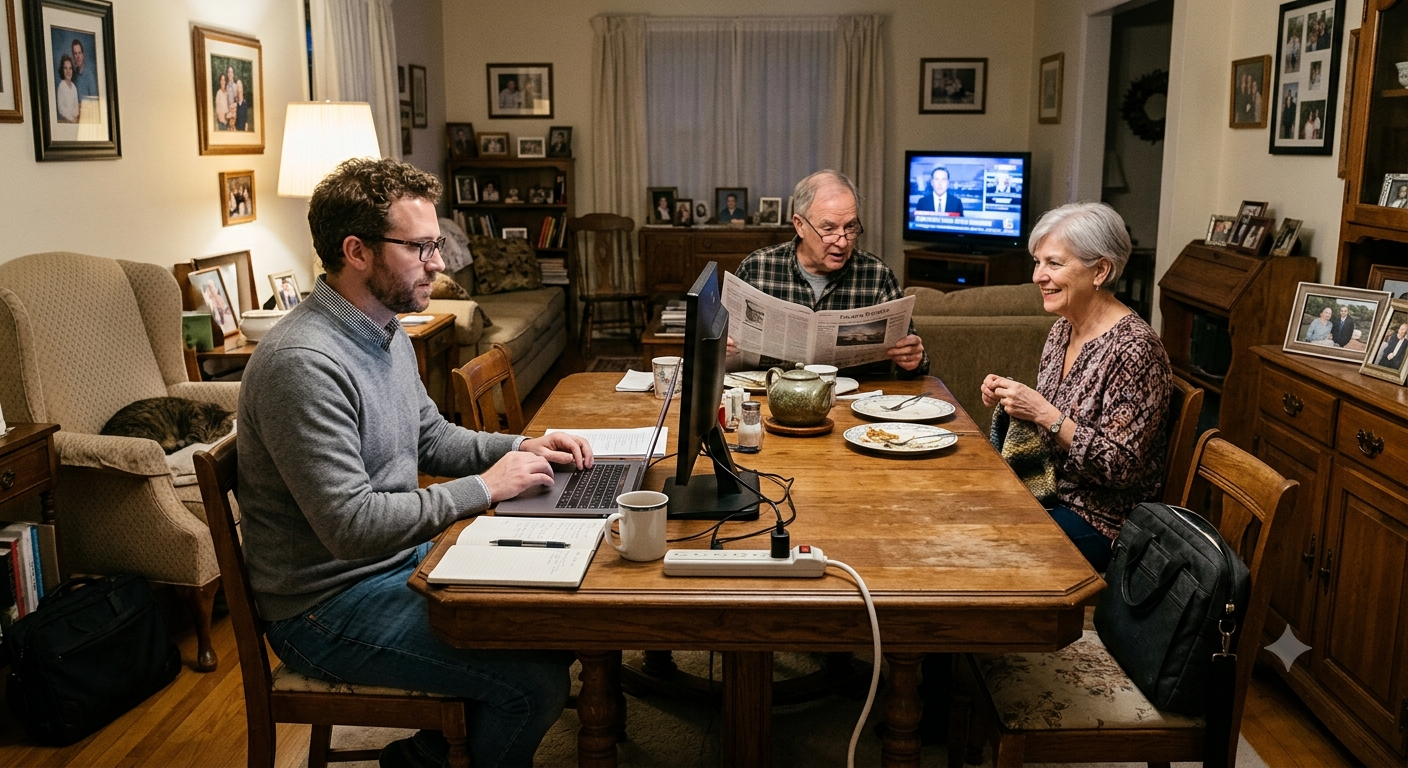
Start with the headline most people scrolled right past. A June 2026 analysis from Realtor.com put a record 25.2 million adults under 35 in their parents’ homes in 2025, roughly one in three people in that age bracket and an all-time high that sailed clean past even the pandemic peak. The lazy version of this story blames lack of motivation and video games, but the data dismantles that argument in a single line. 70% of the 25-34 year-olds living at home are employed, with a good share of them carrying degrees. What’s holding them in place isn’t a missing work ethic, it’s a pay wall they cannot climb on the incomes they earn.
That same research estimated that if the country’s historical living patterns had simply held, 4.86 million fewer young adults would be under their parents’ roofs right now, and that gap is not a sociology footnote to nod at and move past. It’s a reservoir. A pent-up ocean of future buyers who already carry the income and the desire, but are stuck.
Look at who these people actually are, because the profile tells the whole story:
- Ages 18 to 24: 98% have never married, 52% are employed
- Ages 25 to 29: 94% have never married, 71% are employed
- Ages 30 to 34: 89% have never married, 68% are employed
Realtor.com’s own read of that data lands where the numbers point, noting that the overwhelming majority have never married and more than half are working, which points squarely at cost rather than ambition as the force keeping them home longer. That reshapes demand for every seller in the country, and it reshapes it right here in North Texas most of all.
The Starter Home Became a Million-Dollar Myth
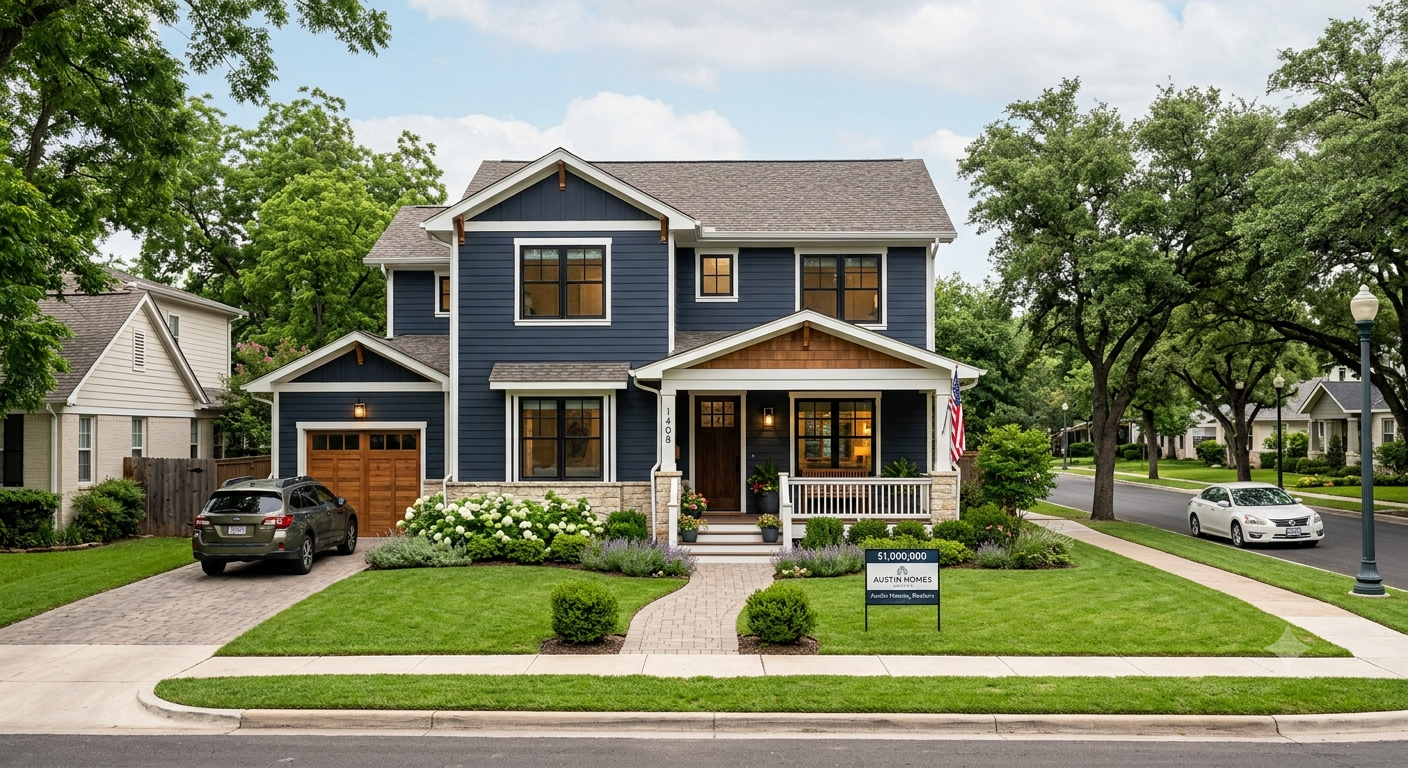
Now the second headline, the one that made coastal buyers wince. As of April 2026, a record 242 American cities carry starter homes, meaning the bottom third of local home values, priced at a million dollars or more, according to a June 2026 Zillow analysis. Six years ago that count stood at just 80 cities, which means the number of places where the cheapest homes cost seven figures has nearly tripled in the time it takes to raise a kindergartner into first grade.
| State | $1M+ Starter Cities (Apr 2026) | Apr 2025 | Feb 2020 |
|---|---|---|---|
| United States | 242 | 226 | 80 |
| California | 105 | 106 | 52 |
| New York | 41 | 31 | 12 |
| New Jersey | 26 | 21 | 1 |
| Florida | 11 | 11 | 4 |
| Massachusetts | 10 | 10 | 1 |
| Washington | 8 | 8 | 7 |
| Texas | 7 | 6 | 0 |
| Connecticut | 4 | 4 | 0 |
Source: Zillow, June 2026
Texas has gone from zero million-dollar starter cities in 2020 to seven today, and that single line of movement is exactly why the smart money is already pointing south of Dallas toward Ellis County, where the typical starter home still sits within reach and builders are competing hard for the contract you’re about to write.
Zillow senior economist Kara Ng framed the pandemic as the catalyst that spread million-dollar starter homes out of a handful of coastal states into more than two dozen others. Thankfully those million-dollar starters remain the exception, and with more inventory, slower price growth, and a narrowing gap between renting and buying, financially prepared buyers are generally in better shape than they have been in years. Read that sentence twice, because it is the North Texas opportunity compressed into a single breath. The prepared buyer who knows where to look is standing on firmer ground today than that same buyer in 2023 or 2024.
The Four Forces That Built the 2026 Squeeze
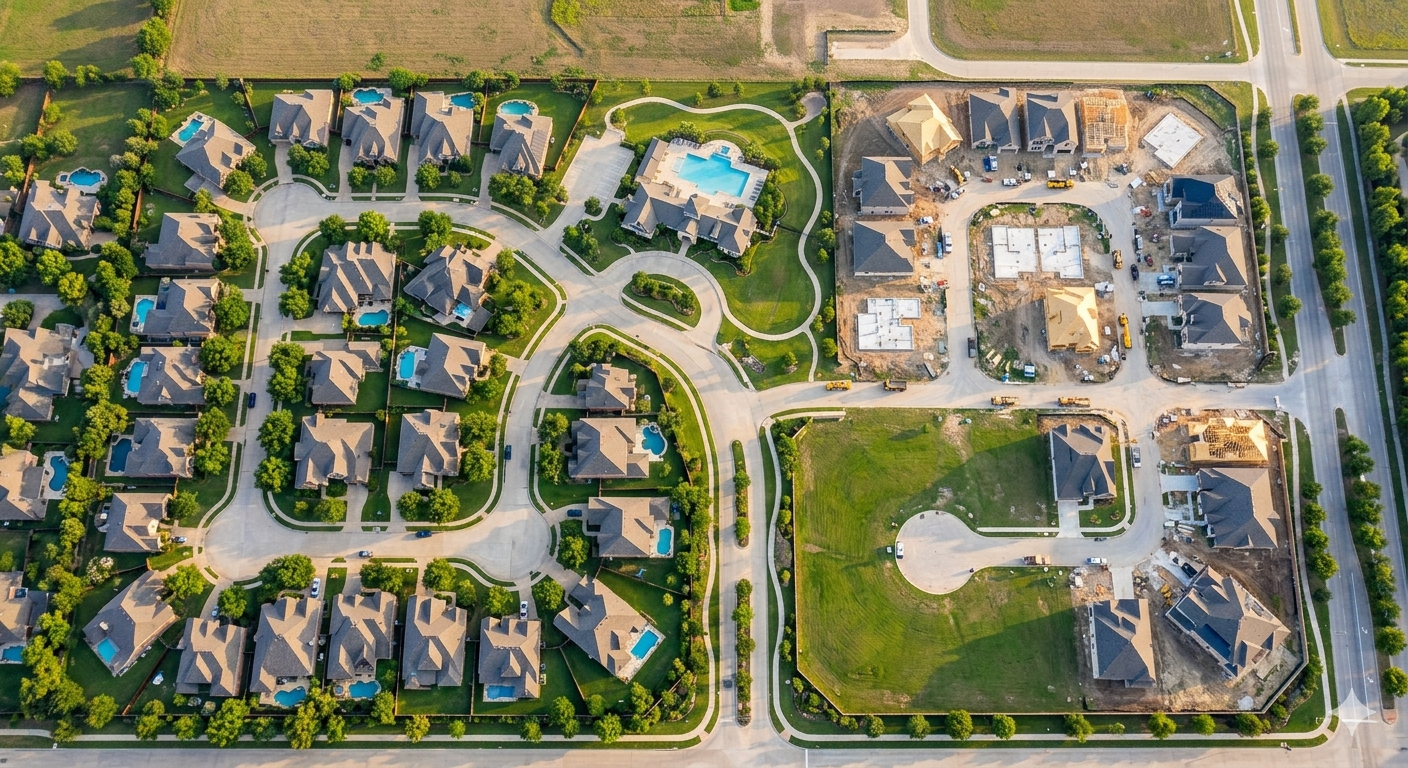
None of this is academic, because the forces underneath the headlines are the same forces that decide how you buy, when you buy, and where. Four structural drivers built the environment you’re standing in, and understanding them is what separates a buyer with a strategy from a buyer with a wish.
1. A Generational Supply Deficit
The U.S. housing supply gap widened to roughly 4.03 million homes in 2025, up from 3.8 million a year earlier, according to Realtor.com’s Housing Supply Gap Report. The mechanics behind that number are brutally simple. In 2025 the country formed about 1.41 million new households while starting only 1.36 million homes, so the shortfall didn’t just persist, it compounded on top of fifteen years of chronic under-building stretching back to the wreckage of 2008. Every young adult trying to launch isn’t merely racing their peers for a home, they’re competing inside a market that structurally cannot manufacture enough homes to go around.
2. Prices Outran Incomes
The American Enterprise Institute’s Housing Center now pegs the ratio of median home price to household income at nearly 6.0, a steep climb from 4.3 back in 2003 and 5.1 as recently as 2017. The Mortgage Bankers Association clocks national prices rising roughly 55% between 2020 and 2025 alone. The national median list price has settled at $430,000, about 34.4% above where it sat in 2019, while the median asking rent has climbed to $1,673, some 17.9% higher over the same stretch, which means the market slammed both doors at once and left an entire generation standing in the hallway.
Sit with what that 6.0 actually means, because a ratio like that stays abstract until you turn it back into a paycheck. The math is simple: the median home price divided by the median household’s yearly income tells you how many years of a family’s entire paycheck it takes to buy the typical house. At 6.0, the answer is six full years.
Economists have long marked a genuinely affordable market at somewhere near 3.0, three years of income for a home, which means that climb from 4.3 to nearly 6.0 over two decades isn’t a market drifting, it’s the cost of owning a home nearly doubling inside a single working lifetime. The house didn’t get twice as good. It got twice as expensive against the paycheck meant to buy it, and that is the exact math keeping 25 million capable adults in their parents’ spare rooms.
3. Rates Stayed High, and the Payment Math Is Merciless
Mortgage rates have held stubbornly in the 6.3% to 6.6% range through the middle of 2026, a different universe from the sub-3% window buyers enjoyed in 2020 and 2021, and NAR projections keep them parked near 6% for the remainder of the year with no dramatic drop on the horizon. Watch what that does to the payment on a $400,000 loan, because the gap is where affordability actually lives or dies:
- At 3.0% (the 2021 rate): roughly $1,686 a month
- At 6.5% (the 2026 rate): roughly $2,528 a month
That is the same exact house costing an extra $842 every month. That’s more than $10,000 a year evaporating into interest, and for a first-time buyer already carrying student debt and paying a swollen rent, that single gap is the entire distance between qualifying and getting told no.
4. First-Time Buyers Nearly Vanished
Only 21% of homes sold between July 2024 and June 2025 went to first-time buyers, the thinnest annual share since 1981, and the average first-timer is now 40 years old, a figure that has crept up from 33 in 2019 and 28 back in 1991. Stack that against the income math and the crisis resolves into two merciless numbers: a household needs to earn roughly $141,000 to afford a median-priced American home, according to the National Association of Home Builders, while the actual median household earns around $81,200. The gap between those two figures is the whole story in a single equation.
The 25 Million Are a Compressed Spring
Here is what nearly all of the coverage has missed, and it’s the insight that changes how you should be reading every one of these headlines. Twenty-five million adults living at home is not a permanent condition to mourn, it’s a spring wound tight under load, and springs under load always do the same thing when the tension finally gives.
Think of that number as latent demand, the buyers the market has not been able to absorb yet because the cost has kept them out, and understand that nothing about that demand has disappeared. It is stored, not spent, waiting on a release valve that could take any one of several forms. Rates ease even modestly, a job relocation forces a decision that can no longer wait, a marriage or a baby turns the childhood bedroom from cozy to impossible, and the moment any of those triggers fire, that stored demand does not trickle politely back into the market. It floods, all at once, and it floods everywhere the buyers can finally afford to land.
The Mortgage Bankers Association projects supply could grow by 10.6 to 14.6 million units between 2026 and 2035, likely outrunning projected demand of around 11 million over that same window, which sounds like relief until you sit with the timeline. A ten-year horizon does nothing for the millennial who is 39 today and wants to buy before 50. For that entire cohort, now pushing into their late thirties and early forties, the window to enter homeownership at a life-stage that still makes sense is narrowing by the month. That pressure is precisely why Ellis County and the southern DFW corridor sit in a different position from nearly every other metro in the country, holding real affordability against the coastal and big-city markets. Active new-construction supply coming out of the ground, and a builder-incentive environment that keeps an entry-level purchase genuinely achievable for a buyer with the right structure. When that spring finally releases, the buyers who already own here will catch the appreciation, and the buyers still waiting for a perfect buying moment will catch the competition instead.
Multigenerational Living Is Rewriting the Demand Map
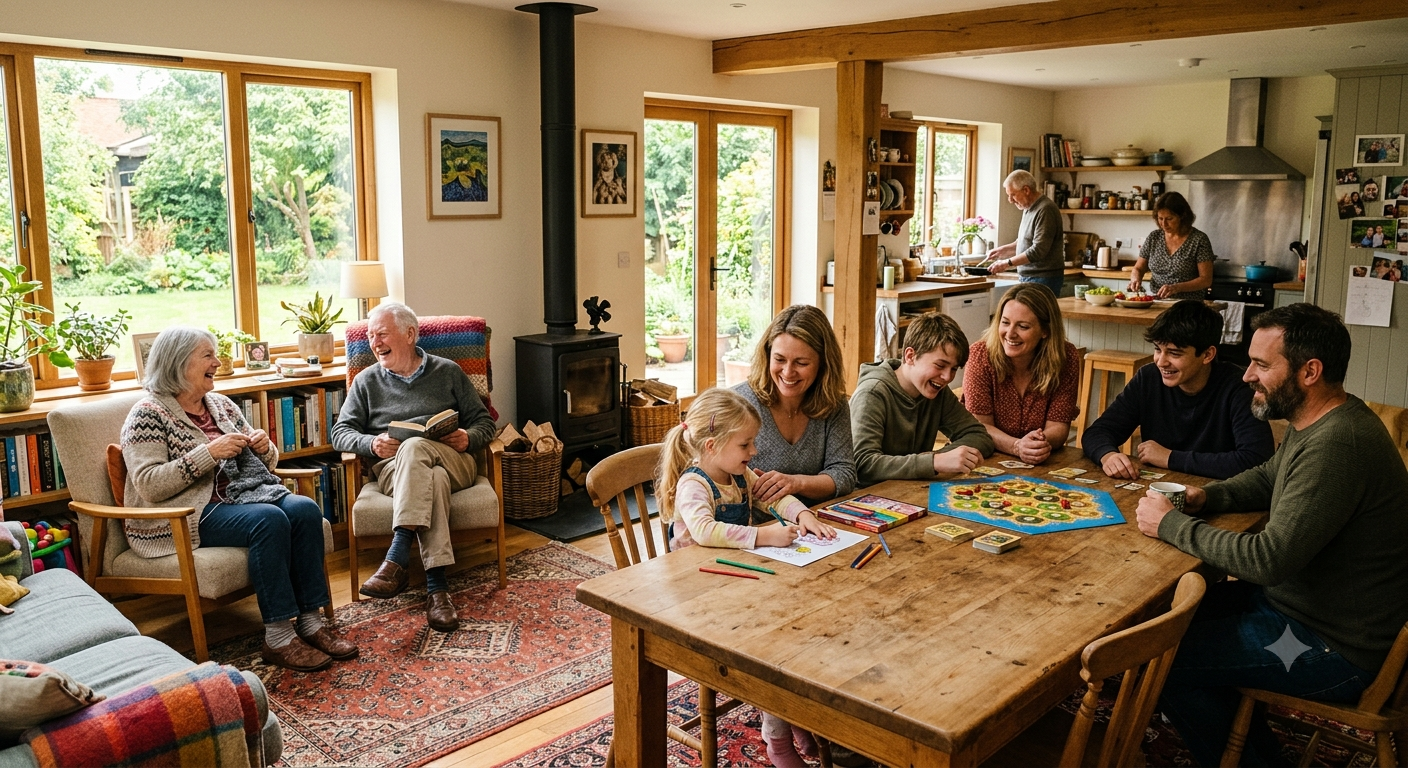
There is a third dimension to this crisis that most of the coverage treats as a curiosity, and it happens to be the one reshaping the floor plans builders are pouring across Ellis County right now. Realtor.com’s 2026 multigenerational report found nearly 3 million owner-occupied American homes with at least two mothers living under one roof, a statistic that ran everywhere around Mother’s Day and was read as heartwarming when it should have been read as a major symptom.
Dig into the trend and the scale becomes impossible to dismiss. As of 2024, close to 4 million multigenerational households live in owner-occupied homes, about 4.5% of the total and a 43% jump since 2013 according to Newsweek’s analysis of the data, while Pew tracks the broader share quadrupling from 7% in 1971 to 18% by 2021. The typical multigen household packs five people into a four-bedroom home on a median income of $131,000, and even that income cannot carry two independent households at today’s prices, which is the whole reason these families are consolidating in the first place. The premium is real, too, because the median asking price for a home purpose-built for multigen living runs $709,000, roughly 65% above the $429,900 median for a standard listing, and that gap is fueling an entirely new buyer profile of families pooling resources across two and three generations to punch clean through the affordability wall.
A multigenerational buyer walks in needing specific things that a generic listing simply cannot deliver, starting with genuine space. Because for a family of 5 or more, 2,500 square feet is often the floor rather than the ceiling. They need the right plan, meaning a ground-floor primary suite, a private secondary entrance, and a kitchenette-equipped in-law suite that lets two generations share a roof without living in each other’s pockets. They need ADU capability, the lot size and the zoning that actually permit an accessory dwelling unit rather than merely tolerating the idea of one. Underneath all of it, they need the carrying cost to land genuinely below what two separate households would run, because the entire model collapses the moment the combined monthly number stops beating the cost of living apart.
Texas cleared a real path here, and it matters. HB 2789 stripped away much of the local red tape that used to strangle ADU construction across DFW, opening a clean administrative approval lane for families adding independent living space to a property. Pair that legislative opening with Ellis County’s larger lots and lower land costs and the corridor becomes one of the best places in the entire metroplex to build the multigen structure that actually pencils out, especially with DFW senior-housing occupancy nearing 90%, the highest in twenty years, which is pushing more and more families to conclude that an ADU on a Waxahachie or Midlothian lot beats a senior-living community on cost and beats two separate mortgages on math. The multigen buyer is not a niche to service on the side, it’s the fastest-growing profile in this market, and the communities that answer it with the right plans, the right lots, and the right zoning are going to take outsized share over the next five years.
The Multigen Math: Why $131,000 Still Comes Up Short

That $131,000 median income sounds like a family with options. It reads like a household that should be able to spread out, buy two homes, and live independently, and the fact that they won’t is exactly what makes the number worth sitting with, because once you run the actual math you understand why they’re pooling under one roof instead of scattering across two.
Start with the reason two separate homes simply doesn’t work, which comes down to the cruel doubling of everything. Two independent households means two down payments, two sets of closing costs, and two monthly notes running in parallel, so take even a modest pair of purchases, a $300,000 home for the parents and a $300,000 home for the adult kids, and watch what happens. At a 6.5% rate each note runs roughly $1,900 a month in principal and interest before a dollar of tax or insurance touches it, and because Texas carries a heavy property-tax and homeowners-insurance load that routinely adds 30 to 40% on top, each household is realistically staring at $2,600 to $2,900 all-in. Add those two roofs together and the family is now carrying somewhere near $5,500 a month before a single grocery run, which is a punishing number even against a six-figure combined income.
Now layer on the costs that pushed these families together in the first place, because they never went away. Childcare across DFW runs into the thousands per child every year, and elder care, whether that means in-home help or a facility, runs far higher and climbs faster than almost any other line item these households face. Subtract two mortgages, two tax bills, two insurance policies, childcare, and elder care from that $131,000 and the cushion you imagined simply isn’t there. What’s left is a squeeze, a household that looks comfortably middle-class on a spreadsheet and lives paycheck-thin in the actual month, and that gap between how the income looks and how it lives is the trap the whole country is walking into.
Then collapse the two households into one and watch the math invert. The family now carries a single note, a single tax bill, a single insurance policy, and one shared set of utilities, so even at the $709,000 multigen-designed median, one mortgage on a larger home comes in dramatically cheaper than two mortgages on two smaller ones. Childcare stops being a check written to a center and becomes a grandparent down the hall, elder care stops being a facility invoice and becomes a suite off the kitchen, and the $131,000 that couldn’t stretch across two roofs suddenly carries one home with room left to breathe. More of every payment flows toward principal on a single appreciating asset instead of leaking out across duplicate carrying costs, which means these families frequently build equity faster than the buyers who insisted on staying separate.
That is the arbitrage, and it’s why this buyer profile is detonating across the corridor rather than merely growing. It was never a lifestyle preference dressed up in economic language, it’s hard economics that happens to solve childcare and elder care in the very same move, and for a family running those numbers honestly, the multigen home in a Waxahachie or Midlothian community with a real ADU or a private in-law suite stops looking like a compromise and starts looking like the single smartest financial structure available to them in 2026. The lots and the builders in this corridor are among the very few in the metroplex actually built to deliver it.
North Texas in 2026: The Affordability Exception That Matters
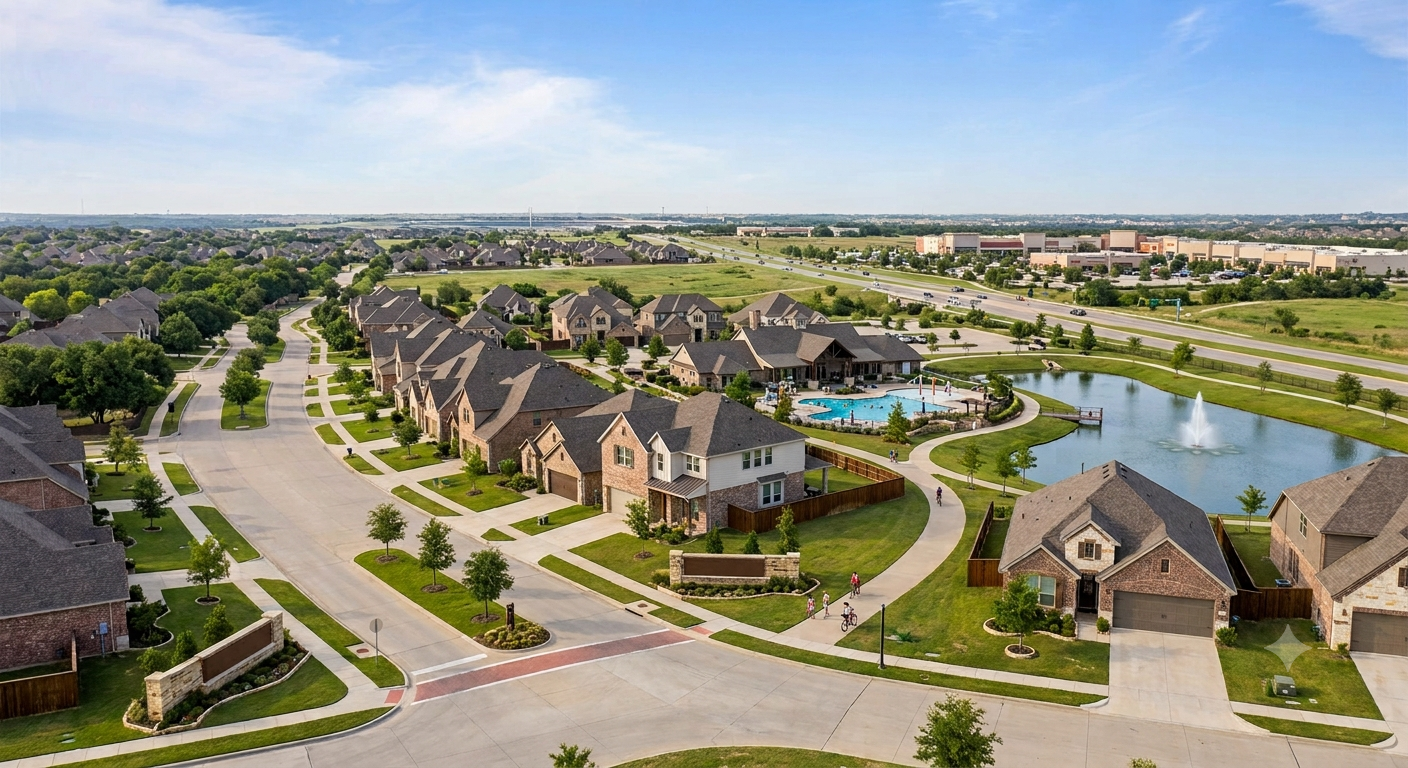
Bring all of this home, literally, because the national numbers only matter once you translate them into the ground under your feet. While 242 cities nationwide carry those million-dollar starter homes, Zillow still puts the typical American starter home at $198,649, and the DFW metro median list price ran $439,990 as of June 2026 according to Federal Reserve FRED data. Which is comfortably beneath the coastal metros driving the national panic. Inside that DFW number, Ellis County offers entry points among the most competitive in the entire footprint, which is the part the coastal headlines will never tell your relocating cousin in Los Angeles. Here is what the buyer opportunity actually looks like across the corridor I work every single day.
Waxahachie: The Value Anchor
Waxahachie holds in the high $300s to mid $400s on median price, stable and well-supported by permanent growth drivers. It’s still genuinely reachable for the buyer who got priced out of the northern suburbs and came looking south. The pipeline underneath that stability is enormous, starting with a 3,170-acre master-planned community approved earlier this year that will eventually bring more than 13,000 homes to the area, layered with the new 75-acre Palmetto Road development adding density along the eastern corridor and Baylor Scott & White’s $240 million campus expansion putting 59 new beds and a wave of healthcare payroll into the local economy. Those are structural demand drivers with roots in the ground, not seasonal tailwinds that vanish when the wind shifts.
Midlothian: The Builder Corridor
Midlothian is running more than fifteen active new-construction communities right now, the hottest builder corridor south of I-20, and the anchor tenant is about as permanent as employment gets. Google’s fifth Midlothian building, an $880 million data center pushing 288,000 square feet, is under construction toward an early-2027 completion as part of the company’s $40 billion Texas commitment planted right here. Data centers throw off exactly the kind of permanent, high-wage employment that runs straight into local home demand. Pair that payroll with Midlothian ISD and its steady stream of elite ratings, one of the real reasons families choose this corridor over other suburbs, and for the buyer hunting the exact sweet spot of price and appreciation, the five southern-DFW new-construction communities under $350,000 represent the entry-level inventory that has gone nearly extinct in the coastal markets making all the noise. The builders out here are writing rate buydowns, closing-cost credits, and design allowances that quietly rewrite the monthly-payment math.
Red Oak: The Google-Anchored Play
Red Oak sits on a structural demand floor poured by the Google and Compass Datacenters buildout in and around the city, which is a ten-year employment story rather than a passing tailwind. As the closest Ellis County city to Downtown Dallas, Red Oak plays as the commuter value move, handing buyers Ellis County pricing but with direct access to Dallas employment centers, and that combination is exactly what makes it punch above its weight.
The Broader Picture
The March 2026 North Texas Market Report documented DFW active listings up roughly 20% year-over-year, sellers conceding 2 to 3% of contract price, and the market tilting toward buyers for the first time since 2019, and the May 2026 report confirmed the shift with 8% more closings this spring than last and sellers surrendering an average of $15,000 off their original ask. That is a market softening under its own weight, not one collapsing. For the buyer who has spent two years on the sidelines waiting for a signal, the combination of swelling inventory, seller flexibility, and assistance adds up to the most favorable entry window since before the pandemic rewrote the rules.
The First-Time Buyer Playbook the National Story Ignores

Here is the piece the national affordability narrative refuses to touch, and it happens to be the piece that changes everything for a buyer looking in Texas. This state runs the deepest stack of first-time-buyer assistance in the country, and the tragedy is how many qualified buyers walk right past it because nobody ever told them it existed. Texas offers more than 75 down payment assistance programs in 2026, and the real stack breaks down cleanly.
On the state level, the anchor programs do heavy lifting. TSAHC Home Sweet Texas delivers 3 to 5% of the loan amount as a grant that is never repaid for buyers at or below 80% of area median income, and TSAHC Homes for Texas Heroes carries the identical structure for teachers, first responders, veterans, and healthcare workers. TDHCA My First Texas Home layers up to 5% assistance as a 0% second lien repaid only at sale or refinance, wrapped around a low-rate 30-year first mortgage, and the Mortgage Credit Certificate stacks a dollar-for-dollar federal tax credit on your mortgage interest that can be worth $2,000 or more every year for the life of the loan.
The local programs go further still, with the City of Dallas offering up to $60,000 in deferred first-time-buyer assistance and a range of DFW municipal programs layering another $25,000 to $50,000 on top. Underneath all of it sit the low-down-payment loans that quietly killed the old rules like FHA at 3.5% down with a 580 minimum score. Conventional options like HomeReady and Home Possible at 3% down. Then there’s VA at zero down for qualifying veterans and service members, and USDA at zero down across the eligible rural stretches of Ellis County and its neighbors.
The 20%-down myth is dead, and it deserves to stay dead, because most of the first-time buyers I close across Ellis County are putting 3 to 5% down and stacking a state grant on top, which drops their real cash to close far below whatever number they were dreading. Run it on an eligible $350,000 Waxahachie purchase and a TSAHC grant paired with a builder closing-cost credit can push cash to close under $5,000 in the right scenario, which is a different planet from the down payment most renters assume they need.
Builder buydowns bend the rate on top of all that, and as I broke down in my analysis of new-construction value, DFW builders are running 2-1 temporary buydowns that drop your effective rate to 4.5% in year one and 5.5% in year two on a 6.5% note. Layering a state grant over that makes your first-year payment look nothing like the headline rate. Here is the part the model-home rep will never lead with, and I always will, that buydown is temporary and it steps up every year until it lands you on the full 6.5% note by year three, which means you need a real plan for that payment or a realistic refinance path before you ever sign, not a hope dressed up as a strategy.
Watch the base price too while you’re at it, because some builders quietly fold part of what they’re branding as an incentive back into the sticker, which turns your buydown from free money into your own money handed back with a bow. None of that makes buydowns a bad deal though. When used correctly they’re one of the strongest tools on the board in 2026, it just means you run the year-three number and the base-price comparison before you fall in love with the year-one payment, because that discipline is the whole difference between the buyer who got a deal and the buyer who got sold.
The Honest Picture, Then the Long Game

I’m going to be direct with you, because directness is the entire foundation this site is built on. The affordability crisis is real, not media invention, and a household earning the national median of $81,200 runs headlong into a genuine wall trying to buy at DFW median pricing on a 6.5% rate. Pretending otherwise would insult the very buyer I’m trying to help, so I won’t.
The phrases, “housing is unaffordable” and “you cannot buy a home in North Texas in 2026” are two entirely different statements, and only the first one is true. As I’ve laid out in prior analysis, the Ellis County calculus shifts dramatically once you run the five factors the national number quietly leaves out:
- No state income tax. For a household earning $100,000, that alone keeps $4,000 to $7,000 a year in your pocket compared to a matching income in California or New York.
- A lower cost-of-living baseline. On the Council for Community and Economic Research (C2ER) Cost of Living Index, Dallas sits right around the national baseline near 100 while Los Angeles runs near 149, Seattle near 145, and Manhattan north of 230, so a dollar of income covers meaningfully more of your daily life in Texas than in the coastal metros feeding the migration wave. One honest caveat, because that’s the standard on this site: Texas property taxes and homeowners insurance both run high, so make sure you build those into the monthly number rather than planning around principal and interest alone.
- Real builder incentives. Some 61% of builders nationally offered sales incentives in May 2026, and the southern DFW corridor runs hotter than that. Some Ellis County builders are even offering 4.99% fixed rates.
- Underused assistance. The average DFW buyer who qualifies for TSAHC leaves $10,000 to $20,000 on the table simply by never applying.
- Standard seller concessions. Sellers across this market now cover 2 to 3% of contract price in closing costs and buydowns as a matter of routine.
Run all five together on a $350,000 Midlothian or Waxahachie home and the total cost of ownership looks nothing like a $430,000 national-median home bought with no help and no concessions. Just because a home is “unaffordable” in sticker price, doesn’t mean you can’t afford it. It’s all in how you play the game and what programs you take advantage of.
Let me take on the sharpest objection to everything I’ve just said, because a smart reader is already holding it in their hand. The American Enterprise Institute projects modest price declines nationally through 2028, so why not simply wait and buy the dip? Here’s three reasons why the wait rarely pays:
- First, “modest” is the operative word, and a few points of price softening is a rounding error next to a $10,000-a-year swing in your payment when rates move.
- Second, the dip and the discount cannot coexist, because the very rate relief that would nudge prices down is the exact trigger that releases the compressed spring of 25 million buyers, and that surge of competition swamps whatever modest softening arrived the moment it shows up.
- Third, today’s environment, the 20% more inventory, the seller covering your closing costs, the builder buydown, exists precisely because demand is quiet, so when demand returns those concessions are the first thing to vanish.
Waiting for a lower price usually means trading a real discount you can capture right now for a hypothetical one you’ll be fighting a crowd to reach later.
Now pull the lens all the way back and look past the 2026 noise entirely, because the structural picture for this corridor is where conviction actually earns its keep. DFW is adding somewhere between 40,000 and 50,000 jobs a year, and the southern corridor specifically is absorbing billions in permanent corporate investment, from Google’s $40 billion Texas commitment anchored in Midlothian to Compass Datacenters in Red Oak, Baylor Scott & White’s $240 million Waxahachie expansion, and the 5,200-acre South Creek Ranch development taking shape in Ferris along I-45 and the future Loop 9 connector.
Those are the kind of permanent, high-wage demand generators that have historically put a floor under home values right through rate cycles, because the jobs don’t pack up and leave when the 30-year fixed ticks up in a given month. Nobody guarantees a price in real estate, and I never will, but I’ll say plainly that a corridor absorbing this much permanent payroll stands on far more durable footing than one riding a temporary tailwind, and you can draw the ten-year line from there yourself.
The 25 million future-buyers won’t stay in their parents’ houses forever, and a meaningful share of them land in Ellis County, pulled by the same affordability edge that has driven Texas migration for a decade. The buyers who already own when that demand arrives benefit, and the buyers still holding out for flawless conditions may be holding out for a market that never bothers to show.
My weekly North Texas Market Intelligence Reports track every shift in this thing in real time, the inventory, the days on market, the price cuts, the builder incentives, and the development news that actually moves values.
Frequently Asked Questions: Housing Affordability in 2026

The questions buyers search most on this topic, answered straight.
1. Why are so many young adults still living with their parents in 2026?
A record 25.2 million adults under 35 lived with their parents in 2025 according to Realtor.com, and 70% of them are employed, which means the driver was never unemployment or a lack of ambition. What keeps them at home is the collision of home prices running 34.4% above 2019 levels, mortgage rates parked near 6.5%, and a national shortage of more than 4 million homes, a combination that makes saving a down payment while paying today’s rents nearly impossible on a median income. For millions of households, the parents’ home simply became the most rational financial choice available.
2. How many U.S. cities have $1 million starter homes in 2026?
A record 242 as of April 2026 according to Zillow, which is nearly triple the 80 cities that carried million-dollar starters back in February 2020. California leads with 105 such cities, followed by New York at 41 and New Jersey at 26, while Texas now has 7, up from zero in 2020. Keep it in perspective, though, because the typical American starter home is still worth $198,649, which means million-dollar starters remain the exception even as they spread across the map.
3. Will housing become more affordable in 2026 or 2027?
Modestly, and only in some markets. The American Enterprise Institute’s Housing Center projects slight price declines through 2028 while wages rise around 3% a year, so the ratio of prices to incomes is improving, just slowly enough that meaningful recovery for middle-income families could still take years. In DFW specifically, the current buyer’s-market conditions represent a genuine window, and it’s the kind of window that tends to close once rates ease and sidelined demand comes flooding back.
4. What is the average age of a first-time homebuyer in 2026?
Forty years old, a record high that has climbed from 33 in 2019 and 28 in 1991, according to NAR. In 2025 only 21% of home sales went to first-time buyers, the smallest share since 1981, and the culprit is the same trio every time: high prices, high rates, and student debt combining to delay entry into homeownership by more than a decade compared with prior generations.
5. Can I buy a house in Texas with little to no down payment in 2026?
Yes, and it’s more achievable than most renters assume. FHA loans only require 3.5% down, some conventional options run as low as 3%, VA loans sit at zero down for veterans, and USDA loans hit zero down across eligible rural areas, while state programs like TSAHC grants and TDHCA My First Texas Home stack another 3 to 5% of assistance on top of those loans. In the right scenario, buyers across Ellis County close under $5,000 out of pocket on homes priced below $350,000.
6. What is multigenerational living and why is it increasing?
Multigenerational living means two or more adult generations sharing a single owner-occupied home, and it’s climbing fast, with nearly 3 million American homes now housing at least two mothers under one roof and multigen households up 43% between 2013 and 2024. The drivers are housing costs, childcare, and elder care all pushing in the same direction, since pooling resources on one larger home routinely beats carrying two separate households. Across North Texas and Ellis County, new construction offers the floor plans and the ADU capability built specifically for these buyers.
7. Is North Texas affordable compared to other major metros in 2026?
Significantly, yes. A DFW metro median list price near $440,000 sits well beneath the million-dollar starter homes defining Los Angeles, San Francisco, and New York, and once you add no state income tax, active new supply, and available assistance programs, the entire cost-of-ownership equation changes character. Ellis County cities like Waxahachie and Midlothian especially, carry entry-level new construction priced comfortably below the metro median.
8. What Texas first-time homebuyer programs are available in 2026?
Texas runs more than 75 down payment assistance programs, anchored by TSAHC Home Sweet Texas at 3 to 5% as a grant that’s never repaid, TSAHC Homes for Texas Heroes carrying the same structure for teachers, first responders, and veterans, TDHCA My First Texas Home at up to 5% as a 0% second lien, and the Mortgage Credit Certificate delivering a federal tax credit on mortgage interest. Many DFW cities layer another $25,000 to $60,000 in local assistance on top of the state stack.
9. Why is the housing shortage not being solved?
The shortage traces back to a decade of underbuilding after 2008, compounded by restrictive zoning, high construction costs, and persistent trade-labor shortages, and the current math keeps digging the hole even deeper. In 2025 the country started only 1.36 million homes while forming 1.41 million households, so the deficit compounds even now, and while Sun Belt metros like DFW lead national construction and are steadily closing the gap, inventory across the Northeast and Midwest barely moves. Zoning reform, ADU enablement chief among it, remains the most direct structural fix on the table.
10. What is the impact of adults living with parents on the real estate market?
Those 25 million adults represent latent demand, buyers who want in but can’t get there yet, and latent demand doesn’t disappear, it waits. When conditions shift through lower rates, life events, or finally-saved down payments, that demand releases fast and drives both competition and price appreciation, which is already visible in Gen Z hitting a record 1 in 5 purchase mortgage locks in Q2 2026. The demand isn’t gone, it’s compressed, and affordable-entry markets like Ellis County are built to absorb it the moment it breaks loose.
Ready to Break the Boomerang Cycle?
If you’re one of the 25 million, or you know someone who is, the real question was never whether you buy eventually, it’s whether the right structure exists to make it work right now, in this market, on these terms. In North Texas, it usually does, because the available inventory, the seller concessions, the builder incentives, the state assistance, and the corridor’s structural growth story combine into a case for action that simply doesn’t exist across most of the markets generating the headlines.
If you’re a parent with an adult child at home, you may be sitting on a real estate decision of your own without realizing it, since the multigenerational setup that pencils out today may not be the right structure two years from now. Mapping your options while you still have room to choose, whether that means helping a child buy their own place, exploring a multigen floor plan together, or timing your own next move with intention, is a conversation worth having before the market makes the decision for you.
I’m Bobby Franklin, REALTOR® with Legacy Realty Group – Leslie Majors Team, and I serve buyers, sellers, and investors across Ellis County, Waxahachie, Midlothian, Red Oak, and the greater DFW metroplex.
📲 Call or Text: 214-228-0003
📧 [email protected]
🌐 northtexasmarketinsider.com
Schedule a consultation, ask a market question, or just tell me where you are in the process. The first conversation is always free, and it’s always honest.
Bobby Franklin is a licensed Texas REALTOR® (License #0805459) with Legacy Realty Group – Leslie Majors Team, serving buyers and sellers across Ellis County, DFW, and greater North Texas. All content represents the author’s market analysis and professional opinion based on publicly available data. Nothing in this article constitutes legal, financial, or tax advice. Real estate services are provided without regard to race, color, national origin, religion, sex, familial status, disability, or any other characteristic protected under the Fair Housing Act or applicable Texas law. Commission amounts are fully negotiable and are not fixed or recommended by any real estate organization. NAR Code of Ethics compliance is maintained at all times. This content is original, created exclusively for North Texas Market Insider, and is not reproduced from any other source. All outbound links are provided for informational purposes only and do not constitute endorsement. RESPA compliance is maintained on all lender and service referrals.