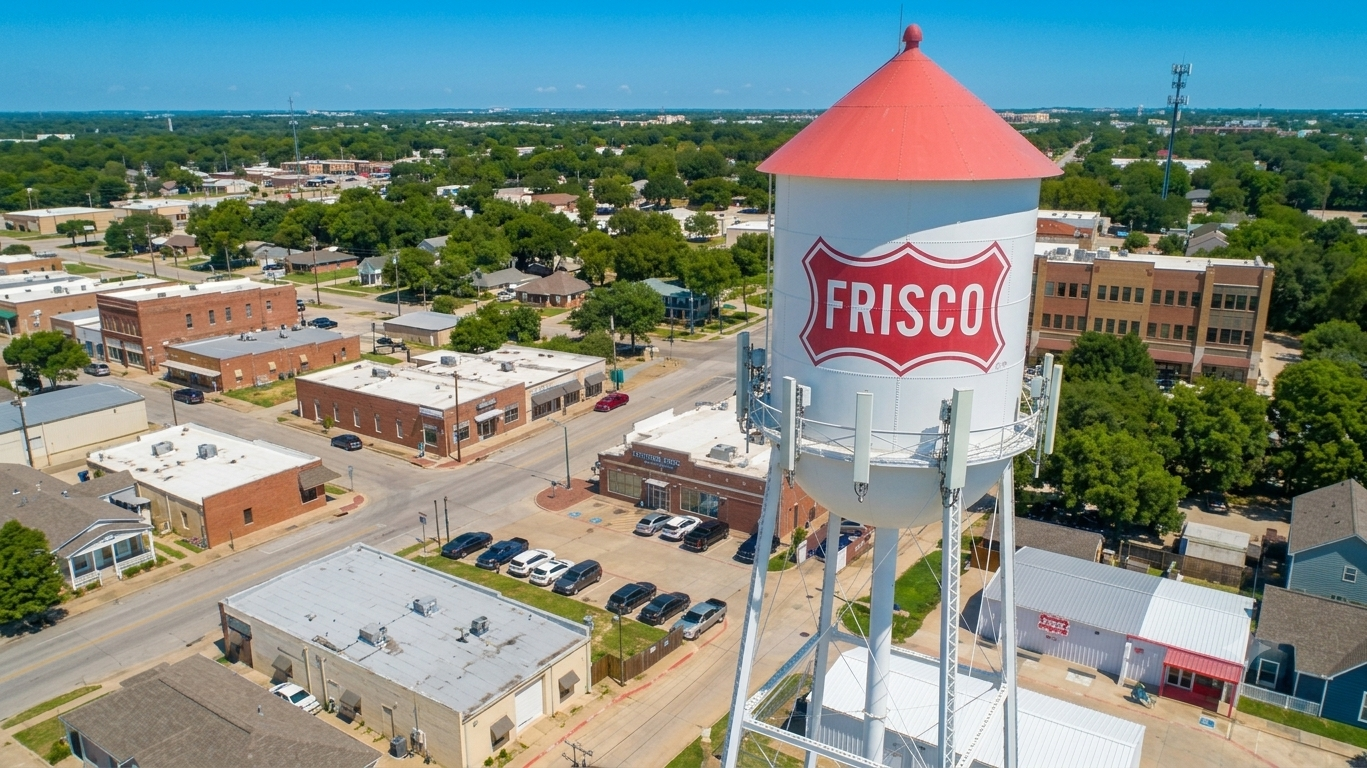
Why thousands of New York families are choosing Dallas-Fort Worth and what you need to know before you join them.
North Texas Market Insider™ · New York Relocation
Why New York Money is Flowing to North Texas
New York is the cleanest financial case on this site, and the reason is a line that surprises people. Your property tax barely moves.
Every other state I work with takes a real hit here. Arizona goes from roughly half a percent to nearly two. Utah and Colorado roughly triple. Washington doubles. New York arrives already paying an effective rate close to Texas's, and because you are usually buying at a lower price point, the actual annual dollar amount frequently lands equal or lower than what you pay now.
Which leaves the income tax standing on its own. Combined New York state and city rates reach into double digits at the top, and Texas charges nothing. On a $200,000 household income that is roughly $12,000 to $15,000 a year that stops leaving your account. Add housing where the budget that buys a cramped co-op in Queens gets a four-bedroom with a yard here, and the arithmetic is not close.
The catch is not financial. It is the car, which you will need from day one and which changes your daily life more than the house does. It is the food. And it is New York's tax department, which audits relocation claims aggressively and specifically targets high earners. Sever residency properly and document it from the day you move.
1.73% vs ~1.8%
Effective property tax, New York against Texas
$12K–$15K
Annual income tax saving on a $200,000 household income
183 days
The line New York audits against
New York residency determinations are fact-specific and enforcement is active. Property tax effective rates vary by county and by data vintage. Consult a qualified tax professional before relying on any of this. General information, not advice.
North Texas Market Insider™ · Area Matcher
Find Your North Texas Landing Zone
Three questions, about twenty seconds. Tell me where in New York you're leaving and I'll start you with the priorities most families from there name first. Change any of them, then set your budget, and I'll show you the areas worth a real look.
123✓
Where in New York are you coming from?
I'll use this to suggest a starting point on the next step. You can change every one of them.
What actually matters most? Pick up to three.
0 of 3 selected. Tap to add or remove.
What's your home budget?
Purchase price, not monthly payment.
Your closest matches
Results are ranked only on the priorities and budget you selected, all of which you control. Every community listed is open to all buyers. Price ranges are general estimates and change with the market. See the full disclosure at the bottom of this page.
New York → North Texas
Where New York families are landing.
Most of my New York clients aren't randomly picking a Texas ZIP code. They're narrowing in on areas that preserve the parts of New York life they adore, access, schools, food, and culture, while fixing the things that stopped working. Tap what matters to you and the rest will drop away.
Tell me what part of New York you're coming from, and what you like or don't like about it, and I can usually narrow this list down to two or three specific DFW or rural areas that match your lifestyle and budget very closely.
Bobby Franklin, REALTOR® · Legacy Realty Group – Leslie Majors Team · northtexasmarketinsider.com
North Texas Market Insider™ · New York Relocation
Four Kinds of New York Buyer
If you're relocating from New York, you're not just buying a house, you're running an arbitrage play. That requires intelligence, not inspiration. Almost every New York client I work with fits one of these four profiles. Find yours, then open it for what actually determines whether it works.
Space starved
The Space-Starved Strivers
$4,000 → $1,400one-bedroom rent, Manhattan to Dallas
Professionals and families in Manhattan, Brooklyn, Queens, and the nearby suburbs who have outgrown their apartments and townhomes. The same budget that buys a cramped co-op in Queens gets a four-bedroom house with a yard in a DFW suburb.
What determines whether it works
The car is the adjustment, not the house. Outside a few walkable pockets, everything requires driving, usually on a highway, often twenty to forty minutes each way. People who frame that as a lifestyle loss struggle; people who reframe it as trading subway time for private space adapt fast.
Budget for the car immediately. Purchase or ship, plus a Texas license within 90 days and registration within 30. Many longtime city residents have not owned a vehicle in a decade and underestimate the insurance and maintenance line.
Renters often become first-time owners within months. If you could never realistically buy in the New York metro, the math here changes that quickly, and that is a bigger life change than the square footage.
Tax burdened
The Tax-Burdened Earners
$12K–$15Ksaved annually on a $200K income
High-income households, business owners, and commission-based professionals comparing New York and Texas tax exposure. Combined state and city rates reach into double digits at the top. Texas charges nothing, and every bonus and commission cheque lands closer to gross.
The residency piece nobody warns you about
New York audits relocation claims aggressively, and high earners are the specific target. The Department of Taxation and Finance scrutinises your driver's licence, vehicle registration, voter registration, where your children attend school, how many days you spend in each state, and where your social and professional ties sit.
Make the break clean and make it dated. Texas licence, Texas registration, Texas voter registration, and documented evidence of your days in state, ideally from the day you move rather than months later. People who keep a pied-a-terre or spend more than 183 days in New York routinely get hit with back taxes.
If your income is high, engage a relocation tax attorney before you move. This is the one line item on this page where professional advice pays for itself several times over, and it is the mistake I see most often.
Remote work
The Remote-Work Recalibrators
Centraltime zone, nonstop flights back
Remote and hybrid workers earning New York or national-level salaries whose employers no longer require a Midtown or Wall Street commute. The job stays New York calibre. The daily life does not have to be.
What determines whether it works
Central time is a genuine advantage for East Coast work. You stay one hour off New York rather than three, which keeps you inside the working day rather than starting it at dawn. Combined with nonstop flights from two airports, staying connected is straightforward.
Confirm the arrangement is permanent and location-independent in writing before you shop. Underwriting scrutinises a newly remote, newly out-of-state borrower more than most people expect, and a verbal understanding will not carry a mortgage application.
Then use the freedom. Remote workers can optimise for schools, land, or walkability instead of drive time, and most default to a commuter suburb out of habit anyway. That is a wasted advantage.
Rebalance
The Lifestyle Rebalancers
~57%lower cost of living than New York City
Longtime city and suburban residents tired of the grind who are trading cramped layouts, thin walls, and shared outdoor space for private backyards, extra bedrooms, and home offices that close with a door. The move is a reset in noise, privacy, and daily stress.
The trade you are actually making
The food grief is real and worth naming. The pizza place, the bagel spot, the deli. Texas more than compensates with barbecue, Tex-Mex as its own cuisine, and breakfast tacos, but there is no substitute for what you left. You find new favourites and stop expecting to find your place.
Social life becomes scheduled rather than incidental. New York social infrastructure runs on density; you bump into people. Here it runs on neighbourhood pools, trails, HOA events, and sports leagues. Transplants who lean into that layer immediately adapt fastest.
The car changes your identity more than your calendar. The city taught you that not owning one was practical and even freeing. Here it is the only access to everything. That reframe takes about a year.
General information, not tax, legal, or investment advice. Franchise tax figures reflect Texas Comptroller guidance for 2026 and 2027 report years and are subject to change. Capital gains treatment depends on your individual circumstances. Consult a CPA and a licensed lender before acting on any of this.
North Texas Market Insider™ · Reality Check
What New York Didn't Prepare You For
Twelve things that catch New York families off guard in the first year. Four of them cost real money. Tick the ones that apply to you and build your own first-year number, then open any card for the detail underneath it.
Showing all twelve
Your estimated first-year add-on cost$0
Tick the boxes on the four cost cards below to build your number.
01Costs money
Cost of Living Is Reshuffled, Not Just Cheaper
1.73% → ~1.8% effective property tax, roughly a wash
Housing prices deliver: the budget that buys a cramped co-op in Queens gets a four-bedroom with a yard here. Here is the part that surprises people in a good way. Unlike buyers from most western states, your property tax rate barely moves. New York's effective rate already runs near Texas levels.
Why New York is the cleanest case of the six
Every other state we work with takes a beating on this line. Arizona goes from roughly half a percent to nearly two. Utah and Colorado triple. Washington doubles. New York arrives already paying a comparable effective rate, so the property tax increase that derails other buyers' math mostly does not apply to you.
Because you are usually buying at a lower price point, the actual dollar amount frequently lands equal or lower than what you were paying, even at a similar rate.
Texas does cap increases. Annual growth in a residence homestead's appraised value is limited to 10 percent plus new improvements under Tax Code 23.23. The cap begins January 1 following the year you first qualify for the homestead exemption, so file at closing and protest that uncapped first year.
02Daily life
The Car Isn't an Option, It's Infrastructure
Day one not month three
You intellectually know Texas has no subway. The reality hits differently on day one without a car. No quick trip down the block, no errand on foot. Even a nearby grocery store means getting on a highway. Every task, from school drop-off to lunch, involves driving.
The identity shift underneath it
This is not just inconvenience, it is a reframe. The city taught you that not owning a car was practical and even freeing. Here the car is the only access to everything, and people who treat that as a loss struggle where people who treat it as trading subway time for private space adapt quickly.
Budget for it immediately. Purchase or ship a vehicle, plus insurance and maintenance you may not have carried in a decade. Registration is due within 30 days at the county tax office and a Texas licence within 90 days.
Choose your suburb around the commute. Many transplants say proximity to work matters more than district, aesthetics, or price, because the cost of a long Texas commute in time and patience is the thing people underestimate until they are living it.
03Daily life
The Scale of the State Rewires How You Think About Distance
45 min is a normal drive to a friend's house
New Yorkers think of two hours as a long trip. Here, two hours gets you to another part of Texas. The Metroplex alone is sprawling enough that a short drive is routinely 45 minutes each way, and locals reference eight-hour drives as a road trip rather than an ordeal.
What it costs you in year one
Most transplants spend the first year underestimating how long everything takes and overestimating how close things look on a map. Two suburbs that appear adjacent can be thirty-five minutes apart at the hour you would actually drive it.
Test every commute at the real hour before you commit. Not at eleven in the morning. At 7:45am on a Tuesday.
The upside is control. Unlike a train that runs on its own schedule regardless of anything, you can change your commute by choosing a different suburb or corridor, which is a lever New York never gave you.
04Costs money
Toll Roads Are a Monthly Line Item
TollTag get it before you need it
DFW runs an extensive toll network, and the Dallas North Tollway, President George Bush Turnpike, and Sam Rayburn Tollway carry a large share of cross-metro traffic. Without a tag you pay higher rates by mail.
How to keep the number down
Get a TollTag in your first week. Driving untagged means pay-by-mail rates, and that is the most expensive avoidable mistake new arrivals make.
Some corridors use dynamic pricing that rises with congestion, meaning the worst time to use them is exactly when you most want to. Know which routes near your target suburb are tolled before you sign anything.
Factor it into the location decision. Two neighbourhoods twenty minutes apart can differ meaningfully in monthly toll spend depending on which corridor you use.
05Weather
Severe Weather Is Recurring, Not Occasional
1–2% hail deductible, as a share of dwelling coverage
New York has occasional bad snowstorms. Here you get tornadoes, large hail, flash flooding, and the occasional multi-day freeze. Transplants are surprised less by the severity than by the frequency and the matter-of-fact way Texans discuss it.
What to check before you buy
Insurance runs meaningfully higher and the deductible structure is different. Wind and hail deductibles are calculated as a percentage of dwelling coverage rather than a flat dollar amount, so on a $500,000 home a hail claim can carry five figures of exposure before the policy pays.
Roof age drives insurability. As roofs age, carriers may shift from replacement cost to actual cash value, which pays depreciated value. Ask the roof's age and last hail claim before you write an offer, and get an insurance quote during your option period.
On tornadoes, keep proportion. Warnings cover large regions, most neighbourhoods go years without a direct hit, peak season is April and May, and radar plus phone alerts give ten to thirty minutes. You shelter in an interior room for fifteen to twenty minutes and resume.
06Weather
The Heat Is a Season You Survive, Not Enjoy
5–6 months of it, not three weeks
New York has hot summers, so transplants think they know what is coming. What they do not expect is five or six unbroken months, nights that never cool down, and humidity that makes 95 feel like something the thermometer cannot capture.
The adaptation timeline
Most describe the same arc: first summer feels like a slap, second is a test of new habits, and by year three you are timing errands and workouts without thinking. You never love 102 with humidity, you just get good at not letting it ruin the day.
What makes it livable: central air is standard in every house, apartment, store, and office rather than an old window unit you fight with. Neighbourhood pools, splash pads, covered patios, and shaded greenbelts are normal design, not luxuries.
Your bills shift seasons rather than exploding. Electricity spikes in the hottest months, but you are no longer paying for months of heating oil or gas. Over a full year many families feel they traded one expensive season for another.
07Costs money
Texas Runs Its Own Grid and You Pick Your Provider
100+ retail electricity providers to choose from
About 85 percent of Texans live in a deregulated electricity market. You are not assigned a utility, you choose from a large field of competing retail suppliers. That can work in your favour with fixed-rate plans, and against you if you sign whatever is in front of you at closing.
How to not get a bad plan
Use the state comparison site before you sign anything. Most locals recommend it, and the plan that is active at move-in is rarely the best available. Watch for headline rates that only apply at a specific monthly usage level.
The grid operates independently from the national network, which contributed to the widespread outages during the February 2021 freeze. The state has since imposed winterisation requirements, but most residents keep a backup plan for extended outages during winter ice events.
Read the contract term, not just the rate. Early termination fees are common and the difference between a twelve and thirty-six month lock matters more here than it does where a single utility sets the price.
08Culture
Southern Friendliness Feels Suspicious at First
Sir / ma'am consistently, even from teenagers
New Yorkers do not expect strangers to start full conversations in the checkout line, or a store employee to approach unprompted and genuinely offer help. More than a few admit their first instinct was that something was off or that someone wanted something.
It takes a few weeks to stop flinching
What eventually surprises people most is that the warmth is mostly genuine. Neighbours introduce themselves, people wave from driveways, and a new face gets a nod rather than a studied non-glance.
The social rhythm is planned rather than incidental. New York social life runs on density; you bump into people. Here it runs on neighbourhood pools, trails, HOA events, and sports leagues, which is a scheduled version of the same thing.
Transplants who adapt fastest lean into the neighbourhood layer immediately rather than waiting to feel at home before getting involved. That is the single most repeated piece of advice from people two years in.
09Culture
Faith and Football Are Ambient, Not Private
Texas Pledge recited after the national one
In New York, religion is private and largely invisible in secular daily life. Here it is ambient. Coworkers mention their church casually, megachurches anchor community life, and what church do you go to is asked the way New Yorkers ask what neighbourhood you live in.
Opting out is possible, opting in is easier
Non-religious transplants are rarely pressured directly, but they notice that faith is a natural part of small talk and that opting out means opting out of something socially woven in. That is worth knowing rather than discovering.
Friday night football operates the same way. From late August through November the community calendar bends around it, and band, drill team, cheer, and ROTC all run on that schedule with summer practice starting in July.
Texas identity itself runs deeper than you expect. It is not Southern the way Georgia is Southern, it is Texan, which is its own category. Most transplants say they did not take it seriously at first and found themselves explaining it to newer arrivals a few years later.
10Wildlife
Mosquitoes, Fire Ants, and a Longer Pest Season
$75–$125 a month for pest control
New York has a hard winter that resets the insect population every year. Here the season runs most of the calendar. Fire ants build mounds across open lawn overnight, and mosquito activity stretches from late winter into November.
What to expect and what to do
Fire ants are the daily adjustment if you have kids or dogs. Mounds appear fast after rain following a dry stretch and they are aggressive when disturbed. You will scan the grass before the kids run onto it.
Regular pest control is standard here, not a sign of a problem. Quarterly exterior service handles most of it; monthly is common in newer construction on the edge of undeveloped land.
Allergies catch people too. Cedar peaks in winter rather than spring, which is backwards from what you are used to, and many transplants who never had seasonal allergies develop them in the first two years.
11Costs money
The Homestead Exemption Has a Hard Deadline
April 30 file or lose the year
Applications are accepted January 1 through April 30 of the tax year. Miss it and you forfeit that year's savings, though Texas allows a late filing for up to two years after the delinquency date with a penalty attached.
And it doubles as residency evidence
Your Texas driver's licence address must match the property, so the chain matters: register the vehicle first, then get the licence at the property address, then file the exemption.
For New Yorkers this paperwork does double duty. A filed Texas homestead exemption is exactly the kind of documented, dated evidence that a New York residency audit looks for. File it early and keep the confirmation.
It also starts your 10 percent appraisal cap, which takes effect January 1 following the year you first qualify. Filing late delays the protection limiting every future increase.
12Daily life
Your Paperwork Clock Starts the Day You Arrive
30 / 90 days, and they are different clocks
Thirty days to register your vehicle with the county tax office. Ninety days to get a Texas driver's licence. Most people assume it is one deadline handled in one trip. It is not, and for New Yorkers this paperwork carries extra weight.
Do these in the right order, and early
Register the vehicle before you go to DPS. The licence application asks for proof of Texas registration, so the county office is your first stop. Getting this backwards costs a wasted morning.
Texas dropped the annual safety inspection for most non-commercial vehicles in January 2025, but emissions testing is still required in the most populous counties, which includes all of DFW.
Do all of it as early as you can. Licence, registration, and voter registration are the first three things a New York residency audit examines. Doing them in month one rather than month six is the difference between clean evidence and an argument.
Nothing matches that filter. Try another one.
Figures are general estimates for the North Texas market and vary by property, neighbourhood, and provider. Property tax, insurance, residency, and utility references are general information, not legal or tax advice. New York residency determinations are fact-specific; consult a qualified tax professional before relying on any of this.
North Texas Market Insider™ · Climate Ledger
New York Weather vs North Texas Weather, Honestly
This is not a weather comparison, it is a trade. You swap cold, snow, and coastal storms for heat, humidity, and severe weather with warning. Three of these eight rows go against Texas, including the shoulder seasons New Yorkers love most, and they are marked as such. If a page like this only ran one direction you would be right not to trust it. Tap any row for the detail underneath it.
North Texas winsNew York wins
WinterNew YorkReal winter, months of itvsNorth TexasJacket weather, mostlyNorth Texas
STATE
Snow, slush, black ice, nor'easters, and the late-March emotional crash when you realise the heavy coat has another few weeks of service. Commutes and weekends bend around storm tracks.
North Texas
Most winter days land in the 40s to 60s with only short bursts of hard freeze. Snow is a novelty. You retire the shovel, the windshield scraper, and the salt tracked through every lobby.
The row New Yorkers quietly love most
This is the trade most transplants name as the best part of the move, and it is not close. December nights where holiday lights actually draw people outside. January weekends on playgrounds. February dinners on a patio with a light jacket.
What you stop paying for: months of heating, and the slow freeze-thaw damage to sidewalks, steps, brick, and roofs that quietly costs Northeast homeowners real money every year.
Take the occasional freeze seriously though. Infrastructure here is built for heat, not extended cold. Know where your water shutoff is before your first February, and expect the region to slow dramatically during an ice event.
SummerNew YorkHot, but containedvsNorth TexasFive to six unbroken monthsNew York
STATE
Two or three serious heat waves a season, with nights that drift back into the 60s and low 70s and give you a genuine break. Evening walks, outdoor dining, and park time stay workable.
North Texas
Highs in the 90s from late May into September, nights that do not cool the way they do after a Manhattan thunderstorm, and humidity that makes 95 feel like more than the number.
The adaptation arc is consistent
First summer feels like a slap, second is a test of your new habits, and by year three you time errands and workouts without thinking. You never love 102 with humidity. You get good at not letting it ruin the day.
What keeps it livable: central air is standard everywhere rather than an old window unit you fight with, and pools, splash pads, covered patios, and shaded greenbelts are normal design rather than luxuries.
Your bills shift seasons rather than exploding. Electricity spikes in the hottest months but you stop paying for months of heating oil or gas. Over a full year most families feel they traded one expensive season for another.
Shoulder seasonsNew YorkA real spring and fallvsNorth TexasShorter, and quickerNew York
STATE
Weeks of 60 to 70 degree days with low humidity and a crisp breeze. That just-right stretch is a genuine part of why the Northeast seasonal rhythm feels satisfying.
North Texas
Texas has shoulder seasons but they compress, and you jump between chilly and warm without long stretches of ideal windows-open weather.
The honest concession
This row goes to New York and there is no argument to make. If those weeks of perfect October weather are load-bearing in your year, you will miss them and you should know that going in.
What partly offsets it: the mild winter here means far more usable outdoor days across the full calendar, even if fewer of them are perfect. Count the total, not the peak.
Severe weatherNew YorkNor'easters and coastal stormsvsNorth TexasHail, wind, and tornado seasonNew York
STATE
Big weather comes from nor'easters, coastal systems, and heavy rain events with localised flooding. Widespread hail, tornadoes, and back-to-back severe outbreaks are not the norm.
North Texas
More frequent severe thunderstorms in spring, hail that damages roofs and cars, and occasional tornado warnings. Insurance is priced accordingly.
Warning time and the deductible structure
The tools are better than the headlines suggest. Warnings cover large regions, most neighbourhoods go years without a direct hit, and radar plus phone alerts give ten to thirty minutes. You move away from windows for fifteen to twenty minutes and then resume.
The financial part is the real difference. Wind and hail deductibles here are a percentage of dwelling coverage rather than a flat amount, which is a structure most New Yorkers have never encountered. Roof inspections after a big storm are routine rather than alarming.
This row goes to New York on cost. Budget for higher homeowners insurance and treat it as a known line item.
Already high by national standards, which is precisely why the usual Texas objection lands so much softer for New York buyers than for anyone else.
North Texas
Comparable rate, and because you are typically buying at a lower price point the annual dollar amount often ends up equal or lower than what you were paying.
The line that makes New York different
Every other origin state we work with takes a real hit here. Arizona goes from roughly half a percent to nearly two. Utah and Colorado roughly triple. Washington doubles. New York arrives already paying a comparable rate.
Texas does cap increases. Annual growth in a residence homestead's appraised value is limited to 10 percent plus new improvements. The cap begins January 1 following the year you first qualify for the homestead exemption, so file at closing and protest that uncapped first year.
Income taxNew YorkUp to double digits, plus cityvsNorth TexasZeroNorth Texas
STATE
Combined state and city rates reach into double digits at the top, quietly stripping thousands from high earners before they see net pay.
North Texas
Every bonus, raise, and commission cheque lands closer to gross. Over a decade that difference funds college, a second property, or earlier independence.
But sever residency properly
New York audits relocation claims aggressively and targets high earners specifically. Licence, vehicle registration, voter registration, where your children attend school, days in each state, and where your ties sit are all examined.
Do the paperwork in month one, not month six. A dated Texas licence, registration, voter registration, and a filed homestead exemption are exactly the documented evidence an audit looks for.
If your income is high, engage a relocation tax attorney before you move. This is the single highest-return professional expense in a New York to Texas relocation.
Air and environmentNew YorkHeat islands and drifting smokevsNorth TexasStorms, then clearNorth Texas
STATE
Heat-island days, smog alerts, and more recently wildfire smoke pushing down from Canada. Episodic rather than the defining feature of a season, but increasingly present.
North Texas
North Texas has its own ozone action days, particularly in summer, but no pattern of regional smoke sitting for a week at a time.
A difference of pattern, not a clean win
Do not overstate this one. DFW has genuine air quality alerts, especially in high summer, and ozone is a real regional issue.
What changes is the shape. Fast-moving storm systems clear the air between them, rather than a stagnant regional condition that settles in and stays for days.
The overall tradeNew YorkSnow, income tax, and densityvsNorth TexasHeat, storms, and spaceNorth Texas
STATE
A climate you plan around in winter, a tax structure that compounds against high earners, and a cost of living that makes a six-figure income feel smaller than it should.
North Texas
A longer, hotter warm season with real severe weather, offset by no income tax, comparable property tax, dramatically lower housing cost, and winters you actually enjoy.
Stated plainly
You give up long cold slushy winters and shorter contained heat. You take on a longer hotter warm season with serious storms, periodic hail, and some tornado risk, with better tools and habits for managing them than cable news suggests.
You move from planning around snow days, alternate-side parking, and wet boots to planning around heat, air conditioning, and the occasional night in the hallway during a passing storm line.
Texas is not better or worse than New York. It is a different set of rules. The families who do best are not the ones who pretend it is mild. They are the ones who accept the trade, budget for the storm and cooling realities, and fully enjoy how much winter life they get back.
General information rather than advice. Insurance costs, tax rates, and weather patterns vary by property and change over time. New York residency determinations are fact-specific. Confirm current figures with a licensed insurance agent and a qualified tax professional before relying on them.
North Texas Market Insider™ · Schools
Four Ways New York Families Choose a District
Here is the honest framing before the tiers: New York ranks first in the country for public school quality and Texas does not. What that state-level number hides is that Texas district quality varies enormously, and the strongest DFW districts routinely rank among the best systems in the nation. The most important research you can do is district-specific, not state-level. These are the four patterns I actually see.
Each bar is drawn on the same $0 to $2.6M scale, so the widths are directly comparable across all four tiers.
Tier 1Executive track
$1M–$2M+
"Executive & Top-School Track"
Carroll ISD · Westlake · Highland Park ISD · select Flower Mound · luxury Frisco and West Plano
A lifestyle that lines up with Scarsdale, Chappaqua, Great Neck, and high-equity Brooklyn. Elite districts, polished neighbourhoods, serious club sports and arts, and quick reach to DFW Airport for trips back to the Northeast.
What you're actually getting
The saving here is tax and net-worth math, not sticker price. Many New York sellers in this tier exit properties in Westchester, Long Island, or Brooklyn and land in an equal or lower purchase range here while erasing New York state income tax and city tax on top of it.
On $400,000 to $600,000-plus incomes that is tens of thousands annually redirected into investments, college funding, or principal. If you measure this move by month one you will misjudge it badly.
Best for dual-income executive families who want the highest tier of schools and amenities, need a major airport, and want their Texas address to read as a direct peer to their current New York suburb rather than a downgrade.
Tier 2Career suburbs
$650K–$1.2M
"Career Suburbs & Stability Track"
Plano · Allen · Coppell · central Frisco · strong McKinney and Flower Mound
Suburbs that line up with established but not ultra-elite New York areas: many Long Island towns, northern New Jersey communities, and mid-priced Westchester or Rockland. Deep employer bases and mature shopping and dining.
What you're actually getting
What buys a 1,700 to 2,000 square foot older home in many New York suburbs translates into a newer or larger Texas home with a yard, plus lower recurring costs on parking, childcare, and services.
Losing New York state and possibly city income tax on a $200,000 to $300,000 household income typically frees five figures a year, accelerating savings and debt payoff even while the day-to-day lifestyle improves.
Best for professional families who want strong schools, predictable commutes, and a suburban life that simply works, without needing the most prestigious ZIP code or stretching into ultra-luxury pricing.
Tier 3Next wave
$425K–$800K
"Next-Wave Growth & Value Builders"
Melissa · Anna · Princeton · north McKinney · outer Prosper · Forney · Northlake and Justin
Markets that feel like early-stage New York bedroom communities, similar to what outer Long Island or New Jersey exurbs felt like ten to fifteen years ago. New schools, shopping, and road projects following home construction.
What you're actually getting
New York buyers who could barely reach a townhome or starter Cape at $600,000 to $800,000 often find a larger, newer single-family home with real yard space here well below that, depending on suburb and finish level.
Property tax rates are similar across most DFW suburbs, but lower prices plus no state income tax make the total annual burden lighter than most New York scenarios even as you trade up in space and age of home.
Best for young and mid-career families, first-time buyers, and move-up buyers who value new construction and appreciation potential over a fully mature neighbourhood on day one.
Tier 4Acreage & hybrid
$450K–$900K+
"Acreage, Flexibility & Hybrid Lifestyles"
Waxahachie · Midlothian · Ellis and Johnson counties · rural-edge Denton and Kaufman
Something difficult to replicate in the New York metro without huge compromise: meaningful acreage plus realistic access to a major job market. Note the bar: this range runs wider than the others.
What you're actually getting
The budget that might secure a small-lot home in many New York suburbs can translate into several acres plus a larger house here, with lower annual taxes per acre than anywhere near New York City.
These areas support detached shops, RV and boat storage, small agricultural uses, and home-based businesses far more easily than tightly zoned Northeast suburbs. The option to add barns, second structures, or expanded garages without Manhattan-level permitting friction acts as an extra return on the move.
Worth checking: whether the land qualifies for an agricultural valuation, which changes the property tax math on acreage substantially. This is my home corridor, so I will tell you plainly: the growth here is real and it is early.
School district information is provided as general information only and reflects the districts New York families most frequently ask about. Attendance boundaries, program offerings, campus assignments, and performance data change and vary by campus. Verify all school information directly with the district before making any purchase decision. Home price ranges are general estimates and vary by neighborhood, campus, and market conditions. As a REALTOR® I comply fully with the Fair Housing Act and cannot and will not direct buyers toward or away from any community based on race, color, religion, sex, national origin, familial status, or disability.
By Bobby Franklin, REALTOR® — North Texas Market Insider | Serving Ellis County, the I-35E Corridor, and the DFW Metroplex Last updated: July. Continue reading
Dallas just claimed the #2 spot nationally for apartment construction with 28,958 units under...
Market Snapshot · Live NTREIS Data
What the DFW Market Is Actually Doing
In New York, what a home sold for is recorded and public. In Texas it is not. Sales price information provided to appraisal districts is confidential under Tax Code 22.27, which means every national site you have been browsing is estimating closed prices here rather than reporting them. These four charts come from NTREIS, the MLS, where the confirmed numbers actually live.
Median Sales Price
What Your Equity Actually Buys
The middle point of all closed sales, so one luxury outlier cannot skew it. This is the number to hold your New York sale price against. Compare it to your own median, not to your neighbourhood's best comp. With Nassau near $795,000 and Suffolk near $680,000, the spread against this line is the equity you get to redeploy.
Chart: Median sales price across the DFW market, tracked monthly. Source: NTREIS MLS.
Closed Sales
How Much Is Actually Trading
Completed transactions where financing cleared and the home changed hands. Read it against price, never alone. Rising prices with rising volume is genuine demand. Rising prices with falling volume means sellers are holding a number that fewer buyers will accept, and that is precisely when concessions start showing up in contracts.
Chart: Closed sales volume across the DFW market, tracked monthly. Source: NTREIS MLS.
Percent Of Original List Price
How Far Sellers Actually Move
What homes closed for measured against their original ask, before any price reductions. Near 100 percent means sellers are holding firm. Below it, that gap is your negotiating room. This is the single most useful number to carry into an offer, and out-of-state buyers almost never ask for it.
Chart: Percent of original list price received across the DFW market, tracked monthly. Source: NTREIS MLS.
Showings To Pending
How Hard Sellers Are Working
How many showings it takes to produce one home going under contract. This is the earliest honest signal on the page. A low number means homes are selling on the first weekend and you will be competing. A climbing number means sellers are opening the door again and again before anyone writes, and that is buyer leverage arriving weeks before it ever reaches an asking price.
Chart: Showings required per pending sale across the DFW market, tracked monthly. Source: NTREIS MLS.
All four charts update automatically from NTREIS as new sales close. Want these numbers filtered to the specific submarkets you are considering, with your New York sale price run against them? Call 214-228-0003.
Bobby Franklin, REALTOR® · Legacy Realty Group – Leslie Majors Team · northtexasmarketinsider.com
North Texas Market Insider™ · New York Relocation
What New Yorkers Want To Know About Texas
Ten answers on the questions that come up on every New York relocation call: what actually gets cheaper, how far downstate equity goes, how aggressively New York audits people who leave, and what happens to schools.
Is it actually cheaper to live in Texas than New York?
For most New York families yes, and the gap is bigger and different in character than people expect. Overall cost of living in Dallas runs dramatically lower than New York City once you blend all categories, and the driver is not only housing. Groceries, dining, transportation, and everyday expenses all run meaningfully lower.
What reshuffles things is the tax trade. New York residents face combined state and city income taxes that reach into double digits, while Texas has none. You hand some back in property tax, but Texas's effective rate is close to New York's, and since you are usually buying at a lower price point the actual dollar amount often ends up comparable or lower.
How far does my New York equity actually go in Texas?
Further than most New Yorkers expect, and it has become the defining financial reason people move. NYC suburban median prices now exceed a million dollars in roughly one in four communities, with Nassau County near $795,000 and Suffolk near $680,000. Those are medians, not luxury markets.
The DFW metro median sits considerably lower, and the same dollars that buy a dated three-bedroom in a close-in Long Island suburb often get new-construction with four or five bedrooms in a master-planned community. Equity stretches furthest in Ellis County, North Fort Worth, and parts of Collin County. Frisco and Southlake absorb more of it on arrival.
Will I need a car the minute I land?
Yes, essentially from day one, and this is the biggest practical shock for longtime city residents. Outside a few walkable pockets in central Dallas, Texas metros assume every adult has a car and uses it for everything: groceries, school pickup, appointments, dinner, the gym.
Budget for buying or shipping a car immediately, a Texas driver's licence within 90 days, and vehicle registration within 30. People who frame this as a lifestyle loss tend to struggle. People who reframe it as trading subway time for personal space in a vehicle adapt considerably faster.
What happens to my taxes? New York has been aggressive about residency.
The income tax savings are real and substantial. A household earning $200,000 can save roughly $12,000 to $15,000 annually just by removing New York state and city income tax. But the residency severance is genuinely more complicated for New Yorkers than for anyone else.
New York's Department of Taxation and Finance actively audits relocation claims, specifically targeting high earners. They scrutinise your driver's licence, vehicle registration, voter registration, where your children attend school, days spent in each state, and where your social and professional ties sit. To make a clean break you want Texas licence, registration, and voter registration plus documented evidence of your time in state, ideally from the day you move. People who keep a pied-a-terre or spend more than 183 days in New York routinely get hit with back taxes. If your income is high, engaging a relocation tax attorney before you move is worth every dollar.
What are Texas schools like? New York has some of the highest-ranked in the country.
This is where New Yorkers need an honest answer rather than a sales pitch. New York ranks first in the country for public school quality by multiple measures and Texas ranks considerably lower nationally.
The story is more nuanced than the state ranking suggests. School quality varies enormously by suburb and district here. Plano ISD routinely ranks among the top school systems in the entire country, with Frisco, Allen, and Carroll ISD all consistently strong. Families who land in a highly rated North Texas district often find performance comparable to what they left. Those who land in a weaker district may feel the gap acutely. The most important research you can do before buying is district-specific, not state-level.
How different is the cultural and political environment day to day?
New York trends reliably blue where Texas is broadly conservative at the state level, though Dallas, Austin, and Houston lean progressive internally. The day-to-day shift is real but more textured than the political label implies.
You will hear more open talk about faith, church, and religion in casual conversation. It shows up in small talk, school schedules, community calendars, and the quiet assumption that everyone has a congregation somewhere. Texas pride is its own distinct thing, with genuine emotional attachment to being Texan in a way that surprises people from a state where nobody offers that as a daily primary identity. Most transplants find the shift is less about politics and more about cadence: slower, more neighbourly, more church-and-football centred, less everyone-minds-their-own-business.
What about electricity? I've heard Texas has its own grid.
Roughly 85 percent of Texas residents live in a deregulated electricity market, meaning you choose your own provider from more than a hundred competing retail suppliers rather than being assigned a utility. Fixed-rate plans let you lock pricing, and competition often keeps costs reasonable.
It also means you can end up on a bad plan if you do not research at move-in. The grid itself operates independently from the national network, which contributed to the widespread outages during the February 2021 freeze. The state has since imposed winterisation requirements, but most new residents keep a backup plan for extended outages during winter ice events. Use the state's official comparison site before signing anything at closing.
What does outdoor and social life look like without the city?
The transition is less about losing things and more about learning a different rhythm. New York social infrastructure is built around density: you run into people on the street, in coffee shops, in the building hallway. Texas social life is more planned, more backyard-and-neighbourhood based, and considerably more car-dependent to access.
Master-planned communities here are genuinely built for social interaction, with neighbourhood pools, trails, community events, and sports leagues replacing the organic density of city life with a more scheduled version of it. You will stop expecting to find your specific New York place and start building new favourites. Transplants who adapt fastest lean into the neighbourhood layer immediately rather than waiting to feel at home before getting involved.
How bad is the traffic?
Significant, and it hits differently when you are used to a commute measured in subway stops rather than highway miles. DFW has some of the worst congestion in the country by certain measures, and unlike a train that runs on a fixed schedule regardless of incidents, highway commute times swing wildly with accidents, weather, and time of day. A normal thirty to forty-five minute commute can double on a bad afternoon.
The key difference is that you have more direct control. Picking a suburb close to your office, avoiding major interchange corridors, or working from home changes the equation substantially. Many transplants find that choosing where to live based on proximity to work is the single most important decision they make, more than district, aesthetics, or price.
Will Texas feel permanent, or will I always feel like a transplant?
It depends on how much you lean in, but Texas has an unusually strong pull on people who give it time. The state has absorbed enormous migration from other states and countries, and the major metros are genuinely diverse in ways that make it feel far less monolithic than the cowboy stereotype.
What surprises many New Yorkers is that Texas does not ask you to give up your identity. It just expects you will eventually acquire a layer of Texan on top of it. You do not stop being a New Yorker. You just start understanding why people here get emotional about a football team, a grocery chain, and a state flag in ways that seemed excessive until they did not. Most transplants who stay past year two report that community roots form faster than they did in the city.
Question that isn't on this list? That's usually the one worth a phone call. Tell me where in New York you're coming from and what you're trying to solve, and I'll give you a straight answer about how it works here.
Bobby Franklin, REALTOR®Legacy Realty Group – Leslie Majors Team214-228-0003
North Texas Market Insider™ · Working Together
Your New York-to-Texas Relocation Specialist
I work with New York relocators regularly, and there are two things I raise before anything about houses. The first is the car, because you will need one from day one and longtime city residents consistently underestimate what that does to daily life. The second is residency, because New York's Department of Taxation and Finance audits relocation claims aggressively and high earners are the specific target.
That second one is where I can save you the most money, and it has nothing to do with the purchase price. Licence, registration, voter registration, where your children enrol, days in each state, and a filed Texas homestead exemption are all documented evidence. Doing them in month one rather than month six is the difference between clean evidence and an argument.
What I provide
Residency severance sequencing licence, registration, voter registration, and homestead exemption handled early, because they are exactly what an audit examines.
A relocation tax attorney referral if your income warrants it. This is the single highest-return professional expense in a New York to Texas move.
The car conversation early budget, timing, insurance, and which suburbs actually work for a household that has not owned a vehicle in a decade.
Total tax rate breakdowns including MUD and PID exposure, so a builder's monthly estimate never becomes a surprise.
Virtual property tours walked live on video with commentary, for buyers still in New York.
Neighbourhood translation mapped against your market. If you liked Park Slope, Montclair, or Scarsdale, I will tell you where that actually is here.
Lender connections who handle out-of-state relocations routinely and understand a New York closing timeline.
Post-move support homestead exemption filing by April 30, the 30 and 90 day paperwork clocks, and community connections.
Ready to plan your move to Texas?
Market insights · Strategic planning · No pressure
Contains information related to marketing campaigns of the user. These are shared with Google AdWords / Google Ads when the Google Ads and Google Analytics accounts are linked together.
90 days
__utma
ID used to identify users and sessions
2 years after last activity
__utmt
Used to monitor number of Google Analytics server requests
10 minutes
__utmb
Used to distinguish new sessions and visits. This cookie is set when the GA.js javascript library is loaded and there is no existing __utmb cookie. The cookie is updated every time data is sent to the Google Analytics server.
30 minutes after last activity
__utmc
Used only with old Urchin versions of Google Analytics and not with GA.js. Was used to distinguish between new sessions and visits at the end of a session.
End of session (browser)
__utmz
Contains information about the traffic source or campaign that directed user to the website. The cookie is set when the GA.js javascript is loaded and updated when data is sent to the Google Anaytics server
6 months after last activity
__utmv
Contains custom information set by the web developer via the _setCustomVar method in Google Analytics. This cookie is updated every time new data is sent to the Google Analytics server.
2 years after last activity
__utmx
Used to determine whether a user is included in an A / B or Multivariate test.
18 months
_ga
ID used to identify users
2 years
_gali
Used by Google Analytics to determine which links on a page are being clicked
30 seconds
_ga_
ID used to identify users
2 years
_gid
ID used to identify users for 24 hours after last activity
24 hours
_gat
Used to monitor number of Google Analytics server requests when using Google Tag Manager
1 minute
You can find more information in our Cookie Policy and .