
Update, July 8, 2026: This report covers June, and June’s story has already flipped. Days after the ceasefire was signed, it cracked when Iran attacked three commercial ships in the Strait of Hormuz. The United States answered with fresh strikes, revoked Iran’s oil waiver, and President Trump, speaking from the NATO summit, called the interim deal “over”. Oil jumped roughly 6% and mortgage rates ticked right back up, with the 30-year running near 6.66% on July 8.
In June the fighting paused, oil crashed, and rates did not fall. Weeks later the fighting reignites, oil spiked, and rates climbed. That is the whipsaw, and it is the entire lesson of this report. You cannot time the geopolitics, because it can reverse inside of a week, and every reversal that carries an inflation threat lands squarely on your rate.
For four months, everyone was waiting for the same thing. Get a ceasefire, and rates come down. That was the story on every feed, in every headline, from every armchair economist who had finally learned that mortgage rates track the war in the Middle East. So here is what happened in June. The fighting paused. A ceasefire framework got signed. Oil collapsed from the low nineties into the seventies. Gas dropped back below four dollars a gallon. The single thing everyone had been waiting for actually arrived.
But still mortgage rates did not move.
That is the entire story of June 2026, and if you understand why it happened, you are already standing five steps ahead of every buyer and seller still refreshing their phone waiting for a rate drop that is not coming. The driver changed. It stopped being the war, and it became the Federal Reserve. While everyone stared at the Strait of Hormuz, a new Fed Chair walked into his first meeting and told the market to stop dreaming about rate cuts. Meanwhile, right here in North Texas, the market kept handing quiet leverage to the buyers paying attention.

Rates Barely Twitched All Month, and That Was the Tell
Start with the number, because the number is almost comical in how little it did. The Freddie Mac 30-year fixed rate ran 6.48% in the first week of June, ticked to 6.52%, settled back to 6.47%, and closed the month at 6.49%. That is a five-basis-point range across an entire month in which a shooting war paused under a ceasefire and the oil market fell. Freddie Mac’s chief economist Sam Khater said it plainly, noting that rates have remained relatively stable over the last six weeks. Daily lender pricing sat a touch higher, closer to 6.59% heading into July, but the story is the same either way. Nothing moved.
Now sit with why that matters. For months I have been telling North Texas buyers and sellers that your mortgage rate is priced off the 10-year Treasury yield, and the Treasury yield is driven by what the bond market expects inflation to do. When the war spiked oil, it spiked inflation fear, and rates climbed. That was the whole engine behind the May rate spike I broke down last month, and it’s the same chain reaction I first mapped out back in the March report. Logic would dictate that the reverse should also be true. That when the fighting stops, when oil falls, when inflation fear drains out, rates should come down.
The fighting paused and oil fell but unfortunately, rates stayed put. When an effect refuses to follow its cause, that is the market telling you the cause has changed. In June, it changed completely.
The Fighting Paused and Oil Fell Off a Cliff

Let me give the geopolitics its due, because the de-escalation was real and it was dramatic, even if it was fragile. After months of conflict that began at the end of February, both Iran and the U.S. agreed to ceasefire terms in mid-June, and a memorandum of understanding was signed on June 17, opening a 60-day window to try to finalize a permanent end to military operations. But, it was only a window, not an established peace. Within a day, the reporting was that Iran would reopen the Strait of Hormuz and the United States would lift its naval blockade. There were still tremors. Claims and counterclaims about whether the strait had truly reopened, threats that the whole thing could fall apart. The war was not over but the direction was unmistakable, and the war premium was finally coming out of the market.
Oil prices told the story in real time. West Texas crude slid from about $91 a barrel at the start of June toward $70 by the end of it, and Brent posted its steepest monthly decline since March of 2020. The national gas average, which had terrified buyers all spring as it pushed past four and a half dollars, slid back below four. The energy shock that had been strangling household budgets and driving up inflation expectations finally let go.
Hold onto that word, paused, because it carried more weight than it seemed to at the time. This was a fragile ceasefire, not a settled peace, and by early July it had already cracked. For the four weeks of June, though, the energy shock genuinely drained away. That is exactly what makes the next part so revealing.
Every buyer who had been waiting for exactly this exhaled and waited for their rate to follow but it never did and this is why.
The New Sheriff at the Fed Changed the Whole Game

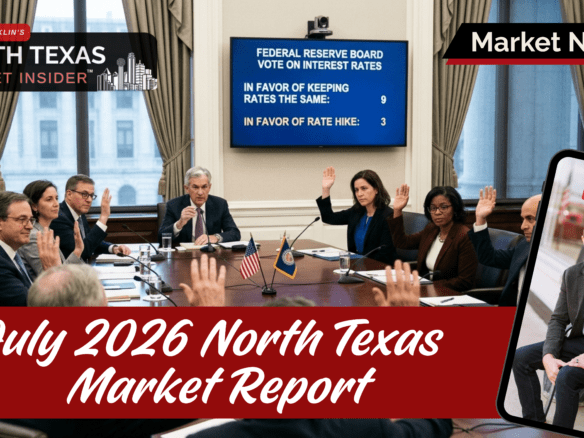
June 16 and 17 brought the first Federal Reserve meeting under new Chair Kevin Warsh, and he used it to deliver a message the market did not want to hear. The Fed held its benchmark rate steady, which surprised no one. What surprised everyone was the projection that came with it. Back in March, the Fed’s own dot plot had penciled in rate cuts for 2026. In June, that projection flipped. The committee now signaled that the next move on rates is more likely to be up than down, with a meaningful share of officials projecting at least one hike before year-end and some projecting two.
Warsh set a tone to match. He stripped the Fed’s statement down to the studs, killed the forward guidance the market had leaned on for years, and told the room in his first press conference that this committee will deliver price stability. Translation for anyone with a mortgage in their future: inflation is still the enemy, and I am not going to bail you out with cuts just because a ceasefire got signed. The market got the message immediately. Stocks dropped, short-term Treasury yields jumped, and the door to 2026 rate cuts, which buyers had treated as a certainty, quietly closed.
He had reason to be stubborn, at least on the surface. The headline inflation reading released in June showed consumer prices up 4.2% from a year earlier, the hottest in years, with energy costs doing most of the damage. Here is the nuance that matters, and that almost nobody reported. That 4.2% is the all-items number, the one that includes volatile food and energy. Strip out that energy piece and look at core inflation, the measure the Fed actually watches most closely, and it was running far cooler, closer to 2.9%, with the monthly pace easing to a mild 0.2%. In other words, the scary headline number was a war-and-oil story, and the war-and-oil story was already reversing in real time. A patient Fed might have looked through it and waited for the energy spike to wash out of the data. Warsh’s Fed chose not to blink, and that choice is now the single biggest force sitting on your mortgage rate. Not Iran. Not oil. The Fed.
What this means for the rest of 2026 is worth saying out loud, because it reframes every decision a buyer or seller is weighing right now. For two years the entire housing market has been running on a single assumption: rates are coming down, it is only a question of when. Warsh just took a hammer to that assumption. When the Fed’s own projections shift from cuts to hikes, the people waiting on the sidelines for cheaper money are no longer being patient, they are being stranded. Yes, the Fed could still pivot later in the year if core inflation keeps cooling and hiring slows.
That is a real possibility, but definitely not a promise. It’s also a hypothetical future meeting on a calendar, not a plan you can build a home purchase around today. Betting your move on it is betting on a maybe while the certain opportunity in front of you expires. The market gave you a clear signal in June, and the signal was stop waiting on the Fed and rates. That’s not necessarily bad news and it provides a lot of clarity. Anyone actually trying to make a move knows that clarity is far more valuable than hope. Every month you spend waiting on a Fed cut that may never come is a month of buyer leverage you are handing back for free.
The National Market Quietly Got Its Legs Back
While all of that drama played out at the top, something quieter and more important happened underneath. National housing demand, which had been frozen by spring’s fear, started to thaw.
The existing-home sales data released in June climbed to a five-month high, with the national median price pushing to fresh record territory near $429,000. NAR’s Lawrence Yun said more Americans are on the move, and the data backed him up. Pending sales rose across every region of the country. Mortgage applications to buy a home ran ahead of last year’s pace for weeks on end, with the Mortgage Bankers Association reporting purchase demand holding above 2025 levels even with rates stuck in the mid-sixes. Buyers stopped waiting for permission and started transacting.
The supply side, though, looked ugly, and that tension is the whole national story right now. Housing starts collapsed to a five-year low, and builder confidence sank again, with the National Association of Home Builders index sliding to 35 and staying pinned below the neutral line for the fourteenth straight month. Builders are building less. New-home sales pulled back as well, leaving builders sitting on roughly ten months of unsold inventory, which is exactly why they are leaning so hard on price cuts and rate buydowns to move product. Buyers, for their part, are showing up anyway. Put firming demand on top of shrinking new supply and you get exactly what the national price data is showing: records, not declines.
Sit with how strange that combination is, because it is the key to understanding this entire market. Normally, when builders pull back and confidence craters, it is because demand has died. This time demand is doing the opposite. It is recovering. The pullback in construction is about cost, regulation, and caution, not about a missing buyer. That is why the doom narrative keeps getting the story wrong. A market with collapsing starts and rising sales and record prices is not a market falling apart. It is a market where too little supply is meeting stubborn demand, and that is a recipe for firm prices nationally for a long time to come. I made this same structural argument in my breakdown of why this housing market is not going to crash, and June did nothing but reinforce it.
That is the national picture. Demand recovering, supply tightening, prices at all-time highs. Now here is where North Texas tells a completely different story, and where the opportunity lives.
North Texas Is Diverging From the Nation, and That Is Good News for Buyers

The country is one housing market only in the imagination of national headline writers. On the ground it is thousands of markets moving in different directions, and in June the gap between the national story and the North Texas story got a lot wider.
While national prices printed record highs, Dallas home values were running below where they sat a year ago, down roughly 1.6% year over year in the closely watched Case-Shiller data, placing Dallas among a small group of major metros where prices are actually softening while most of the country climbs. That divergence is not a weakness. It is a door. It exists because North Texas did the responsible thing over the last few years and built, and that inventory is now giving buyers something buyers in supply-starved markets can only dream about: choice, time, and leverage.
The early June read on our local market, drawn from NTREIS data compiled through the end of the month, shows a metroplex effectively running at three speeds. Official association figures for June land later in July, so treat these as directional rather than final, but the shape of the market is already clear. Resale homes are carrying the volume, with closings holding up and inventory sitting near six months of supply while the typical home takes close to eight weeks to sell.
New construction is a different animal, with builders repricing and stacking incentives to keep spec inventory moving. Leasing, for its part, stays firmly in the landlord’s favor. Read across all three and the message for buyers is loud: you are negotiating from strength right now in a way you have not been able to for years. More than a few analysts have flagged Dallas as one of the strongest buyer’s markets among the nation’s largest metros, with sellers meaningfully outnumbering buyers.
You can watch these shifts unfold in real time on my live DFW market data page, which pulls current numbers across all of North Texas. The headline reads soft, but the opportunity reads wide open.
Let me put real meaning behind the phrase “buyer’s market,” because it gets thrown around until it stops meaning anything. Six months of inventory means that if not a single new home came on the market, it would take half a year to sell everything already listed. A few of years ago during the COVID boom, that number was closer to one month, when buyers waived inspections and wrote offers over asking on homes they had seen for ten minutes. At six months, the pressure is off the buyer and squarely on the seller, and every week a home sits is another week of leverage sliding toward whoever finally writes the offer. Eight weeks on market means the average seller is waiting two full months for a contract, watching comparable homes cut their prices around them and their realistic sales price go down with them.
This is not a market you rush into. It is a market you negotiate, and the buyers who understand the difference are quietly getting terms this month that were unthinkable during the frenzy. The three-speed split matters too, because it tells you where to hunt. Resale sellers who have been sitting more than 2 months are the most motivated. Builders with standing spec inventory are the most flexible on buydowns and credits. Knowing which door to knock on is half the game, and it is exactly the kind of read a national headline will never give you.
What June Hands the North Texas Buyer

Let me be direct, because softening this would cost you money. If you are a serious buyer in North Texas, June just clarified your situation, and the clarity is a gift.
Stop waiting for the war to fix your rate. The fighting paused and your rate did not move, so that trade is dead. Worse, the Fed is now openly signaling that the next move could be a hike, which means the people sitting on the sidelines betting on a rate crash may be waiting for a train that has already left in the other direction. The smart response is to stop trying to time the rate and start using the market you actually have. That market is stuffed with buyer leverage.
With ample inventory and homes sitting closer to two months on market, buyers hold the cards on price, on closing-cost credits, on repairs, and on the single most powerful tool in a mid-six-percent environment: the rate buydown. This is not wishful thinking, it is what the builders themselves are telling us they are doing. Nationally, more than 6 in 10 builders were offering sales incentives in June and roughly a third were cutting prices outright, and that behavior is even more aggressive locally, where builders are sitting on spec inventory they need to move before the next quarter. A builder-paid or seller-paid buydown can pull your effective rate well under that headline number for the early years of your loan, which is how you win on affordability today instead of waiting on a Fed that has told you it is in no hurry to help. On a typical Ellis County new build, that single concession can be worth more to your monthly payment than a half-point drop in the market rate you keep hoping for, and unlike that hoped-for drop, it is actually on the table right now.
None of that leverage matters, though, if your financing is not locked and loaded before you write an offer. Get fully pre-approved first so you can move the moment the right home shows up. I work with three lenders who understand this market and structure these buydowns the right way:
Andrew Bryan — andrewthelender.com | Jennifer Nelson — eustismortgage.com | Taylor Fruge — lower.com
If land or new construction is your lane, the leverage runs even deeper there, and the south DFW corridor’s long game is land. My complete guide to purchasing land in North Texas walks through ag exemptions, utilities, and where the growth is actually heading, because the buyers positioning in the right spots today are the ones who look brilliant in five years.
What June Hands the North Texas Seller

Sellers, this is the honest read, and I would rather you hear it from me than learn it after ninety days of silence.
The buyers are back. That much is real, and it is genuinely good news. The homes that are moving are the ones priced to the market that exists in June of 2026, not the market that existed at the peak. With lots of inventory and buyers holding leverage, the cost of overpricing is no longer a slow drip. It is a stalled listing, a stale calendar, and a run of price cuts that broadcasts weakness to every buyer’s agent in the metroplex. The seller who prices to yesterday funds a price-drop spiral. The seller who prices to today gets the offer.
The winning approach has not changed, it has just gotten less forgiving. Price to the current comparable sales, present the home in genuine move-in condition, and be ready to offer the same concessions the builders down the street are offering, including a buydown. Unfortunately, most sellers can’t offer $20,000 in closing costs and a fixed rate by down. That’s where new construction is really beating preowned sellers right now. What you can do is price at least $50,000 below comparable new construction and partner with a lender who will give a temporary rate buydown.
I lay out the full framework in my guide to pricing strategies for North Texas sellers, and if you want the tactical prep list before you ever hit the market, my home sellers’ checklist walks it room by room. Price it right on day one and you skip the bleed entirely. The demand is out there. Give a buyer a reason to choose your home over the three others they are weighing, and you are the one that closes.
If You Are Moving to North Texas From Out of State, June Made Your Case Stronger

A large share of the people I help are not moving across town. They are moving across the country, from California, Colorado, Washington, Arizona, and Utah, and a number of them are coming home from postings overseas. If that describes you, the national-versus-local split I just walked through is not an abstraction. It is the entire financial argument for your move, and June sharpened it.
Look at the contrast through your own eyes for a second. The national market just printed record prices. The coastal metros most people are leaving are the very places where affordability has completely broken. North Texas, by contrast, is a rare major market where prices are flat to softening, inventory is deep, and sellers are actively negotiating. You are not chasing a hot market and praying you did not overpay at the top. You are stepping into a genuine buyer’s market, in a state with no income tax, where your dollar buys dramatically more home on dramatically more land than it did wherever you are reading this from.
To put it bluntly: what buys you a dated condo in California buys you a brand-new house, a yard, and a driveway here, and Texas never touches your paycheck on the way. That gap is not small. For families relocating from the coasts, it is frequently the difference between a cramped starter home and a brand-new build with a yard in a corridor that is actively growing around them.
Then layer the timing on top of the math. You are arriving at the exact moment the rate-relief crowd is frozen on the sidelines, which means less competition for you, more attention from sellers, and builder incentives that a local buyer waiting for a Fed cut is too distracted to go claim.
The one piece of advice I give every relocating buyer is this. Do not let the national rate headline you read in your current city make your decision for you. The number that matters is not the average national rate, it is your effective rate after a builder or seller buydown, measured against a Texas cost of living, on a home in a corridor absorbing billions in permanent investment. Run that full picture before you decide anything, because most people who do are stunned at how far ahead the move actually puts them.
The Part Nobody on Your Feed Is Tracking: Ellis County Keeps Winning
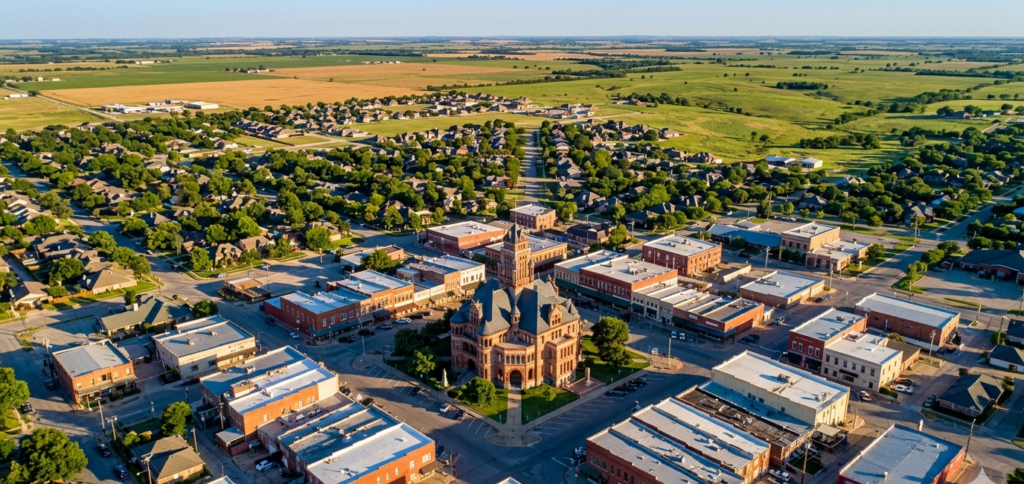
Here is the piece that makes the monthly rate noise almost irrelevant to me, because this is the intelligence nobody else in this market is delivering. None of what follows broke as a June headline. These are the ongoing engines that keep humming underneath the monthly noise, the reason a soft print on rates or pending sales does not shake my read on this corridor one bit. While the headlines argued about the Fed and the Middle East, the biggest names on earth kept pouring capital into the ground south of Dallas.
Construction continues on Google’s fifth building at its Midlothian campus, an $880 million data center that is one piece of the $40 billion Google committed to Texas, a commitment anchored right here in our corridor and standing as the company’s single largest investment in any state. Healthcare is following the rooftops. Baylor Scott & White’s Waxahachie campus is finishing a roughly $240 million expansion, with a new six-story tower on track to open this fall adding dozens of beds along with expanded emergency and intensive-care capacity. Major hospitals do not spend a quarter of a billion dollars in places they expect to shrink.
The residential pipeline matches the commercial momentum. A 3,170-acre master-planned community approved in Waxahachie earlier this year will eventually bring more than 13,000 homes to the area, the largest development in the city’s history. Down the corridor, the 5,200-acre South Creek Ranch project in Ferris keeps reshaping the southern end, and a proposed tollway extension through Ellis County would stitch the region together even tighter. Every one of these is a jobs magnet, and every job is a future buyer.
This is the five-steps-ahead read. The rate noise is temporary and it is now driven by a Fed that will eventually pivot. Data centers, hospitals, master-planned communities, and new highways are permanent, and they are all pointing in the same direction towards Ellis County. The floor under this corridor is rising while the short-term headlines tell everyone to wait. Whether your search points to Waxahachie, Midlothian, or Red Oak, the structural story is the same, and it is getting stronger by the quarter.
The Move That Puts You Five Steps Ahead

Pull it all together and June wrote a lesson in plain language for anyone willing to read it.
The thing everyone was waiting for happened. The fighting paused, oil crashed, and the rate relief never came, because the crowd was watching the wrong variable the entire time. Then came the exclamation point. Within weeks, the ceasefire cracked, the fighting flared back up, and the same rates that would not fall on June’s good news began climbing on July’s bad news. The geopolitics whipsawed a full cycle in a matter of weeks. Through all of it, two things never wavered: the Fed’s posture and the leverage sitting in your own market.
Rates are a Fed story now, not a war story, and the Fed just told you it is thinking about hikes, not cuts. So the sideline strategy of waiting for a rate drop is not just passive, it is aimed at a target that keeps moving. Meanwhile the national market climbed to record prices while North Texas quietly handed buyers the strongest negotiating position they have had in years, on top of a corridor absorbing billions in permanent investment.
The prepared buyer stops waiting and starts using the leverage that is sitting right in front of them, because that leverage evaporates the moment the Fed does finally pivot and the sideline crowd floods back in all at once. Picture that day for a second. Rates tick down, the headlines turn euphoric, and every buyer who spent 2026 waiting rushes back into the same corridor at the same time, bidding against each other for the same homes you could be negotiating on today with almost no competition. That is the trade. Leverage now, or a bidding war later. The smart seller stops pricing to memory and starts pricing to the buyers who are actually shopping today. Both moves require the same thing: reading the market for what it is instead of what the headlines say it is.
That is the whole game, and it is exactly the kind of moment that builds real estate fortunes for the people paying attention while everyone else waits for a signal that is not coming. If you want to know precisely where your home stands in today’s numbers, or which corridor opportunities fit your situation before the crowd catches on, the live DFW market data is updated for you, and I am one call away. Let’s get you five steps ahead.
Bobby Franklin, REALTOR®
Legacy Realty Group – Leslie Majors Team
📲 214-228-0003 | northtexasmarketinsider.com
Lender recommendations reflect expertise and service only, and I receive no compensation for referrals. Market data is current as of publication and subject to change, nothing here is financial, legal, or investment advice, and all real estate services are provided in full compliance with the Fair Housing Act and TREC.