By Bobby Franklin, REALTOR® | North Texas Market Insider™ | Legacy Realty Group – Leslie Majors Team
Serving Ellis County, Waxahachie, Midlothian, DeSoto, Ennis, and the Greater DFW Metroplex | 214-228-0003 | northtexasmarketinsider.com
Last updated: June 16, 2026
Here is the thing most buyers in Ellis County will find out a week too late. The single most consequential housing bill in a generation is sitting on the Senate floor right now, and the vote that reshapes who gets to buy a starter home in North Texas is the next and final step before it reaches the President’s desk. While other agents wait for the headline, we’re going to dissect the play before it happens.
The bill in question is the 21st Century ROAD to Housing Act, and its centerpiece is a hard cap on Wall Street’s ability to buy up single-family homes. If you are looking to buy in Waxahachie, sell in Midlothian, or relocate to DeSoto or Ennis, this legislation changes your competition, your inventory, and your timeline.
Here is my read in one line: This cap will not flood the MLS, but it quietly reopens the entry-level lane in the exact North Texas counties where institutions bought hardest, and the smart move is to get positioned now, while that relief is still priced at zero.

Where This Actually Stands Right Now
Let me give it to you straight, because intelligence beats hype every time and the timeline is the whole story.
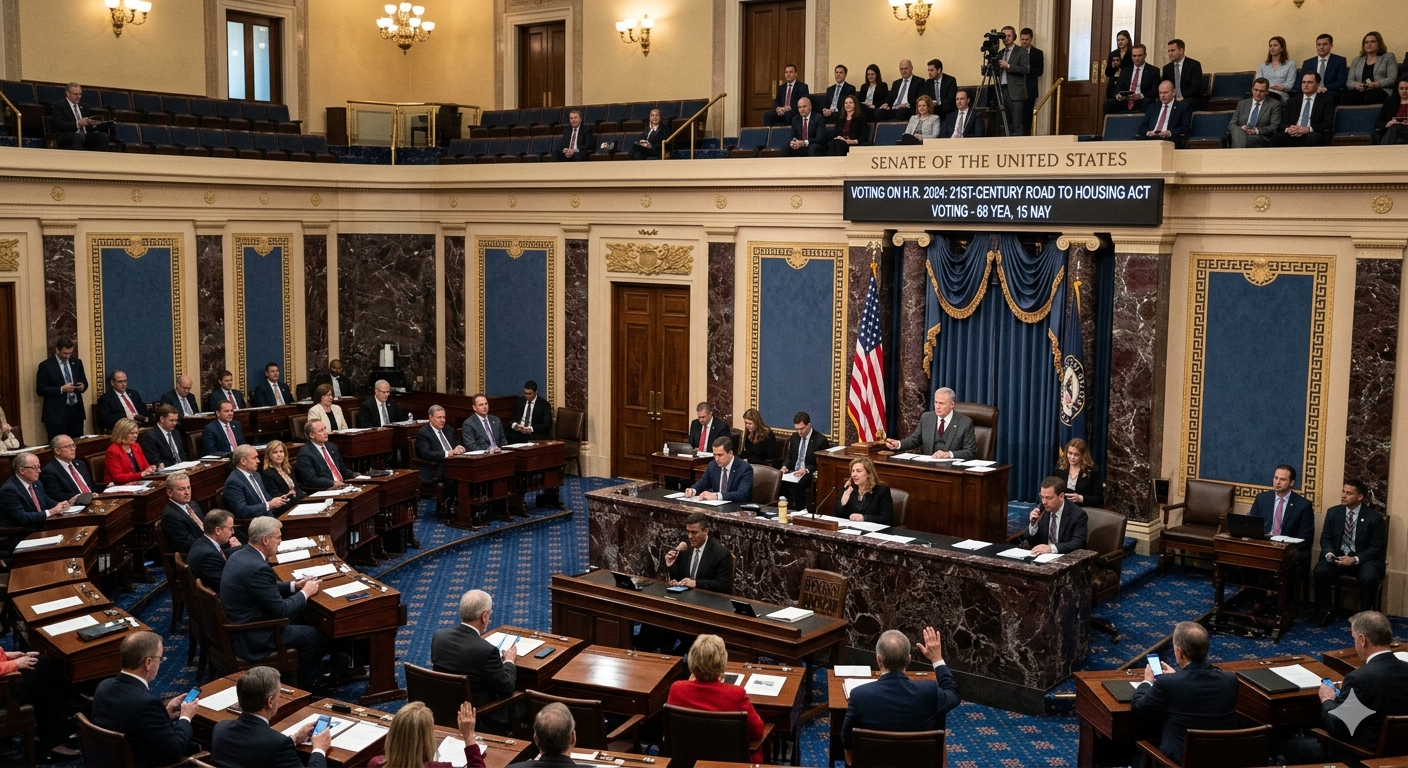
This bill has cleared both chambers once already. The House passed its version 396-13 on May 20, 2026, and because the House amended it, the bill went back to the Senate for a final vote. The Senate had passed its own version 89-10 back on March 12. Two chambers, two lopsided bipartisan margins, one bill still just one step short of the President’s desk.
What changed this week is the part that matters. After negotiations between Senate and House leadership, a compromise version is headed back to the Senate floor for what is now the bill’s final step, a decisive Senate vote, and the White House has signaled support for the new package. The compromise leaves the investor restriction intact. The most controversial provision in the entire bill survived the negotiating table, which means the people writing the final language decided the institutional-buyer cap is not a bargaining chip, but rather a cornerstone of the bill.
So the honest status is this: not signed, not final, but closer than it has ever been, with the deciding vote in motion as you read this. That is not a reason to wait, but rather it’s a reason to position now, while the rest of the market is still asleep on it.
What the 21st Century ROAD to Housing Act Does
North Texas Market Insider™ · Legislative Briefing
The 21st Century ROAD to Housing Act
A bipartisan framework to expand housing supply, widen access, and stop Wall Street from outbidding families for starter homes.
H.R. 6644 / S.Amdt. 4308
The Congressional Journey
What’s Inside the Bill
Homeownership for Main Street
- Caps large institutional investors. Once an entity controls 350+ single-family homes, it cannot buy more existing ones.
- Build-to-rent and renovate-to-rent exemptions remain, with conditions.
- Small-dollar mortgage pilot for loans under $100k, plus stronger housing counseling oversight.
Building More in America
- Streamlined permitting and NEPA exemptions for small projects.
- Grants for pre-reviewed home designs, ADUs, and duplexes.
- Incentives for local zoning reform and affordable construction funding.
Modernizing Federal Programs
- Manufactured housing modernized, including homes built without a permanent chassis.
- Rural and USDA housing updates; HOME program reauthorized.
- CDBG-DR disaster recovery permanently authorized, with a 3-year sunset.
Oversight, Accountability & Impact
- Annual testimony from federal housing regulators.
- Community bank relief, raising the public welfare investment cap to 20%.
- Veteran and heirs’-property tools, including a VASH income calculation update.
The North Texas Reality Check
Why this bill is personal here
Texas led the nation in institutional home buying, with investors taking 28% of 2021 home sales against a 13% national average. In the counties wrapping Ellis County, the share ran far higher.
What it means for you: The cap won’t flood the MLS overnight, but it reopens the entry-level lane in the exact markets where families were getting outbid. The move is to get positioned now, while that relief is still priced at zero.
Share of 2021 single-family home sales to institutional buyers, per National Association of REALTORS® data reported by WFAA and Texas Monthly. Bill status current as of June 16, 2026.
For informational purposes only; not legal or financial advice. Provided in compliance with the Fair Housing Act, RESPA, the NAR Code of Ethics, and TREC advertising policies.
ROAD stands for Renewing Opportunity in the American Dream. The bill is the product of genuinely bipartisan work, co-led in the Senate by Chairman Tim Scott (R-SC) and Ranking Member Elizabeth Warren (D-MA), and advanced in the House under Financial Services Chair French Hill. It is not one narrow fix. It is a sweeping package that, by the National Low Income Housing Coalition’s count, runs to roughly 56 provisions across housing supply, manufactured housing, mortgage financing, rural housing, veteran housing, and community banking.
Three big things sit at the core:
- It restricts large institutional investors from buying additional single-family homes once they cross a defined threshold.
- It expands housing supply through permitting reform, new grant programs, and modernized federal programs.
- It widens financing access for first-time buyers, rural communities, and veterans.
The investor restriction traces directly to the White House. The bill is, in large part, a legislative response to the administration’s executive order aimed at stopping Wall Street from competing with Main Street homebuyers. The politics here are rare. Populist Democrats and the President landed on the same side of the same fight, which is exactly why this thing has bipartisan margins most legislation only dreams about.
The Investor Cap: What It Actually Prohibits

This is the headline, so let me be precise where precision matters.
Under the bill’s institutional-investor title, as analyzed by legal experts tracking the legislation, a large institutional investor is broadly defined as a for-profit entity in the business of owning or renting single-family homes that, alone or together with affiliated entities, controls 350 or more single-family homes. Once an entity crosses that line, it is barred from purchasing additional single-family homes, and the legislation carries steep civil penalties for violations. Treat the specific threshold and penalty figures as reflecting the versions analyzed to date, with final numbers tracking the bill as ultimately passed.
Two features make this real rather than symbolic. First, the threshold counts affiliated entities together, which closes the obvious workaround of spinning up shell LLCs to stay under the cap. Second, the penalties are written with teeth, not as a cost-of-doing-business line item.
There are meaningful exceptions, and you need to know them because they shape what you will still see getting built:
- Build-to-rent (BTR): Newly constructed homes built specifically as rentals remain allowed.
- Renovate-to-rent: Major rehabilitation projects qualify.
- Newly built or renovated homes for sale: Allowed, provided they are not rented while pending sale.
- Homeownership pathway programs: Rent-to-own structures with down-payment support are exempt.
- Age-restricted (55+) communities: Exempt.
The single biggest change between the House and Senate versions, and the one that carried into the compromise, was the removal of a mandatory resale clock for build-to-rent homes. The Senate had wanted BTR homes eventually sold to individual owners. The House stripped that requirement after heavy pressure from the institutional rental industry, which fought to protect its build-to-rent pipeline and won. Call it what it is. This is the loophole, and it is the single biggest reason the bill’s reach is narrower than the headlines suggest. Industry leaders framed the change as preserving build-to-rent production, which is true, and it is also exactly how a carve-out gets sold. Hold onto that detail. It is the seam where the honest limitations of this bill live, and we will come back to it.
Why North Texas Is Ground Zero
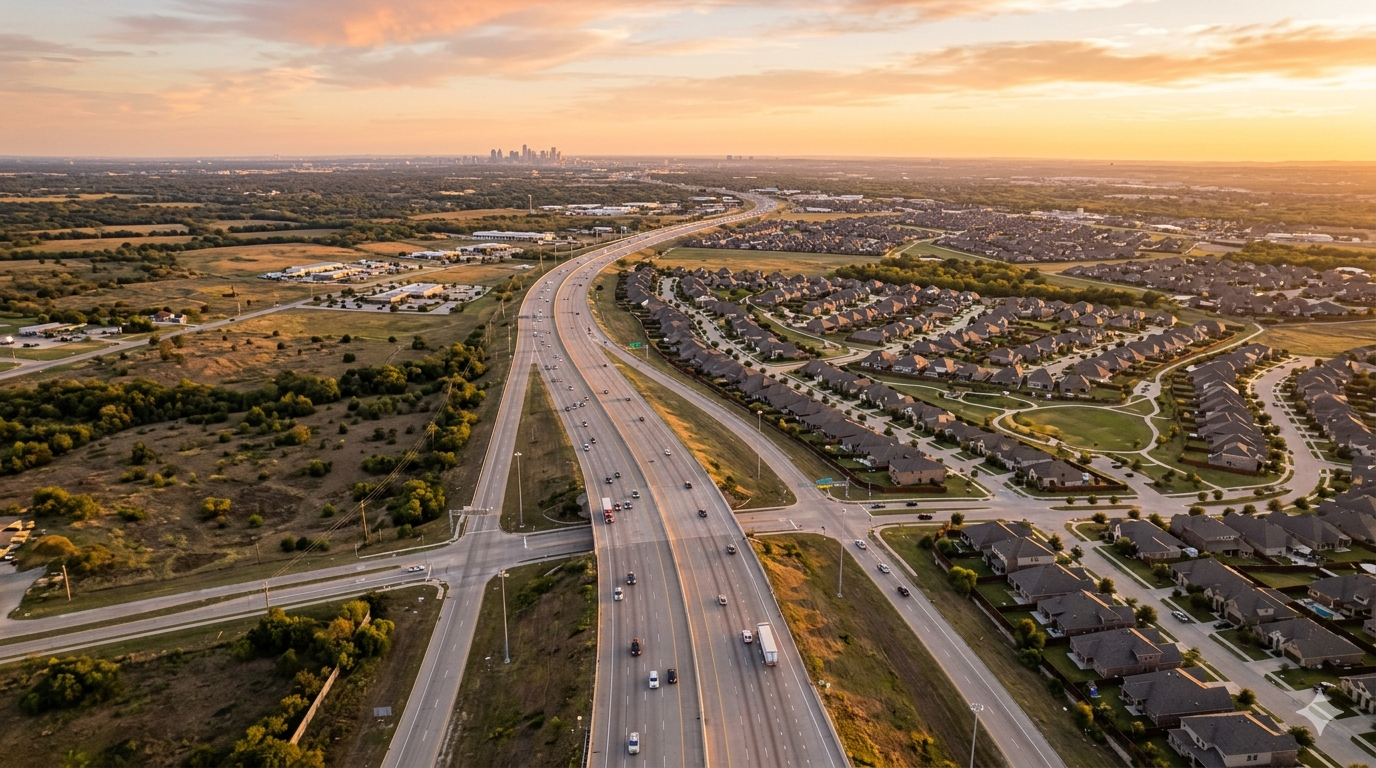
Here is where this stops being a Washington story and becomes a story about your subdivision.
Texas led the entire nation in institutional home buying during the pandemic surge. A landmark National Association of REALTORS® study found that institutional buyers purchased 28% of all homes sold in Texas in 2021, against a national average near 13%. Texas did not edge out the rest of the country. It more than doubled it.
Now look at where the buying concentrated, because the NAR county data reads like a map of the DFW commuter belt. According to that same reporting, institutional investors bought 52% of homes in Tarrant County and 43% in Dallas County in 2021, with Johnson County at 48%, Rockwall at 45%, Denton at 39%, and Kaufman at 38%. Read those numbers again. In Tarrant County, more than half of homes sold went to a corporate buyer. These are the counties that wrap directly around Ellis County, the same growth corridor your buyers are competing in every weekend.
The damage was surgical, not random. The NAR research found that the median price institutional buyers paid was typically about 26% below the state median, and in Texas specifically investors paid a steep premium to win those entry-level homes. Translate that out of economist language: hedge funds aimed their cash at the exact starter homes first-time buyers in Waxahachie and Ennis need most, and then outbid those families to get them.
This is not a fringe concern in Dallas, because it caught the attention of legislators in Austin. It reached the Texas Senate floor, where Senator Bryan Hughes pressed the point directly, noting that 28% of homes purchased in Texas in 2021 went to large institutional buyers, the highest rate in the nation. That is the exact problem this federal bill is built to attack.
The Part Other Agents Will Not Tell You

Real market intelligence means bringing up the inconvenient things too when necessary, so here it is.
This bill does not force existing investors to sell a single home. An entity sitting on 5,000 houses keeps all 5,000. The cap is forward-looking only, which means the supply relief arrives gradually rather than as a flood of listings next month. Anyone promising you a wave of investor homes hitting the MLS in July is selling a fantasy.
The bigger asterisk is build-to-rent. Because newly built rental homes are exempt and the resale clock got removed, the largest operators have a clean lane to keep producing rental communities. The honest read is that this restricts future bulk-buying of existing homes far more than it slows the institutions that already pivoted to building their own rental subdivisions. The Bipartisan Policy Center’s section-by-section breakdown lays out how much of the package is supply-side reform rather than a pure investor lockout, and that framing is the accurate one.
So what does this actually do for North Texas? It rebalances the entry-level fight. New subdivisions become far less likely to get bulk-purchased before they open, starter inventory faces less all-cash institutional pressure over time, and the family-to-family transaction starts becoming the norm again in the price bands where it had nearly vanished. Gradual, structural and real but not overnight.
What This Means If You Are Buying in North Texas

The math is shifting in your favor, and the buyers who move while the shift is still early are the ones who win.
Less all-cash competition at the entry level. Institutional buyers flooding starter homes with cash making as-is offers is one of the primary reasons families have been outbid for years. Capping future acquisitions pulls that buyer category out of your competition pool over time.
More access in new construction. Builders across Ellis County and southern DFW have watched institutions sweep entire phases before communities opened. The 350-home cap means any large operator near that limit cannot keep doing it. The complete North Texas new construction timeline walks you through every stage where that bulk-buying used to lock individual buyers out.
Healthier appreciation, not chaos. Independent of this bill, the Texas Real Estate Research Center at Texas A&M has been forecasting a steady appreciation range for the period ahead. Easing institutional bidding pressure supports that trajectory rather than the volatile spikes institutional demand once fueled. That is the kind of resale environment that builds equity you can count on.
Current conditions back the move. The DFW market is running around 4.3 months of inventory with mid-6% mortgage rates, a far more balanced field than the one-month inventory crush of 2021. For a buyer eyeing Waxahachie’s new construction or the resale market in Red Oak, this is the most workable entry point since before the pandemic.
What This Means If You Are Selling

Sellers, this works in your favor too, just not the way the panic crowd assumes.
The myth says institutional investors propped up your value, so restricting them will hurt you. The reality is that institutions bought entry-level homes, the ones averaging well below median price. They were rarely the buyers for the $400,000 to $600,000 move-up homes most North Texas sellers list. Their effect on your value was indirect. By trapping first-time buyers in rentals, they shrank the pool of future move-up buyers for your home.
Flip that dynamic and the picture gets better for you. When first-time buyers can actually purchase starter homes, they build equity, and in five to seven years they become the move-up buyers competing for your Midlothian or Waxahachie listing. The investor cap is not a threat to your equity. It is the front end of a healthier buyer pipeline.
What still decides your outcome is pricing discipline. With inventory around 4.3 months and days on market stretching in many DFW submarkets, overpricing remains the fastest way to leave money on the table. The seller resources on this site cover the pricing strategy that gets homes sold instead of sitting.
What This Means If You Are an Investor
Small investors can exhale. The cap targets entities controlling 350 or more homes. If you own one to ten rental properties in North Texas, nothing about your strategy needs to change.
If your portfolio is approaching the threshold, the clock matters. Get legal counsel reviewing your compliance position before the bill’s effective window starts running. Build-to-rent remains the open lane, which is precisely where institutional capital will concentrate going forward.
Texas Programs That Stack On Top of This Bill

Federal legislation does not operate in a vacuum. It layers on existing state programs that already give North Texas buyers an edge.
The Texas State Affordable Housing Corporation runs the Homes for Texas Heroes and Home Sweet Texas programs, offering down payment assistance as grants or deferred liens that pair with FHA, VA, USDA, and conventional loans. The Texas Department of Housing and Community Affairs My First Texas Home program adds up to 5% down payment assistance through a no-payment second lien, plus the Mortgage Credit Certificate that converts a slice of your annual mortgage interest into a dollar-for-dollar federal tax credit.
For veterans and buyers in qualifying rural tracts, VA and USDA loans still offer zero-down purchase options, and parts of Ellis and Johnson counties sit inside USDA-eligible areas that most online calculators miss entirely. The 2026 conforming loan limit rose again as well, pulling more move-up buyers into conventional financing without jumbo-rate penalties.
To see how these stack for your situation, start with the First-Time Home Buyer guide on North Texas Market Insider, then call me at 214-228-0003 to run your actual numbers.
When Would This Take Effect
The investor restrictions are written to take effect on a defined runway after enactment, not the day the President signs. Existing investors face no forced divestiture. Annual reporting requirements to HUD kick in for entities over the threshold, and the supply-side reforms, including the HOME program updates and manufactured housing modernization, phase in on their own timelines.
The near-term trigger to watch is the bill’s final Senate vote, which is the next step in the process. If it passes the compromise, the bill heads to the President, who has championed the investor cap from the start. For the live status of this bill, monitor the Senate Banking Committee and the bill’s official page on Congress.gov. I will issue an update article the moment the vote lands.
The Bottom Line: What To Do Right Now

First-time buyers: Get pre-approved this week, before the news goes mainstream and demand stiffens. Target Ellis County, where Waxahachie and Midlothian offer the best mix of new construction, school strength, and commuter access under $400,000. Do not wait for rates to drop a quarter point while inventory tightens against you.
Move-up buyers: The window is open right now. Balanced inventory, motivated sellers, and builder incentives sit in front of a market that has not yet repriced for the demand this bill will eventually unlock.
Sellers: Price right from day one and understand that your future buyer pool grows as first-time buyers regain access. Time is on your side strategically, but only if your pricing is disciplined today.
The agents who read the board early are the ones who put clients in position before the rest of the market reacts.
Frequently Asked Questions

What does the 21st Century ROAD to Housing Act do?
It is a bipartisan housing package that restricts large institutional investors, those controlling 350 or more single-family homes, from buying additional homes, while expanding housing supply through permitting reform and modernized federal programs and widening financing access for first-time buyers and veterans.
Has the bill become law yet?
Not yet. As of June 16, 2026, the House passed its amended version 396-13 and the Senate is positioned to take a final vote on a negotiated compromise. If the Senate passes it, the bill goes to the President’s desk.
How many homes can investors own under the new law?
Investors keep every home they own before the effective date, with no forced sale. Going forward, an entity controlling 350 or more single-family homes cannot purchase additional ones, and affiliated entities are counted together.
Does the bill force investors to sell homes they already own?
No. The restriction is entirely forward-looking and applies only to future acquisitions after the effective date.
Will this make homes cheaper in North Texas right away?
No. The relief is gradual. Because existing portfolios are untouched, there is no sudden surge of listings. Over time, less institutional competition for entry-level homes should ease bidding pressure on starter inventory.
Can institutional investors still build rental homes?
Yes. Build-to-rent is exempt. Large operators can keep developing newly built rental communities. What they cannot do is bulk-purchase existing single-family homes once over the cap.
Why was Texas so affected by institutional buying?
Texas led the nation, with institutional buyers accounting for 28% of 2021 home sales against a national average near 13%, and several North Texas counties ran far higher, including Tarrant at 52% and Johnson at 48%.
Is this bill good or bad for homebuyers?
For most individual buyers, especially first-time buyers in markets like North Texas, it is a structural positive. The main criticism is that the build-to-rent exemption limits its effect on operators who already shifted to building rentals.
Ready To Move Forward?
Whether you are a first-time buyer navigating this new environment, a seller timing your exit in a balanced market, or an investor recalibrating under the new rules, the right intelligence and the right advisor are the difference between an average outcome and an exceptional one.
Before you tour a single home, get your financing locked. I recommend these lenders based on their expertise and service, and I do not receive compensation for referrals:
Andrew Bryan — Miramar Mortgage | andrewthelender.com |
Jennifer Nelson — Eustis Mortgage | eustismortgage.com |
Taylor Fruge — Lower Mortgage | lower.com.
Bobby Franklin is a licensed Texas REALTOR® with Legacy Realty Group – Leslie Majors Team, serving buyers and sellers across Ellis County, Waxahachie, Midlothian, DeSoto, Ennis, Arlington, and the greater DFW Metroplex. North Texas Market Insider™ delivers data-driven intelligence that keeps buyers, sellers, and investors five steps ahead of the market. Learn more about Bobby’s approach.
Bobby Franklin, REALTOR® | Legacy Realty Group – Leslie Majors Team
📲 214-228-0003 | northtexasmarketinsider.com
This article has been reviewed for compliance with the Fair Housing Act, RESPA, the NAR Code of Ethics, and Texas Real Estate Commission advertising policies. All content is original and created exclusively for North Texas Market Insider™. Nothing in this article constitutes legal or financial advice. Bobby Franklin proudly supports equal housing opportunity in accordance with the Fair Housing Act.