
By Bobby Franklin, REALTOR® | North Texas Market Insider™ | Legacy Realty Group – Leslie Majors Team
Serving Ellis County, DFW & Greater North Texas | 214-228-0003 | northtexasmarketinsider.com
Within forty-eight hours this week, both of downtown Dallas’s major sports franchises made their exits official, and most of the agents reacting to it are reading the wrong map entirely. The reflex is to call this a downtown story, when what it really confirms is that DFW stopped being a single-center metro years ago, and the money now lining up behind Plano and Far North Dallas is about to push value-seeking demand further south than the panic crowd is willing to admit. While everyone else argues about what happens to the condos around the American Airlines Center, the buyers who understand the bigger shift are already quietly positioning for it.
The Dallas Stars made it official on June 2, signing a nonbinding letter of intent for a proposed arena and entertainment district at The Shops at Willow Bend, a roughly 76-acre site at the northwest corner of Park Boulevard and the Dallas North Tollway. The arena itself is pegged at north of $1 billion, but the number the excited coverage tends to bury is the public one, because Plano would contribute up to $700 million through a tax increment reinvestment zone covering more than 900 acres, with the city owning the arena and the land and leasing it back to the team for roughly thirty years. None of it is settled yet, since Plano’s City Council votes on the deal on June 8, which makes this the opening move rather than the final whistle.
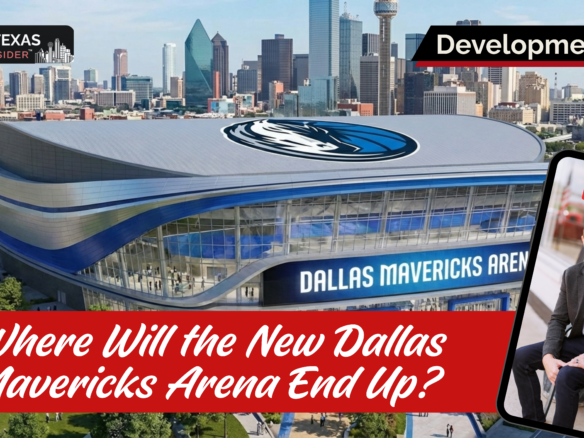
The Mavericks moved first, entering an option agreement on June 1 on roughly 104 acres of the former Valley View Mall site in Far North Dallas, near Interstate 635 and Preston Road, with a stated goal of opening their own arena district by the end of 2031. Their plan is privately driven so far, with no public-subsidy figure disclosed, though the site already sits inside an existing Dallas tax increment district that could supply public dollars down the line.
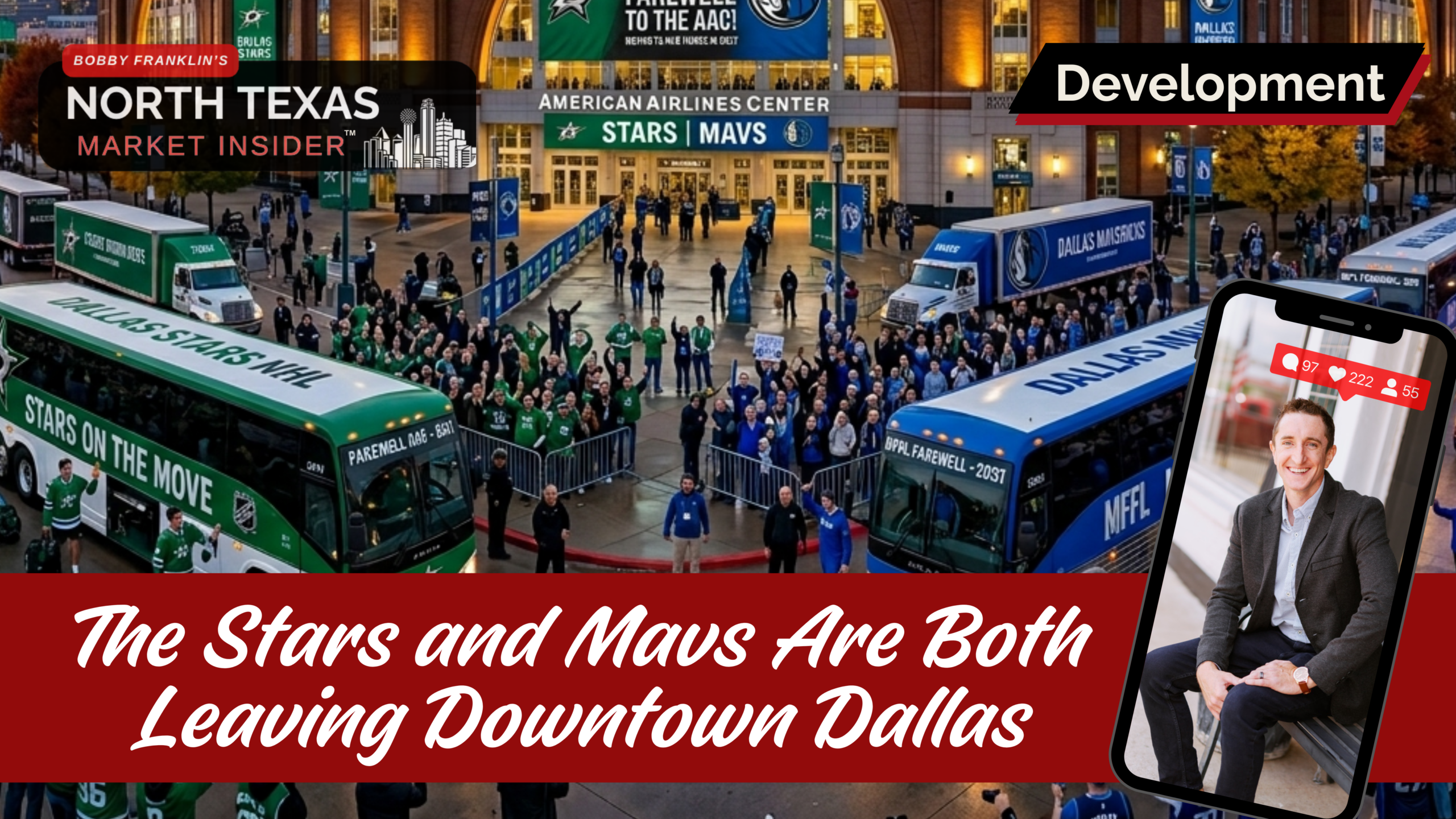
This is not an orderly relocation so much as a breakup. A Dallas business court judge ruled in May that the Mavericks, not the Stars, hold the right to control American Airlines Center, the Stars have appealed that ruling to the state appeals court, and the two former co-tenants are now building separate futures in opposite suburbs. Both teams remain bound to the AAC through their 2031 leases, which buys downtown a few more years of game nights, but the direction the money is flowing changed the moment that ruling came down.
The Signal Nobody Is Reading Correctly

Here is the read that sits five steps ahead of the headlines: the arenas were never the story, the map is.
When a metro loses both its NBA and NHL anchors out of a single downtown core, the lazy interpretation is decline, while the accurate one is dispersion. DFW long ago stopped being one center with suburbs orbiting it, and it now runs as a network of high-gravity nodes spread across multiple corridors, each of them pulling jobs, retail, hospitality, and rooftops toward itself. Plano and Far North Dallas both just got considerably stronger, while downtown is being asked to become a different kind of node altogether.
The directional read almost nobody in the sports coverage is making is that northern intensity pushes demand outward. As the northern corridors grow more expensive, more congested, and harder to win in, the households who want space, value, and a calmer pace of life keep doing exactly what they have done all cycle, which is to look south toward the I-35E corridor and Ellis County, where the same paycheck still buys a larger home, a bigger lot, and a shorter line at everything. The gap underneath that migration is structural rather than seasonal with the northern corridor (Plano / Frisco / Far North Dallas) selling around $230 -per square foot versus Ellis County at around $185 per square foot(cited from NTREIS on 06/04/2026). That spread is the engine, and every arena dollar concentrating in the north widens it, sending another wave of value-seeking buyers southward.
The obvious objection runs the other way, of course, pouring this much capital into Plano and Far North Dallas should make those corridors more desirable rather than less, pulling demand toward the amenities instead of away from them. That does hold true at the very top of the market, where the buyers who can pay the northern premium will gladly pay even more to sit next to the action, and that is precisely why the southern corridor wins underneath them. Every buyer who bids up a node-adjacent home in Plano or North Dallas raises the entry price for everyone behind them, and the buyers who get priced out of that bidding war don’t usually leave the metroplex, they simply move down the price ladder and out the northern corridor, which in this region means south. Amenity density lifts the few who can afford proximity while it quietly shuffles away everyone else. The arena moves were never a threat to the southern corridor in the first place; they are fuel for it.
That is the opportunity buried inside the chaos, because while the market litigates what happens to a handful of Victory Park high-rises, the far larger reallocation of demand is already underway across the entire region.
Why Arenas Move Home Values, and Why Proximity Alone Is a Trap
Sports venues can absolutely lift nearby residential values, and the research behind that is real. A study published in Land Economics and the broader body of work summarized by New Home Source point to price premiums of roughly 4 to 5 percent around successful stadium developments, with the strongest effects usually showing up within about a mile of the site.
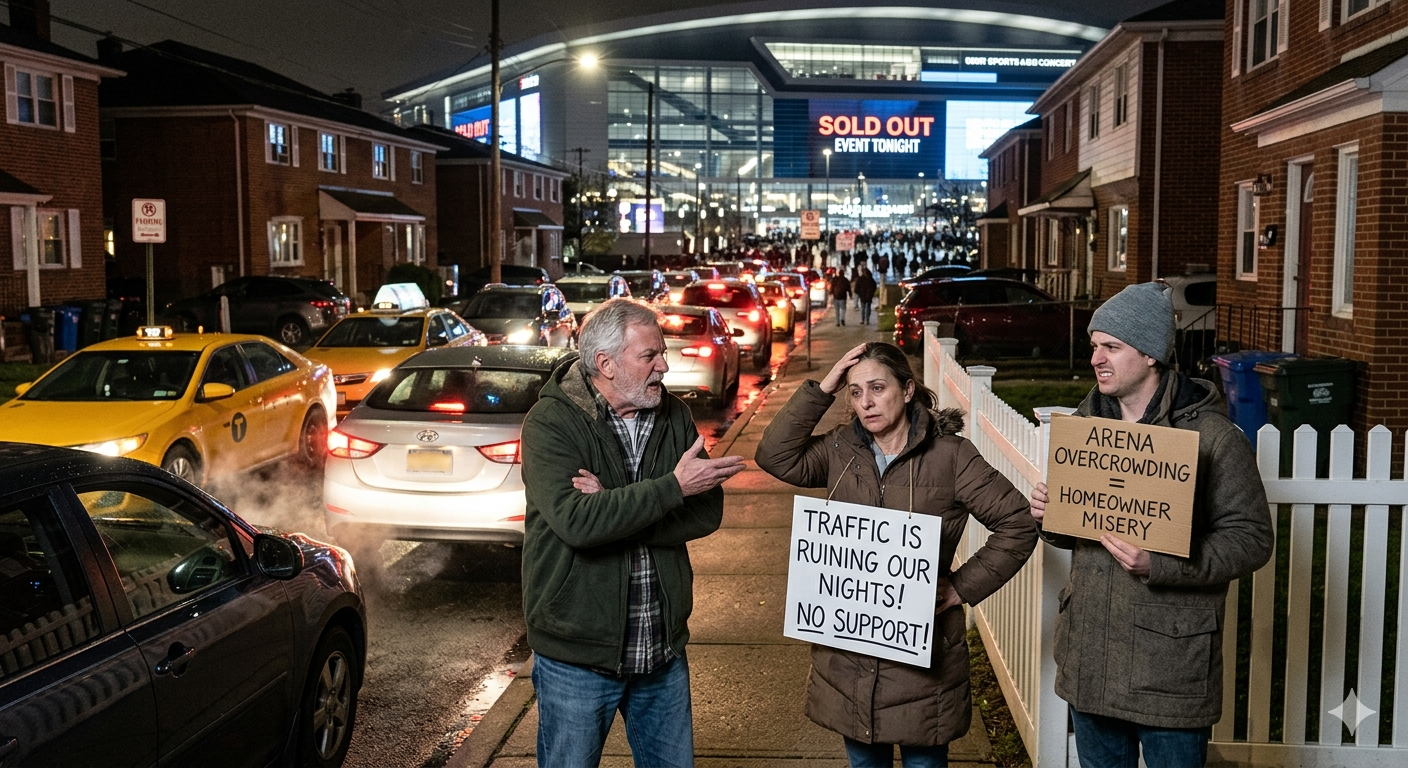
The premium is real, but it is earned rather than automatic. A venue lifts an area when it becomes part of a genuine destination, the kind built from restaurants, hotels, public space, and infrastructure that people actually want to live near, whereas a venue that lands as a stand-alone box surrounded by parking lots often delivers congestion, noise, and event-night headaches with none of the lifestyle payoff.
That distinction quietly reverses the obvious play, because the houses pressed right up against the arena are frequently not the winners at all. The homes that win are the ones a short drive out. They are close enough to capture the convenience and the prestige of the district, yet far enough away to keep their privacy and their parking. Adjacency to the front door often becomes a liability on game nights, while easy access from a quiet street, a bit further down, with strong schools is the asset that actually holds value.
The $700 Million Line Nobody Selling You This Will Say Out Loud
Here is the part the announcements and the non-stop local coverage skate right past. The Stars project keeps getting framed as a billion-dollar private investment, and that framing is doing a great deal of work, because up to $700 million of the surrounding district would be financed publicly through Plano’s reinvestment zone, with the city owning the building and the dirt beneath it. Field of Schemes, which tracks these arena deals nationally, points out that the $700 million covers public infrastructure while the interest on the debt is still listed as undetermined.
You are allowed to be excited about a new arena and clear-eyed about who pays for it at the same time. Decades of independent economic research land in roughly the same place, which is that public arena subsidies rarely return what they cost in fresh tax revenue or new jobs, and a widely cited survey of economists found overwhelming agreement that stadium subsidies are not worth the public price tag. None of that means the district fails or that nearby values cannot rise, it means the value, tends to come from the dining, hospitality, and housing that grow up around the building rather than from the building itself, and it means the taxpayer exposure is real no matter how the marketing reads.
For a homeowner, the practical translation is simple. Watch whether Plano actually approves the public money on June 8, watch whether the district fills in with the restaurants and rooftops that create lasting demand, and take with a grain of salt the press-release economics until that second-order development genuinely shows up.
Willow Bend and Plano: Who Actually Wins
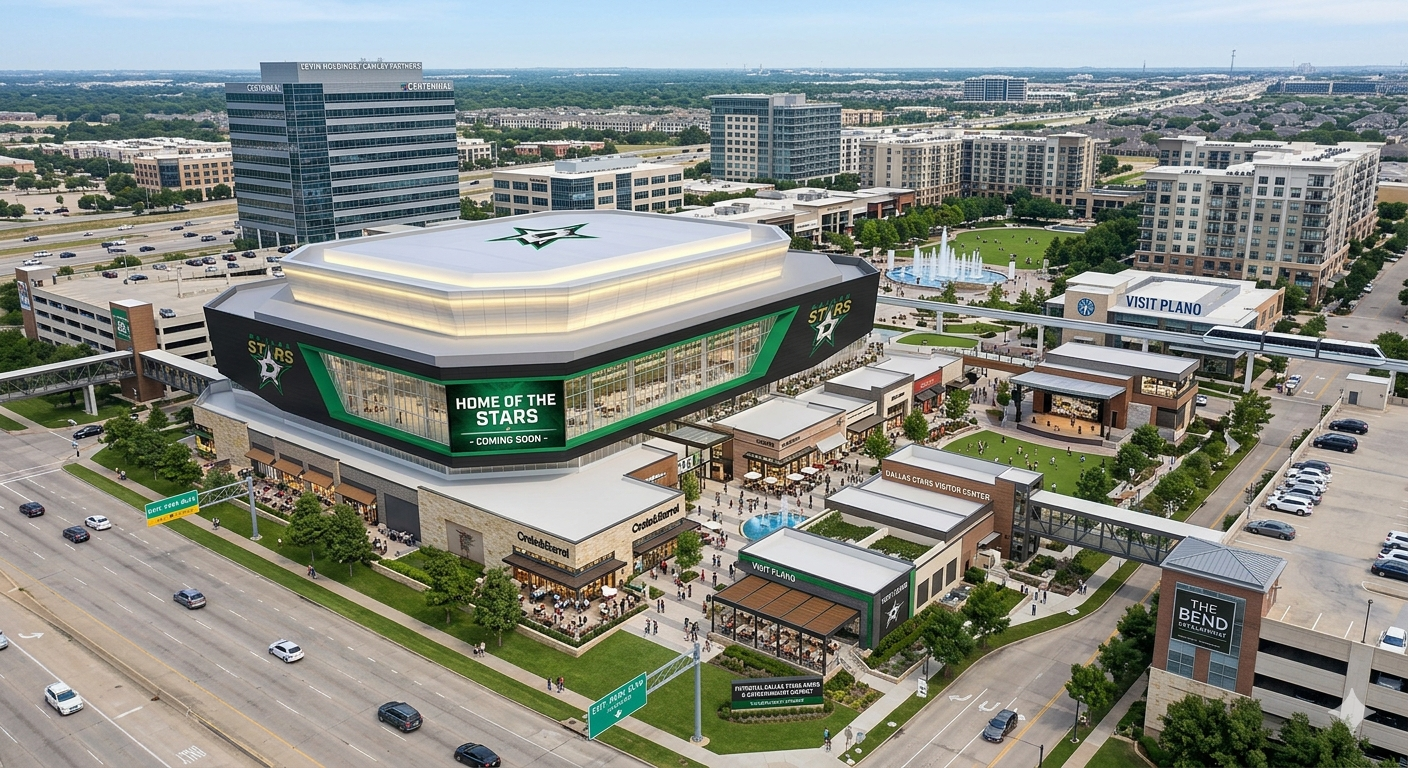
Willow Bend is not an empty parcel waiting for a use, it is a legacy regional mall still sitting on a premium Tollway-corridor location, and that gives it redevelopment leverage that smaller sites can only dream about. The plan in front of council right now pairs the arena with a separate $15 million agreement covering demolition of the old mall space and a new Visit Plano visitor center. The city’s own documents project roughly $2.4 billion in new development value across the zone, advanced alongside partners including Centennial, Levin Holdings, and Cawley Partners. A roughly 20,000-seat building with thousands of new premium and club seats is the revenue engine that makes the whole move worth it for ownership.
The Plano homeowners positioned to benefit most fall into a few clear profiles. Updated single-family homes with strong school zoning and clean Tollway access grow more valuable as the district matures, townhomes and lock-and-leave properties pick up a new buyer pool of professionals who want to live near the energy without maintaining a yard, and rental housing within a short drive draws transferees, district workers, and tenants chasing the higher-tempo lifestyle.
The smart Plano owner is not watching the arena announcement so much as the second-order signals that reveal whether a real district is actually forming, the hotel commitments, the restaurant leases, the zoning updates, the road improvements, the office repositioning, all of which separate a true destination from a single-purpose venue and tend to show up long before the building does. The early friction is worth noting too, since West Plano neighbors are already raising traffic and property-value concerns, and the nearest rail stop sits more than eight miles away, which puts real weight on the transit and road commitments baked into the deal. A stronger Plano is the first link in that redistribution, and the higher its floor climbs, the more buyers it spills outward toward everything south of it.
Valley View and Far North Dallas: The Bigger Canvas
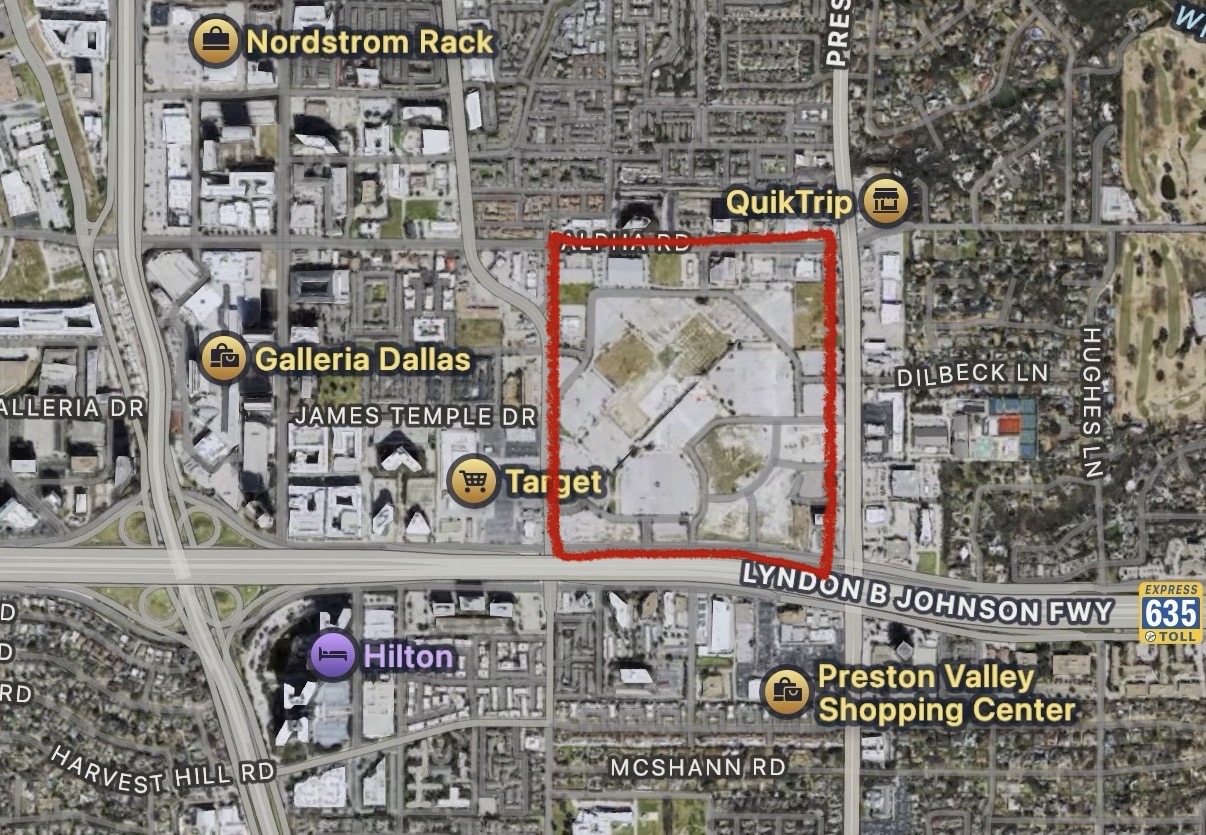
The Valley View site sits at one of the most visible crossroads in North Dallas, near I-635, Preston Road, and the Galleria, on a corridor that has been trending toward a denser, more urban form for years. A Mavericks arena does not start that shift so much as pour gasoline on it.
What makes Valley View matter more than a typical project is it’s sheer scale. A large, contiguous parcel like this lets developers and the city coordinate streets, retail, housing, and public space as one master plan rather than a patchwork of disconnected lots. That coordinated scale is the precondition for durable real estate value since it builds an ecosystem instead of a single attraction. The Mavericks’ vision reaches well past the arena to a corporate headquarters, a practice facility, a hotel, retail, dining, and green space, with the team going out of its way to confirm there is no casino in the plan. The land itself is still being assembled, with an SEC filing showing about $50.76 million committed for the first 20 acres and additional deals required with other Valley View owners before the full footprint comes together.
For buyers eyeing the corridor, the sweet spot is the same as it is everywhere arenas land, close enough to ride the rising profile yet far enough to skip the full weight of event traffic and construction dust, which historically has favored the nearby townhome clusters, condo districts, and established single-family neighborhoods that gain convenience and prestige from the district without being swallowed by it. Valley View is the second northern node hardening in the very same cycle, and two nodes pricing up at once is no isolated event, it is the map redrawing itself in real time, and redrawn maps move buyers.
Downtown and Victory Park: Not a Funeral, a Repositioning
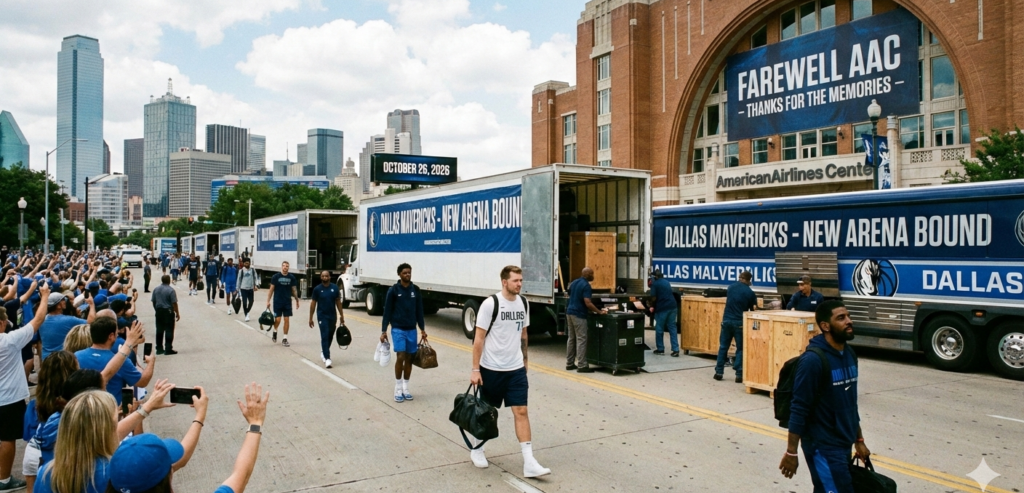
The headlines make it sound like downtown is being abandoned, which it’s not, at least not yet. The Stars and Mavericks remain at American Airlines Center through 2031, so game-night activity stays in Victory Park for several more seasons, and that gradual timeline is one a prepared owner can get out ahead of.
Here is the call other agents will not put in writing: the arena premium baked into the condos around American Airlines Center starts eroding the moment those 2031 leases lapse. Not the whole value of the unit, but the specific slice that buyers once paid for walking distance to two pro franchises, and that slice now carries an expiration date printed right there on the lease. The owners who treat 2031 as comfortably far away are the same ones who will end up selling into a softening premium instead of getting out ahead of it.
The building’s own future is suddenly an open question, since the court ruling hands the Mavericks control of the AAC even as they plan to leave it, and the Dallas Wings have been floated as a possible tenant as soon as 2027. City leadership is not pretending otherwise, with Mayor Eric Johnson warning his council that the wolf is up the tollway and the city manager pledging to fight to keep the Stars in Dallas. The Mavericks’ choice of Valley View also pulls the long-running City Hall redevelopment fight loose from the arena question, leaving downtown with two big repositioning decisions to make at once.
Downtown values hold, or even climb, if the district trades a sports-anchored identity for a broader one built on housing, office conversions, restaurants, cultural venues, transit, and public space, so the real question is not whether the teams are leaving but whether Dallas and its private stakeholders move fast enough to rewrite Victory Park’s story before the buyers write it for them.
If you own an AAC-adjacent unit and your horizon is short, the window to reposition or exit while the premium is mostly intact is open now, not in 2030, whereas if your horizon is long, your bet rides on the district’s reinvention rather than on the teams. Either way, downtown is not the casualty in this story, it is the node being forced to redefine itself while demand quietly redistributes all around it.
The Seller’s Move in a Shifting Map

Sellers near these sites should stop chasing headlines and start reading timing, buyer profile, and competitive position, because a Willow Bend-area owner may well benefit from holding while approvals, infrastructure, and early construction validate the project and pull buyer excitement forward, given how often buyers price in the story long before the doors open.
Holding is not automatically the right call, though, since your mortgage rate, your equity goals, local inventory, and your own household timing usually outweigh any attempt to sell at the precise top of a redevelopment cycle, and trying to nail the peak of a multi-year arena buildout is exactly how owners talk themselves out of strong markets they’re currently in. It’s worth remembering that neither project is locked in, because the Stars deal still needs that June 8 council vote and the Mavericks hold only an option rather than a signed purchase.
Downtown sellers face a different assignment, because they need to retire the sports-access pitch and lead instead with what actually endures, the urban convenience, the architecture, the building amenities, the transit, the lifestyle, since in a market this fluid the story attached to the home carries nearly as much weight as the home itself.
The Investor’s Play
Big public projects attract investors because they hand you a clean narrative about future appreciation, yet the best arena-adjacent investments are rarely the obvious ones, they are the assets that capture the spillover without betting everything on a single project’s execution.
Three categories stand out: the well-located rentals within a short drive of either district, the older multifamily or retail properties that can be repositioned as the surrounding area climbs, and the homes in nearby submarkets that gain prestige and convenience while still trading below the core district price. Underwrite present-day cash flow and real market fundamentals rather than the press release, because the splashier total-cost figures already circulating for the Mavericks district are unofficial estimates, and arena projects routinely take years, invite legal fights and political pushback, and change shape dramatically between the first announcement and the ribbon cutting.
The Read From the Southern Corridor
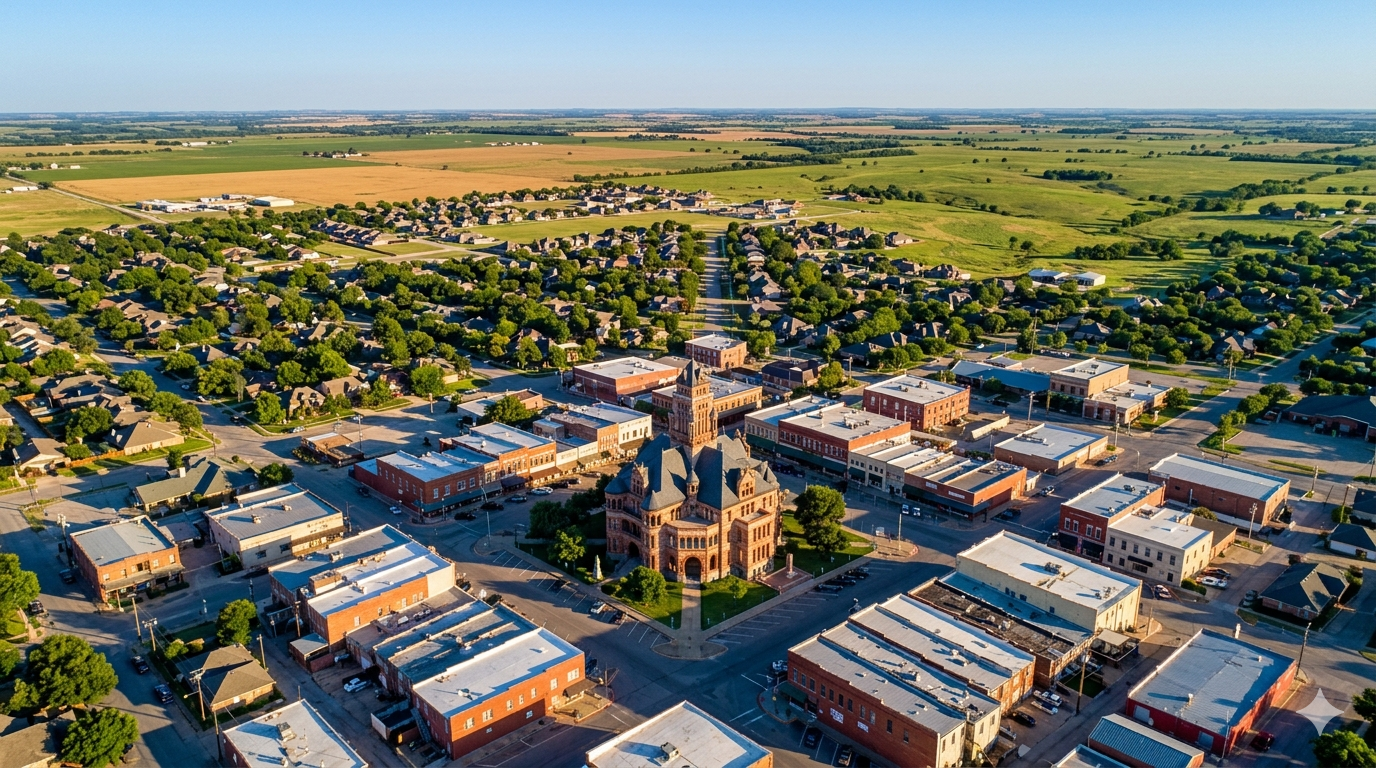
This is where the story comes home for anyone in Ellis County, Johnson County, and the southern DFW growth markets, because the northern arena money is not a competing magnet so much as a pressure system. As Plano and Far North Dallas grow denser and pricier, the households priced out or worn out by that intensity keep looking south for room to breathe.
The southern corridor is not waiting passively for that demand either, since the region is already absorbing serious capital of its own, from the $2.5 billion Staybolt Street entertainment district in Mansfield to The Reserve, a $1 billion development reshaping South DFW, to public-sector commitments like Dallas approving Veterans Village at Patriot Crossing. Connect those dots and a pattern emerges that the arena coverage misses entirely, which is that infrastructure and institutional investment are steadily spreading south, and that is exactly why even a downtown police command center turns out to be a leading indicator for Ellis County home values.
Two teams leaving a single downtown is not the headline that should move you; the redistribution of an entire metroplex is. Read the full Dallas coverage, Plano market updates, and Mansfield market reporting together, and the through-line becomes almost impossible to miss.
The Bottom Line

Two teams leaving downtown Dallas is the headline, but the redrawing of the entire metroplex is the story, and the agents reacting only to the arenas are playing move one while the owners and buyers who read this as a region-wide redistribution of demand are already several moves ahead of them.
The through-line is simple: a stronger Plano and a stronger Far North Dallas raise the northern floor, a higher floor exports the buyers who cannot or will not pay it, and in this region most exported demand is moving south into Ellis County and the I-35E corridor, where the same budget still buys room to breathe. There’s an irony here worth sitting with, because the north is prepared to route up to $700 million in public money toward pulling the action its direction, and every dollar of that only widens the gap sending more value-seekers our way. The arena story turns out to be a North Dallas headline with a southern punchline.
So stop watching the buildings and start watching the full map, because whether you own a condo in Victory Park, a house near Willow Bend, or a lot in Ellis County, the work is the same: position for where demand is heading, not for where it just was. That is the read the North Texas Market Insider delivers every day, before the market gets around to pricing it in, and when you want it applied to your specific street, your timeline, and your equity, that conversation is one click away — Schedule a consultation —
FAQ: The Questions North Texas Homeowners Are Actually Asking

Will the Dallas Stars moving to Plano increase home values near Willow Bend?
Yes, if it clears the June 8 council vote and becomes a real mixed-use destination rather than a stand-alone box, and the early signs point that way. Research on stadium-adjacent markets shows nearby premiums of roughly 4 to 5 percent once an area gains lasting amenities, though the catch is that the homes closest to the arena are usually not the biggest winners. The ones a short drive out, with strong schools and clean Tollway access, tend to be.
Will the Mavericks leaving Downtown Dallas hurt condo values near American Airlines Center?
The sports premium on those units will erode and because the leases run through 2031 it will happen gradually rather than all at once, but the slice of value tied to walking distance from two pro teams now carries an expiration date. The picture is murkier still because a court has handed the Mavericks control of the AAC even as they plan to leave, so if your horizon is short, position ahead of the softening rather than into it.
Should I wait to sell my Plano home until after the Stars arena is built?
Do not try to time the ribbon cutting, because smart buyers often price in the story years before the doors open, which means the appreciation tied to the announcement starts building now rather than at completion. Keep in mind the deal still needs the June 8 council vote, so your equity, your rate, and your timeline should decide this rather than the construction schedule. Chasing the exact peak of a multi-year buildout is how sellers miss strong markets they’re currently in.
Is buying near the Valley View redevelopment a good investment?
It can be, for buyers who understand redevelopment risk and can hold through planning, construction, and transition, but the Mavericks currently hold only an option on the land rather than a completed purchase, so the strongest plays still rely on solid present-day fundamentals rather than future hype.
Will property taxes go up because of these arena projects?
The Plano deal would route up to $700 million through a tax increment reinvestment zone, which captures future tax growth inside the zone rather than raising your rate directly. While the Mavericks’ Valley View site sits inside an existing Dallas tax increment district with no public figure attached yet. Watch the financing details and the public meetings rather than assume a simple, direct hit to your tax bill from the early headlines.
Will traffic get worse near Willow Bend and Valley View?
Major arenas do increase event-night traffic and local congestion, and Willow Bend neighbors are already raising exactly that concern with the nearest rail stop more than eight miles away. Whether it becomes a real quality-of-life issue comes down to road improvements, parking design, and the transit commitments built into each deal.
Are homes near sports arenas always good investments?
No. Some perform extremely well while others get hurt by congestion, taxes, or poor execution, and a long line of independent economists is openly skeptical about whether or not publicly subsidized arenas will pay off the way boosters promise. So the smart approach is to analyze the neighborhood fundamentals rather than assume that arena proximity guarantees appreciation.
What does this mean for the future of Downtown Dallas real estate?
Losing both teams is a genuine challenge and a genuine opening all at once. Downtown can reinvent itself through housing, culture, offices, and entertainment that owe nothing to the NBA or NHL. The WNBA’s Dallas Wings are already floated as a possible AAC tenant, but the long-term outcome hinges on how quickly public and private leaders adapt their strategy.
Is this actually happening, or could it still fall through?
Neither move is guaranteed. The Stars signed a non-binding letter of intent that still needs Plano City Council approval during a vote on June 8. The Mavericks hold an option to buy the Valley View land rather than a finished purchase, and the fight over American Airlines Center is under appeal, so treat all of it as a strong direction of travel rather than any of it a done deal.
What does this mean for Ellis County and the southern DFW corridor?
It is bullish for the south, full stop, because every dollar of arena investment concentrating in the north raises northern prices, and higher northern prices push value-seeking buyers toward Ellis County, the I-35E corridor, and the southern growth markets, where the same budget buys more home. The headlines read like a North Dallas story, but the demand they redistribute often lands south.
This analysis discusses neighborhood change only through lawful, factual lenses such as infrastructure, access, zoning, public school data, pricing, and market behavior, never through assumptions about who will or should live in an area, in full compliance with the Fair Housing Act. All vendor recommendations, including lenders and title, remain independent and RESPA-compliant, with no kickbacks or unearned referral fees.