

Published October 20, 2026 | Reporting period: September 1–30, 2026
For most of this year the entire housing conversation ran on one quiet assumption. Rates are coming down, it is only a matter of when, so hold on and wait for the Federal Reserve to rescue your payment. September took that assumption out behind the barn and left it there. The Fed did not cut. The Fed hiked, for the first time since 2023, and the 30-year mortgage rate climbed clean through 7% for the first time since January of 2025. Every buyer and every seller who spent the summer waiting for cheaper money just watched the money get more expensive.
Here is the part the national headlines got lazy about while they argued over whether this was a slowdown or a crash. In North Texas it was neither. Prices barely moved, with the Dallas–Fort Worth single-family median slipping just 1% to $385,000, while the real action happened in the pipeline, where pending sales fell a startling 19% from a year earlier. That is the signature of a market freezing rather than falling. Buyers pulled back because a 7% rate finally priced too many of them out, and sellers pulled back right alongside them, declining to list into a market that would not pay 2022 money. When both sides step away from the table at the same time, prices stall in place while activity drains out of the room. Let me walk you through exactly what happened, why it happened, and where the real opening sits for anyone with the nerve to move while the crowd waits.
What September Did to Your Rate
Start with the number, because the number sets the tone for everything else. The Freddie Mac 30-year fixed opened September at 6.71%, ticked to 6.76% the following week, jumped to 6.95% the week of the Fed meeting, and closed the month at 7.03% on September 24. Four straight weekly increases, roughly 32 basis points across the month’s four readings, and the first print above 7% in twenty months. The climb did not stop when the calendar turned, either. Freddie Mac reported 7.28% on October 1 and 7.40% by October 8, and daily lender pricing has run higher still. The Mortgage Bankers Association caught the same move in its own weekly survey, with Joel Kan noting the 30-year contract rate at 6.97%, its highest since May 2025 as applications fell for the week.
September 2026 • Mortgage Rates
The 30-Year Broke 7%
The first Freddie Mac reading above 7% since January 2025, after four straight weekly climbs.
Sep 3
6.71%
Sep 10
6.76%
Sep 17
6.95%
Sep 24
7.03%
October
7.40%+
Up 32 basis points in a single month, and the climb has carried straight into October rather than reversing.
Source: Freddie Mac Primary Mortgage Market Survey, 30-year fixed, September–October 2026.
I have hammered this point in every report this year, and September proved it one more time, so let me say it plainly. Your mortgage rate is not set by the Fed’s benchmark. It is priced off the 10-year Treasury yield, and the 10-year moves on what the bond market expects inflation to do over the next decade. All month the bond market stared at reignited oil prices and a central bank that had suddenly stopped flirting with cuts, and it demanded more yield to compensate. The rate climb was not a reaction to a single meeting or a single headline. It was the bond market repricing the entire back half of the year, and that is precisely why it has proved so stubborn. A payment driven higher by a one-day news spike can reverse in a week. A payment driven higher by a structural shift in what the market expects from inflation and the Fed, does not.
That distinction is the whole ballgame for anyone trying to time a purchase. If you are waiting for the number to fall, you are not waiting on a headline. You are waiting on the bond market to change its mind about inflation, and in September it moved firmly in the other direction.
The Fed Hiked, and Warsh Meant It

On September 16 the Federal Reserve raised its benchmark rate a quarter point to a range of 3.75% to 4.00%, the first increase of this entire cycle from a unanimous 12-to-0 vote. This did not come out of nowhere, and anyone who had been reading the Fed instead of hoping for good headlines saw this coming. Back at the July Fed meeting, three officials dissented in favor of an immediate hike, and Chair Kevin Warsh refused to call the hold a pause, framing the moment instead as watchful thinking rather than watchful waiting. When a Fed chair tells you he is thinking rather than waiting, he is telling you the next move is live. September was simply the follow-through on what those July dissenters had already argued for.
The projections are where it stops being a single decision and becomes a direction. The Fed’s updated dot plot now puts the benchmark rate at 4.1% at the end of both 2026 and 2027, which translates into one more hike still coming this year and the rate cuts the Fed had previously penciled in for next year erased entirely from the board. Read that twice, because it reframes every waiting-game decision in North Texas. The central bank’s own members are now forecasting that the next twelve months hold another increase and zero relief. Warsh described the move as removing a dose of accommodation from an economy running warmer than the Fed wanted, and called the decision “a sober decision, serious decision, responsible decision” while pointedly declining to pre-judge what comes next. The bond market heard a Fed with no intention of riding to anyone’s rescue, and the 10-year Treasury pushed toward levels it had not touched in nearly two decades.
September 16, 2026 • Federal Reserve
The Fed Hiked, It Didn’t Cut
The first rate increase since 2023, and the market never saw relief coming.
+0.25%
to a 3.75–4.00% target range
4.1%
dot-plot median, end of 2026 and 2027
1 more
hike signaled for 2026
0
cuts projected for 2027
Waiting on the sidelines for a rate cut is now a bet against the Fed’s own written plan.
Source: Federal Reserve FOMC statement and Summary of Economic Projections, September 16, 2026.
For a North Texas buyer, the takeaway could not be cleaner or more uncomfortable. The strategy of sitting on the sidelines waiting for a cut is now a bet against the Federal Reserve’s own written plan. You are wagering that the people who set the policy are wrong about the policy they just told you they intend to run. That is a bold bet, and it is costing you principal paydown and negotiating leverage every month you hold it. I broke the hike down the week it happened in my piece on what the Fed’s move means for North Texas home buyers, and nothing in the weeks since has softened the conclusion.
The War Came Back to the Gas Pump

The other hand pushing rates up was the one almost nobody wanted to talk about again, because we were all supposed to be done with it. We were not. The fragile ceasefire framework with Iran had been unraveling since July, when the interim deal was already being called dead, and it formally lapsed in mid-August. By the end of that month the two sides were trading fire again after a brief lull, and the energy market reacted the way it always does to trouble near the Strait of Hormuz.
By the first week of September the United States had struck Iran-linked tankers, Iran had declared a maritime exclusion zone, and West Texas crude had spiked to a near six-week high around $92 a barrel. Then it got worse. Drone attacks shut a major Saudi pipeline and Houthi strikes on Saudi targets followed, pushing Brent crude toward $110. For the month as a whole, Brent averaged around $114 a barrel while U.S. crude spent most of September in the $90s, briefly topping $105 at mid-month. That is not a market pricing in calm, it’s a market pricing in a war premium all over again.
The human cost showed up at the pump and in the data. Regular gasoline averaged about $4.44 a gallon by mid-September, and diesel crossed $6 a gallon for the first time in history, a milestone that ripples into the price of everything that moves on a truck, which is basically all consumer goods in the United States. That energy shock walked straight into the inflation report. The August Consumer Price Index, released September 11, came in hot at 3.4% year over year, with gasoline up 27.4% and gasoline alone accounting for more than a third of the entire monthly increase. When your Fed is already leaning hawkish and the inflation print validates every fear it had, a rate hike stops being a risk on the table and becomes a near certainty. That is the chain reaction that put a 7 in front of your rate, and it is the clearest example I can give you of why the war you thought was over still reaches into your closing costs.
Nationally, the Cold Finally Spread to Prices
For months I have described a split-screen housing market: North Texas soft, the rest of the country firm. In September that gap finally closed, and it closed on the national side getting weaker, not on ours getting stronger. The cold that started in the Sun Belt spread, and this time it reached prices, not just sales volume.
The damage showed up everywhere you cared to look. Builder confidence fell to 32, its lowest reading since September of 2025, with two-thirds of builders now leaning on sales incentives and 38% cutting prices outright to move standing inventory. Realtor.com reported that 20.8% of listings took a price cut, the highest September share since 2018, while the national median list price fell year over year for the eleventh straight month. The National Association of Realtors watched existing-home sales grind along near a four-million annual pace, up a slim 1.5% for the month but down 2.2% from a year earlier, and its chief economist Lawrence Yun said plainly that home sellers need to be realistic about local market conditions, which could require price discounts and other incentives to attract buyers. Realtor.com’s Danielle Hale summed up the squeeze better than I could: buyers are gaining leverage, but higher mortgage rates are limiting how much of that opportunity they can actually use.
United States • September 2026
The Cold Finally Spread to Prices
The national market stopped softening on volume alone and started softening on price.
32
builder confidence, lowest since Sept 2025
20.8%
of listings cut price, highest September since 2018
66%
of builders now paying sales incentives
38%
of builders cutting prices, 6% average cut
The national median list price has now fallen year over year for eleven straight months.
Sources: NAHB/Wells Fargo Housing Market Index and Realtor.com, September 2026.
That last line deserves a moment, because it is the paradox at the center of this entire market. Buyers have more room to negotiate than they have had in years, and at the same time they can afford less than they could a year ago, because the rate ate the discount. The leverage is real and the affordability is brutal, both at once, and that tension is exactly what stalled transaction volume in September. It is the same dynamic I wrote about in why it has gotten so hard to buy a house in North Texas right now, and in September the national data finally caught all the way up to it.
The Jobs Picture Underneath It All

None of this housing data exists in a vacuum, and the North Texas labor market is the foundation every bit of it rests on, so it deserves a clear look rather than a hand-wave. The headline is reassuring and the undercurrent is worth watching, both at the same time.
The reassuring part first. As of late 2025, the most recent local reading available, North Texas unemployment sat around 4.1% in the Dallas–Plano–Irving area and 4.0% in Fort Worth–Arlington–Grapevine, close to full employment by any historical standard, and Texas added roughly 143,000 construction jobs over the four years through mid-2026, a sign that the building economy underneath our housing market is still deep and active. People with jobs buy houses, and North Texas still has an enormous number of people with jobs.
The undercurrent is where the caution lives, and it ties directly back to the rate story. The Dallas Fed cut its Texas job-growth forecast for the year from 2.0% to 1.2% in late September, shaving well over a hundred thousand expected jobs off the projection, and the national picture softened behind it, with September payrolls adding a mere 29,000 jobs against expectations and unemployment ticking up to 4.2%. Part of that softening is the AI story I will come back to shortly, as generative AI begins to trim entry-level hiring in the exact white-collar fields that feed first-time home buying. A cooling labor market cuts both ways for housing. It eventually gives the Fed room to cut, which would help rates, but it thins out the buyer pool in the meantime, which is part of why that pending-sales number fell as hard as it did. Do not file the jobs reports under background noise this winter. The labor market is where the next real turn in this market shows up first, and the buyer who is watching it closely will see the thaw coming while everyone else is still staring at the rate sheet.
The September DFW Numbers, in Full
Now to the part that actually matters for your house, the real September data for the Dallas–Fort Worth single-family market, pulled from the NTREIS monthly summary produced for the Texas Real Estate Research Center. These are metropolitan statistics covering homes sold through the MLS, not a valuation of any single property, and I am giving you every figure rather than the one that tells the prettiest story.
Dallas–Fort Worth Single-Family • September 2026
The September DFW Numbers, in Full
Every figure, not just the flattering one. Metro statistics, not a valuation of any single home.
| Measure | September 2026 | Year over year |
|---|---|---|
| Closed sales | 6,759 | ▼ 7% |
| Median sale price | $385,000 | ▼ 1% |
| Average sale price | $509,534 | ▲ 4% |
| Pending sales | 5,536 | ▼ 19% |
| New listings | 10,383 | ▼ 5% |
| Active listings | 31,325 | ▼ 2% |
| Months of inventory | 4.3 mo | Balanced |
| Days on market | 62 days | ▼ 2% |
| Sold-to-list ratio | 93.9% | — |
| Median price / sq ft | $185.82 | Unchanged |
The median barely moved while pending sales fell 19%. Both sides stepped back at once, so the market did less business at nearly the same prices.
Source: NTREIS Monthly MLS Summary Report, DFW single-family residences, prepared for the Texas Real Estate Research Center, September 2026.
Read across that table and the story writes itself. Fewer homes closed, far fewer went under contract, and fewer new listings arrived to replace them, yet prices held almost perfectly still, with the median off only by a single percent and price per square foot staying essentially flat. This is not the shape of a crash, where prices break because sellers are forced to dump homes into a market with no buyers. It is the shape of a standoff, where both sides quietly withdraw and the market simply does less business at roughly the same prices. The 19% collapse in pending sales is the single most important number on the page, and it is the one most agents will skip right past on their way to a comforting headline. I won’t, because it is the early-warning signal that tells us where the next few months of closings are heading. You can track all of it as it moves on the live DFW market dashboard, updated across every county I serve.
Are DFW Prices Dropping? The Median and the Average Are Telling Two Stories
Here is where you have to think like an analyst instead of a headline reader, because September handed us a genuine puzzle. The median sale price slipped 1% to $385,000, while the average sale price rose 4% to $509,534. Those two numbers appear to contradict each other, and reconciling them is the key to pricing your home correctly this fall.
The median is the midpoint, the price where half the homes sold for more and half for less, and it is the truest read on the typical transaction. The average simply adds every sale price together and divides by the number of sales, which means a handful of expensive closings can drag it upward even when the middle of the market is flat or soft. When the median drifts down and the average climbs, as it did in September, the most likely explanation is a shift in the mix of what sold, with a larger share of high-end homes closing while activity in the middle thinned out. That fits everything else in the data, because higher rates hit entry-level and move-up buyers hardest, the exact buyers who transact in the middle of the market.
What this means for you as a seller is simple and important. Do not let the rising average convince you the market lifted your home’s value, and do not let the falling median convince you it cratered. Neither number is a valuation of your house. They describe two different slices of what sold, and your home competes only against its actual comparables, homes of similar size, age, condition, and location, adjusted for the concessions buyers are now routinely demanding. A regional price-per-square-foot figure is not a shortcut around that analysis either. Apply $185.82 a foot uniformly to a small renovated home, a large dated one, and an acreage property and you will produce three confident numbers with weak foundations. Before you set an asking price, work the framework in my guide to pricing strategies for North Texas sellers, because the goal is not to defend the highest number you can find. It is to find the defensible number that actually moves your home.
Why Pending Sales Down 19% Is the Number to Watch
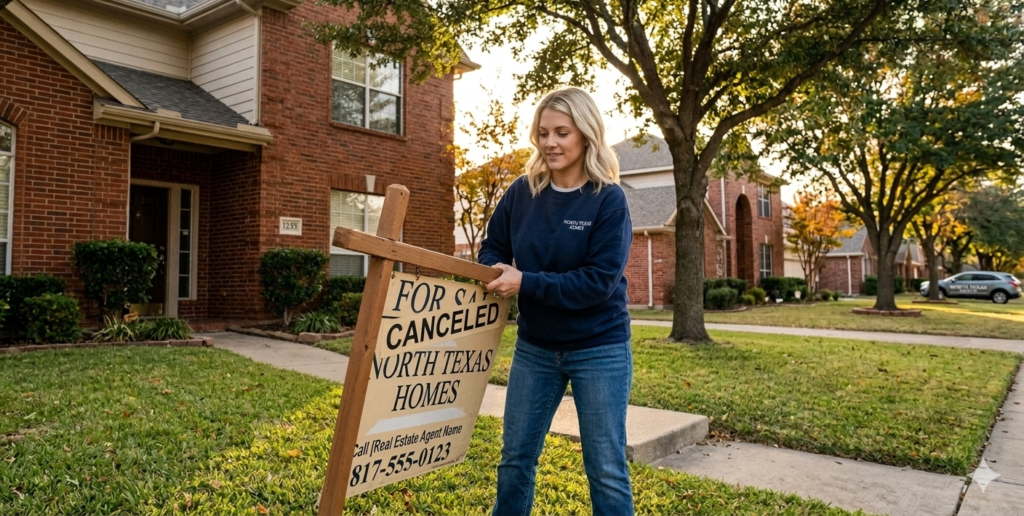
Closed sales tell you what already happened, often reflecting contracts signed six or eight weeks earlier. Pending sales tell you what is happening right now, this month, as buyers decide whether to commit. That is why the 19% year-over-year drop in September pending sales is worth more of your attention than any other figure in the report. It is the market’s leading edge, and right now that edge is pointing down.
A decline that steep in the contract pipeline does not prove a crash is coming, and one month never establishes a durable trend. What it does establish is that September’s buyers were markedly more hesitant than last year’s, which is exactly what you would expect when the 30-year rate punches through 7% in the middle of the month. It also tells us that October and November closings, the deals being signed right now, are likely to come in softer than the already-soft September closings, because today’s contracts become next month’s completed sales. NAR’s own Lawrence Yun made this same point nationally, noting that September’s closings largely reflected contracts signed in August, before the sharpest part of the rate climb, which makes the coming months the real test.
For a seller, the practical response is not panic, it is precision. Make your evidence current. Closed comparables show what buyers have paid, active listings show what buyers can tour instead of your home today, and pending properties hint at where prices are heading even if their final numbers are not public yet. Ask whoever lists your home to walk you through all three groups separately, because a pricing presentation built only on attractive closed sales can quietly ignore a new competitor down the street, a builder incentive around the corner, or a rival listing that cut its price last week. The homework protects your bottom line.
New Construction Now Costs Less Than Resale, and That Changes Everything

The single most revealing number in North Texas this fall is one almost nobody outside the business is talking about. For the first time in years, newly built homes in the Dallas metro are selling for less per square foot than resale homes, roughly $175 against $195 according to Zillow’s September data, a gap of about 10% that works out to near $40,000 on a typical 2,000-square-foot house. For most of the last decade a new home carried a premium, and buyers accepted it as the cost of new. Today it carries a discount, and Dallas runs one of the widest discounts in the entire country. I laid out the full math in my piece on why new construction now costs less than resale in DFW, and the short version is that builders are the most motivated sellers, with the deepest pockets in this market by a country mile.
The reason is sitting in their inventory. Builders nationally are carrying roughly 9 months of unsold supply, well above the healthy mark, and a builder cannot afford to let finished homes sit on the books while carrying costs eat the margin. A builder can slow its next project almost overnight, but it cannot un-build a completed house already standing on a lot, which is exactly why the incentives on finished spec inventory are so aggressive right now while the incentives on next quarter’s dirt are not. Two-thirds of builders are offering sales incentives, 38% are cutting prices outright, and the rate buydowns on move-in-ready homes can pull your effective rate well below that 7% headline for the early years of the loan.
Dallas–Fort Worth • New vs Resale
New Construction Now Costs Less Than Resale
For the first time in years, the brand-new home is the discount, not the premium.
New Construction
$175
per square foot
Resale
$195
per square foot
A gap of about 10%, or roughly $40,000 on a typical 2,000-square-foot home. Builders carrying about nine months of unsold inventory are the most motivated sellers in the market.
Source: Zillow, September 2026 (Dallas metro price per square foot).
For a buyer, this is the opportunity of the year. For a seller, it is the competitor you cannot ignore, because the brand-new home down the road with the builder-paid buydown is now often the cheaper monthly payment, and buyers run the payment, not the sticker. Any pricing decision you make this fall has to account for the fact that new construction has quietly become your toughest rival.
Is DFW a Buyer’s Market? It Depends Which Door You Knock On

September supports a more negotiation-friendly market across North Texas, but it does not support slapping one label on every property, and the inventory data proves why. Single-family inventory stood at 4.3 months, which sits right in the balanced range that traditionally favors neither side. Condominiums, however, carried 8.9 months of supply and townhouses 5.8 months, which are firmly buyer’s-market conditions. A condo seller and a single-family seller are standing in two completely different markets this fall, and anyone who tells you otherwise is reading the metro headline instead of your actual competition.
Days on market tell the same nuanced story. The typical home took 62 days to sell, and sellers collected 93.9% of their list price. That 93.9% figure deserves a careful word, because it is measured against the list price at the time of sale, not necessarily the original asking price, and the gap between those two can be wide for a home that launched too high and cut its way down. Do not turn 93.9% into an automatic offer formula in either direction. An accurately priced listing in a desirable pocket can still sell near asking with minimal time on market, while an overpriced one can sit for months and close far below even that reduced number. The leverage in this market is real, but it is uneven, and it rewards buyers and sellers who understand precisely where their own property sits rather than where the metro average does.
Dallas–Fort Worth • September 2026
Three Property Types, Three Different Markets
Months of inventory, the balance of supply and demand. Under ~4 favors sellers, 4–6 is balanced, above ~6 favors buyers.
A condo seller and a single-family seller are standing in completely different markets this fall. The metro headline hides it.
Source: NTREIS Monthly MLS Summary Report, DFW months of inventory by residential property type, September 2026.
The practical move is to narrow the lens to the address, not the city. A home’s genuine competition might sit across a municipal line in a comparable subdivision, while a home in the same city at a different price point or condition is not really a competitor at all. Count the true substitutes available to your specific buyer, check how long they have lingered and whether their terms have changed, and price against that reality. A market label is where the conversation starts. Your property’s competitive position is where the decision actually gets made.
What September Hands the Buyer

Let me be direct, because softening this would cost you money. The buyer who understands this market stops hunting for a lower sticker price and starts hunting for better terms, because at a 7% rate the terms are where the real dollars are hiding. The seller who drops their price $10,000 helps you a little. The seller or builder who buys your rate down two points for the first two years helps you a lot more, every single month, right when the payment stings most.
With homes sitting 62 days and sellers fully aware that the buyer pool shrinks every time rates tick up, you have the negotiating room to ask for things that were unthinkable in 2022. Negotiate closing-cost credits, repair credits, and above all the rate buydown, which is the single most powerful tool on the board right now. Builders are handing these out aggressively, because, as the confidence numbers made clear, they have finished inventory they need to clear before year-end and they are competing for every contract. On a completed new build, stacking a buydown with a price concession and an appliance or closing allowance can reshape your monthly payment far more than waiting on a Fed that just told you it is thinking about hiking again. The move is to win on terms today, with the option to refinance if rates ever turn, rather than to wait on a rate cut the central bank has removed from its own forecast.
There is one more thing worth saying about who is actually winning in this market, because it runs hard against the gloom. The buyers quietly getting it done are, by a margin of 2-1, single women. Nationally they make up 21% of all buyers against just 9% for single men, and among first-time buyers the gap is wider still at 25% to 10%, with Texas tracking the same pattern at 18% to 7%. The deeper story in that data is the real lesson. Over the past year, the median income of first-time single-women buyers held essentially flat while the median income of single-men buyers fell sharply, which tells you a harder market is filtering for the most disciplined buyers. Single women keep closing because they underwrite themselves conservatively, buy within their means, and show up to the table ready, and that is a playbook every buyer in this market can borrow. I wrote the full guide to buying confidently on one income in my piece on why single women are outbuying single men two to one.
Who’s Actually Buying • 2026
Single Women Outbuy Single Men, 2 to 1
A harder market filters for the most disciplined buyers, and they keep closing.
All Buyers
21%
Women
9%
Men
First-Time Buyers
25%
Women
10%
Men
Texas Buyers
18%
Women
7%
Men
They close because they underwrite themselves conservatively and show up ready, which is a lesson every buyer in this market can borrow.
Sources: National Association of REALTORS Profile of Home Buyers & Sellers; Texas REALTORS, 2026.
None of that leverage matters if your financing is not locked and ready before you write an offer, so get fully pre-approved first and move the moment the right home appears. I work with four lenders who know this market cold and structure these buydowns the right way:
Andrew Bryan — andrewthelender.com
Jennifer Nelson — eustismortgage.com
Taylor Fruge — lower.com
Rachael Carter — mytxmortgageteam.com
I recommend these lenders based on their expertise and service. I do not receive compensation for referrals.
If You Are Renting and Waiting, Run This Math Before You Renew
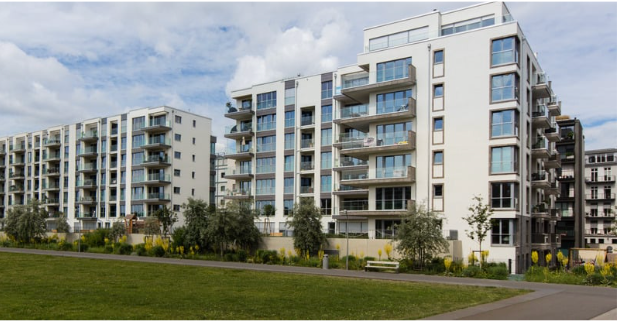
A lot of would-be buyers are sitting in apartments right now, telling themselves renting is the safe move while rates are high. The data says look closer before you sign that renewal, because the relief you are counting on is real in one part of the market and absent in exactly the part you need.
DFW apartment rents are genuinely falling. The national median asking rent has now declined for 37 straight months, and locally the pressure is sharper, with the DFW metro median asking rent down about 2.7% year over year and Dallas apartment rents off nearly 9% by some measures, because the region overbuilt apartments through the boom and landlords are now competing hard for tenants with falling rents and fat concession packages. If an apartment genuinely suits your life, enjoy that discount with my blessing. Here is the catch, and it is a big one for families. The rent that is falling is apartment rent, not the rent on the three-bedroom house your family actually wants. A single-family rental across DFW still runs around $2,200 a month and has not dropped a dime, because that part of the market is not oversupplied at all. The apartment glut never reached the family house.
Dallas–Fort Worth • Rent vs Own
Falling Rents Skip the House You Actually Want
The apartment glut is cutting rents, but not on the family home your household needs.
−2.7%
DFW apartment asking rent, year over year
−8.8%
Dallas apartment asking rent, year over year
~$2,200
3-bed DFW house rent, essentially flat
If you are going to pay something close to a mortgage either way, the only question left is whose equity you are building, your landlord’s or your own.
Sources: Realtor.com, Zumper, and Rental Beast DFW rent data, 2026.
So run the real comparison. Measure that $2,200 house rent, which buys you zero equity and climbs a little every year, against the cost of owning a comparable home with a builder-paid buydown softening the early payments. When you put them side by side, the distance between renting a house and owning one is far shorter than the falling-rent headlines make it sound. If you are going to pay something close to a mortgage either way, the only question left is whose equity you are building, your landlord’s or your own. I laid the full comparison out, numbers and all, in my breakdown of why apartment rents are falling in DFW but the house your family needs is not.
What September Hands the Seller

Sellers, this is the honest read, and you will not hear all of it from an agent who only wants the listing signed. The market is still moving, homes are still closing, but September rewarded realism and punished memory, and the gap between those two outcomes is wider than it has been in years.
Start with what the data actually says about your position. Prices held, which is genuinely good news, but understand why they held, because it changes how you price. The DFW median slipped only 1% not because buyers rushed in to support prices, but because sellers withdrew in step with them, with new listings down 5% and pending sales down 19%. That is a fragile kind of stability, the kind that holds only as long as sellers keep choosing not to compete. The moment you list, you are competing, and you are competing against a brutal new rival. For the first time in years, the brand-new home down the road costs less per square foot than your resale, roughly $175 a foot against $195, and it comes with a builder-paid buydown your resale cannot match without a concession of your own. A buyer running the monthly payment will choose new over overpriced every single time.
That reality dictates the strategy. Price to the comparable sales actually closing today, not to the rising average and not to what your neighbor got in the spring of 2022, because the typical home is now taking 62 days to sell and collecting 93.9% of its list price. Present the home in genuine move-in condition, because a market full of discounted new construction has no patience for a resale that needs work. Come to the table ready to offer the same kinds of concessions the builder is dangling, whether that is a rate buydown, a closing-cost credit, or a repair allowance, and evaluate a buyer’s request for help by its effect on your net proceeds and your odds of closing, not by reflex. The home priced right on day one, shown well, and backed by a sensible concession still sells inside a reasonable window. The home priced to memory sits, goes stale, watches the new build down the street close first, and funds its own slow string of reductions while the calendar does the quiet damage. Work the room-by-room preparation in my home sellers’ checklist before you ever go live, because in this market the preparation is the margin. Meet the market and you win. Fight it and you pay for the fight.
Will the Midterm Election Slow the North Texas Housing Market?

With the midterms landing on November 3, plenty of North Texas buyers and sellers are asking whether to just wait until the dust settles. It is a fair question, and the honest answer is the one almost nobody gives you straight. Yes, the market tends to soften a little around an election, but the effect is small, it is temporary, and it has nothing to do with which party or candidate comes out ahead. It is about uncertainty, and uncertainty always resolves.
Start with the number everyone cites and almost nobody puts in context. Research from Meyers Research, now Zonda, found median new-home sales fell about 15% from October to November across presidential election years. That sounds dramatic until you remember home sales fall every single November as the weather turns and the holidays arrive, election or not. When Redfin stripped out the seasonal noise and controlled for mortgage rates, jobs, and consumer confidence, the election effect nearly disappeared, amounting to roughly a 1.5% dip in December closings that was fully recovered by January. John Burns Research and Consulting went further, reviewing 35 years of data and concluding the seasonal slowdown is no worse in election years than in non-election years.
What actually happens is a brief wait-and-see pause, and the mechanism is identical regardless of your politics. As Zonda’s chief economist Ali Wolf put it, buyers are not saying they never want to buy, they are saying let’s just wait to see how things play out. That demand does not vanish, it gets delayed by a few weeks and then comes roaring back. Home sales rose in the year after 9 of the last 11 presidential elections, according to NAR and HUD data. After the 2024 election, Redfin’s Homebuyer Demand Index jumped more than 15% within days of the results being called, and right here at home Dallas pending sales ran 22.4% above the prior year in the weeks that followed. The buyers who waited did not leave the market. They came back all at once.
Two more things worth knowing. Midterms move the market even less than presidential years do, with Census data showing November sales in 2014, 2018, and 2022 slipping about the same as any ordinary year. Prices, for their part, tend to hold their existing trend right through the cycle, with Case-Shiller appreciation actually averaging slightly higher in election years than in non-election years going back to 1987.
Here is the five-steps-ahead read: If you are thinking about sitting out this fall, be honest with yourself about why, because the far bigger force on this market is a mortgage rate near 7%, not a ballot. The election is a few weeks of hesitation that history says reverses fast. Wait for the political noise to clear and you will step back onto the field at the exact moment every other buyer who made the same safe choice does too, which is how a quiet fall turns into a competitive winter. The prepared move is to act while the crowd hesitates.
Ellis County Keeps Building Through the Noise
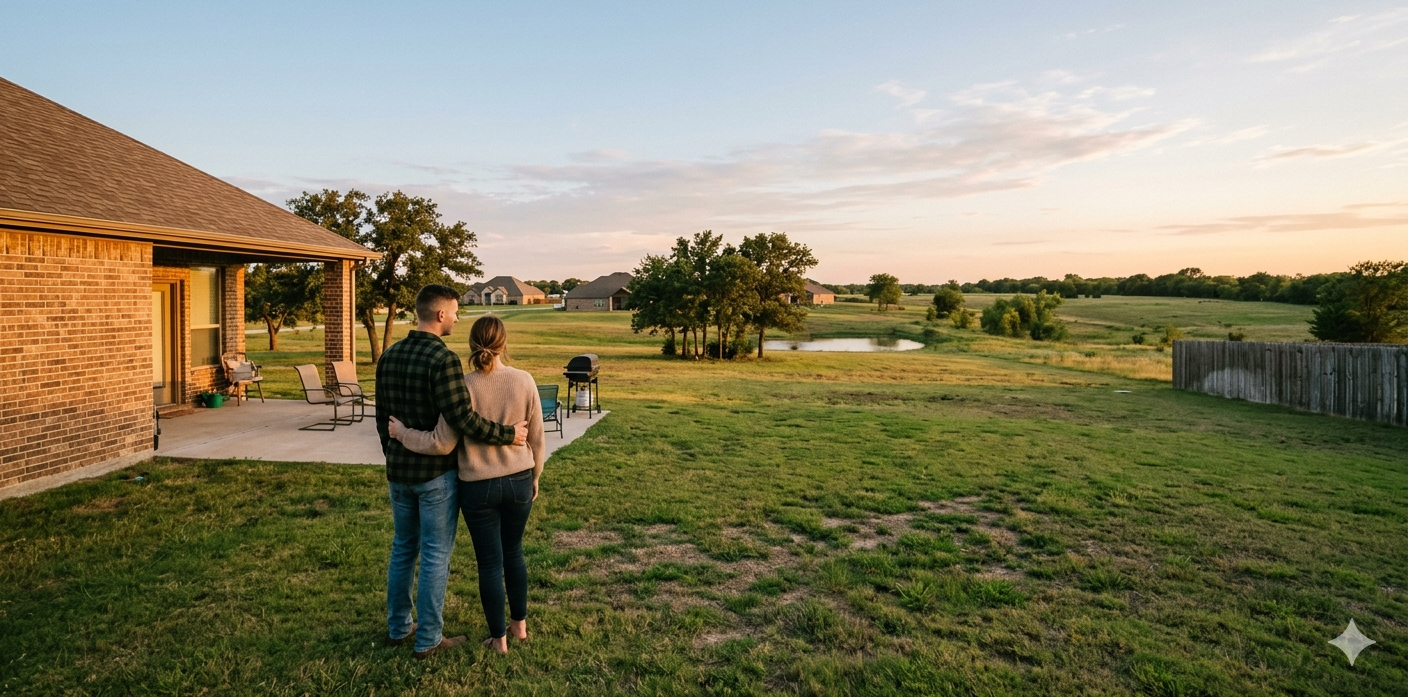
Here is the piece that makes the monthly rate drama almost irrelevant to how I think about this corridor over the long run, because while the headlines argued about the Fed and the Middle East, Ellis County never stopped pouring concrete.
September alone brought a public meeting on the Waxahachie to Midlothian Regional Trail, a shared-use path that will eventually stitch nearly ten miles of the corridor together, the kind of quality-of-life infrastructure that quietly lifts property values for a decade. The county posted replat notices for the next phase of Oak Creek Ranch, a roughly 108-lot subdivision headed to the Commissioners Court on October 27, one more signal that the residential pipeline south of Dallas has not slowed even as the broader market stalled. Those join a development backdrop that reads like a decade of growth compressed into eighteen months. Baylor Scott & White’s new East Patient Tower, a $240 million expansion that substantially expands the hospital’s capacity, opened this summer ahead of schedule. Google’s fifth data center building in Midlothian, an $880 million project inside its $40 billion Texas commitment, remains under construction and targeted for early 2027. Minto Communities’ approved master-planned community in Waxahachie will eventually bring more than 13,000 homes to the area, the largest development in the city’s history. Hospitals, highways, trails, data campuses, and thirteen thousand future rooftops are not the behavior of a region anyone expects to shrink.
There is a sharper layer to this that most agents will never mention, because it complicates the easy growth story, and I would rather you hear the whole truth from me. That same AI and data-center boom lifting Ellis County’s tax base is also one of the quiet forces keeping your mortgage rate high, because the market’s expectation of an AI-driven productivity surge and the federal borrowing behind it both push long-term interest rates upward. The campuses generate enormous construction activity but only dozens of permanent jobs each, not thousands, and the staggering power they pull is already surfacing on utility bills, with the National Association of Realtors finding residential electric rates rose 21.4% in counties with ten or more data centers against 15.7% in counties with none. The ERCOT grid queue has swelled toward 474 gigawatts of requests, the overwhelming majority of it data centers, and Governor Abbott has directed state regulators to make those data centers pay for the grid they are straining, with an audit of the entire queue due in December. I walked through the whole double-edged picture in my piece on what the future of AI could mean for DFW home buyers, and the honest read is that the corridor’s long-term growth is real while its near-term costs, in rates and in electric bills, are real too. Both things are true, and you deserve to own a home with both of them in full view.
This is the five-steps-ahead read I keep coming back to. Rates whipsaw on wars and Fed meetings that reverse themselves within a quarter. The data centers, the hospital beds, the trails, and the thirteen thousand approved homes are permanent, and they all point the same direction. Whether you are watching Waxahachie, Midlothian, Red Oak, or Ennis, the structural story under this corridor keeps getting stronger while the short-term noise tells everyone to wait.
The Insider Take

September was the month the rate shock came back, and it came back harder than the summer version. The Fed hiked for the first time in years, the war came back to the gas pump, the 30-year broke 7%, and DFW demand blinked, with pending sales down a full 19%. Prices barely moved, down just 1%, which is why you should treat anyone shouting crash with as much suspicion as you treat anyone promising an imminent cut. A slowdown and a selloff are not the same animal, and the two require completely different game plans.
The lesson of this market is not complicated, and it is the opposite of what the sideline crowd keeps telling itself. You cannot time the Fed, you cannot time a war, and you certainly cannot time both at once while they keep reversing on each other. What you can act on is the leverage sitting in your own backyard right now. North Texas did not crack in September because sellers pulled back as fast as buyers did, and that standoff is precisely what hands a prepared buyer room to negotiate terms a frenzied market would never allow, a builder buydown, a price concession, a closing allowance, on a brand-new home that already costs less than resale.
When rates do eventually turn, and the entire sidelined crowd floods back in at once, that negotiating room will disappear overnight and the competition will come roaring back. The buyers who move now, with their financing locked and their expectations honest, are the ones who will look five steps ahead of everyone else a year from today. For the longer arc of where all of this is heading, my full read lives in the 2026 North Texas Real Estate Intelligence Report, and this month connects directly to the story I traced in the August market report. The market froze in September. The people who keep moving through a freeze are the ones who own the thaw.
Where Is the North Texas Housing Market Headed in 2027?
Every number that follows is a forecast, not a fact, because nobody rings a bell at the turn. That said, the credible forecasters have lined up behind one uncomfortable call: the freeze lasts well into 2027. After September’s hike, Fannie Mae raised its outlook sharply, now projecting the 30-year rate at 7.4% to close 2026 and 7.5% across every quarter of 2027, an eighty-basis-point jump in a single month. The Mortgage Bankers Association sees rates holding above 7% through 2027, with its chief economist Mike Fratantoni putting it bluntly: rates will come down from this spike, but “I don’t think we’re going to come down that far.” Oxford Economics expects the national sales pace to stay below four million for the next several quarters. Prices are forecast to grind rather than crash, with Fannie Mae projecting roughly half a percent of national growth in 2027 and Cotality near 1.7% through next August, both of which fall behind inflation, which means real values slip even while the sticker holds.
Closer to home, the read is softer still. The Dallas Fed’s October Beige Book flatly called Texas housing “weak,” with builder outlooks “dim”, and Ted Wilson of Residential Strategies put his finger on the psychology, noting there is “something about 7% that has been tough” on buyer traffic and sales. Even the Texas Real Estate Research Center’s more hopeful forecast of modest 2027 price and sales gains came with a quiet asterisk, because it assumed no new shocks and was written before rates pushed toward 7.4%.
Here is the part that matters for your decision. The single biggest force in all of this is not the Fed’s quarter point, it is the 10-year Treasury yield, and the 10-year is being driven higher by oil and inflation tied to the Iran conflict more than by anything a Fed chair says at a podium. That is why the honest forecast is a range rather than a certainty, and the consensus trigger for a real thaw is simple: rates back toward 6%. NAR’s Lawrence Yun, who is already urging sellers to get realistic about price and incentives, has said that if rates ease toward 6% early in 2027, buying activity returns in force. Until then, plan for a market that stays frozen, stays negotiable, and rewards the buyer who acts before the thaw instead of waiting for permission to want a home.
Frequently Asked Questions

Did mortgage rates really go above 7% in September 2026?
Yes. The Freddie Mac 30-year fixed rose every week of the month, from 6.71% to 7.03% on September 24, the first reading above 7% since January 2025. The climb continued into October, reaching 7.40%, and daily lender pricing has run higher still.
Why did the Fed raise rates instead of cutting them?
The Federal Reserve hiked a quarter point on September 16 to 3.75% to 4.00% because inflation was running hot, oil had spiked on the renewed Iran conflict, and the economy was growing faster than the Fed wanted. Its updated projections signal one more hike ahead and no cuts in 2027.
Is the North Texas housing market crashing?
No. The DFW single-family median slipped just 1% in September to $385,000, with price per square foot essentially flat. The market has frozen rather than fallen: sales and pending contracts dropped sharply while prices held, because sellers pulled back about as fast as buyers. That is a standoff, not a crash.
Should I sell my house now or wait?
It depends on your home, your timeline, and your competition, not on a single headline. Prices are holding but the pipeline is thinning, with pending sales down 19%, so waiting carries real risk that the coming months soften further. If you price to your actual comparables, prepare the home well, and come ready to offer a sensible concession, a well-positioned home still sells in a reasonable window.
Are DFW home prices dropping?
Only slightly, and unevenly. The September median was down 1% while the average was up 4%, a divergence driven by a shift in which homes sold rather than a uniform decline. Your home competes only against its true comparables, so neither the metro median nor the average is a valuation of your specific property.
Is it a buyer’s market or a seller’s market in DFW right now?
It depends on the property type. Single-family homes sat at a balanced 4.3 months of inventory, while condominiums carried 8.9 months and townhouses 5.8 months, which are clear buyer’s-market conditions. Across the board, leverage shows up as negotiating room on terms and concessions more than as falling sticker prices.
Are new construction homes cheaper than resale in DFW right now?
In many cases, yes. As of September 2026, newly built homes in the Dallas metro were selling for roughly $175 per square foot against about $195 for resale, a gap near 10% that can mean close to $40,000 on a typical home, according to Zillow. Builders carrying high inventory are cutting prices and offering rate buydowns, which flipped the long-standing new-home premium into a discount.
Are apartment rents falling in Dallas-Fort Worth?
Yes. DFW apartment rents have been sliding amid a wave of new supply, with the metro median asking rent down roughly 2.7% and Dallas apartment rents off nearly 9% year over year. Rents on larger single-family houses, however, have held steady near $2,200 a month, so the relief is concentrated in apartments rather than the family-sized homes many buyers actually need.
Are Ellis County home values still holding up?
Ellis County remains one of the firmer corners of the Metroplex, supported by major investment including the expanded Baylor Scott & White hospital, Google’s $880 million Midlothian data center building, Minto’s approved 13,000-home community, and new corridor infrastructure. Near-term costs in rates and electric bills are real, but the structural growth continues to support long-term values along the I-35E corridor.
Bobby Franklin, REALTOR®
Legacy Realty Group – Leslie Majors Team
📲 214-228-0003 | northtexasmarketinsider.com
Market data is current as of publication and subject to change, and nothing here is financial, legal, or investment advice. Metropolitan statistics are not a valuation of any individual property. All real estate services are provided in full compliance with the Fair Housing Act and the Texas Real Estate Commission.







Join The Discussion