

Last updated: September 28, 2026
AI’s real hit on the DFW housing market isn’t a wave of layoffs. It’s the rate relief everyone was promised that isn’t coming, a generation of first-time buyers who never get hired, and a power fight playing out in Ellis County right now.
That’s the argument. Everything below is the evidence, and I’m going to walk you through it in the order it matters to your wallet.
The Rate Picture · September 2026
The AI boom is here. Cheap mortgages aren’t.
Four numbers that explain why the rate relief everyone was promised hasn’t shown up.
30-Year Fixed
7.03%
Freddie Mac, Sept. 24. The first reading above 7% since January 2025. A year ago it was 6.30%.
10-Year Treasury
5.17%
Closed Sept. 25 after touching 5.18% the day before. The benchmark mortgage rates follow.
Mortgage Spread
~2.0 pts
The gap between mortgages and Treasuries. HousingWire measured 1.97% this month. It fell under 1 point in 2021.
Fed Funds, Top of Range
4.00%
Raised Sept. 16 to a 3.75% to 4% range. The Fed’s first move of 2026 and its first hike since 2023.
Sources: Freddie Mac PMMS · Advisor Perspectives · HousingWire · Federal Reserve · NPR
The Theory Everyone Is Sharing, and Why It Breaks

There’s a take circulating on social media that sounds brilliant until you pull it apart: mortgage rates fall whether AI succeeds or fails. If AI booms, productivity kills inflation and the Fed cuts. If AI busts, the economy stalls and the Fed cuts anyway. Heads you win, tails you win.
Now look at what actually happened this month. In the middle of the biggest AI investment boom in history, Freddie Mac’s 30-year fixed hit 7.03% on September 24, the first reading above 7% since January 2025. The 10-year Treasury closed at 5.17% on September 25 after touching 5.18% the day before. On September 16, the Federal Reserve raised rates a quarter point, its first move of 2026 and its first hike since 2023.
Rates had actually dipped below 6% at the end of February. Then the Iran conflict sent oil higher, and the MBA’s Joel Kan put it plainly: the threat of higher-for-longer oil prices kept Treasury yields elevated. Add inflation worries and federal debt, and you have the real reason rates climbed.
Let’s be precise about what that proves. AI didn’t push mortgages to 7%. Oil, inflation and debt did. What AI does is decide whether rates come back down, and the theory everyone is sharing gets that part wrong on both sides of the coin.
Why an AI Boom Pushes Rates Up, Not Down

The Chicago Fed answered this question directly in September. In Chicago Fed Letter No. 528, economists modeled a productivity surge of one extra percentage point a year for a decade. When that surge catches people by surprise, it lowers costs and inflation, and the right policy response is lower rates. When everyone sees it coming, households feel richer and spend ahead of the gains, and the model calls for rates about 50 basis points higher for as long as the surge lasts.
So which kind of boom are we in? Fed Chair Kevin Warsh has argued that the AI productivity surge he sees coming will allow rapid growth without inflation, which would justify lower rates. That’s the strongest version of the other side, and it deserves a straight answer. The answer is in his own words: he sees it coming. So does every earnings call in America. A productivity wave the Fed chair announces in advance is, by definition, an anticipated one, and in the Chicago Fed’s framework, the anticipated version is the one that holds rates up. Warsh may be right about where AI ends up, but the model says he has the timing backwards.
The St. Louis Fed reached the same place from another direction. Its March 2026 analysis found that optimism about future AI gains creates inflationary demand before the gains show up. Meanwhile the gains themselves are nowhere in the data yet: the San Francisco Fed’s utilization-adjusted productivity series, cited by the St. Louis Fed, grew just 0.07% in the four quarters through Q1 2026. St. Louis Fed President Alberto Musalem said as much in Iceland on May 28: with inflation still above target, counting on future productivity to do the Fed’s work would be a risky bet.
Demand is running ahead of supply. That’s the recipe for higher rates, not lower ones.
Why an AI Bust Won’t Save You Either

The other half of the theory is closer to correct. If AI stocks crash and the economy stalls, Treasury yields should fall. The trap is that your mortgage rate doesn’t track Treasuries one for one.
The gap between the two, the mortgage spread, sits around 2 percentage points today. The Boston Fed put it at about 200 basis points in May, and HousingWire’s Logan Mohtashami measured it at 1.97% this month. Tighter spreads are the main reason rates stayed under 7% for most of 2026.
Here’s what happens in a crisis. The Richmond Fed’s Grey Gordon showed that spreads historically jump in periods of economic stress, because an inverted yield curve makes lenders expect a wave of refinancing, which shortens the life of every mortgage they hold. The Boston Fed found that each 10 basis point rise in rate volatility widens the spread about 15 basis points, and spreads blew past 300 basis points in 2007 through 2009. Treasuries fall, spreads widen, and the relief you were promised gets eaten in the middle.
Heads You Win, Tails You Win?
Why neither AI outcome delivers the rate cut
The social media theory says mortgage rates fall whether AI succeeds or fails. Here is what the Federal Reserve’s own research says happens in each case.
The theory
Productivity kills inflation and the Fed cuts.
The research
When a productivity surge is widely expected, households spend ahead of the gains. The Chicago Fed’s model calls for rates about 50 basis points higher for as long as the surge lasts.
The result
Rates stay up.
The theory
The economy stalls and the Fed cuts anyway.
The research
Treasury yields fall, but mortgage spreads jump in stress (Richmond Fed). Each 10 bp rise in rate volatility widens the spread about 15 bp (Boston Fed).
The result
Mortgages fall less than Treasuries.
+170 bp
The floor under both outcomes. Every point of federal debt-to-GDP adds about 3 basis points to long-term rates. The projected 56-point rise over 30 years works out to roughly 170 basis points (Dallas Fed).
Sources: Chicago Fed Letter No. 528 · Richmond Fed EB 23-27 · Boston Fed · Dallas Fed WP 2513
Underneath all of it sits a floor. Dallas Fed research finds that every percentage point of federal debt-to-GDP adds about 3 basis points to long-term rates, and the projected 56-point debt increase over the next 30 years works out to roughly 170 basis points. Neither an AI boom nor an AI bust makes that go away.
The Jobs Story Is Real. It’s Just Not the One You’ve Heard.
Start with the number that moved this month. In July, the Dallas Fed projected 2.0% Texas job growth for 2026, about 286,000 jobs. On September 21, after first-quarter benchmark revisions, it cut that to 1.2%, about 173,600 jobs. Back in May, the same forecast team had named two headwinds: immigration constraining labor supply, and higher productivity suppressing labor demand in some sectors.
That second headwind is AI, and it’s showing up where you’d least expect it: in the jobs that never get posted. Dallas Fed economists Samuel Dodini and Tucker Smith estimate that generative AI exposure cut total Texas job postings by about 1.8% in 2024 and 2.6% in 2025. Firms most exposed to AI cut postings 5 to 6% by mid-2024 and 8 to 9% by early 2026. Two-thirds of Texas firms in the Dallas Fed’s May survey now use AI, up from 40% two years earlier.
The Low-Hire, Low-Fire Market
The hiring that funds first down payments is drying up
The Dallas Fed’s 2026 Texas job forecast, and what AI is doing to job postings underneath it.
Dallas Fed Texas job growth forecast for 2026
What AI is doing to hiring
Texas job postings, 2025
−2.6%
Estimated cut from generative AI exposure, after −1.8% in 2024 (Dallas Fed).
Most AI-exposed firms
−8 to 9%
Drop in job postings by early 2026, up from 5 to 6% by mid-2024.
Texas firms using AI
2 in 3
In the Dallas Fed’s May 2026 survey, up from 40% two years earlier.
Sources: Dallas Fed forecast, Sept. 21 · Dallas Fed forecast, Aug. 21 · Dallas Fed forecast, July 17 · Dodini & Smith, Dallas Fed · Dallas Morning News
The layoffs are real, but they aren’t the main event. The bigger story is the hiring that never happens. North Texas employers issued fewer layoff notices in Q1 2026 than in any quarter since summer 2024. Unemployment ended 2025 at 4.1% in Dallas-Plano-Irving and 4.0% in Fort Worth-Arlington-Grapevine, barely moved from a year earlier. Metro job growth ran near 3% a year from 2022 to 2024 and slipped under 1% in 2025. Economists call it “low-hire, low-fire,” and the name fits.
Nationally, the picture matches. Challenger, Gray & Christmas counted 112,713 job cuts through July where employers cited AI, about 24% of all announced cuts and already double the 54,836 for all of 2025. The same report showed hiring up 25% from a year earlier. AI is reshuffling the labor market. It isn’t dismantling it.
Who Actually Gets Hurt: The Missing Buyer
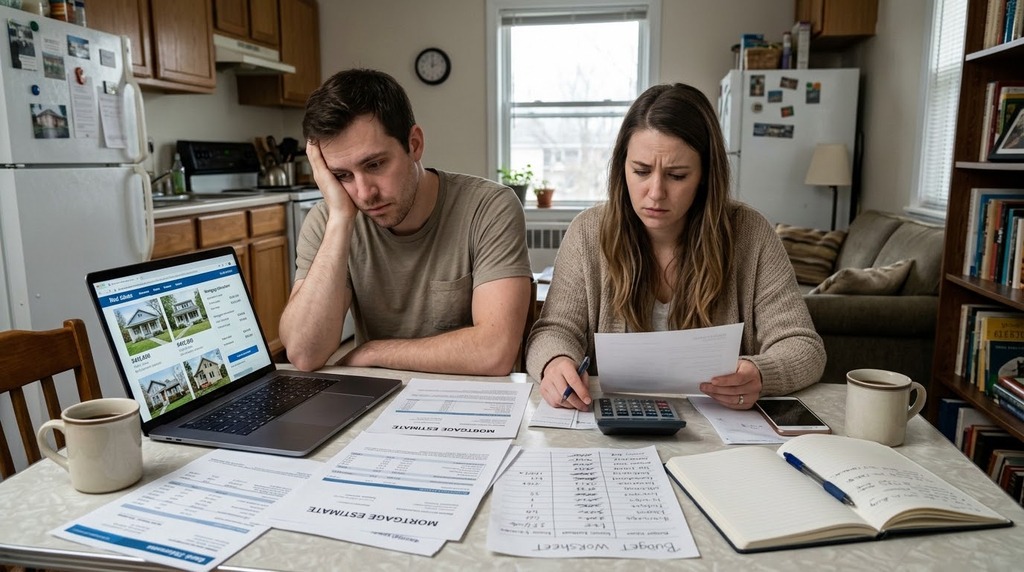
Dallas Fed economist Scott Davis found that returns on experience are rising in AI-exposed occupations. Wages in the most exposed industries grew 8.5%. The workers struggling are under 25, and their problem isn’t layoffs. It’s a job-finding rate that keeps falling. At a University of North Texas conversation with Dallas Fed President Lorie Logan, employers from real estate, health care and banking all said the same thing: they’re hiring fewer entry-level workers.
Follow that to housing. The first down payment in DFW has always come from the entry-level analyst job, the junior developer role, the customer service seat that turns into a career. If those roles quietly disappear, the damage isn’t a foreclosure wave but rather a missing cohort of first-time buyers, and it will show up as softer starter-home sales and slower apartment lease-up long before anyone calls it a trend. To be clear, that’s the thing to watch, not something the local data shows yet. The national and Texas numbers are already pointing this way. DFW’s first-time buyer share and starter-home days on market are where it will show up first, and I’ll be tracking both.
How exposed is DFW? Brookings named the Metroplex an AI Star Hub, #13 of 387 metros for AI readiness, with 36% of local jobs exposed to generative AI. That’s barely above the 35% average for the nation’s highly urban counties and not far from the 30% in rural ones. Brookings’ Mark Muro has pointed to Collin County among the high-usage counties for AI chatbots. The exposure is concentrated in office-heavy corridors, not spread evenly across the region.
The Power Grid Next Door
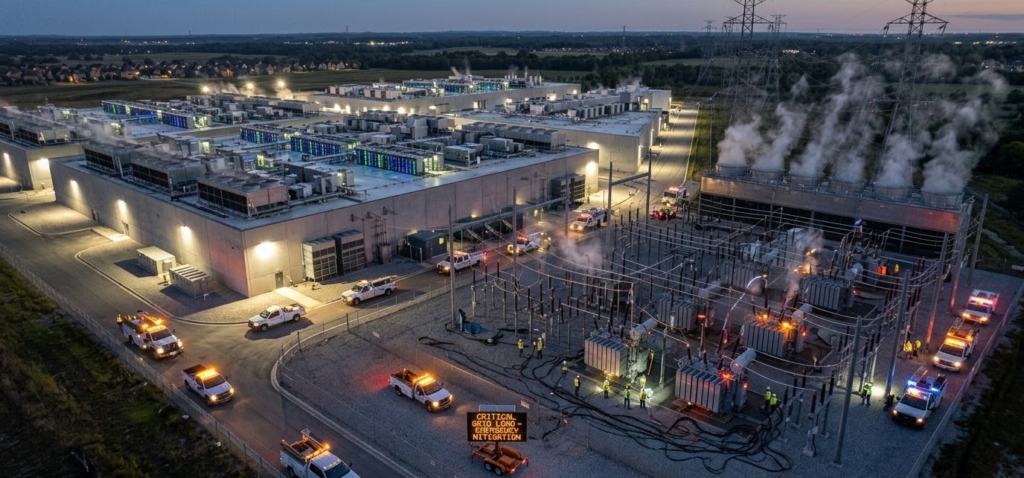
Now to the part of this story nobody else in DFW real estate is tracking closely enough: what’s being built along I-35E south of Dallas.
Google has been in Midlothian since 2019 and filed for a fifth building there at an estimated $880 million. Its Red Oak campus was announced in 2023 as at least a $600 million project with nearly 1,200 construction jobs and about 30 permanent ones. DataBank’s 292-acre, 480 MW Red Oak campus landed a $2 billion construction loan in April, then a $650 million upsize in June, bringing the campus to $2.65 billion. Its next building, DFW15, was permitted at $425 million. The county abatement for the campus requires 68 direct jobs at about $80,000, with another 107 indirect jobs.
Compass Datacenters already runs a 225-acre campus in Red Oak built for up to 350 MW. In May, the Red Oak City Council voted 4-1 to rezone another 830 acres for a second Compass campus, the city’s sixth, with a $2.82 million city tax abatement over ten years and $72 million in grid reinforcements. AREP won a seven-year county abatement for a data center near Red Oak promising more than $2.7 billion in investment and 64 direct and indirect jobs. Just outside Ferris city limits, Cawley Partners bought the 5,200-acre South Creek Ranch for data centers, logistics and up to about 5,000 homes.
Red Oak’s mayor says $13 billion in data center investment is set to quadruple the city’s taxable land value. Look at the job numbers above, though. The tax base is enormous. The permanent payroll is measured in dozens per campus, not thousands.
The Power Grid Next Door
The I-35E data center corridor
Six projects reshaping land, tax bases and the power grid across northern Ellis County and the southern DFW edge. Power figures converted to homes using ERCOT’s rule of thumb of about 200 homes per megawatt at peak demand.
The project
Estimated power and grid strain
Midlothian
Google, Building 5
$880M
Fifth building filed with the state, targeted for February 2027. Google has been on this campus since 2019.
Power & grid
~86 MW
Google doesn’t publish power figures. Data center trackers list the Midlothian campus at about 86 MW, roughly 17,000 homes’ worth. Building 5 adds to a campus that is already connected to the grid.
Grid strain: moderateRed Oak
Google Red Oak
$600M+
Announced in 2023 with nearly 1,200 construction jobs and about 30 permanent ones.
Power & grid
Undisclosed
No public megawatt figure. The building runs about 285,000 sq ft, and it draws from the same southern Dallas grid as DataBank and Compass next door.
Grid strain: not disclosedRed Oak
DataBank
$2.65B
292 acres, 8 buildings, 480 MW. The county abatement requires 68 direct jobs at about $80,000.
Power & grid
480 MW
At full build, about 96,000 homes’ worth of demand. The first three buildings alone draw 180 MW, and Phase 1 is built around its own 400 MW substation.
Grid strain: highRed Oak
Compass, second campus
830 acres
Rezoned 4-1 in May 2026. A $2.82M city abatement over 10 years and $72M in grid reinforcements.
Power & grid
Undisclosed
No megawatt figure yet, but the $72M in grid reinforcements tells you the scale. Compass’s first Red Oak campus was built for up to 350 MW, about 70,000 homes’ worth.
Grid strain: highRed Oak area
AREP
$2.7B+
Seven-year county abatement. 64 direct and indirect jobs.
Power & grid
Undisclosed
No public megawatt figure yet. The investment is on the scale of DataBank’s campus, which is planned at 480 MW.
Grid strain: not disclosedFerris ETJ
South Creek Ranch
5,200 acres
Cawley Partners’ plan for data centers, logistics and up to about 5,000 homes.
Power & grid
Undisclosed
Still a proposal with no published load. It’s the one project on this list planning to put homes and data centers on the same land.
Grid strain: too early to tellSources: DCD · Server Country (Google Midlothian MW) · Dallas Morning News · DataBank · Construction Front (400 MW substation) · The Real Deal · Waxahachie Sun · Dallas Observer · Ellis County (Compass 350 MW) · Midlothian Mirror · D CEO · Compute Atlas (Ellis County 2.3 GW) · CBS Austin (ERCOT 200 homes per MW) · City of Red Oak
Red Oak residents noticed and assembled. More than 150 people packed the May 11 council meeting. A petition gathered more than 2,200 signatures. The Planning and Zoning Commission had recommended denial, and the council approved it anyway around midnight. The county’s own abatement for the new Compass site was withdrawn before a June 23 vote, and Compass has since donated $15 million for a county animal shelter and a $12.6 million training facility to Texas State Technical College.
Who Pays for the Grid
This is the fight that will shape Ellis County for a decade, and it escalated fast this summer.
Oncor’s queue alone holds 282 gigawatts of data center requests. At the end of Q2 it held 737 requests in total. ERCOT’s Kristi Hobbs told the board in December that the statewide large-load queue had grown almost 300% in a year. ERCOT’s review of Oncor’s southern DFW upgrades assumes about 4 gigawatts of new large load in the study area alone.
Then Austin stepped in, three times in eight weeks:
June 10. Gov. Abbott directed the PUC to make data centers fund the grid infrastructure they need and to start cutting residential transmission costs by July 31.
July 24. Announcing the agencies’ response, he said residential ratepayers “will not foot the bill” for the industry’s growth.
August 3. He ordered a full audit of every data center in ERCOT’s queue before any more can advance, putting the statewide queue at roughly 474 gigawatts, about 90% of it data centers. ERCOT postponed its first batch study in response.
Who Pays for the Grid
Austin stepped in three times in eight weeks
The data center queue exploded. Then the state started deciding who covers the cost.
Oncor data center requests
282 GW
In Oncor’s transmission queue at the end of Q2 2026, across 737 total requests.
ERCOT statewide queue
~474 GW
Per the governor’s August letter, about 90% of it data centers.
The timeline
Dec. 9, 2025
ERCOT’s Kristi Hobbs tells the board the large-load queue grew almost 300% in a year.
June 10, 2026
Gov. Abbott directs the PUC to make data centers fund their own grid infrastructure and to start cutting residential transmission costs by July 31.
July 24, 2026
Announcing the agencies’ response, Abbott says residential ratepayers “will not foot the bill.”
Aug. 3, 2026
Abbott orders a full audit of every data center in ERCOT’s queue before any more can advance. ERCOT postpones its first batch study.
Sources: Oncor Q2 2026 · Utility Dive, Dec. 2025 · Office of the Governor, June 10 · Office of the Governor, July 24 · Akin · Utility Dive, Aug. 2026
Most of that queue was never going to be built anyway. Oracle and OpenAI scrapped a planned 600 MW expansion at Stargate Abilene in March after financing talks stalled and grid timelines slipped. Your electric bill still matters, though. NAR found residential electricity rates rose 21.4% from 2020 to 2024 in counties with 10 or more data centers, against 15.7% in counties with none. That’s a correlation measured with state-level rate data, not proof of cause, and it’s exactly why the “who pays” fight is now the most important local story in Texas energy.
What a Data Center Does to the House Down the Road
The honest answer is that nobody knows yet, and anyone who tells you otherwise is selling something.
The Split Verdict
What a data center does to the house down the road
NAR’s 2026 Data Center Impact Report asked agents in data center markets what they’ve actually seen.
Effect on nearby home values
Demand for nearby homes
Commercial values
50%
Of agents reported increases in nearby commercial property values.
Top buyer worries
61% / 56%
Energy costs and water use, the two biggest concerns agents hear.
Residential power rates
21.4% vs 15.7%
Rate growth from 2020 to 2024 in counties with 10+ data centers vs. none. A correlation, using state-level data.
Sources: NAR, 2026 Data Center Impact Report · NAR newsroom · HBS Dealer · GMU Center for Regional Analysis
NAR’s 2026 Data Center Impact Report surveyed agents in data center markets. Twenty-five percent saw a positive effect on nearby home values, 22% saw a negative one, and about a third weren’t sure. On demand, 19% saw more interest in nearby homes, 26% saw less, and 27% saw no change. Commercial values were clearer, with half reporting increases. Buyers’ top worries were energy costs at 61% and water use at 56%. NAR’s own economists say their research doesn’t support claiming a data center will automatically raise or lower nearby values.
The best long-run data comes from Northern Virginia, where data centers have operated for decades. George Mason University’s Terry Clower and Keith Waters studied 2023 home sales there and found no statistical evidence that proximity hurt values. That’s a market with years of planning experience. Red Oak is writing its playbook live.
The Electrician Problem Nobody Priced In
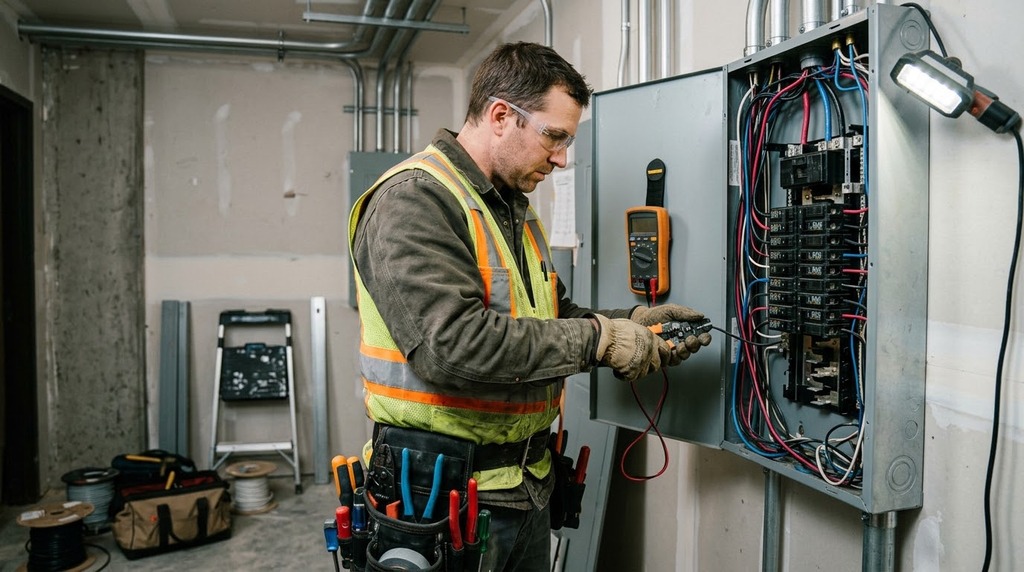
Here’s another connection a lot of people miss: data centers and new homes compete for the exact same workers.
Texas has about 71,000 electricians. The IBEW says 45 to 70% of a data center’s construction budget goes to electrical work. The clearest example so far is out in Abilene, next door to Stargate, not here on I-35E. Builder Gene Lantrip told the Texas Tribune it has taken his crews two months longer to finish houses since the data centers arrived, and electrical contractor Scotty Wristen said that data centers often outbid him at $35 an hour plus overtime and per diem. On a national level, Associated Builders and Contractors estimated the industry needed 439,000 new workers in 2025 across all of construction.
Texas has been hiring. The state added about 143,000 construction jobs from June 2022 to June 2026, including about 25,000 in the most recent year alone, the most of any state. So the construction workforce isn’t the problem. Licensed electricians are. You can add framers and concrete crews by the thousands, but a licensed electrician takes years to train, and the data center down the road pays double. That’s the bottleneck the Red Oak corridor is about to test. In the near term, AI makes new homes slower to build, not cheaper.
Growth Is Slowing, but AI Isn’t the Reason
DFW added 123,557 residents from July 2024 to July 2025, second only to Houston. The regional planning council’s 16-county count shows 203,786 new residents in 2025, bringing North Central Texas to 8,952,590. Growth did cool, though, from 2.3% to 1.4%, and the reason is international migration falling by about half. Dallas County lost about 2,600 residents while Collin added nearly 43,000.
AI is still a magnet for business capital here: Google’s $40 billion Texas commitment, Stargate Abilene, and the southern I-35E corridor. The subtler risk is that when AI lets a company grow without adding headcount, each corporate relocation brings fewer households than the moves of the 2010s did.
The Wealth Effect: Where an AI Crash Would Land
The Magnificent Seven make up about 34% of the S&P 500, and in June alone the group shed roughly $2 trillion in market value. If you own an index fund in your 401(k), you own far more AI than you think.
History says a stock crash doesn’t automatically crater home prices. Karl Case, John Quigley and Robert Shiller found that housing wealth moves consumer spending more than stock wealth does. National home prices kept rising through the 2000 to 2002 dot-com bust, and a new working paper by UC Santa Cruz’s Yanshuo Chen argues the crash actually fed the housing boom, with home prices rising faster where more households pulled out of stocks.
So why wouldn’t an AI crash do the same thing for DFW housing? It might, but only if rates fall far enough for that money to land. In 2001 the Fed could cut hard. In 2026 it’s starting from a hike, with inflation still above target, and the mortgage spread tends to widen in exactly the moment the money starts moving. Until rates give, an AI stock bust hits move-up and luxury buyers first, the ones whose down payments come out of brokerage accounts and equity compensation. The median DFW home would only feel it later, if at all.
Where DFW Stands Going In

DFW isn’t entering any of these scenarios from a position of strength. The July median single-family price was $404,900, down 1.7% from a year earlier and below the $414,990 peak of May 2024. Inventory sat at 37,231 homes, and the median home spent 62 days on the market against 56 nationally. The Dallas Fed has called the Texas housing market depressed. More supply, less pricing power, and a buyer pool that’s been waiting for relief that isn’t coming.
The Scenarios: How I Read the Next 18 Months
These are my calls, based on everything above. They are NOT forecasts from any source I’ve cited.
The Rate Path (these three add to 100%)
“1999 Redux,” the anticipated AI boom: 55%. AI investment and stock wealth keep the economy hot, and the Fed holds or hikes because everyone expects the productivity gains. The evidence is already on the board: a September hike, a 10-year above 5%, and productivity that hasn’t shown up yet. Mortgage rates stay in the high 6s to low 7s. Prices stay flat to slightly down, inventory stays elevated, and first-time buyer suburbs carry the weight. Luxury holds up best. Watch Freddie Mac’s weekly rate survey, the 10-year yield and the Fed’s dot plot.
AI stock bust into recession: 25%. The concentrated AI trade breaks, wealth drops and the Fed cuts. June’s $2 trillion drawdown and the scrapped Abilene expansion show how quickly sentiment can turn. Rates fall, but less than Treasuries do, because spreads widen in stress and the debt floor stays put. Luxury and move-up sales freeze first. Data center construction slows. If rates drop far enough, entry-level demand could actually improve. Watch hyperscaler spending guidance, the yield curve and the mortgage spread.
The productivity surprise, “Goldilocks”: 20%. The gains arrive faster than anyone expects, inflation breaks and the Fed eases. Two-thirds of Texas firms already use AI, so the tools are in place. The catch is that it’s hard to surprise a market that’s been told for two years what’s coming. If it happens, rates drift toward 6%, pent-up buyers come off the sidelines and prices resume modest appreciation. Watch core PCE, quarterly productivity data, and whether the 10-year falls while stocks stay strong.
The Scenarios
How I read the next 18 months
Three possible rate paths that add to 100%, plus two local forces that run on top of whichever one wins.
The rate path
55%
“1999 Redux,” the anticipated AI boom
The Fed holds or hikes because everyone expects the gains. First-time buyer suburbs carry the weight.
Rates: high 6s to low 7s
25%
AI stock bust into recession
The AI trade breaks and the Fed cuts, but spreads widen. Luxury and move-up sales freeze first.
Rates: fall, but less than Treasuries
20%
The productivity surprise
Gains arrive faster than expected and inflation breaks. Pent-up buyers come off the sidelines.
Rates: drift toward 6%
The local overlays
The white-collar squeeze
Underway
Fewer entry-level jobs means softer demand for starter homes and apartments, whichever rate path wins.
The power grid next door
60%
Odds the financed Ellis County projects get built on schedule. Anything unfinanced waits on the August audit.
Scenario probabilities are Bobby Franklin’s editorial judgment. Supporting evidence is sourced throughout the article.
The Local Overlays (these run on top of whichever rate path wins)
The slow-burn white-collar squeeze: already underway. This one isn’t a question of if, it’s a question of how soon? The Dallas Fed’s forecast cut, the 8-9% drop in postings at exposed firms and employers’ own accounts of hiring fewer entry-level workers all point the same direction. Expect softer demand for starter homes and Class A and B apartments, and slower sales of entry-level new construction. Owners locked into low rates will barely feel it. Housing tied to finance, insurance and back-office corridors will feel it the most. Housing tied to health care, logistics, the trades and government will feel it the least. Watch the Dallas Fed’s monthly Texas employment forecast and unemployment for workers aged 20 to 24.
The power grid next door: 60% that the financed projects get built on schedule. DataBank’s $2.65 billion has closed, Google is already building, and the Compass rezoning is done. That’s the part I’d bet on. What I wouldn’t bet on is the next wave. The August 3 audit froze new interconnections statewide, and anything that isn’t already financed is waiting on Austin. The real threats are that audit, along with the shift of grid costs onto data centers and a neighborhood opposition that’s getting organized. If the build-out continues, land and commercial values rise near campuses, city and school tax bases grow, and new homes in the corridor take longer to finish because the electricians are across the road. Nearby home values woulds still be a genuine coin flip. Watch Ellis County appraisal rolls, Oncor’s quarterly queue, the PUC’s cost rulemakings and builder completion dates.
The Insider Take: What to Do About It

If you’re buying: Don’t wait on the “rates fall either way” theory. Underwrite today’s roughly 7% rate, and treat any future drop as a refinance opportunity, not a a guarantee. Talk to a lender now about your real payment at today’s rates, not the one you’re hoping for.
If you’re buying new construction within a couple of miles of a Red Oak data center campus: Ask the builder how many electricians are on the current phase, and whether completion dates on their last three closings slipped. That one question tells you more about your move-in date than the sales brochure does. While you’re at it, pull the zoning map and find the nearest substation.
If you’re selling: Price to today’s market, not to AI headlines. Inventory is high and homes are sitting. If you’re near a campus, expect buyers to ask about noise, power costs and what’s planned next door, and have your answers ready before the first showing.
For everyone: The number that matters most isn’t the stock market. It’s the mortgage spread. After that, watch the Dallas Fed’s monthly Texas employment forecast and Oncor’s quarterly queue. When those three move, the market moves.
Talk to a Lender Before Don’t Just Assume Your Rate
Andrew Bryan, Miramar Mortgage | andrewthelender.com Jennifer Nelson, Eustis Mortgage | eustismortgage.com Rachael Carter, My TX Mortgage Team | mytxmortgageteam.com Taylor Fruge, Lower Mortgage | lower.com
I recommend these lenders based on their expertise and service. I do not receive compensation for referrals.
Frequently Asked Questions
Will mortgage rates go down because of AI? Not necessarily. Chicago Fed research shows that when an AI productivity boom is widely expected, it pushes interest rates up, not down. Mortgage rates hit 7.03% in September 2026, driven mainly by oil, inflation and federal debt, and a widely anticipated AI boom works against them coming back down.
If AI stocks crash, will mortgage rates drop? Treasury yields would likely fall, but mortgage rates would likely fall less. Research from the Richmond Fed and Boston Fed shows the gap between mortgage rates and Treasuries tends to widen during economic stress.
Is AI causing layoffs in Dallas-Fort Worth? Not at scale. North Texas layoff notices in early 2026 were the lowest since mid-2024. The bigger effect is fewer entry-level job postings: Dallas Fed research estimates AI exposure cut Texas job postings 2.6% in 2025.
How does AI affect first-time homebuyers in DFW? The main risk is fewer entry-level white-collar jobs, which have traditionally funded first down payments. That shows up as softer demand for starter homes and apartments rather than forced sales.
Do data centers lower home values in Ellis County? The evidence is split. In NAR’s 2026 survey, 25% of agents saw a positive effect on nearby home values, 22% saw a negative one, and about a third weren’t sure. Northern Virginia research found no statistical evidence that living near a data center hurt home values.
Will data centers raise my electric bill in Texas? It’s unsettled. NAR found residential electricity rates rose faster from 2020 to 2024 in counties with 10 or more data centers (21.4% vs. 15.7%), but that’s a correlation, not proof. Texas regulators are now writing rules meant to put grid costs on data centers instead of households, after Gov. Abbott’s June 2026 directive and August audit order. Whether those rules will actually hold is still being decided.
Why are new homes taking longer to build near data centers? Data centers and homebuilders compete for the same electricians, and electrical work makes up 45 to 70% of a data center’s construction budget according to the IBEW. One Abilene builder near the Stargate campus told the Texas Tribune his homes now take about two months longer to finish.
What data centers are being built in Red Oak and Midlothian? Google operates in Midlothian and has a campus in Red Oak. DataBank is building a 480 MW, $2.65 billion campus in Red Oak, and Compass Datacenters has an existing campus plus an 830-acre second campus approved in May 2026.
This article is general market education, not investment, legal, tax, mortgage or appraisal advice. It does not recommend buying or selling ET, SUN, SUNC, USAC or any other security, and it makes no representation about future investment performance or property appreciation. Brokerage services are provided through Legacy Realty Group – Leslie Majors Team. All consumers are entitled to equal professional service without regard to any protected characteristic under the Fair Housing Act. Brokerage fees and commissions are negotiable and not set by law.
Bobby Franklin, REALTOR® | Legacy Realty Group – Leslie Majors Team 📲 214-228-0003 | northtexasmarketinsider.com






Join The Discussion