
Last updated October 5, 2026
By Bobby Franklin, REALTOR® | North Texas Market Insider™ | Legacy Realty Group – Leslie Majors Team
For as long as most North Texas buyers can remember, the rule was simple enough to fit on a yard sign: new costs more. That rule is now broken. In Zillow’s July 2026 data, newly built homes in the Dallas metro sold for a median of $175 per square foot, while existing homes sold for $195, a $20 gap that works out to roughly 10% and, applied straight across a 2,000-square-foot house, about $40,000 in the new home’s favor (Zillow, September 2026).
That is a reversal, not a fluke. From 2018 through 2024, new homes sold for more per square foot than existing homes in 77 of 84 months, with the premium peaking at $25 per square foot in November 2022. New construction has now sold at a discount in 17 of the past 19 months and in one-third of major U.S. markets, and while the national gap is thin, $205 versus $212, Dallas is posting a discount roughly three times wider than the country as a whole.
North Texas Market Insider™ · The Reversal
Seven Years of “New Costs More,” Then the Flip
How much more (or less) a newly built home sold for per square foot than an existing home, nationally. Bars right of center are a new-home premium; bars left of center are a new-home discount.
77 of 84 months
New homes sold at a premium per square foot from 2018 through 2024.
17 of 19 months
New homes have sold at a discount per square foot through July 2026.
Source: Zillow, September 29, 2026. National median sale price per square foot, newly built vs. existing homes. Bobby Franklin, REALTOR®, Legacy Realty Group – Leslie Majors Team.
Here is what most of the coverage will miss. That number is just a starting gun, not a verdict. Price per square foot ignores the lot, the commute, the tax rate, the HOA, the finish level, the financing, and the roof an older house may need in three years, and Zillow’s analysis blends single-family homes with condos rather than matching identical properties. The buyers who win this market will stop crossing either category off the list and start pricing the total package. The resale sellers who win will accept that their real competition is not the house down the street but a builder with a lower payment, a warranty, and an incentive budget. Put plainly, the position this article defends is that right now in DFW, the strongest buyer position is a completed builder spec home bought on total cost, and the weakest seller position is a resale priced against other resale.
What Does the 2026 Data Say About New Construction vs. Existing Homes?
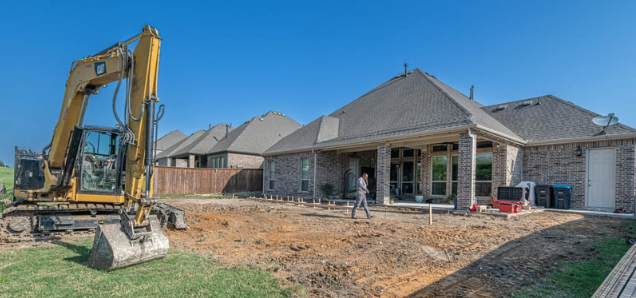
The national headline is accurate, but the number that matters for anyone buying or selling in the Metroplex is the Dallas-metro figure, and it tells a sharper story.
North Texas Market Insider™ · Who You’re Competing With
Builders Now Take a Bigger Slice of Every Texas Market
New construction’s share of all home sales, 2019 compared with the 12 months ending July 2026. Nationally the share hasn’t moved. In the big Texas metros, builders have taken ground.
Source: Zillow, September 29, 2026. Point changes calculated from Zillow’s published shares; Zillow’s release rounds some changes slightly differently (Dallas +7, Houston +6.8). Scale runs 0% to 40%. Bobby Franklin, REALTOR®, Legacy Realty Group – Leslie Majors Team.
Source: Zillow’s September 2026 new-home value report. Price-per-square-foot figures are July 2026 medians; sales shares cover August 2025 through July 2026; percent differences calculated from Zillow’s published medians.
The column most people will skip is the one that should change how sellers think. New construction made up 25.8% of Dallas-area sales over the 12 months ending July 2026, up from 18.9% in 2019. Roughly one in four sales in the metro is a builder sale, which makes builder inventory a direct competitor for every resale listing in a growth corridor, not a separate market that resale sellers can ignore.
Texas itself proves how local this story is. Austin’s new homes sold at a 19.3% discount, San Antonio’s at 4.9%, and Houston’s actually carried a slight premium. Four metros in one state produced four different answers, which is exactly why a national headline, or even a Texas headline, cannot price a specific house in Midlothian, Forney, or Celina.
North Texas Market Insider™ · Sun Belt Comparison
Dallas Has One of the Deeper New-Home Discounts in the Sun Belt
New-home price per square foot compared with existing homes, July 2026, across major Sun Belt metros. Green bars to the left of center mean new construction sold for less per square foot; amber bars to the right mean it sold for more.
Source: Zillow, September 29, 2026. Percentages calculated from Zillow’s published July 2026 median price per square foot; Zillow reports Raleigh’s discount as 14.4% from unrounded figures. Bobby Franklin, REALTOR®, Legacy Realty Group – Leslie Majors Team.
Why Are New Construction Homes Cheaper Than Existing Homes Right Now?

The short answer is that builders have to sell and many resale owners do not. Everything else flows from that imbalance.
Builders Are Carrying Inventory That Costs Them Every Month
A homeowner can pull a listing and keep living in the house. A production builder sitting on finished homes is paying for land, construction loans, taxes, insurance, payroll, and investor expectations every month those homes stay unsold, so the math pushes them toward price cuts, rate buydowns, closing-cost credits, and included upgrades long before a typical seller would blink.
The supply data explains the pressure. The Census Bureau and HUD first estimated 9.6 months of new-home supply in July 2026 (July 2026 New Residential Sales), a figure later revised to 9.0 months with 483,000 new houses for sale, and August came in at 8.5 months with inventory unchanged at 483,000 (Census Bureau and HUD, latest New Residential Sales). Zillow set that elevated supply against resale inventory still running 17.1% below pre-pandemic levels, a split that leaves builders carrying far more product than the typical resale seller is competing against.
North Texas Market Insider™ · The Supply Valve
New-Home Supply Ran Hot, and It Is Already Easing
Months of new-home supply nationally: how long it would take to sell every new home on the market at the current sales pace. Roughly six months is the pre-pandemic baseline.
483,000
New homes for sale nationally at the end of August 2026, unchanged from the revised July count.
17.1% below
Resale inventory compared with pre-pandemic levels. Builders are long on supply while resale stays tight.
Sources: Zillow, September 29, 2026 (2018, 2019 and 2024 figures; resale inventory); U.S. Census Bureau and HUD, New Residential Sales (2026 figures; seasonally adjusted, subject to revision). Bobby Franklin, REALTOR®, Legacy Realty Group – Leslie Majors Team.
Builders Changed the Product, but Supply Is Doing the Heavy Lifting
Builders have also been shrinking floor plans, tightening lots, simplifying elevations, and leaning into entry-level price bands, and it would be easy to assume smaller homes explain the discount. Zillow’s analysis points the other way. As Zillow senior economist Kara Ng explained, smaller homes usually carry a higher cost per square foot because fixed costs like kitchens and baths get spread across fewer feet, so the fact that new homes still come in cheaper per foot is evidence that supply, not size, is driving the gap. Zillow’s own release puts it bluntly: supply is the primary driver.
Financing Has Become the Builder’s Sharpest Weapon
With Freddie Mac’s average 30-year fixed rate at 7.28% on October 1, 2026 (Freddie Mac PMMS), a buyer feels payment relief more than a modest price cut, and builders know it. In September 2026, 66% of builders reported using sales incentives and 38% reported cutting prices, with an average reduction of 6%, according to the NAHB/Wells Fargo Housing Market Index. Those are national survey figures rather than a promise about any particular DFW community, but they describe the playbook builders are running right now.
Resale Owners Can Afford to Wait
Many existing owners hold real equity and a mortgage rate far below today’s market. When an offer disappoints them, they can withdraw the listing, stay put, or rent the house out, and that flexibility makes resale pricing slow to adjust. A completed builder spec home has no such patience, which is why negotiating leverage tracks construction stage: a to-be-built home in a hot phase may come with very little room, while a finished inventory home approaching a builder’s quarter-end or year-end can carry a far stronger package. Fiscal calendars vary by builder, but for those whose books close with the calendar year, the fourth quarter is when that pressure peaks, and my read is that finished spec homes carry their richest packages between now and December.
North Texas Market Insider™ · Negotiation Map
Where Your Leverage Lives in a Builder Deal
The same builder can be immovable on one home and flexible on another. What changes is how much each unsold home costs them to carry, and when.
Stage 1
To-be-built in a phase that’s selling
Low leverage
The builder has buyers lining up and no carrying cost yet. Price and lot premiums rarely move.
Ask for: design-center credit, a capped lot premium, or lender closing-cost help.
Stage 2
Under construction, no buyer yet
Moderate leverage
The construction loan is live and the home needs a buyer before it finishes. Options are often still negotiable.
Ask for: included upgrades, a rate buydown, or closing costs tied to an on-time close.
Stage 3
Finished spec home sitting on the market
Strong leverage
Every month unsold costs the builder interest, taxes, and insurance. This is where price cuts and buydowns cluster.
Ask for: a permanent buydown, a price reduction, or both, checked against closed sales.
Stage 4
Finished spec home near the builder’s books closing
Peak leverage
A builder needing closings on the books by quarter-end or year-end has the strongest reason to deal.
Ask for: the full package, with a closing date that fits the builder’s deadline.
Leverage levels reflect Bobby Franklin’s market read, not a guarantee of any builder’s terms. Builder fiscal calendars and incentive programs vary; every offer should be verified in writing and compared with closed sales. Bobby Franklin, REALTOR®, Legacy Realty Group – Leslie Majors Team.
Does a Lower Price Per Square Foot Make a New Home the Better Deal?

Not by itself. Price per square foot is an excellent screening tool and a poor final answer, because two 2,000-square-foot homes can differ enormously in land value, location, construction quality, layout, energy performance, tax burden, and resale prospects.
The Comparison Was Never Apples to Apples
Zillow compares the median price per square foot of all new properties against the median for all existing properties in each metro, condos included, so the mix of homes shapes the result. A 2,400-square-foot production home on a 50-foot lot at the edge of the metro will beat a renovated 1,900-square-foot home on a bigger, established lot near a job center on square footage, systems, and incentives. The older home may still win on land, trees, access, finished surroundings, and scarcity, which is precisely the value that price per square foot cannot see.
The Lot Disappears Inside the Math
Price per square foot divides the sale price by interior living area, so it gives almost no weight to the dirt underneath. A greenbelt, cul-de-sac, oversized, or poorly draining lot can move long-term value dramatically without changing the square footage at all, and the lot is the one decision a buyer can never undo after closing. Before choosing a homesite, review the recorded plat, easements, drainage plan, grading, retaining walls, utility locations, road plans, and whatever is slated to go up behind the property. The North Texas new-construction process guide walks through that sequence from homesite selection to final walkthrough.
The Advertised Price Is Rarely the Final Price
Model homes are dressed in upgrades, and the “from” price usually excludes the lot premium, elevation, structural options, flooring, cabinetry, lighting, appliances, blinds, gutters, fencing, landscaping, and design-center selections a buyer will expect to have. Inventory homes tend to have a cleaner all-in number because the options are already installed. Either way, insist on four figures in writing:
- The base price
- The homesite premium
- The structural and design-option total
- The final contract price before financing incentives
Then compare that final figure against relevant closed sales rather than the decorated model. The guide to choosing a North Texas home builder covers the builder research, entity checks, and contract questions that belong in the same conversation.
How Do You Compare the True Cost of a New Build and a Resale Home?
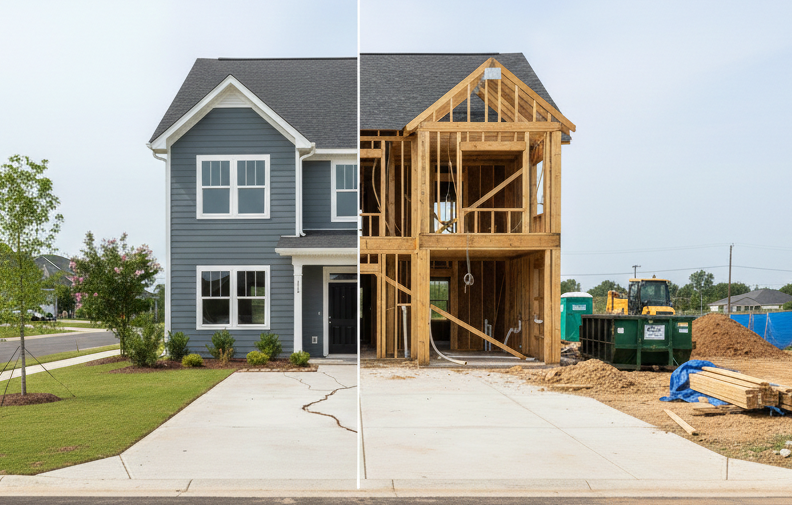
When comparing New Construction to pre-owned, the comparison that matters is not list price against list price. It is cash to close, plus monthly ownership cost, plus the capital expenses likely in the first few years, weighed against location and expected resale position.
| Cost Factor | New Construction | Pre-owned Home |
|---|---|---|
| Purchase price | Often lower per square foot; verify options and lot premium | May reflect a stronger location or larger lot |
| Mortgage | Builder may fund a temporary or permanent buydown | Seller may contribute to allowable closing costs or a buydown |
| Closing costs | Preferred lender and title incentives may cut cash needed | Negotiable based on market, loan, and seller motivation |
| Property taxes | Budget from completed value and full taxing-unit rate | Review current value, exemptions, and post-sale reappraisal |
| HOA, PID, MUD | Newer communities often carry dues and special-district obligations | Older areas may have lower dues or none; verify |
| Repairs | Lower expected early maintenance, though defects still occur | Roof, HVAC, foundation, plumbing, and windows may be near term |
| Warranty | Builder and manufacturer coverage, with exclusions | Existing warranties may transfer; service contracts vary |
| Outdoor completion | May still need blinds, gutters, landscaping, irrigation, fencing | Many improvements already in place |
| Commute and access | Often farther from established job centers | May offer shorter routes and mature nearby services |
Compare Loan Estimates, Not Advertisements
A headline builder rate can be genuinely valuable, but the questions that decide whether it is valuable are buried in the fine print: whether the rate is temporary or permanent, which loan program it requires, how many discount points are being paid, what credit score it assumes, how long the lock lasts, and what fees ride along. The Consumer Financial Protection Bureau recommends pulling multiple Loan Estimates for the same loan type and comparing origination charges along with the “Comparisons” section (CFPB Loan Estimate explainer). Points and lender credits simply move cost between closing day and the monthly payment, so the CFPB’s guide to points and lender credits is worth reading before anyone signs.
The question to bring to every lender is never just “which rate is lower?” It is this set:
- What is the APR?
- Is the rate fixed for the full term or only temporarily reduced?
- How much is being paid in discount points, and by whom?
- What happens if construction runs past the rate lock?
- Does the incentive disappear if I choose another lender?
- What are the total lender-controlled costs?
- How long until the buydown beats a straight price reduction?
North Texas Market Insider™ · Run the Numbers
A Price Cut or a Rate Buydown? Watch the Payment
An illustrative $400,000 home with 10% down. Monthly principal and interest under three scenarios: today’s average rate, the average builder price cut, and a hypothetical builder-funded fixed rate.
To match that payment with price alone
≈$49,900 off
At 7.28%, the price would have to fall to about $350,100, a cut of roughly 12.5%, to land at the same $2,156 payment. That is more than twice the average builder price cut.
The temporary 2-1 buydown trap
A 2-1 buydown at 7.28% looks cheap up front, then steps back to the full payment in year three. Qualify on the year-three number.
Illustration only, not a loan offer or rate quote. Principal and interest on a 30-year fixed loan; excludes taxes, insurance, HOA dues, and mortgage insurance. 5.99% is a hypothetical rate for comparison. Sources: Freddie Mac PMMS (7.28%, week of Oct 1, 2026); NAHB/Wells Fargo HMI, September 2026 (6% average price cut). Bobby Franklin, REALTOR®, Legacy Realty Group – Leslie Majors Team.
The trade-offs are laid out in more depth in Are Builder Mortgage Buydowns a Lifeline or a Trap? For an outside Loan Estimate to set beside the builder’s package, these are the lenders I send clients to: Andrew Bryan with Miramar Mortgage (andrewthelender.com), Jennifer Nelson with Eustis Mortgage (eustismortgage.com), Rachael Carter with My TX Mortgage Team (mytxmortgageteam.com), and Taylor Fruge with Lower Mortgage (lower.com). I recommend these lenders based on their expertise and service. I do not receive compensation for referrals.
Budget Taxes From the Finished House, Not the Dirt
The most common new-construction budgeting mistake is trusting a tax estimate built on vacant land or a half-finished improvement. Texas has no state property tax; local taxing units set the rates and appraisal districts set the value (Texas Comptroller property-tax resources). Estimate the bill from the expected completed value, the property’s actual taxing jurisdictions, and only the exemptions the owner will genuinely qualify for, using the Comptroller’s homestead-exemption guidance, and confirm the math with the county appraisal district.
A Builder Warranty Is Not a Home Warranty, and Neither Replaces an Inspection
A builder warranty covers specific workmanship, materials, systems, or structural components under its written terms, while a “home warranty” is usually a separately purchased service contract. The Federal Trade Commission advises buyers to read the coverage, duration, claim process, exclusions, and dispute-resolution terms closely (FTC guide to new-home warranties). New homes still ship with grading, roofing, electrical, plumbing, HVAC, insulation, window, and framing defects, which is why the guide to North Texas home-inspection risks applies to brand-new houses as much as old ones.
Measure Efficiency Instead of Assuming It
“New” is an age, not an efficiency rating. Ask for insulation specs, HVAC sizing and efficiency, window ratings, duct-testing results, air-sealing documentation, and any certifications. ENERGY STAR reports that its NextGen-certified homes are at least 20% more energy-efficient than homes built to typical code levels (ENERGY STAR NextGen), but that figure belongs to certified homes, not every new build on the market.
Check the Water Before You Check the Countertops
A new subdivision does not come with immunity from drainage problems. Review the grading plan, drainage easements, nearby creeks, detention areas, and low points, then run the address through the FEMA Flood Map Service Center. FEMA defines a high-risk Zone A area as carrying a 1% annual chance of flooding and a 26% chance over the life of a 30-year mortgage (FEMA Zone A definition), and its own reminder applies to every lot in the Metroplex: anywhere it can rain, it can flood.
Should I Buy a New Construction Home or an Existing Home in North Texas?
Buy the house that wins after financing, taxes, insurance, location, condition, and resale are all on the table. New construction tends to reward buyers who value modern layouts, predictable early maintenance, builder financing, and the patience to ride out a build. Resale tends to reward buyers who value an established location, mature landscaping, larger lots, a firm closing date, and improvements someone else already paid for.
Here is where the edge sits right now. A finished spec home with a permanent buydown, bought against a final contract price that holds up to closed sales, is the strongest buyer position in the Metroplex this fall, because it captures the builder’s carrying-cost pressure without taking on construction-timeline risk. A resale wins when it offers something a builder cannot manufacture, whether that is a scarce location, a larger lot, or improvements already paid for, and when the seller is willing to meet the builder’s payment with a concession. A resale seller who will do neither is the weakest hand at the table, and a to-be-built home in a phase that is already selling well is the second weakest, because the builder has no reason to deal.
Run the Eight-Step Comparison
- Set one total monthly budget that includes principal, interest, taxes, insurance, HOA dues, special-district obligations, and realistic commuting costs.
- Search both property types side by side for the same functional needs, comparing location, layout, lot, and condition rather than square footage alone.
- Get written builder worksheets that separate base price, lot premium, options, incentives, lender requirements, and estimated cash to close.
- Pull competing Loan Estimates with matching loan type, down payment, lock period, and points.
- Review closed sales and builder history, including what comparable homes actually closed for and whether incentives shaped those numbers.
- Inspect independently, with phase inspections on a to-be-built home and a final inspection on completed inventory.
- Investigate the lot and its future surroundings through plats, easements, road plans, nearby land uses, drainage, and planned phases.
- Model the five-year picture, including expected repairs, utilities, tax normalization, HOA changes, resale competition, and every improvement not included at closing.
The Complete North Texas New Construction Timeline maps the build sequence, and the North Texas New Construction Market Data hub is the live data starting point.
Do I Need My Own Agent for a New Construction Home?
The salesperson in the model home represents the builder. A buyer who wants representation needs to settle it before the first visit or registration, because builder registration policies can determine whether an outside broker is recognized at all.
Texas law tightened on January 1, 2026. TREC explains that a license holder working with a prospective buyer of residential property generally must have a written representation agreement, or a qualifying non-representation showing agreement, in place before showing property or presenting an offer, and that agreement must address services, termination, exclusivity, representation status, and compensation (TREC on 2026 buyer-representation requirements). The NAR settlement practice changes likewise require written agreements before tours, removed offers of broker compensation from the MLS, and require disclosure that commissions are negotiable and not set by law (NAR consumer explanation). Compensation is negotiable, and no buyer should assume a builder, seller, or listing broker will pay any particular amount without written confirmation. The North Texas new-construction getting-started guide is the place to begin before that first model-home visit.
Can a Builder Require Me to Use Its Lender?
Builders can tie certain incentives to an affiliated or preferred lender, subject to the law and required disclosures, but an incentive is a package to evaluate, not free money. RESPA prohibits kickbacks and unearned fees for settlement-service referrals, and affiliated business arrangements generally require written disclosure of the relationship and estimated charges, with limits on required use (CFPB Regulation X, kickbacks; CFPB affiliated business arrangements). The winning offer is the one with the strongest combination of rate, APR, fees, credits, lock protection, and certainty, which is not always the one shouting the biggest incentive.
Where Should North Texas Buyers Look for New Construction?
Look where builders are competing with each other, not just with resale. Built-out cities offer infill, townhomes, and small pockets that usually carry a premium, but the growth corridors, from Midlothian, Waxahachie, and Red Oak in the south to Mansfield on the west side and Frisco up north, are full of master-planned communities like Goodland where several builders chase the same buyer inside the same development, and that head-to-head competition is where incentive packages get most aggressive. Map the search to work locations, budget, taxing jurisdictions, HOA documents, infrastructure, commute routes, flood information, and construction plans, using the six major North Texas market areas and the relocation guide as the starting grid. Housing guidance should never rest on race, color, national origin, religion, sex, familial status, or disability, and HUD’s Fair Housing Act overview lays out the protected classes.
How Can I Sell My North Texas Home When Builders Are Offering Incentives?
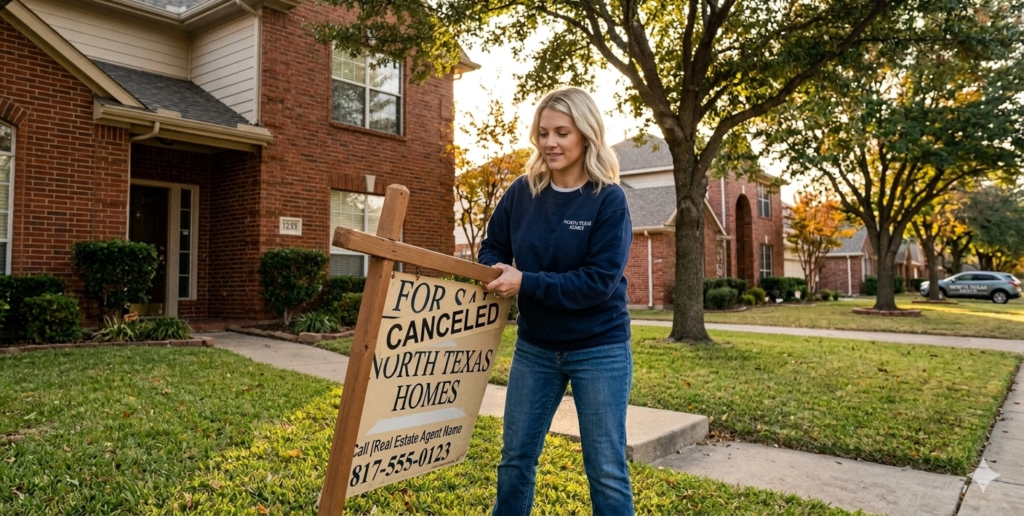
Resale sellers do not need to beat the builder on every feature. They need to prove their house is the stronger overall choice for the right buyer, and that starts with pricing against the competition buyers are actually touring rather than the three nearest resale listings.
Price Against the Buyer’s Real Alternatives
Pull nearby active and closed resale properties, then map every new-home community inside the likely buyer’s search radius and compare final inventory-home prices, estimated taxes, HOA and special-district obligations, lot sizes, completion dates, and advertised incentives. A $10,000 price gap may not matter at all if the builder’s financing produces a much lower payment, and an established home may fully justify its price through a larger lot, better access, finished improvements, or lower recurring costs. Sellers only find out which side of that line they are on by running the comparison.
Put the Resale Advantage on the Table
Buyers routinely forget what it costs to finish a new house after closing, so show them. Window coverings, upgraded lighting, gutters, irrigation, fencing, mature landscaping, patios, pergolas, pools, outdoor kitchens, garage storage, water treatment, and recently replaced roofs, HVAC systems, water heaters, windows, and appliances all represent money a new-home buyer will spend later. Established internet, retail, and road access count too. Back every item with invoices, permits where applicable, warranty documents, service records, and utility history, then let the market assign contributory value rather than claiming dollar-for-dollar credit for every upgrade.
Use Concessions Like a Scalpel
Depending on the loan program, appraisal, contract, and lender requirements, a seller may be able to fund allowable closing costs or a rate buydown, and a concession aimed at a specific affordability problem usually outperforms a vague credit. Before cutting the price by reflex, model a price reduction, a closing-cost contribution, a temporary buydown, permanent discount points, and a targeted repair against each other with the buyer’s lender, because the right answer depends on buyer qualification, loan limits, seller net, appraisal support, and how long the buyer will keep the loan. Brokerage compensation is separate, fully negotiable, and never fixed, standard, or set by law.
Win on Certainty
A finished resale offers what a to-be-built home cannot: a known closing date, a completed structure to inspect, established landscaping, a clear view of the neighbors, and zero design-center surprises. Pre-listing preparation, accurate disclosures, repair documentation, an available survey, and clean title coordination turn that certainty into a selling point instead of a hope.
Market the Property, Not the Buyer
Describe the home and its objective amenities rather than the kind of person who should live there, and keep digital ad targeting away from protected classes and close proxies. HUD withdrew its 2024 digital-advertising guidance in 2025, but the Fair Housing Act’s advertising prohibitions are statutory and still apply to every listing, every post, and every paid campaign (HUD Fair Housing Act overview).
What Are the Biggest Risks When Buying New Construction?

The first risk lives in the contract, because builder contracts are drafted by the builder’s counsel and can treat deposits, delays, substitutions, financing deadlines, appraisals, inspection access, dispute resolution, and default remedies very differently from familiar resale forms. An agent can explain market practice and strategy, but legal interpretation belongs with a qualified attorney.
A signed contract still leaves the house itself to be proven, and that is where inspection risk enters. Municipal code inspections serve a different purpose than a buyer’s inspection and will not catch every workmanship or performance issue, which is why TREC licenses Texas inspectors and sets reporting standards (TREC consumer guide to buying and selling).
A clean inspection does not guarantee the numbers hold, either, which is why appraisal risk catches so many buyers who assume incentives create value. The appraiser analyzes the property and the market evidence, and large design packages, lot premiums, or financing incentives may not contribute dollar for dollar, so know exactly how the contract handles a low appraisal and whether deposits or upgrade money are refundable.
Even when the price appraises, the calendar can still move against you. Weather, labor, materials, permitting, inspections, utility work, and change orders all push the finish line, so never give notice on a lease or close on a current home based on an optimistic verbal date, and get the current timeline and extension terms in writing.
The risk almost nobody asks about shows up years later, when it is time to sell. An early buyer may need to resell while the builder is still offering brand-new homes a few streets away with incentives an individual seller cannot match, so ask how many phases, lots, and years of development remain and what product is planned next.
The Insider Take

The new-construction discount is a supply story, and the supply side is already moving. New-home supply first printed at 9.6 months in July, was revised down to 9.0, and fell to 8.5 months in August, while Zillow notes that permitting has slowed. Builders release inventory pressure in a predictable sequence, first by cutting prices and buying down rates to clear finished homes, then by slowing starts until the inventory shrinks and the incentives quietly fade, and the data says that second phase has begun. The buyer who understands that sequence is shopping completed inventory now, through the fourth quarter, while the package on a finished spec home is still rich and before the valve closes any further.
The bigger shift is on the resale side. When 1 in 4 Dallas-area sales is a builder sale, every seller within driving distance of a master-planned community is in a pricing war whether they signed up for one or not, and the seller who prices only against resale comps is pricing against the wrong competitor. That seller sits, cuts, and sits again. The seller who prices against the builder’s total offer, shows the buyer every dollar of finished improvements, and uses a targeted concession to close the payment gap is the one who gets to the closing table first.
The data has moved and the leverage has moved. The only question left is whether your next move is built on this year’s numbers or last decade’s assumption.
Frequently Asked Questions: New Construction vs. Existing Homes in North Texas

1. Are new construction homes cheaper than existing homes in North Texas?
By price per square foot, yes. Zillow’s July 2026 Dallas-metro data showed new construction at a median of $175 per square foot against $195 for existing homes. That does not make every new home the cheaper choice, because location, lot, product type, options, taxes, and incentives have to be compared property by property.
2. Why do new homes cost less per square foot than older homes right now?
Elevated builder inventory, competition between communities, price cuts, financing incentives, and shifts toward smaller lots and more affordable plans all push new-home pricing down. Existing homes often command more for established locations, larger lots, mature landscaping, and tighter resale supply.
3. Is price per square foot a good way to compare new construction and resale?
It is a strong first screen and a weak final answer. It does not capture lot value, location, condition, layout, upgrades, taxes, HOA costs, commute, or future development, so compare similar homes in a similar functional market and then calculate the total cost of ownership.
4. Are builder mortgage incentives actually worth it?
Some are excellent, especially permanent buydowns that materially lower the payment. Others look less impressive once lender fees, points, qualification assumptions, lock costs, or a higher purchase price are counted, so compare same-day Loan Estimates from the builder’s lender and an outside lender using the same loan structure.
5. Can I negotiate the price of a new construction home?
Often, and timing drives the leverage. Completed inventory, homes that have sat longer, and quarter-end or year-end closings usually offer more flexibility than a to-be-built home in a popular phase, and the value may show up as price, closing costs, rate relief, upgrades, or a reduced lot premium.
6. Do I need a home inspection on a brand-new house?
Yes. New homes can still have defects, unfinished work, or systems that underperform, so buyers should consider pre-drywall, final, and warranty-period inspections depending on the build stage and contract access.
7. Do I need a real estate agent when buying from a builder?
It is not required, but the on-site salesperson represents the builder. A buyer’s agent compares communities, evaluates incentives, coordinates due diligence, and advocates through construction and closing, and representation, services, and negotiable compensation should be agreed in writing before touring or registering.
8. Are property taxes higher on new construction homes in Texas?
Not automatically, but newer communities often include additional taxing districts or infrastructure obligations, and first-year estimates can mislead when they reflect land or partial construction. Budget from the completed value and the exact taxing jurisdictions.
9. Do new construction homes lose value after closing?
They can, particularly when a buyer overpays for options, the builder later cuts prices, or competing inventory stays high. They can also appreciate when the location, community, and broader market perform well, so evaluate remaining lot supply, future phases, comparable sales, and your likely holding period before buying.
10. Is it better to buy a new build or an older home in Dallas-Fort Worth?
Neither category wins automatically. A new build may deliver better financing, lower early maintenance, and more square footage, while an existing home may deliver a stronger location, larger lot, and improvements already paid for. The right choice is the individual property with the strongest combination of affordability, condition, location, risk, and resale.
Weighing a builder against resale, relocating to North Texas, or selling near a growing community? Call me at 214-228-0003 for a property-specific analysis built on current inventory, closed sales, builder incentives, tax jurisdictions, and total monthly cost.
Bobby Franklin, REALTOR®, TREC #0805459, Legacy Realty Group – Leslie Majors Team 📲 214-228-0003 | northtexasmarketinsider.com







Join The Discussion