

Last updated: November 4, 2026
Bobby Franklin, REALTOR® | North Texas Market Insider Legacy Realty Group – Leslie Majors Team | TREC License #0805459
Elections move housing through expectations first and policy second, and the North Texas buyers who wait for the policy will give up the negotiating leverage they have today and end up competing with everyone who waited alongside them. Last night Democrats took both chambers of Congress, and Gina Hinojosa unseated Greg Abbott to become Texas’s first Democratic governor since Ann Richards left office in 1995. Regardless of where you stand with politics, the market isn’t waiting for a single bill to pass, and neither should you.
North Texas Market Insider · Election 2026
The Expectations Trade: Markets Moved Before the Laws Did
Rates came off a 24-year high before a single vote was counted. Here is what already moved, the five channels that decide 2027, and the dates that will move it next.
10-Year Treasury
5.34% → 4.92%
Oct. 1 intraday peak, highest since 2002, to Nov. 4 morning
30-Year Mortgage (Freddie Mac)
7.40% → 7.24%
Oct. 15 peak to Oct. 29 weekly average
Dow Jones, Nov. 4
+1,178
Up 2.3% at 9:35 a.m. ET; S&P 500 up 1.2%, Nasdaq up 1.1%
Five Channels That Decide 2027
Channel 1
Iran War & Oil
Biggest inflation lever, up to 1.8 points. A ceasefire likely pulls rates lower by spring.
Channel 2
Tariffs
About 0.7% on prices. Expect pressure through funding fights, not overnight repeal.
Channel 3
Confidence
Follows gas prices. Lower costs bring buyers back to open houses first.
Channel 4
Bond Market
The Fed signals; the 10-year sets your rate. December 8–9 is the next test.
Channel 5
Construction Labor
Enforcement adds $10K–$20K per home in South Texas. Easing means better builder deals.
Dates That Move the Market Next
Dec. 8–9
Fed meeting and new projections
Jan. 3
New Congress scheduled to convene
Jan. 7
Federal limit on 350+ home investors takes effect
Jan. 12
90th Texas Legislature convenes
Jan. 19
Gov. Hinojosa takes office
Buyers who wait for the policy give up today’s leverage. DFW has 4.3 months of inventory, and homes are selling about 6% below their original asking price.
Sources: China Pulse and Trading Economics (10-year yield); Freddie Mac PMMS (mortgage rates); Associated Press via Spectrum News (stocks, 10-year Nov. 4); VoxEU, Kilian et al. (Iran war inflation range); Yale Budget Lab, July 2026 (tariff price impact); South Texas Builders Association via KRGV (construction costs); Federal Reserve FOMC calendar; Congressional Research Service R49354; Texas Legislative Council; KHOU; NTREIS/MetroTex September 2026 single-family data (DFW inventory and sale-to-list). Stock figures are intraday. Compiled by Bobby Franklin, REALTOR®, Legacy Realty Group – Leslie Majors Team.
The Market Moved Before the Votes Were Counted

The bond market proved it first. In early October the 10-year Treasury hit about 5.34%, its highest level since 2002, according to China Pulse and Forbes. By election morning it was sitting near 4.9%, per Trading Economics, a drop of about 40 basis points without a single new law on the books.
Mortgage rates followed. Freddie Mac’s 30-year average peaked at 7.40% on October 15, the highest since November 2023, eased to 7.32% the week of October 22 and fell again to 7.24% on October 29. Then the results came in, and Dow futures jumped 1,083 points by 8:45 a.m. Eastern on Wednesday, according to CNBC figures, with the market showing relief that the outcome was clear and uncontested.
Nearly all of that rate relief arrived before a single vote was counted, and the outcome itself was no surprise: a week before Election Day, Polymarket gave Democrats a 92% chance of taking the House and a 65% chance at the Senate, as Bastille Post reported. The election confirmed a direction markets were already pricing. Expectations moved the money first, and that’s the whole point: they’ll keep moving it for months before Congress or Austin finishes anything.
Channel One: The Iran War Is the Biggest Inflation Lever in America

If you want lower mortgage rates in 2027, watch the Strait of Hormuz before you watch the tariff debate. Economists led by Lutz Kilian, writing for VoxEU, estimate that even a one-quarter Hormuz closure with gradual recovery adds about 0.6 percentage points to 2026 headline inflation, with their scenarios ranging from 0.2 to 1.8 points, building on their Dallas Fed working paper. Moody’s Analytics chief economist Mark Zandi told CNN the war has cost the average household roughly $2,000, with about $1,100 of that in energy. Flip that math and you find the upside: if diplomacy holds and that inflation premium comes out, the Fed loses its main reason to keep tightening, and a half-point drop in mortgage rates, from 7.24% to 6.75%, would cut principal and interest on a $320,000 loan by about $105 a month.
A credible path to ending the war is a credible path to cheaper money, and a Democratic Congress now controls war funding, hearings and the political pressure that shapes that path. The outcomes split cleanly from here: a durable ceasefire likely pulls rates lower through the spring buying season, a drawn-out stalemate keeps them hovering near 7%, and a renewed Hormuz disruption could push them back above October’s 7.40% peak.
Texas has a genuine trade-off here, and pretending otherwise would be dishonest. High oil supports Texas energy jobs and state revenue, so a peace deal trims some of that income. For a diversified metro like DFW, though, lower gas prices and lower mortgage rates almost certainly matter more to the average household than oil-patch revenue, and that’s where the affordability story lands. The likely outcome for North Texas is a split result, with energy-sector paychecks feeling the pinch while most DFW households come out ahead at the pump and at the closing table.
Channel Two: Tariffs Are a Real Cost, and the Fight Just Changed
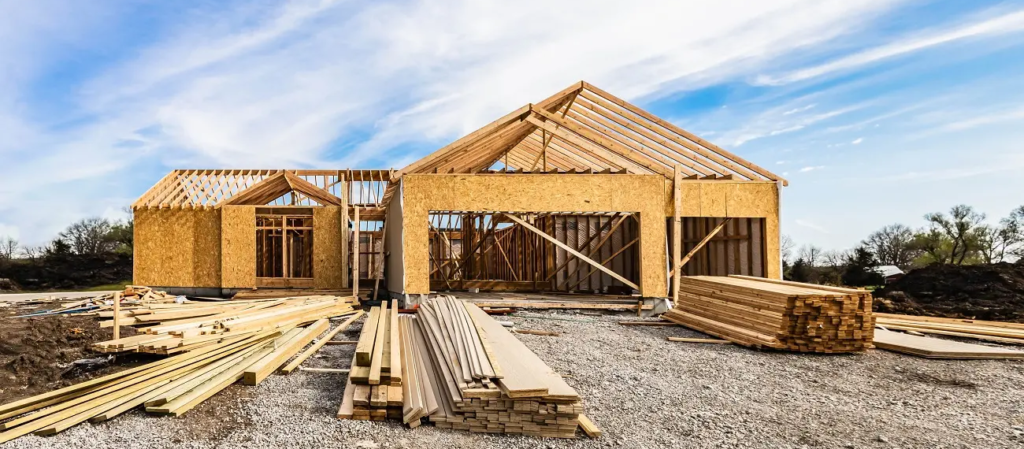
The Supreme Court struck down tariffs imposed under IEEPA on February 20, 2026, in a 6-3 decision in Learning Resources, Inc. v. Trump, according to Fortune, and the administration rebuilt the regime under other authorities. Section 232 tariffs still sit at 50% on steel, aluminum and certain copper products and 10% on softwood lumber, with lower rates for some trade partners, per the Tax Foundation. The Yale Budget Lab, in its July 2026 estimate, puts the consumer price impact at about 0.7%, or roughly $1,100 per household a year. If any of that tariff burden comes off, even partially, peeling back part of that 0.7% price bump would cool inflation at the margin and hand the Fed one less reason to keep rates high.
Builders feel it directly. NAHB reports building material prices up 5.5% year over year in September, the highest rate since December 2022, with inputs to new residential construction up 10.3%. Every one of those dollars shows up in the price of a new home, and new homes set the ceiling for resale prices across North Texas. The outcome to watch is builder pricing: if material costs ease, builders can pass the savings to buyers through lower base prices or bigger incentives, which gives buyers more choice and forces resale sellers to sharpen their pricing.
House Democrats put undoing the tariff regime in their “first 100 hours” agenda once the new Congress is seated, as part of a broader push to claw back power from the White House, according to the Associated Press. The realistic path runs through forced votes, funding fights, hearings, court challenges and negotiation, because the President still holds the veto, though his veto can be overridden. The tariffs that hit housing hardest, the Section 232 duties on steel, aluminum and lumber, are also the toughest to unwind over a veto, so the honest call is pressure and direction in 2027, not an overnight repeal.
Realistically, expect three outcomes: tariffs turned into bargaining chips in funding deals, relief on consumer goods arriving well before relief on building materials, and continued court challenges that could knock out more of the regime the way the Supreme Court already did with IEEPA.
Channel Three: Confidence Follows Affordability
Consumer sentiment is sitting near historic lows. The University of Michigan’s final October reading came in at 48.0, 10% below a year earlier, with year-ahead inflation expectations at 4.7%, according to TheStreet. The Conference Board index jumped 7.5 points to 91.7 in October, and its senior economist tied the rebound directly to gasoline prices easing, per the Associated Press. If gas keeps falling, that same index is already telling you the outcome: confidence follows, and buyers who have been sitting out start touring again.
Read those two together and you have the entire argument in one sentence: when everyday costs fall, people feel richer, and people who feel richer buy homes. The CBS News exit poll found roughly nine in 10 voters called cost of living a major factor in their vote. Voters sent an affordability message, and confidence is the first place that message shows up in housing. The likely outcome is demand with a trigger: the first stretch of visibly lower costs pulls buyers off the sidelines, and that crowd shows up at open houses well before it shows up in the sales data, with the University of Michigan’s preliminary November reading in mid-November serving as the first post-election test.
Channel Four: The Fed Moves Expectations. The Bond Market Sets Your Rate.
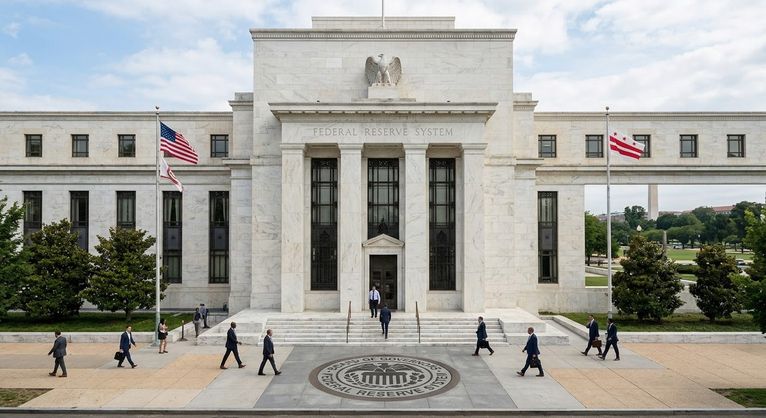
Here’s the myth that costs buyers money: the Fed does not set mortgage rates. It sets the overnight federal funds rate, while your 30-year mortgage is priced off the 10-year Treasury yield plus a spread that lenders and mortgage-bond investors demand on top of it. The Texas Real Estate Research Center calls the 10-year a critical benchmark for 30-year mortgage rates and tracks that spread separately. It narrowed 17 basis points in September to 174 basis points. The Fed raised its own benchmark to 3.75% to 4.00% on September 16 and held on October 28 in a 10-2 vote where both dissenters wanted another hike, according to the Fed’s own statement, and Chair Kevin Warsh said politics played no role in the decision. The Fed’s real power over your mortgage is the signal it sends bond investors about inflation and the path of short-term rates, so if those two dissenters win the argument in December, the likely outcome is a bond market that pushes the 10-year, and your rate with it, back toward October’s highs.
This fall already proved who’s in charge. The Fed was holding with two members pushing for a hike, yet Freddie Mac’s 30-year average fell from 7.40% in mid-October to 7.24% by October 29 as the 10-year came off its highest level since 2002. That’s why the chain you should be watching runs from oil and tariffs into inflation, then into the 10-year Treasury, then into your rate. Fed research puts tariffs at a few tenths of a point of inflation, per the Minneapolis Fed, while the war is worth up to about 1.8 points depending on the scenario. Bring both down and bond investors stop demanding an inflation premium, no matter what the Fed does next. The next real checkpoint is the December 8–9 FOMC meeting, when the Fed releases fresh projections that bond investors will read for the road ahead. The best case is a December pause paired with softer projections, which would tell the bond market the hiking cycle is finished and likely pull the 10-year and mortgage rates lower heading into spring. Either way, a buyer who has already negotiated a strong price keeps that win, because the price is permanent while a rate can always be refinanced later.
Channel Five: Construction Labor and the Cost of Building

Immigration enforcement has become a homebuilding story. Undocumented workers make up roughly a quarter of the Texas construction workforce, according to the American Immigration Council via Marketplace, and the South Texas Builders Association estimates enforcement-related delays have added $10,000 to $20,000 per home, per KRGV. South Texas builders, including Republicans, warned of voter backlash in November if the raids continued, as the Texas Tribune reported. If enforcement continues at its current pace, those costs keep landing in new-home prices and build timelines, while an eased pace on job sites could let builders recover part of that $10,000 to $20,000 per home and redirect it into incentives.
The hardest numbers come from South Texas, and HousingWire found the labor squeeze swings hard from market to market, so DFW builders feel it unevenly. Congressional oversight of ICE won’t create new work permits on its own, but appropriations riders and hearings can change how enforcement hits job sites. Fewer delays means faster deliveries and less cost baked into every new house competing with yours. For buyers, the outcome is more finished inventory and better builder deals heading into 2027, while DFW resale sellers should expect that competition to get sharper, not softer.
What Congress Can Actually Do, and When
The new majorities are real. Democrats hold the Senate 54–44 with Alaska and Mississippi still uncalled, according to AP calls compiled by State Capital Lobbyist, and Democrats took the House with at least 25 flips, per Al Jazeera. They’re scheduled to take over January 3, 2027, but the veto math still bites. Overriding a presidential veto takes 290 House votes and 67 Senate votes with every member voting, so any laws the President vetos will still need Republican votes to overturn.
That doesn’t make the majority weak, they will control committees, subpoenas, the hearing calendar and, above all, the power of the purse. Every government funding deadline in 2027 could become a negotiation over tariffs, war spending and enforcement, and markets will price each one ahead of time before it resolves.
North Texas Market Insider · Election 2026
What the New Congress Can and Can’t Do
The majorities are real, and so is the veto. Here’s where the leverage actually sits, and what that means for rates and housing in 2027.
U.S. Senate
54–44
Democratic control; Alaska and Mississippi still uncalled Nov. 4
U.S. House
25+ flips
Democratic control called; dozens of races still counting
Veto override
290 / 67
House / Senate votes needed with every member voting
Can do
Control the power of the purse
Every funding deadline becomes a negotiation over tariffs, war spending and enforcement.
Force votes
Put tariff rollbacks and war funding on the record, starting in the first 100 hours.
Run oversight
Committees, subpoenas and hearings, including on ICE and the war.
Shape housing law funding
Appropriations decide how far the ROAD to Housing Act’s programs reach.
Can’t do alone
Override a veto
Even optimistic counts fall short of two-thirds, so laws the President opposes need Republican votes.
Repeal tariffs overnight
Section 232 duties on steel, aluminum and lumber are the hardest to unwind over a veto.
Set mortgage rates
The bond market does. Congress moves rates only through inflation, deficits and confidence.
Take over before Jan. 3
The new majorities are scheduled to take over January 3, 2027. Until then, the current Congress runs the lame-duck session.
Markets price each funding fight before it resolves. That’s the expectations trade, and it starts now.
Sources: AP calls compiled by State Capital Lobbyist and Al Jazeera (Nov. 4, 2026 counts); CRS RS22654 (veto override); Associated Press via PBS (House Democrats’ first-100-hours agenda); Tax Foundation (Section 232); CRS R49354 and Congress.gov (ROAD to Housing Act); U.S. Constitution, 20th Amendment. Results remain unofficial. Compiled by Bobby Franklin, REALTOR®, Legacy Realty Group – Leslie Majors Team.
One housing change is already locked in regardless of who won. The 21st Century ROAD to Housing Act, Public Law 119-101, became law July 11, 2026 without the President’s signature, and it bars entities controlling 350 or more single-family homes from buying more starting January 7, 2027, according to the Congressional Research Service. Exceptions include build-to-rent, homes substantially rehabbed for rental and lenders taking homes through foreclosure. Expect a modest easing of entry-level competition in parts of DFW, not a price reset.
Texas Flipped Too: What Hinojosa’s Agenda Could Mean for Housing

The statewide sweep runs deep. Hinojosa defeated Abbott, who conceded Tuesday night, per KPRC and CBS News Texas. Democrats also won lieutenant governor with Vikki Goodwin, per FOX 4, and attorney general with Nathan Johnson, while Sarah Eckhardt declared victory in a comptroller’s race the AP still called too close to call overnight. Republicans are expected to keep the Texas Senate, and control of the Texas House was still uncalled this morning, according to the Texas Tribune.
The calendar here really matters. The 90th Legislature convenes January 12, 2027, with bill pre-filing opening November 9, per the Texas Legislative Council and Hinojosa taking office January 19. A Democratic governor and lieutenant governor working with a Republican Senate is new territory for Texas, so every projection below is a potential direction to plan around, but not anywhere close to a promise.
Here’s what her platform could mean for North Texas real estate, policy by policy:
North Texas Market Insider · Texas 2027
Hinojosa’s Agenda and What It Could Mean for North Texas Housing
Her platform, policy by policy, with the projected effect on buyers, sellers and owners. Most of it runs through the Legislature, so read these as direction, not done deals.
Legislature convenes
Jan. 12, 2027
Takes office
Jan. 19, 2027
Texas Senate
Expected to stay R
Texas House
Uncalled Nov. 4
Property tax relief
End corporate subsidies to cut property taxes, with an end goal of eliminating residential property taxes.
Housing effect: Lower carrying costs raise buyer purchase power. Over time, cuts tend to get priced into home values, rewarding current owners too.
$1,500 per household
One-time payment from about $17 billion of the Rainy Day Fund.
Housing effect: A boost to savings and confidence. Helpful for closing costs, not a game-changer for down payments.
Institutional buyer limits
Her 2025 bill would have kept institutional investors from buying more than 10 single-family homes.
Housing effect: Stacks on the federal 350-home limit starting Jan. 7. Could ease competition for entry-level homes.
Data center permit pause
Moratorium on new permits until lawmakers set protections; projects underway continue.
Housing effect: Two-sided for DFW and Ellis County: less grid and utility pressure, weighed against fewer jobs and a smaller school tax base.
School vouchers
Opposes the $1 billion voucher program.
Housing effect: Keeps public school funding at the center of the property tax fight, where most of a Texas tax bill goes.
Homeowners insurance
No specific plan released; her campaign backs banning bad-faith claim denials.
Housing effect: The biggest open question. Insurance is now one of the largest pieces of a North Texas payment.
Baseline today: a $140,000 school-tax homestead exemption, plus $60,000 more for qualifying homeowners 65 and older or disabled. Any relief builds from there.
Sources: Gina Hinojosa campaign platform; Kiplinger; Big Country Homepage; CBS News Texas; Texas Tribune (Oct. 8, 2026 affordability guide); Texas Tribune (Nov. 4, 2026 legislative results); Texas Legislative Council; KHOU; Texas Comptroller. Housing effects are analysis, not forecasts. Compiled by Bobby Franklin, REALTOR®, Legacy Realty Group – Leslie Majors Team.
The real constraint will be the Legislature. Property tax and subsidy changes need lawmakers, and eliminating homeowners’ school taxes would leave the state billions of dollars to replace, as KUT reported about Abbott’s version of the idea. Any plan that goes as far as Hinojosa’s end goal faces the same math. Hinojosa will have the veto, a line-item budget veto, special sessions and appointments, which gives her real power to set direction. The baseline she inherits is the $140,000 school-tax homestead exemption plus $60,000 for qualifying homeowners 65 and older or disabled, per the Texas Comptroller.
Where DFW Stands Right Now

North Texas walks into all of this as a buyer’s market with real leverage. NTREIS data for September shows 6,759 single-family sales in the Dallas–Fort Worth–Arlington metro, down 7% year over year, a median price of $385,000, down 1%, and 4.3 months of inventory, according to the MetroTex monthly report. Homes sold at about 93.9% of original list price, roughly 6% under the first asking price.
That’s the opportunity sitting in plain sight. Buyers have negotiating room today while rates are drifting lower on expectations, and the moment those expectations turn into actual policy, the buyers who waited could come back all at once. Check the live DFW market updates and the September North Texas market report for the latest.
Three Ways 2027 Could Play Out
None of these scenarios depends on which party you voted for. All three reward the person who already has a plan.
North Texas Market Insider · 2027 Outlook
Three Ways 2027 Could Play Out
None of these depends on which party you voted for. All three reward the person who already has a plan.
Peace and pressure
Rates: likely lower by spring
What happens
The war winds down, oil falls and tariff pressure builds through funding fights.
DFW housing
Confidence rebuilds and buyer competition returns by spring.
Buyer move
Negotiate now, before the crowd comes back.
Seller move
Prep now to list into the spring window.
Gridlock
Rates: hovering near 7%
What happens
Veto standoffs, the war drags on and tariffs mostly hold.
DFW housing
Leverage stays with buyers; sellers compete on price and condition.
Buyer move
Use inventory and builder incentives to your advantage.
Seller move
Price for the market you have, not the one you hope for.
Escalation
Rates: back above 7.40%
What happens
Oil spikes again or funding fights rattle the bond market.
DFW housing
Sales slow further and prepared buyers find the best deals.
Buyer move
Lock early and budget without counting on a refinance.
Seller move
Lead with condition and concessions to stand out.
Watch the signals in order: oil, inflation reports, the 10-year Treasury, then the weekly Freddie Mac average.
Scenarios are analysis, not forecasts. Reference points: Freddie Mac PMMS October 2026 peak of 7.40% and October 29 average of 7.24%. Compiled by Bobby Franklin, REALTOR®, Legacy Realty Group – Leslie Majors Team.
Buyer Strategy: Act on Expectations, Not Headlines
The playbook is simple. Lock in your negotiating leverage now, while inventory is high and homes are selling about 6% below their original asking price, and if rates fall further in 2027, refinancing is a tool you can use later. Nobody can promise lower rates, so set a budget that works today without counting on a refinance. Waiting for every policy to land means you’ll be shopping alongside everyone who waited with you.
Always get multiple quotes with the same loan type, down payment, lock period, points and fees so you’re comparing real numbers, and make sure to budget the full payment with taxes and insurance. These are the lenders I trust to run those numbers:
- Andrew Bryan, Miramar Mortgage: andrewthelender.com
- Jennifer Nelson, Eustis Mortgage: eustismortgage.com
- Taylor Fruge, Lower Mortgage: lower.com
- Rachael Carter, My TX Mortgage Team: mytxmortgageteam.com
I recommend these lenders based on their expertise and service. I do not receive compensation for referrals.
When you’re ready to shop, start with the North Texas listings and the buyer resources.
Seller Strategy: The Spring Window Is Being Built Right Now
If rates keep easing, buyers will come back, and they’ll come back to a market that still has more than four months of inventory to choose from. The sellers who win that window are the ones who prepare now: condition, pricing strategy and a clear read on the new-construction competition down the road. Builders are still using financing incentives, so compare your home against what a buyer can actually get this week, using the new-home versus resale breakdown.
Ask for two net-proceeds scenarios, one now and one in the spring. Then run the spring number without assuming appreciation. If waiting only works in the best case, it isn’t a plan, its just wishful thinking. Click here to get started with a property-specific home-value review.
The Insider Take

Elections absolutely move housing, and this one moved it before the polls even closed. Rates came off a 24-year high in the bond market, confidence is following gas prices, and voters in both Washington and Austin just made affordability the mandate. The new policies will take months to enact and will likely run into vetoes along the way from a Republican Texas Senate and a Fed that answers to inflation, not politics.
That gap between expectations and policy is where the opportunity lives. While everyone else waits for proof, the buyers and sellers who move will be five steps ahead by the time the proof arrives. Chaos rewards the prepared, and right now the market is paying the people who are paying attention.
Frequently Asked Questions

How will the 2026 midterm results affect the North Texas housing market in 2027?
Through expectations first and policy second. The 10-year Treasury fell from about 5.34% in early October to roughly 4.9% by Election Day, and Freddie Mac’s 30-year rate eased to 7.24%. Policy on tariffs, the Iran war and enforcement will move slower because of veto limits, but markets are already pricing the direction.
Will mortgage rates go down after the 2026 midterms?
They’ve been easing, but no outcome is guaranteed. The biggest lever is oil and the Iran war, followed by tariffs, both of which feed inflation and the Fed’s next move. Watch the Fed’s December 8–9 meeting and the weekly Freddie Mac survey.
Can Democrats end tariffs now that they control Congress?
They can force votes, attach conditions to funding bills, hold hearings and pressure the administration. The President can still veto, but Democrats don’t have the two-thirds needed to override, so expect pressure and direction in 2027 rather than an immediate repeal.
How does the Iran war affect North Texas home prices?
Through a simple chain: the war pushes oil prices up, higher oil pushes inflation up, and higher inflation keeps mortgage rates up. In a severe scenario, economists estimate the war could add as much as 1.8 percentage points to inflation. If the conflict ends, oil prices should fall, and mortgage rates and everyday costs would likely follow. The trade-off for Texas is that lower oil prices also mean less energy revenue for the state.
What does Gina Hinojosa’s win mean for Texas property taxes?
She campaigned on ending corporate subsidies to fund property tax cuts, with a long-term goal of eliminating residential property taxes. Any change will need the Legislature, which convenes January 12, 2027, which won’t be clear cut since the Texas Senate remains Republican. Gina’s inherited baseline is a $140,000 school-tax homestead exemption.
When does Hinojosa take office?
January 19, 2027. The Legislature convenes January 12, and bill pre-filing opens November 9, 2026.
Will investors stop buying homes in North Texas?
Large ones are facing new limits. Starting January 7, 2027, entities controlling 350 or more single-family homes are barred from buying more under the federal ROAD to Housing Act, with some exceptions. Hinojosa has also backed tighter state limits on institutional buyers, which could bring further changes.
Should I buy now or wait for the new policies?
In a market with 4.3 months of inventory and homes selling around 6% under original list price, buyers have unusual leverage today. If rates fall later, refinancing is an option, though not a guarantee, but waiting for policy likely means competing with everyone else who waited and losing considerable leverage against sellers.
Should I sell now or wait until spring 2027?
Spring could bring more buyers if rates keep easing, but there will still be plenty of inventory to compete against, potentially more if new construction costs start easing.
Get Your 2027 Game Plan
The market is pricing what’s coming. Let’s make sure your plan is too. Whether you’re buying, selling or doing both, we’ll build your strategy around today’s leverage and what the next 90 days are likely to bring. Request a North Texas strategy consultation.
Bobby Franklin, REALTOR® North Texas Market Insider Legacy Realty Group – Leslie Majors Team Serving Ellis County and the greater Dallas–Fort Worth area TREC License #0805459 | 214-228-0003
This article is educational and is not legal, tax, lending or investment advice. Some election results, including several U.S. House and Senate seats and control of the Texas House, remain uncalled or uncertified as of November 4, 2026. Projections are analysis, not guarantees. Brokerage compensation is negotiable. Housing guidance is provided in accordance with the Fair Housing Act.







Join The Discussion