

By Bobby Franklin, REALTOR® | North Texas Market Insider™ | Legacy Realty Group – Leslie Majors Team | Serving Ellis County, DFW & Greater North Texas
You’ve seen the signs. Celina. Little Elm. Forney. Anna. Princeton. Beazer Homes has been planting flags across North Texas for years.
That’s all coming to an end.
On August 7, 2026, Dream Finders and Beazer Homes USA announced a definitive all-cash merger agreement entered into the previous day. Roughly $915 million in equity value, about $2.2 billion including debt. The combined company becomes the nation’s sixth-largest homebuilder. The Wall Street Journal confirmed Beazer shareholders get $33.50 cash per share. Dream Finders’ own investor announcement lays out the full terms.
Here is my read: this deal will not make new construction cheaper in North Texas, and it was never designed to. It was designed to consolidate purchasing power, thin the field of independently branded competitors in the exact corridors where entry-level buyers shop, and(this is the part almost nobody is covering) capture more of your mortgage and title business.
That last item is not my speculation. It is in the investor materials. Dream Finders told Wall Street it expects more than $100 million in annual run-rate synergies from purchasing and production efficiencies, reduced overhead, eliminated duplicate public-company costs, and higher mortgage and title capture rates. Builder Magazine’s coverage notes the combined operation will lean on Dream Finders’ in-house title insurance and mortgage banking capabilities.
Translate that into English: a $6.6 billion homebuilder has just told its shareholders that part of the return on this acquisition depends on more buyers using its lender instead of yours.
What Actually Happened
Dream Finders didn’t buy Beazer on a whim. It hunted Beazer for six months and was told no repeatedly before being accepted.
Dream Finders × Beazer · Announced August 7, 2026
The Deal at a Glance
An all-cash acquisition that creates the sixth-largest homebuilder in the United States, targeted to close in the fourth quarter of 2026.
$33.50
Cash per Beazer share
$915M
Equity value
$2.2B
Enterprise value with debt
0.8×
Price-to-book multiple — bought below stated asset value
$6.6B
Combined annual revenue
88,000
Lots controlled
520
Active communities nationwide
26
Of the 50 largest U.S. metro areas
Source
Dream Finders Homes and Beazer Homes USA joint transaction announcement, August 7, 2026; Builder Magazine; The Wall Street Journal. Figures as announced and subject to Beazer shareholder and regulatory approval.
The first private approach came February 5, 2026. By May, Dream Finders went public with a $25.75-per-share offer roughly $704 million after Beazer’s board declined to engage. Dream Finders published the correspondence itself. Beazer rejected it as undervalued against book value. June 30 Dream Finders brought a revised $32.00 per share, submitted privately and disclosed publicly on July 8. They were still told no. But, on August 6 with an offer at $33.50, Beazer finally said yes.
The financing comes from existing capital plus committed money from Goldman Sachs, Bank of America, and affiliates of Kennedy Lewis Asset Management. Both boards approved unanimously with a target close in the fourth quarter of 2026, pending Beazer shareholder approval and regulatory clearance.
The scale of the new entity: approximately $6.6 billion in combined annual revenue, around 88,000 lots, roughly 520 active communities, and a footprint spanning 26 of the country’s 50 largest metropolitan statistical areas. Beazer alone operates in 15 markets across 13 states and delivered 4,427 homes in 2025.
Dallas–Fort Worth is one of the deepest markets in that footprint. NewHomeSource currently tracks 24 active Beazer communities in the Dallas area, with additional communities counted separately in the Fort Worth market.
This is not just Wall Street noise this could affect your subdivision.
Seven months, four builders
The 2026 Consolidation Wave
Dream Finders pursued Beazer for six months and was turned down twice before the price cleared. It happened alongside three other national acquisitions.
- FEB 2026
Stanley Martin acquires United Homes Group
Daiwa House–owned Stanley Martin makes the first major move of the year.
- FEB 5
First private approach to Beazer
Dream Finders opens contact. No public disclosure at the time.
- MAY 2026
Sumitomo Forestry closes on Tri Pointe Homes
A second public builder leaves the competitive field.
- MAY 2026
Offer goes public at $25.75 per share
Roughly $704 million. Beazer’s board declines to engage, calling it undervalued against book.
- JUN 30
Revised bid at $32.00 per share
Submitted privately, disclosed publicly on July 8. Rejected again.
- JUL 24
Berkshire Hathaway closes Taylor Morrison
Approximately $8.5 billion enterprise value, folded into Clayton Properties Group to form the nation’s fourth-largest builder.
- JUL 2026
Stanley Martin adds Holiday Builders
Florida operations absorbed. Fourth builder of the year.
- AUG 6–7
Agreement signed at $33.50 per share
Announced August 7. Both boards unanimous. Target close: fourth quarter 2026, pending Beazer shareholder and regulatory approval.
Source
Dream Finders Homes investor communications and transaction announcement; Reuters; Berkshire Hathaway and Taylor Morrison closing announcement, July 24, 2026; John Burns Research and Consulting; NAHB Eye on Housing.
Why Dream Finders Wanted Beazer This Badly

Understand the “why” and you can predict the “what’s next”.
Mid-sized builder economics are brutal right now. NAHB’s Eye on Housing reports the 30-year mortgage rate averaged 6.49% in June 2026, with new home sales running 7% behind last year and housing starts down 5% versus the first half of 2025. Rates have not cooperated since: Freddie Mac’s Primary Mortgage Market Survey climbed through July and sat at 6.65% as of August 20, 2026.
Margin pressure is the fuel behind consolidations like this and it always has been.
The same NAHB survey found the share of builders reporting increased merger/acquisition activity in their local markets jumped from 14% in August 2025 to 21% in June 2026, while the share who had been approached about being acquired doubled, from 9% to 18%. Zelman & Associates has separately flagged that public builders now account for roughly 53% of national new-home sales, with scale becoming the primary survival lever. You can read Zelman’s full analysis here.
Dream Finders isn’t acting alone, not even close. Sumitomo Forestry closed its acquisition of Tri Pointe Homes in May 2026. Berkshire Hathaway completed its Taylor Morrison purchase on July 24 at approximately $8.5 billion enterprise value, folding it into Clayton Properties Group to create the country’s fourth-largest builder. Daiwa House-owned Stanley Martin took United Homes Group in February and moved on Florida’s Holiday Builders in July.
Four major builders were absorbed in just 7 months.
Margin pressure is the fuel of consolidation
Why Builders Are Selling
Mergers this size don’t happen in strong markets. Here is the 2026 environment that put four national builders on the block in seven months.
What changed — August 2025 to June 2026
Builders reporting increased M&A activity in their local market
NAHB / WELLS FARGO HMI SURVEY
Builders who have been approached about being acquired — doubled
NAHB / WELLS FARGO HMI SURVEY
30-year fixed mortgage rate, June 2026 to August 20, 2026
NAHB / FREDDIE MAC PMMS
The demand picture builders are pricing against
−7%
New home sales versus the same period in 2025
−5%
Housing starts, first half 2026 versus first half 2025
~53%
Share of national new-home sales held by public builders
4
National builders acquired between February and August 2026
Source
NAHB Eye on Housing, July 2026, drawing on the NAHB/Wells Fargo Housing Market Index survey; Freddie Mac Primary Mortgage Market Survey, week of August 20, 2026; Zelman & Associates; John Burns Research and Consulting.
Why this hits North Texas harder than most markets: DFW has always run an unusually deep bench of competing builders. That bench is thinning. Beazer’s absorption is just one more name off the board in the entry-level and move-up inventory you’re actually shopping.
Will This Make New Construction Cheaper or More Expensive in DFW?

This is perhaps the most-searched question attached to any builder merger and here’s the answer the sales office won’t give you.
Dream Finders is promising over $100 million in annual synergies from purchasing power, reduced overhead, and operational efficiency, savings that could in theory show up as incentives. ResiClub’s post-announcement analysis quotes the company directly.
Those savings are not going to reach you as a lower price. They were promised to shareholders as accretive earnings. A builder that just borrowed against a $900 million bridge facility to close a deal, does not hand its synergies to buyers voluntarily. What consolidation reliably delivers to the buyer is not a discount but rather a narrower menu.
A December 2025 University of Texas at Dallas study, cited in Homes.com’s national consolidation reporting, found greater consolidation in homebuilding can reduce supply, raise prices, and lower construction quality in some markets, because large builders lean on standardized floor plans with preselected finishes instead of competing on flexibility.
The honest counterweight, from the same reporting: John Burns Research vice president Danielle Nguyen argues bigger companies negotiate with more purchasing power, which can lower construction costs and help entry-level buyers. She isn’t wrong about the mechanism. The question is whether the savings get passed through or booked as margin, and history in consolidated building markets says margin.
Read the investor materials, not the sales office
Where the Savings Actually Go
Dream Finders told shareholders this acquisition produces four categories of annual savings. One of them is you.
$100M+
Expected annual run-rate synergies
Purchasing and production efficiency
Materials, labor, and cycle times negotiated across a larger combined volume.
Reduced overhead
Consolidated divisions, corporate functions, and regional administration.
Eliminated duplicate public-company costs
One set of filings, audits, and listing obligations instead of two.
Higher mortgage and title capture rates
More buyers financing and closing through the builder’s in-house lender and title company instead of an outside one.
What that means at the model home. Items 01 through 03 happen inside the company. Item 04 happens across the table from you. A $6.6 billion homebuilder has told its shareholders, on the record, that part of the return on this deal depends on where your loan originates. Ask for the incentive with an outside lender — in writing — and compare the two.
Source
Dream Finders Homes investor announcement, August 2026; Builder Magazine. The company has not disclosed a dollar split among the four categories, and none is implied here.
Here’s the realistic North Texas scenario. There will likely be fewer standalone Beazer floor plans and design options over time. We could also see continued, possibly expanded, aggressive rate buydowns and closing cost incentives, because incentives are the primary tool builders use to move inventory in a soft sales environment. There’s also a good chance there will be less brand-level competition in the submarkets where Beazer has been most active like; Anna, Celina, Forney, Little Elm, Royse City.
Buyers Beware: Less competition is rarely a buyer’s friend.
If You’re Already Under Contract with Beazer

Your contract doesn’t change. Not today.
Deals this size close months after signing, which doesn’t happen until Q4 2026, until then Beazer operates as an independent public company under its existing brand, with its current warranty obligations and community management, per the joint transaction announcement. Wildflower Ranch in Justin, Woodcreek in Fate, Bayside in Rowlett, Whitewing Trails in Princeton will all remain business as usual through closing.
The risk isn’t the merger itself, it’s the integration.
When a national builder absorbs a smaller public competitor, three things reliably happen inside 12 to 24 months. Brand names fold into the parent company’s naming conventions. Standardized floor plans replace local product lines and structural warranty administration shifts to the acquirer’s in-house or third-party provider.
So if you’re mid-construction: get the sales office to confirm in writing which entity carries your one-year and structural warranty coverage post-closing. Keep every document purchase agreement, selections, change orders. All of it.
Which North Texas Cities Have the Most at Stake
Beazer’s DFW footprint is concentrated in the northern and eastern growth corridors. Here’s every Dallas-area city where Beazer is currently building, with the entry price for that city’s least expensive active community.
14 cities · Dallas area
Beazer’s North Texas Entry Prices
Starting price of the least expensive active Beazer community in each Dallas-area city. Bars are drawn from a zero baseline, so the lengths are proportional to actual price.
Source
NewHomeSource active Beazer Homes listings, Dallas area, August 2026. This database updates daily — verify current pricing with the community before relying on it. No Ellis County or Midlothian communities are currently listed.
Pricing and community counts reflect NewHomeSource’s Beazer listings as of August 2026. That database updates daily. Verify current pricing before you rely on any of it.
Shopping one of these corridors? Our New Home Communities guide breaks down every active builder in each one, not just Beazer so you can compare apples to apples before you sign.
The Ellis County Read: Why This One Misses Us, and What That Tells You
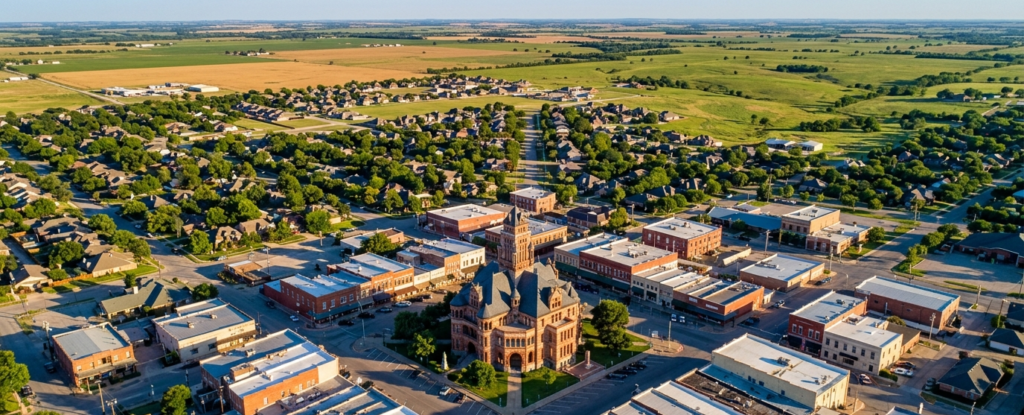
Every headline about this deal is going to be written for Collin, Denton, Kaufman, and Rockwall counties so here’s the part written for the I-35E corridor.
Beazer maintains a Midlothian market page and has built in Ellis County, but it currently lists no active Midlothian communities in the major new-construction databases other than Goodland. In effect, this merger touches Ellis County far less directly than it touches the northern and eastern growth arcs.
The interesting question isn’t whether it misses us. It’s why it misses us.
Beazer is a publicly traded national builder that competes on standardized product at volume. That model needs large tracts of contiguous, entitled, utility-ready lots delivered by master-plan developers on a national land-banking timeline, which is precisely what Celina, Anna, and Princeton have been manufacturing for a decade. The Ellis County corridor has grown quite differently from the northern corridor. Our builder field skews private and regional with builders like: Bloomfield, John Houston, Graham Hart, Lakeway, Centre Living and Highland Homes. Companies that acquire land in smaller phases, build to local demand, and don’t answer to the same national scale quarterly earnings call.
The public-builder consolidation wave has a specific target profile, and the Ellis County corridor doesn’t match it, yet. Our March 2026 North Texas Market Report identified Midlothian as carrying 15-plus active new-construction communities and called it the hottest builder corridor south of I-20. That competitive dynamic survives this deal intact. Buyers shopping Redden Farms in Midlothian, or weighing new construction against resale in Waxahachie and Midlothian, still have real leverage from real competition. That is a genuine, measurable advantage over the northern corridors right now.
Here’s the five-steps-ahead part. Private and regional builders are exactly the acquisition targets NAHB’s own survey says are being approached at double last year’s rate. And this corridor is about to get a strong infrastructure spine(Loop 9, the data center build-out, the utility investment) that makes large-lot delivery viable at national-builder scale. The conditions that have kept Ellis County out of the consolidation crosshairs are the conditions that are actively changing.
Enjoy the competition while it lasts. Don’t assume it’s permanent.
Fair Housing: The Rules That Don’t Bend
Any honest conversation about builders, agents, and commissions has to start with federal law. That’s especially true in a market consolidating this fast.
The Fair Housing Act makes it illegal for any real estate professional, builder representative, or agent to direct buyers toward or away from specific communities, builders, or neighborhoods based on race, color, religion, sex, national origin, familial status, or disability. That protection applies fully to new-construction sales offices and on-site builder representatives, not just resale transactions. This University of Tulsa Law Review analysis explains the statutory basis for those violations under 42 U.S.C. § 3604.
There’s a second dimension, and it’s financial.
Under the NAR Code of Ethics, an agent representing a buyer has a fiduciary duty to present the community, builder, and floor plan that best serves that buyer’s needs and budget. Not the one paying the highest commission. As consolidation shrinks the number of independent brands competing for your traffic and as a combined Dream Finders/Beazer potentially standardizes incentive structures across communities, that obligation gets more important, not less.
Homes.com’s national reporting flags the mechanism directly: as fewer builders control more inventory, buyer flexibility on floor plans, finishes, and negotiated concessions tends to shrink. That is precisely the environment where an independent buyer’s agent earns their keep rather than relying solely on the builder’s on-site sales rep.
RESPA, Commissions, and the 2024 Rewrite
Shopping new construction for the first time since the industry’s 2024 commission overhaul? Read this before you walk into a model home.
Effective August 17, 2024, NAR implemented sweeping practice changes as part of a $418 million antitrust settlement. Buyer’s agent compensation can no longer be advertised on the MLS. Any buyer working with an agent, including at new-construction sales offices, must sign a written buyer representation agreement before that agent tours homes with them, per NAR’s official settlement summary.
Buyer agent commissions did not disappear. They just left the MLS.
Builders like Beazer and Dream Finders can still offer compensation to a buyer’s agent, they simply can’t advertise it on the MLS. It moves to the builder’s website, printed materials, or broker-to-broker outreach. NAR’s compensation and concessions guidance confirms the distinction. The data backs it up: Redfin’s tracking shows buyer’s agent commissions on homes under $500,000 rising after the rule change, not falling, reaching 2.52% in the second quarter of 2025, the highest for that tier in nearly two years, before settling back near pre-settlement levels. Most Beazer and Dream Finders product in DFW sits comfortably under that price threshold. That’s your segment.
Now, RESPA and this is where the merger stops being abstract.
Builders and their affiliated mortgage or title companies are prohibited from paying kickbacks or referral fees to agents in exchange for directing buyers toward the builder’s in-house lender or title company. Federal law requires any incentive tied to lender choice to be disclosed transparently, and it cannot be conditioned in a way that violates RESPA’s anti-kickback provisions.
Read that against the investor materials again. The combined company has told shareholders it expects higher mortgage and title capture rates to contribute to $100 million in synergies. Legal? Entirely. Builders are permitted to incentivize use of an affiliated lender, provided the arrangement and any conditions are disclosed. But you should walk into that sales office knowing that the person quoting you an incentive package has an employer with a stated, documented, board-approved financial interest in where your loan originates.
Ask for the incentive with an outside lender. In writing. Then compare the two.
What Independent Representation Actually Buys You

Here’s what the sales office won’t volunteer.
The person behind the desk in that beautifully staged model home represents the builder. Full stop. They may be warm, sharp, and genuinely good at the job. They still have zero legal or fiduciary duty to negotiate your best price, flag a better-value lot, or tell you the builder three streets over is running a stronger incentive package.
Dream Finders and Beazer are combining into a $6.6 billion revenue enterprise with roughly 520 communities. That dynamic doesn’t change. It just scales.
Bringing your own buyer’s agent to a new-construction transaction costs you nothing in the vast majority of cases, builders routinely compensate cooperating agents for bringing qualified buyers, and that agent you bring works exclusively for you. That matters most in a merger environment, when community-level pricing, inventory, and incentive structures may be shifting behind the scenes as Dream Finders integrates Beazer’s Texas operations. For the step-by-step on contracts, earnest money, and builder incentive negotiation in North Texas, our full walkthrough on how new construction actually works covers it start to finish.
Shopping a Beazer Community Right Now? Three Moves.

If you’re touring in Anna, Celina, Little Elm, Forney, Princeton, or Royse City treat the next few months as a window, not a warning. Deals this size rarely disrupt active sales offices before closing, and Dream Finders reaffirmed its full-year 2026 outlook of approximately 9,250 home closings excluding any Beazer contribution, signaling continuity through the transition.
One: Get everything in writing. Verbal incentive promises, rate buydowns, closing cost credits, get them written into the purchase agreement. Sales staff and incentive programs change hands, or vanish, once integration starts after the Q4 2026 close.
Two: ask who owns the warranty. Specifically, whether your community’s warranty administrator stays the same post-merger. Structural warranty continuity is one of the first things large acquirers standardize.
Three: understand the clock cuts both ways. Beazer is still chasing its own independent sales targets before it folds into Dream Finders, and builders in a slow 2026 market are already conceding real money, which argues for moving now. The counterargument is real, and I’ll make it for you: a post-close Dream Finders pushing volume through a captive mortgage and title operation may put more incentive money on the table, not less, because financing capture gives it a second profit center to subsidize the first. If your timeline is flexible and your target community is deep in inventory, waiting is a defensible play.
What isn’t defensible is walking in without knowing which of those two forces is operating on your specific community. That’s a question with an answer, and it’s worth getting before you sign.
Frequently Asked Questions About the Dream Finders–Beazer Merger

Is Beazer Homes going out of business? No. Beazer is being acquired by Dream Finders in an all-cash transaction, not liquidated or shut down. It will continue operating and honoring existing contracts, warranties, and community commitments through the closing process, expected in the fourth quarter of 2026, and likely for a transition period afterward. The brand name is what disappears first in deals like this, usually 12 to 24 months after close. The homes, the warranties, and the obligations don’t.
How much did Dream Finders pay for Beazer Homes? $33.50 in cash per share of Beazer common stock which is an equity value of approximately $915 million, with full enterprise value including assumed debt reaching approximately $2.2 billion, confirmed by The Wall Street Journal’s deal coverage. Worth noting: that’s an implied 0.8x price-to-book multiple. Dream Finders bought Beazer for less than the stated value of its assets.
When will the Dream Finders–Beazer merger close? Both companies expect the transaction to close in the fourth quarter of 2026, pending Beazer shareholder approval and customary regulatory clearances, according to Reuters.
Will my Beazer home warranty still be honored after the merger? Existing purchase agreements and warranty obligations are expected to transfer with the acquisition and remain contractually binding regardless of ownership change. Request written confirmation from your sales representative about which entity will administer warranty claims post-closing including integration timelines for administrative systems vary, and “the obligation transfers” and “you know who to call in year three” are two different things.
Does this deal make Dream Finders the largest homebuilder in Texas? No. The combined company becomes the sixth-largest homebuilder in the United States, a figure both companies stated in their joint announcement. It remains behind national leaders including D.R. Horton, Lennar, PulteGroup, and the recently combined Berkshire Hathaway/Clayton Properties and Taylor Morrison operation, which John Burns Research ranks fourth nationally.
Will new home prices go up or down because of homebuilder mergers like this one? Builders promise cost savings from purchasing scale. Independent research, including a University of Texas at Dallas study cited by Homes.com, found consolidation can also reduce supply and limit floor plan flexibility. My read on North Texas specifically: expect incentives to stay aggressive because the 2026 sales environment demands it, and expect the menu of floor plans, elevations, and finish packages to get shorter. The price on the sticker is not where consolidation shows up. The options list is.
Can I still use my own real estate agent when buying a Beazer or Dream Finders home? Yes. Builders routinely compensate independent buyer’s agents, and doing so does not increase your purchase price. Since the August 2024 NAR settlement, buyers must sign a written buyer representation agreement with their agent before touring homes, a requirement that applies equally to new construction and resale, per NAR’s official guidance. Register your agent on your first visit. Most builders require it at first contact, and showing up alone the first time can complicate representation later.
How many Beazer Homes communities are in Dallas-Fort Worth? NewHomeSource currently tracks 24 active Beazer communities in the Dallas area, plus additional communities in the Fort Worth market. Dallas-area cities include Anna, Aubrey, Celina, Crandall, Denton, Fate, Forney, Heath, Justin, Little Elm, Princeton, Rowlett, Royse City, and Terrell.
Does this merger affect Ellis County specifically Waxahachie, Midlothian, Red Oak, Ennis? Not directly. Beazer lists no active Midlothian or Ellis County communities in the major new-construction databases, so the local builder field is unchanged by this transaction. The Midlothian corridor remains one of the most builder-competitive stretches in North Texas, which is a real advantage for buyers shopping south of I-20 right now.
Are there other major homebuilder mergers happening in 2026? Yes. Sumitomo Forestry completed its acquisition of Tri Pointe Homes in May 2026, Berkshire Hathaway completed its $8.5 billion acquisition of Taylor Morrison in July 2026, and Daiwa House-owned Stanley Martin acquired United Homes Group and then Holiday Builders, all part of an accelerating consolidation wave documented by John Burns Research and Consulting.
Should I buy now or wait until after the merger closes? There’s no universal answer, and anyone who gives you one without knowing your community isn’t paying attention. Buyers currently shopping Beazer communities may have more leverage before the Q4 2026 close, since Beazer remains independently motivated to hit its own sales targets. But a post-close Dream Finders with captive mortgage and title operations has its own reasons to buy your business with incentives. The variable that decides it is your specific community’s standing inventory. Our complete new-construction buying guide walks through the full contract and negotiation process.
The Bottom Line

This is a material event for anyone shopping new construction across DFW’s northern and eastern growth corridors. Not just another headline, but a real market change.
Four national builders have been absorbed in seven months. The bench of independently branded competitors in Anna, Celina, Forney, Little Elm, Princeton, and Royse City is shorter today than it was in July, and it will be shorter still in 2027. The savings that justified this deal were promised to shareholders, not to you. And the acquiring company has told the market, on the record, that capturing more of your mortgage and title business is part of how the math works.
None of that makes new construction a bad buy. It makes it a transaction where the information asymmetry just got wider and where the only person in the room with a legal duty to your interests is the agent you bring with you.
The builder brought a $6.6 billion balance sheet and a captive lender to the table. Bring somebody to yours.
Evaluating a Beazer community anywhere in North Texas? Weighing new construction against resale in Ellis County? Want a second read before you sign a builder contract? Call me directly at 214-228-0003. This is exactly the kind of transaction-level detail buyers miss when they go it alone at the sales office.
Bobby Franklin, REALTOR® | Legacy Realty Group – Leslie Majors Team | 214-228-0003 | northtexasmarketinsider.com
Content compliance note: This article has been independently researched and written for North Texas Market Insider and Bobby Franklin, REALTOR®. It is original content, free of plagiarism, and complies with the Fair Housing Act, RESPA anti-kickback provisions, NAR Code of Ethics fiduciary standards, and applicable Texas Real Estate Commission advertising requirements. No content in this article discriminates based on, or references preference for, any protected class, and no compensation arrangement described here violates federal fair housing or commission-fixing prohibitions. Community and pricing data reflects publicly available listings as of August 2026 and is subject to change. Mortgage rate figures reflect NAHB and Freddie Mac published data as of the dates cited.