By Bobby Franklin, REALTOR®
Serving Ellis County, DFW & Greater North Texas | 214-228-0003 | northtexasmarketinsider.com
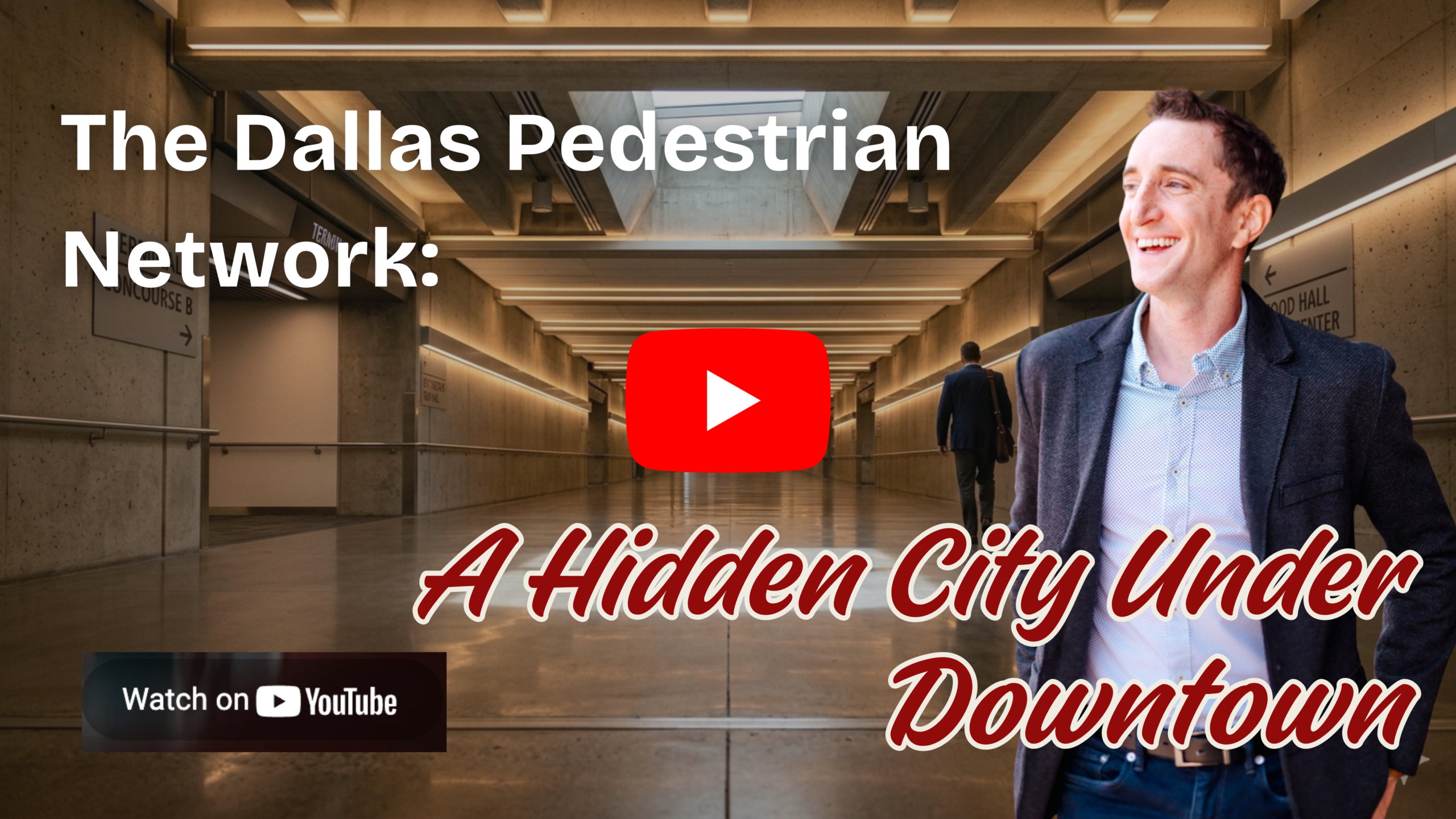
Here’s something I tell every relocating client who puts downtown Dallas on their list: before you decide if you want to live here, you need to understand the city that exists beneath.
Not metaphorically. Literally. Right now, under the glass towers and sun-blasted streets of downtown Dallas, there is a functioning three-mile network of climate-controlled tunnels and sky bridges spanning 36 city blocks, connecting hotels, office towers, restaurants, and retail shops. Surprisingly, the overwhelming majority of people who work, live, and even buy real estate in this city have never set foot in it.
That’s not a quirky fun fact to drop at dinner parties. It’s actually a window into something important about how downtown Dallas was built, how it struggled, how it’s being rebuilt right now, and what any serious buyer or investor needs to understand before they make a decision about this market. The history of why it was built, why it failed, and why it’s still sitting there is the fastest way to understand what downtown Dallas real estate is doing right now. and where it’s headed.
The underground city is officially known as the Dallas Pedestrian Network, but locals refer to it as “the tunnels.” The story of what it was, what it became, and what it’s becoming tells you more about downtown Dallas real estate than any comp report I could pull for you.
Let’s go underground.
What Is The Dallas Pedestrian Network Exactly?
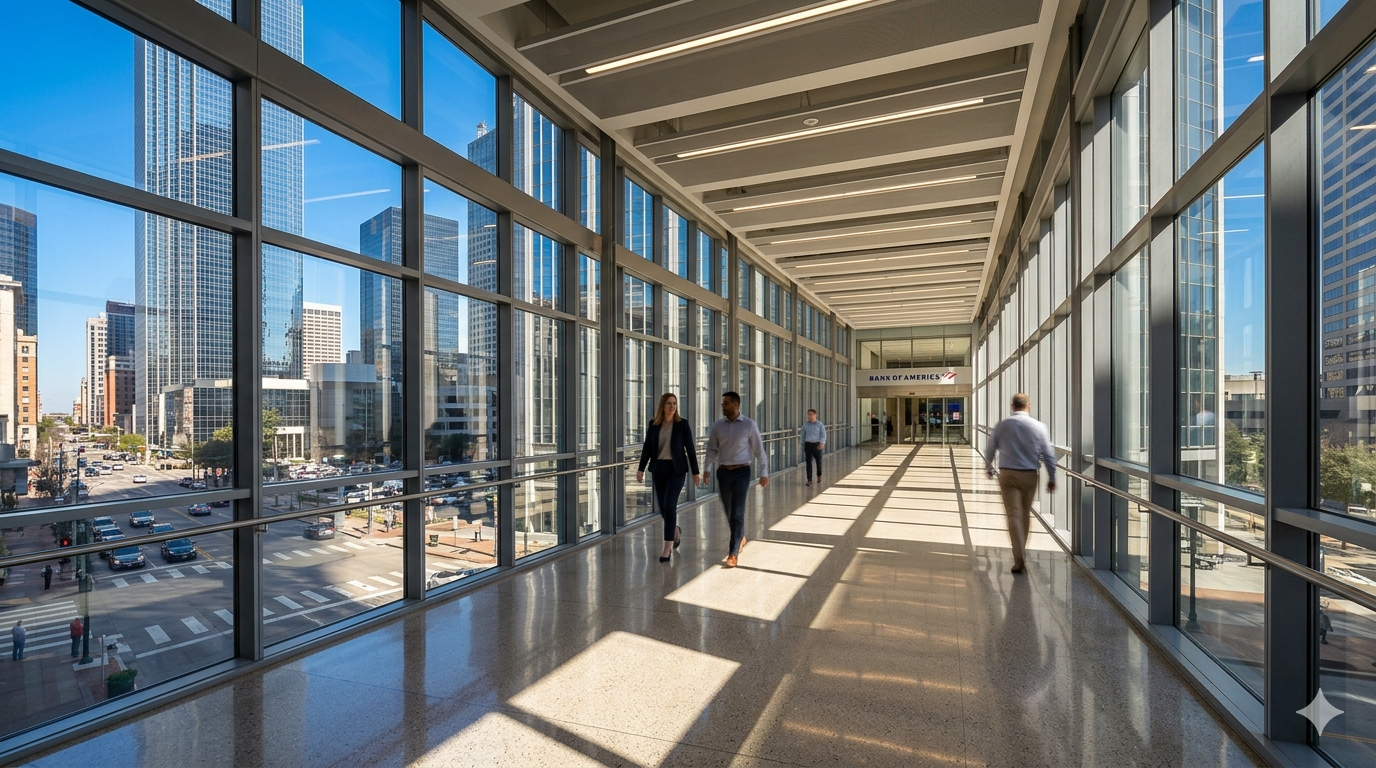
The Dallas Pedestrian Network, also called the Dallas Pedway, the Dallas underground, or simply “the tunnels”, is a system of grade-separated pedestrian walkways covering 36 city blocks beneath and above downtown Dallas. The system runs through a combination of underground tunnel segments and elevated sky bridges that connect major office buildings, hotels, parking structures, and city parks into a single contiguous network.
According to Visit Dallas, the network spans approximately 3 miles and includes a variety of shops and restaurants throughout. The major public entry points are at Thanks-Giving Square, Renaissance Tower, One Main Place, and Bank of America Plaza.
The practical purpose is obvious the moment you step outside anytime in July or August. Downtown Dallas summers are brutal with triple-digit heat, pavement that radiates that heat back at you and zero shade on most blocks. A climate-controlled pedestrian network that lets you walk from your parking garage to your office to lunch, then to a meeting on the other end of downtown without going outside isn’t just a luxury. In this climate, it’s a competitive advantage for a central business district trying to retain its workforce.
What makes the network remarkable, and what most people miss, is that it is largely invisible from street level. There are no neon signs on the sidewalk directing you underground. Most entry points run through private building lobbies. The tunnels were built for, and are still primarily used by, people who already know they’re there. If you don’t know, you don’t go.
That invisibility is not an accident. It’s a consequence of decisions made over the last five decades and understanding those decisions is where the market intelligence actually lives.
The Origin Story: How a Montreal Planner Built a City Under Dallas
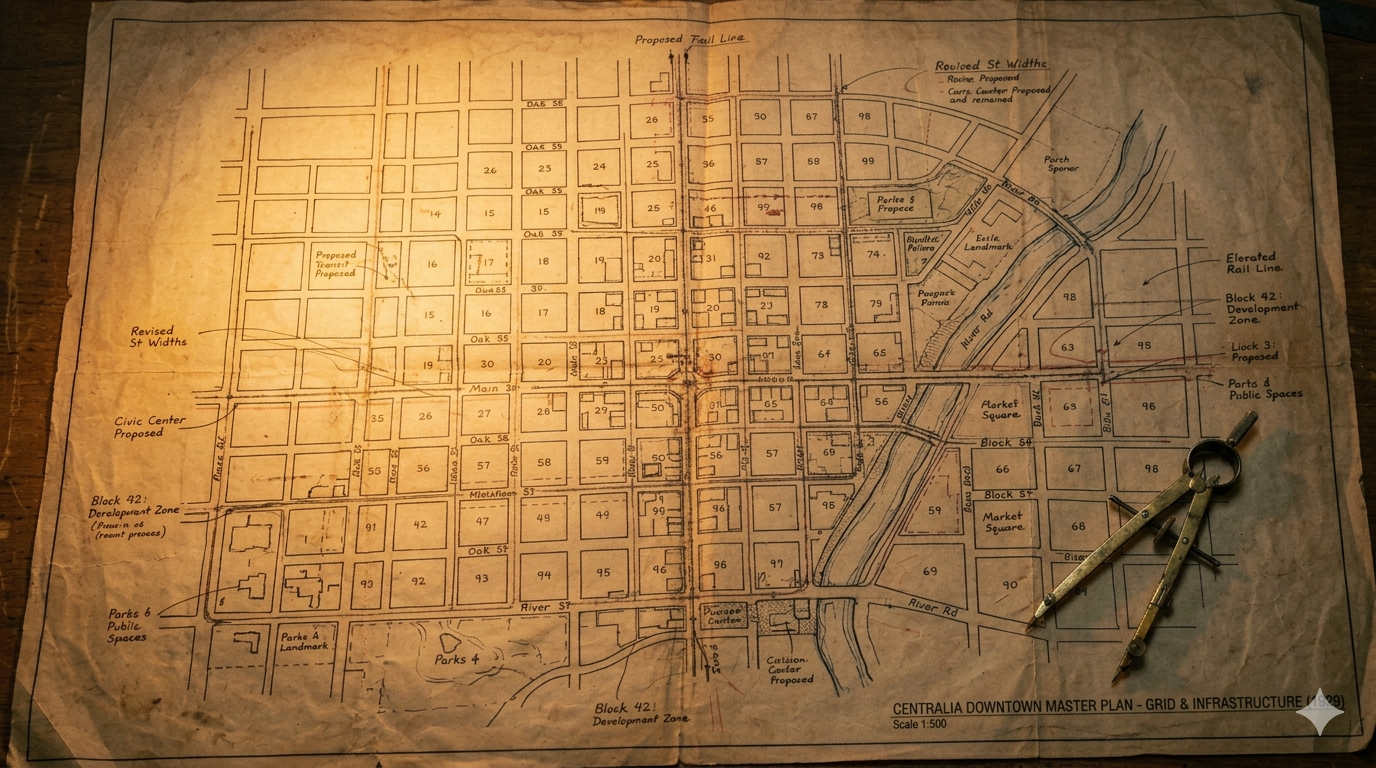
The Dallas underground was not a grassroots idea. It was an imported vision.
In 1969, the City of Dallas commissioned Vincent Ponte, a Montreal-based urban planner, along with traffic engineer Warren Travers, to design a comprehensive master plan for the Dallas Central Business District. Ponte came with serious credentials. He had already done pioneering work on Montreal’s Underground City, one of the largest underground pedestrian complexes in the world. Dallas officials believed he could bring that same energy of urban reinvention to their downtown landscape.
Ponte’s Plan Was Not Timid
He envisioned underground truck corridors to move delivery traffic off surface streets entirely, a full system of pedestrian promenades connecting every major building, perimeter parking garages that would allow downtown workers to park once and never interact with street traffic again, and a mass transit system integrated with it all. The stated goal was the complete separation of pedestrians and vehicles, a genuinely multi-level city.
The Greater Dallas Planning Council has documented that Ponte’s concept followed mid-20th-century urban planning principles that were gaining traction across North America at the time. The idea was that a climate-controlled, grade-separated pedestrian infrastructure would stimulate year-round economic activity in ways that weather-exposed street-level retail simply couldn’t.
Dallas Embraced The Concept
Construction began in the early 1970s, but not as a single coordinated city project. Instead, private developers integrated tunnel segments into their individual building projects, each one connecting to the emerging network in a way that served their tenants. The network grew organically, one building at a time, over two decades of downtown construction.
By the 1980s, the tunnels were genuinely thriving. The City had spent significant capital extending the system past two miles. A full retail ecosystem had developed below ground with food courts, dry cleaners, tailors, jewelry vendors, shoe repair shops, convenience stores and even pharmacies. The tunnel system wasn’t a curiosity anymore, it was the daily infrastructure of downtown Dallas working life.
Thanks-Giving Square, the iconic private park designed by Philip Johnson and dedicated in 1976, became the architectural centerpiece of the network. Below its spiraling chapel and garden were wider walkways, skylights, and colorful atriums that created the most thoughtfully designed section of the entire system, a section that still impresses people who find it today.
At its peak, the Dallas underground was exactly what Ponte promised: a city within a city.
The Decline: When Success Became the Problem
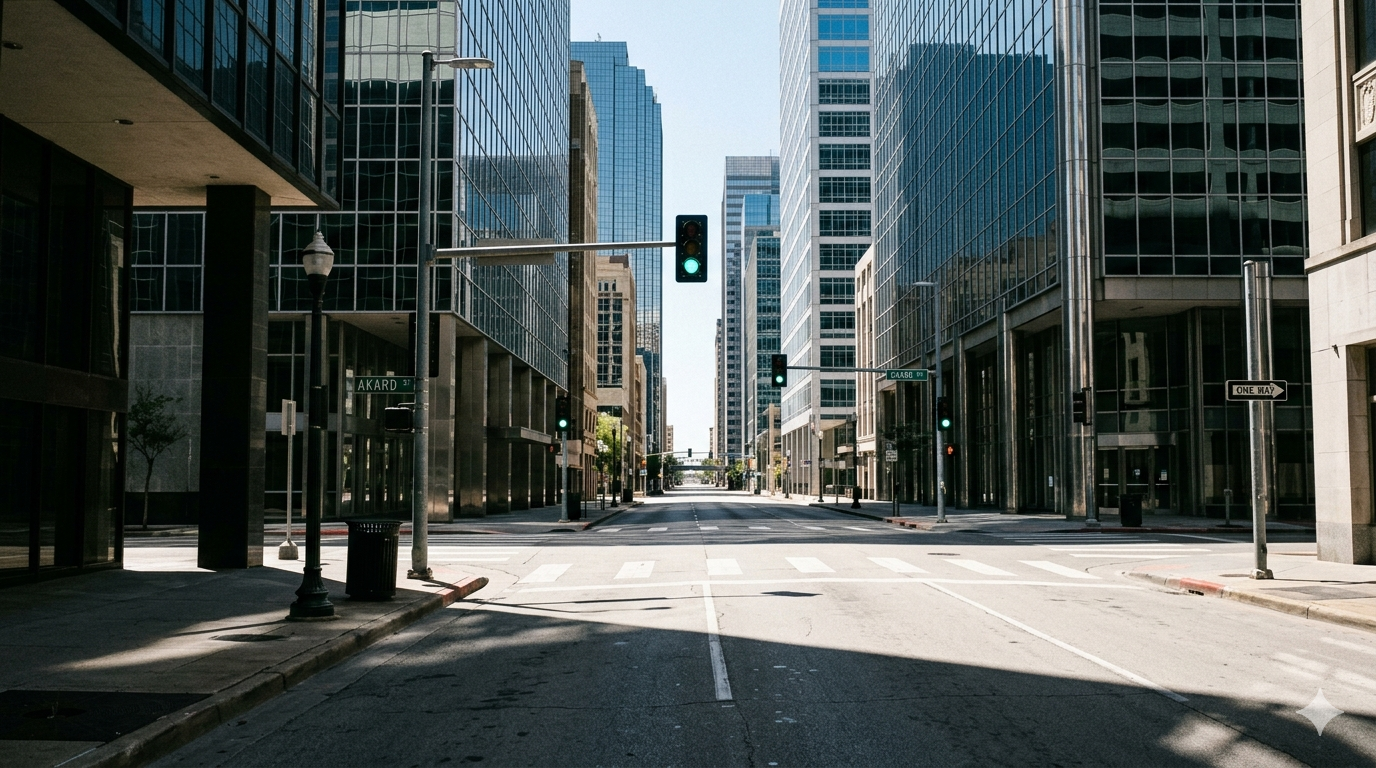
Here’s the part of the story that most guides skip and it’s the most important part for understanding downtown Dallas real estate today.
The tunnels didn’t fail because they were bad. They failed, in a real sense, because they worked too well.
As CBS News Dallas documented in an I-Team investigation, by the 1990s city officials and downtown developers had identified a serious unintended consequence: the pedestrian network had been so effective at pulling people underground that the streets above were empty. The ghost town effect was real. When your entire lunchtime workforce is eating and shopping three stories below the pavement, the sidewalks are dead. Street-level retail withers, restaurant storefronts that need foot traffic to survive struggle to generate it. The perception of downtown Dallas as a place that shuts down after 5 PM, a reputation that plagued the district for decades, was partly a consequence of the tunnel system’s success at capturing daytime activity underground.
“As a practical matter, the tunnels stood in our way for a long time in terms of creating that urban street-level retail,” one downtown official told CBS News. That’s a striking thing to say about infrastructure that cost the city and private developers enormous sums to build. But it reflects a genuine planning tension that Dallas had to work through.
A City of Dallas task force report eventually recommended phasing out retail uses in the underground tunnels altogether and redirecting that energy toward street-level activation. The city’s priority shifted: get people on the sidewalks, not below them.
Private building owners, who controlled most of the tunnel sections beneath their properties, began making their own calculations. When maintenance costs like HVAC, lighting, security, and repairs began to outpace the revenue their retail tenants generated, sections started closing. The seamless 36-block network developed gaps. Without consistent public signage or reliable access points, the tunnels faded from public consciousness. By the 2000s, many Dallas residents had no idea the system existed at all.
That planning tension of underground efficiency versus street-level vitality, is exactly what downtown Dallas has spent the last decade trying to resolve and the resolution is reshaping the market in ways most buyers aren’t tracking.
Which brings us to what’s actually down there today.
The Dallas Underground Today: What You’ll Find and How to Get There
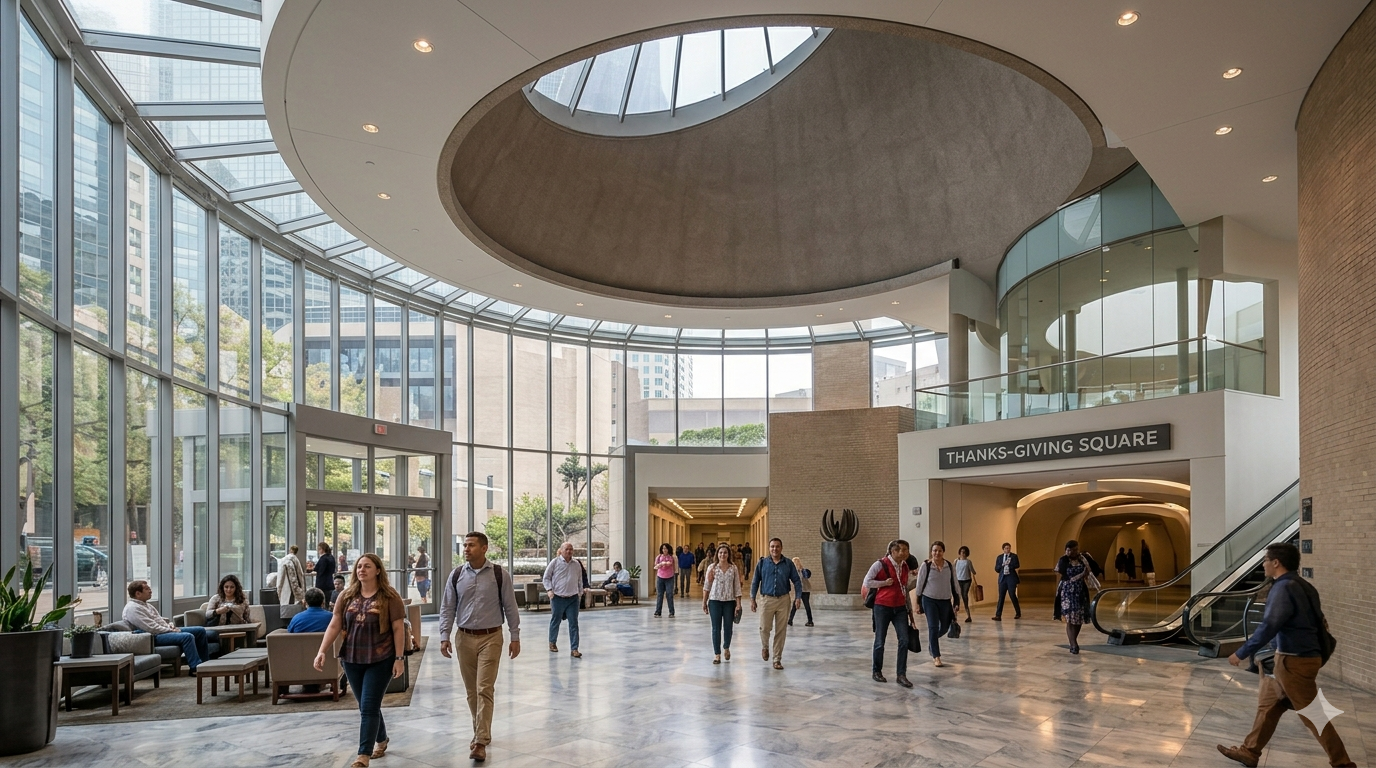
The tunnels are not dead. Let me be clear about that, because the narrative of decline often obscures what’s actually still functioning down there. The network is quieter than it was in its prime, harder to navigate without knowing where you’re going, and limited in hours in most sections. But for the people who work downtown, it remains a daily convenience that shapes how they experience the city.
What’s Open
The AMLI blog describes the current experience accurately: wide, well-lit passageways with directional signage, a mix of retail spaces, restaurants, and in some sections, art installations. Secret Dallas confirms the network spans 36 city blocks with various retail vendors and food options throughout.
The food options skew toward quick-service: Chick-fil-A and Subway appear reliably in the system. The Bank of America Plaza concourse hosts Asia Wok and Bowl & Burger. The Plaza of the Americas section runs a food court featuring Salata and Smoothie King. Throughout the system, you’ll find dry cleaners, tailors, convenience retailers, and service businesses. Exactly the kind of operations that work when you have a captive audience of office workers who need to handle errands without roasting outside in the summer.
The Thanks-Giving Square section remains the most architecturally interesting segment of the entire network. The wider corridors, the natural light filtering down through skylights, and the connection to one of downtown’s most distinctive public spaces make it worth exploring on its own terms, independent of any retail activity.
The Buildings That Connect
The scope of the network becomes clear when you see the list of connected properties:
Hotels: Sheraton Dallas Hotel, Fairmont Hotel, Westin City Center Dallas, Hotel Indigo, Crowne Plaza Dallas Downtown
Major Office Towers: Comerica Tower, Chase Tower, 1700 Pacific, Bank of America Plaza, Renaissance Tower, Fountain Place, Bryan Tower, KPMG Centre, Energy Plaza, Lincoln Plaza
Parks: Cancer Survivors Plaza, Thanks-Giving Square
Residential Buildings: Titche-Goettinger Building, Gables Republic Tower, 1505 Elm
Other: First Baptist Church of Dallas, Universities Center at Dallas, Elm Place
That residential presence is not incidental. It signals something important about how downtown Dallas has evolved since the tunnel system was built and it connects directly to the real estate story I want to make sure you understand.
Hours, Access, and The Practical Reality
The Dallas underground operates primarily Monday through Friday, 5:30 AM to 7:00 PM. It is closed on weekends.
That operating window tells you everything about who this infrastructure was built for and who it still serves. This is not a tourist attraction in any conventional sense. It was built for Dallas’s downtown workforce, and that workforce drives almost every decision about how the tunnels operate. Individual vendor hours tend to be even more restricted with most food options running hard for the lunch rush and then winding down well before the 7 PM tunnel closure.
The access reality matters if you’re thinking about weekend exploration: most entry points run through private office building lobbies, and those lobbies have weekend security protocols that make casual access difficult or impossible. Plan a weekday visit if you want to see the system in anything close to its functional state.
Getting oriented: the four most reliable public entry points are Thanks-Giving Square, Bank of America Plaza, Renaissance Tower, and One Main Place. If you’re navigating the system for the first time, start at Thanks-Giving Square, it’s the most architecturally compelling entry point, and the wider corridors make the experience less disorienting than some of the narrower commercial sections.
What the Tunnels Tell You About Downtown Dallas Real Estate Right Now
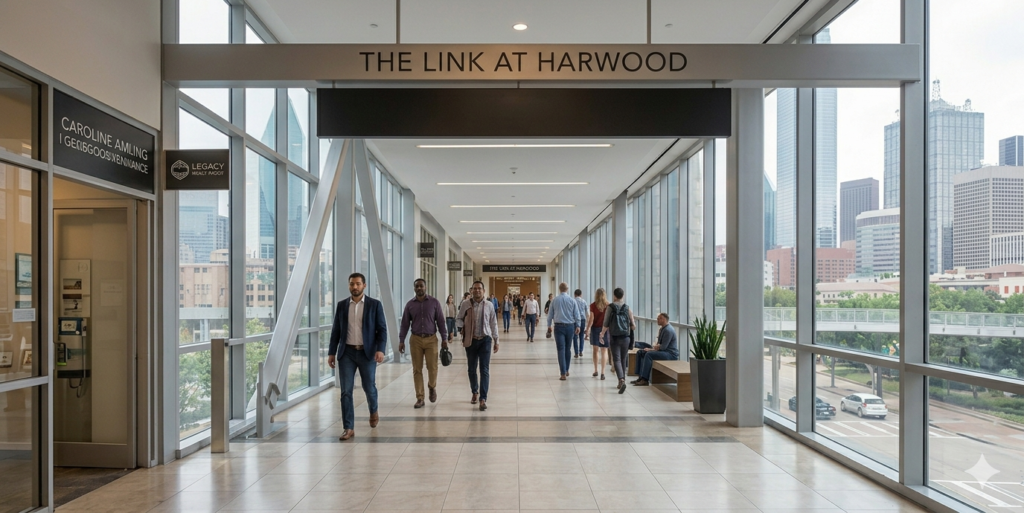
This is where I stop being a tour guide and start being a market analyst, because everything I’ve just told you about the Dallas underground is actually a story about the forces that are reshaping downtown Dallas real estate in real time.
The Ghost Town Problem Is Being Solved And It’s Repricing the Market
The fundamental tension that killed the tunnel system’s retail ambitions, underground activity versus street-level vitality, is the same tension that downtown Dallas spent the last 20 years trying to resolve. The resolution is happening right now and it’s being driven by a residential development wave that is fundamentally changing the character of the district.
Downtown Dallas’s residential population has grown dramatically over the past decade. The Downtown Dallas 360 Plan has consistently tracked population growth in the core district and that growth is not slowing. New residential developments, adaptive reuse conversions of historic office buildings, and hotel-to-residential conversions are adding units to a district that, not long ago, was almost exclusively commercial.
When residential density increases in an urban core, everything changes. Street-level retail has real customers on evenings and weekends. Restaurants can operate on dinner covers, not just office lunch traffic. The ghost town after 5 PM becomes a neighborhood after 5 PM. That transformation is what every serious investor in downtown Dallas real estate is watching, and in several key corridors, it’s already happened.
The tunnel system’s limited hours and weekend closure are, in a real sense, an artifact of downtown Dallas when it was purely a 9-to-5 district. The market is finally outgrowing that identity, so what you’re watching in real time is the gap between the infrastructure of the old downtown and the demand profile of the new one.
The Office-to-Residential Conversion Story Is Real
Downtown Dallas currently has one of the highest office vacancy rates in the country, a structural challenge that accelerated during the pandemic and has not fully reversed as hybrid work patterns have become permanent for many employers. That vacancy is a big problem if you’re a commercial landlord. But, it can be an opportunity if you understand what comes next.
Several of the office towers connected to the pedestrian network are active candidates for conversion to residential. The Titche-Goettinger Building is already residential. Elm Place, the former headquarters of First RepublicBank, one of the most recognizable towers on the Dallas skyline, recently went through a major conversion process. The adaptive reuse pipeline for downtown Dallas is genuine, not speculative, and it is happening in buildings that sit directly on the tunnel network.
This matters for buyers and investors because residential units in buildings connected to the pedestrian network have an amenity that no new construction can easily replicate. You simply cannot build three miles of underground infrastructure anymore, the network is fixed. The buildings that connect to it are the buildings that connect to it. That’s a value moat, and it’s underpriced in the current market because most buyers, including most sophisticated buyers, have no idea the network exists.
I’ll say that more directly: if you are evaluating downtown Dallas residential options and the building’s connection to the pedestrian network is not part of your analysis, you are missing information that matters to resale value, tenant appeal, and quality of life in a market where summer temperatures make outdoor pedestrian infrastructure genuinely hostile for several months a year.
The Broader DFW Context: Why Downtown Dallas Is Positioned for a Cycle
The capital moving into North Texas right now is not primarily going into downtown Dallas, it’s going into the suburban growth corridors, the industrial markets, the master-planned communities along I-35 and the new construction submarkets in Ellis County and its neighboring counties. I cover those markets every day, and the velocity of capital in those corridors is astonishing.
But that suburban growth is creating a secondary effect that benefits downtown Dallas: it’s importing a critical mass of professional class residents into the broader metro who, over time, generate demand for the amenities and urban experience that only a functional downtown can provide. The research is consistent, remote workers who moved to suburban Texas during the pandemic are, at an increasing rate, seeking proximity to the city core as they re-engage with hybrid work schedules and urban social infrastructure.
Downtown Dallas is the primary beneficiary of that re-engagement in the DFW metro and the investors who are positioning now by buying into the residential conversion pipeline, acquiring in the buildings connected to the pedestrian network and betting on the transformation of the 9-to-5 district into a genuine live-work-play urban core, are the ones who will look prescient in five years.
The tunnel system is not the whole story. But it is one of the clearest illustrations of the underlying dynamic, infrastructure that was built for one version of downtown Dallas is being inherited by a fundamentally different one. The buyers who understand that dynamic are the ones who won’t have buyers remorse in 5 years.
The Future of the Dallas Underground: What Comes Next
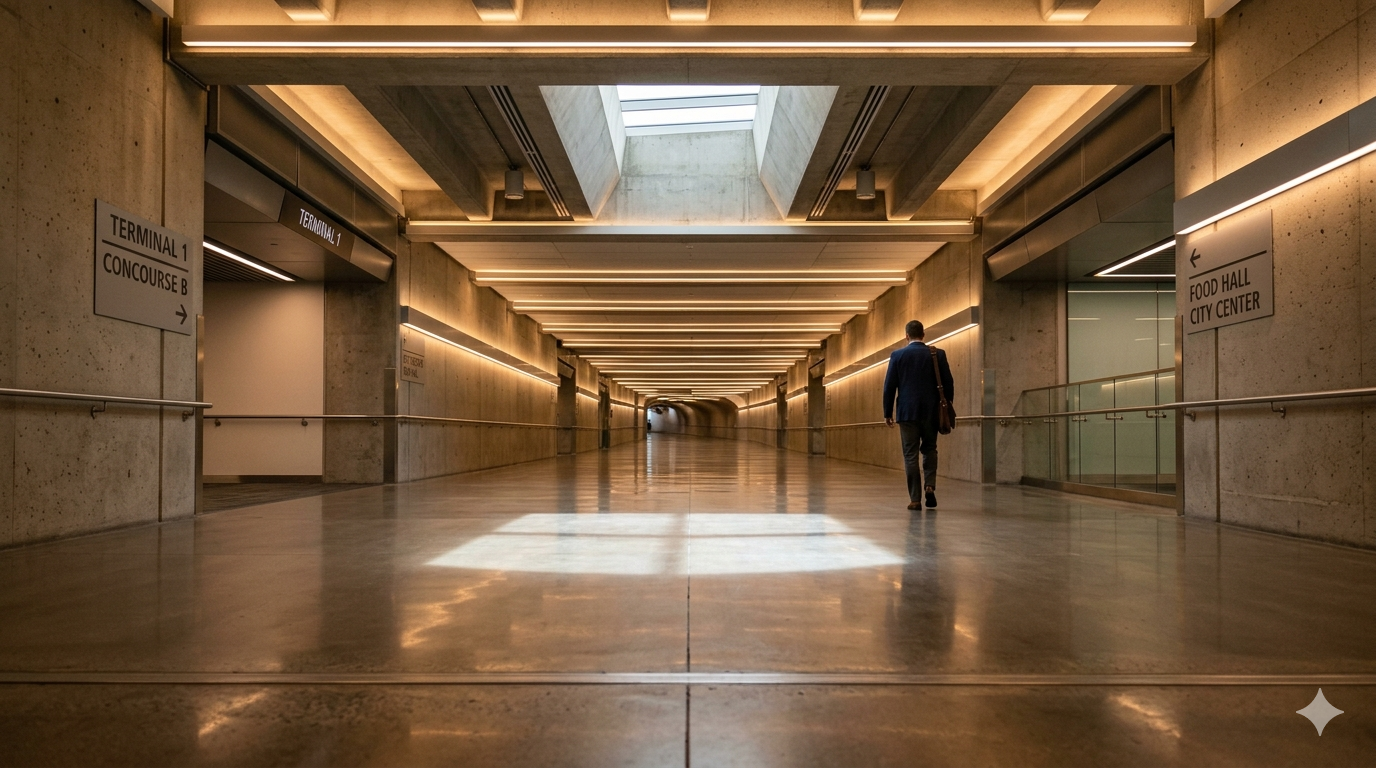
The conversation about the Dallas pedestrian network is not closed. It periodically re-emerges in planning circles, in downtown development discussions, and in debates about how to activate the urban core. That debate is interesting, but it’s also beside the point.
The infrastructure that exists is not going anywhere. Three miles of underground corridors don’t get decommissioned, the cost of removal exceeds the cost of maintenance by orders of magnitude. The question is not whether the tunnels survive. The question is what happens to them as the district above them reaches residential critical mass.
The answer to that question is not complicated: the tunnel system’s future is not a planning question. It’s a density question. When enough people live in the connected buildings, the system adapts to serve them, because that’s what infrastructure does when the market around it reaches critical mass. The weekend closure, the restricted hours, the workforce-only orientation, these are all features of the old downtown, not permanent conditions. Downtown Dallas is approaching a residential density threshold that will change those calculations. The timeline is compressed, not extended.
The residential pipeline is real, the capital commitment is real, the demographic tailwinds of young professionals, remote workers re-engaging with urban cores and empty nesters seeking walkable density are real. The tunnel system doesn’t drive that story, but it will benefit from it directly and significantly and the buildings connected to those tunnels will benefit all the more.
Practical Guide: How to Experience the Dallas Underground
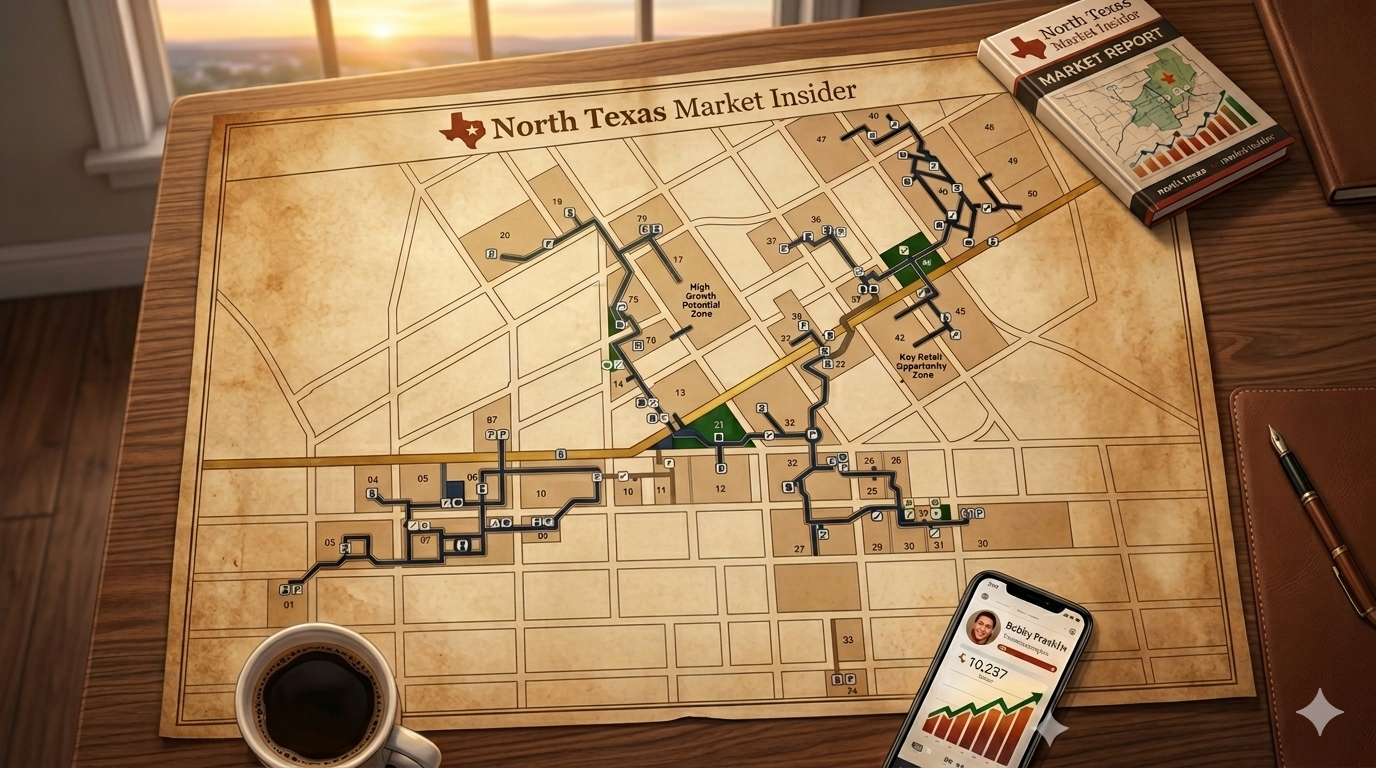
For anyone who wants to actually explore the network whether it’s clients considering downtown Dallas properties, curious visitors, or longtime Dallas residents who’ve never made it underground, here’s what you need to know before you go.
Best entry points for first-time visitors:
Thanks-Giving Square is the recommended starting point. Located at the block bounded by Pacific, Bryan, Ervay, and Akard Streets, the park itself is worth visiting independently. Philip Johnson’s spiral chapel is one of the most interesting architectural experiences in Dallas. The tunnel access from this point leads into some of the widest, best-lit sections of the network, and the natural light from the park’s skylights makes the first leg of the journey feel genuinely welcoming rather than claustrophobic.
Bank of America Plaza at 901 Main Street gives you access to the Plaza concourse, which has among the most active retail and food options currently operating in the system. If your primary goal is to see the tunnels while grabbing lunch, this is your best entry point.
Renaissance Tower at 1201 Elm Street and One Main Place at 1201 Main Street are reliable secondary access points that connect you into the broader system from the southern end of the network.
Navigation reality check: The tunnel system does not have consistent, clear wayfinding throughout. Some sections are well-signed and others are not. If you are exploring without a specific destination, budget time for dead ends and unexpected turns. This is not a professionally managed tourist attraction, it’s working infrastructure. Embrace the exploratory quality rather than fighting it.
What to bring: The tunnels are climate-controlled, so dress for indoor temperatures regardless of what’s happening outside. Cell service is variable underground, some sections have strong signal throughout and others drop entirely. Download a map before you go rather than relying on real-time navigation.
Timing your visit: Arrive between 11:30 AM and 1:30 PM on a weekday if you want to see the system at its most active. That’s when the office workforce is moving through for lunch, when vendors are fully staffed, and when the network has the energy it was designed around. Early morning visits, before 9 AM, give you the tunnels largely to yourself, which has its own appeal if you want to explore without navigating crowds.
Remember the weekend closure: Plan a weekday visit. There is no meaningful tunnel experience available on Saturday or Sunday under current operating conditions.
FAQ: The Dallas Underground Tunnels

Every serious buyer who goes deep on this topic eventually lands on the same ten questions. Here are the answers. Unfiltered, specific, and with the details most real estate content won’t give you.
Q: Is it safe down there?
Yes, with one caveat worth understanding. The tunnels themselves are private, camera-monitored property populated almost exclusively by office workers during business hours. Violent crime inside the tunnel system is functionally non-existent as a category. The relevant safety question is downtown Dallas at street level, and that story has improved significantly. Downtown Dallas Inc.‘s Safe in the City data shows crime in the district dropped more than 10% in 2025 compared to 2024, violent crime specifically fell more than 12%, and reports of sleeping in public dropped over 35% following the closure of all downtown homeless encampments. The Real Deal’s November 2025 cover piece on downtown Dallas put the violent crime decline at nearly 20% between 2024 and 2025.
The practical risk underground isn’t crime, it’s timing. Get caught inside a building segment at 6 PM when the lobby locks and you’re walking back to your car at street level regardless of what the weather is doing.
Q: How does Dallas compare to Houston’s tunnel system?
Houston’s is roughly twice the size and considerably more active. The Houston tunnel system links approximately 95 city blocks, runs close to 6 miles, connects around 80 buildings, and serves a downtown workforce the Downtown Houston Management District puts at more than 150,000 people. In comparison, Dallas covers only 36 blocks across 3 miles.
The structural difference isn’t just scale, it’s economics. Houston’s tunnel system was built and is maintained almost entirely through private cross-easements between building owners, with no meaningful public subsidy. Dallas, by contrast, is currently paying the Thanks-Giving Foundation $425,620 per year under a 1973 lease for the Bullington pedestrian concourse beneath Thanks-Giving Square and that arrangement is now under City Council scrutiny.
Dallas Observer columnist Jim Schutze, citing Council Member Scott Griggs, has argued that the Dallas tunnels “contributed to the decline of downtown… The idea back then was to control and sanitize downtown, make it less public and more like a suburban shopping mall.” Houston avoided that fate. Dallas didn’t.
Q: Can tourists actually explore the tunnels?
Functionally, no. Visit Dallas lists the tunnel system as an attraction, but their own description notes it’s closed evenings and weekends. Most access points run through private office building lobbies that operate on business-hours security protocols. The only time to explore the tunnels is during the busy downtown workweek.
For a relocating buyer, this means something specific: don’t underwrite a condo purchase on the assumption you’ll use the tunnels to walk to dinner on a Saturday night. You won’t. The system is a weekday workforce amenity. Full stop.
Q: Where can I find a map?
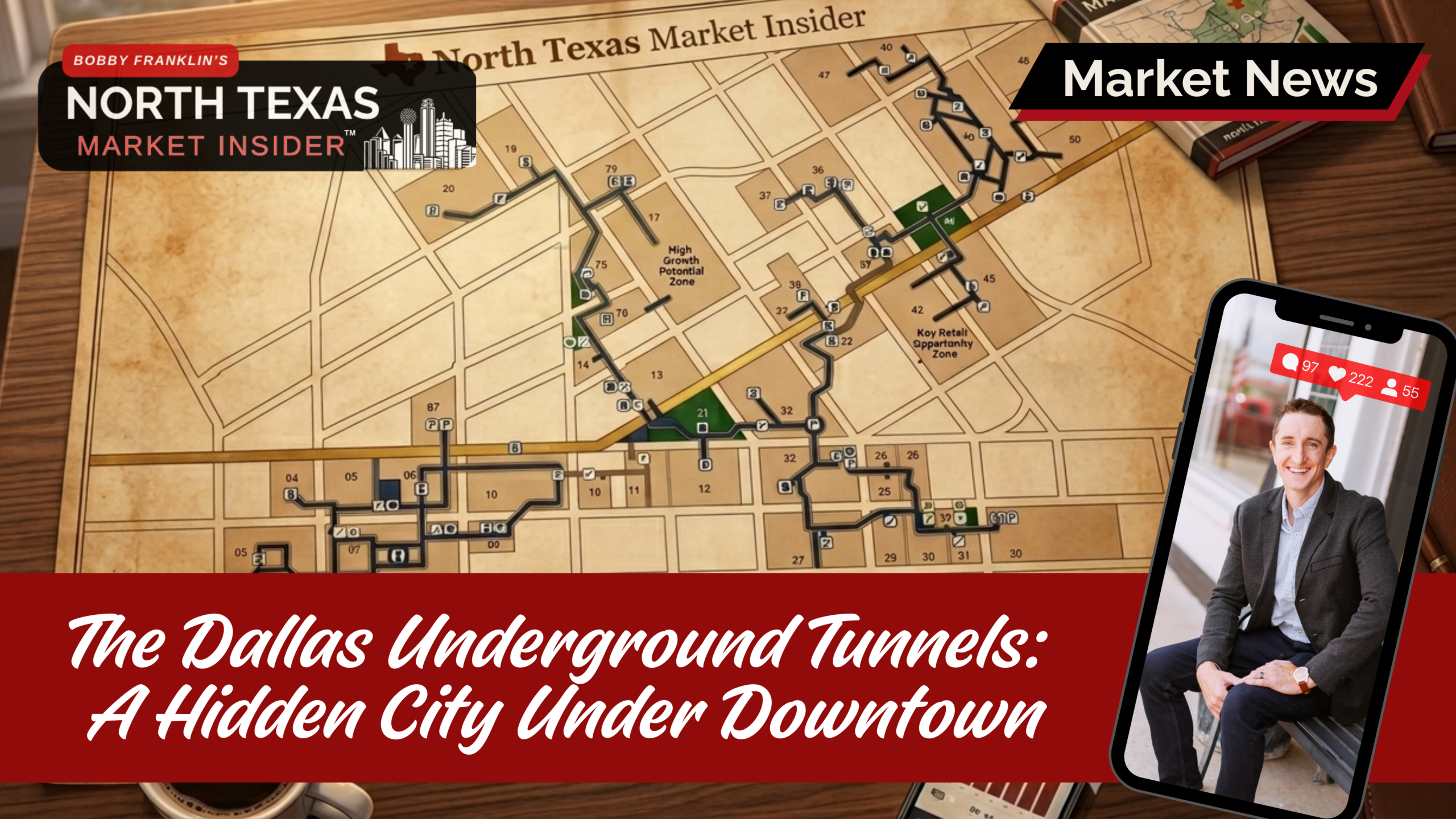
There is no current official municipal map, which tells you something about the city’s commitment to this infrastructure. Dallas doesn’t publish one. The working reference is the map designed by Noah Jeppson, originally crowdfunded through Kickstarter in 2011–2012, which printed 10,000 copies and is available as a downloadable PDF. The Downtown Dallas Parks Conservancy recommends it specifically because it shows public access points, open and closed sections, parking facilities, and rail transit stations.
Know this before you use it: the Jeppson map is well over a decade old. Building owners have closed access points since it was printed. The absence of authoritative, current wayfinding is itself a data point about where this infrastructure sits in the city’s priorities.
Q: Which residential buildings are actually connected to the tunnel network?
This is the most investable question in the entire article, and most buyers never ask it. The residential buildings with documented direct tunnel connections are:
1900 Elm Apartments (the Titche-Goettinger Building) — 129 loft-style units above the former Titche’s department store. Tunnel connection built during the 1986 renovation when the building joined the Pedestrian Network.
Gables Republic Tower — At 325 N. St. Paul, directly connected through the Bullington concourse beneath Thanks-Giving Square.
1505 Elm — Documented by the Downtown Dallas Parks Conservancy as a connected residential property.
Peridot Residences at Santander Tower (1601 Elm) — 291 units in Phase 1, completed October 2024. Phase 2 adds 105 more. Santander Tower sits directly on the Bullington concourse and connects to the Pedestrian Network at the Crystal Court level.
Additional connections are coming through the conversion pipeline: Comerica Bank Tower (240 apartments planned), Bryan Tower (426 apartments under construction), and conversion candidates at 1601 Bryan, 509 Elm, 211 Ervay, and Republic II.
Q: What’s the current retail situation inside the tunnels?
Thin, and getting thinner. The two food courts the Downtown Dallas Parks Conservancy still identifies as operating, are below Renaissance Tower and below 1700 Pacific. Beyond those anchor points, the CBS News Texas I-Team investigation found the broader network is “now mainly empty.” Downtown Dallas Inc. CEO John Crawford has said the system “really doesn’t serve any purpose anymore” because closed segments mean “you can’t go more than two or three blocks now without having to come up above ground.”
Long-time tunnel tenant Beth Fancher of Posters and Prints told CBS that foot traffic has collapsed so severely she now relies on home deliveries to survive. The Downtown Dallas 360 Plan anticipates that “future uses such as service and storage may become viable replacements for retail uses” which is planning language for: the underground retail model is over.
Q: What is the city actually doing with the tunnels right now?
Moving away from them, deliberately. The Downtown Dallas 360 Plan, unanimously approved by City Council in December 2017, calls the network’s pedestrian/vehicle separation “perhaps the most damaging impact on street activity” and explicitly targets the tunnels for de-emphasis. That’s the city’s own adopted policy, on record.
More concretely: on September 23, 2024, the Government Performance & Financial Management Committee was briefed that Dallas was paying the Thanks-Giving Foundation $425,620 annually under a 75-year 1973 lease for the Bullington concourse, while incurring roughly $453,000 in unrecovered expenses on top of that. Council Member Chad West asked publicly: “We’re paying a lease to Thanks-Giving Square and what do we get out of that?” Staff recommended billing all costs back to the four connected surface users. That outcome is still unresolved as of this writing.
For investors in the connected buildings, this is the policy signal worth tracking. If the city succeeds in pushing tunnel maintenance costs back to property owners, HOA and master-condo fees in those buildings could move. Watch Dallas City Council Legistar item 25-235A.
Q: How do the tunnels connect to DART light rail?
They don’t, not directly. None of DART’s four downtown light rail lines has an underground transfer into the Pedestrian Network. Riders disembark at surface-level Akard Station on the Pacific Avenue transit mall and walk into the lobbies of Santander Tower, Renaissance Tower, or Thanks-Giving Square to reach the tunnels. West End, St. Paul, and Pearl/Arts District stations are also at-grade, all requiring a surface walk to a tunnel entry point.
The proposed D2 subway would have placed underground stations near Akard and Harwood with direct tunnel connections, but DART removed D2 from its 20-year financial plan in July 2023. D Magazine’s Matt Goodman broke the story in August 2023. It’s gone, and there’s no replacement proposal in the pipeline.
For a buyer evaluating transit-connected urban living, a tunnel-connected condo gets you a sheltered walk to the building lobby, then a short outdoor walk to the train platform. Not a complete indoor transfer. Know what you’re buying.
Q: Are there plans to expand or modernize the tunnel system?
No. The city’s adopted position is the opposite of expansion. Downtown Dallas Inc. CEO John Crawford has said publicly the tunnels “aren’t much of an issue anymore.” Individual property owners have been closing access points, not opening them.
One item worth separating from this conversation: in March 2026, The Boring Company announced that its national Tunnel Vision Challenge produced three winners, including a University Hills Loop project in South Dallas. That project would connect the University of North Texas at Dallas campus to the planned University Hills development. But, it has no relationship whatsoever to the downtown Pedestrian Network. Don’t conflate them.
The downtown tunnel system is not being extended. The question is whether it stabilizes at its current footprint or continues to contract. The residential density wave is the only force that could reverse that and that story is still being written.
Q: What about ADA accessibility and parking?
ADA accessibility is uneven and there is no published system-wide audit. Many tunnel entrances are reached only by building elevators dropping into private garages, and some connector segments include stairs without parallel ramp access. This is a structural constraint of infrastructure built in the 1970s, adding ramps while maintaining pedestrian headroom in existing tunnels is, in many segments, physically impossible. DART’s downtown light rail stations themselves are fully ADA-compliant, but the tunnel-to-platform transfer is at grade regardless.
For parking, the network is best accessed through three public garages with direct underground connections: Majestic Garage, Elm Street Garage, and Metropolitan Garage. If those are full, consider using the underground garages of Renaissance Tower, Bank of America Plaza, and Santander Tower. Thanks-Giving Square has no on-site parking. The nearest paid garage to it is at 400 N. Ervay Street.
The Bottom Line: Why This Matters If You’re Thinking About Downtown Dallas

I cover North Texas real estate from the I-35E corridor south through Ellis County, but I work with buyers across the full DFW metro and downtown Dallas comes up consistently for a specific type of client: the relocator from a city with real urban infrastructure who wants to know whether Dallas can deliver a genuine urban experience.
My honest answer is that downtown Dallas is in transition. It’s past the ghost town phase, it has not yet arrived at the full-density neighborhood phase, and it is moving through the gap between those two states faster than most people realize. The tunnel system is a useful illustration of that transition, because it’s a piece of infrastructure that was built for the old downtown, went dormant as the old model was shunned, and is now sitting in the middle of a district that is actively becoming something new.
The connected buildings, the conversion pipeline, the gap between where this district is and where it’s going, that’s the map and most people evaluating downtown Dallas don’t have it.
If you’re seriously evaluating downtown Dallas real estate, for a primary residence, a rental investment, or a long-term hold, I want to be the person who walks you through what I’m seeing in this market right now. Not the surface-level pitch. The actual intelligence.
That’s what I do.
if you’re ready to talk about downtown Dallas or plan to move to DFW, schedule a consultation today.
Bobby Franklin, REALTOR® | Legacy Realty Group – Leslie Majors Team
📲 214-228-0003 | northtexasmarketinsider.com
Looking for financing? I work with three lenders I trust — Andrew Bryan at andrewthelender.com, Jennifer Nelson at eustismortgage.com, and Taylor Fruge at lower.com. I recommend them based on their expertise and service. I don’t receive compensation for referrals.