By Bobby Franklin, REALTOR® | North Texas Market Insider™ | Legacy Realty Group – Leslie Majors Team
Published May 2026 | Reading Time: ~22 minutes
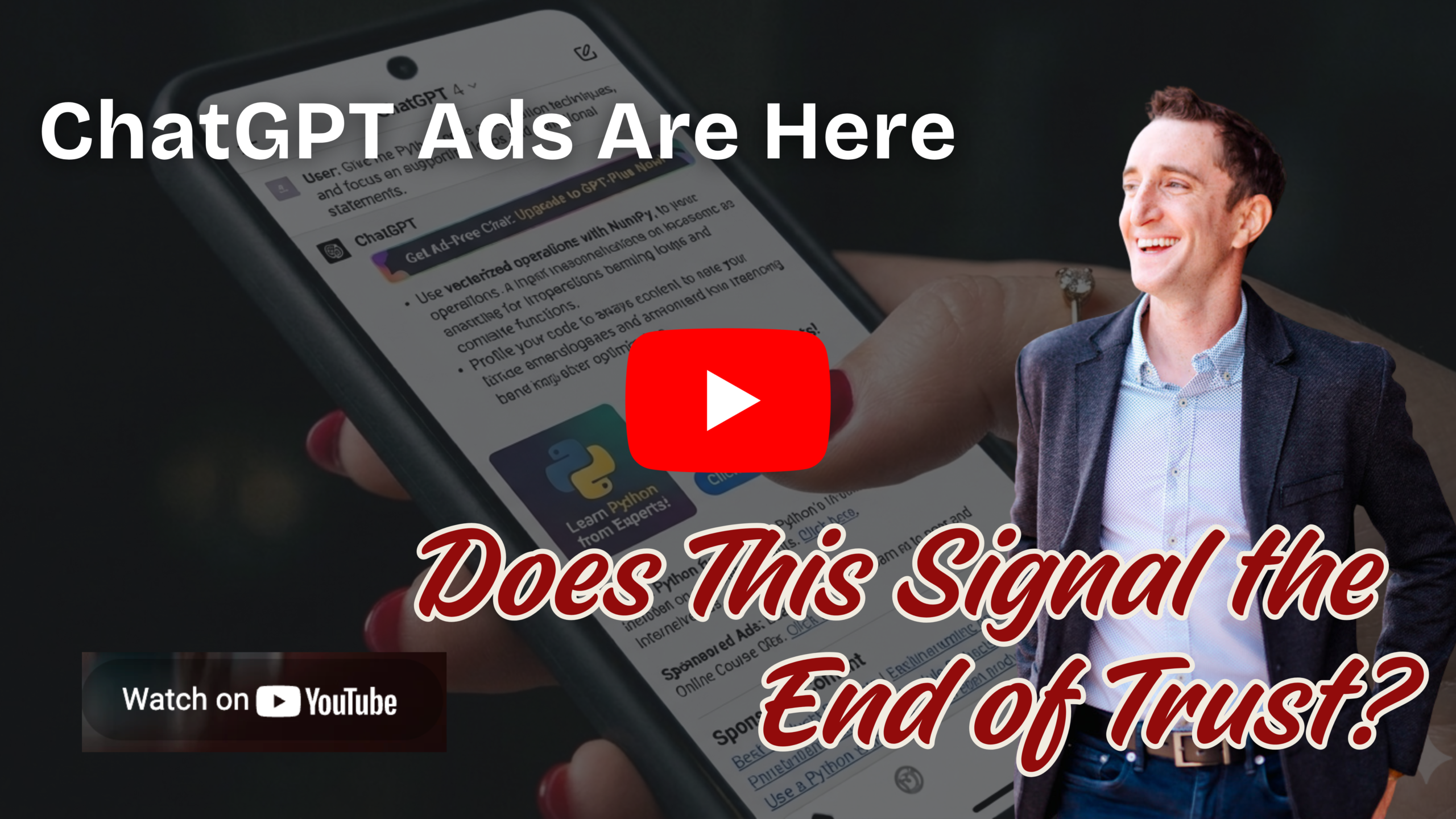
If you’ve been using ChatGPT to research a home purchase, asking it which neighborhoods to consider, which agents to trust, which markets are worth your money, something changed on February 9, 2026 that you need to understand. That’s the day ChatGPT began running paid advertisements inside its conversations, and the AI assistant you’ve come to treat like a knowledgeable, unbiased friend quietly entered a new era. One where the answer you receive might be shaped, at least in part, by who paid the most to be there. A home purchases is the largest financial decision most people will ever make, and the tool millions of buyers are relying on to navigate that decision just introduced a commercial incentive that didn’t exist six months ago.
Most people didn’t even notice when it happened. That’s precisely the problem.
This isn’t a story about technology, it’s a story about trust. Who has it, who’s selling it, and how to protect yourself when the platforms you rely on stop working entirely in your interest. It’s the same story that played out with Google in the early 2000s and with Zillow a decade later. ChatGPT is simply the latest chapter, moving much faster than either of those predecessors did.
What follows is the full picture: what actually changed, why it hits harder with AI than it ever did with search engines, what happened when the two biggest AI companies in the world went to war over your trust on Super Bowl Sunday, and, most importantly, we’ll cover a specific, practical framework for protecting yourself the next time you open ChatGPT to research a home, or anything else.
What OpenAI Actually Changed on February 9, 2026
Start with the facts, because the details matter here.
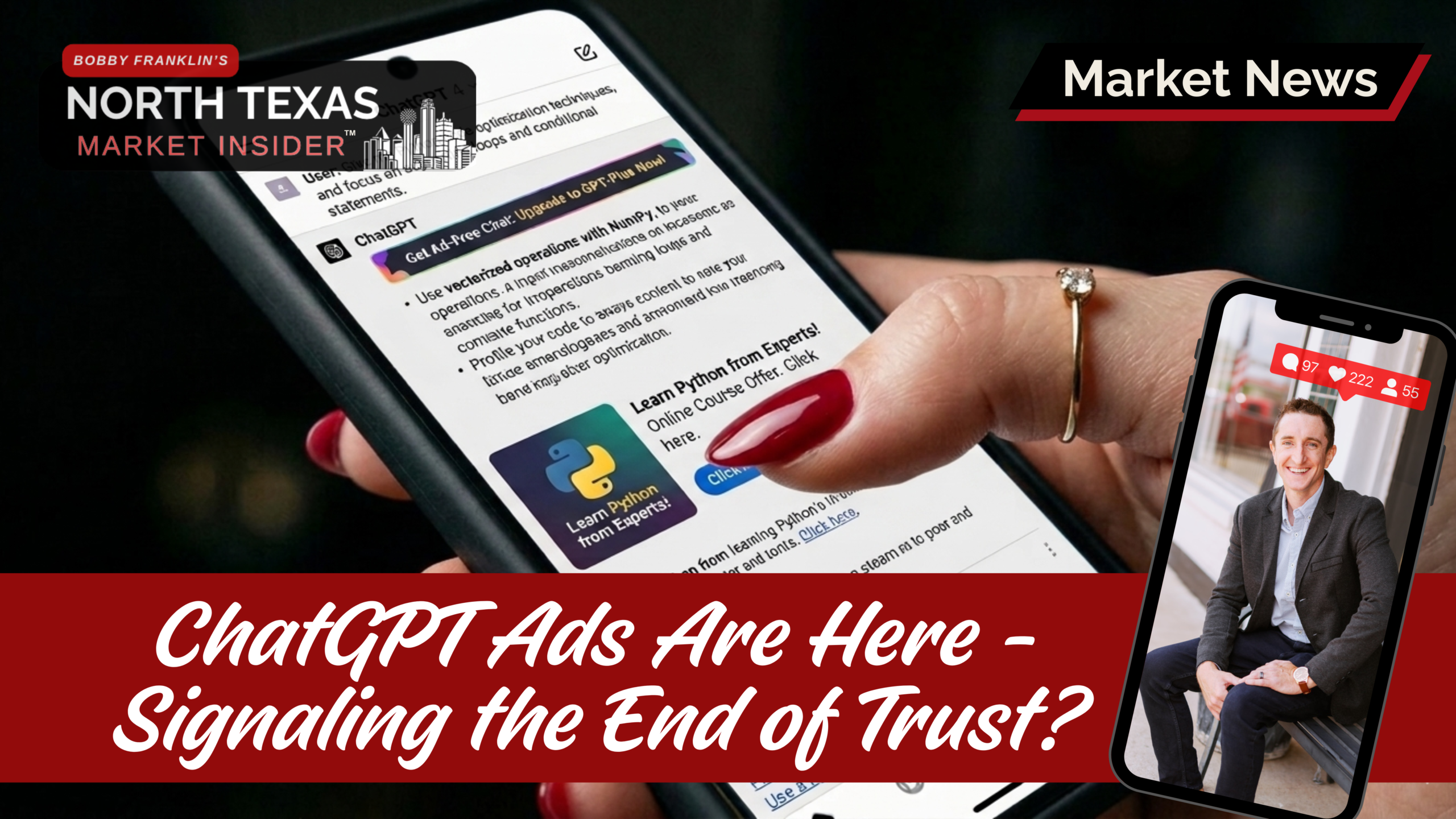
On January 16, 2026, OpenAI announced it would begin testing paid advertisements inside ChatGPT, and the rollout went live on February 9. The ads appear as “Sponsored Recommendations” — a clearly labeled box sitting below ChatGPT’s actual response, matched contextually to whatever you’re discussing. Ask about home loans and you might see a mortgage lender. Ask about neighborhoods in Dallas and a real estate platform might appear below the answer.
Who sees ads matters. If you’re on ChatGPT’s free tier or the $8/month Go plan, you see them. If you pay for Plus ($20/month), Pro ($100/month), Business, Enterprise, or Education, you don’t. The rollout started small with roughly only 1% of mobile users in February. It quickly expanded to about 5% by late March, and has been spreading to more users across more countries ever since. OpenAI published a set of principles alongside the launch, and their core promise is clear: ads do not influence the answers ChatGPT gives you. They are always separate and always labeled. Your conversations stay private from advertisers, and you can always pay to opt out.
Those are the promises. Now here’s the context that makes them harder to take entirely at face value.
In October 2024, at a Harvard fireside chat, Sam Altman was unambiguous: “Ads plus AI is sort of uniquely unsettling to me. I kind of think of ads as a last resort for us for a business model.” He went further in the same conversation, saying he “hates ads” as a personal bias, that they “somewhat fundamentally misalign a user’s incentives with the company providing the service,” and that he valued the fact that ChatGPT subscribers knew their answers weren’t influenced by advertisers. Twenty months later, he launched the ads anyway and the financial pressure that produced that reversal tells you everything you need to know about the dynamics at work here.
OpenAI burned roughly $8 billion in 2025 alone, and the company now projects theirnad revenue growing from $2.5 billion this year to $100 billion by 2030, contingent of course upon reaching 2.75 billion weekly users. That isn’t a company running a cautious experiment, that’s a company whose entire financial model now depends on making advertising work inside a tool that was built on the promise of being the alternative to advertising. The tension between those two things is the story of every platform that has ever monetized trust, and understanding it is exactly how you protect yourself from it.
The Moment the AI Industry Went to War Over Your Trust
The most revealing thing about the ChatGPT ad rollout wasn’t the ads themselves, it was what happened the day they went live.
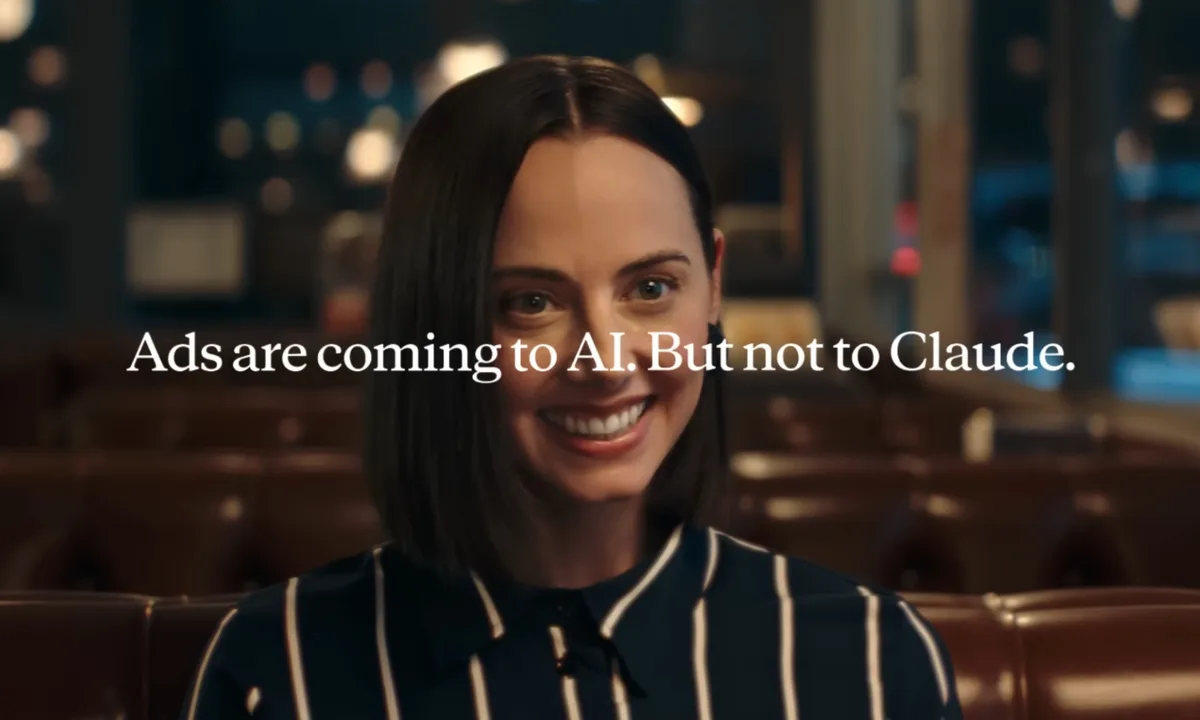
On February 8, 2026, the day before ChatGPT’s ads launched, Anthropic, the company behind the AI assistant Claude, ran a pregame spot and an in-game commercial during Super Bowl LX. Super Bowl slots were going for an average of $8 million per 30 seconds, and Anthropic bought several slots. The ads depicted an AI assistant clearly modeled on ChatGPT interrupting a user’s workout question to pitch fictional insoles for “short kings,” then cutting to another spot where the same assistant pivoted from relationship advice into promoting a cougar-dating site. Each spot carried the same tagline across the screen: “Ads are coming to AI. But not to Claude.” They never named ChatGPT directly. They didn’t need to, 125 million Super Bowl viewers understood exactly what they were watching.
Sam Altman responded before the game even aired, posting publicly that the ads were “funny” but “clearly dishonest,” writing: “Our most important principle for ads says that we won’t do exactly this; we would obviously never run ads in the way Anthropic depicts them. We are not stupid and we know our users would reject that.” He went on to accuse Anthropic of being “authoritarian,” of wanting to “control what people do with AI,” and added: “More Texans use ChatGPT for free than total people use Claude in the US.” The exchange became one of the most-discussed moments of the entire Super Bowl weekend, with marketing analyst Scott Galloway noting that Altman’s essay-length rebuttal had inadvertently validated Anthropic as a serious threat. When you’re the market leader, you don’t write paragraphs responding to a competitor’s 30-second spot.
Here’s why this matters for anyone using AI to make real estate decisions: two of the most powerful companies in artificial intelligence, tools you are already using to research neighborhoods and evaluate agents, just spent millions of dollars on national television fighting over whether the AI you trust should carry advertising at all. That fight happened because both companies understand something most users haven’t fully processed yet.
The trust you place in an AI answer is qualitatively different from the trust you place in a Google search result, and that difference is exactly what makes advertising inside AI so much more consequential than advertising inside a search engine.
Why AI Advertising Hits Differently Than Search Ads

People who use Google regularly have developed what researchers call “advertising literacy”. It’s an intuitive ability to recognize paid content and discount it accordingly. You see the small “Sponsored” label, you scroll past it, you look for the organic listings below. You’ve been doing this for twenty years, and the commercial nature of those results is so deeply baked into how you read them that it happens almost automatically.
AI works on an entirely different psychological register. When you type a question into ChatGPT, you don’t receive a list of competing links to evaluate, you receive a single synthesized answer, delivered in a conversational tone, as if a knowledgeable friend had done all the research and was simply telling you what they found. There’s no list to scroll past, no visual signal that multiple sources were competing for the response you received. Even the format itself with the confident, direct and personal delivery creates a psychological experience much closer to getting advice from someone you trust than the feel of navigating a search results page. Academic research on conversational AI has consistently shown that users extend interpersonal trust to AI assistants in ways they don’t extend to search engines, treating them as confident experts rather than commercial intermediaries, relying on the cognitive shortcut that authoritative-sounding equals trustworthy.
A Forrester poll fielded in the first week after ChatGPT’s ads went live found that consumers were already “generally sensitive to ads blurring the line between helpful information and paid promotion”, even when the ads were technically separate and clearly labeled. The concern wasn’t that ads appeared alongside answers. It was that the mere presence of ads created doubt about whether the answers themselves had been shaped by commercial considerations. That doubt is the critical thing to understand here, because it existed before the ads arrived. Klaviyo’s 2026 AI Consumer Trends Report found that only 13% of consumers completely trust AI recommendations, and that 58% trust brands less when content is AI-generated. The ad rollout doesn’t create that skepticism, it accelerates and validates it.
The gap between AI usage and AI trust for high-stakes decisions is equally stark. A TD Bank survey of more than 2,500 Americans found that while 78% use AI tools daily, only 18% would trust AI to make financial recommendations on its own. A home purchase is a financial decision. An agent recommendation is a financial decision. Riskified’s Q1 2026 research found that 55% of consumers are “not comfortable” with AI completing transactions on their behalf(specifically around autonomous AI purchasing) up from just 30% in Q4 2025. That’s a 25-point collapse in a single quarter, driven by exactly the kind of commercial creep this article is about. The market is waking up to what it’s actually dealing with.
You’ve Seen This Story Before
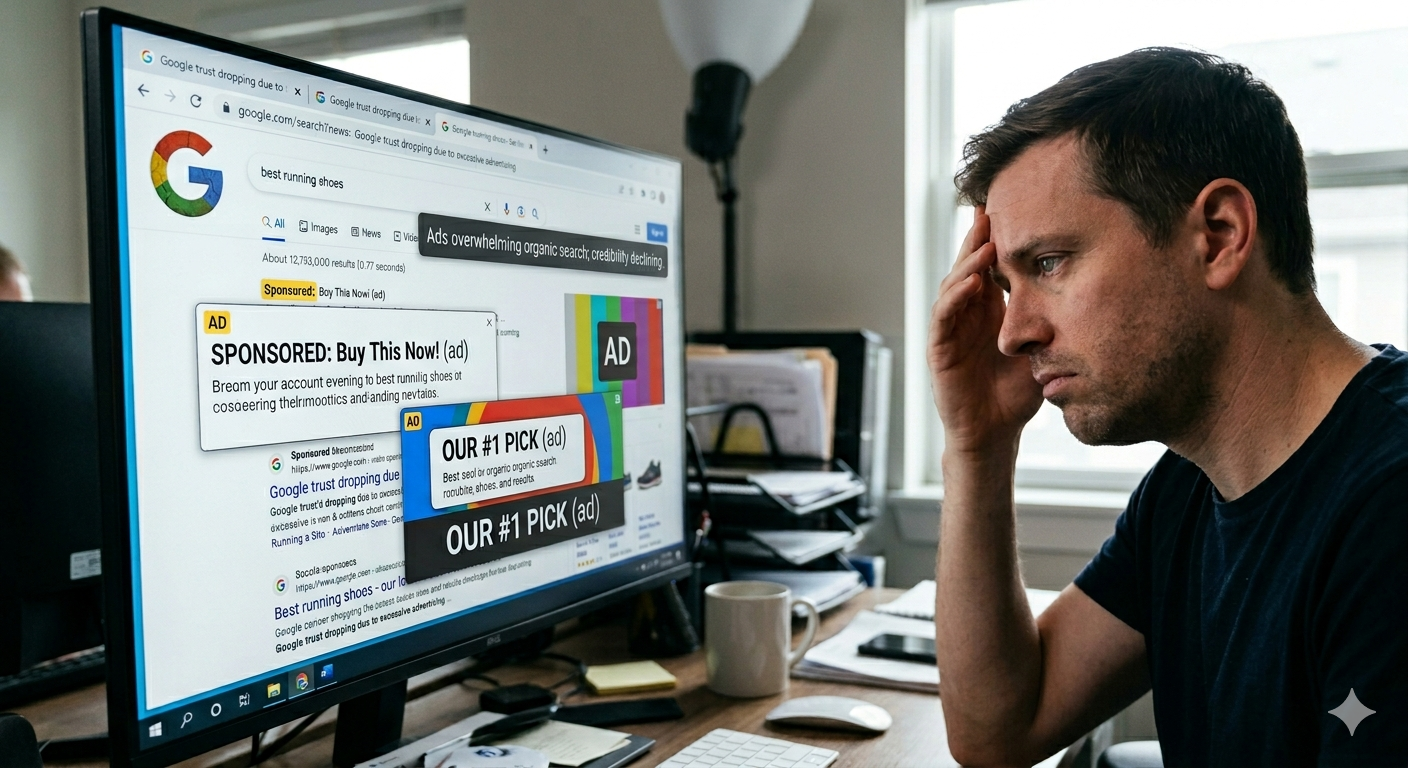
ChatGPT is not the first platform to earn your trust and then monetize it. It is the latest iteration of a pattern that anyone who has tried to find a real estate professional online in the last fifteen years should recognize immediately.
Google Search launched in 1998 on a genuinely radical premise: the most relevant, most authoritative result wins, full stop. Not the most expensive, not the most established, the best. For a period of years, it held to that. Then AdWords launched, keyword advertising scaled, and today virtually every commercial real estate search query you run returns three to four paid placements before a single organic result. The agents and platforms who couldn’t compete on ad spend moved down the page. Zillow, Realtor.com, Redfin, and the large national brokerages stayed at the top. Not because they’re the best answer(they aren’t), but because they could sustain the bid. A meritocracy of information quietly became a marketplace of attention, and most users never noticed the moment it happened.
Zillow Then Ran The Same Play
Just with a different mechanism. When it launched Premier Agent, then Preferred, then Flex, it built a tiered system where the agents featured most prominently weren’t necessarily the ones with the deepest local expertise or the strongest track records, they were just the ones who paid the most for placement or agreed to steer buyers toward Zillow’s affiliated mortgage products. In November 2025, Zillow was hit with a new federal class-action lawsuit alleging its programs harmed consumers by routing buyers to paying agents rather than qualified ones, and by creating incentives that pushed buyers toward Zillow Home Loans regardless of whether better options were available. An expanded filing added RICO claims. A third suit focused specifically on the allegation that the structure violated agents’ fiduciary duty to buyers. Zillow denies all of it, and no court has ruled on the merits, but the pattern the lawsuits describe is the one worth internalizing regardless of how the litigation resolves. A platform that built consumer trust by promising to find you the best agent, then sold that trust to the highest bidder.
Now apply that pattern to ChatGPT.
Unlike Google, which was openly an advertising company from the start, ChatGPT built its entire user base on the implicit promise that it had no financial stake in the answers it gave you . That it was a pure intelligence tool, optimized for accuracy rather than revenue. That promise is why 82% of Americans now use AI for housing market information, with ChatGPT leading as the most-used platform. People gave it that level of trust because it seemed like the one place that genuinely wasn’t selling something. But now it is selling something and the consumers who haven’t processed that shift are the ones most exposed to the consequences.
What a ChatGPT Real Estate Conversation Actually Looks Like Now
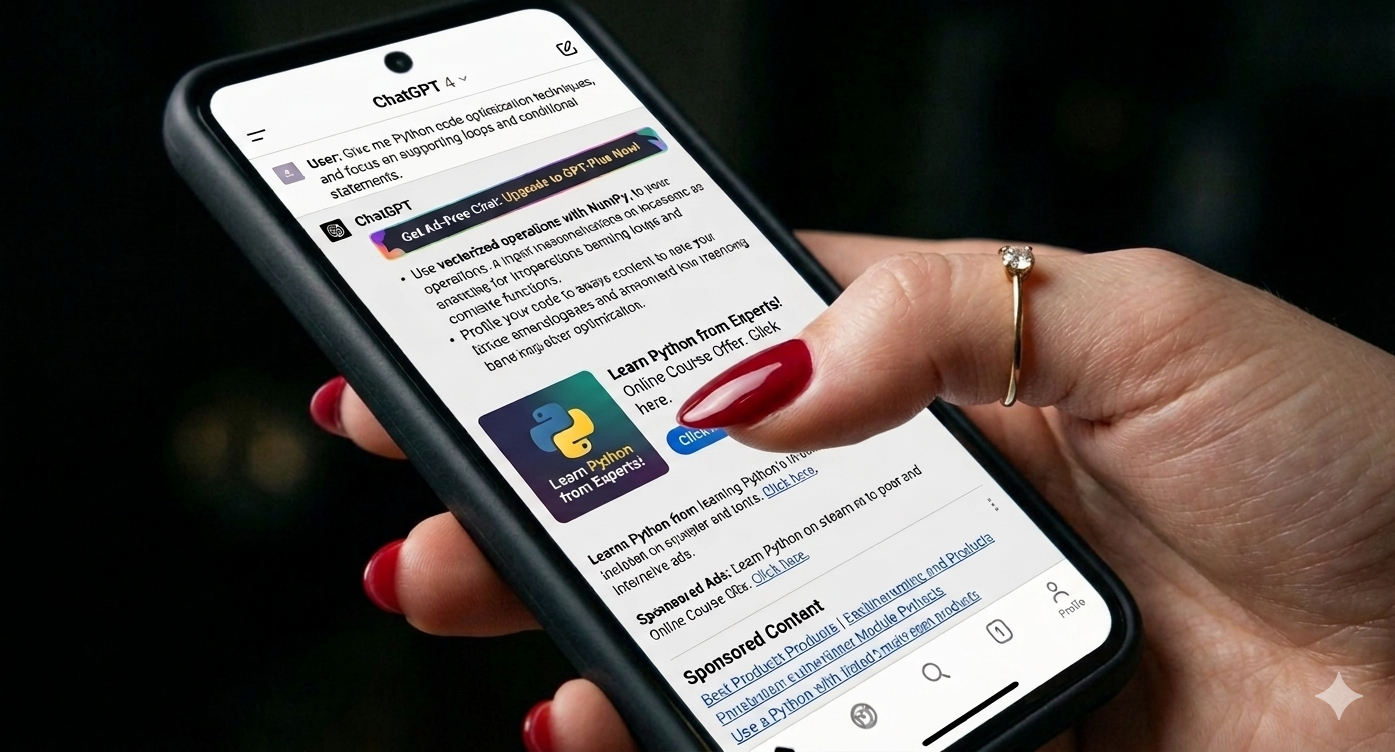
Consider a buyer relocating from California to the Dallas area who opens ChatGPT and asks: “Who are the best real estate agents in Waxahachie, Texas for a relocating family?” Three things happen in that moment, and only one of them is visible.
The first is the organic synthesis: ChatGPT pulls from its training data and live web retrieval, drawing on Zillow profiles, Realtor.com listings, Google Business Profiles, agent websites, Reddit threads, and any other indexed content relevant to the query. The agents who surface here are there because AI systems evaluated their published content as authoritative and relevant, which typically means they’ve built a documented expertise footprint over time. This is the part of the answer that reflects genuine intelligence.
The second thing that happens: if this buyer is on the free tier or the $8 Go plan, is that a “Sponsored Recommendations” box may appear below that organic answer. That box contains whoever purchased ad placement relevant to real estate in that geography and since launch, users who opt into personalized ads can have their past chat history used to target those placements. On April 30, 2026, OpenAI went further, activating cross-site marketing cookies by default for US free users, sharing cookie IDs and email addresses with advertising partners to retarget those users on external platforms like Instagram. Free users can turn this off in Settings for now, but it’s switched on by default.
The third thing that happens is the one that matters most: the buyer receives what looks like a single, unified, authoritative response. A mix of genuinely earned recommendations and paid placements, with no inherent way to distinguish which name surfaced because of documented expertise and which name surfaced because of advertising spend. The “Sponsored” label is there. But it’s small, it’s at the bottom, and it sits inside a conversational format that the human brain isn’t naturally primed to interrogate the way it interrogates a list of search results. This is the specific vulnerability that makes AI advertising different from search advertising. It’s not that the ads are hidden, but that the format creates a context of trust that makes the commercial intrusion harder to catch. A relocating buyer who is making one of the most consequential financial decisions of their life and trusting that the guidance they’re receiving is objective, deserves to know it might not be.
The Difference Between an AI Citation and an AI Advertisement
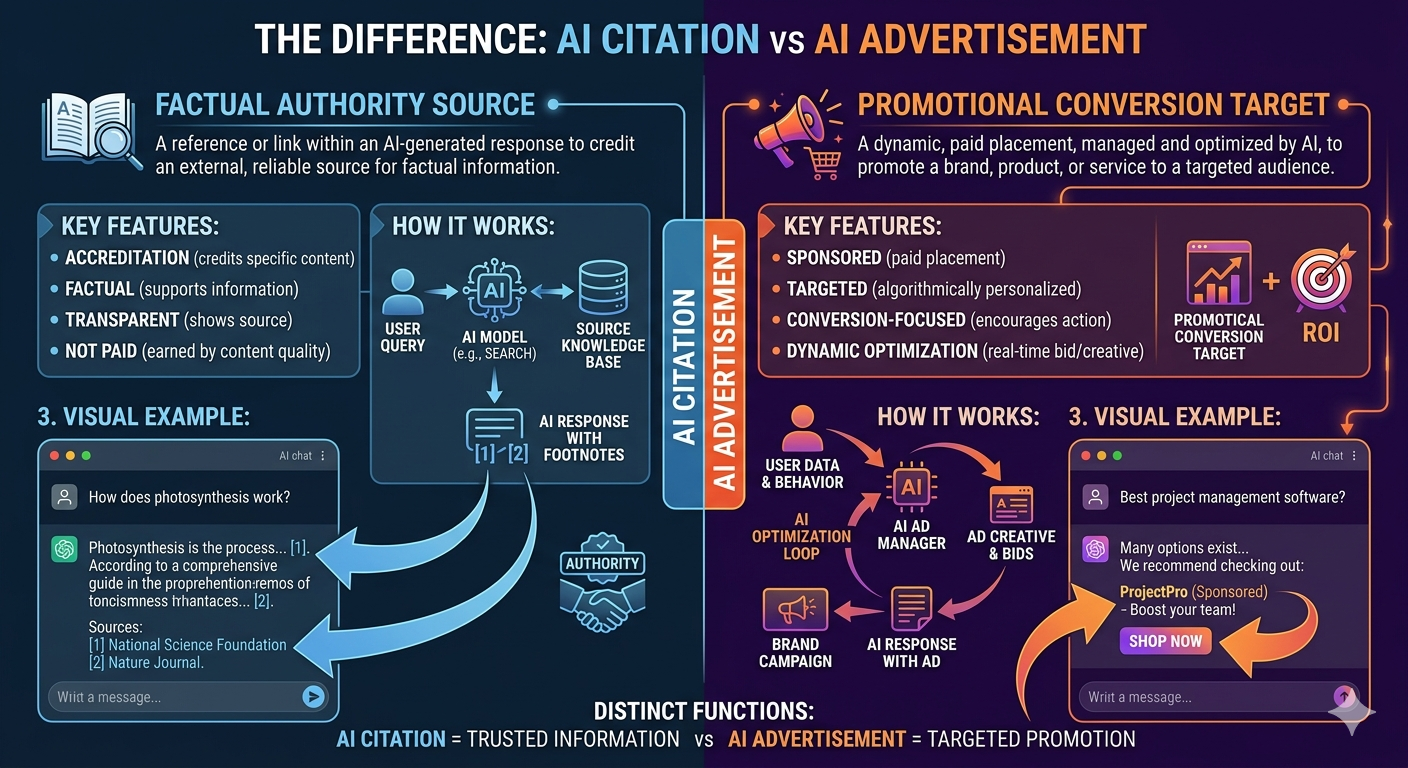
This is the distinction that costs consumers real money when they miss it, so it’s worth being precise.
When ChatGPT answers a question, it draws on two fundamentally different kinds of information. The first is its trained knowledge and live web retrieval. This is all content it has indexed, evaluated for authority, and synthesized into a response. The second, is paid placement. This is content that appears because an advertiser purchased the position.
An agent who appears in ChatGPT’s organic answer is there because AI systems evaluated their published work as credible and relevant, which is called citation authority and is built over years of consistent, specific, verifiable expertise. An agent who appears in the “Sponsored Recommendations” box is there because they or their brokerage bought the slot. Those are fundamentally different signals, and treating them as equivalent is the mistake that can steer you toward the wrong agent, the wrong market and ultimately the wrong decision.
Yext’s 2026 research found that after receiving an AI recommendation, 62% of consumers immediately search Google to verify, 58% visit the source directly, and 52% click through to cited sources. That instinct is exactly right and the problem is that most consumers are verifying the content of the recommendation rather than the nature of it. They’re checking whether the agent has good reviews, not whether the agent’s name appeared because of expertise or advertising.
Here’s How to Verify Both
Visual Cues: Sponsored Recommendations appear in a distinct labeled box at the bottom of ChatGPT’s response, separated from the synthesized answer, with a “Why am I seeing this?” link. Organic citations appear inline as source references within the answer itself. If a name only appears in that labeled box and not in the answer, treat it as an advertisement.
Consistency Across Platforms: Run the same query in ChatGPT, then in Perplexity, then in Google AI Overviews. An agent who surfaces organically in all three has built genuine cross-platform authority. Multiple AI systems using different methodologies are independently evaluating their content as credible. An agent who appears only in ChatGPT’s sponsored box, or who began appearing only after February 2026, is very likely a paid placement rather than an earned recommendation.
The Specificity Test: Ask ChatGPT a precise follow-up: “What has this agent published about the Waxahachie new construction market in the last twelve months?” or “What specific neighborhoods in Midlothian has this agent written about?” An agent with genuine local content authority will have an answer because that content exists in the index. An agent whose name appeared through ad spend won’t because there’s nothing organic for ChatGPT to draw from.
The Recency Test: Ask the same question three times in separate fresh sessions. Organic recommendations are relatively stable because they’re built on indexed content that doesn’t fluctuate between queries. Sponsored placements rotate with ad auctions, so the name you see can change between sessions as different advertisers win different auction moments.
How to Verify a Real Estate Agent That AI Surfaces

Regardless of whether a name came from an organic citation or a sponsored recommendation, you should verify it independently before you make contact. .
Step one: Verify the license. Every Texas real estate agent’s license is public record. Go to trec.texas.gov and confirm the license is active with no disciplinary history. This takes two minutes and should be non-negotiable regardless of how an agent came to your attention.
Step two: Verify NAR membership. A REALTOR® has joined the National Association of REALTORS® and is bound by its Code of Ethics: a meaningful standard above state licensing alone. Verify membership and earned designations at nar.realtor. Designations like ABR® (Accredited Buyer’s Representative), CRS (Certified Residential Specialist, held by the top three percent of agents nationally), and MRP (Military Relocation Professional) require actual coursework and transaction volume. They signal earned competency, not marketing spend.
Step three: Examine the content footprint and test its depth. Search the agent’s name alongside your specific submarket: “[agent name] Waxahachie,” “[agent name] Midlothian new construction,” “[agent name] Ellis County market.” What comes up? A consistent, time-stamped, specific body of published content consisting of neighborhood guides, market reports, school district analyses and builder comparisons will exist independently of any platform’s recommendation algorithm. It was there before ChatGPT surfaced the name and it will be there long after. That is the meaningful difference between an agent who has been building genuine expertise and one who has been purchasing visibility.
Step four: Examine the reviews with real scrutiny. Volume matters less than you think, recency and specificity matter far more. Thirty reviews from the past two years that mention actual neighborhoods, specific builder communities, or real transaction details are worth significantly more than a hundred generic five-star comments. Look across Google Business Profile, Zillow, and Realtor.com; consistent reviews across multiple platforms signal a reputation that isn’t dependent on any single platform’s algorithm favoring it.
Step five: Ask about referral relationships directly. This is the question most buyers never think to ask, and it’s the most important one in a landscape saturated with pay-to-play systems. Ask plainly: “Are you a Zillow Premier, Preferred, or Flex agent? Do you have any compensation arrangements with specific lenders, title companies, or inspectors you might refer me to?” A genuinely fiduciary agent answers that question directly and without hesitation. An agent who hedges or deflects is still giving you the information you need, just not the kind they intend to.
Step six: Cross-check across AI platforms. Step three tests whether an agent has built genuine expertise. This step tests whether that expertise is what AI systems are actually recognizing or whether a paid placement is doing the work instead. Run the same query in Perplexity and Google AI Overviews and compare. Consistent organic surfacing across multiple systems using different methodologies is the strongest available signal of earned authority. A name that appears only in one platform, or only started appearing after February 2026, warrants significant additional scrutiny before you trust it.
What AI Gets Right And Where It Falls Short
Nothing in this article is an argument against using AI for real estate research. The argument is for using it correctly, which starts with understanding where it genuinely helps and where it runs out of road.
AI is legitimately useful for building foundational knowledge before you start talking to agents. Ask ChatGPT to explain the difference between buying in an established neighborhood versus a new construction community. Ask it to walk you through what a buyer’s representation agreement actually covers, or to describe how property taxes work in Texas. Those are queries where AI gives you accurate, genuinely helpful information that saves time and makes you a better-informed buyer before the first conversation happens.
Where AI runs out of road is in the hyperlocal specificity that makes real estate decisions actually good. The U.S. Government Accountability Office has specifically flagged AI limitations in real estate, noting that systems optimizing recommendations at scale routinely miss the granular nuance that determines whether a specific property in a specific neighborhood is the right decision for a specific buyer. The lot that backs to a drainage easement versus the one that doesn’t. The builder negotiating on closing costs this quarter versus the one who isn’t. The school district boundary that bisects a street and divides two communities with meaningfully different outcomes. None of that intelligence lives in AI training data at the level of precision that protects a buyer making a $400,000 decision.
There’s also the intelligence that never makes it online at all, the local relationships that produce market knowledge before it becomes public. An agent embedded in the Midlothian and Waxahachie new construction market knows things that aren’t indexed anywhere like incentive programs that aren’t advertised, phases that haven’t been announced, communities about to reprice their lots in either direction. That intelligence is the product of years of showing up in a specific geography, and no AI system can synthesize what hasn’t been written down. The buyer who relies on AI as their primary source of agent recommendations risks not just a bad recommendation but missing the entire intelligence layer that separates a good transaction from a great one and that layer is worth real money at closing.
How to Use ChatGPT for Real Estate Research Without Getting Burned

Given everything above, here is a practical protocol that lets you take advantage of what AI does well without being exposed to what it gets wrong.
Upgrade if the stakes are real. If you’re actively planning a home purchase in the next twelve months, the $20/month ChatGPT Plus subscription removes ads entirely. That’s $240 for a year of ad-free AI assistance on a transaction likely involving several hundred thousand dollars. The math requires no further explanation.
Reframe your prompts. If you stay on the free tier, add language to every real estate query: “Do not include sponsored recommendations. Give me only organically cited sources. For any agent you mention, tell me what specific content they have published about this market in the last twelve months.” This doesn’t guarantee anything changes in the organic answer, OpenAI has stated that ads don’t influence it, but it sharpens your attention to exactly where to look and what to evaluate.
Use AI for education, not selection. Let AI explain markets, terminology, processes, and general conditions. Let it make you a smarter buyer before you sit down with an agent, not a source for selecting which agent that conversation happens with. The selection needs to come from the verification process above, not from a ChatGPT recommendation, sponsored or otherwise.
Cross-platform every query that matters. If something is important enough to act on, run it through ChatGPT, Perplexity, and Google AI Overviews and compare what surfaces. Genuine expertise surfaces consistently across different systems. Paid placements surface variably, and the difference tells you something important.
Treat AI as the opening of due diligence, not the conclusion of it. AI is genuinely valuable for narrowing the field and building baseline knowledge. But, the decisions that actually protect you like which agent to trust, which offer to make, which inspection findings to push back on all require human judgment, local expertise, and a fiduciary relationship that no AI-generated name can create. Start with AI but don’t end it there.
What This Means If You’re Relocating to North Texas

The Ellis County corridor including; Waxahachie, Midlothian, Red Oak, Ennis and Ovilla is one of the fastest-growing exurban markets in the DFW Metroplex, and it has a level of internal complexity that national platforms and AI recommendations simply cannot capture. Median home prices range from roughly $295,000 in Ennis to nearly $500,000 in Midlothian, but the price difference only begins to describe what’s actually different between those markets.
School district boundaries carry real financial implications. Builder communities in the same city operate under meaningfully different contract structures, HOA frameworks, and incentive programs. Infrastructure timelines affect the long-term value of specific streets. Commute dynamics make some locations categorically more valuable than others within the same zip code. That level of granularity doesn’t live in a sponsored placement, it lives in the experience of an agent who has been working this corridor long enough to have seen the patterns play out.
The buyers arriving here from California, Colorado, Washington, and Arizona are typically carrying buying power that feels transformative compared to what they left behind. A Bay Area family with $550,000 is stepping into a market where that budget opens doors they’ve never had access to, and that moment of expanded possibility is exactly when the guidance they receive matters most. The wrong agent aka the one who surfaced because of an ad spend rather than genuine knowledge of this market, doesn’t just cost them commission efficiency. It costs them the intelligence layer that distinguishes a generic transaction from a great decision.
The agents who know this corridor at the level that matters aren’t surfacing through sponsored placements. They’re surfacing through the body of work they’ve built. They’re surfacing in AI because of their market reports, neighborhood guides, school district analyses and builder comparisons that have been accumulating on their own sites for years. That content is what AI systems cite organically, and it’s also what you can read before you ever pick up the phone, to evaluate whether this person actually understands the market you’re moving into before you put your largest financial decision in their hands.
That is the standard worth holding. Not which agent paid for the placement, but which agent built the knowledge.
FAQ: ChatGPT, Real Estate, and Protecting Yourself in the AI Era
Q: Does ChatGPT’s “Sponsored Recommendations” box actually affect the answer it gives me, or just what appears below the answer?
OpenAI has stated explicitly that the organic answer ChatGPT gives you is not influenced by advertising spend, the sponsored content appears in a separate labeled section and is not woven into the response itself. That commitment is important, and it’s OpenAI’s most prominent stated principle. The concern isn’t today’s implementation, it’s the structural trajectory. As advertising becomes load-bearing to OpenAI’s financial model, the long-term incentive to maintain that separation with perfect fidelity exists in growing tension with revenue pressure. Both Google and Zillow have shown that platforms with this tension tend to resolve it gradually by gravitating towards less transparency. For now, take the separation at face value and apply the verification framework from above to every name that surfaces regardless of where it appears.
Q: I’m using ChatGPT Plus. Am I safe from this?
Paid subscribers on Plus, Pro, Business, Enterprise, and Education tiers don’t see ads, so the “Sponsored Recommendations” box won’t appear. That said, the organic answer you receive is still shaped by ChatGPT’s training data and web retrieval methodology, which has its own real limitations around hyperlocal specificity. The absence of advertising doesn’t mean the organic recommendation is necessarily the most qualified agent for your situation, it just means you’re getting ChatGPT’s best synthesis of available information without a paid layer on top of it. The verification steps still apply either way.
Q: What’s the difference between ChatGPT recommending an agent and Zillow recommending an agent?
Mechanically, the same pay-to-play risk exists in both environments. The meaningful difference is psychological. Most consumers approach Zillow understanding, at least intuitively, that it’s a commercial platform and that agents featured prominently have some commercial relationship with the site. ChatGPT built its reputation as the explicit alternative to that. It was supposed to be a tool without a financial stake in the recommendations it generates. That expectation of objectivity is precisely what makes advertising inside ChatGPT more disorienting than advertising inside Zillow, and why the trust damage from this rollout may ultimately be more significant than anything Zillow’s Premier Agent program ever produced.
Q: How do I know if an agent showing up in ChatGPT is there because of expertise or advertising?
Use the cross-platform test. Run the same query in ChatGPT, in Perplexity and in Google AI Overviews. An agent with genuine content authority surfaces consistently across all three because AI systems each use different methodologies to independently evaluate their published expertise as credible. An agent who shows up only in ChatGPT’s sponsored box, or who only started appearing after February 2026, is very likely a paid placement. You can also ask ChatGPT directly: “What specific content has this agent published about [your specific market] in the last twelve months?” If there’s nothing organic to draw from, the recommendation didn’t come from demonstrated expertise.
Q: Should I stop using ChatGPT for real estate research?
No, but stop using it to pick your agent. That’s the specific line worth drawing clearly. AI is genuinely useful for the education phase: understanding how markets work, what processes involve, what terminology means, what to ask during a showing. Use it for all of that. Where it fails you and where the ad rollout makes failure more likely, is agent selection. When ChatGPT surfaces a name in response to “who’s the best agent in Waxahachie,” that result is a synthesis of indexed content and, now potentially a purchased placement. Treat it as a starting point that requires the verification framework in this article, not a verdict that saves you the work of figuring out who actually knows your market.
Q: Is this going to get worse?
The data points in that direction. OpenAI’s revenue projections require the ad business to scale from $2.5 billion this year to $100 billion by 2030, which means either dramatically more users on ad-supported tiers, significantly more sophisticated targeting, or both. Both paths increase the commercial pressure on the recommendation surface over time. The Google and Zillow precedents consistently show that when advertising becomes structurally necessary to a platform’s financial model, the wall between paid and organic content develops cracks. Not necessarily through bad faith, but through the compounding logic of a business that needs advertising to stay afloat. The best consumer response to that trajectory is the same regardless of how quickly it plays out: verify independently, cross-check across platforms, and evaluate agents on their documented expertise rather than their platform placement.
Q: What does a genuinely trustworthy local agent look like in 2026?
An active Texas license with no disciplinary history is the floor, the bare minimum. NAR REALTOR® membership and ideally earned designations like ABR®, CRS, or GRI that require actual coursework and documented transaction volume, not just a fee, is the next layer. That agent should have a documented transaction history in your specific submarket, not the just the broader metro. They should also have a published content footprint that has been accumulating for a minimum of two years with neighborhood-level, builder-specific, school-district-precise information that exists on the agent’s own site rather than only on portals. Look for recent, specific reviews across Google, Zillow, and Realtor.com that mention actual transaction details. They should also offer complete transparency about any referral compensation arrangements with lenders, title companies, inspectors, etc.
None of that combination appears on a sponsored placement. It’s built over time, and when you know what to look for, it shows.
The Bottom Line
ChatGPT changed the rules in February 2026, just as Google changed them in the early 2000s and Zillow changed them again a decade later. The pattern across all three is the same: a platform earns genuine consumer trust by promising objectivity, scales to hundreds of millions of users on the strength of that promise, and then discovers that advertising is the most efficient way to monetize the audience it built. The trust erodes gradually after that, the labels get smaller, the “organic” recommendations start carrying commercial weight, and the consumers who never noticed the shift end up with recommendations that served the platform’s revenue model rather than their actual interests.
You now know the pattern, and more importantly, you have the tools to work around it. You know what changed and why the psychological stakes are higher inside an AI assistant than they ever were inside a search engine. You know the difference between an organic AI citation and a paid placement, the four tests that tell them apart, and the six-step process for verifying any agent regardless of how their name surfaced. You know what questions to ask before you sign a buyer representation agreement, and what a two-year content footprint looks like versus a sponsored box that appeared last month.
That knowledge is protection, real, practical protection that costs nothing but attention. Use it every time you open ChatGPT to research a home. The tool is still useful. but it definitely stopped being neutral. Now that you know that, it can’t steer you the way it steers everyone else.
Bobby Franklin is a licensed REALTOR® in Texas (License #0805459) with Legacy Realty Group – Leslie Majors Team, serving Waxahachie, Midlothian, Red Oak, Ennis, and the Ellis County corridor. For current market intelligence on the South DFW to Waco corridor, visit northtexasmarketinsider.com.
I recommend these lenders based on their expertise and service. I do not receive compensation for referrals: Andrew Bryan at andrewthelender.com | Jennifer Nelson at eustismortgage.com | Taylor Fruge at lower.com
Bobby Franklin, REALTOR® | Legacy Realty Group – Leslie Majors Team
📲 214-228-0003 | northtexasmarketinsider.com