Here’s what nobody is telling you while you’re scrolling FIFA bracket predictions and arguing about which fan zone has the best food trucks.
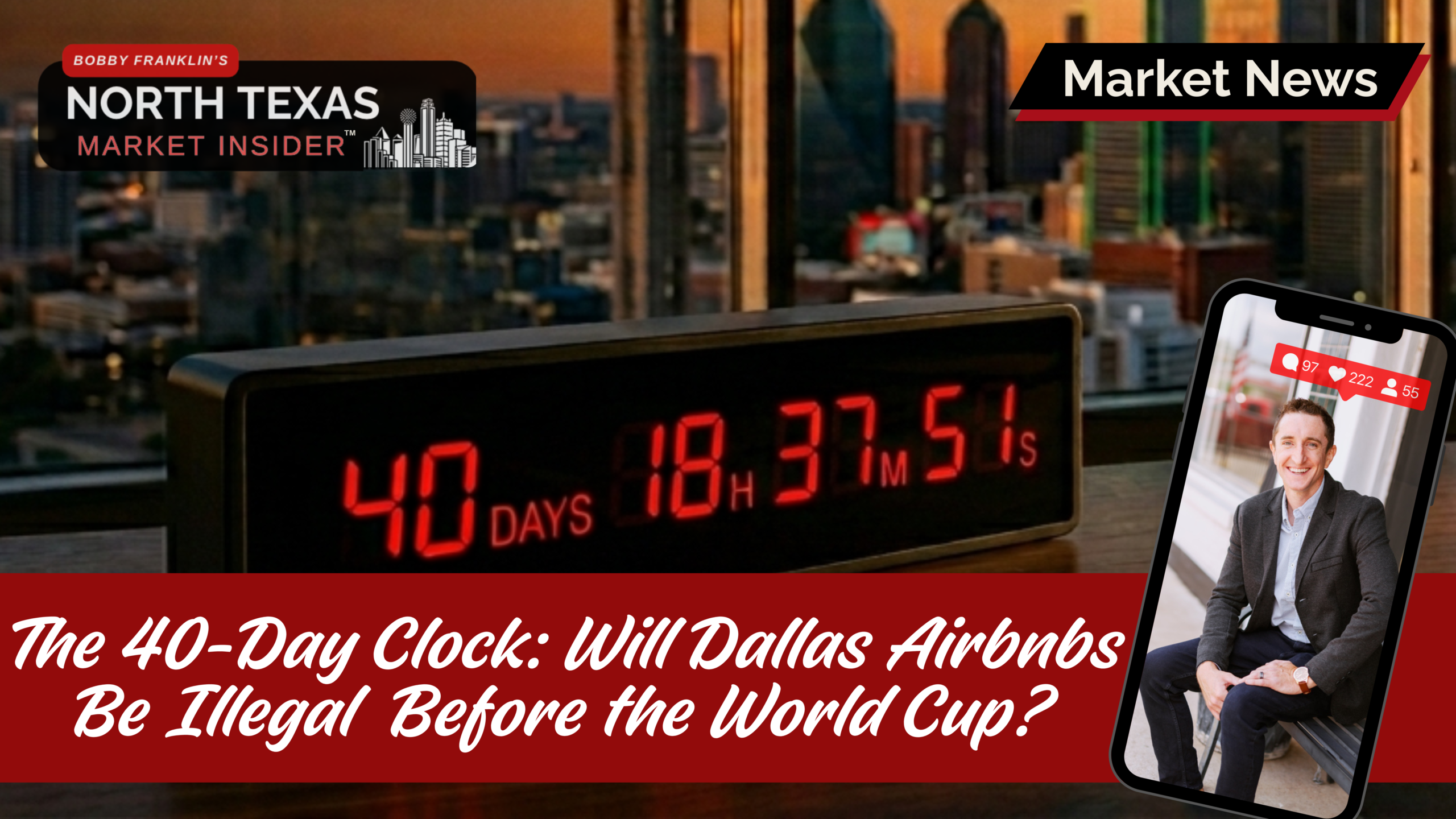
While you’re counting down to June 14 and the opening whistle of the 2026 World Cup, there’s a different countdown clock running 200 miles south of here in Austin. It’s quiet, it’s not on ESPN and it’s not in your social feed. But it could erase tens of thousands of confirmed Airbnb and Vrbo bookings across Dallas overnight and most of the hosts holding those bookings have no idea it’s happening.
Between October 22 and November 17, 2025, the City of Dallas walked into the Texas Supreme Court and asked the justices to lift the injunction blocking its 2023 short-term rental ordinance. In plain English: Dallas asked the highest court in Texas for permission to enforce a ban that would wipe most Airbnbs and Vrbos out of single-family neighborhoods across the city. And in their filing, the city used three words that should be tattooed on the forehead of every short-term rental invXestor in DFW right now: “time is of the essence.”
They specifically named the World Cup as the reason for the rush.
If the court sides with Dallas before kickoff, an estimated 90% of currently operating short-term rentals in single-family zones become illegal, instantly. Not next year. Not after a grace period. Overnight. With World Cup guests already booked. With international flights already paid for. With deposits already collected and listing calendars already locked.
This is one of the biggest housing and lodging stories happening in North Texas right now, the one that determines whether you make that money or get a cease-and-desist letter, is sitting in a Texas Supreme Court inbox waiting for a ruling.
Let’s get into it.
What Dallas Actually Passed in 2023 (And Why It’s Still in Limbo)
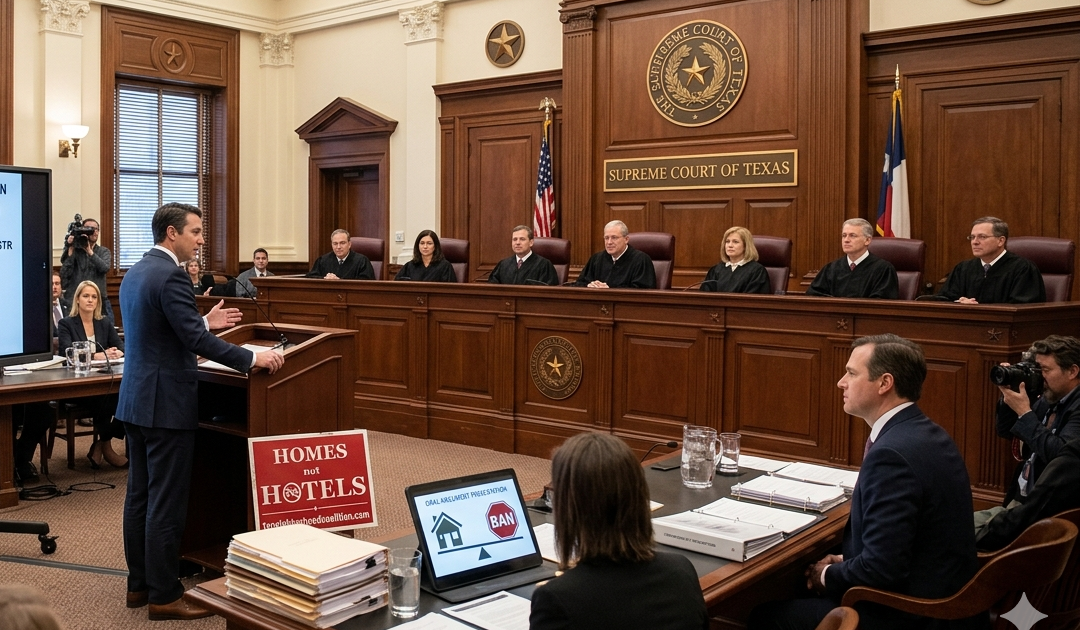
Let’s rewind. June 2023. Dallas City Council walks into chambers and votes to do something that would have been politically unthinkable five years earlier: functionally ban short-term rentals from most of the city.
Here’s what they actually passed:
- A ban on short-term rentals in most single-family residential zoning districts.
- Permission for STRs only in certain multifamily, mixed-use, and commercial areas.
- A registration requirement, hotel occupancy tax collection mandate, and operating compliance rules for the few STRs that would still be legal.
Now stop and look at the math on that. Roughly 90% of Dallas’s residential land is zoned single-family. Which means this ordinance isn’t a “regulation”, it’s a near-total ban dressed up as zoning policy. The 90% number is the entire game. That’s the part that lit the fuse.
The Dallas Short-Term Rental Alliance (DSTRA) and several individual property owners didn’t wait around. They sued. And in December 2023, a Dallas County district court judge handed them an injunction, blocking the city from enforcing the ordinance while the case played out. The judge’s reasoning? The property owners were likely to win on the merits.
Throughout 2025, the Fifth Court of Appeals slapped Dallas down repeatedly, upholding the injunction every time the city tried to get around it. The appellate court raised serious questions about whether the ban violated Texas property rights protections and the state’s prohibition on certain retroactive laws. Translation: the appeals court thought Dallas was overreaching.
So Dallas escalated. They filed with the Texas Supreme Court. And in those filings, this is the part that matters, they emphasized the World Cup. They told the highest court in Texas that “time is of the essence” because of the visitor surge coming this summer.
As of spring 2026, the Supreme Court has not issued a final ruling. Most Dallas STRs in single-family zones are still operating under the protection of that 2023 injunction. But that protection is sitting on a desk in Austin, and the city is actively pushing to have it removed before the world shows up at AT&T Stadium.
This is the part nobody outside of land-use attorneys and a handful of operators is tracking closely, but it’s the part that’s about to define the summer.
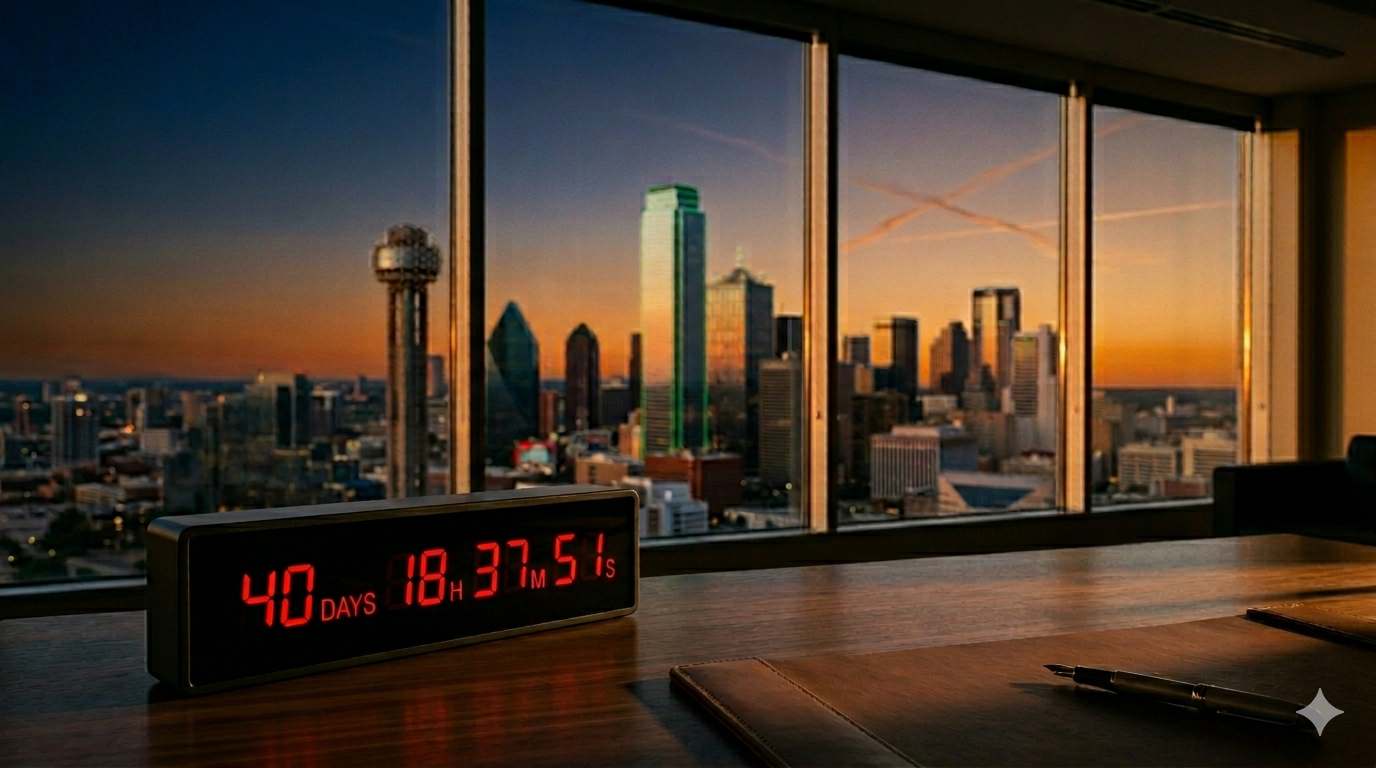
Why the World Cup Turns This Into a 40-Day Clock
Let me show you what we’re actually talking about when we say “the World Cup is coming to North Texas.”
AT&T Stadium in Arlington is hosting nine matches. Nine group stage games and later-round matches, including matchups that historically draw the largest international audiences in the entire tournament. Millions of fans will move through DFW and Dallas is projected to lead U.S. host cities in visitor spending.
Now layer on the data:
- Regional tourism projections show Dallas at or near the top in projected World Cup visitor spending and total economic impact, with updated forecasts placing the regional impact between $1.5 and $2.1 billion.
- Short-term rental analytics firms are reporting 300–500% year-over-year demand spikes for June and July in Dallas, with even higher growth in Fort Worth and surrounding cities. Fort Worth bookings are running 500–700% above last year’s pace.
- International flight bookings into DFW Airport for the World Cup window are up dramatically over a typical summer.
At the same time, the City of Dallas has already burned an estimated $3.5 million building enforcement infrastructure and litigating this case and the ordinance isn’t even active yet. That tab covers staff, enforcement software, and legal costs. Local reporting confirms it. So the city has already put millions of dollars on the table betting that they win.
Meanwhile, Dallas is collecting a 9% city hotel occupancy tax on STR stays right now, plus the 6% state hotel occupancy tax on top of that. STR guests are already filling city and state coffers. They’re already paying their share and the city is trying to ban the thing that’s generating that revenue.
When you stack huge event demand on top of millions in pre-spent enforcement money on top of a pending Supreme Court decision, you get the actual scenario nobody is naming clearly:
- If the Supreme Court lets Dallas enforce the ordinance before June 14, most STRs in single-family neighborhoods are immediately out of compliance.
- Hosts who keep operating face fines and legal exposure. Guests face last-minute cancellations on bookings they paid for months ago.
- If the court rules for the property owners, Dallas has to scrap the strategy and reset while the World Cup is already happening.
This isn’t a theoretical risk. This is a 40-day clock. And the people who are five steps ahead of it right now are the ones who win this summer.
Why Dallas Is Pushing This And Why They Say It Has to Happen Before Kickoff
Before we go further, let’s give Dallas a fair hearing. This article is going to make a strong argument about what the ban means for investors, hosts, and the World Cup window, but the city didn’t pass this ordinance on a whim, and they didn’t escalate to the Texas Supreme Court just to be spiteful. There are real residents, real complaints, real data points, and a specific set of concerns tied to the World Cup holding up their position. Anyone serious about understanding this fight needs to understand both sides of it.
Here’s what Dallas is actually arguing.
The Foundational Case (Why They Banned It in the First Place)
Quality-of-life and safety concerns. The original push for the ban came from Dallas residents who said specific short-term rentals had become unregulated event spaces in their neighborhoods. Council members were responding to dozens of complaints about noise, parking, loud parties, and illegal activity including drug use and prostitution. High-profile incidents, including shootings and what police described as a brothel, became part of the public record. From the perspective of long-term homeowners in those neighborhoods, this isn’t an abstract policy debate. It’s the house next door and its their future equity on the line.
The “businesses in residential zones” argument. Dallas Council Member Paul Ridley, whose District 14 has more STRs than any other district, put it bluntly: STRs are a commercial use. Lodging use, classified that way under the state tax code. In his view, commercial uses don’t belong in residential zoning. The city’s lawyers expanded the argument in court, contending that STR operators aren’t really homeowners using their properties, they’re hotel operators, and hotels have always been zoned out of single-family neighborhoods.
Enforcement limitations under existing law. This is the operational argument, and it’s stronger than it gets credit for. Dallas Code Compliance doesn’t work nights or weekends, the exact times when party-house complaints peak. The police department doesn’t have spare capacity to break up house parties. By the time anyone responds to a complaint, the harm has already happened. The Texas Neighborhood Coalition argues that anti-nuisance ordinances don’t work for this reason: you can’t enforce your way out of a structural zoning problem.
That’s the foundational case. But here’s where it gets interesting and where the World Cup specifically enters the argument.
The World Cup-Specific Case (Why They Say “Time Is of the Essence”)
Dallas isn’t just trying to enforce its ordinance in general. They’re racing to enforce it before kickoff for a very specific set of reasons. Read the October 16, 2025 Texas Supreme Court petition carefully and the city’s logic looks like this:
Argument 1: The World Cup amplifies every existing complaint to a level current enforcement tools can’t handle.
The 11-complaints-per-month problem the city has been managing? Now imagine that during a 39-day stretch when an estimated 300,000–400,000 visitors are descending on the region, most of them international, many fueled by match-day celebration culture. The city’s argument is that the ratio of nuisance to enforcement capacity inverts during the tournament. What’s manageable in a normal month becomes structurally unmanageable for six weeks straight.
Dallas’s filing language gets at this directly: with the ordinances enjoined, “it will be more difficult for the city to proactively ensure the health, safety, and quality of life for residents and visitors alike.” The key word is proactively. The city is saying their existing complaint-driven, after-the-fact enforcement model is going to fail at World Cup scale. They want the structural tool — zoning — in place before the wave hits.
Argument 2: International World Cup crowds present risks the city argues it isn’t currently equipped to manage.
This is the part nobody likes to say out loud, but it’s in the city’s reasoning. International travelers staying in unregulated single-family STRs create a different risk profile than business travelers staying in registered hotels. The insurance industry has flagged this directly: large groups celebrating matches, language barriers, alcohol consumption, and “the general chaos of a major sporting event” all increase the likelihood of property damage, liability claims, and incidents. Other host cities are flagging the same issues with concerns about poorly vetted guests, property damage, and the well-documented “squatter” risk when guest stays cross the 30-day legal threshold.
Dallas’s argument, stripped down: in regulated hotel inventory, there are guest registration requirements, professional staff, security, and accountability. In unregulated single-family STR inventory, much of that is absent. The city is arguing that during a global event of this magnitude, that gap matters in a way it doesn’t during a normal Tuesday in October.
Argument 3: The “neighborhood character” concern goes nuclear during the World Cup.
The whole foundational argument was about long-term residents losing their neighborhood to a steady stream of weekend visitors. Now imagine that same dynamic, except the visitors are international, the parties are tied to match days that fall on weekdays, and the celebrations run for six weeks straight rather than a single weekend. The Dallas Council Member representing District 14 (the highest-STR-concentration district in the city) has framed the foundational concern as residents “no longer knowing who lives in houses in their neighborhood.” The city’s view is that the World Cup turns that from a chronic concern into an acute one.
Argument 4: Dallas wants to set the regulatory baseline before the precedent is set against them.
This one is unstated but strategic. If the World Cup arrives with the injunction still in place, hosts continue operating in single-family neighborhoods, and the world doesn’t end, then the city’s case for a zoning ban gets dramatically harder going forward. Operators will have established a six-week track record of operating during peak demand without catastrophic outcomes. The city’s strongest argument, that STRs in single-family zones threaten public safety, gets undercut by reality. From Dallas’s perspective, the window to enforce structurally is before the World Cup, not after, because the World Cup itself becomes evidence in whichever direction it cuts.
Where the City’s Case Gets Complicated
Now, and this is where the analysis gets interesting, the same Dallas city government that’s pushing this ban has been confronted with its own data, and the data tells a more nuanced story than the public hearings suggested.
The city’s own short-term rental impact study, released in November 2022, found that 88% of registered STRs had never had a 311 or 911 call associated with them. STRs represented less than 1% of the city’s housing stock. Only 5.9% of operators ran more than one property. The report’s actual conclusion: “there is no evidence in the data that STRs have a city-wide impact.”
Subsequent data presented to the City Council in late 2024 reinforced the pattern: only 160 STR-related complaints had been filed with code enforcement since June 2023, about 11 per month, against a base of roughly 3,500 active STRs in the city. That’s a complaint rate of about 0.3% of properties per month.
This is the data tension at the heart of the case. Dallas’s own analysis suggests the problem isn’t STRs as a category, it’s a small number of bad actors. Council members Chad West and Adam Bazaldua, who voted against the ban, have argued that targeted regulation and stronger enforcement against repeat offenders would address the actual problem without eliminating the legal income stream of thousands of compliant operators.
The Dallas Short-Term Rental Alliance has made the same argument from day one: hike registration fees to fund proper enforcement, revoke permits for repeat offenders, and protect responsible operators. That’s a regulatory model. The current ordinance is a zoning model. Both can claim public safety as a goal, including World Cup public safety, but hey reach vastly different conclusions about which tools to use.
Why This Matters for the Reader
Understanding the full case isn’t just a fun thought exercise, it’s strategically useful and for three reasons.
First, it tells you where the legal weight actually sits. The Texas appellate court has ruled against Dallas multiple times in part because the city’s own data undermines its policy argument. When the underlying facts contradict the regulatory response, courts notice. Dallas’s World Cup urgency arguments might compel the Texas Supreme Court, or it might look to the justices like a pretext to fast-track an ordinance the appellate court has already found constitutionally suspect.
Second, it tells you what compromise looks like. If the Texas Supreme Court sends this back to negotiation, the most likely landing zone isn’t a total ban or a total free-for-all, but rather a regulatory framework that targets bad actors, funds enforcement properly, surges enforcement capacity for the World Cup window specifically, and lets compliant operators continue. Investors and hosts who structure their operations around being unimpeachably compliant are positioning for whichever side wins.
Third, it tells you how to talk about this with the long-term residents in your network. Real estate isn’t just about buyers and sellers. It’s about communities. If you’re in a neighborhood with concerned homeowners, including homeowners who specifically don’t want their street to become party central during the World Cup, the answer isn’t to dismiss their concerns. It’s to acknowledge them, point them toward the data, and push for the targeted-enforcement model that protects both sides. That’s how a serious agent operates: not as a partisan for one camp, but as someone who understands the whole board.
Now, with both sides fairly stated and the data on the table, let’s get back to the clock that’s actually running.
How Other North Texas Cities Are Handling This (Hint: Every City Is Different)
Here’s what the average DFW agent will tell you: “Just buy an Airbnb. Make easy money during the World Cup.”
Here’s what’s actually happening across North Texas: a regulatory patchwork that changes city by city, zone by zone, and sometimes block by block. Almost every major North Texas city has either adopted an STR policy or is actively writing one. Treating “DFW” as one market right now is how investors lose their shirts.
Quick scan of what’s on the ground:
- Arlington — Long-standing ban on STRs in most single-family neighborhoods. Limited allowances in special tourism or commercial zones near the stadium.
- Fort Worth — Ban on STRs in single-family zones, upheld by a local court. STRs allowed primarily in commercial and certain mixed-use districts.
- Frisco — Active STR license program with caps and a waitlist. New entry is functionally closed heading into the World Cup.
- Grand Prairie — STRs allowed, but subject to registration, annual permit fees, and active enforcement.
- Plano, Garland, McKinney, Richardson — Stronger registration rules, pauses on new STRs, or outright bans on new STRs in many residential areas.
- Waxahachie — Case-by-case Special Use Permits. Several have been approved in recent meetings.
These rules change. Enforcement varies. Anyone making a six- or seven-figure investment decision based on what a city’s website said two years ago is making a six- or seven-figure mistake. Verify directly with the city. When the stakes warrant it, hire a land-use attorney before you write the check, not after the cease-and-desist arrives.
Now let’s break down the cities that matter most for World Cup STR strategy.
How to Read the Categories Below

No short-term rental market is risk-free anywhere in North Texas right now. So we’re going to use three honest categories:
- NOT SAFE — High regulatory or litigation risk. Bans in single-family zones in effect or likely to take effect, or a major court decision pending.
- POTENTIALLY LIMITED — STRs allowed, but with caps, waitlists, special permits, or active registration and enforcement.
- RELATIVELY STABLE FOR NOW — Clear frameworks in place, no immediate new ban in the pipeline. Rules can still change, but the path is clearer.
City-by-city below: safety rating label, average income context, projected World Cup income impact, and what each scenario means for local businesses.
Dallas: NOT SAFE (For Single-Family STRs)
Regulatory Status
- The 2023 ordinance bans STRs in single-family zones but is currently blocked by a court injunction.
- The Fifth Court of Appeals upheld that injunction multiple times throughout 2025.
- The City of Dallas has petitioned the Texas Supreme Court to lift the injunction. A ruling is pending.
- If the Supreme Court sides with the city, most STRs in single-family areas are illegal immediately.
Average STR Income in Dallas
Market-wide data shows average Dallas STR revenue often in the mid-$30,000s to upper-$40,000s per year per listing, with significant variation by neighborhood and property type. Occupancy for well-located listings frequently runs in the 60–70 percent range, supported by weekend demand, events, and convention traffic.
For deeper scenarios on how event-driven demand can push revenues significantly higher during the World Cup window, see this in-depth post: Your DFW AirBnB Could Make $4,400+ This Summer.
Projected World Cup STR Income in Dallas
- STR analytics platforms project 300–500% year-over-year demand spikes for June and July across many Dallas submarkets.
- Match-day average daily rates (ADR) can jump significantly above typical summer levels, with prime listings capturing premium pricing on group-stage and later-round nights. AirDNA data shows Dallas Airbnb rates already rising 85% for World Cup 2026.
- A Deloitte analysis projects Airbnb hosts in and around Dallas will earn roughly $24 million total during the tournament window, averaging about $4,400 per host.
Here’s the catch, and it’s the catch nobody is putting in their hype content. If the injunction is lifted(meaning the STR’s are deemed illegal) close to kickoff, every one of those projected gains evaporates the moment guests cancel. That’s why Dallas single-family STRs are NOT SAFE for new speculative investment right now. The math only works if the legal foundation holds, and the legal foundation is the exact thing under attack.
Local Business Impact If STRs Stay Operational
- Neighborhood STRs spread visitor spending into local coffee shops, restaurants, bars, and cultural districts well outside traditional hotel corridors.
- STR guests behave more like temporary residents with spending on groceries, rideshare, neighborhood services and local entertainment. That money flows to small businesses that hotel guests rarely reach.
Local Business Impact If STRs Get Shut Down
- Thousands of STR rooms vanish from inventory overnight. Guests get pushed back into hotels or driven to neighboring cities.
- Neighborhood-level economic benefits collapse toward hotel zones and official fan areas. Small businesses outside those corridors lose the foot traffic they were counting on.
For broader context on how policy changes like this feed into values, inventory, and demand across the region, see The Complete 2026 Housing Market Forecast For North Texas.
Frisco: NOT SAFE (For New STRs) and POTENTIALLY LIMITED (For Existing Hosts)
Regulatory Status
- Frisco operates an official STR license program.
- The city uses caps and a waitlist process that limit the number of active licenses.
- HOAs and neighborhood overlays frequently add another layer of restriction even when the city would technically permit the STR.
Frisco is NOT SAFE for anyone trying to launch a brand-new World Cup-focused STR right now. The door is closed for new entry. For existing, fully licensed STRs, the city is POTENTIALLY LIMITED. It’s currently heavily regulated but still operational.
Average STR Income in Frisco
Frisco-specific data often gets rolled into a broader North Dallas / Collin County market band. Whole-home suburban STRs in this band frequently report annual incomes in the mid-$40,000s to low-$60,000s for well-run properties. Varying by bedroom count and finishes. Suburban homes with more bedrooms, better parking, and family-friendly layouts command higher ADRs than smaller urban units.
Projected World Cup STR Income in Frisco
Because Frisco caps licenses, existing legally operating hosts benefit from scarcity pricing as demand spills north out of Dallas and Arlington. Expect many licensed Frisco STRs to see June and July revenue significantly above a typical summer month, particularly for larger homes that cater to family groups and traveling parties.
Local Business Impact If STRs Stay Operational
- Guests staying in Frisco support local restaurants, the Star District, PGA Frisco, entertainment venues, and neighborhood retail.
- Because STRs are spread through suburban subdivisions, that spending distributes across the city instead of concentrating in a single hotel strip.
Local Business Impact If STRs Get Tightened Further
- More visitors get pushed back toward Dallas, Arlington, or along major hotel corridors.
- Local businesses near Frisco’s STR-rich neighborhoods lose extra dinner, shopping, and entertainment traffic that would have flowed naturally from out-of-town guests.
Arlington: NOT SAFE (For Most Single-Family STRs) — And This Is the Host City
Let’s be honest about something the original conversation around Dallas STRs has buried: the host city isn’t Dallas. It’s Arlington.
AT&T Stadium sits in Arlington. The nine matches happen in Arlington. The fan experience radiates from Arlington outward. And Arlington has had one of the most restrictive STR environments in North Texas for years.
Regulatory Status
- Long-standing ban on STRs in most single-family residential neighborhoods, with Arlington’s STR fight previously going all the way to the Texas Supreme Court.
- Limited allowances exist in special tourism zones and certain commercial districts near the Entertainment District.
- Enforcement is real and has been actively pursued. This isn’t a city debating whether to ban STRs. It already did, and it’s holding the line.
That puts most of Arlington firmly in the NOT SAFE category for new STR investment in residential neighborhoods. The narrow legal path runs through commercially-zoned properties and specifically designated tourism areas. Those properties trade at a premium because every operator in DFW already understands they’re the only game in the host city.
Why This Matters More Than Most Agents Are Saying
Here’s the strategic read nobody is making clearly. Arlington is the World Cup host city. Arlington has banned STRs in most neighborhoods for years. Which means the supply of legal, walkable-to-stadium STR inventory was capped long before anyone started talking about Dallas’s Supreme Court case.
When demand surges 500–700% for a 30-day window and the legal supply is already constrained, guess what happens to ADRs on the legal listings? They go vertical. That’s the math. Existing legal Arlington STRs in commercial zones near the Entertainment District are likely to capture some of the highest event premiums in the entire region.
Average and Projected STR Income in Arlington
Existing legal STRs in the commercial zones around AT&T Stadium and Globe Life Field have historically performed well above suburban DFW averages because of year-round event demand like the Cowboys, Rangers, concerts and conventions. Layer the World Cup on top of that baseline and the June-July window becomes the single largest revenue event in the operating history of most of these properties.
Match-day ADRs during group-stage games are projected to run multiples of typical event-night pricing. The closer to walkable distance from the stadium, the steeper the curve.
Local Business Impact
- Visitors staying in Arlington concentrate spending in the Entertainment District: restaurants, bars, shops, and the surrounding hospitality ecosystem.
- Because residential STRs are restricted, most Arlington STR guests already cluster near commercial corridors. That’s exactly where the city wants tourism dollars to land. The model works, by design.
- The flip side: visitors who can’t find Arlington STR inventory bounce out to Grand Prairie, Fort Worth, Mansfield, or further afield. The economic activity follows them.
What This Means for Buyers Looking at Arlington Right Now
If you’re shopping for an STR investment in Arlington, you are shopping a small, tightly regulated, high-demand inventory. That’s not necessarily bad, scarcity favors disciplined investors, but it’s not the kind of market where you buy on impulse and figure out compliance later. Verify the zoning. Verify the permitting path. Talk to the city’s planning department directly. And underwrite the deal with a long-term hold strategy, not just the World Cup window.
Fort Worth: POTENTIALLY LIMITED But Operational (Commercial-Only Focus)
Regulatory Status
- Fort Worth bans STRs in many single-family residential areas.
- The city allows STRs primarily in commercial and certain mixed-use zones.
- A local court has already upheld Fort Worth’s right to enforce these restrictions.
Fort Worth is POTENTIALLY LIMITED but operational. STRs are legal in specific zones with proper registration and compliance. They’re not generally available in typical single-family neighborhoods. The path is narrower than Dallas’s pre-injunction landscape ever was, but it’s a clearer path because the legal framework is settled.
Average STR Income in Fort Worth
Average Fort Worth STR income often falls in the low- to mid-$30,000s annually. Top-performing areas include Downtown, the Stockyards, West 7th, and Near Southside.
Projected World Cup STR Income in Fort Worth
Demand models project 500–700% increases in short-term rental demand for June compared to a typical year, as visitors actively seek alternatives to Dallas. Properties near transit, major highways, and stadium shuttle routes are especially attractive, the closer to Trinity Metro and TEXRail connections to Arlington, the better.
Local Business Impact If STRs Stay Operational
- Visitors staying in Fort Worth bring extra traffic to the Stockyards, the Cultural District, restaurants, bars, and entertainment venues.
- Because STRs concentrate in more commercial areas, the city captures tourism dollars while minimizing neighborhood friction. That’s actually a defensible model and it’s the model that survives legal scrutiny.
Local Business Impact If Fort Worth Tightens Further
- Reducing supply pushes more visitors into hotels or out to other cities.
- Local businesses near STR-heavy zones could see lower-than-expected event traffic.
For investors and homeowners thinking about Fort Worth as part of a broader strategy, the Guides For Investors/Rental Properties section on North Texas Market Insider is the right next step.
Grand Prairie: POTENTIALLY LIMITED But Licensable
Regulatory Status
- Grand Prairie permits STRs but requires registration and annual permits.
- Hosts face notable annual fees and must comply with safety and tax requirements.
This puts Grand Prairie in the POTENTIALLY LIMITED category. STRs are legal, but compliance costs and oversight are real and ongoing. This isn’t a “buy it and list it” market. It’s a “do it the right way and capture event premiums” market.
Average and Projected STR Income in Grand Prairie
Properties near AT&T Stadium and major entertainment corridors are positioned to capture serious event-driven demand. For well-managed STRs, match-day ADRs during the World Cup can be multiples of a typical summer night, especially for larger houses that accommodate fan groups traveling together.
Local Business Impact If STRs Stay Operational
- STR guests support local restaurants, shopping centers, and attractions like EpicCentral.
- Because Grand Prairie sits geographically between Dallas and Fort Worth, it functions as a relief valve when core lodging markets tighten. That position becomes more valuable, not less, as Dallas STR uncertainty grows.
Local Business Impact If STRs Get Sharply Reduced
- Less distributed lodging means more visitors stay farther away or pay higher hotel prices closer in.
- Local small businesses near Grand Prairie neighborhoods miss the incremental World Cup traffic they would have captured.
Waxahachie: POTENTIALLY LIMITED (Case-by-Case Special Use Permits)
Regulatory Status
- Waxahachie uses a Special Use Permit (SUP) model to approve STRs.
- Applications go before public hearings with neighborhood feedback.
- Recent meetings have approved several STR requests, signaling that the city is willing to permit STRs that fit the neighborhood character.
POTENTIALLY LIMITED. Not a free-for-all. Not closed off. A vetted, case-by-case path for STR operators willing to do the work.
Average and Projected STR Income in Waxahachie
Hyperlocal STR data is more limited here than in the larger metros, but Waxahachie’s growth trajectory, historic downtown, and I-35 access support solid occupancy and moderate ADRs for attractive properties. The World Cup overflow effect is real. Fans who want more space, a yard, or a quieter stay than they’d get in Dallas proper will absolutely look this direction.
Local Business Impact
- Guests support historic downtown restaurants, shops, antique stores, and local events.
- STRs reinforce Waxahachie’s identity as the charming, historic alternative south of DFW. That brand is an asset, and well-run STRs amplify it.
To understand how major developments are reshaping Waxahachie’s long-term trajectory and why this market is one of the most strategically important in North Texas right now, read Westlake Developers Are Bringing 13,000 Homes to Waxahachie and How Will the New 75-Acre Palmetto Road Development Impact Waxahachie Home Values?.
Plano, Garland, McKinney, Richardson and Other “Caution” Zones
Several other cities are tightening the screws on STRs in different ways:
- Plano has moved toward a permanent ban on many new STRs in residential areas, while grandfathering some existing operators.
- Garland has implemented registration and stepped-up enforcement.
- McKinney and Richardson have launched registration programs and, in some cases, temporary pauses on new STRs while they work through long-term rules.
Treat these as POTENTIALLY LIMITED markets. Opportunity exists but it’s narrower and depends on precise zoning and timing. It requires actual due diligence, not Instagram comments and not assumptions based on what was true two years ago.
How Short-Term Rental Policy Affects Home Values, Inventory, and the Broader Market
Here’s where most STR conversations stop too early. STR policy isn’t just an issue for tourists and investors. It feeds directly into:
- Neighborhood stability and perceived quality of life.
- Long-term rental supply and affordability.
- Investor demand and bidding pressure on certain property types in certain neighborhoods.
Research from real estate and housing economists shows STRs can push prices up at the margin in already-constrained urban markets, particularly when many units convert from long-term rentals to short-term ones. In suburban and exurban areas, the impact is more mixed and tends to track with vacation patterns and event demand.
In North Texas, STR policy is layered on top of:
- Strong population growth and continued relocation from other states and countries.
- Massive new construction pipelines and master-planned communities coming online.
- Event-driven demand from the World Cup, PGA Frisco, and significant corporate relocations.
This is why the STR conversation is bigger than “should I buy an Airbnb.” It’s a window into how the entire region is being reshaped, and it’s why being on the right side of the data matters.
To track these forces as they play out across the region, lean on:
- Dallas/Fort Worth Market Updates
- North Texas Real Estate Insights (Insider Daily News)
- Investment/Rental Property articles
How a North Texas Agent Should Help You Navigate This (The Right Way)

In a market with shifting regulations, active court cases, and a once-in-a-generation event on the horizon, the thing buyers and investors need most is honest, data-driven guidance grounded in ethics. Not hype. Not “buy now or miss out.” Not generic advice from social media.
The right approach, the only approach, looks like this:
- Explain what’s currently legal in each city and zoning category, without pretending rules can’t change.
- Encourage clients to get their own legal and tax advice. Not “practice law.” Not give tax opinions. Refer to qualified professionals.
- Help clients evaluate properties on multiple exit strategies; primary residence, long-term rental, STR where allowed, and future resale, so a single regulatory shift doesn’t sink the investment.
- Stay aligned with the Fair Housing Act, RESPA, and the NAR Code of Ethics in every conversation, every recommendation, and every piece of advertising.
That’s the philosophy North Texas Market Insider™ is built on: deep local market data, transparent analysis, and a strict commitment to professional standards.
For some deep dives into other aspects of DFW real estate:
- Relocating To North Texas — A transparent look at costs, commute patterns, and lifestyle tradeoffs for newcomers.
- Relocating From California To Texas — Realistic expectations versus social media myths for out-of-state buyers.
- Guides For New Construction — Builder contracts, inspections, and long-term value walked through step by step.
- Waxahachie “The Gingerbread City” — A deep look at one of the region’s fastest-changing submarkets.
The Hotel Pricing Dynamic Nobody Is Talking About

Step back from the STR conversation for a second and look at the broader lodging picture, because the two markets don’t operate independently. They’re locked together.
DFW has a finite number of hotel rooms. That number doesn’t scale up overnight just because the World Cup is in town. Major hotels were already booking out match-day weekends 12 to 18 months in advance. By the time the average fan started shopping for lodging, the legal hotel inventory in the core stadium corridor was effectively gone, at least at any price point a normal traveler would consider sane.
What happens then? Two things at once:
- Hotel ADRs go vertical for the few rooms still available. Reports across major event cities consistently show match-day hotel pricing running 3-5x the normal rate during World Cup-style mega events. We’ve already seen this pattern in every recent host city for the Olympics, the Super Bowl, and prior World Cups. North Texas isn’t going to be an exception. It’s going to be the rule.
- Visitors who can’t or won’t pay $1,200 a night for a Hampton Inn pour into the STR market as their backup plan. That backup plan is exactly the inventory currently caught in legal limbo across Dallas, capped in Frisco, banned in most of Arlington, and operating under registration regimes everywhere else.
Now run that scenario forward. If the Texas Supreme Court lifts the Dallas injunction in May or June and tens of thousands of STR rooms exit the market overnight, where do those displaced guests go? They don’t disappear. They cascade outwards.
- Some scramble for hotel rooms at whatever the surge pricing is. Hotels capture more revenue.
- Some shift their bookings to legal STRs in Fort Worth, Grand Prairie, Waxahachie, Frisco. Effectively pushing demand and ADRs in those markets even higher than current projections suggest.
- Some shorten their trips. Some skip non-match days entirely. Some just don’t come at all.
Whichever direction the cascade flows, it concentrates economic activity in fewer places. The cities and operators positioned ahead of that concentration capture outsized revenue. The ones caught flat-footed lose the entire window.
This is why “what’s the average projected STR income for the World Cup?” is the wrong question for a serious investor. The right question is: under each possible court outcome, which inventory captures the displaced demand, and is my property positioned to be on that side of the cascade?
That’s the Insider level question. It requires you to map every scenario before kickoff, not after.
The Tactical Playbook: What Owners and Investors Should Actually Do Right Now

Strategy without execution is just a blog post. Let’s make this concrete. If you own an STR in North Texas right now, or you’re seriously evaluating buying one for the World Cup window, here’s the actual move list, broken down by situation.
If You Already Own an STR in a Dallas Single-Family Zone
You are sitting in the bullseye of the legal uncertainty. Don’t panic. Don’t ignore it either. Just start moving the chess pieces.
- Document everything. Pull together your registration paperwork, hotel occupancy tax filings, insurance, safety compliance records, and operating history. If enforcement begins, the operators with clean documentation are in a far better position than the ones who treated the STR as a side hustle.
- Talk to a Texas land-use attorney now, not after the ruling. The reactive operators will be calling lawyers from a backlog of hundreds of other panicked operators. The proactive ones already have counsel reviewing their position and exit options.
- Build your guest contingency plan. If the ruling drops mid-summer and you have to cancel, what’s your refund policy, your communication script, your relocation referral network? Have it written down before you need it.
- Run the math on a long-term rental conversion. What does the property earn as a 12-month rental versus an STR? In some cases, the answer is closer than operators want to admit. Knowing the floor under the asset’s income matters when scenarios get rough.
- Don’t list the property in panic. Forced sellers in legal uncertainty get crushed on price. If the asset is solid, the asset is solid. Cash flow problems are different from value problems.
If You’re Considering Buying an STR Right Now
This is the higher-risk position. You don’t have an existing income stream. You’re betting capital on an investment thesis. Every assumption needs to be stress-tested.
- Verify zoning at the city level before writing any offer. Don’t trust the listing agent. Don’t trust the seller. Don’t trust the appraiser. Call the city’s planning or code compliance department. Get the zoning classification in writing.
- Get a Texas attorney’s read on the legal status of STRs in that specific city, in that specific zone. Two thousand dollars in legal fees on the front end can save you from a six-figure mistake on the back end.
- Underwrite the deal three different ways. As an STR. As a long-term rental. As a primary residence resale in 18 months. If the deal only works under one scenario, you’ve manufactured a binary risk you don’t need.
- Be strategic about timing. Closing a deal in March or April that’s intended to capture World Cup income is one thing. Closing in late May with two weeks to set up, list, and capture a single tournament window is a different conversation entirely. Operational ramp-up time is real.
- Don’t pay an STR premium for a property that may not legally operate as an STR. Some sellers in current-market Dallas are pricing properties as if STR income is permanent. It may not be. Negotiate accordingly.
If You’re a Homeowner Considering Renting Your Primary Residence During the World Cup
This is the often-overlooked option, and it can make a lot of sense for the right person.
- Check your HOA documents. Many North Texas HOAs already prohibit short-term rentals, independent of city ordinances. The HOA layer matters.
- Check your homeowner’s insurance. Standard policies may not cover short-term rental activity. You may need a separate rider or short-term landlord policy.
- Plan your own logistics. Where do you go for the rental window? Family? A trip? A long weekend turned into a week? Build the plan before you accept bookings.
- Price aggressively but realistically. Match-day ADRs are real, but five-night bookings around match dates also matter. Don’t price yourself out of the market while chasing a single-night peak.
- Consider Fair Housing implications in your screening. This is non-negotiable. You cannot discriminate against guests on the basis of protected classes. Not even in a one-time short-term rental. Treat every inquiry the same. Apply the same screening criteria consistently.
If You’re an Investor Looking to Capitalize on the Cascade Effect
This is where the strategic opportunity actually lives. While most operators panic about Dallas, the tactical move is to look at the markets that absorb displaced demand.
- Fort Worth commercial-zoned STR properties are positioned for substantial upside if Dallas single-family STRs go offline.
- Grand Prairie permit-compliant properties sit geographically in the relief-valve zone between Dallas and Fort Worth.
- Waxahachie SUP-approved properties capture overflow from fans who want space, yards, and a quieter base camp.
- Frisco licensed STRs benefit from artificial scarcity in a market with already-capped supply.
The investors who win this summer aren’t the ones racing to buy a Dallas single-family flip in May. They’re the ones who positioned in the secondary markets six months ago and are now sitting on inventory while the cascade flows toward them.
What the Ruling Actually Means for Long-Term North Texas Real Estate Strategy
Zoom out one more level, because the World Cup is a moment, but the legal precedent is permanent.
If the Texas Supreme Court rules for Dallas and allows the ban to take effect, expect the following ripple effects across the state:
- Other Texas cities will accelerate their own STR ordinances, knowing the legal foundation is now stronger.
- Investor capital that was flowing into single-family STR portfolios will rotate toward commercial-zoned properties, multifamily conversions, and traditional long-term rentals.
- Property values in heavy STR neighborhoods may soften as the income premium evaporates. Property values in long-term rental neighborhoods may strengthen as supply tightens.
- New construction strategies will shift. Builders may design specific subdivisions for STR-permitted commercial zones rather than betting on residential STRs holding up.
If the court rules for the property owners and strikes down the Dallas ban, expect:
- A wave of Texas cities pulling back on aggressive STR ordinances, knowing they won’t survive judicial review.
- A fresh investment cycle into single-family STR properties, especially in Texas markets that had been on hold.
- Continued upward pressure on home prices in tourist-attractive neighborhoods, as the STR income stream remains intact.
- Renewed political pressure at the state legislature to pass laws addressing STRs on the state level. Likely favorable to property owners, given current Texas political leanings.
Either ruling reshapes the market. Neither ruling makes the fundamental forces of growth, migration, and demand in North Texas go away. Population still grows. Companies still relocate. Master-planned communities still come online. The trajectory of the region doesn’t reverse, it just bends.
The agents and investors who understand both scenarios and have already mapped their plays for either outcome are the ones who use the next 90 days to position. Everyone else is going to be reading the news on a Tuesday morning trying to figure out what just happened.
That’s the difference between intelligence and reaction. That’s the difference between five steps ahead and five steps behind.
FAQ: The Real Questions People Are Asking About Dallas STRs and the World Cup

1. Will Dallas ban Airbnb before the World Cup starts?
Dallas already passed a 2023 ordinance that bans STRs in most single-family zones. Enforcement is on hold because of an injunction. The Texas Supreme Court is reviewing the case right now. A ruling could land before, during, or after the World Cup. The timing isn’t guaranteed and the outcome isn’t guaranteed. What’s guaranteed is that the city is pushing hard for enforcement.
2. Is my Dallas Airbnb safe during the World Cup?
It depends entirely on location and zoning. STRs in single-family neighborhoods are at high risk if the Supreme Court lifts the injunction. STRs in properly zoned multifamily or mixed-use areas have a stronger legal foundation but still need to follow registration and tax rules. For property-specific advice, consult your own attorney. This is not a question to answer with a Google search.
3. What happens if the court rules for Dallas right before the tournament?
If the Texas Supreme Court allows immediate enforcement of the ordinance, most STRs in single-family neighborhoods become illegal. Hosts who keep operating face enforcement risk and fines. Many would cancel guest reservations to avoid exposure. Visitors get pushed into hotels or STRs in other cities, usually at significantly higher last-minute prices. The chaos cuts in every direction at once.
4. Which North Texas cities are safest for World Cup short-term rentals?
No city is risk-free. But Fort Worth (commercial-only focus), Grand Prairie (permit-heavy but allowed), and Waxahachie (case-by-case Special Use Permits) currently have clearer operating paths. Dallas, Arlington, Plano, and several others have bans, caps, moratoria, or pending legal decisions that make them less predictable.
5. How much can a DFW Airbnb make during the World Cup?
There’s no guaranteed number. For legal, well-located STRs, expect substantially higher-than-normal summer revenue in June and July. A Deloitte analysis projects average earnings of approximately $4,400 per Dallas-area Airbnb host during the tournament window. Meaningful, but a long way from the “early retirement” numbers floating around social media. Pricing strategy, property quality, and full compliance all matter. Anyone giving you a hard guaranteed number is selling you something, usually a property at a marked-up price.
6. Are short-term rentals really driving up Dallas home prices?
STRs can contribute to higher rents and prices in specific neighborhoods, particularly when units convert from long-term leases to short-term rentals. They’re one factor among many with population growth, interest rates, construction costs, zoning, and migration patterns all playing larger roles. The 2023 ordinance reflects the city’s belief that STRs in single-family zones should be limited. STR advocates argue the bans overreach and trample property rights. Both sides have legitimate points. The TX Supreme court is currently sorting it out.
7. How do hotel occupancy taxes work for STRs in Texas?
In most cases, STR operators owe the 6% state hotel occupancy tax plus a city hotel occupancy tax that ranges from 7–9% depending on the city. Platforms like Airbnb may collect and remit some of these taxes automatically. Hosts remain responsible for understanding and complying with all tax obligations. Don’t assume the platform has it covered for you. Verify.
8. Can I still buy a property in North Texas and use it as a short-term rental?
Yes, but only where it’s legal, and only with the understanding that rules can change. Many cities now restrict STRs in single-family zones, require permits, or have moratoria on new STRs. When you’re underwriting a deal, make sure the property also works as a primary home or long-term rental. Don’t bet the whole investment on STR income alone. Multiple exit strategies aren’t optional; they’re the entire risk management plan.
9. How do the recent NAR settlements and commission changes affect STR buyers and sellers?
The NAR settlements primarily change how buyer broker compensation offers are handled and disclosed. They don’t directly change whether STRs are allowed. They do reinforce the need for clear, written agreements and upfront fee conversations, which benefits every client, including STR buyers and sellers. Transparency wins regardless of what you’re buying.
10. How can I stay updated on Dallas STR news and World Cup lodging changes?
Follow credible local news, legal analysis, and real estate-focused sources. North Texas Market Insider™ tracks these developments and publishes updates in North Texas Real Estate Insights and DFW Market Updates on a regular cadence. The updates that matter usually arrive before the mainstream coverage catches up.
Final Thoughts: Five Steps Ahead, Not Five Steps Behind
The Dallas STR case sitting at the Texas Supreme Court is bigger than Airbnb. It’s about property rights. It’s about housing affordability. It’s about what kind of neighborhoods Dallas wants to have. It’s about how a global event like the World Cup stress-tests every system at once. And the ruling, whenever it comes, sets precedent that ripples out across Texas for years.
The investors and homeowners who win this summer are the ones who:
- Stay informed without panicking.
- Underwrite based on multiple exit strategies, not just STR income.
- Work with professionals who actually respect Fair Housing, RESPA, and ethical standards instead of treating them as inconveniences.
- Understand that the agents and operators who saw this coming six months ago are the ones positioned to capitalize on whatever direction the ruling goes.
Chaos is opportunity for the prepared. Always has been. The 2026 World Cup is going to deliver one of the largest economic moments North Texas has ever seen. Whether the Texas Supreme Court rules for Dallas or for the property owners, there is a strategic move on either side of that decision. The people who’ve already mapped both scenarios are the ones who don’t get caught flat-footed.
If you want help thinking this through for your specific property, your portfolio, or a purchase you’re weighing right now, start with the resources at North Texas Market Insider or reach out directly and schedule a consultation.
The clock is running. Most people aren’t watching it and that’s the opportunity.
This article is for informational and educational purposes only. It is not legal, tax, or financial advice. Homeowners, buyers, and investors should consult a qualified attorney, CPA, or financial advisor before making decisions about buying or operating short-term rentals. All content is designed to comply with: The Fair Housing Act and state fair housing laws (no discrimination or steering based on protected classes). RESPA and rules prohibiting kickbacks or improper referral fees. Regulations prohibiting commission fixing or collusion on pricing. The NAR Code of Ethics and 2024 NAR settlement compliance standards. Texas Real Estate Commission advertising and disclosure rules All content is original, plagiarism-free, and uniquely tailored to the North Texas Market Insider™ brand and audience.
Bobby Franklin, REALTOR® | Legacy Realty Group – Leslie Majors Team | 214-228-0003 |