By Bobby Franklin, REALTOR® | North Texas Market Insider™ | Legacy Realty Group – The Leslie Majors Team
Published April 2026 | Serving Ellis County, DFW, and All of North Texas
The Single Greatest Predictor of Neighborhood Appreciation Is Not What You Think
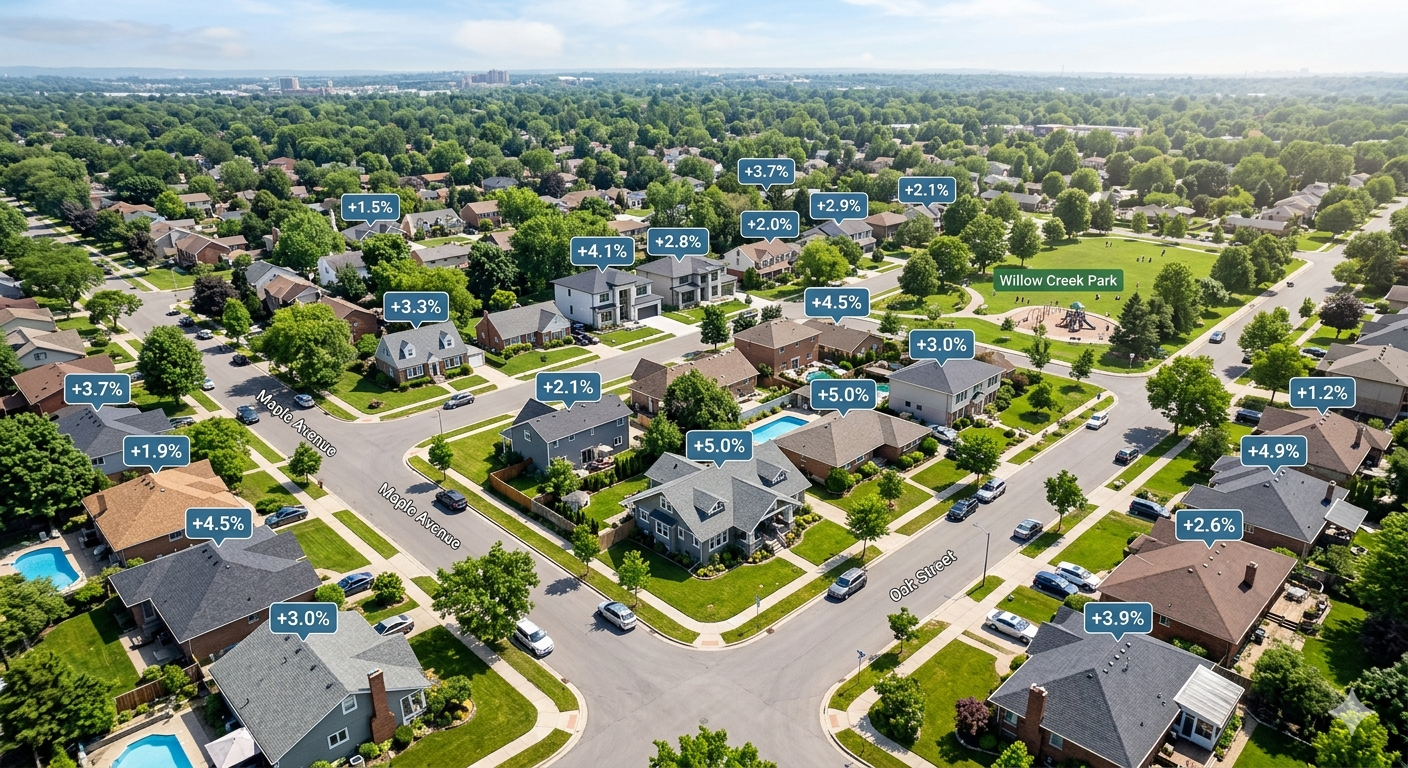
The single greatest leading indicator of long-term neighborhood appreciation is not schools. It is not highways. It is not even new construction. It is food access.
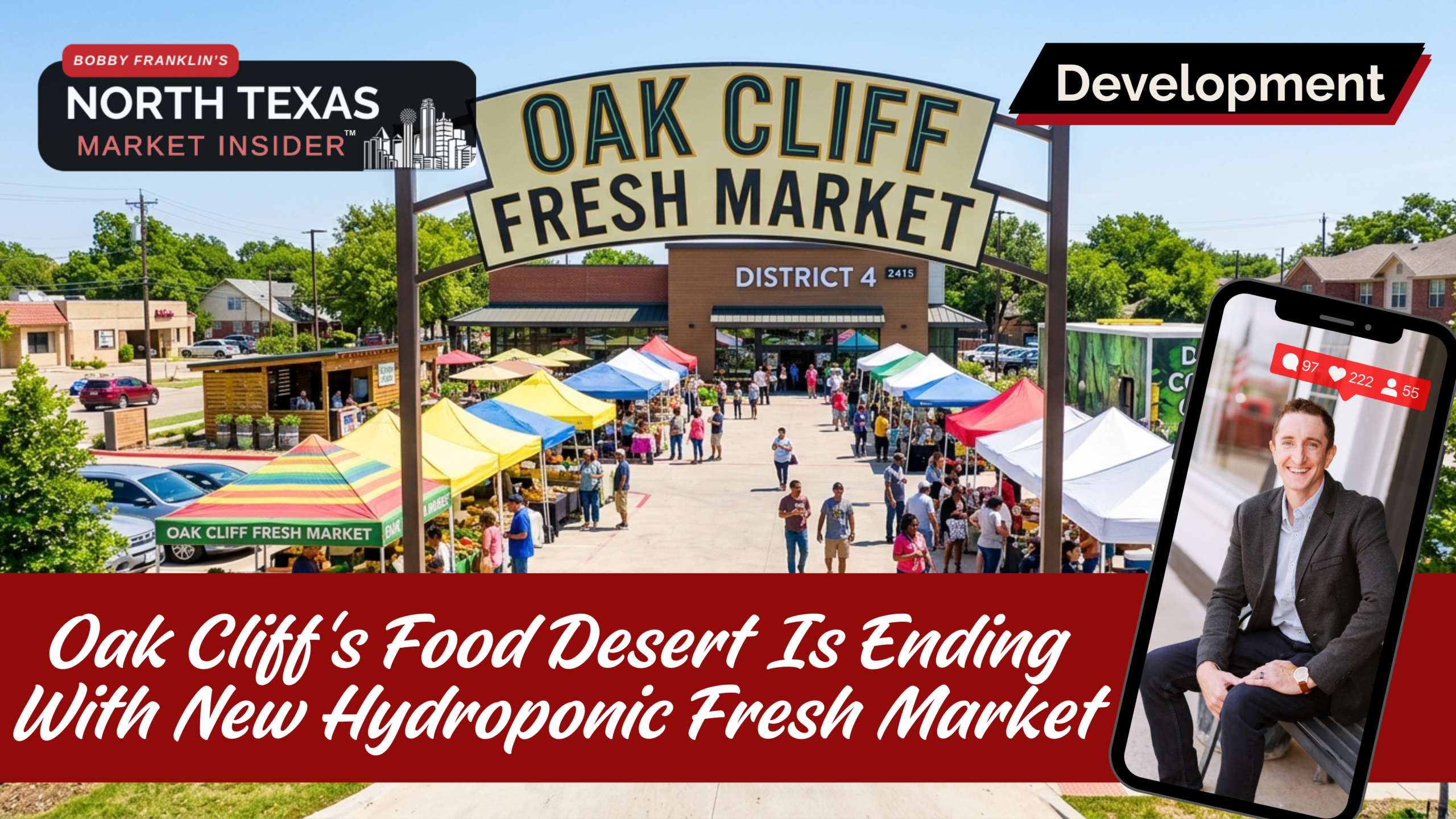
And right now, in East Oak Cliff, the city of Dallas is doing something that I have been waiting on for years. Dallas District 4 Councilman Maxie Johnson is deploying over $1 million in city economic development funds to partner with a private developer and a fresh-market company called Mati-x to build a community-led fresh market and hydroponic farm at the corner of Sunnyvale and Lea Crest.
This is not a grocery story. This is a real estate story. This is the kind of catalyst that quietly reshapes property values across an entire corridor for the next decade and the buyers who understand what is happening right now, while the rest of the market is still asleep, are the ones who will look back in 2030 and realize they bought before the appreciation curve bent upward.
If you own property anywhere from East Oak Cliff to; DeSoto, Lancaster, Cedar Hill, Duncanville, Glenn Heights, Red Oak, or Waxahachie then keep reading. This affects you directly.
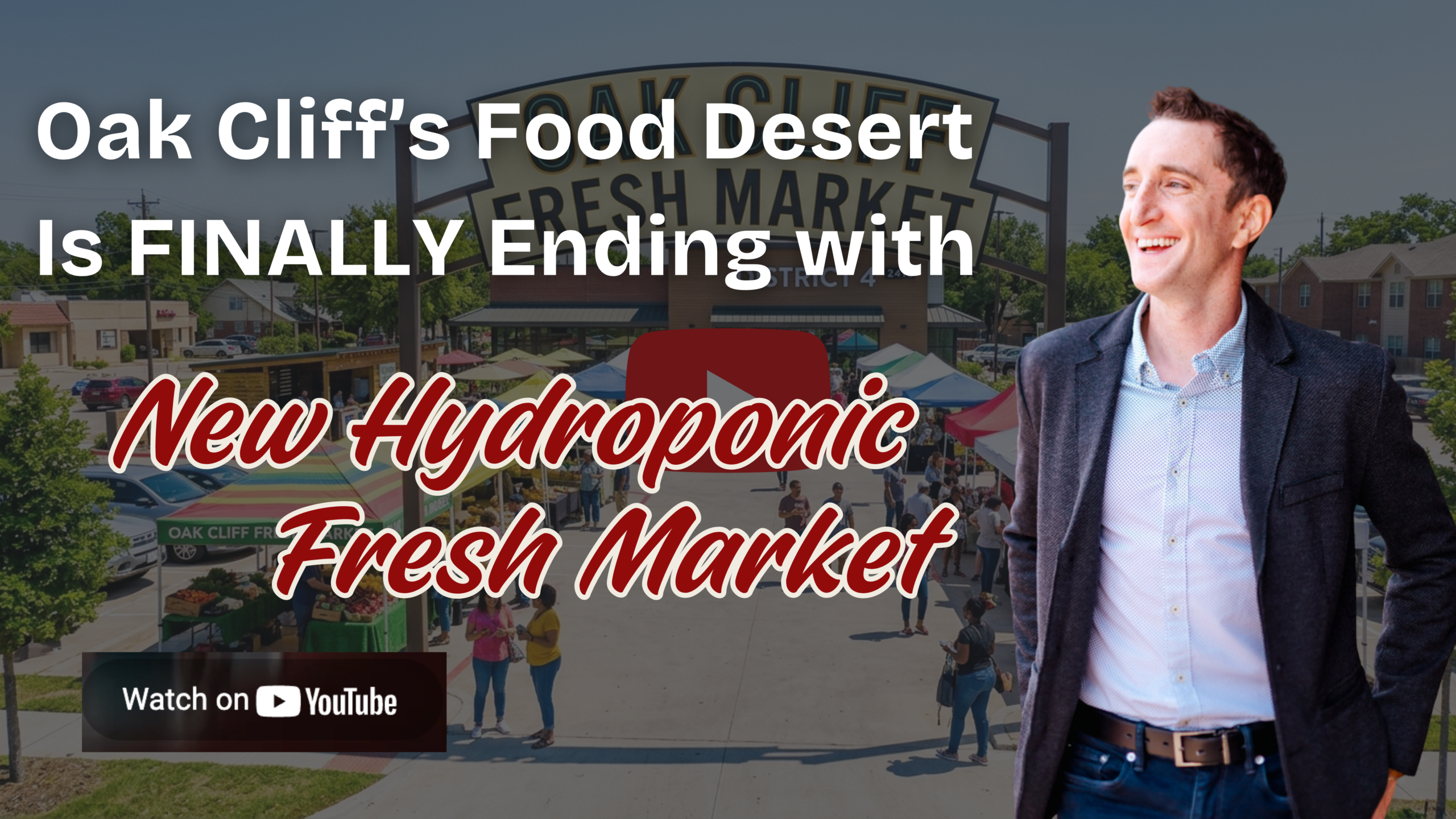
“H-E-B Won’t Come Over Here So We’re Doing It Ourselves”
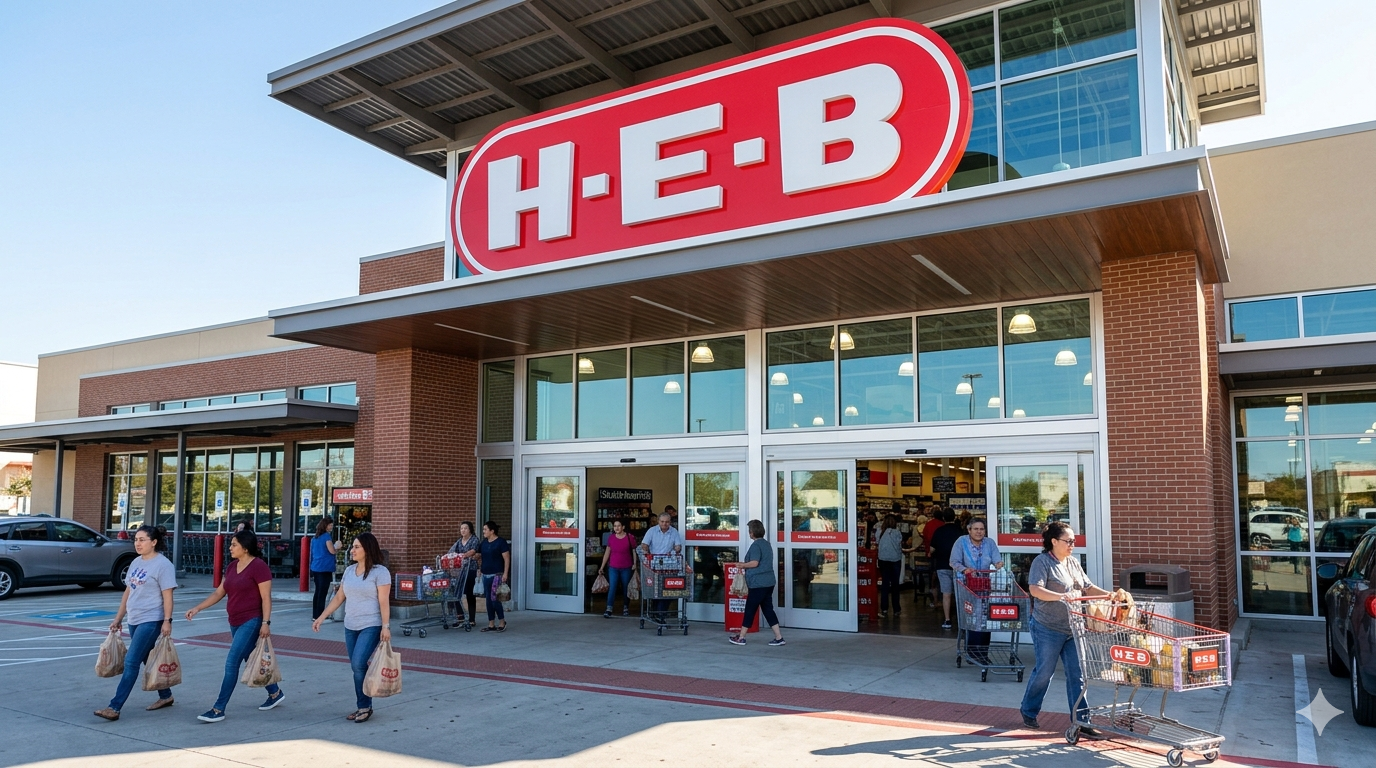
East Oak Cliff sits in the southern sector of Dallas. It is home to over 200,000 residents. It covers more than 54% of Dallas’s total land mass. And for years, it has been classified as a food desert by the USDA.
A food desert, per the U.S. Department of Agriculture’s official definition, is a low-income census tract where at least 33% of the population lives more than one mile from a supermarket or large grocery store. For the families of East Oak Cliff, that is not a bullet point on a government slide. That is what it actually feels like to drive twenty minutes for a head of lettuce.
Councilman Maxie Johnson is eight months into his role as District 4 representative, and he has decided this is the fight he is going to win first. His framing is direct, unfiltered, and the kind of leadership I respect: “H-E-B don’t wanna come over here, so we’re saying we’re going to do it for ourselves.”
Here is the math that explains why the major chains stayed out. East Oak Cliff’s median household income sits at approximately $46,000. Post-COVID, construction costs are up roughly 50% since 2020. For a national chain like H-E-B, the unit economics on a new build in a lower-income census tract simply do not pencil out the way they do in Frisco or Prosper.
So Johnson stopped waiting on a chain that was never coming. He restructured the deal.
The project is backed by over $1.5 million in public and private funding drawn from District 4’s economic development discretionary account. The structure is a three-way partnership between the landowner, a Dallas-based developer, and Mati-x – a fresh-market company specializing in innovative retail food environments. Permits are pulled. Groundbreaking is expected within 90 days. Full buildout is projected to take up to two years.
Here is the part that takes this from “another grocery announcement” to “this changes the appreciation curve.” The design includes an on-site hydroponic growing system that will allow leafy greens, herbs, and fresh vegetables to be grown inside the market. Councilman Johnson confirmed that nothing like this has ever existed in this part of Oak Cliff.
That is not just food access. That is infrastructure.
What Hydroponic Farming Actually Means for a Neighborhood

Hydroponics is the practice of growing plants in nutrient-rich water rather than soil. The numbers are not subtle. Hydroponic farms produce yields roughly 30% greater per square foot than conventional agriculture and grow crops about three times faster. They use a fraction of the water. They require no pesticides. They run year-round in any climate, which in a Texas summer is a real and meaningful advantage.
The USDA has been investing in urban hydroponic programs in cities from New York to Dubuque, Iowa, because they recognize what most municipal planners have not figured out yet: an urban hydroponic system is not a feature, it is a self-sustaining food engine that reduces supply chain dependency and stabilizes neighborhood food security year-round.
From a real estate standpoint, this matters. The integration of urban food production into a neighborhood has been directly linked to increased property values, stronger community engagement, and renewed buyer interest in previously overlooked urban submarkets. Buildings and communities that integrate food production are increasingly viewed as premium lifestyle assets, not agricultural curiosities.
So when you read “hydroponic farm” in a press release, what I read is property value catalyst.
The Food Desert–Real Estate Connection: The Data Is Not Quiet
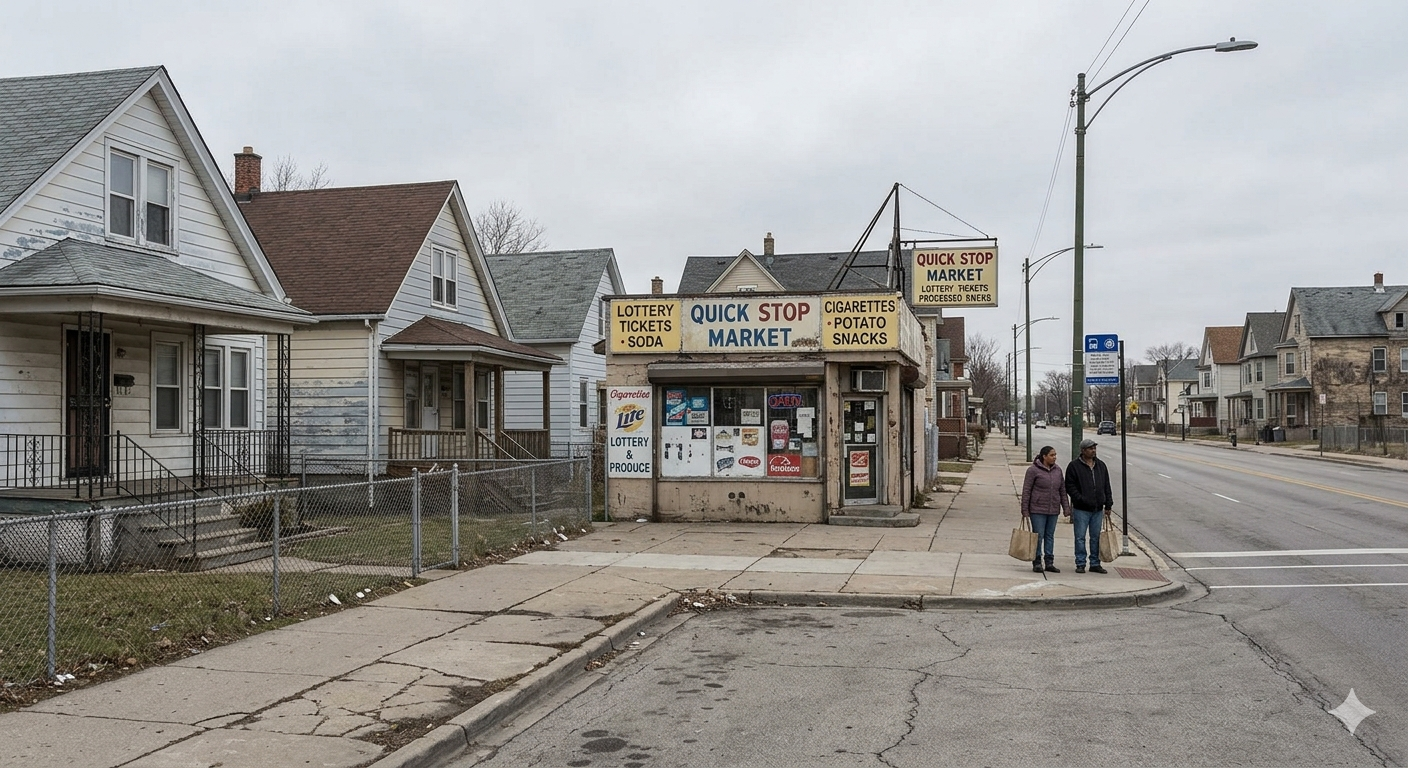
This is where I want every buyer, seller, and investor in southern Dallas to pay close attention.
A landmark study from the University of California Irvine found that adding a single grocery store to a neighborhood increases non-commercial assessed property values by an average of 6.77%. Apply that to a $280,000 Oak Cliff home and you are looking at nearly $19,000 in added value from a single development.
Think bigger. A study in Cleveland documented housing value increases of up to 10% within one mile of a newly opened grocery store. Pennsylvania’s Fresh Food Financing Initiative showed local spending on fresh food rising as much as 60% inside food desert neighborhoods after a market opened. Meaning the dollars that used to leave the neighborhood started staying inside it, circulating through small businesses, restaurants, and services.
The compounding effects are where the real wealth gets built:
A new supermarket in a food desert typically generates 30 to 40 new jobs at the store itself. Local spending stays local instead of flowing to suburban chains. Property tax revenues climb as assessed values rise, which feeds school and infrastructure budgets. Surveys consistently show measurable increases in community satisfaction and reduced crime perception in the years following a new grocery opening. And once one major amenity is established, additional retail, restaurants, and services follow because the developers who saw an “uninvestable” census tract last year, now see a market with foot traffic, household spending, and momentum.
This is the multiplier effect playing out in real time. And it is coming to East Oak Cliff.
Southern Dallas Is Already Transforming – The Fresh Market Is Just the Headline
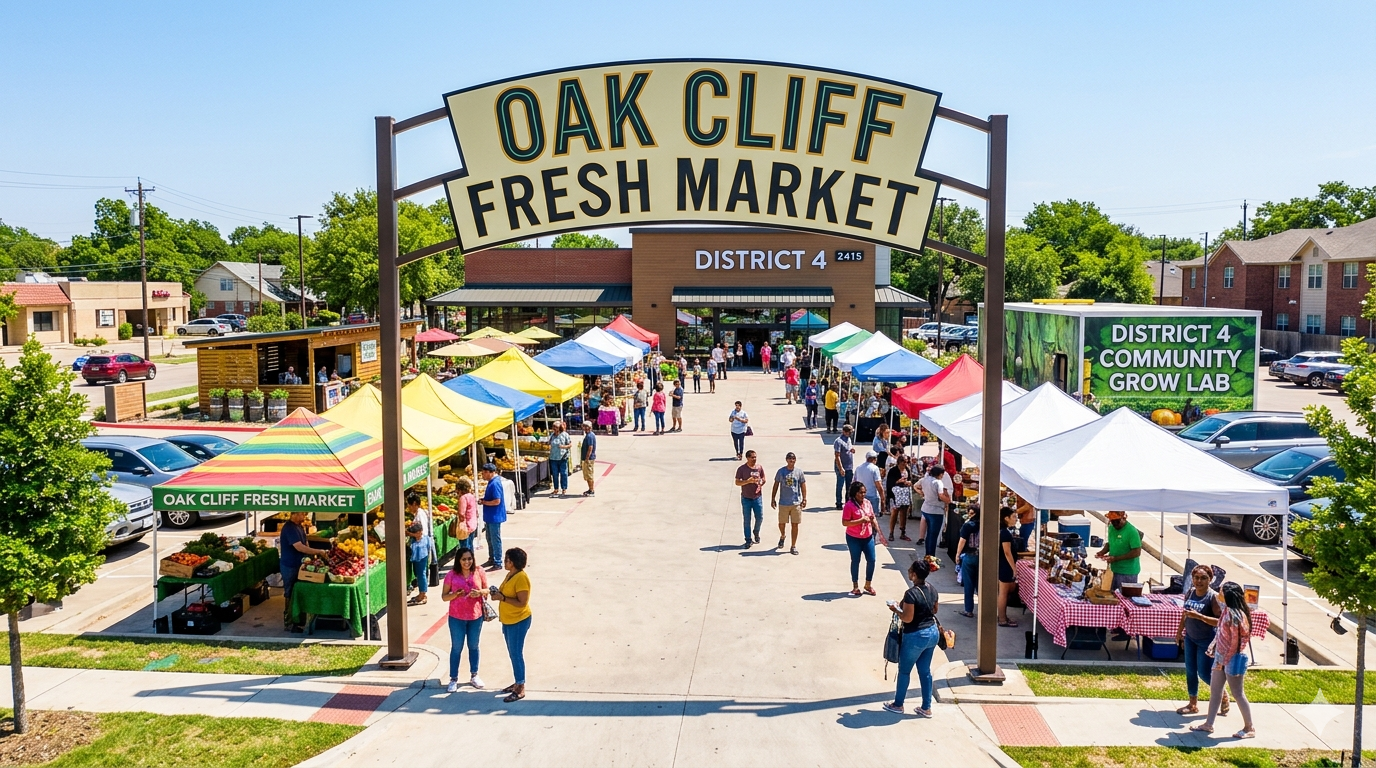
Here is what most casual market observers are missing. The Oak Cliff Fresh Market is not happening in a vacuum. It is the latest brick in a wall of strategic investment that has been quietly going up across southern Dallas for the past 12 months.
Look at what has already happened.
June 2025 – Sprouts Farmers Market opened in North Oak Cliff. The City of Dallas approved a $6.3 million economic development incentive for the Vista Property Company to anchor a redevelopment at North Hampton Road and Fort Worth Avenue. The Sprouts is now open. Roughly 100 jobs created. Surrounding retail has already followed including Starbucks, Nothing Bundt Cakes, with even more on the way.
December 2025 – Rivullet announced near UNT Dallas. A roughly 90-acre development called Rivullet is converting a massive lot near UNT Dallas into 300 single-family homes, 240 apartments, and retail space. It’s backed by over $23 million in city infrastructure funding, with community pressure for a grocery anchor.
April 2026 – Pearl Ridge breaks ground. A 200-home, owner-occupied community called Pearl Ridge is being built on South Lancaster Road. Owner-occupied. Not rental. That distinction matters a lot because homeownership stabilizes neighborhoods in ways that rentals don’t.
April 2026 – Oak Cliff Fresh Market announced. The Mati-x partnership goes public.
April 2026 – Multifamily rezoning approved on Boulevard Terrace in West Oak Cliff, opening up new density and new housing supply.
Each of these is a single data point. Stack them together and the picture is unmistakable. Southern Dallas is in the early innings of a structural transformation. Which means buyers, sellers, and investors who understand the trajectory still have the chance to position ahead of the appreciation curve, not behind it.
What This Actually Does to Property Values
Let me give you the numbers as they sit today, before the appreciation wave fully prices in.
According to Redfin’s March 2026 data, the median home sale price in Oak Cliff is $280,000, and the median price per square foot is up 2.5% year-over-year. The market is described as “somewhat competitive,” with homes averaging 63 days on market.
Realtor.com shows a median listed price of $314,900 and a median sold price of $337,187 and that gap between asking and selling tells you everything. Buyers are willing to pay over ask for the right Oak Cliff property right now. Over a three-year window, the median sold price has climbed 19.30%.
These are the numbers before the Sprouts effect fully flows through. Before the Fresh Market breaks ground. Before Pearl Ridge fills up. Before the multifamily rezoning produces a single new unit.
Now overlay the academic research: a 6% to 10% lift in property values when a grocery anchor lands in a food desert. Lift the entire neighborhood narrative from “underserved” to “emerging.” Add the secondary investment that always follows. Market analysts tracking 2026 Dallas submarkets are already calling out East Oak Cliff as appreciating on the strength of anticipated infrastructure and zoning changes, before the Fresh Market is even built.
This is what I call a leading indicator buy. You are not buying the present condition of the neighborhood. You are buying its trajectory.
Who Should Be Paying Attention Right Now

Buyers in the Oak Cliff Corridor and Surrounding Communities
If you are looking at homes in or near Oak Cliff, the current window is the one that matters. Once the groundbreaking hits the news cycle a second time and the photos start showing up on the local news, the pricing in adjacent neighborhoods will adjust and quickly.
Cedar Hill, sitting 7 to 10 miles from Oak Cliff, is one of the most undervalued communities in Dallas County right now. Its proximity to the Oak Cliff investment corridor, combined with Joe Pool Lake, Cedar Hill State Park, and its “city in a park” identity, makes it an increasingly compelling buy as southern Dallas values rise. Pull up the Cedar Hill city page on NorthTexasMarketInsider.com for the current data and neighborhood breakdown.
DeSoto, sitting at the convergence of I-35E, I-20, and US-67, puts you 15 minutes from downtown Dallas and 10 minutes from the Oak Cliff investment zone. The DeSoto market page tracks live data on days on market, closed sales, and price trends. As Oak Cliff appreciates, DeSoto becomes the natural affordability spillover target and it is already moving.
Lancaster, Duncanville, and Glenn Heights are all within a 15-minute radius of the Oak Cliff development corridor and all are inside their own active investment cycles as the infrastructure spending flows southward.
For buyers relocating to North Texas from out of state, the Ultimate North Texas Relocation Guide covers exactly why this metroplex, and specifically the southern corridor, represents some of the strongest value in American real estate right now. DFW just claimed the #1 spot as the hottest real estate market in the country, and the communities surrounding Oak Cliff remain dramatically underpriced relative to comparable neighborhoods on the north side.
If you are coming from a high-cost market, the equity conversion play here is not subtle. New York buyers should pull up the relocating from New York guide, and Washington state transplants will find the relocating from Washington guide tailored specifically to your situation.
Sellers in the Oak Cliff Corridor and Adjacent Markets
If you own property in Oak Cliff, DeSoto, Cedar Hill, Lancaster, Duncanville, or anywhere in the immediate corridor, this is the year you need to be thinking strategically.
The combination of new food infrastructure, multifamily development, and southern Dallas public investment is creating demand pressure that will take 2 to 4 years to fully reflect in market prices. Sellers who wait for the peak of the appreciation wave often end up selling behind the curve once new supply catches up. Sellers moving now need to price correctly to capture the motivated buyers who already understand what is coming.
The Guides for Home Buyers and Sellers and the 2026 North Texas Housing Market Forecast will give you the full strategic picture and the timing framework I am running my listing strategies on right now.
Investors
Urban food desert transformations are some of the highest-conviction real estate strategies available in 2026. Communities with documented food access improvements, consistently outperform broader market averages on a 3-to-7-year appreciation timeline.
Red Oak, sitting 20 minutes from the Oak Cliff investment corridor with direct I-35E access, is already projected for 227% population growth by 2030 on the back of Google’s $600M data center build. The full Red Oak market analysis explains why this is one of the most compelling investment buys in Ellis County right now.
For investors looking even further into the infrastructure thesis, the analysis I published on the impact of AI data center development on North Texas property values is directly applicable to the food-access investment story now playing out in Oak Cliff. Same logic. Different catalyst.
The Fair Housing Dimension: Why This Story Matters Beyond the Numbers
There is a part of this story that goes well past the economics, and I am not going to skip over it.
East Oak Cliff’s food desert status is not random. The withdrawal of grocery chains from southern Dallas neighborhoods correlates directly with demographic shifts that accelerated in the 1970s and 1980s. Businesses left. Investment did not return at the same pace that it did in higher-income, predominantly white neighborhoods on the north side. That is textbook economic redlining, not always through explicit policy, but through the cumulative effect of decades of disinvestment decisions that compounded year after year.
Under the Fair Housing Act, real estate professionals are prohibited from discriminating in housing transactions and from engaging in practices that have a discriminatory effect on protected classes including steering buyers toward or away from neighborhoods based on race, national origin, color, religion, sex, disability, or familial status. The NAR’s fair housing policies require all members to complete Fair Housing and Anti-Bias training every three years, and the 2025–2027 cycle is in motion right now.
My commitment as a REALTOR® bound to the NAR Code of Ethics is straightforward. Every community, every neighborhood, every opportunity gets the same quality of information, the same enthusiasm, and the same strategic analysis from me. The Oak Cliff Fresh Market is an economic opportunity story. It is also a justice story. Telling both honestly is what separates an agent who shows houses from an advisor who actually helps clients build wealth alongside the communities they choose to invest in.
The Waxahachie and Ellis County Connection
You might be sitting in Waxahachie, Midlothian, or Ennis right now thinking: Bobby, what does an Oak Cliff fresh market have to do with my Ellis County home search?
More than you would expect.
The revitalization of southern Dallas, driven directly by investments like the Oak Cliff Fresh Market, reduces what I call the “southern Dallas discount.” The historical hesitation buyers have had about anything south of I-30. As Oak Cliff, DeSoto, Lancaster, and Cedar Hill strengthen, the entire commute corridor from downtown Dallas south to Waxahachie becomes more functional, more attractive, and more valuable as a coherent region.
Waxahachie – Ellis County core, 30 miles south of Dallas. It already offers median home prices around $410,225. That is more than $300,000 below comparable properties in McKinney or Frisco. The transformation of the southern DFW corridor only sharpens Waxahachie’s case as the smartest value play in North Texas.
Ennis, Maypearl, and the rest of the Ellis County communities I cover are similarly positioned to benefit as the broader southern corridor narrative shifts from “underserved” to “emerging.”
Community-Led Development: The New Playbook

What is happening at Sunnyvale and Lea Crest is not just a grocery story. It is a template and I expect we are going to see it replicated in more Texas neighborhoods over the next 36 months.
The most successful food desert interventions across the country have all followed the same structural formula: community leadership + public funding + private sector partnership + innovative food production. The Oak Cliff Fresh Market checks every single one of those boxes.
Community leadership came from Councilman Johnson, eight months into his role, prioritizing his constituents over political convenience. Public funding came in the form of $1.5 million in city economic development discretionary funds. That’s not a handout, it’s an investment. Private sector partnership came from Mati-x and the landowner, who brought retail expertise and the real estate asset together. Innovative production came from the on-site hydroponic system, which will be the first of its kind in East Oak Cliff.
The Annie E. Casey Foundation has documented how heavily food deserts cluster in Black and Brown urban communities, and how addressing them requires exactly this kind of multi-stakeholder approach. The City of Dallas’s own policy documents acknowledge that traditional grocers are extremely difficult to recruit into food desert areas, and that non-traditional retailers, farmers markets, and community-based projects are often the only viable path forward.
The Oak Cliff Fresh Market is proof that cities and communities do not have to wait for H-E-B to decide they care. They can build their own food infrastructure and in the process they build far more than a grocery store. They build property values, jobs, generational wealth, and neighborhood pride.
Timeline, Impact, and the Buying Window
Based on current reporting and what has been confirmed by the council office:
Within 90 days (Summer 2026) – Groundbreaking at Sunnyvale and Lea Crest. Construction begins. Hydroponic system foundation prepped.
2026 to 2027 – Construction phase. Additional media attention as the project rises out of the ground and becomes visible. This is the window when adjacent property values typically begin to move, before the store opens, as buyers price in the anticipated improvement.
2027 to 2028 (estimated) – Fresh Market opens. Hydroponic produce growing on-site. Jobs land. Spending patterns shift inside the neighborhood. Property value appreciation accelerates measurably.
2028 and beyond — The southern Dallas corridor compounds. Additional food retail follows the proof of concept. Infrastructure investment continues. Community confidence climbs.
The optimal buying window in Oak Cliff itself and the adjacent communities of Cedar Hill, DeSoto, Lancaster and Duncanville is right now. Before the groundbreaking hits the news cycle a second time and prices recalibrate. Early movers capture the appreciation. Late movers pay the premium. The market does not wait for anyone to catch up.
How I Help Clients Navigate This Market

I am Bobby Franklin, REALTOR® with Legacy Realty Group – The Leslie Majors Team, working out of our Waxahachie office and serving Ellis County and the greater DFW metroplex.
My entire practice is built around market intelligence. Identifying the data points, development announcements, and neighborhood signals that tell you where a market is going, not just where it has been. The Oak Cliff Fresh Market is exactly the type of catalyst I track in real time, because it has direct, measurable, evidence-based implications for property values across the entire southern DFW corridor.
Whether you are:
- A buyer trying to position in or near the Oak Cliff corridor before the appreciation wave accelerates
- A seller in southern Dallas or an adjacent suburb working out how these developments affect your pricing and timing
- An investor hunting emerging neighborhoods with documented revitalization catalysts
- Someone relocating to North Texas from out of state who wants to understand the full geometry of this market, not just the four north-side suburbs everyone already names
I am here to give you the actual numbers, the honest analysis, and the strategic perspective that moves the needle.
When you are ready to finance the move, I work alongside three trusted lenders: Denise Donoghue at The Mortgage Nerd, Andrew Bryan at Miramar Mortgage, and Ethan Hester at Midtex Mortgage. Any of the three will give you straight numbers and a real strategy.
Frequently Asked Questions

1. What is the Oak Cliff Fresh Market and when will it open?
The Oak Cliff Fresh Market is a community-led fresh produce market and hydroponic farm being built at Sunnyvale and Lea Crest in East Oak Cliff. It is backed by over $1.5 million in public and private funding, spearheaded by Dallas District 4 Councilman Maxie Johnson in partnership with developer-operator Mati-x. Groundbreaking is expected within 90 days of April 2026, with full buildout projected at approximately two years after construction begins. The market will feature an on-site hydroponic system to grow leafy greens, herbs, and vegetables directly inside the store — the first of its kind in this part of Oak Cliff.
2. Why is East Oak Cliff considered a food desert?
East Oak Cliff qualifies as a food desert under the USDA’s Low Income, Low Access framework because it is a low-income census tract where a significant portion of residents live more than one mile from a supermarket. Median household income sits around $46,000. Combined with the departure of grocery chains across previous decades and the reluctance of national chains like H-E-B to absorb the higher post-COVID construction costs in lower-income census tracts, large portions of East Oak Cliff have been left without reliable fresh food access for years.
3. Who is Councilman Maxie Johnson and what is his role in the project?
Maxie Johnson is the Dallas City Council member for District 4, which covers East Oak Cliff. Eight months into his first term, he made food access his district’s top priority and structured a three-way partnership using District 4’s economic development discretionary funds, a private landowner, and Mati-x. After failing to attract national chains to commit to the area, Johnson chose to lead the development from the city side rather than wait any longer.
4. What is Mati-x and what do they do?
Mati-x is a fresh-market company specializing in innovative community-oriented food retail, including the integration of on-site hydroponic growing systems. The company is led by a woman entrepreneur and was selected by Councilman Johnson as the right partner to bring this project to East Oak Cliff. Mati-x brings both fresh-market retail expertise and agricultural technology knowledge to the table.
5. How will the Oak Cliff Fresh Market affect nearby home values?
Academic research consistently shows new food retail in food deserts lifts surrounding property values. A UC Irvine study found an average 6.77% increase in non-commercial property values following a new grocery store opening, while a Cleveland study documented increases of up to 10% within one mile of a new store. The Oak Cliff Fresh Market, combined with the Sprouts opening in North Oak Cliff, the Rivullet development, the Pearl Ridge homes, and approved multifamily rezoning, is all expected to drive measurable appreciation in Oak Cliff and adjacent neighborhoods like Cedar Hill, DeSoto, and Lancaster over a 2-to-5-year window.
6. Is now a good time to buy a home near Oak Cliff or in southern Dallas?
The data and the development pipeline say yes. The current Oak Cliff median price of $280,000 is dramatically below comparable communities on the north side, and the corridor is in active early-stage transformation. The optimal window for early-stage appreciation capture is typically before major amenities open. Buyers who act in 2026 are positioning ahead of the curve rather than chasing it. Always work with a licensed real estate professional who knows the specific submarket.
7. What other grocery stores or food options are coming to Oak Cliff?
The North Oak Cliff Sprouts Farmers Market opened in June 2025 with a $6.3 million city incentive at North Hampton Road and Fort Worth Avenue. The Rivullet development near UNT Dallas is expected to include retail space and has attracted grocery interest. A Target location was also planned for Oak Cliff in Spring 2026. Stack the Fresh Market on top of all of that and you are looking at a fundamentally different food access landscape inside 36 months.
8. How does hydroponic farming work in an urban fresh market?
Hydroponics grows plants in nutrient-rich water rather than soil, allowing crops to be grown indoors year-round with no soil, minimal water, and no pesticides. The systems produce roughly 30% more yield per square foot than traditional farming and grow crops about three times faster. In an urban fresh market, on-site hydroponic systems allow the market to grow greens, herbs, and vegetables directly inside or adjacent to the retail floor. This maximizes freshness, reduces transportation costs, and creates visible community growth. The Oak Cliff Fresh Market’s hydroponic component will be the first of its kind in East Oak Cliff.
9. Are there affordable homes to buy near Oak Cliff and southern Dallas right now?
Yes. The Oak Cliff median home price currently sits between $280,000 and $314,900 across Redfin and Realtor.com data. Adjacent communities offer similar or lower entry points: DeSoto, Cedar Hill, Lancaster, Duncanville, and Ellis County communities like Red Oak, Waxahachie, and Ennis all have homes in the high $200,000s to mid-$400,000s. Which is dramatically below comparable inventory in Frisco, McKinney, or Plano. With investment continuing to flow into the southern corridor, those prices are not expected to hold at current levels indefinitely.
10. What does the NAR settlement mean for buyers looking at southern Dallas neighborhoods?
The 2024 NAR settlement changed how buyer’s agent compensation gets negotiated and disclosed. Under the new rules, buyers must sign written agreements with their agents before touring homes, and compensation arrangements are clearly disclosed. The protections apply equally across every neighborhood and price point. Oak Cliff buyers have the same rights and the same agent advocacy as any other buyer in the metroplex. The settlement also reinforces that agents represent the best interests of their specific buyer with full transparency on compensation. For personalized guidance on navigating the post-settlement landscape, contact me at (214) 228-0003.
Final Thought: Neighborhoods That Win Are Neighborhoods That Bet On Themselves
I have watched this pattern play out across North Texas dozens of times now. The neighborhoods that achieve the strongest long-term appreciation are not always the ones with the best schools or the newest construction at the moment of purchase. They are the ones where someone, whether a council member, a developer or a community leader, places a bet on the neighborhood’s future and follows through on it.
East Oak Cliff just placed that bet. If they stick with it, the data says it pays off.
If you want to be on the right side of this story as a buyer, a seller, an investor, or someone who simply wants to understand the full geometry of the North Texas real estate market, I am here.
This is the work. This is what I love doing. This is exactly why I built North Texas Market Insider.
Five steps ahead. Always.
Bobby Franklin, REALTOR® | Legacy Realty Group – Leslie Majors Team | 214-228-0003 | northtexasmarketinsider.com


Bobby Franklin is a licensed REALTOR® in the state of Texas, affiliated with Legacy Realty Group – The Leslie Majors Team, located at 16 Northgate Dr. Ste 100, Waxahachie, TX 75165. All real estate services are provided in full compliance with the Texas Real Estate Commission (TREC), the Fair Housing Act, RESPA, the NAR Code of Ethics, and all applicable federal and state advertising regulations. This article is for informational purposes only and does not constitute legal, financial, or investment advice. All market data cited is sourced from publicly available information and is subject to change. Buyers and sellers should conduct independent due diligence and consult qualified professionals before making real estate decisions. Bobby Franklin does not discriminate on the basis of race, color, national origin, religion, sex, disability, familial status, or any other protected class.