

Why a 2008-style collapse isn’t coming to North Texas, and what’s actually happening in our local market
Look, I’m going to be straight with you. If you’ve been scrolling through social media lately, you’ve probably seen some pretty alarming predictions about the housing market. Videos claiming a 50% price crash is coming. Analysts warning of a collapse “worse than 2008.” Headlines designed to trigger fear and get clicks.
Here’s what I want you to understand: chaos creates opportunity, but only for those who can separate signal from noise and stay five steps ahead of the herd mentality.
As someone who tracks every major development, permit, and transaction across Ellis County and the broader DFW metroplex, I’m seeing something very different from what these viral predictions suggest. And if you’re thinking about buying or selling in North Texas over the next couple of years, understanding the real story, not the clickbait version, could be worth tens of thousands of dollars in your decision-making.
So let’s break down what’s actually happening, what the data really shows, and what it means for homeowners and buyers right here in our market.
The Viral Prediction Everyone’s Talking About
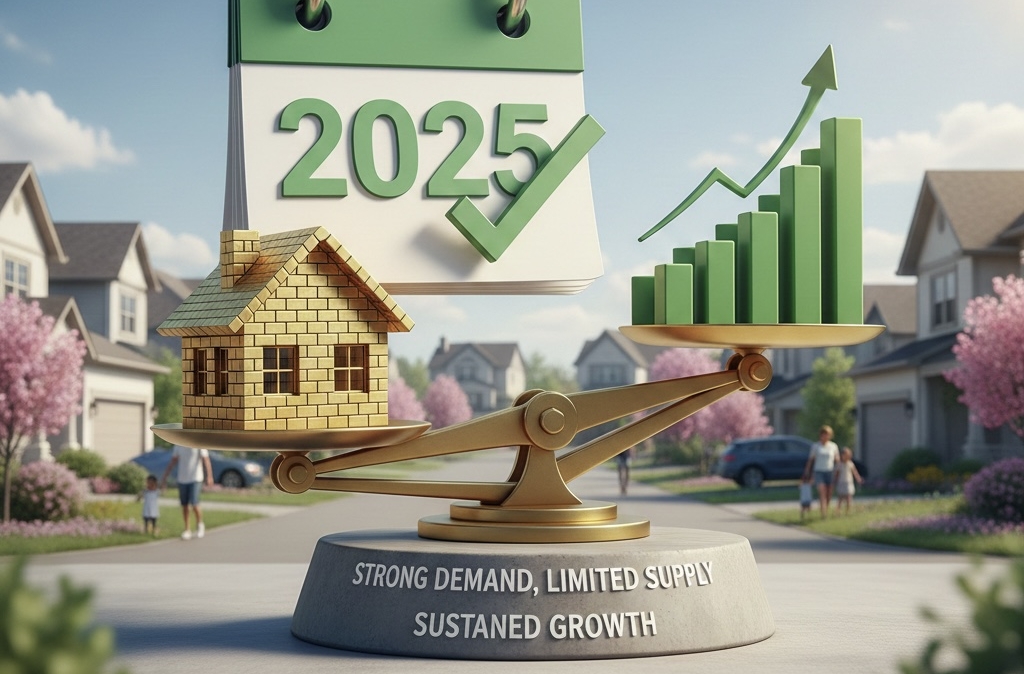
Housing analyst Melody Wright recently appeared on the “Thoughtful Money” podcast and made some bold claims that immediately went viral. Her core argument? Home prices need to drop by roughly 50% nationally to realign with median household incomes, which according to U.S. Census data sit around $83,730 as of 2024.
Wright’s timeline predicts 2025 as the first year of flat to declining prices, with the real correction hitting hard in 2026-2027. She points to several factors: investors exiting unprofitable rental properties, the so-called “silver tsunami” of aging Baby Boomers potentially flooding the market, and what she describes as a “bifurcated market” where only ultra-luxury homes above $1 million are actively transacting.
It’s a compelling narrative. It feeds into very real anxieties people have about affordability and market sustainability. And it sounds very scary if you’re sitting on equity you’ve built up over the past few years or if you’re trying to figure out when to make your move.
But here’s the problem: compelling narratives and actual market mechanics are two different things.
Why 2025 Isn’t 2008 And Why That Matters
Let me take you back to what actually caused the 2008 housing crash, because understanding that history is critical to evaluating today’s predictions.
The 2008 crisis wasn’t just about high prices or overvaluation. It was fundamentally a credit crisis fueled by reckless lending practices that don’t exist today. We’re talking about:
- No-documentation loans where borrowers literally didn’t have to prove income
- Negative amortization mortgages where your balance grew every month
- Adjustable-rate mortgages with teaser rates that reset dramatically higher
- Subprime lending to borrowers with terrible credit and minimal down payments
- Wall Street packaging these toxic loans into securities that spread the risk throughout the entire financial system
When those adjustable rates reset and home values started falling, millions of homeowners suddenly owed more than their homes were worth and couldn’t afford their payments. The result? A wave of foreclosures that created forced selling, which drove prices down further, which triggered more foreclosures. A true death spiral.
Today’s market looks nothing like that.
According to Fannie Mae’s loan performance data, the average credit score for new mortgage originations has been hovering in the 740s, significantly higher than the pre-2008 era. Lenders now verify income and assets. The risky loan products that fueled the crisis were outlawed by Dodd-Frank regulations. Even adjustable-rate mortgages, when they exist today, have caps and much more conservative underwriting.
Perhaps most importantly, homeowner equity is at or near record highs. Collectively, U.S. homeowners hold over $30 trillion in home equity. The vast majority of mortgage holders have fixed rates locked in during the pandemic era at 3-4%, creating what economists call “the golden handcuffs”, people aren’t going to walk away from these homes because they have massive equity cushions and payment security.
Foreclosure activity has ticked up modestly from record lows, but we’re still nowhere near the levels seen during the Great Recession. Without forced selling from mass foreclosures, you don’t get the cascading price collapse that defined 2008.
What Mainstream Forecasters Actually Predict

While viral social media predictions get attention, it’s worth looking at what the major forecasting organizations with billions of dollars on the line are actually saying.
The National Association of REALTORS® forecasts modest price appreciation or flat prices for 2025, with gradual recovery as mortgage rates moderate. Zillow’s market outlook shows home values growing at low single-digit rates nationally, with significant regional variation. Moody’s Analytics predicts a soft landing with localized corrections rather than a national crash.
Here’s what these organizations generally agree on:
- A correction, not a collapse: Some markets that overheated dramatically (think Phoenix, Boise, Austin) may see price declines in the 5-10% range from peak values. That’s a healthy market rebalancing, not a crash.
- Regional variation matters more than ever: Job growth, migration patterns, and local supply dynamics will determine winners and losers. One-size-fits-all national predictions miss this critical point.
- Mortgage rates are the wildcard: If rates drop significantly, pent-up demand could quickly reignite price appreciation. If they stay elevated, we’ll see continued sluggishness but not catastrophic declines.
Think about it this way: these are organizations that manage risk for pension funds, insurance companies, and massive real estate portfolios. If they genuinely believed a 50% crash was coming, they’d be positioning very differently.
What’s Actually Happening in North Texas Right Now

National headlines are interesting, but if you’re buying or selling in Ellis County or the DFW metroplex, local market dynamics matter infinitely more than viral predictions about national averages.
The DFW Market Reality
Here’s what I’m seeing on the ground across North Texas:
The market is undeniably cooler than the 2021-2022 frenzy. Days on market have lengthened from the panic-buying era when homes sold in hours. Seller concessions are back on the table, I’m seeing rate buydowns, closing cost credits, and even price reductions in certain neighborhoods. Inventory has increased, giving buyers actual choices again instead of bidding against 15 other offers sight unseen.
But cooling doesn’t mean crashing.
According to the latest Texas Real Estate Research Center data, DFW median prices have largely plateaued rather than collapsed. We’re not seeing the dramatic appreciation of recent years, but we’re also not experiencing the free-fall some predicted.
Why? Because the fundamentals supporting our market remain strong:
- Corporate relocations continue: Major companies keep moving headquarters and regional offices to DFW, bringing high-wage jobs
- In-migration stays robust: People are still moving to Texas from higher-cost states, particularly California, New York, and Illinois
- Job growth outpaces most metros: Our diversified economy across healthcare, technology, finance, and logistics creates sustained demand
- New construction can’t keep pace: While we’re building more than most markets, population growth still outstrips housing supply in desirable submarkets
The Ellis County and South DFW Story
For those of us focused on Ellis County and the southern DFW suburbs, Waxahachie, Midlothian, Red Oak, Lancaster, surrounding communities, the picture is even more nuanced.
These submarkets have been attractive alternatives for buyers priced out of core DFW suburbs. You get newer construction, larger lots, good schools, and significantly lower price points than Frisco, McKinney, or Southlake. That value proposition hasn’t disappeared.
What I’m tracking right now:
- Median sale prices in Ellis County have been relatively stable year-over-year, with some neighborhoods showing modest appreciation and others flat
- Days on market are definitely longer than peak pandemic, think 30-45 days instead of 5-10, but that’s actually a return to historical norms, not a sign of distress
- New construction inventory has increased visibly, particularly in master-planned communities, which gives buyers leverage they didn’t have before
- The massive 5,200-acre development planned in Ferris along with the Loop 9 project will significantly reshape the area over the next decade, creating long-term value appreciation opportunities for those who understand the trajectory
Bottom line: This looks like market normalization, not market collapse. Buyers have more negotiating power than they did at peak frenzy, but quality homes in desirable locations with good school ratings are still selling at reasonable prices.
Should You Sell Your Home Now or Wait?

This is the question I get most often from homeowners who’ve built up significant equity over the past few years. They’re worried about “leaving money on the table” if they sell now and prices keep rising, but they’re also terrified of holding on and losing equity if a correction happens.
Here’s my take: Stop trying to time the absolute peak and start thinking strategically about your actual goals.
Reasons to Consider Selling Now
Your home no longer serves your life. This is the most important factor, and it has nothing to do with market timing. If you’ve outgrown your space, need to relocate for work, want to downsize as your kids leave, or simply hate your commute, waiting purely out of fear of “missing the top” keeps you stuck in a situation that doesn’t work.
I had clients last year who delayed selling for eight months trying to time the market perfectly. They finally pulled the trigger, and you know what they told me? “We should have moved six months ago. The stress and unhappiness cost us way more than any potential equity gain.”
You’re sitting on substantial equity you can deploy elsewhere. Many North Texas homeowners who bought before 2020 have gained $100,000-$200,000+ in equity. If you don’t plan to immediately buy another home at similar prices, maybe you’re relocating to a lower-cost area, downsizing significantly, or moving to long-term renting, capturing that equity now makes strategic sense regardless of minor price fluctuations ahead.
You have a locked-in next move. If you’ve already identified your next home or living situation and the numbers work for your budget, don’t let fear of hypothetical future scenarios paralyze you from making a move that improves your life today.
Reasons to Consider Waiting
The golden handcuffs are real. If you refinanced into a 2.75% mortgage during the pandemic and would be trading into a 6.5-7% rate on your next purchase, your monthly payment could increase dramatically(upwards of $700/month) even if you’re buying a similarly priced home. Run the actual numbers on your payment increase, not just sale prices.
You’re buying in the same market. Here’s something many people don’t think through: If you’re selling in North Texas and buying in North Texas, you’re operating within the same market dynamics. Yes, your home’s value might dip slightly, but so will your next purchase. In this scenario, focus less on market timing and more on right-sizing your monthly payment and finding the right property for your next chapter.
Your situation is stable and your home works. If your job is secure, your family is happy, your finances are solid, and the home genuinely meets your needs, the lowest-stress option might simply be staying put and letting short-term market noise pass by. Building equity through principal paydown and riding out volatility is a proven long-term wealth-building strategy.
Is 2025 a Good Time to Buy in North Texas?

If you’re on the buyer side of this equation, you’re probably feeling paralyzed by conflicting advice. Should you wait for the crash that might come? Jump in before rates potentially rise? Try to time some mythical perfect moment?
Let me give you the truth: Perfect timing is a myth sold by people who don’t have to live with your decision.
Why 2025 May Actually Favor Prepared Buyers
The frenzy is gone. This is huge. During the pandemic boom, I watched qualified buyers lose 10, 15, 20 offers in a row. They waived inspections, offered $50,000 over asking sight unseen, and still couldn’t compete with cash investors. That environment was demoralizing and financially dangerous.
Today? You can actually schedule a showing, bring your inspector, negotiate repairs, ask for seller concessions on closing costs or rate buydowns. The return of normal negotiating power is worth more than trying to catch a falling knife on price.
Inventory has improved significantly. More choices mean better matches. Instead of settling for “the only thing available in our price range,” buyers can compare neighborhoods, floor plans, lot sizes, and school ratings. Quality of life improves when you find the right home, not just a home.
The “marry the house, date the rate” strategy makes sense. Yes, current mortgage rates are higher than pandemic lows. But if you buy a home you can afford at today’s rates and plan to stay 7-10+ years, you have options:
- If rates drop significantly in 2026-2027, you can refinance and dramatically lower your payment while keeping your home
- Even if rates don’t drop, you’re building equity through principal paydown instead of sending rent checks that build zero wealth
- Home affordability is about monthly payment AND long-term asset appreciation, not just purchase price
The Risk of Waiting for a Crash That May Not Come
Here’s the Franklin strategic thinking: What if you’re wrong?
Let’s say you decide to wait, convinced prices will crater 20-30%. Then one of these scenarios happens:
- Mortgage rates drop to 5% as the Federal Reserve cuts rates, unleashing all the pent-up buyer demand sitting on the sidelines. Prices stabilize or even rise as competition returns.
- 75% of buyers are waiting for rates, an estimated 7-19 buyers per home on the market now.
- Inflation picks back up and pushes prices higher across all assets, including real estate, even as the economy wobbles.
- The inventory situation improves only modestly, and that “crash” you’re waiting for ends up being a 5-8% correction in select neighborhoods while other areas stay flat or even appreciate.
In the meantime, you’ve spent another 12-24 months paying rent that builds zero equity, potentially watching the home you wanted get purchased by someone else, and missing out on principal paydown and any appreciation that does occur.
The better approach: Buy when you’re financially ready, meaning stable income, solid emergency fund, comfortable with the payment at current rates, and when you’ve found a home in a location you genuinely want to live for 5+ years minimum. That’s a strategy that works regardless of whether prices go up 5%, down 5%, or sideways for three years.
Understanding Corrections vs. Crashes: Words Matter

The terminology here matters because it dramatically changes how you should think about risk and opportunity.
A housing correction is a moderate price decline, typically in the 5-10% range from peak values, after a period of rapid appreciation. It’s the market’s way of re-establishing equilibrium between prices and fundamentals like incomes, rents, and historical price-to-income ratios. Corrections are normal, healthy, and often create excellent buying opportunities for those positioned to act.
A housing crash is something entirely different: severe, rapid price declines of 20-50%+ accompanied by systemic financial stress, mass foreclosures, spiking unemployment, credit freezing, and forced selling that creates a self-reinforcing downward spiral. This is what happened in 2008.
Right now, the preponderance of evidence points toward regional corrections in overheated markets rather than a synchronized national crash. Some cities that saw 40-50% appreciation in three years (Austin, Boise, Phoenix) are experiencing meaningful pullbacks. But job-strong, high-migration, diversified metros like DFW are far more likely to see flatter price action or modest declines in select submarkets.
The difference between these scenarios from a decision-making standpoint is massive. In a correction, waiting to buy might save you 5-8% on purchase price but cost you 18-24 months of rent, principal paydown, and potential appreciation. In a crash, waiting could save you 30-40%+ and protect you from negative equity.
Which scenario are we actually in? All evidence points to the former, not the latter.
What This All Means for Your North Texas Real Estate Decisions
So here’s where we land after cutting through all the noise, hype, and fear-mongering:
For North Texas specifically, the most likely path forward over the next 18-24 months looks less like a cliff and more like a winding road with some bumps.
- Prices will be choppy, up slightly in strong neighborhoods with good schools and new development, flat in middle-tier suburbs, potentially down modestly in overbuilt pockets or areas with weakening job markets
- Well-priced homes that show well will continue to sell at reasonable pace; overpriced listings will sit
- Buyers will have legitimate negotiating leverage for the first time in years, but true “fire sale” deals remain rare because most owners have massive equity cushions and aren’t forced to sell
- The investors who drove prices up in 2021-2022 have largely exited, which removes both upward and downward price pressure
- Major developments like the Ferris project create long-term value appreciation opportunities that patient, strategic buyers can capitalize on
Instead of reacting emotionally to viral crash predictions, build your strategy around these factors:
- Your time horizon: Are you buying/selling for a 2-year plan or a 10-year plan? Short-term volatility matters infinitely less over longer timeframes.
- Your monthly affordability: Can you comfortably handle the payment at today’s rates? If yes, you’re probably fine. If you’re stretching dangerously, reassess.
- The fit for your actual life: Does this home/neighborhood/commute/school district serve your family’s real needs? Life quality matters more than timing the market perfectly.
- Your risk tolerance: If market uncertainty keeps you up at night, maybe waiting until conditions feel more stable makes sense for your psychological wellbeing—that has value too.
- Strategic positioning: Can you see five steps ahead in your market like Ellison would? Where are the infrastructure projects, the corporate relocations, the demographic shifts creating opportunity that others are missing?
The Franklin Mindset Applied to Real Estate

Here’s what I want you to take away from all of this:
Chaos creates opportunity, but only for those who can stay rational, think strategically, and move decisively when others are paralyzed by fear.
While viral predictions create panic, the prepared and informed are positioning themselves for the next cycle. While everyone else is asking “will prices crash?”, smart operators are asking:
- Where is new job growth concentrating?
- Which submarkets have the best school ratings and are still relatively affordable?
- Where are major infrastructure improvements happening that will drive long-term value?
- Which neighborhoods have healthy inventory levels without oversupply?
- Where can I find quality assets that the herd is overlooking because they’re distracted by headlines?
That’s five-steps-ahead thinking. That’s turning market uncertainty into competitive advantage.
The real estate agents crushing it right now aren’t the ones trying to predict the exact market bottom or top. They’re the ones providing genuine market intelligence, helping clients understand their actual financial position, and making strategic moves based on individual circumstances rather than viral TikTok predictions.
Learn more about successful selling strategies(click the image bleow)

Bobby Franklin, REALTOR® | Legacy Realty Group – Leslie Majors Team | 214-228-0003 | northtexasmarketinsider.com
Compliance Notice: This analysis is for educational purposes and does not constitute legal, financial, or investment advice. All real estate transactions should be evaluated based on individual circumstances with appropriate professional guidance. Fair Housing Act compliance is maintained throughout. Commission structures are negotiable and determined individually. Content is original and adheres to NAR Code of Ethics and Texas Real Estate Commission regulations.