

The Morning Show’s Cory Ellison has a phrase: “Chaos is the new cocaine.” January 7, 2026 just gave the real estate industry its latest hit.
President Trump dropped a bombshell on Truth Social that sent shockwaves through the housing market: “I am immediately taking steps to ban large institutional investors from buying more single-family homes.” Within hours, major rental property stocks cratered, American Homes 4 Rent hit a three-year low, Blackstone shares fell 4-6%.
But here’s what nobody’s asking: What does this actually mean for you, the North Texas homeowner trying to sell in 2026?
I’ve spent the past week diving deep into the data, analyzing the policy implications, reading the latest reports from economists, and connecting dots that most people miss. Because while everyone’s debating politics, there’s real money and real decisions on the line for Fort Worth, Dallas, and Ellis County sellers.
Let me give you the unfiltered truth about what’s actually happening, what it means for your home’s value, and the strategic moves you need to make right now.
The Five-Steps-Ahead Analysis: What Trump Actually Said (And Didn’t Say)
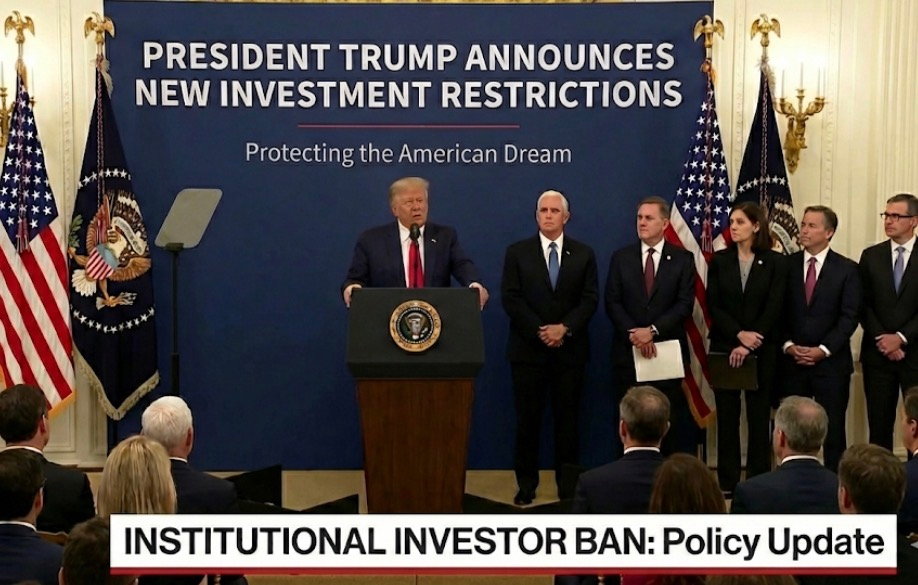
Trump’s announcement was deliberately vague, which is exactly what makes it strategically interesting. He stated he’s “immediately taking steps” but also said he’d “be calling on Congress to codify it.” Translation? This is a process, not a policy. Yet.
Here’s what we don’t know and why it matters:
The Definition Problem: What constitutes a “large institutional investor”? The industry is scrambling because this could mean:
- Companies owning 100+ properties
- Firms with 1,000+ properties across multiple markets
- Wall Street giants like Blackstone only
- Regional operators and local LLCs
Each definition creates completely different market impacts. This ambiguity? It’s not a bug, it’s a feature. It keeps everyone guessing while Trump gauges reaction and negotiates details.
The Implementation Timeline: Trump promised more specifics at the World Economic Forum in Davos and acknowledged Congressional action would be necessary. Policy analysts at TD Cowen note this means months, possibly years, before anything concrete happens.
The Political Context: This announcement landed with precision timing ahead of critical political cycles. It resonates with voter frustration about housing affordability while requiring zero immediate action. That’s strategic positioning at its finest -promise relief, generate headlines, let Congress handle the messy details.
The North Texas Reality Check: Numbers That Actually Matter

Let me show you what the data reveals about institutional investors in our market, because the national narrative doesn’t tell our story.
The 2021-2022 Investor Frenzy
During the pandemic boom, Texas led the nation in institutional investor activity. The numbers were staggering:
- Dallas County: 43% of homes purchased by institutional investors in 2021
- Tarrant County: 52% of homes purchased by institutional investors in 2021
- North Texas overall: One of the hottest investor markets in America
I remember those days vividly. Sellers received multiple all-cash offers within hours. Institutional buyers waived inspections, closed in seven days, and paid above asking without blinking. It felt like printing money.
But here’s the critical nuance everyone misses: Not all “institutional investors” are Blackstone.
A comprehensive study found that small landlords owning 1-10 properties comprise roughly 90% of investor-owned homes. The mega-firms Trump is targeting, companies with 1,000+ properties actually represent only about 2% of investor-owned homes and 1% of the total single-family market nationally.
In Fort Worth specifically, local research revealed that the majority of commercially owned homes are held by mom-and-pop landlords, not Wall Street giants.
The 2025 Market Reset
Fast forward to today. North Texas institutional investor activity in Q1 2025 dropped to 10% of home sales, back to pre-pandemic normal. Investor purchases in Dallas peaked at roughly 40,000 transactions in early 2022 but fell to just over 20,000 by end of 2023.
Why? High interest rates and elevated home prices already did what Trump is promising to do legislatively. The market self-corrected.
Institutional investors represent approximately 4% of the single-family rental market overall. Even during peak activity, major operators were net sellers for six consecutive quarters leading into 2025, selling more homes than they bought.
What Housing Economists Are Actually Saying (The Part CNN Won’t Tell You)

I’ve reviewed analysis from Goldman Sachs, the Urban Institute, Redfin, and the National Association of Realtors. The consensus is striking, and it might surprise you.
Daryl Fairweather, Redfin Chief Economist: “Institutional investors are a small slice of the overall market and there is not sufficient evidence they are the main driver of price increases.”
Goldman Sachs: The U.S. would need to add 3-4 million homes above normal construction levels to significantly ease housing costs. Restricting institutional buyers doesn’t create supply.
TD Cowen Policy Analyst Jaret Seiberg: This proposal “will not fix affordability” and will likely trade some homeownership gains for reduced single-family rental stock.
The Urban Institute: Institutional investors defined as firms owning at least 1,000 units across three or more locations hold roughly 4% of the single-family rental market – a share that’s remained stable as high rates slowed acquisitions.
Here’s the strategic insight I would hammer home: The real housing affordability crisis stems from supply shortages, not investor competition.
More than 80 million single-family homes exist in America. Institutional investors held maybe 300,000 of them by 2015 according to NAR data. That’s 0.375%. You can’t solve a supply crisis by restricting demand from 0.375% of the market.
The Strategic Implications for Fort Worth and Dallas Sellers in 2026

Now we get to what actually matters for your sale. Let me break this down into immediate considerations and longer-term implications.
Short-Term Market Psychology (Next 3-6 Months)
Policy uncertainty creates buyer hesitation. Even without concrete legislation, some institutional buyers will pause acquisitions until definitions clarify. This is standard corporate risk management, when rules are unclear, conservative players sit out.
For North Texas sellers, this means:
Fewer all-cash offers in the $250K-$400K range. Institutional investors historically concentrated on entry-level and mid-tier homes priced below their metro’s median. With Fort Worth’s median home value around $292,666 (down 3.6% year-over-year) and the broader DFW median listing price near $420,000, properties under about $400,000 are most exposed.
If you previously benefited from institutional buyer interest, understand what you’re losing:
- All-cash transactions (no appraisal risk, no financing contingencies)
- Quick closing timelines (often 7-14 days)
- Willingness to purchase properties needing repairs
- Less negotiation on inspection items
More reliance on financed buyers means more scrutiny. Traditional buyers need appraisals to match contract prices and often request repairs after inspections. The “easy button” of institutional cash offers may be temporarily unplugged.
Medium-Term Market Dynamics (6-18 Months)
Here’s where high-level strategic thinking comes in. While everyone focuses on the policy, I’m watching three deeper forces that will actually determine your sale outcome:
Force #1: The Great Unlocking
NAR forecasts a 14% jump in existing-home sales nationally in 2026 as pent-up demand meets stabilizing rates. Sellers locked in with 3% mortgages are slowly accepting that 6-6.3% rates aren’t going back to pandemic levels anytime soon.
This inventory release will have 10X more impact on your competition than any investor ban.
Force #2: The DFW Economic Advantage
Dallas-Fort Worth was ranked the #1 real estate market to watch for 2026 for the second straight year. Corporate relocations, job growth, and relative affordability compared to coastal metros create sustained demand regardless of policy changes.
Our regional economy isn’t dependent on institutional investors buying homes – it’s driven by people moving here for jobs and lifestyle.
Force #3: The Structural Supply Shortage
Texas leads the nation in new housing starts yet still faces an estimated six-figure unit shortfall as population growth outpaces construction. Nationally, analysts estimate we’re millions of housing units short of demand.
This structural shortage provides a long-term floor under home values even as the market rebalances from pandemic extremes.
Impact Variability by Submarket
North Texas isn’t monolithic. The investor ban’s effect will vary dramatically by location and price point:
Minimal impact areas:
- Luxury properties above $750,000 (institutional investors rarely compete here)
- Established neighborhoods with minimal investor presence historically
- Suburbs with strong owner-occupant demand (Keller, Southlake, Colleyville)
Moderate impact potential:
- Entry-level homes $200K-$350K in high-growth suburbs
- Properties popular with small-scale landlords (2-4 bedroom, decent condition)
- Areas that saw 30%+ investor purchases in 2021-2022
Highest impact potential:
- Neighborhoods previously dominated by institutional bulk purchases
- Properties needing significant repairs (less appealing to owner-occupants)
- Markets where local LLCs with 50-200 properties were major buyers
But remember, even “highest impact potential” areas will likely see modest effects if the final policy only targets mega-firms with 1,000+ properties.
Your Strategic Game Plan: The Execution Framework

Enough analysis. Let’s talk action. Here’s your play-by-play for maximizing your sale in 2026.
Timing: When to Pull the Trigger
Spring (Late March-June): Maximum Competition Season
This remains prime selling season in North Texas. Listing inventory jumps 25-35% as sellers capitalize on green yards, school-calendar buyers, and favorable weather.
The data is decisive: Homes listed between May 1-15 historically sell nine days faster and for nearly 1% more than average listings. During recent years, sale-to-list ratios in DFW have averaged 101-103% in spring with homes often sell above asking.
My take: If you want maximum price and don’t mind competition, spring is your window. The institutional investor question mark might actually work in your favor becuase some confused sellers will delay listing, reducing your competition.
Summer (June-August): Solid Demand, Less Frenzy
Transaction volume stays high but begins to plateau. 46% of Fort Worth homes closed at list price in July 2025 rather than above it. Longer daylight creates more showing flexibility, though extreme heat can reduce casual weekend traffic.
My take: Great for sellers who need flexibility and can handle slightly longer marketing times. You’ll attract serious buyers, not tire-kickers.
Fall (September-Mid November): The Serious Buyer Season
Median prices typically dip 2-4% from summer peaks while days on market climb. But here’s the hidden opportunity: Corporate relocations often ramp up in fall, bringing buyers with relocation benefits and closing-cost assistance.
My take: Underrated season. Less competition, motivated buyers, and potentially less stress if you price realistically.
Winter (December-February): Low Inventory Advantage
Listing counts reach annual lows, cutting direct competition even as buyer volume eases. Many winter sellers move due to job transfers, family changes, or financial needs. Buyers who brave holiday schedules represent the most committed segment.
My take: If you need to sell regardless of season, don’t fear winter. Low competition can offset reduced buyer traffic if you’re priced right.
Pricing: The Single Most Critical Decision
77% of agents cite overpricing as the top factor causing listings to sit, attract lowball offers, or ultimately sell for less than they could have. Bottom line: listen to the agent with modest pricing, don’t hire the agent who promises the highest sales price, because you’ll probably be on the market for months.
In today’s market with longer days on market (60-89 days in many North Texas submarkets versus two weeks at the boom peak), pricing strategy is everything.
The Strategic Pricing Framework:
- Forget 2021-2022 comps. Those pandemic prices reflected temporary insanity, not market reality.
- Use recent 90-day sales only. Preferably 60-day. Markets move fast.
- Factor in increased competition. If inventory is rising in your submarket, price accordingly.
- Consider the institutional investor gap. If your property historically would have attracted institutional buyers, you might need to price 2-3% more competitively to attract financed buyers.
- Plan for negotiation room but don’t overprice. Better to start at market value and negotiate from a position of perceived fairness than start high and chase the market down with embarrassing price cuts.
The Insider move: Price at or slightly below market to create urgency and multiple-offer potential. When everyone expects slow markets and price cuts, being the sharp-priced property creates psychological FOMO that can drive your price back up through competition.
Presentation: Winning the First Impression Battle
With longer days on market, presentation quality has become a major differentiator. Here’s your high-ROI preparation checklist:
The Non-Negotiables:
- Deep cleaning and decluttering (remove 30% more than you think necessary)
- Fresh paint in neutral tones for key rooms
- Fix all minor repairs (leaky faucets, squeaky doors, cracked tiles, chipped paint)
- Boost curb appeal (fresh mulch, trimmed landscaping, power-washed walkways)
- Update lighting to bright LED bulbs throughout
The Competitive Advantages:
- Professional staging for vacant homes or key rooms
- Pre-listing inspection to identify and address issues proactively
- High-quality photography and virtual tours
- Consider a fresh black front door (data shows this color performs well)
The 2026 Staging Trend: Designers describe it as “maximalism with intention”, layered textures, natural materials, and curated decor that feels inviting but not cluttered. Each room should have a clearly defined purpose.
Avoid over-renovating. High-end upgrades that overshoot neighborhood standards rarely deliver full ROI and can make appraisals more challenging. Focus on widely appealing improvements.
Positioning: Know Your Competitive Landscape
This is where local market intelligence becomes your unfair advantage. North Texas is not monolithic – conditions differ dramatically among Aledo, Keller, Mansfield, Frisco, and central Fort Worth.
Before listing, answer these strategic questions:
- Who is my most likely buyer? (First-time, move-up, downsizer, relocation client)
- How does my property compare to nearby alternatives? (Not just price but features, condition, location)
- Does my price point fall into the range previously favored by institutional investors? (If yes, adjust expectations accordingly)
- What’s my submarket’s current inventory trend? (Rising, falling, stable)
- What are realistic days on market for comparable properties in current conditions? (Not 2022 conditions, today’s conditions)
An experienced local agent working your neighborhood daily should provide this intelligence. If they can’t, find someone who can.
The Compliance Framework: How We Navigate Regulatory Reality
Before we go further, let me address the regulatory environment because this matters for how I position opportunities.
All guidance here complies with:
- Fair Housing Act – prohibits discrimination based on race, color, religion, sex, disability, familial status, and national origin
- RESPA – regulates settlement practices and referral fees
- Recent NAR settlement changes – requires transparency around brokerage fees
- NAR Code of Ethics – establishes duties of honesty and fiduciary responsibility
I avoid steering language, don’t make specific price appreciation promises, and base all projections on publicly available forecasts that may change as conditions evolve.
This isn’t just legal compliance, it’s strategic positioning. The agents who build sustainable businesses are the ones who operate with complete transparency and put client interests first every single time.
The Long Game: Why 2026 Is a Reset, Not a Crash

Let me give you the big-picture strategic view that Cory Ellison would see while everyone else focuses on daily headlines.
Most forecasts characterize 2026 as a normalization year:
- Modest price growth (typically 1-4% range in various analyses)
- Increased transaction volume (the unlocking of frozen inventory)
- Slow improvement in affordability as income growth catches up to home prices
- Continued supply constraints providing downside price protection
North Texas, with its strong economic fundamentals, is projected to remain one of the country’s healthier large markets.
The Strategic Opportunity Nobody Sees:
While everyone debates the institutional investor ban, the real opportunity is positioning yourself as the informed, strategic seller in a market where most people are confused and paralyzed.
Confusion creates opportunity. Uncertainty rewards preparation. Market transitions favor those who act decisively with good information.
That’s the Ellison playbook right there.
Your Action Plan: What to Do This Week
Let’s bring this home with concrete next steps.
Action Step 1: Schedule a Professional Market Analysis
Not a Zillow estimate. Not a Redfin guess. A comprehensive analysis from a local agent who actively works your neighborhood. Ask them specifically:
- What percentage of sales in my neighborhood involved investors in 2024-2025?
- How has days on market trended in my submarket over the past 6 months?
- What’s my realistic price range based on recent closed sales, not active listings?
- What are the 3-5 improvements that would provide highest ROI for my specific property?
Action Step 2: Decide on Your Ideal Timeframe
Based on personal circumstances and market seasonality, pick your target listing window. Work backward to create a preparation timeline with specific deadlines.
Action Step 3: Focus Your Budget
Prioritize high-ROI improvements: curb appeal, fresh paint, lighting, minor repairs, professional cleaning. Don’t dive into major renovations unless absolutely necessary to be competitive.
Action Step 4: Get Your Finances in Order
Understand your net proceeds after mortgage payoff, closing costs, and agent fees. Know your walk-away number so you can negotiate from a position of clarity rather than emotion.
Action Step 5: Stay Informed But Don’t Obsess
Monitor policy developments through reputable sources. But don’t delay your plans indefinitely waiting for legislation whose details and timeline remain uncertain. The market is moving regardless of Trump’s announcements.
The Bottom Line: Chaos Is Opportunity

Trump’s institutional investor proposal is the latest headline in an ever-evolving market. It will create some effects, mostly psychological, with modest practical impact on most North Texas submarkets.
But here’s what I would tell you: Markets are always changing. Winners are the people who make informed decisions and execute relentlessly regardless of headlines.
And here’s what Cory Ellison would tell you: While everyone’s reacting to the announcement, the strategic players are already five steps ahead, positioning themselves to capitalize on the confusion.
The institutional investor ban might reduce some competition in certain price ranges. Or it might not materially affect your sale at all. But the fundamentals that drive successful sales remain constant:
- Strategic timing aligned with your personal circumstances
- Accurate pricing based on current market realities
- Professional presentation that differentiates your property
- Deep local market intelligence guiding your positioning
- Experienced representation navigating negotiations
Those factors will determine your success far more than any policy announcement.
The North Texas housing market remains fundamentally strong. Corporate relocations continue. Population growth persists. Supply remains constrained relative to demand. These forces create a favorable environment for well-positioned sellers regardless of institutional investor policy.
Your job is simple: Get informed. Get prepared. Get positioned. Then execute with confidence.
The market rewards action, not anxiety.
Bobby Franklin, REALTOR®
Legacy Realty Group – Leslie Majors Team
📲 214-228-0003 | northtexasmarketinsider.com
North Texas Market Insider provides data-driven real estate insights, hyper-local market analysis, and full-service representation for home buyers and sellers across Fort Worth, Dallas, Ellis County, and surrounding suburbs. Our commitment: giving you market intelligence that puts you five steps ahead of the competition.






Join The Discussion