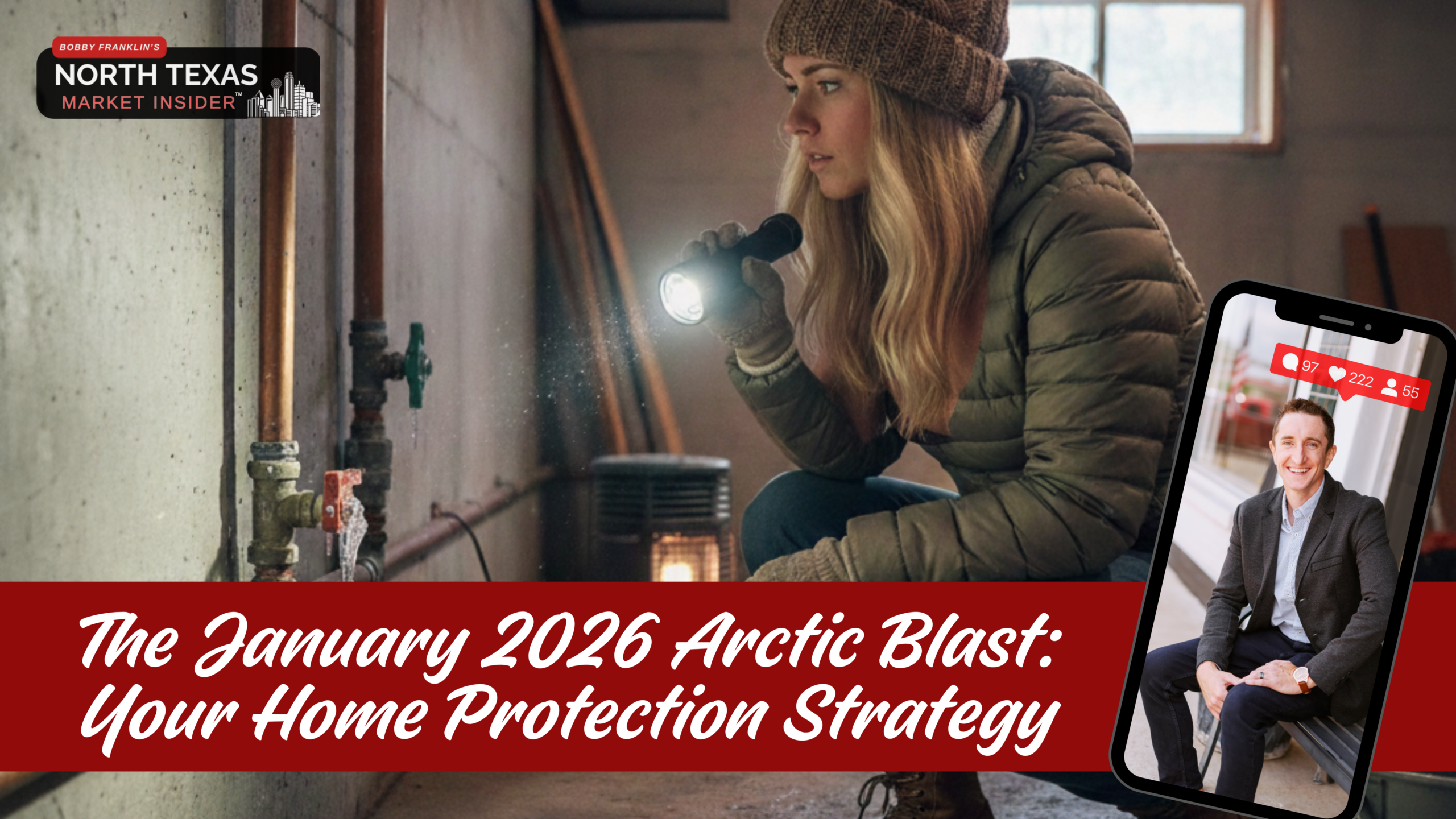
Here’s what’s about to happen: North Texas is facing 65+ hours of subfreezing temperatures starting Friday night, with ice accumulation potentially reaching 1.5 inches and Monday morning lows plunging to 11°F. While your neighbor is panic-buying bread and milk, I’m going to show you exactly how to protect your home’s value and prevent the $5,000-$130,000 in damage that thousands of unprepared homeowners will face this weekend.
This isn’t your typical “stay warm” article. This is market intelligence meets home protection strategy – the kind of comprehensive guide that separates informed homeowners from those learning expensive lessons the hard way.
The Strategic Reality Most Agents Miss
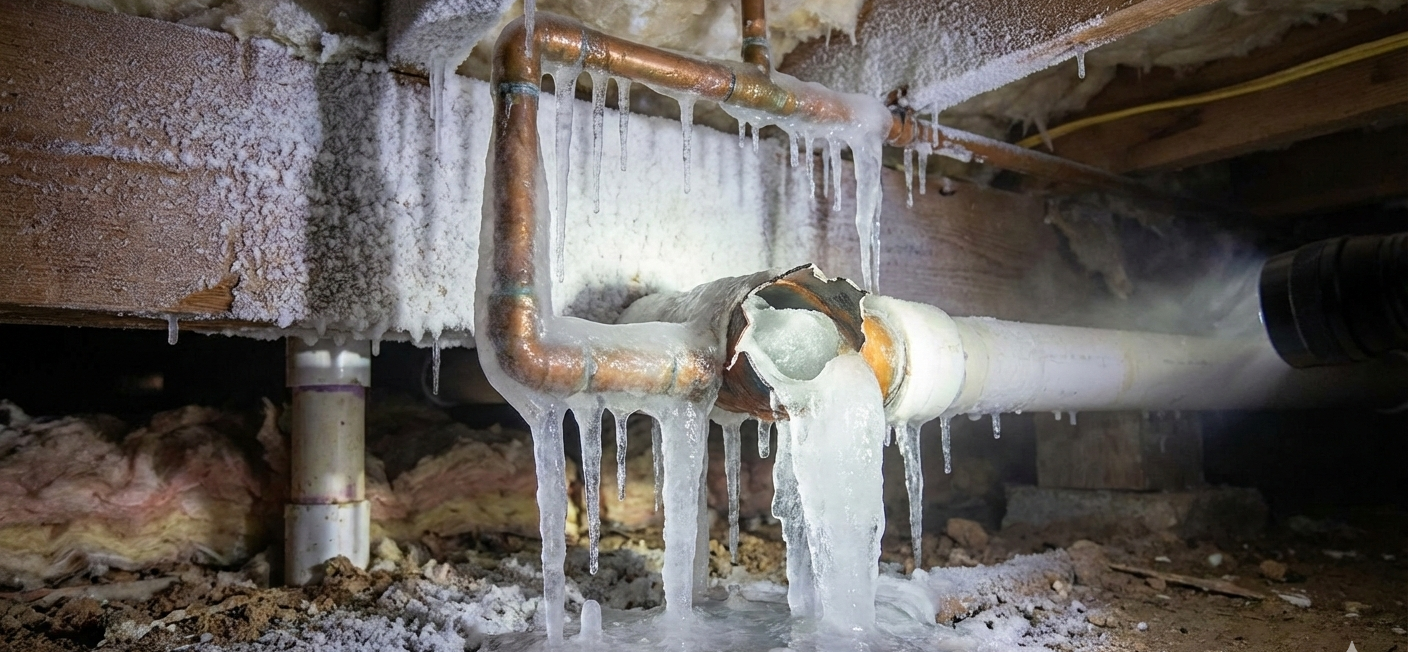
Let me be direct: frozen pipes represent the single greatest threat to your home’s value during this storm – not the cold itself, not even the ice. And here’s the market reality nobody talks about: homes with undisclosed past freeze damage sell for 5-15% less than comparable properties, and sellers are legally required to disclose material defects like previous pipe bursts.
Translation? The preparation you do (or don’t do) this weekend doesn’t just affect your immediate comfort, it potentially impacts your home’s resale value for years to come.
The National Weather Service is calling this a “potentially catastrophic” weather event. Governor Abbott has activated the Texas Division of Emergency Management and the National Guard. When the state mobilizes emergency resources before the first ice crystal forms, you know we’re playing a different game than your typical North Texas cold snap.
Understanding What We’re Actually Facing (The Timeline That Matters)
Friday, January 23: We start at a comfortable 70°F. By 11 PM, we hit freezing. Think about that – a 38-degree temperature drop in under 12 hours.
Saturday, January 24: High of 26°F with sustained freezing rain, sleet, and snow. This is where the real damage happens – not the cold alone, but ice-loaded tree branches snapping onto power lines, roads becoming skating rinks, and pipes in uninsulated spaces beginning their freeze cycle.
Sunday, January 25: Continued extreme cold with highs of just 25°F. Precipitation tapers off, but the damage accelerates because pipes have now been below freezing for 24+ hours.
Monday, January 26: Morning lows hit 11°F – potentially the coldest we’ve seen in years.
The critical number: 65 continuous hours at or below freezing from Friday 11 PM through Monday 4 PM. According to plumbing engineering research, pipes can begin freezing in as little as 6 hours, with damage typically occurring after 24-72 hours of sustained subfreezing temperatures. We’re looking at triple the critical exposure time.
Areas along the Red River could see up to 12 inches of snow. Ellis County and the southern DFW metro? Expect 4-6 inches plus significant ice accumulation.
For the full winter forecast visit the WFAA official forecast page
Why This Storm Creates Market Opportunities (While You’re Protecting Your Investment)
Here’s where we shift into strategic thinking. Winter Storm Uri in 2021 caused over $130 billion in property damage across Texas and created massive market disruption. Thousands of homes hit the market with undisclosed damage. Insurance companies paid out billions in claims. And informed buyers with access to good market intelligence made generational wealth by understanding which properties were truly affected versus which received preventative care.
I’m not suggesting you buy during this storm, I’m suggesting you understand that how you handle the next 72 hours creates either a future disclosure requirement or a selling point. “Home professionally winterized and maintained through the 2026 freeze with documented prevention measures” is a very different narrative than “Seller must disclose: burst pipes in master bathroom and kitchen in January 2026.”
The Insurance Institute for Business & Home Safety estimates 250,000 homes nationwide suffer frozen pipe damage every winter, with average claims exceeding $5,000 – and that’s before we factor in mold remediation, flooring replacement, and the nightmare of insurance deductibles.
The Pipe Protection Protocol: Your Non-Negotiable Action Plan
Outdoor Plumbing (Complete by 6 PM Friday)
Disconnect every garden hose. Not most of them, every single one. Water trapped in a connected hose freezes back into the faucet and creates a pressurized ice bomb that will crack your pipe fittings. I’ve seen $3,000 in damage from a $15 hose that “seemed fine.”
Cover your hose bibs. Hardware stores sell foam covers for $3-10 each. If they’re sold out (likely), wrap outdoor faucets with old towels secured inside plastic trash bags. The plastic keeps moisture out, remember, wet insulation is useless insulation.
Shut off interior valves to outdoor faucets. If your home has shut-off valves for outdoor faucets (usually in your garage or utility room), turn them off and open the outdoor faucet to drain remaining water. This creates an air gap that prevents freezing.
Winterize your sprinkler system. Turn off the system and drain all irrigation lines per the manufacturer’s instructions. And here’s something most landscapers won’t tell you: never add antifreeze to sprinkler lines. It’s environmentally harmful, toxic to pets and landscaping, and potentially contaminates groundwater. Drain the system properly instead.
Indoor Pipe Protection (Your Insurance Policy Against Disaster)
Insulate vulnerable pipes immediately. Focus on these high-risk areas:
- Attics and crawl spaces
- Garages (especially if you have a washing machine there)
- Pipes along exterior walls
- Areas near water heaters in uninsulated spaces
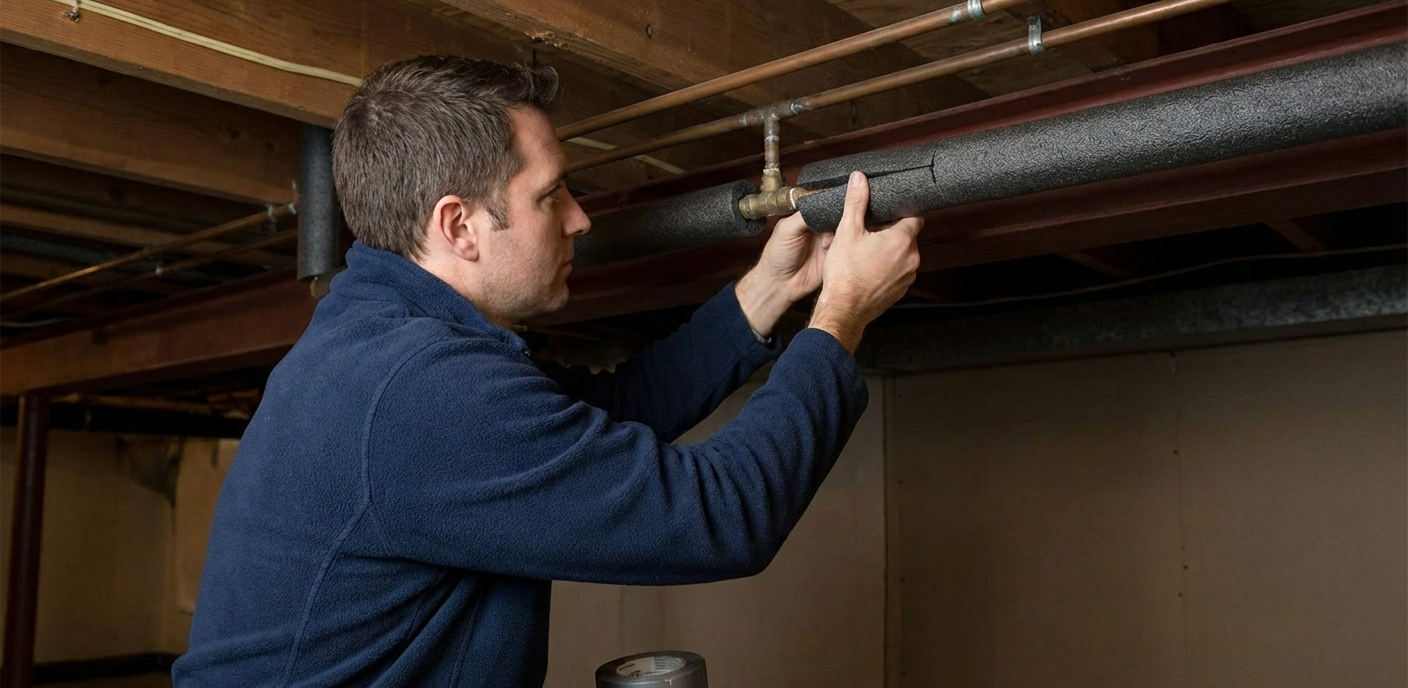
Hardware stores like Home Depot and Lowe’s carry foam pipe insulation sleeves for $2-5 per 6-foot section. If stores are sold out, use newspapers wrapped in plastic, old blankets, or bubble wrap. Any insulation beats no insulation.
Open cabinet doors under all sinks. This allows heated air from your home to circulate around hidden pipes. Do this for:
- Kitchen sinks (especially on exterior walls)
- All bathroom vanities
- Any cabinet containing plumbing
If you have small children or pets, temporarily remove hazardous cleaning products while doors stay open.
Let faucets drip during the coldest hours. When temperatures drop below 20°F (Saturday through Monday), allow faucets to drip at about 1-2 drips per second, with drops roughly the width of a pencil lead.
Here’s the proper technique most people get wrong:
- For dual-handle faucets: Turn on BOTH hot and cold water to protect both supply lines
- For single-handle faucets: Turn on hot until it flows hot, then adjust to middle position for both hot and cold
- Reduce to a steady thin stream (not just individual drops)
- Prioritize faucets served by pipes in exterior walls or unheated areas
- Continue until temperatures consistently stay above 32°F
Maintain consistent indoor temperatures. Set your thermostat to minimum 55°F, with 65°F recommended for optimal protection. Here’s the insurance angle: maintaining adequate heat is often a policy requirement. Insurers can deny frozen pipe claims if you failed to heat your property adequately. That’s buried in your policy’s “reasonable care” clause.
Critical heating rules:
- Never drop below 55°F, even when sleeping or away
- Keep heat consistent day and night, major fluctuations increase freezing risk
- Override any programmable thermostat setbacks during the freeze
- For multi-story homes, verify heat circulation to all floors
Locate your main water shut-off valve RIGHT NOW. Before the emergency happens, every adult in your household needs to know:
- Where the main shut-off valve is located
- How to turn it off (clockwise to close)
- Whether you need a water meter key (available at hardware stores for $10-20)
Common locations in North Texas homes:
- Near the water meter (typically same side of house as meter)
- In utility room or garage
- In basement or crawl space
- Behind an access panel
If the valve is stiff or won’t turn easily, call a licensed plumber TODAY to repair or replace it. You don’t want to discover a frozen valve during a burst pipe emergency at 2 AM.
What To Do When Pipes Freeze (Because Prevention Isn’t Always Perfect)
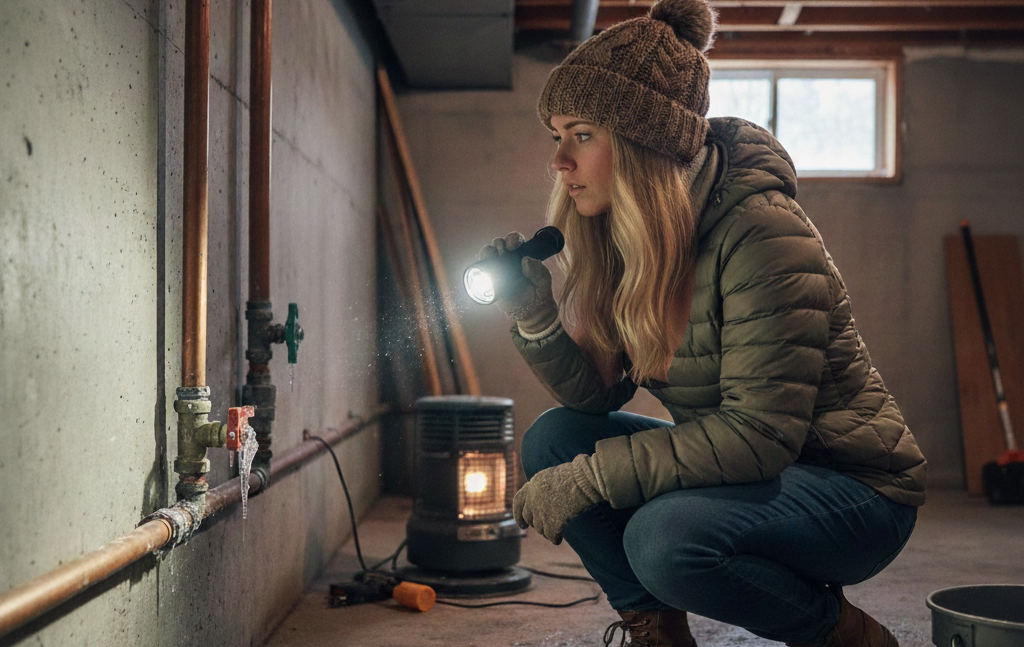
Despite your best efforts, pipes may still freeze during this extreme event. Recognizing signs early and responding correctly prevents a frozen pipe from becoming a burst pipe disaster.
Warning Signs Your Pipes Are Freezing
- Faucets produce only a trickle or nothing at all
- Visible frost on exposed pipes
- Strange odors from drains (frozen pipes trap odors)
- Bulging or cracked pipes (visible damage)
Emergency Response Protocol
Step 1: Shut off the main water supply immediately. If you suspect a burst pipe or can’t locate the frozen section, turn off water at the main valve. This prevents flooding when the ice thaws.
Step 2: Open all faucets throughout your home. Turn on both hot and cold water at every faucet to relieve pressure in the system. Pressure buildup from expanding ice causes pipes to burst, this step is critical.
Step 3: Safely thaw frozen pipes. Locate the frozen section and apply gentle heat using approved methods:
Safe thawing approaches:
- Electric heating pad wrapped around the pipe
- Hair dryer on low to medium heat
- Portable space heater placed nearby (never touching the pipe)
- Towels soaked in hot water, wrapped around frozen sections
Start thawing at the faucet end and work toward the blockage. This allows melting ice to escape through the open faucet rather than building pressure behind the blockage.
NEVER use these dangerous methods:
- Open flames (blowtorches, propane heaters)
- Kerosene heaters placed too close to pipes
- High-heat devices that can damage pipes or start fires
- Any method causing rapid temperature changes
Step 4: If you cannot access the frozen pipe, increase your home’s temperature above 55°F and open all cabinet doors to allow warm air to reach hidden pipes. If frozen pipes are in walls or inaccessible locations, call a licensed plumber immediately, they have specialized equipment for hard-to-reach pipes.
Beyond Pipes: Comprehensive Home Winterization
Roof and Ice Dam Prevention
Ice dams form when heat escapes through your roof, melting snow that refreezes at the eaves, creating a dam that prevents proper drainage. The result? Torn-off gutters, roof leaks, and extensive water damage.
Prevention strategies:
- Clean gutters and downspouts before the storm to ensure proper drainage
- Remove snow accumulation from your roof if safe to do so, especially the lower 3 feet where ice dams form
- Ensure proper attic insulation and ventilation to minimize heat loss
- Consider installing heat cables along roof edges and in gutters (available at hardware stores)
Critical safety note: Never attempt to remove ice dams yourself by climbing on icy roofs. If necessary, hire professional ice dam removal services after the storm.
Weatherize Your Home’s Envelope
Seal air leaks. Cold air infiltration forces your heating system to work harder and exposes pipes to colder temperatures. Sealing leaks can reduce heating costs 10-20% while protecting your home.
Priority sealing locations:
- Weather-strip doors and windows
- Caulk cracks around window and door frames
- Install door sweeps or use draft snakes under doors
- Seal gaps where pipes penetrate walls with spray foam
- Cover foundation vents (if you have a crawl space)
- Install outlet protectors on exterior wall outlets
Use window treatments strategically:
- Keep south-facing curtains open during daylight for solar heating
- Close all curtains at night and on north-facing windows to reduce heat loss
- Consider temporary plastic window film for single-pane windows
Reverse ceiling fan direction. Set ceiling fans to rotate clockwise on low speed to push warm air down from the ceiling. This improves heat distribution and keeps pipes warmer.
ERCOT Grid Status and Power Outage Preparation
The Electric Reliability Council of Texas (ERCOT) reports expecting sufficient generation to meet demand during this storm, with significant improvements since the 2021 Winter Storm Uri disaster. However, local distribution networks remain vulnerable to ice-damaged power lines and equipment failures.
Monitor grid conditions in real-time:
- Visit ERCOT.com for current grid status
- Download the ERCOT mobile app for alerts
- Watch for operating reserve levels – low reserves indicate potential controlled outages
Power Outage Emergency Supplies
According to the Federal Emergency Management Agency (FEMA) and Texas emergency management officials, every household should maintain supplies for at least 3-7 days without power.
Essential emergency supplies:
Water and Food:
- Minimum 1 gallon of water per person per day (7-day supply recommended)
- Non-perishable foods requiring no cooking: granola bars, nuts, dried fruit, canned goods with pop-top lids
- Manual can opener
- Disposable plates and utensils
Power and Communication:
- Fully charged cell phones and tablets before the storm
- Portable battery banks/power packs (charge now)
- Battery-powered or hand-crank NOAA Weather Radio
- Flashlights with extra batteries (safer than candles)
- Battery-powered radio for emergency updates
Heating and Safety:
- Extra blankets and warm clothing layers
- Sleeping bags rated for cold temperatures
- Working carbon monoxide detectors with battery backup
- Working smoke alarms (test monthly)
- Fire extinguisher
Medical and Personal:
- 7-day supply of prescription medications
- First aid kit
- Personal hygiene supplies
- Infant formula and diapers (if applicable)
- Pet food and supplies
Safe Heating During Power Outages (This Saves Lives)
Carbon monoxide poisoning causes hundreds of deaths annually in the United States, with cases spiking during winter power outages when people use dangerous alternative heating methods.
NEVER use indoors:
- Portable generators (must be 20+ feet from all doors, windows, and vents)
- Gas stoves or ovens for heat
- Charcoal grills or hibachis
- Outdoor camping equipment (camp stoves, portable grills)
- Kerosene heaters without proper ventilation
- Any device with an open flame in enclosed spaces
Safe heating alternatives:
- Fireplace or wood-burning stove (ensure chimney is clear)
- Portable propane heaters rated for indoor use only
- Keep space heaters 3+ feet from walls and combustible materials
- Designate one room as your “warm room” and close off unused areas to conserve heat
Carbon monoxide detector requirements: Install battery-powered CO detectors outside each sleeping area. If your detector sounds, evacuate immediately, call 911, and do not re-enter until emergency personnel declare it safe.
Protect Your Pets During the Freeze

The American Veterinary Medical Association (AVMA) and Cornell University Veterinary Specialists provide critical guidance for pet safety during extreme cold.
Pet protection checklist:
- Bring pets indoors during the freeze – even cold-weather breeds are vulnerable to frostbite and hypothermia at these extreme temperatures
- Limit outdoor bathroom breaks to 5-10 minutes maximum
- Provide unfrozen water – check bowls frequently and use heated pet water bowls if power remains on
- Wipe paws after outdoor exposure to remove toxic ice melt chemicals and salt
- Consider pet sweaters or booties for dogs with short coats or small breeds
- Create warm sleeping areas away from drafts with extra blankets
- Bang on car hoods before starting your vehicle, outdoor cats often seek warmth in wheel wells
- Watch for hypothermia signs: shivering, lethargy, sluggishness, stopping during walks
Never leave pets in vehicles during the freeze cars act like refrigerators in extreme cold.
Winterize Outdoor Plants and Landscaping
According to Texas horticultural experts and regional nurseries, even brief freezes can cause serious damage to North Texas landscapes without proper protection.
Plant protection strategies:
- Water thoroughly the afternoon before temperatures drop. Moist soil retains heat better and protects roots
- Apply 2-3 inches of mulch around the base of trees, shrubs, and perennials to insulate roots
- Bring potted plants indoors or move to protected locations like garages or covered patios
- Cover cold-sensitive plants with frost cloth, blankets, or bed sheets (avoid plastic directly on foliage)
- Support covers with stakes to prevent contact damage
- For especially vulnerable plants like citrus, place old-style incandescent holiday lights (not LEDs) under covers for added warmth
- Remove covers during the day when temperatures rise to allow sunlight and air circulation
- Drain and store fountains and empty water from birdbaths
Prepare Your Vehicle for Winter Conditions
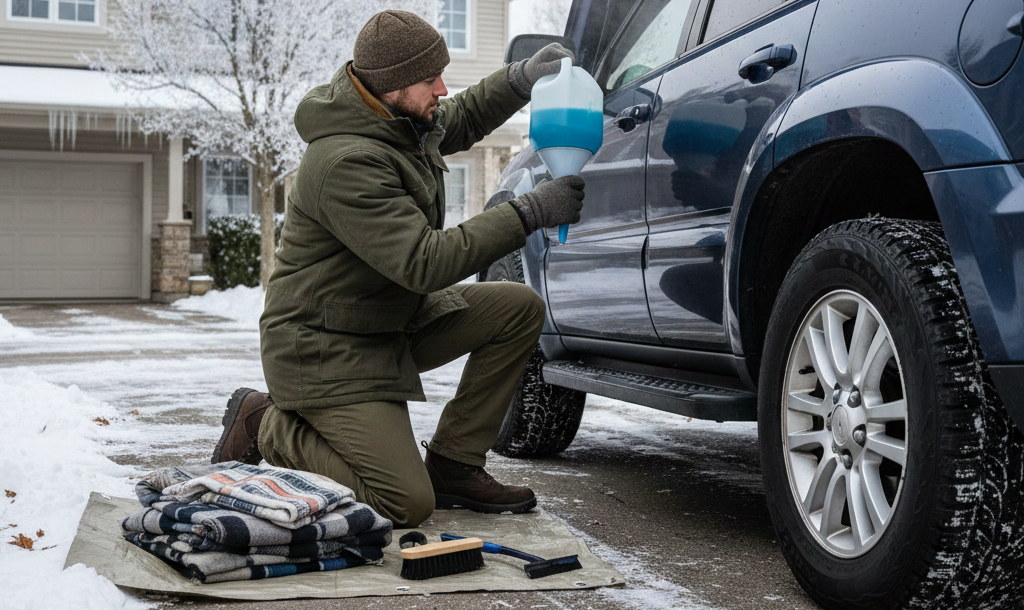
The National Highway Traffic Safety Administration (NHTSA) and Texas Department of Public Safety emphasize that avoiding travel is the safest option during this ice storm. However, if you must drive, proper vehicle preparation is essential.
Vehicle winterization checklist:
Mechanical systems:
- Fill gas tank (keep above half full throughout winter)
- Check battery condition and connections
- Test windshield wipers and replace if worn
- Verify heater and defroster operation
- Check tire pressure and tread depth
- Top off windshield washer fluid with de-icer formula
- Test all lights (headlights, brake lights, turn signals)
Emergency car kit:
- Warm blankets or sleeping bags
- Extra winter clothing, gloves, hats
- Flashlight with extra batteries
- Mobile phone charger (car adapter and portable battery)
- First aid kit
- High-calorie, non-perishable snacks
- Water bottles (store in cabin to prevent freezing)
- Ice scraper and snow brush
- Small shovel
- Jumper cables or battery booster pack
- Sand, cat litter, or traction mats
- Emergency flares or reflective triangles
- Basic tool kit
Monitor road conditions on DriveTexas.org before any travel.
Homeowners Insurance Coverage: What You Need to Know
Understanding your insurance coverage before disaster strikes can save you thousands of dollars and significant stress. According to the Texas Department of Insurance (TDI), most homeowners policies cover damage from frozen pipes, but with important limitations.
What Is Typically Covered
Standard homeowners insurance generally covers:
- Water damage from burst pipes (walls, floors, ceilings, personal property)
- Cost of accessing pipes (tearing out walls, removing flooring)
- Repairs to restore your home after accessing pipes
- Personal property damaged by water
- Temporary living expenses if your home becomes uninhabitable
- Some policies cover food spoilage from power outages
Average burst pipe claim costs:
- Minor damage: $5,000-$10,000
- Moderate damage: $10,000-$30,000
- Severe damage with mold remediation: $30,000-$100,000+
What May NOT Be Covered
Important exclusions and limitations:
- The pipe repair itself (often only the resulting water damage is covered)
- Lack of preventative measures – insurers may deny claims if you failed to:
- Maintain adequate heat (commonly 55°F minimum)
- Insulate vulnerable pipes
- Take reasonable care during the cold
- Leave heat on when away from home
- Vacant home exclusions – many policies exclude coverage if the home was vacant for 30+ days
- Gradual leaks or maintenance issues (only sudden, accidental damage is covered)
Protect Your Coverage Through Documentation
Document your prevention efforts:
- Take photos showing:
- Thermostat settings during the freeze
- Insulated pipes
- Covered outdoor faucets
- Open cabinet doors (with date stamps)
- Save receipts for:
- Pipe insulation materials
- Faucet covers
- Heating bills showing continuous operation
- Keep maintenance records:
- HVAC service
- Plumbing inspections
- Winterization measures taken
This documentation can be critical if your claim is challenged.
Filing a Frozen Pipe Insurance Claim
Immediate steps after pipe damage:
- Mitigate further damage – insurance requires you to prevent additional loss:
- Turn off main water supply
- Remove standing water
- Cover broken windows or roof damage with tarps
- Move valuables to dry areas
- Save receipts for mitigation expenses – these may be reimbursed
- Document everything thoroughly:
- Take extensive photos and videos of all damage
- Make a detailed inventory of damaged property
- Don’t throw away damaged items until the adjuster has seen them
- Notify your insurance company immediately:
- Many policies require prompt notice of loss
- Insurers are subject to strict timelines under Texas law for responding to claims
- Work with the insurance adjuster:
- Be present during the inspection to point out all damage
- Don’t accept the first settlement offer if it seems inadequate
- Consider hiring a public adjuster for large claims
Texas law requires insurers to handle claims promptly and fairly. If you believe your claim is being mishandled or unfairly denied, consult an attorney experienced with property insurance claims.
Hour-by-Hour Action Plan: What To Do When

Friday Afternoon/Evening (Complete by 6 PM)
Final preparation checklist:
- [ ] Disconnect all outdoor hoses and cover faucets
- [ ] Insulate or wrap exposed pipes
- [ ] Open all cabinet doors under sinks
- [ ] Set thermostat to 65°F+ (override any nighttime setbacks)
- [ ] Let water drip from vulnerable faucets
- [ ] Bring pets indoors
- [ ] Cover outdoor plants
- [ ] Charge all electronic devices and power banks
- [ ] Fill vehicle gas tanks
- [ ] Verify emergency supply kit is complete
- [ ] Test flashlights and replace batteries if needed
- [ ] Locate main water shut-off valve
- [ ] Set refrigerator/freezer to coldest settings (in case of power outage)
- [ ] Fill bathtubs with water (for toilet flushing if needed)
Saturday-Sunday (During Peak Cold)
Maintain protection measures:
- Keep faucets dripping continuously
- Monitor thermostat, never let temperature drop below 55°F
- Keep cabinet doors open
- Check on elderly neighbors and family members
- Stay indoors and avoid all non-essential travel
- Monitor ERCOT grid status if concerned about power
- Limit opening doors to exterior
- If using a fireplace, ensure chimney is drawing properly
If power goes out:
- Close refrigerator and freezer immediately (food stays safe 4-48 hours if unopened)
- Disconnect electronics to prevent surge damage when power returns
- Move to your designated warm room with blankets
- Dress in layers: thermal underwear, warm shirt, sweater, insulated pants
- Wear a hat indoors (significant body heat is lost through the head)
- If temperature drops dangerously:
- Go to a warming center (find locations via Texas211.org)
- Stay with friends or family in an unaffected area
- Check into a hotel if necessary
Continue dripping faucets even during power outages, this is critical.
Monday-Tuesday (As Temperatures Rise)
Don’t assume danger has passed:
- Continue dripping faucets until temperatures consistently stay above 32°F for 6+ hours
- This is when burst pipes typically reveal themselves. Ice melts and water flows through cracks
- Monitor for signs of leaks: water stains, dripping sounds, wet spots, sudden pressure drops
- Check attic, basement, and crawl spaces for hidden damage
- Gradually return thermostat to normal settings
- Remove plant covers during the day
- Document any damage with photos before cleanup
Post-Freeze Recovery: Protecting Your Investment Long-Term
Inspect for Damage
After temperatures stabilize, conduct a thorough inspection:
Interior:
- Check all faucets for proper flow
- Inspect ceilings and walls for water stains
- Look for pooling water in basements or crawl spaces
- Test toilets to ensure they fill properly
- Check water heater for leaks
Exterior:
- Examine foundation for new or expanded cracks
- Check gutters for ice damage or detachment
- Inspect roof for missing shingles or other damage
- Look for damaged siding or trim
Professional Inspections to Consider
After a severe freeze, consider scheduling:
- Plumbing inspection – licensed plumbers can detect hidden damage before it becomes an emergency
- HVAC inspection – ensure heating system wasn’t damaged by overwork
- Roof inspection – ice dams and heavy snow can cause hidden structural damage
- Electrical inspection – if you experienced power surges
- Foundation inspection – freeze-thaw cycles can worsen existing foundation issues
Verify plumber licenses at the Texas State Board of Plumbing Examiners and check contractor ratings at the Better Business Bureau.
The Market Intelligence Angle: Why This Matters Beyond This Weekend

Here’s what separates market insiders from typical homeowners: understanding that every major weather event creates documentation requirements, insurance history, and property value implications that persist for years.
Homes that suffered freeze damage in 2021’s Winter Storm Uri are still dealing with disclosure requirements when they sell. Buyers’ inspectors are specifically trained to look for signs of past freeze damage; water stains on ceilings, replaced drywall, mismatched flooring, and insurance claim history.
Conversely, homes with documented preventative maintenance, updated insulation, and professional winterization measures command premium prices because informed buyers recognize reduced risk.
Your preparation this weekend isn’t just about avoiding immediate disaster, it’s about protecting your home’s competitive position in the North Texas real estate market.
What This Storm Reveals About North Texas Real Estate
Every extreme weather event reminds us that North Texas sits at a unique climate crossroads. We’re not Minnesota, we don’t have the infrastructure for sustained winter weather. But we’re also not immune to occasional arctic blasts that test our homes in ways they weren’t originally designed for.
Smart homeowners and informed buyers understand this dynamic. They:
- Invest in proper insulation beyond builder-grade standards
- Upgrade to frost-free outdoor faucets during renovations
- Install whole-house generators for critical systems
- Maintain comprehensive maintenance documentation
- Work with real estate professionals who provide market intelligence, not just transaction services
The Bottom Line: Preparation Is Investment Protection
With temperatures dropping in hours, the time for action is now. The few hours you invest today in preparation can prevent thousands in damage, protect your family’s safety, and preserve your home’s value.
This arctic blast will test your home’s resilience unlike anything we’ve seen in years. But with this comprehensive guide and decisive action, you can weather this storm confidently, knowing you’ve taken every reasonable precaution.
Remember: frozen pipes represent the greatest threat to your home during this prolonged freeze. Prioritize pipe protection above all other preparation efforts, and don’t wait until you see ice forming to take action.
Stay warm, stay safe, and stay strategic, North Texas.
About North Texas Market Insider
While others are still reading weather apps, we’re analyzing how weather events, development projects, infrastructure changes, and demographic shifts impact your real estate decisions and property values. This is what separates market intelligence from market noise.
Whether you’re protecting your current investment, considering buying during market opportunities, or planning a strategic sale, you need access to the kind of comprehensive market analysis that goes beyond basic MLS listings.
Want more North Texas market intelligence delivered before it becomes common knowledge? That’s exactly what we provide, the insights that help you make wealth-building decisions instead of emotional transactions.
Questions about preparing your Ellis County or DFW area home for severe weather? Need recommendations for trusted local contractors? Ready to discuss how market conditions impact your real estate strategy?
Bobby Franklin, REALTOR®
Legacy Realty Group – Leslie Majors Team
📲 214-228-0003 | northtexasmarketinsider.com


Disclaimer: This article provides general guidance for home preparation during winter weather. For specific concerns about any individual property, homeowners should consult with licensed professionals including plumbers, HVAC technicians, insurance agents, and structural engineers. Building codes and insurance requirements vary by location and individual policy. Safety should always be the top priority; evacuate to appropriate shelter if a home becomes unsafe during extreme weather.