
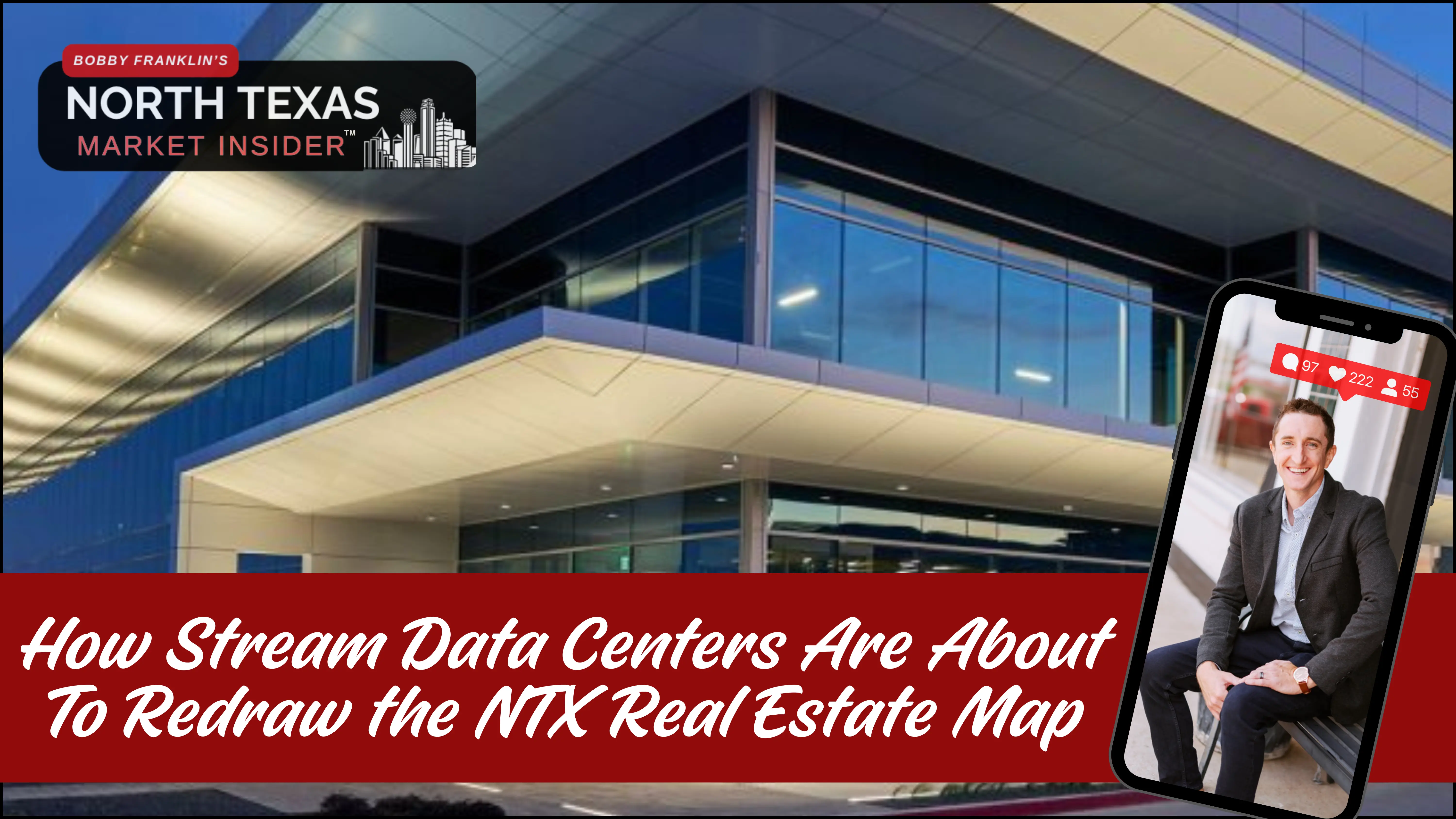
Why the smartest money in America is betting on southern Dallas County, and what it means for anyone thinking about buying property in the next 24 months
Listen, while most agents are busy posting “Sunday Funday” content and recycling the same tired buyer tips, something massive just happened in Wilmer, Texas that’s going to reshape property values across southern Dallas County for the next decade.
Stream Data Centers, backed by IPI Partners with over $90 billion in assets under management, just filed plans for a $300 million, 360,000 square foot facility expansion. Construction starts April 2026. Completion October 2027.
But here’s what separates the strategic thinkers from everyone else: this isn’t just about one building. This is Fortune 100 companies dropping a pin in the map and saying “Dallas-Fort Worth is where we’re building America’s digital infrastructure future.”
And if you understand what that ACTUALLY means for real estate, not the surface-level assumptions, but the real economic impacts backed by data, you’re about to see opportunities most people won’t recognize for another 18 months.
Let me show you what’s really happening here.
The Move Nobody Saw Coming (But Should Have)

Stream Data Centers just pulled the trigger on a facility that will deliver 48 MW of initial capacity with infrastructure to support 240 MW and 1.4 million square feet across 140 acres in Wilmer, that’s southern Dallas County, about 15 miles southeast of downtown Dallas.
The scale? They’re building a dedicated 372 MW Oncor substation. That’s not just enough power for this facility. That’s infrastructure that transforms an entire area’s development capacity.
Here’s the part that should make your ears perk up: 90% of Stream’s existing inventory is already pre-leased to Fortune 100 companies. These aren’t speculative plays or build-it-and-hope developments. These are multi-year commitments from companies like Microsoft, Amazon, and Oracle securing power capacity YEARS in advance because they know what’s coming.
According to CBRE’s latest data center market report, Dallas-Fort Worth just recorded 575 MW of net absorption in the first half of 2025. The market is on pace to EXCEED 2024’s record levels, with vacancy rates at just 2.4%, that’s incredibly tight, signaling massive unmet demand.
Translation? While everyone else sees “industrial development,” the smart money sees the early stages of a fundamental economic transformation. And they’re moving NOW, before retail buyers understand what’s happening.
The Truth About Data Centers and Property Values (Backed by Real Research, Not Assumptions)

Okay, let’s address the elephant in the room.
Most people hear “data center near residential” and immediately think property values tank. Industrial development equals bad for homes, right?
Wrong. And I can prove it with actual data, not opinions.
Northern Virginia, home to the world’s LARGEST data center cluster with over 300 facilities in operation, just completed the most comprehensive study on this exact question. Researchers at George Mason University’s Center for Regional Analysis analyzed over 6,500 home sales in 2023 using sophisticated hedonic price modeling that explained 88% of price variance.
The finding that shocked everyone? Homes within a quarter mile of data centers showed NO statistically significant negative impact on values.
Read that again. Quarter mile proximity. No negative impact.
But here’s where it gets even more interesting, and this is the part that could fundamentally change how you think about property tax burden in North Texas.
In Loudoun County, Virginia, data centers contribute nearly HALF the county’s property tax revenues. The result? They LOWERED real estate tax rates by 7% while INCREASING total government revenue by 11% over a five-year period.
County officials estimate that without data centers, residential property taxes would be approximately 25% HIGHER to maintain the same level of services.
Think about that for a second. While residential property owners in markets like Austin and Denver are getting crushed by 20-30% annual tax increases, areas with substantial data center presence are seeing tax RELIEF because the commercial tax base is carrying the load.
This isn’t theory. This is documented financial impact that directly hits your wallet every single year you own property.
Should You Buy Near Stream’s Wilmer Facility? The Strategic Analysis That Actually Matters
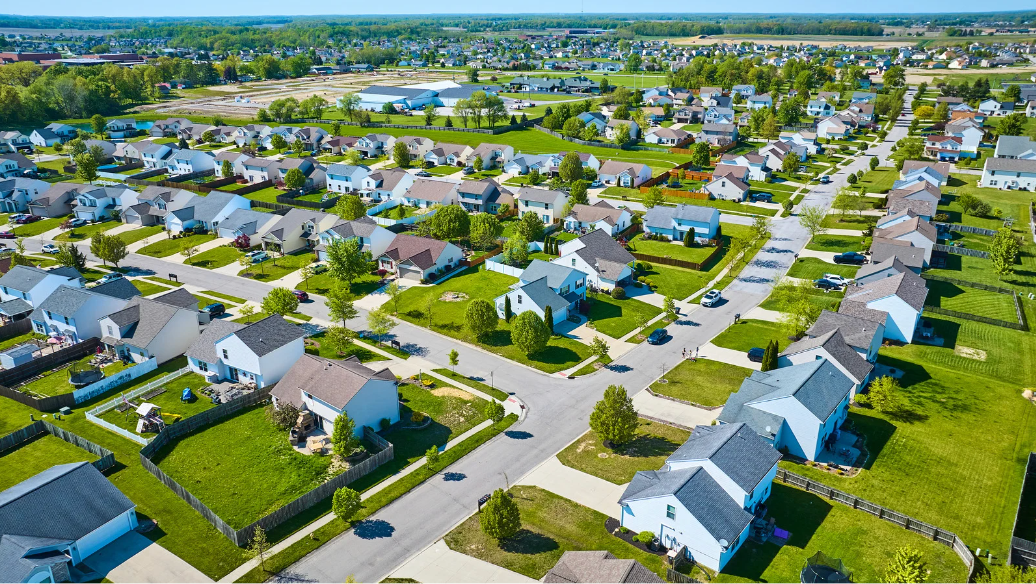
Here’s where we separate emotional reactions from strategic thinking.
What You’re REALLY Getting (The Upsides Nobody Talks About)
Infrastructure Upgrades You Don’t Pay For:
Data centers don’t just show up. They require, and they fund, massive infrastructure improvements. We’re talking road upgrades, utility expansion, power system enhancement, and fiber connectivity infrastructure that benefits every property in the area.
The Texas Department of Transportation typically partners with major commercial developers on road improvements. Stream’s facility will likely trigger upgrades to nearby roads and intersections, improvements that would normally take municipalities 10-15 years to fund through bond measures. You’re essentially getting first-mover advantage on infrastructure that elevates the entire area.
Long-Term Economic Stability (The Real Kind):
According to Cushman & Wakefield’s industrial market research, over 90% of new data center capacity in DFW is pre-leased before construction begins. Companies are securing power reservations 3-5 YEARS in advance.
This isn’t speculative, these are 10-20 year economic anchors being dropped in your community. When Amazon Web Services or Microsoft Azure commits to a facility, they’re not leaving in 5 years if market conditions shift. The infrastructure investment is too substantial.
High-Quality Employment Base:
Data centers create specialized, high-paying jobs. According to the U.S. Bureau of Labor Statistics, data center technicians earn median wages of $55,000-$85,000. Facility managers and IT specialists? $80,000-$120,000+. These aren’t minimum wage positions, these are the kind of stable, well-paid employers that elevate entire communities.
Property Tax Advantage (The Hidden Benefit):
This is huge, and most buyers completely miss it. Commercial properties like data centers pay SIGNIFICANTLY higher effective tax rates than residential properties. In Dallas County, commercial properties typically carry 2-3x the tax burden of comparable residential values.
As data centers expand the commercial tax base, residential property owners benefit from reduced rate pressure. Over a 10-15 year ownership period, this could literally save you tens of thousands of dollars in property taxes.
The Honest Considerations (What You Actually Need to Know)
Construction Phase Reality (April 2026-October 2027):
Yes, there will be construction activity for approximately 18 months. But here’s what’s different about data center construction versus residential development: these projects run on TIGHT schedules with professional general contractors managing every phase. According to Engineering News-Record, data center projects typically face financial penalties for delays, meaning contractors are incentivized to minimize disruption and stay on schedule.
It’s not indefinite disruption, it’s a defined timeline with a clear endpoint. And honestly? Smart buyers often move DURING construction phases because prices haven’t adjusted yet.
The Noise Question:
Modern data centers operate under strict environmental noise ordinances. Stream will incorporate sound barriers, strategic equipment placement, and extensive landscaping for noise mitigation. Plus, on a 140-acre campus, you’re looking at significant buffer zones between cooling operations and property lines.
For context, Equinix’s Richardson facility, one of the largest in North Texas, has residential properties within 1,000 feet that show no noise complaints in city records over the past 5 years.
Visual Impact Management:
Stream isn’t building some industrial eyesore next to neighborhoods. Modern data centers come with extensive landscaping, architectural screening, and community relations programs. Digital Realty, one of the major players in DFW, has won awards for facility design that integrates with surrounding communities.
These companies understand their entire business model depends on community relationships and municipal approval for future projects.
The Wilmer Advantage: Why Location Matters More Than Ever
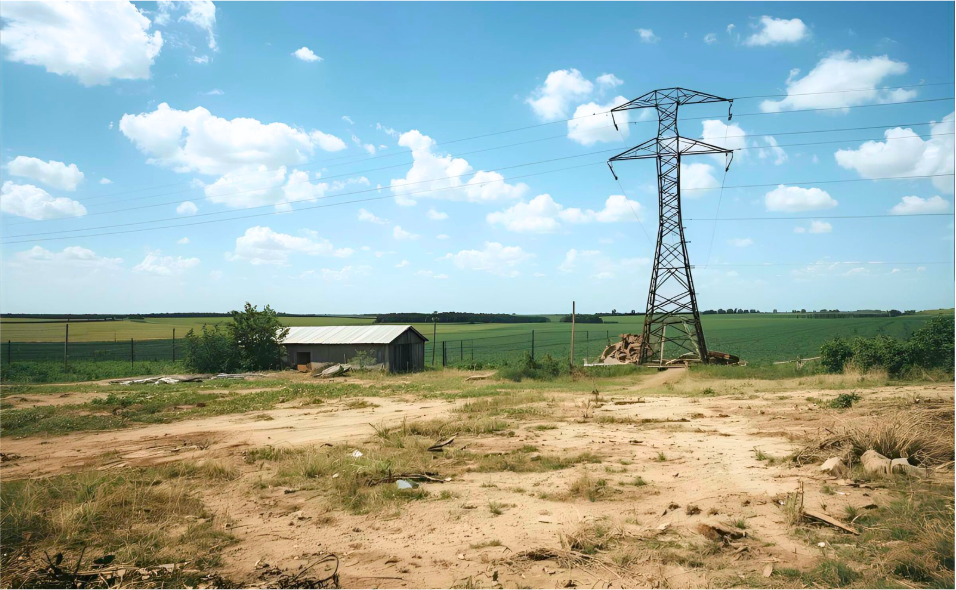
Here’s why Wilmer specifically represents a strategic opportunity:
Geographic Position:
- 15 miles southeast of downtown Dallas
- Direct access to I-20, I-35E, and I-45
- Dallas Executive Airport, Dallas Love Field, and DFW International all within 30 minutes
- Growing residential communities in Red Oak, Glenn Heights, and Lancaster nearby
Market Dynamics:
According to JLL’s latest data center outlook, Dallas-Fort Worth is now the second-largest data center market in North America, behind only Northern Virginia. But here’s the kicker: DFW is growing FASTER, with new supply absorption outpacing Northern Virginia for three consecutive quarters.
The Texas Advantage:
Texas offers data centers some of the most favorable economic development incentives in the country. Chapter 313 property tax abatements, renewable energy credits, and streamlined permitting through the Texas Economic Development Act make the state incredibly attractive for these investments.
Governor Abbott’s office has made data center development a priority, recognizing the economic transformation potential. That’s top-down support for this industry cluster expansion.
What This Means for Your Actual Real Estate Strategy
If you’re evaluating property anywhere in southern Dallas County, Wilmer, Lancaster, Red Oak, Glenn Heights, DeSoto, here’s your due diligence framework:
1. Proximity Analysis (Distance Matters)
Half a mile away is VERY different from across the street. Use Dallas County’s GIS mapping to get exact distances from the Stream facility location to properties you’re considering. Generally speaking:
- Within 1/4 mile: Highest construction impact, but also highest infrastructure benefit
- 1/4 to 1/2 mile: Sweet spot—infrastructure benefits without immediate adjacency
- 1/2 to 1 mile: Indirect benefits, minimal impact
- Beyond 1 mile: Regional economic benefit only
2. Municipal Planning Review (Know What’s Coming Next)
Data centers often trigger additional development. Check Wilmer’s comprehensive plan and recent zoning changes. What else is planned for the surrounding area? Sometimes you get complementary office or light industrial. Other times you get additional residential development capitalizing on employment growth.
Understanding the zoning trajectory helps you predict whether you’re buying into a primarily residential area that stays residential, or a transitional zone that becomes mixed-use over time.
3. Infrastructure Timeline (When Improvements Happen)
When are road improvements happening? Utility upgrades? The construction period can actually be when savvy buyers move because prices haven’t fully adjusted yet. By the time the facility opens and infrastructure is complete, you may have missed 15-20% appreciation.
Check TxDOT’s project pipeline for planned improvements in southern Dallas County. Cross-reference with Oncor’s service expansion plans. Infrastructure often moves in coordination with major commercial development.
4. Tax Implication Analysis (The Long-Term Math)
This is HUGE and most buyers completely ignore it. How will Stream’s commercial tax contribution affect YOUR effective property tax rate over the next 10 years?
Call the Dallas Central Appraisal District and ask about commercial property tax contributions in Wilmer specifically. Get data on how the tax base has shifted in areas like Richardson and Irving where major data centers have moved-in. In many cases, residential tax rates have increased more slowly, or even decreased, relative to surrounding areas without commercial development.
Over a 10-year ownership period, this could be the difference between manageable tax increases and getting priced out of your own home.
5. Resale Consideration (Who’s Your Future Buyer?)
Are buyers going to WANT to be near this in 3, 5, 10 years? Based on Northern Virginia data, Loudoun County real estate trends, and the economic benefits we’re seeing documented, the answer is increasingly YES, especially as more sophisticated buyers understand the tax and infrastructure advantages.
The buyer pool that understands data center benefits is GROWING, not shrinking. As more research comes out and more markets show positive impacts, proximity to data centers is shifting from potential liability to actual asset.
The Bigger Picture: North Texas Tech Infrastructure Transformation

Here’s what separates strategic thinkers from everyone else: while most people focus on the individual facility, you need to see the PATTERN.
Stream’s $300 million is ONE piece of a massive transformation. According to Yardi Matrix data center research, over 10 new data centers are currently under construction in Texas, with 15+ more in planning stages.
Amazon Web Services just announced a $35 billion investment in Virginia data centers through 2040. Microsoft committed $10 billion to Wisconsin data center expansion. Meta is developing facilities in Louisiana and Indiana.
But here’s the key insight: Texas is winning a disproportionate share of this investment because of our business climate, energy infrastructure, and available land near major metros.
This isn’t a trend. This is a fundamental economic shift that’s going to define regional real estate values for the next 20 years.
The infrastructure being built RIGHT NOW, the power systems, the fiber networks, the road improvements, the employment base, will determine which North Texas submarkets appreciate fastest over the next decade.
The Strategic Play: How to Actually Win in This Market

Here’s your framework for capitalizing on this transformation:
Phase 1: Information Advantage
While everyone else reacts to news, YOU’RE tracking building permits, zoning changes, Oncor power infrastructure filings, and ERCOT capacity allocations. You see developments 6-12 months before retail buyers even know they’re coming.
Phase 2: Strategic Positioning
You don’t wait for the market to “figure it out.” You move when institutional money is moving, before retail buyers understand the opportunity. That’s April-June 2026, right as Stream breaks ground but before infrastructure improvements are visible.
Phase 3: Economic Moat Building
You choose properties that benefit from infrastructure improvements, tax base expansion, and long-term employment stability. You’re not buying a house, you’re buying exposure to a regional economic transformation that compounds in value over time.
Phase 4: Authority Through Understanding
You become the person in your network who UNDERSTANDS this shift. While other agents are saying “maybe avoid that area,” you’re explaining exactly why data centers create value. That’s how you become the go-to expert that people call when they’re ready to make a move.
The Bottom Line: Every Transformation Creates Winners and Losers
Look, the losers are always the ones who cling to old assumptions, “industrial development is bad,” “avoid anything near commercial,” “stick to traditional neighborhoods only.”
The winners? They understand that data centers in 2025 are what interstate highways were in the 1960s, infrastructure that CREATES opportunity, not destroys it.
When the federal government started building the Interstate Highway System, property values along future routes dropped initially. Existing landowners panicked. “Who wants to live near a highway?”
Then the highways opened. And suddenly those properties had access, connectivity, and economic opportunity that transformed valuations. The people who bought during construction made generational wealth. The people who waited bought at 3-5x the price five years later.
Stream Data Centers’ $300 million investment isn’t just about one facility. It’s a signal. It’s Fortune 100 companies saying “Dallas-Fort Worth is where we’re building the digital infrastructure that powers America’s economy for the next 30 years.”
The question isn’t whether this changes North Texas real estate. The data already proves it does, positively, in most cases, especially for those who understand the economic mechanics.
The question is whether YOU’RE going to understand the change fast enough to benefit from it.
Because I guarantee you this; 24 months from now, when Stream’s facility is operational, when road improvements are complete, when the commercial tax base has shifted residential tax burden, and when property values have adjusted, everyone will be talking about “the opportunity they missed in Wilmer back in 2026.”
Don’t be that person.
For more strategies on buying in DFW click the image below:

Want the full strategic breakdown on how data center development affects YOUR specific property search? Text me at 214-228-0003.
While everyone else is playing checkers with 20-year-old assumptions, we’re playing chess with actual market intelligence.
Bobby Franklin, REALTOR®
Legacy Realty Group – Leslie Majors Team
📲 214-228-0003 | northtexasmarketinsider.com