

By Bobby Franklin, REALTOR® | Legacy Realty Group – Leslie Majors Team | North Texas Market Insider
Last updated: August 10, 2026
Yes. An HOA can foreclose on your home in Texas. It can do it to a homestead and even while you are current on your mortgage. Interestingly, it is happening more and more often every quarter.
But here is the part the viral headlines miss, and it is the part that should actually change how you shop for a house in North Texas: Texas law is not the problem. Texas gives homeowners more procedural runway than almost any state in the country with; two separate notices, a ninety-day waiting period before a lien can even be recorded, a mandatory payment plan offer, a required court order before a foreclosure can proceed, and a full six months to reclaim the property after the sale. That is a genuinely protective framework, and it exists because Texas already learned this lesson the hard way.
The problem is that every one of those protections is a shock absorber, not a shield. They slow the process down. But they don’t actually fix the underlying condition that starts the process in the first place, an association that promised amenities it cannot afford to maintain, funded by dues that were set too low to make the community easy to sell.
That is a real risk in North Texas right now, and it’s not showing up in the foreclosure statistics yet. It’s instead showing up in the reserve studies. When you buy in a deed-restricted community, you are not just buying a house. You are buying a proportional share of somebody else’s deferred maintenance schedule. This leaves a lot of homeowners inheriting the future bill.

The Numbers Driving the 2026 Headlines
The story is real, and the data behind it is specific. Homeowners associations nationwide filed 6,376 HOA-related foreclosure filings in the first quarter of 2026, a nearly 40% jump from two years earlier, with HOA foreclosure activity now growing faster than traditional mortgage foreclosure activity.
Before that number gets used to frighten anybody, let me do the math that a skeptical reader is already doing. Millions of American households live in association-governed communities. Against that base, 6,376 filings in a quarter is not a mass event. The overwhelming majority of homeowners in HOA communities will never receive a lien notice, never miss an assessment, and never think about Chapter 209 for a single minute of their lives. Anyone offering you panic on this topic is selling you something or not seeing the whole picture.
2026 Foreclosure Data
The HOA Numbers Behind the Headlines
The trajectory is the story, not the raw count. Here is what the national data actually shows — and what it does not.
6,376
HOA foreclosure filings, Q1 2026
A nearly 40% increase from two years earlier. HOA foreclosure activity is now growing faster than traditional mortgage foreclosure activity.
Source: Tech Times
285,000+
HOA liens filed in 2025
Roughly one every 90 seconds, up 8.8% year over year. Liens are the leading indicator — foreclosure filings follow 18 to 24 months later.
Source: Benutech, via IndexBox
21%
Rise in all U.S. foreclosure filings
First half of 2026 versus the same period a year earlier. HOA-specific activity is outpacing this broader number, which means the pressure is concentrated rather than general.
Source: ATTOM Midyear 2026 Report
~3 in 4
Associations underfunded on reserves
Estimated share of HOAs lacking sufficient reserve funding for their own projected repair obligations. This figure reaches most readers through secondary coverage rather than the underlying study — treat it as directional, not precise.
Association Reserves, via national coverage
Read the scale before you read the panic
Millions of American households live in association-governed communities. Against that base, 6,376 filings in a quarter is not a mass event — the overwhelming majority of HOA homeowners will never receive a lien notice. What matters is that a previously stable category moved 40% in two years, because mechanisms that shift once tend to keep moving until the underlying pressure resolves.
What we will not claim
Texas-specific HOA foreclosure figures are not broken out separately in any of the major national reports driving this story. We will not publish a Texas number we cannot source. What applies here is the underlying arithmetic — underfunded reserves, rising insurance and materials costs, aging amenity infrastructure — which is not regional.
All figures are national unless otherwise noted and reflect reporting available as of August 2026. Informational only; not legal, tax, or financial advice.
Bobby Franklin, REALTOR® | Legacy Realty Group – Leslie Majors Team
North Texas Market Insider™ | 214-228-0003 | northtexasmarketinsider.com
The trajectory is the story, not the count. A 40% increase over two years in a category that was previously stable tells you a mechanism changed and mechanisms that change once, tend to keep moving in the same direction until the underlying pressure resolves. The question worth asking is not “am I about to lose my house to my HOA.” It is “what is putting upward pressure on this number, and does my community have that condition.”
The lien data underneath the headline is where that answer starts. Real estate analytics firm Benutech, which tracks lien and delinquency filings nationally, reported that HOAs filed more than 285,000 liens against homeowners in 2025, roughly one every ninety seconds. Putting filings up 8.8% year over year. Liens are the leading indicator, foreclosures are the lagging one. When lien volume climbs at that rate, foreclosure filings follow eighteen to twenty-four months later, because that is simply how long the statutory process takes in states with real notice requirements.
For broader context, ATTOM’s Midyear 2026 U.S. Foreclosure Market Report showed total foreclosure filings up 21% in the first half of 2026 compared to the same period a year earlier. HOA-specific activity is outpacing that broader number, which tells you the pressure is concentrated rather than general.
Here is where I will be straight with you, because the alternative is pretending to know something I don’t: Texas-specific HOA foreclosure figures are not broken out separately in any of the national reporting driving this story. The viral clip that put this topic in everyone’s feed featured a New York affiliate. What I can tell you with confidence is that the financial mechanics producing those national numbers such as; underfunded reserves, rising insurance and materials costs, aging amenity infrastructure, are not just a regional phenomena. They are a deficiency in the arithmetic of countless HOA’s across the country. And North Texas has more brand-new amenity-heavy associations coming online right now than almost any market in the country.
How HOA Foreclosure Actually Works Under Texas Law
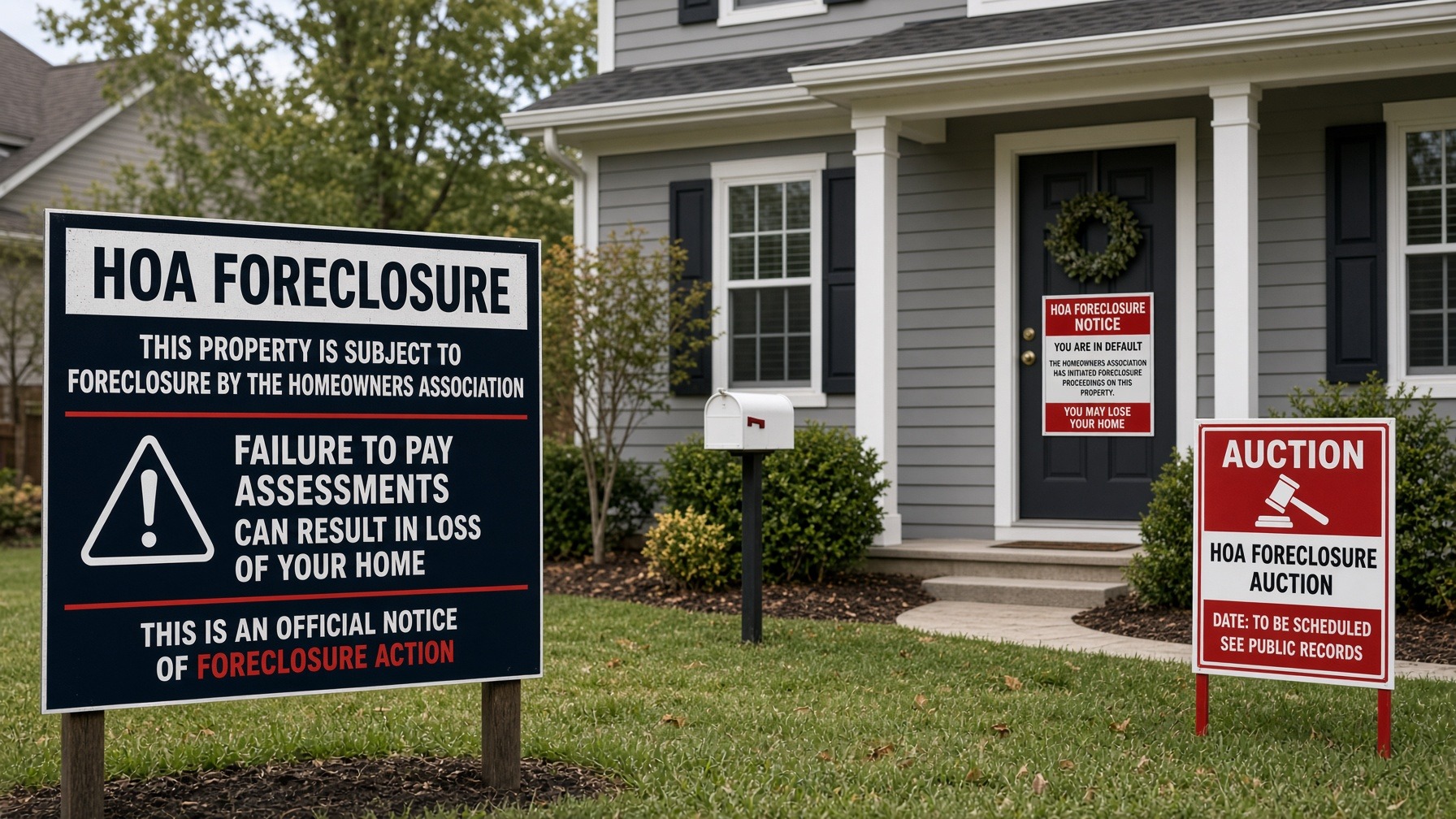
The controlling statute is Chapter 209 of the Texas Property Code, the Texas Residential Property Owners Protection Act. It was substantially rewritten after a 2001 case in which an 82-year-old widow named Wenonah Blevins lost her home to an HOA foreclosure she never knew was happening, according to the Texas State Law Library’s foreclosure guide. The reform that followed is informally known as the Wenonah Blevins Act, and it still governs how Texas HOAs collect today. That history matters, because it explains why the Texas process is slower and more procedurally demanding than what you will find in most other states.
Here is the actual sequence a Texas association has to walk before it can take your house:
Texas Property Code Chapter 209
How Long an HOA Foreclosure Actually Takes in Texas
Texas requires a longer, more procedurally demanding path than most states. Every stage below is a point where an attentive homeowner can stop the process.
First notice of delinquency
Sent by regular mail or email. The association’s lien authority must already exist in the recorded declaration (CC&Rs) — Texas does not grant it automatically.
Second notice, sent certified mail
Required under Section 209.0094, no sooner than 30 days after the first notice.
Payment plan offered
Texas associations generally must offer a plan of at least three months. A board may refuse only if the owner defaulted on a prior plan within the last two years.
Mandatory waiting period
No lien may be recorded in county public records until at least 90 days after the certified second notice.
Assessment lien recorded
Earliest possible point, roughly four months from first contact. A lien is a claim against the property, not a sale — most liens never become foreclosures.
Court order required
Under Section 209.0092, no residential foreclosure without judicial approval — full judicial foreclosure or an expedited Rule 736 proceeding. Fines, interest, and attorney’s fees alone cannot support a foreclosure.
Foreclosure sale
Only after every preceding requirement has been satisfied and documented.
Right of redemption
Texas homeowners may reclaim the property within 180 days of the sale by paying the full amount owed plus costs — a considerably longer window than most mortgage foreclosures allow in this state.
The exception nobody expects
Texas homestead protection does not stop this process. Article XVI, Section 50(a) of the Texas Constitution carves out an explicit exception for HOA assessment liens. Your homestead exemption stops most creditors. It does not stop your association.
Timelines shown are statutory minimums under Texas Property Code Chapter 209, not guarantees — actual cases vary, and condominium associations follow different rules under Chapter 82. Informational only; not legal advice. Consult a licensed Texas real estate attorney about your specific situation.
Bobby Franklin, REALTOR® | Legacy Realty Group – Leslie Majors Team
North Texas Market Insider™ | 214-228-0003 | northtexasmarketinsider.com
Read that list again and notice what it actually describes: a process with at least four or five distinct points where a homeowner who is paying attention can stop the whole thing. Almost nobody who loses a house to an HOA in Texas loses it because the law failed them. They lose it because the notices went to an old address, or they assumed the mortgage company would handle it, or they decided a $400 dispute was not worth answering.
Your Homestead Exemption Does Not Cover This
This is the single most common misunderstanding I encounter, and it costs people real money.
Texas has some of the strongest homestead protections in the country. Article XVI, Section 50(a) of the Texas Constitution shields a primary residence from forced sale for most debts, and that protection is genuinely powerful. But the Constitution carves out specific exceptions, and an HOA assessment lien for improvements or services is explicitly one of them, per Barsalou Law’s analysis of the constitutional text.
In plain language: your homestead exemption will stop a credit card company. It will not stop your HOA.
If you have been operating on the assumption that Texas homestead law makes you untouchable, that assumption is wrong, and it is the kind of wrong that only reveals itself at the worst possible moment. Treat HOA due diligence with the same seriousness you would treat a title search. For the full document-by-document walkthrough, see HOA Restrictions and Neighborhood Regulations in North Texas.
Texas Versus Everywhere Else
Homeowner Protections Compared
Texas Gives You More Runway Than the States Making Headlines
The viral HOA foreclosure coverage came out of other states. Here is how the statutory protections actually compare.
Texas
Property Code Ch. 209
Court order before foreclosure
Always required — judicial or expedited Rule 736
Pre-lien notices
Two notices, 30 days apart, plus a 90-day wait before recording
Payment plan offer
Mandatory — minimum 3 months in most cases
Post-sale redemption
180 days
Homestead exemption applies
No — explicit constitutional exception for HOA liens
New York
Less standardized
Court order before foreclosure
Varies by association type and lien terms
Pre-lien notices
Governed by the declaration and state lien law rather than a uniform statute
Payment plan offer
Not statutorily mandated statewide
Post-sale redemption
Not standard
Homestead exemption applies
No comparable homestead regime
Florida
Shorter timelines
Court order before foreclosure
Judicial foreclosure required for most HOA liens
Pre-lien notices
Requirements vary, generally on shorter timelines than Texas
Payment plan offer
Not statutorily mandated statewide
Post-sale redemption
Not standard
Homestead exemption applies
No — also does not block HOA liens
What this actually means
More procedure cuts both ways. A well-defined process gives homeowners multiple points to intervene, and it turns association mistakes into defenses — skipped notices, a missing payment plan offer, improper filings, or fines folded into an assessment total. But it does not address the condition that starts the process. Texas law governs what happens after the money runs short. It says nothing about whether your association funded its obligations in the first place.
Comparison reflects general statutory frameworks as of August 2026 and is simplified for clarity; state law changes and individual association documents control. Condominium associations in Texas follow separate rules under Property Code Chapter 82. Informational only; not legal advice.
Bobby Franklin, REALTOR® | Legacy Realty Group – Leslie Majors Team
North Texas Market Insider™ | 214-228-0003 | northtexasmarketinsider.com
The comparison lands in a place most people do not expect. Texas homeowners have more statutory guardrails than homeowners in the states generating the loudest headlines. When a Texas HOA foreclosure does happen, it has typically survived a longer and more procedurally defensible path to get there.
That cuts both ways, though. The flip side of a well-defined process is that procedural mistakes become defenses. Skipped notices, a missing payment plan offer, improper court filings, fines improperly folded into the assessment total; all of these are common grounds homeowners raise, according to Barsalou Law. Associations run by volunteer boards and rotating management companies make these mistakes more often than you would think.
Why This Is Happening Now
Three forces converged in 2026, and none of them are going to reverse on their own.
Reserves are structurally underfunded. National reporting has repeatedly cited Association Reserves data indicating that roughly three in four associations lack sufficient reserve funding to meet their own projected repair obligations. I want to be precise about the sourcing on that one: it reaches most readers, including this article, through secondary coverage rather than directly from the underlying study, so treat it as a directional indicator rather than a precision instrument. Directionally, it matches everything visible on the ground. An underfunded reserve does not stay a quiet accounting problem, it eventually becomes a special assessment, and special assessments are what push already-strained households into delinquency.
Post-Surfside safety mandates raised the floor. Since the 2021 Champlain Towers South collapse, multiple states enacted stricter structural inspection and reserve-funding requirements for condo and homeowner associations, driving special assessments up and delinquencies with them, per Wall Street Journal reporting. Boards that spent two decades deferring maintenance suddenly had to fund it on a legislative timeline.
Household budgets are compressed from every direction. Property taxes now average more than $4,400 annually per ATTOM data, home insurance premiums are up roughly 6%, and mortgage rates remain elevated. When something has to give, the HOA bill is almost always the first thing people deprioritize, because it feels like the softest deadline in the stack. Unfortunately, it’s the one with a statutory escalation path attached.
ATTOM CEO Rob Barber has framed the broader foreclosure increase as a normalization of the foreclosure process following years of pandemic-era relief rather than a developing crisis, and that read is fair on the aggregate numbers. But normalization and strain are not mutually exclusive. Rising foreclosure starts, compressing completion timelines, and faster HOA legal escalation together describe a specific slice of homeowners under genuine pressure, not a statistical artifact.
What This Means for North Texas Specifically
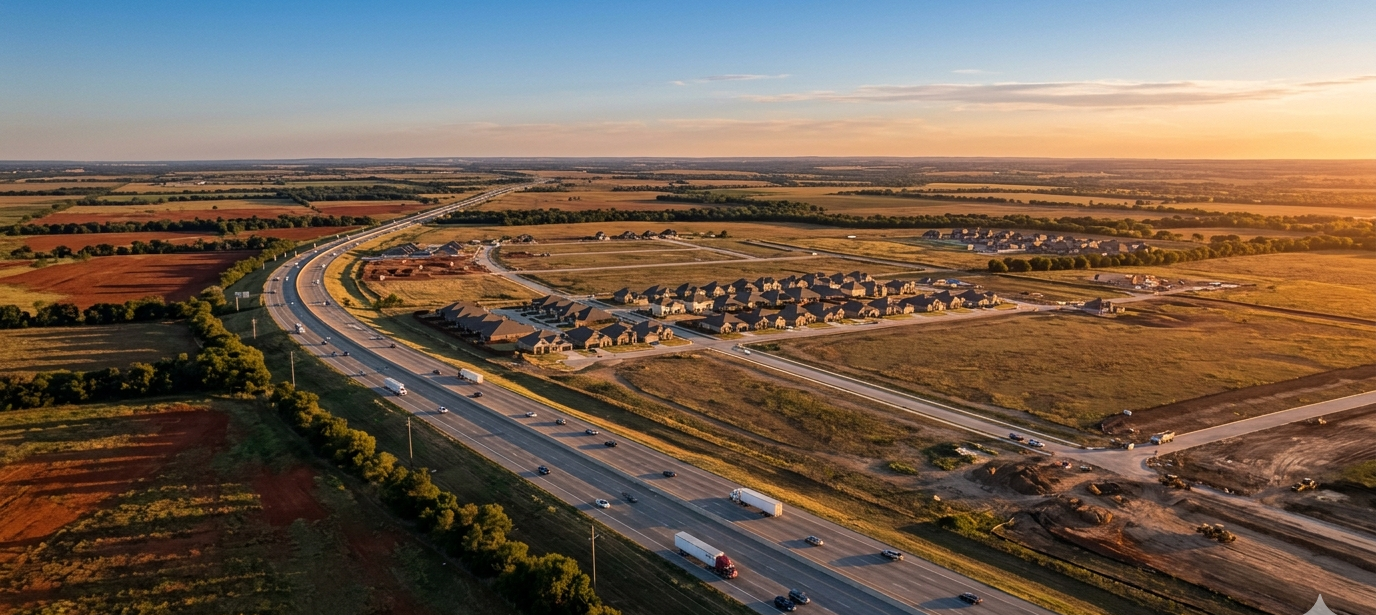
North Texas is in the middle of the largest wave of master-planned community construction in its history. The 13,270-home Minto community approved west of I-35E in Waxahachie. The 75-acre Palmetto Road development. Dozens more across Ellis, Tarrant, and Johnson counties. Nearly every one carries a mandatory HOA, and nearly every one launches with an amenity package with some variety of pools, trail systems, clubhouses, gated entries, or detention pond landscaping that generates permanent maintenance obligations from the day the ribbon gets cut.
Here is a pattern I have watched play out repeatedly in this corridor, and I am telling you as an agent who works these communities rather than citing a study: new associations often launch with dues set at a number that helps the community sell, and residents inherit the real number later. Low dues make a new subdivision easier to move. That is not a scandal and it is not illegal. It’s a sales decision, made by people whose job is to sell the lots. But when the developer transitions control to the homeowners(usually once a threshold percentage of lots have closed) the new resident board inherits the actual maintenance math. Sometimes that math works out fine and sometimes it produces an increase that genuinely surprises people who budgeted around the launch number.
The underlying principle is simple enough to check before you sign anything: a community that has never been through a full maintenance cycle has never been financially tested. Nobody has replaced the pool equipment yet. Nobody has resurfaced the trails or rebuilt the gate motors or dealt with the retaining wall. A twenty-year-old neighborhood with unremarkable dues and a funded reserve has already answered questions that a brand-new community has not been challenged to answer.
This is exactly why I walk buyers through HOA financials as part of our new construction process, and why the fee question deserves a real answer rather than a shrug. At Goodland, for instance, fees run roughly $1,000 per year, but individual villages within the community can carry additional assessments on top of that. The number on the listing sheet is frequently not the number you will actually pay. Apply the same scrutiny in established Waxahachie neighborhoods and in newer subdivisions from builders like the ones covered in our Bloomfield Homes builder guide and understand how association rules interact with municipal authority. Those are two separate rulebooks, and our breakdown of zoning, land use, and restrictions covers where they diverge.
So Is the Amenity Package Worth It?
That is not my call to make, and any agent who answers it for you is telling you about their own preferences rather than your situation.
The resort pool, the gated entry, the trail system, the clubhouse, these are real value that people value differently based on their lifestyle. I would happily pay the premium for a Porsche that another car buyer would consider a waste of money. I also personally couldn’t justify the purchase a Lamborghini, but other car buyers would purchase one without hesitation and enjoy it every day. None of us are wrong. We’re just in different life-stages and running different equations.
Option Period Checklist
Five Documents to Request Before You Close
Every risk described in this article is visible in these five documents. All of them can be requested during your option period at no cost beyond the asking.
The current resale certificate
Confirms dues are current on the property and discloses any pending special assessment. Read the assessment line specifically — a pending special assessment disclosed here becomes your obligation at closing.
Twelve to twenty-four months of board meeting minutes
The most underused document in the stack. Minutes reveal what the budget hides — disputes, deferred repairs, delinquency discussions, and assessments being debated long before they are approved.
The most recent reserve study
Ask for the funding percentage explicitly, not just the document. Below 70% of the recommended level is a warning, and no study at all is a louder one.
Complete CC&Rs and every recorded amendment
Not a summary, not a highlights sheet. The declaration is where lien authority lives — an association cannot place a lien on your property unless these documents grant it that power.
Most recent audited or reviewed financial statements
Operating budget, reserve balance, and receivables in one place. Receivables tell you the delinquency story the resale certificate leaves out.
The principle
In a deed-restricted community you are not only buying a house. You are buying a proportional share of the association’s maintenance obligations. Read the balance sheet or inherit the bill.
Document availability and disclosure requirements vary by association. Reviewing HOA financial health and governing documents is part of a buyer’s agent’s fiduciary duty. Informational only; not legal advice — consult a licensed Texas real estate attorney regarding your specific transaction.
Bobby Franklin, REALTOR® | Legacy Realty Group – Leslie Majors Team
North Texas Market Insider™ | 214-228-0003 | northtexasmarketinsider.com
What I can do is make sure you are running the equation with the actual numbers in it. So here is the framework:
Price the amenity, not the dues. Look at what the association maintains and ask what it costs to replace on its real timeline. A pool has a resurfacing cycle. Gate motors fail. Retaining walls and drainage infrastructure have finite lives. The dues figure is what you pay this year. The replacement schedule is what you are actually signing up for and the part that could change significantly.
Ask what happens if you never use it. This is the big one. Some buyers will use the trails five times a week while others might treat the amenity as a resale feature that that they never use themselves. Both are legitimate, but they justify very different price tolerances and sometimes the house isn’t worth the extra cost for amenities you never plan to use.
Weigh the funded reserve against the shiny thing. Between two communities at similar price points, the one with a fully funded reserve and modest amenities carries different risk than the one with a spectacular amenity package and a reserve study nobody can produce. It’s up to you to decide which risk you would rather hold.
Know your own volatility tolerance. A dues increase that is an inconvenience for one household could be a genuine problem for another. If a $150 monthly increase two years from now would significantly strain your budget, that is a real input, and it should carry real weight regardless of how good the pool looks in October.
Run those four questions and see where you land. The answers you get are worth considerably more than mine, because you are the one living with it.
The broader shift here is one I have written about before: as covered in “Something Broke in the Housing Market – It’s Not What You Think,” buyers are now underwriting total cost of ownership rather than purchase price alone. HOA dues, property taxes, and insurance are getting line-item scrutiny that simply did not exist three years ago. That is not anxiety. That is buyers correctly identifying where the risk actually lives.
What Changed in Texas HOA Law in 2025 and What Did Not

The 89th Texas Legislature passed several HOA-related bills effective September 1, 2025, building on the sweeping 2021 reform in Senate Bill 1588 that established the current notice-and-hearing framework. The 2025 changes weakened foreclosure protections, and several strengthened homeowner position indirectly.
Senate Bill 2629 requires every association to offer at least one alternative voting method like an electronic ballot, absentee ballot, or proxy and expressly prohibits boards from deciding fines, damage assessments, or rights suspensions electronically without first giving the owner an opportunity to be heard.
House Bill 517 bars boards from fining homeowners over a brown or dormant lawn during a municipally mandated drought watering restriction. That closes one of the most common sources of nuisance fines in Texas, the kind that compound into a lien over something a homeowner was legally required not to do.
Senate Bill 711 expanded the architectural review procedures introduced in 2021, adding formal solicitation requirements when review committee seats come open.
Then there’s the one that didn’t pass, which matters more than the other three that did: a proposed statewide cap on annual assessment increases failed in the 2025 session. Texas HOAs still operate with no statutory ceiling on how much dues can rise year over year.
Sit with that alongside the reserve data. A large share of associations are underfunded against their own repair obligations. Insurance and materials costs are climbing and there is no legal limit on how fast a board can raise your dues to close that gap. The pattern across every session since 2021 is consistent: Texas lawmakers keep adding transparency requirements and procedural protections, and they keep declining to touch the money. Which means the trajectory of HOA foreclosure activity in this state will be set by association balance sheets, not protected against by statute.
Red Flags That an HOA Is Headed for Financial Trouble
If the balance sheet is what determines your exposure, then reading the balance sheet is the skill that matters and it is a more accessible skill than most buyers assume. You’re not auditing anything, you’re just looking for a short list of conditions that reliably precede a special assessment.
Buyer Due Diligence
Six Signs an HOA Is Headed for Financial Trouble
Your exposure is set by the association’s balance sheet, not by the statute. These conditions reliably precede a special assessment — and every one is discoverable before you close.
No recent reserve study, or funding below 70%
The single clearest predictor that a special assessment is coming. If the association cannot produce a reserve study at all, that is its own answer.
Ask forThe most recent reserve study, with the funding percentage stated
Dues increases in consecutive years
A board catching up on deferred maintenance raises dues reactively. A board following a funded plan raises them predictably and modestly.
Ask forThree years of dues history and any approved increase for next year
A meaningful share of homes delinquent
Delinquency concentration is how one household’s financial trouble becomes everybody’s special assessment.
Ask forCurrent delinquency rate — the property manager will usually answer directly
Aging systems with no funded replacement plan
Roofs, pool equipment, gate motors, retaining walls, drainage infrastructure. Every one has a useful life, and every one eventually gets paid for by somebody.
Ask forThe replacement schedule for major components and its funding source
Frequent management company turnover
Often signals unpaid management fees or unresolved disputes over financial handling.
Ask forHow many management companies have served the association in five years
Transition from developer to homeowner control
The highest-variance moment in any association’s financial life. Dues frequently reset upward once residents see the real maintenance math.
Ask forTurnover status, and whether the current budget was set by the developer
Timing is the whole game
All six of these are discoverable during your option period. None of them are discoverable after funding. That gap is the entire reason the option period exists — and in a market with this much brand-new amenity-heavy construction, it is the cheapest risk reduction available to a North Texas buyer.
General guidance for evaluating association financial health; individual communities vary and document availability differs by association. Informational only, not legal or financial advice.
Bobby Franklin, REALTOR® | Legacy Realty Group – Leslie Majors Team
North Texas Market Insider™ | 214-228-0003 | northtexasmarketinsider.com
Warning Signs of Impending Special Assessments From Your HOA
- No recent reserve study, or a study showing funding below 70% of the recommended level. This is the clearest single predictor that a special assessment is coming. If the association cannot produce a reserve study at all, that is its own answer.
- Dues increases in consecutive years. A board playing catch-up on deferred maintenance raises dues reactively. A board following a funded plan raises them predictably and modestly.
- A meaningful share of homes currently delinquent. Board meeting minutes often disclose this, and the property manager will usually answer directly if you ask during due diligence. Delinquency concentration is how one household’s financial trouble becomes everybody’s special assessment.
- Aging major systems without a funded replacement plan. Roofs, pool equipment, gate motors, retaining walls, drainage infrastructure. Every one of these has a useful life, and every one of them eventually gets paid for by somebody.
- Frequent turnover in management companies. This often signals unpaid management fees or unresolved disputes over financial handling.
- A community currently transitioning from developer control to homeowner control. The highest-variance moment in any HOA’s financial life. Dues frequently reset upward once the residents see the real numbers.
Any one of these justifies a deeper look before closing. All of them are discoverable during the option period, which is the entire reason the option period exists.
If You Are Behind on HOA Dues Right Now

Everything above is preventive. This section is for the reader who is already past that point. If that is you, the most useful thing I can tell you is that the Texas timeline is longer than the letter’s tone suggests. You almost certainly have more room than you think, and the worst version of this outcome is the one where somebody stops opening the envelopes.
- Read the notice and record every single date. Texas requires strict compliance with notice timelines. If the association skipped a step or missed a window, that becomes a defense later. Documentation is leverage.
- Request a payment plan in writing immediately. Texas associations generally must offer at least three months unless you defaulted on a prior plan within the past two years. Put the request in writing so the request itself is documented.
- Request a hearing before the board. You have the right to contest fines and disputed charges before they escalate into a lien. Most people never exercise it.
- Get the governing documents and your account ledger reviewed by a Texas attorney if a lien has already been recorded. Procedural defects, accounting errors, and improperly included fines are common, and any of them can derail a foreclosure filing.
- Do not assume your mortgage lender will intervene. Your HOA obligation is entirely separate from your mortgage. You can be perfectly current with your lender and still face an assessment lien and foreclosure exposure.
What to Ask Before You Write the Offer
Which brings the whole thing back to the front end, where all of this is cheap to solve. Every risk described in this article is visible in five documents, and every one of them can be requested during your option period at no cost beyond the asking.
- The current resale certificate, confirming dues are current and disclosing any pending special assessment
- Twelve to twenty-four months of board meeting minutes
- The most recent reserve study, with the funding percentage stated
- The complete CC&Rs and every recorded amendment. Not a summary or a highlights sheet
- The association’s most recent audited or reviewed financial statements
The full pre-offer sequence, including what to do if you discover a problem after you are already under contract, is in HOA Restrictions and Neighborhood Regulations in North Texas. Ongoing market coverage across Ellis County and the broader DFW metro runs on the Insider Blog.
The Bottom Line

Texas will give you months. Two notices, a ninety-day wait, a mandatory payment plan, a court order, and half a year to redeem after a sale. That is more protection than homeowners get in most of the country, and it is the reason the alarming national headline does not translate directly into an alarming Texas outcome.
But the law only governs what happens after the money runs short. It has nothing to say about whether the association you are about to join has funded its obligations, and it sets no ceiling on what that association can charge you to fix the problem later. That question gets answered in a reserve study and a set of board minutes, and it should get answered before you sign. Read the balance sheet or inherit the bill.
Frequently Asked Questions About HOA Foreclosure in Texas

Can an HOA really foreclose on my house in Texas?
Yes. Under Texas Property Code Chapter 209, an HOA with proper lien authority in its governing documents can foreclose for unpaid regular or special assessments, but only after sending the required notices, offering a payment plan, and obtaining a court order.
Does my Texas homestead exemption protect me from HOA foreclosure?
No. The Texas Constitution specifically exempts HOA assessment liens from homestead protection. Your primary residence is not shielded from an HOA foreclosure the way it is from most other creditors.
How much notice does a Texas HOA have to give before foreclosing?
A first notice, then a certified-mail second notice at least thirty days later, then a minimum ninety additional days before a lien can even be filed. Separately, the association must obtain a court order before proceeding to foreclosure.
Can an HOA foreclose over unpaid fines instead of dues?
No. Texas law prohibits foreclosure based solely on fines, interest, or attorney’s fees. A foreclosure must rest on unpaid regular or special assessments.
How long do I have to get my house back after an HOA forecloses in Texas?
Texas provides a 180-day right of redemption following an HOA foreclosure sale, allowing you to reclaim the property by paying the full amount owed plus costs.
Is my HOA required to offer me a payment plan before foreclosing?
In most cases, yes, generally a minimum of three months, unless you defaulted on a prior payment plan within the past two years.
Are HOA foreclosures increasing in Texas the same way they are nationally?
National data shows HOA-related foreclosure filings up nearly 40% over two years as of Q1 2026. Texas-specific HOA foreclosure figures are not separately broken out in the major national reports, so I will not claim a Texas number I cannot source. The underfunded-reserve and rising-cost pressures driving the national trend apply to Texas associations the same as anywhere else.
What is the difference between an HOA lien and an HOA foreclosure?
A lien is a recorded legal claim against your property for unpaid amounts. A foreclosure is the forced sale of the property to satisfy that lien. Most liens never reach foreclosure, they often resolve through payment plans or get paid off when the home is sold or refinanced.
Can I fight an HOA foreclosure in Texas?
Yes. Common defenses include improper notice, failure to offer a required payment plan, accounting errors, unlawful fines folded into the lien amount, and failure to obtain proper judicial approval. Any of these can invalidate or delay a foreclosure action.
Do condo associations follow the same foreclosure rules as HOAs in Texas?
No. Condominium associations fall under Texas Property Code Chapter 82, the Texas Uniform Condominium Act, which grants broader nonjudicial foreclosure rights than Chapter 209 allows for typical single-family subdivision HOAs. If you own a condo, your exposure is different and generally faster.
This article is general information, not legal advice, and it is not a substitute for consultation with a licensed Texas real estate attorney regarding your specific situation. Nothing here constitutes legal, tax, or financial advice. This content complies with Fair Housing Act requirements, RESPA disclosure standards, and the NAR Code of Ethics governing truthful advertising.
Have a question about a specific North Texas HOA, or want a second set of eyes on a resale certificate before you close? Text me at 214-228-0003 or visit North Texas Market Insider for community-by-community HOA breakdowns across Ellis, Tarrant, Dallas, and Johnson counties.




Join The Discussion