By Bobby Franklin, REALTOR® | North Texas Market Insider™ | Legacy Realty Group – Leslie Majors Team
Serving Waxahachie, Midlothian, Ennis, Red Oak, and the greater Ellis County and DFW Metroplex
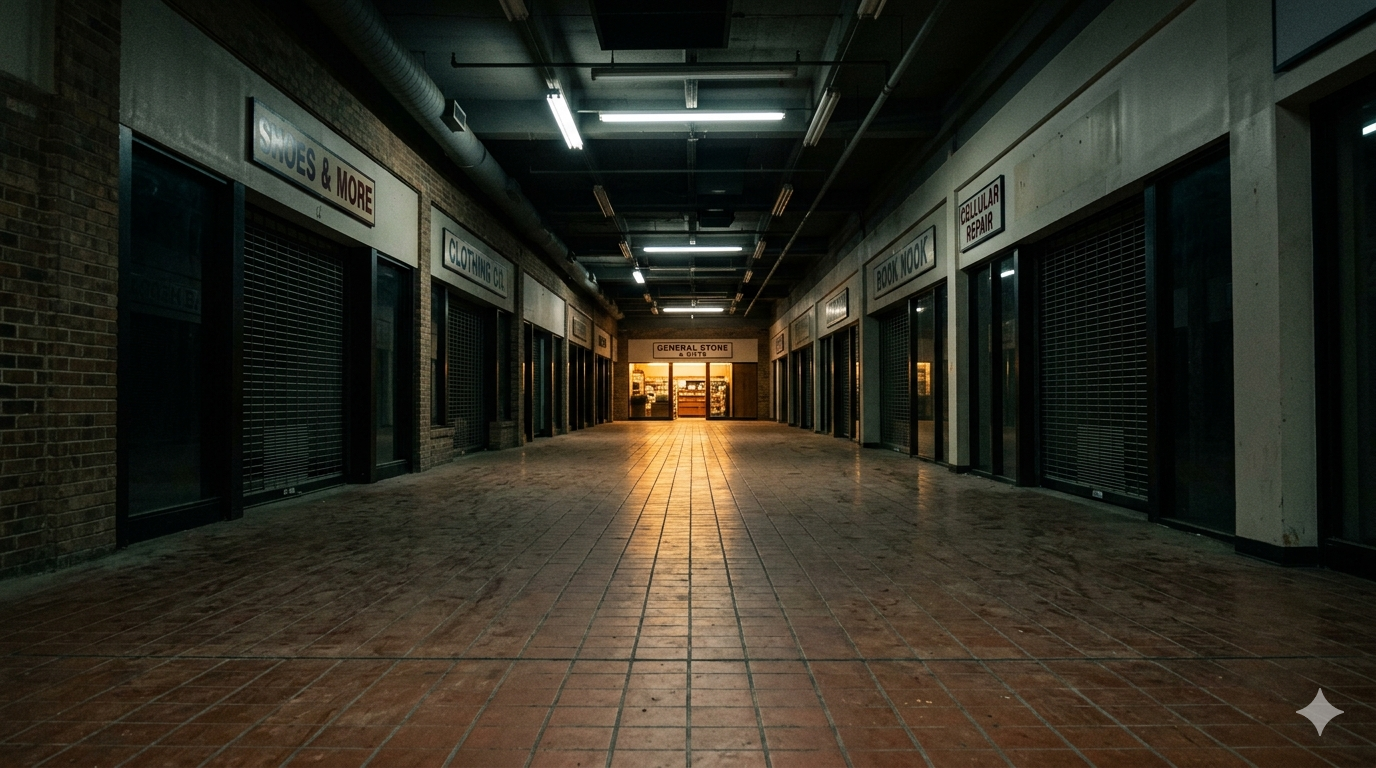
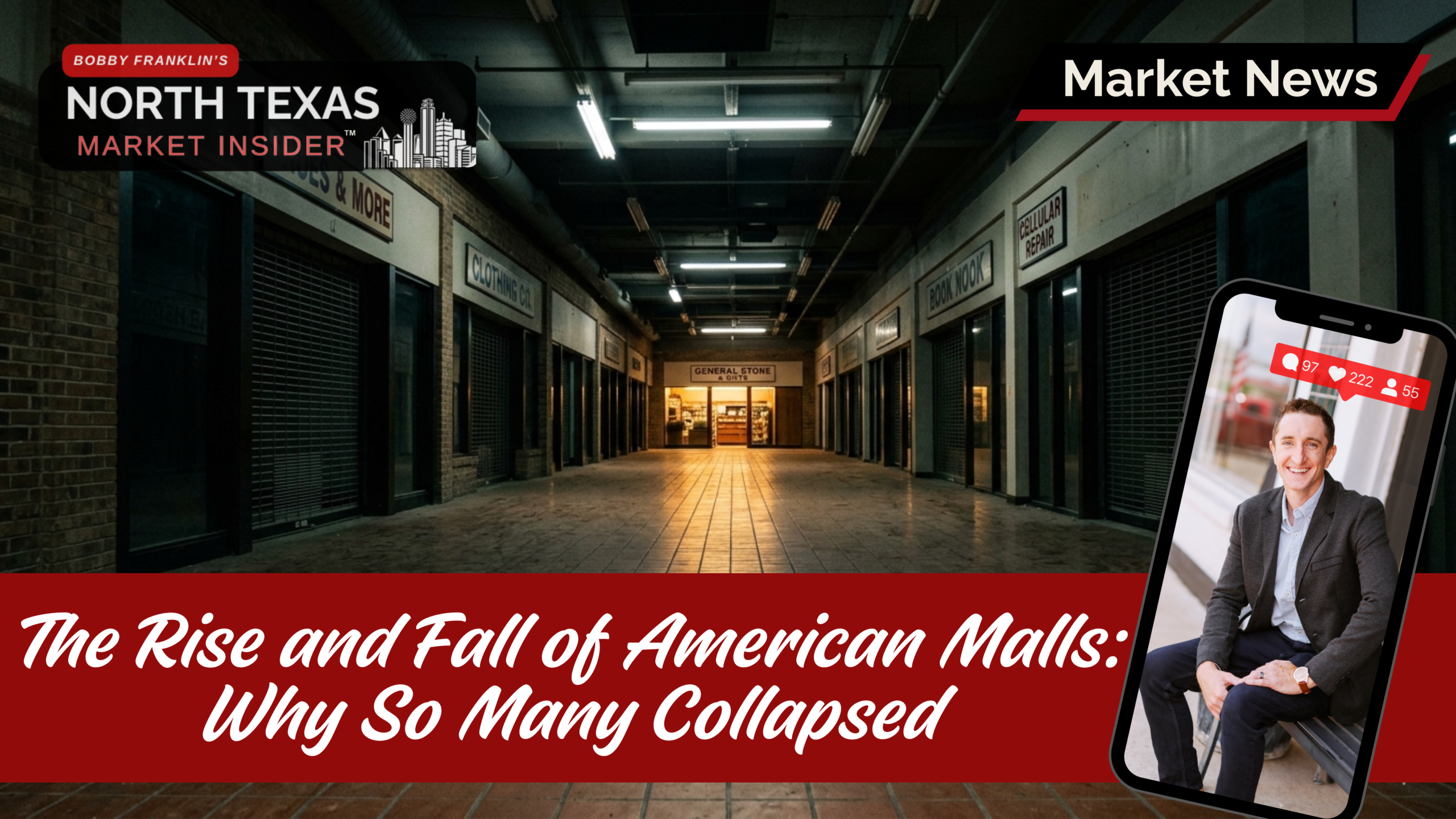
Walk through a dead mall and you’ll feel it before you see it.
The air sits wrong. The light is too bright where it shouldn’t be and too dark where stores used to carry the foot traffic that made everything feel alive. Your footsteps echo off tile that hasn’t seen a crowd in years. Food court chairs are stacked on tables and security gates are frozen halfway down. There’s a directory with names you remember from childhood, stores that don’t exist anymore, and a map that echoing the lost history and memories of those places.
If you grew up in the Dallas–Fort Worth Metroplex, this isn’t an abstraction. You watched Six Flags Mall in Arlington go from the largest shopping center in Tarrant County to a demolition site. You saw Valley View Mall near the Dallas North Tollway, a property that should have been printing money given its location, turn into a ghost town with only a single movie theater still clinging to life until 2022. You watched Collin Creek Mall in Plano close in 2019 after decades of slow-motion decline that everybody saw coming and nobody stopped.
Here’s what I want to tell you that those stories leave out: not every mall died. And understanding why some survived while others collapsed is one of the most instructive real estate intelligence stories in North Texas right now.
Because those dead mall sites? They’re being redeveloped and the neighborhoods around them are being repriced.
I’m going to take you through the entire arc; the golden age, the seeds of collapse, the recession that broke the model, the e-commerce disruption that finished the job, and what it means for property values and buying strategy in DFW today. This is the kind of analysis that doesn’t make the evening news until after the opportunity has already passed.
Let’s go.
Part One: The Golden Age That Was Already Ending Before Anyone Admitted It
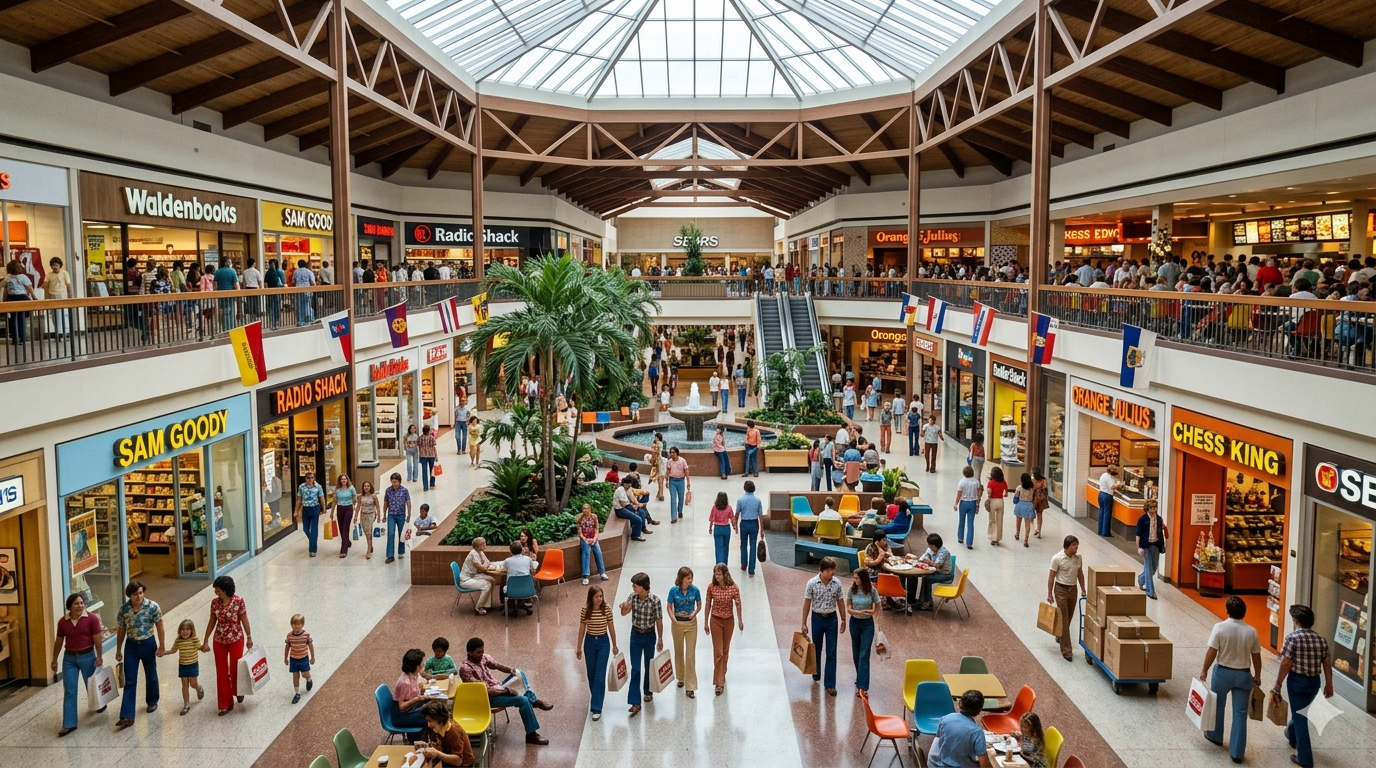
To understand how the collapse happened, you have to give the mall its due. This was not a flawed concept from the beginning, it was a genuinely brilliant solution to a genuinely real problem.
The first enclosed shopping mall in the United States opened in 1956. Climate-controlled, anchored by major department stores, designed around the reality of postwar suburban life where everything was spread across miles of car-dependent development. The mall solved a real logistical problem and became something far larger than logistics, it became a cultural institution. Between 1970 and 2002, over 800 shopping malls were built across the United States, and the industry transformed retail into one of the most powerful economic engines in the country.
At their peak, American malls generated an estimated $400 billion in local tax revenue annually. In most municipalities, the local mall was literally the single largest taxpayer. Think about what that means. Not the airport, not the hospital system, not the office park. The mall. These properties were generating revenue that funded schools, roads, and city services at a scale that nothing else in most suburban communities could match.
In North Texas, the mall boom tracked perfectly with the DFW population explosion. Forum 303 Mall and Six Flags Mall both opened in Arlington in 1970. NorthPark Center had been operating since 1965, already proving the concept before the national boom hit. Collin Creek Mall opened in Plano in 1981. The Parks at Arlington opened in 1988. Vista Ridge Mall in Lewisville in 1989. Stonebriar Centre in Frisco in 2000 and The Shops at Willow Bend in Plano in 2001. Which, as it turned out, was the last major enclosed mall to open in the entire DFW Metroplex.
That last sentence matters. The very year The Shops at Willow Bend opened its doors, the forces that would eventually destroy a third of American malls were already gathering steam. The industry just wasn’t willing to acknowledge them yet.
Part Two: The First Mistake Was Made Before Amazon Existed
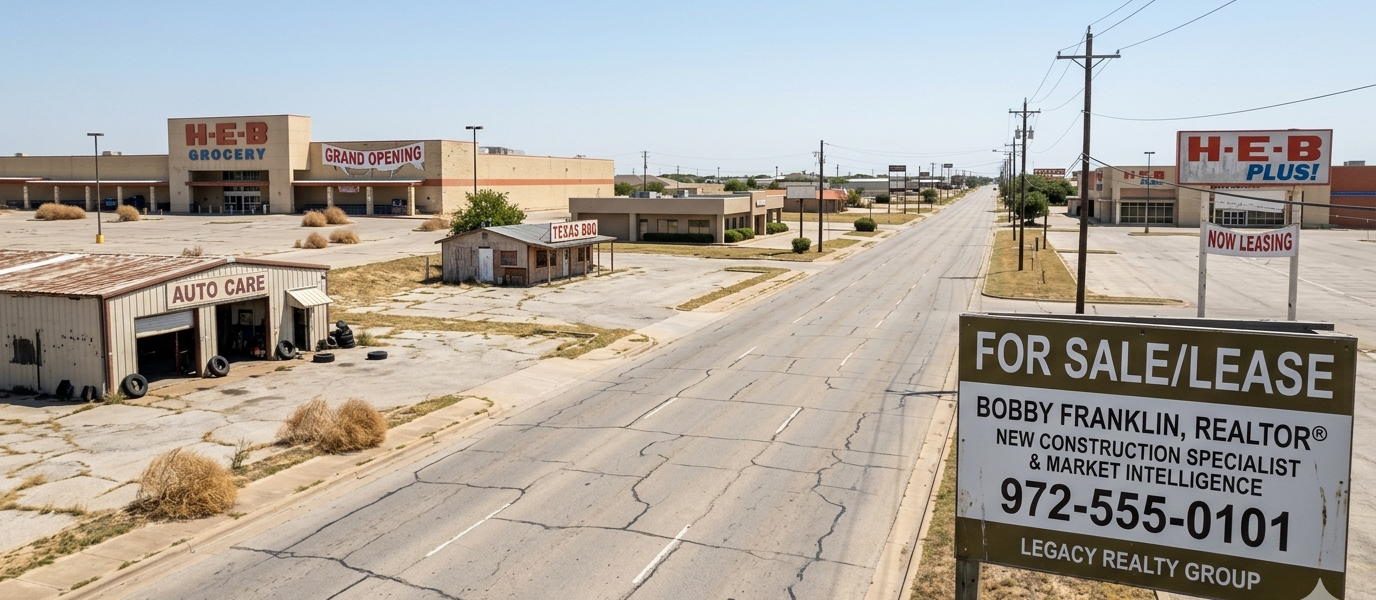
Here’s the part of the mall collapse story that most people miss because they want a simple villain and Amazon makes a convenient one. The truth is actually a lot more uncomfortable.
The mall industry destroyed itself before e-commerce had the chance.
Easy credit in the 1980s and again in the early 2000s fueled a construction boom that had already outpaced population growth in dozens of markets by the time the internet became a shopping destination. The industry wasn’t building malls because demand required them, it was building malls because capital was cheap and developers could. Those are two very different things, and confusing them is how you end up with two massive shopping centers 2.4 miles apart serving the same market.
Arlington in 1970 was a city of roughly 92,000 people. Forum 303 Mall and Six Flags Mall both opened that year, within a short drive of each other on Highway 360. Both would go on to anchor the area for decades, but neither could fully escape the gravity of their own competition. So when The Parks at Arlington arrived in 1988, the market simply couldn’t support all three.
E-commerce back in 2000 accounted for just 0.8% of total retail sales. By Q3 2025, that number had grown to 16.4% according to Federal Reserve Economic Data which is a massive shift, but not an overnight one. The problem is that many malls were already structurally fragile before online shopping became dominant. E-commerce didn’t create the vulnerability, it exploited a vulnerability that overbuilding had already created.
The numbers tell the story plainly. The number of U.S. regional malls peaked in 2006 at 1,522, with nearly 1.4 billion square feet of gross leasable area. By 2023, that number had fallen to 1,148 malls and 1.0 billion square feet. Meaning that in roughly 17 years, American malls shed nearly 400 million square feet. The last new traditional enclosed mall in the United States was completed in 2014. Signaling not just a slowdown, but a categorical, near permanent end to mall construction as a business model.
What does this tell you as a real estate investor or buyer in North Texas? It tells you that the properties left standing, the malls that survived the consolidation, are genuinely durable assets in genuinely durable locations. The market performed a brutal selection process over two decades. But, what’s left isn’t struggling, it’s anchored, stable and well positioned.
Part Three: 2008 – The Recession That Broke the Model
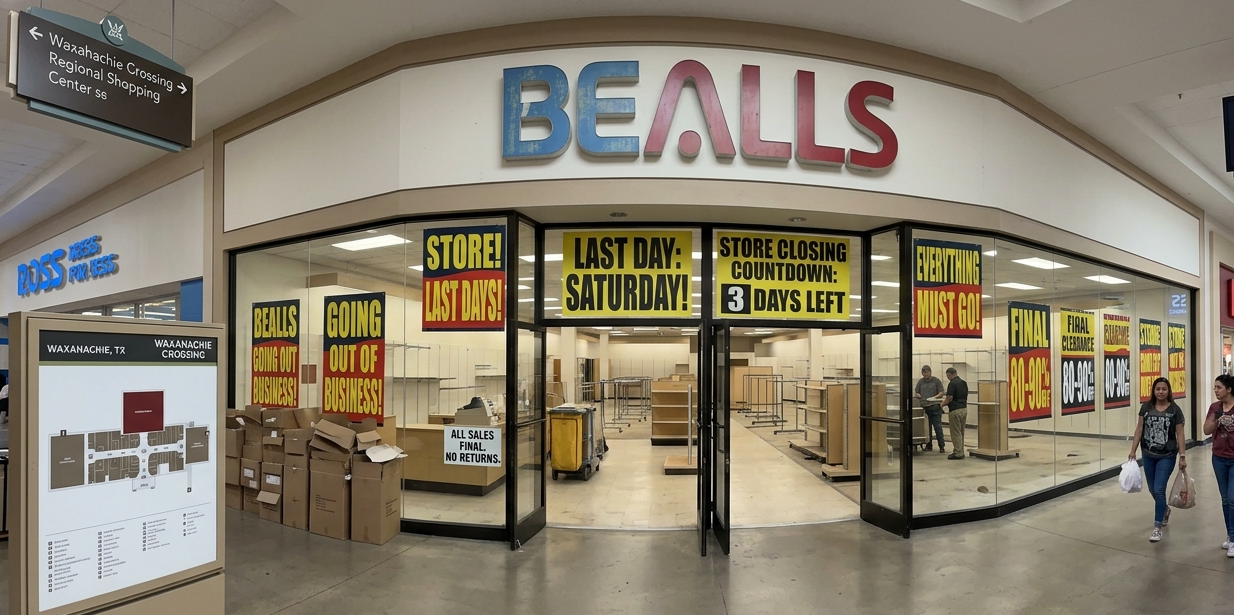
If overbuilding was the slow disease, the 2008–2009 financial crisis was the acute infection that triggered system-wide failure.
Retail sales dropped to 35-year lows when the economy crashed and consumers severely slowed spending. Department stores, the anchor tenants that gave malls their identity and their foot traffic, began hemorrhaging revenue in ways that had never happened before in the modern retail era.
Look at the September 2008 same-store sales numbers: Stein Mart dropped 14.8%. Dillard’s fell 12%. J.C. Penney plunged 12.4% and Nordstrom declined 9.6%. These weren’t minor fluctuations. These were generational collapses happening in a single quarter, where retailers that had operated profitably for decades suddenly couldn’t make payroll without going deep into discounting. Consumers who had never thought twice about paying full price discovered that almost everything was available on sale and once they learned that, they never forgot it.
For mall landlords, the immediate crisis was capital. Landlords had trouble securing financing and refinancing debt at exactly the moment they needed it most. Tenants were defaulting on leases and foot traffic was collapsing. The vacancy feedback loop: the phenomenon where fewer stores means fewer visitors which in turn means even fewer stores, had officially begun. Once that vacancy feedback loop starts, it’s nearly impossible to reverse.
Then came the bankruptcies. The list of retail casualties over the decade that followed reads like a corporate obituary column. Sears was once the most powerful retailer in American history with 3,500 locations at its peak and it eventually collapsed to just 12 stores. J.C. Penney shrank from 2,053 stores to 663. Kmart went from 2,486 locations to 8. Circuit City, Linens ‘N Things, Borders Books and Music, Toys R US, Payless ShoeSource, Charlotte Russe, Forever 21 and Pier 1 Imports. The list unfortunately keeps going and every single name on it represents not just closed stores but removed anchor tenants who were the load-bearing walls of the American mall model.
When your anchor tenants close, you don’t just lose their square footage. You lose the gravitational pull that brought every other customer through the door. A Sears closing in a regional mall doesn’t take 15% of foot traffic with it. It can take 40%, because the Sears shopper was also the person stopping at the food court, the shoe store, and the cell phone kiosk on the way out.
For DFW malls specifically, this era marked the beginning of visible, undeniable decline. Music City Mall in Lewisville, formerly Vista Ridge Mall(which I grew up visiting), watched as its national chain tenants began departing in the mid-2010s when the brand consolidations hit. By 2017, the mall was approximately 30% vacant. Six Flags Mall in Arlington fell into foreclosure in 2008 with only a handful of stores remaining. The writing wasn’t just on the wall anymore, it became the wall.
Part Four: Amazon and the E-Commerce Disruption – 30% of Mall Inventory Gone
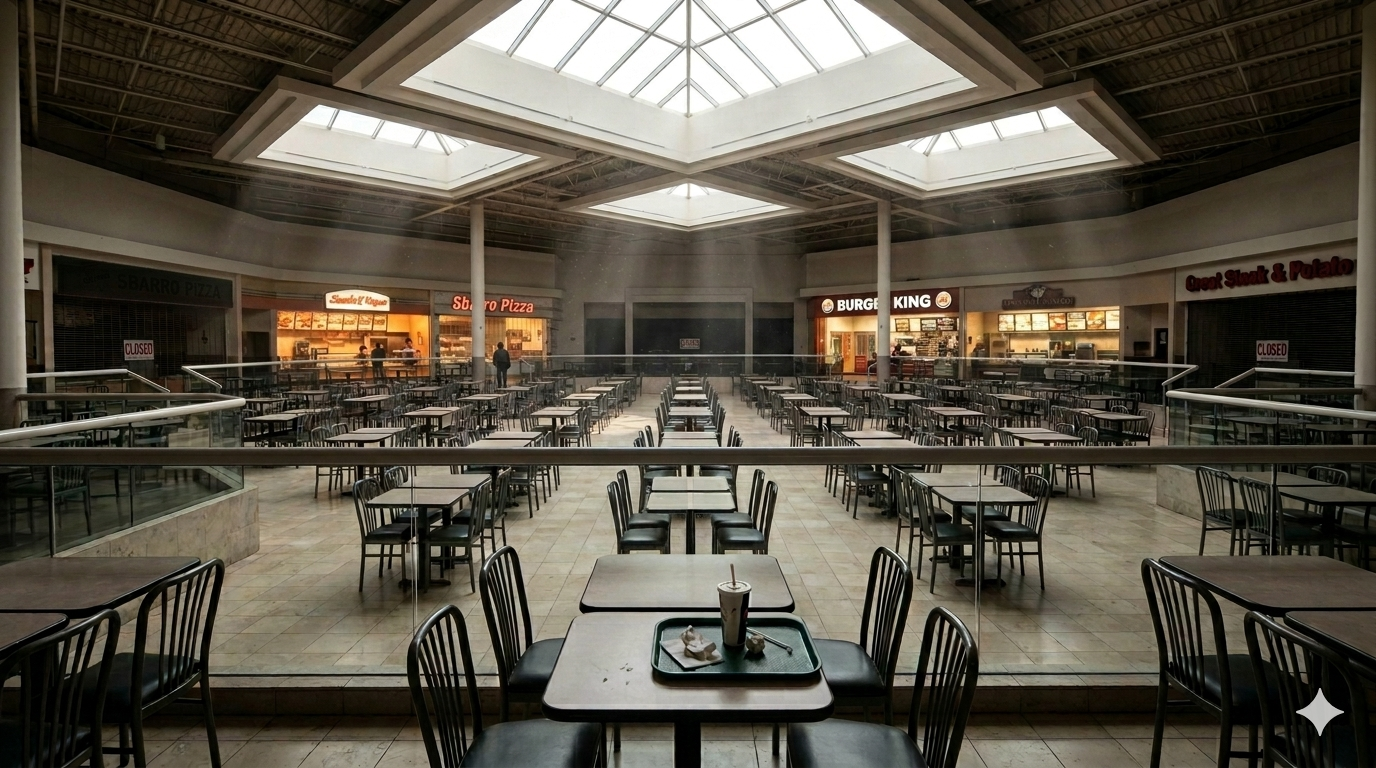
Even as the economy recovered from the Great Recession, a second disruption was accelerating and unlike the 2008 crash, this one wasn’t cyclical. It wasn’t a crisis you could wait out. It was a permanent behavioral shift in how Americans shopped.
The “retail apocalypse” headlines started appearing around 2017, and for once, the media wasn’t being hyperbolic. In 2017 alone, more than 12,000 physical retail stores closed across the United States. Not over a decade. In one standalone year.
The vacancy impact on regional malls was severe and structural. The national mall vacancy rate, which had historically averaged between 5% and 6%, surged to nearly 12% at its post-pandemic peak. Moody’s Analytics documented that mall vacancy rates had already hit 20-year highs before COVID ever arrived. The pandemic didn’t create the mall crisis. It simply compressed five more years of decline into eighteen months.
Approximately 750 anchor vacancies opened up across U.S. malls, concentrated heavily in Class B and Class C properties. These were the mid-tier and lower-tier malls(Vista Ridge Mall or Collin Creek Mall) that had always operated on thin margins, dependent on one or two big anchor names to justify their existence to smaller tenants. Once those anchors departed, through bankruptcy, consolidation, or simple relocation to stronger properties, the domino effect was almost always fatal.
This is where the story in North Texas gets genuinely interesting, because DFW didn’t lose all of its malls. It lost its weakest ones, and what’s left tells a very specific story about what makes a retail property durable enough to survive generational disruption.
Part Five: The DFW Malls That Fell – A Case Study in What Doesn’t Survive
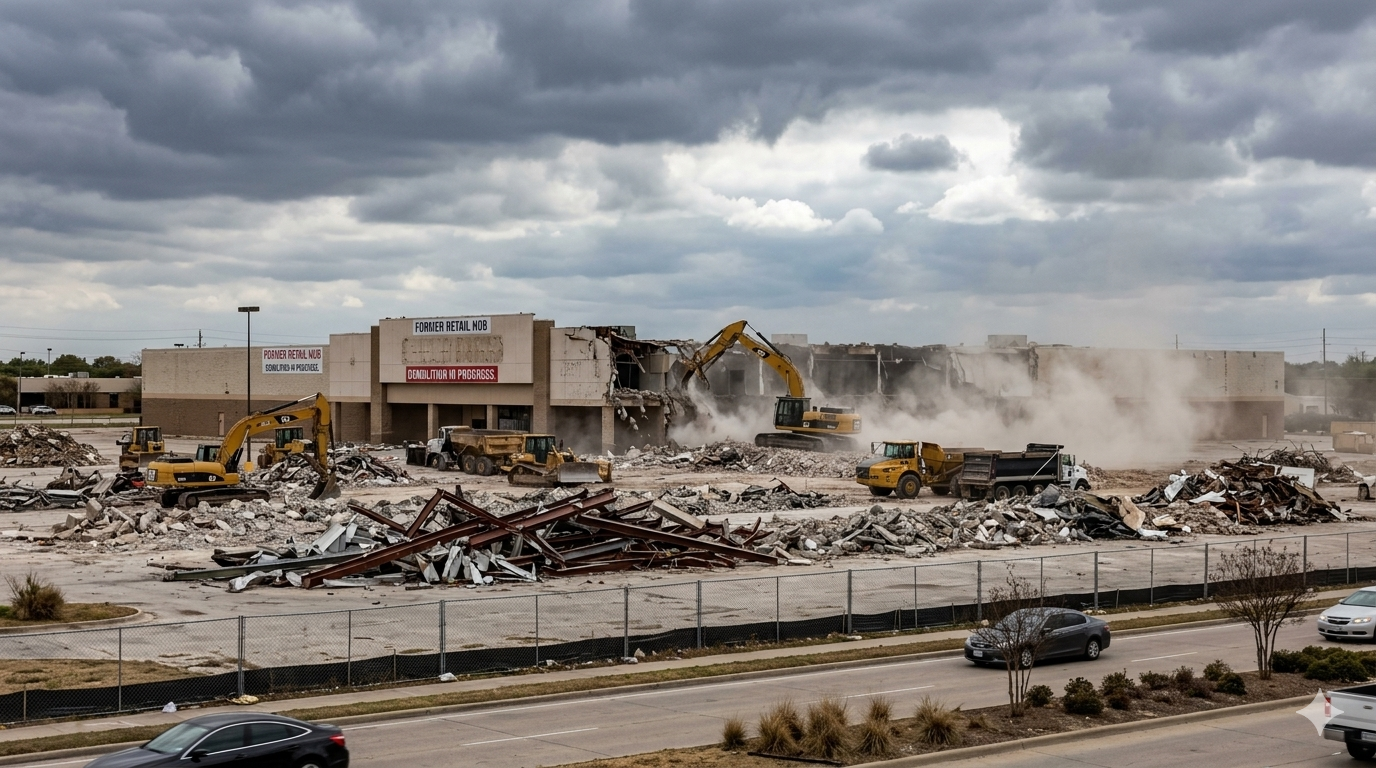
Let me take you through the North Texas casualties specifically, because the pattern matters for understanding what comes next.
Six Flags Mall, Arlington. Opened 1970 at over a million square feet. Anchored by Sears, Montgomery Ward, and Mervyn’s at its peak. By the 2000s, it had become a ghost mall with low-end tenants, declining foot traffic and a neighborhood that had shifted around it. It fell into foreclosure in 2008 was slowly demolished in stages and today that site is being repurposed into an industrial complex. The lesson: location alone doesn’t save you. The retail experience has to continuously evolve or the neighborhood evolves around you and leaves you behind.
Forum 303 Mall, Arlington. Opened the same year as Six Flags Mall, two miles away, on the same highway. The two properties were in direct competition from day one. Forum 303 eventually transitioned into a flea market format before significant portions were demolished. The lesson: you cannot build two identical concepts in the same trade area and expect both to survive long-term. The market will almost always pick one winner.
Valley View Mall, Dallas. This one hurts to analyze because the location of being near the Dallas North Tollway, surrounded by some of the most affluent zip codes in the state, should have been bulletproof. But Valley View spent the 2000s and 2010s watching NorthPark Center, less than four miles away, absolutely dominate the luxury retail market while Valley View’s tenant roster declined in quality and appeal. A mall doesn’t just compete with e-commerce. It competes with other malls and Valley View lost that competition decisively. The site is now slated for major mixed-use redevelopment.
Collin Creek Mall, Plano. Opened 1981, closed 2019. Collin Creek’s story is straightforward oversaturation. It sat in a trade area that eventually got surrounded by newer, higher-quality retail options. The Shops at Legacy, Stonebriar Centre, and the broader Legacy corridor development gave Plano shoppers better alternatives, and Collin Creek simply couldn’t compete. The site is now in the early stages of redevelopment into a mixed-use district.
Music City Mall, Lewisville. Formerly Vista Ridge Mall(for all you 90’s kids like me) rebranded and attempted a country music and entertainment pivot that never gained traction. By 2017, vacancy sat around 30%, and the trajectory never reversed.
The through-line in every one of these stories is the same: the malls that fell were either poorly located, oversaturated by competition, or failed to evolve their experience in ways that gave people a reason to show up in person. They were commodity retail destinations in a world where commodity retail had moved online.
Part Six: The DFW Malls That Survived – And What They Have in Common
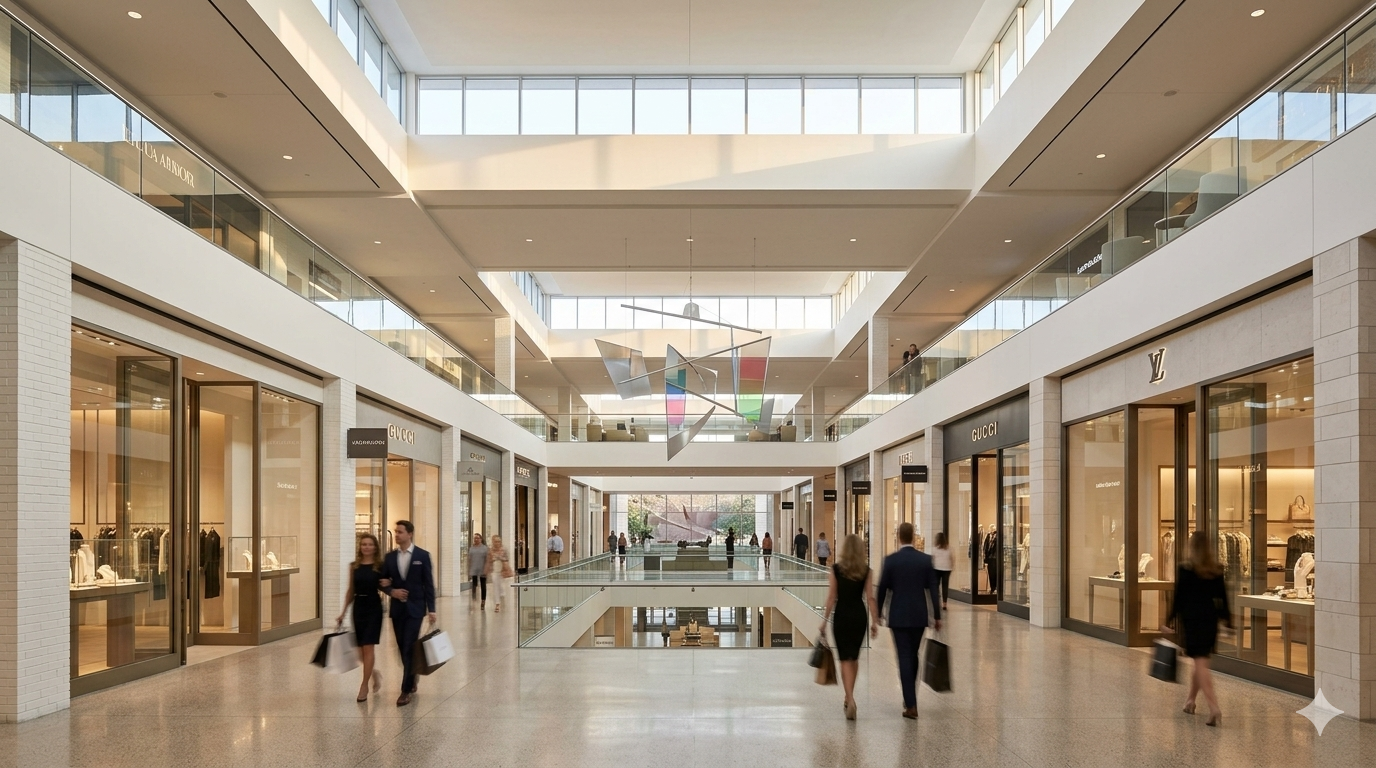
Now here’s where the real intelligence is.
Because not every North Texas mall collapsed. Several not only survived, they actually thrived and the reason why tells you something essential about what creates durable real estate value in a post-Amazon world.
NorthPark Center. One of the most successful malls in the United States, full stop. NorthPark’s survival strategy was never about having the most store. From day one it was about creating an experience that justified the trip. The mall functions as a legitimate art gallery alongside its retail, with rotating exhibits and permanent installations from artists like Andy Warhol and Frank Stella. It curated its tenant roster relentlessly upward, not sideways. The lesson: when you’re competing with the convenience of e-commerce, you win by being irreplaceable. Not by being cheaper or bigger, but by being worth the experience of showing up.
Stonebriar Centre, Frisco. The last major enclosed mall to open in DFW, and one of the few that opened into exactly the right demographic trajectory. Frisco went from 33,000 residents in 2000 to over 200,000 today. Stonebriar didn’t just survive the mall collapse, it benefited from the consolidation, because as weaker competitors closed, their tenants migrated to properties that were still drawing foot traffic. Location and demographic momentum are not things you can manufacture after the fact.
Firewheel Town Center, Garland. A different model entirely: open-air, mixed-use, designed around walkability rather than the enclosed mall concept. Firewheel succeeded in part because it looked nothing like the malls that were dying. The open-air format became aspirational as enclosed malls declined, and it attracted a tenant mix and a customer experience that felt both contemporary and unique.
The Parks at Arlington. The survivor of the Arlington mall wars. It outlasted both Six Flags Mall and Forum 303 by being the newest and most complete of the three, and it has continued to adapt its tenant mix as the market shifted.
What do the survivors have in common?
- Premium location with genuine demographic support
- An experience that can’t be replicated on a phone screen
- Constant, intentional curation of the tenant mix rather than passive acceptance of whoever would sign a lease.
These weren’t lucky malls. They were better-positioned malls that also made better decisions over time.
Part Seven: What Happens to a Dead Mall Site and Why It Matters for Property Values
Here’s where I want your full attention as a buyer or investor in North Texas, because this is the part that actually affects your decision-making.
Dead mall sites don’t just sit empty forever. They get redeveloped and when they do, the redevelopment creates an entirely new real estate dynamic in the surrounding neighborhood.
The national trend in dead mall redevelopment has moved decisively toward mixed-use. Former enclosed mall properties across the country have been converted into apartment communities, medical campuses, fulfillment centers, hotels, office parks, and entertainment districts. The average cost of redeveloping a defunct mall exceeds $50 million, and the timelines routinely stretch five to ten years from initial demolition to completed mixed-use project.
What that means practically: neighborhoods that have been living adjacent to a dead or dying mall are often positioned for a significant repricing event when redevelopment breaks ground. The dead mall has been functioning as a property value suppressor. A source of neighborhood blight, reduced foot traffic to surrounding businesses, and an aesthetic drag on the surrounding area. When a quality mixed-use development replaces it, all of those negatives flip.
In North Texas, several of these redevelopment plays are either underway or in planning stages right now. Valley View Mall’s site has been proposed for a massive mixed-use redevelopment called Midtown Dallas. Collin Creek’s site is moving toward a mixed-use district. Former retail corridors that hosted dying strip centers adjacent to dead malls are being re-evaluated by developers who understand the opportunity.
If you are looking at neighborhoods in the DFW Metroplex that sit adjacent to former major mall properties, you should be evaluating the redevelopment timeline before you make any decision about whether to buy. The market doesn’t price that information in until the construction cranes are visible. That’s when prices move and you want to be positioned before the cranes show up, not after.
Part Seven (Deep Cut): The Specific Redevelopment Plays Happening Right Now in DFW
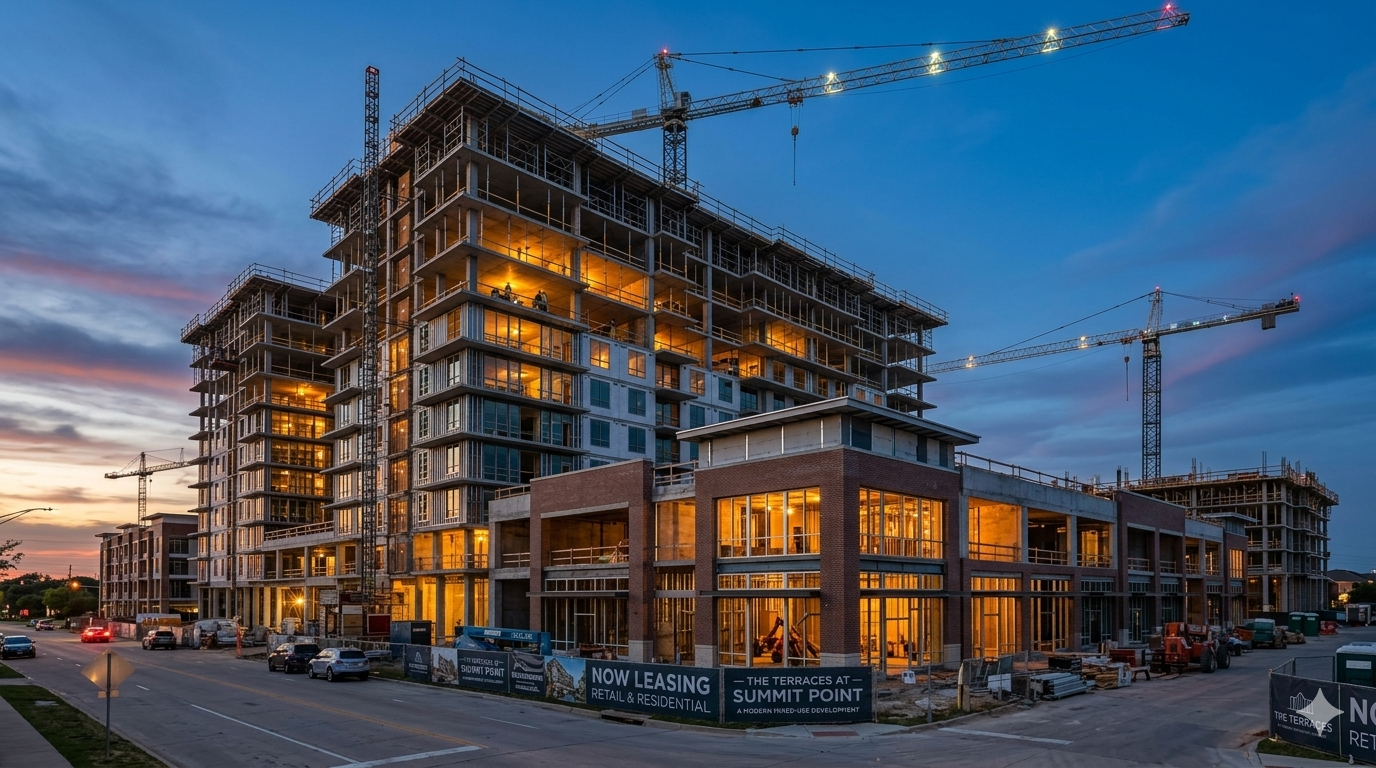
This is the section most real estate content never gives you, because most agents don’t track it until the cranes are already up and the market has already moved. Here’s exactly what’s happening right now, site by site, with real project names, real developers, and real timelines.
Dallas Midtown – the former Valley View Mall site, I-635 and Preston Road
This is the biggest and most complex redevelopment story in DFW right now, and it has been unfolding at different speeds for over a decade.
Valley View Center Mall’s demolition was completed in May 2023, finally clearing a site that had been in limbo for years. Beck Ventures CEO Scott Beck announced a $4 billion master-planned development called Dallas Midtown, with the first phase – an $80 million mixed-use building including 275 luxury apartment units, 26,000 square feet of ground-level retail, and 10,000 square feet of amenity space – targeted for construction.
Here’s what makes this site genuinely significant beyond the headline numbers: Dallas Midtown is part of the city’s 450-acre International District, located north of I-635 and east of the Dallas North Tollway. City voters approved a bond proposition that put $20 million toward the district, and an automated tram system connecting the site to the Dallas Galleria would be funded in part by a $10 million grant from the North Central Texas Council of Governments.
The equity structure is not what you’d expect for a Dallas apartment project. Beck Ventures and Anthem Development are partnering with PLT America, a joint venture of Toyota Motor Corp. and Panasonic Holdings Corp., for equity on Phase 1. The six-story Premier at Dallas Midtown project broke ground in November 2025 and is expected to open in 2027.
Toyota and Panasonic both bringing equity into a mixed-use apartment project in North Dallas is not a small development story. That’s a signal about how international capital views this corridor.
For the housing market in the surrounding neighborhoods of Midway Hills, Preston Hollow adjacent areas and the Inwood corridor, the question is not whether this reprices the area. It’s whether you want to be in position before a $4 billion development opens its first residential building in 2027 or after.
Collin Creek Community – the former Collin Creek Mall site, Plano
This one is further along in execution than most people realize. The $1 billion Centurion American redevelopment of the former Collin Creek Mall in Plano launched residential move-ins in October 2024, with homes ranging from 1,522 to 2,413 square feet starting at $479,990. Builders Ashton Woods, Brightland Homes, and Mattamy Homes are handling a planned 500 single-family residences, with more homes expected throughout 2025.
The full build-out includes more than 1 million square feet of office space, around 300,000 square feet of retail and restaurants, hundreds of hotel rooms, and public parks all developed in partnership between Centurion and the city of Plano.
The school district angle here is significant for relocating families. Homes are zoned for Plano ISD, including the district’s new Career and Technical Education Center featuring a cybersecurity curriculum made possible by a Toyota Motor North America donation. That campus is under construction and scheduled to open before the 2026-27 school year.
Plano ISD is already one of the most sought-after school districts in Texas. Add a brand-new mixed-use walkable district with $1 billion in infrastructure investment, and you have a neighborhood story that will be driving buyer demand in Plano for the next decade. The question for buyers considering this area: are you pricing in the full trajectory of what this site becomes, or just what it is today?
The Vista – the former Vista Ridge Mall / Music City Mall site, Lewisville
This one is the most instructive example of what “redevelopment in process” looks like when the development agreement isn’t done yet, because it tells you exactly how to identify the stage of an opportunity.
In March 2023, the Lewisville City Council revealed concept drawings for a mixed-use redevelopment that would preserve the Cinemark, Dillard’s Clearance, Zion Market, and the original glass atrium, while proposing residential, retail, and dining spaces in newly constructed zones. In May 2024, Lewisville voters approved a bond measure 77 percent in favor, including $32 million for street construction, utilities, drainage, erosion control, and related engineering work around the mall’s perimeter.
The bond money removes a bottleneck. It doesn’t guarantee construction contracts or a groundbreaking date, those still depend on a development agreement between the city and the property’s current owners. As of early 2025, 1000 South Vermont LLC was still working with architects and engineers to adjust earlier plans, and no development agreement was on record.
The developer’s vision calls for a $200 million mixed-use redevelopment including multi-family, office, retail, and entertainment on a site that sits on I-35E with exceptional regional visibility and access.
What this tells a sophisticated buyer: The Vista site is earlier in the redevelopment pipeline than Dallas Midtown or Collin Creek. Voter-approved infrastructure funding is in place and the city has named it a top priority, but, a development agreement has not been executed. This is not a warning sign, it’s a timeline signal. Properties in the surrounding Lewisville corridors haven’t yet priced in the full redevelopment premium that will arrive when a shovel goes in the ground.
Six Flags Mall, Arlington – the one that went a completely different direction
I want to include this one specifically because it illustrates something important: not every dead mall site follows the mixed-use playbook.
The Six Flags Mall site was rebuilt as industrial space to accommodate suppliers to the GM auto assembly plant. The Arlington City Council approved tax incentives for the development of 1.2 million square feet of industrial space, creating what became the Arlington Logistics Center supporting General Motors’ operations. The project is expected to support up to 1,800 employees at buildout.
This is a fundamentally different kind of neighborhood story than Dallas Midtown or Collin Creek Community. Industrial logistics doesn’t generate walkable neighborhood amenities. It generates employment density and economic activity, which has its own effect on the surrounding residential market, but it’s a different buyer profile and a different appreciation story. Understanding which redevelopment type is coming to a specific former mall site is exactly the kind of intelligence that changes a buying decision.
Part Eight: What This Means for Your Real Estate Strategy Right Now
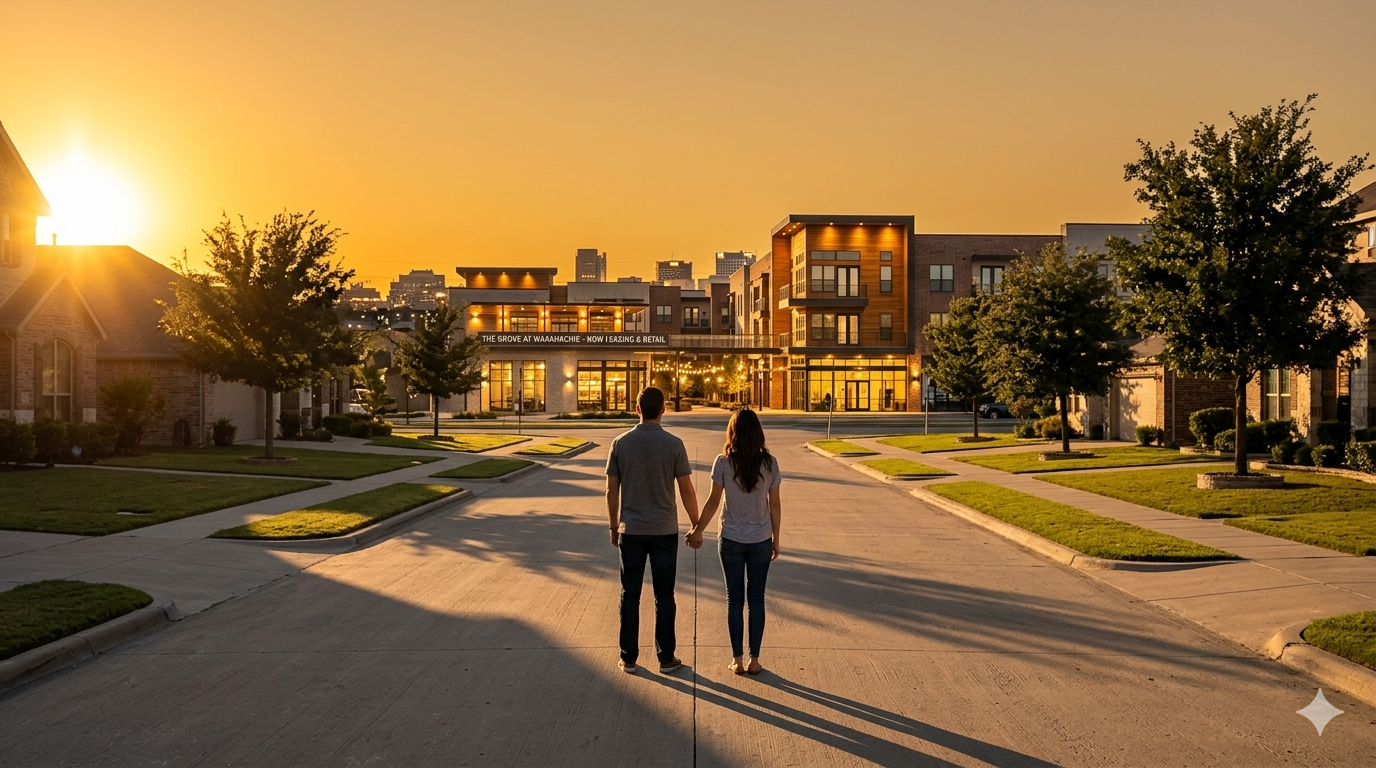
I want to give you the three things I’d want to know if I were evaluating a purchase anywhere in the DFW Metroplex in the current market:
First: Understand what replaced what. The neighborhoods that lost second and third-tier malls are not permanently damaged. They’re in a redevelopment queue. If a site has been sitting vacant for five years with no approved redevelopment plan, the timeline is uncertain. If there’s an approved mixed-use project with financing in place and a groundbreaking in the next 12–18 months, you want to be paying attention to the surrounding residential market right now.
Second: The surviving malls are location anchors. Properties near NorthPark Center, Stonebriar Centre, and The Parks at Arlington carry a retail amenity premium that isn’t going anywhere. When you’re evaluating a home purchase and the comp analysis shows a price gap between similar properties, the access to a functioning, high-quality retail anchor is often a factor that doesn’t show up explicitly in MLS data but absolutely shows up in buyer demand and days on market.
Third: The mixed-use future is being built right now. The next generation of retail in North Texas is not enclosed malls. It’s walkable mixed-use districts, open-air lifestyle centers, and entertainment-anchored retail experiences that offer something a phone cannot. The developments going into former mall sites and former big-box corridors across DFW are being designed with residential components built in, which means the neighborhoods they create are going to carry a walkability and amenity premium that traditional suburban development simply cannot match.
If you are relocating to North Texas, from California, Colorado, Arizona, Washington, or anywhere else, and you want the full intelligence picture on what’s happening in specific corridors before you commit to a neighborhood, that is exactly what I do. Not surface-level market statistics. Actual analysis of what’s being built, what’s being approved, what’s in the permit pipeline, and what it means for property values over the next three to seven years.
The Bottom Line: Chaos Creates Opportunity – If You Know Where to Look
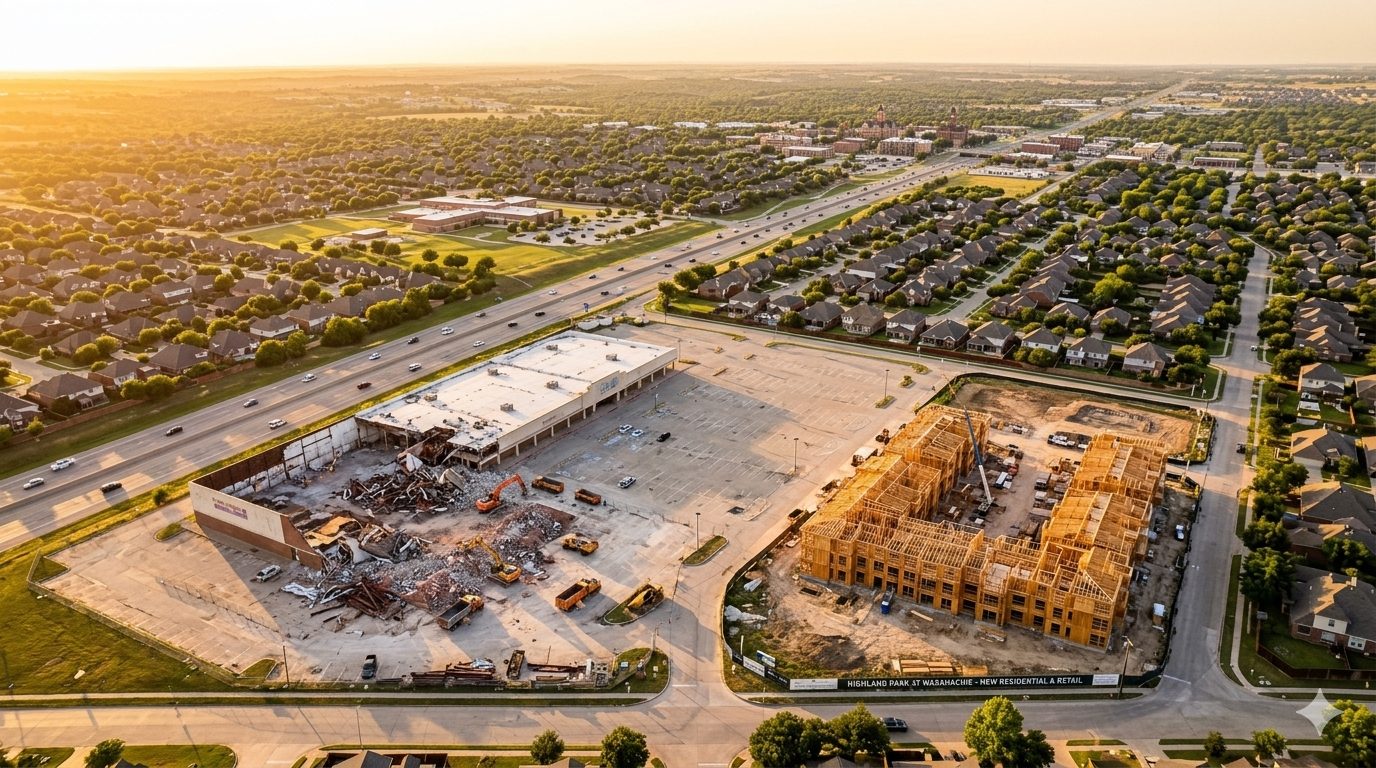
The collapse of the American mall is, on the surface, a story about retail disruption and economic change. But for North Texas real estate, it’s something more specific and more actionable: it’s a story about which neighborhoods are about to be repriced.
Dead mall sites are not a permanent blight. They are redevelopment opportunities on a timeline. The neighborhoods adjacent to them have been suppressed by the blight effect of a failing anchor property, and when quality mixed-use development moves in, that suppression ends. Prices move. Sometimes significantly.
The investors and buyers who understand this are already looking at these corridors. The ones who wait for the mainstream real estate coverage to acknowledge the opportunity will be paying the post-repricing price.
I track this stuff because it’s my job to know it before it becomes obvious. If you want to have this conversation about a specific neighborhood, a specific corridor, or a specific acquisition you’re evaluating in South DFW or Ellis County, reach out or schedule a consultation. This is the kind of conversation I actually enjoy.
Ready to make a move in North Texas? Here’s how to reach me:
Bobby Franklin, REALTOR® | Legacy Realty Group – Leslie Majors Team
📲 214-228-0003 | northtexasmarketinsider.com
Working with a lender? I work with three of the best in North Texas and recommend them equally, each brings something different to the table depending on your loan scenario:
- Andrew Bryan — Miramar Mortgage | miramarmortgage.com
- Jennifer Nelson — Eustis Mortgage | eustismortgage.com
- Taylor Fruge — Lower Mortgage | lower.com
I recommend these lenders based on their expertise and service. I do not receive compensation for referrals.
This content is for informational purposes only and does not constitute financial, investment, or legal advice. All real estate transactions involve risk. Consult with a licensed professional before making any real estate decisions. Bobby Franklin is a licensed Texas REALTOR® with Legacy Realty Group – Leslie Majors Team. Fair Housing: We are committed to the Fair Housing Act and welcome buyers and sellers of all backgrounds.