Listen, while your competition is waiting for the grand opening photos to flood social media, smart money is already positioning. North Texas is getting its first new state park in 25 years, and I’m going to tell you something most agents won’t: this isn’t just a park opening, it’s a fundamental market shift disguised as a ribbon-cutting ceremony.
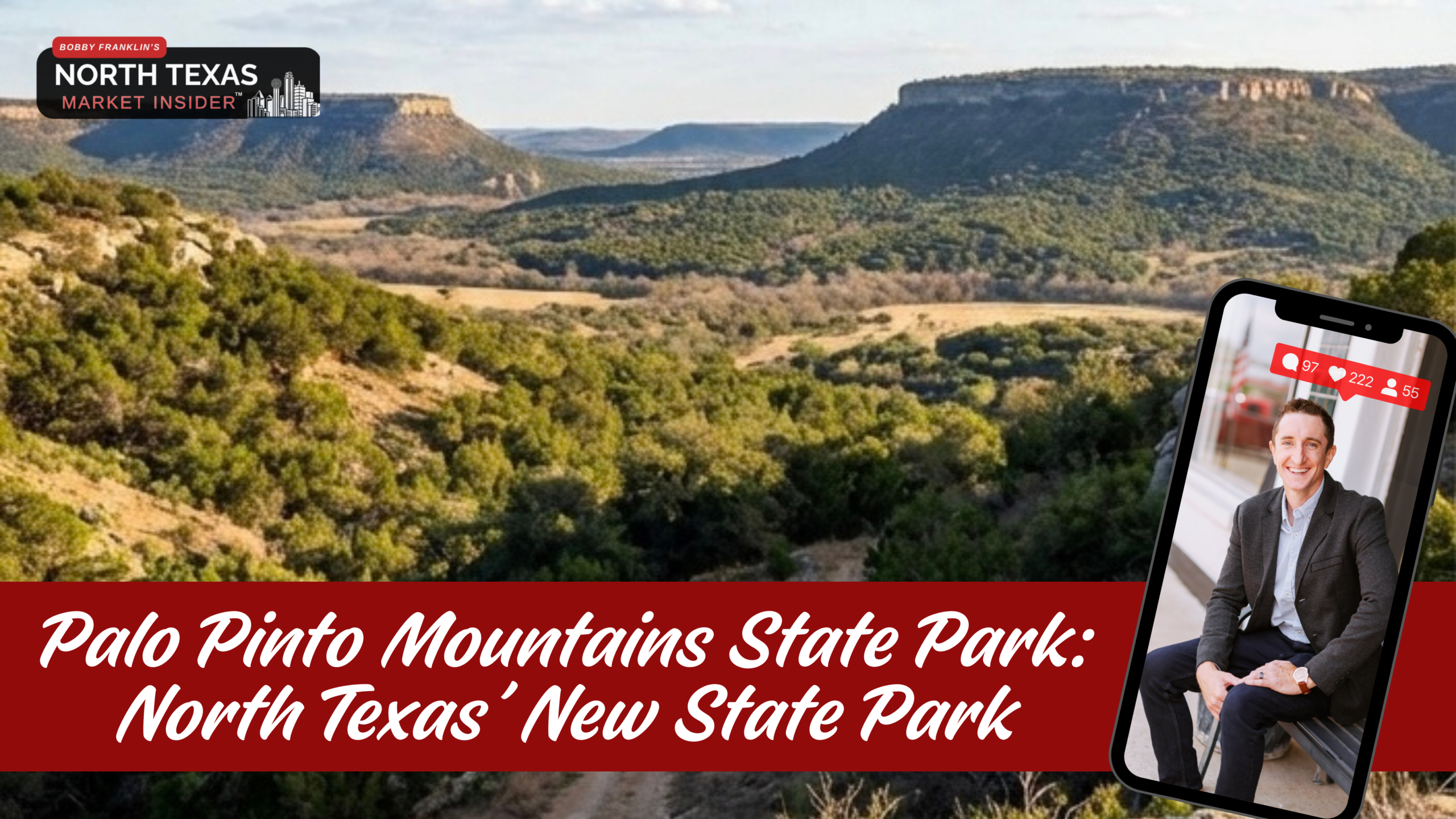
The state just dropped nearly $22 million on 4,871 acres of dramatic canyon landscape 80 miles west of Fort Worth. Palo Pinto Mountains State Park opens to the public sometime in 2026, and if you understand what research actually shows about park proximity premiums, not what people think happens, but what mathematically happens to property values, you’re looking at a window that’s closing faster than most people realize.
Here’s what’s about to happen: properties that are currently priced based on “rural North Texas near Fort Worth” are about to start pricing based on “convenient access to premier outdoor recreation.” That’s not speculation. That’s pattern recognition based on decades of real estate data from markets across the country.
Why This Park Opening Matters More Than You Think
I’m going to be direct with you: most real estate content about new amenities is garbage. It’s either real estate agents pretending to be excited about yet another development, or it’s chamber-of-commerce cheerleading that doesn’t actually help you make decisions with your money.
This analysis is different because I’m going to tell you what the data shows, what the strategic implications are, and why timing matters in ways that won’t be obvious until it’s too late.
The Hard Numbers: What Actually Opened on New Year’s Day
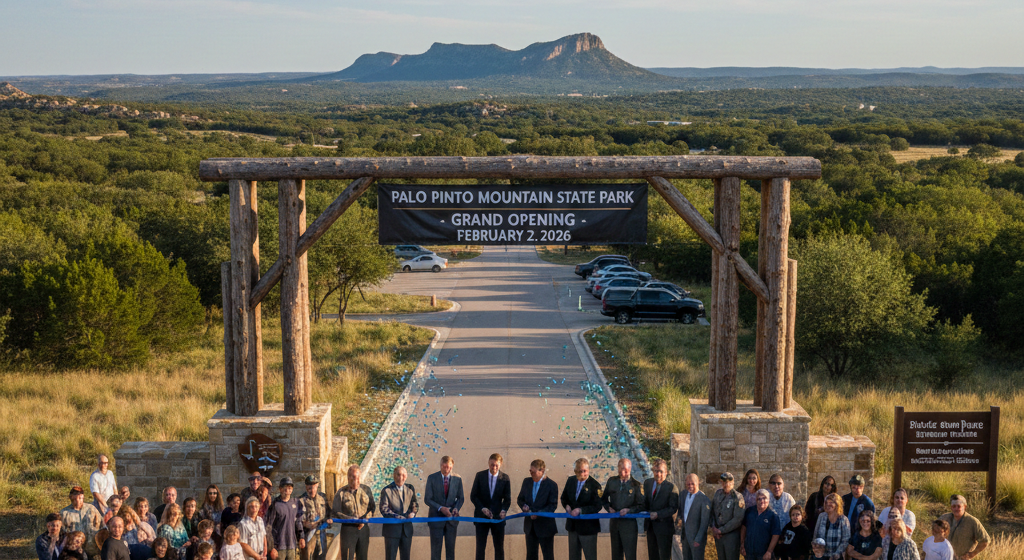
On January 1, 2026, hundreds of people got exclusive access to guided hikes through what Texas Parks and Wildlife describes as “baby mountains”, cuestas rising nearly 1,400 feet with sweeping vistas of canyons carved by wind and water over millennia. This wasn’t the grand opening. This was a strategic preview designed to build anticipation.
Texas Parks and Wildlife purchased the initial 3,300 acres back in October 2011 using proceeds from selling Eagle Mountain Lake State Park. The property has since grown to 4,871 acres straddling Palo Pinto and Stephens Counties, with Tucker Lake, a 90-acre donation from the city of Strawn in 2014, serving as the recreational centerpiece.
Construction officially began in 2021 after the Texas Legislature approved $12.5 million in state funding in 2019, complemented by up to $9 million in public and private funds raised by the Texas Parks and Wildlife Foundation. Original plans called for a 2023 opening, but COVID-19 supply chain disruptions and labor shortages pushed completion to 2026, which, strategically, creates the opportunity I’m going to outline.
What You’re Actually Getting When the Gates Open
Let me paint the picture of what’s been built here, because the scope matters for understanding visitor projections and subsequent real estate impact:
More than 16 miles of completed trails designed for hiking, mountain biking, and horseback riding, with additional mileage planned. These aren’t paved suburban walking paths, these are soft, earthen trails winding through largely undeveloped terrain that resembles Texas Hill Country despite being significantly north of that region.
Tucker Lake offers motor-free fishing, paddling, and canoeing on 90 acres of water. There’s already an ADA-accessible kayak launch and courtesy dock completed. No jet skis. No motorboats. This is the kind of peaceful water recreation that families and serious outdoor enthusiasts actually want.
Approximately 60 campsites will accommodate RV camping, tent camping, and a dedicated equestrian campground with horse-friendly amenities and direct trail access. The infrastructure that’s already finished includes the maintenance building, headquarters, interpretive center, pavilion, multiple restrooms, a bathhouse, playground, picnic sites, and walkways throughout day-use areas.
The landscape supports wildlife including the endangered golden-cheeked warbler, rare black-capped vireo, plus healthy populations of deer, wild turkey, and quail. Mixed-grass prairie, hardwood forests, and stands of live oak, mesquite, cedar elms, and native pecan trees create the kind of diverse habitat that keeps people coming back.
Texas Parks and Wildlife estimates 75,000 to 100,000 annual visitors once operations stabilize. That’s not a small number for rural North Texas. That’s a significant economic catalyst.
The Proximity Premium: What Research Actually Shows (And Why Most Agents Get This Wrong)
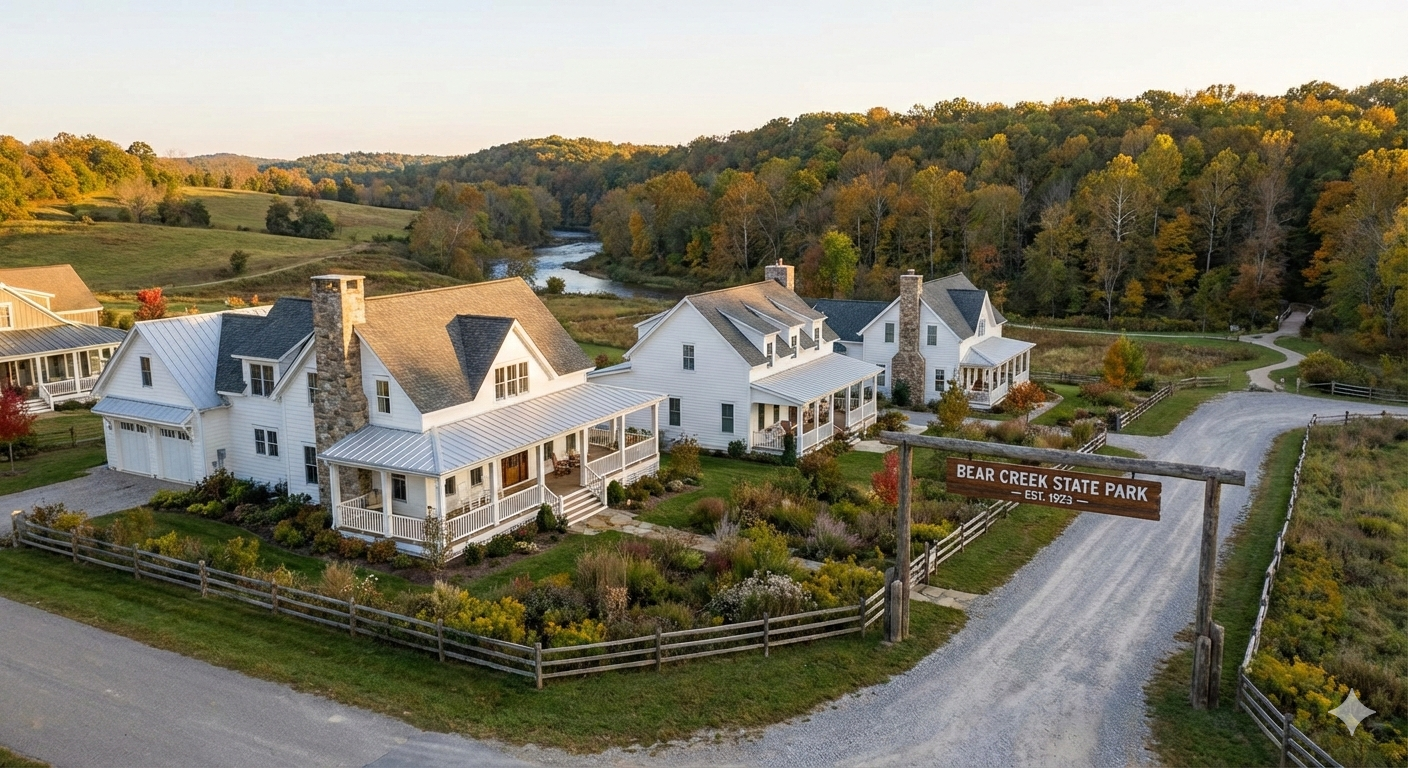
Here’s where we separate people who understand real estate economics from people who just have opinions about parks being “nice.”
Properties near parks don’t just feel more valuable. They mathematically are more valuable. And the premiums aren’t trivial.
The Data You Need to Know
Multiple peer-reviewed studies, the kind published in academic journals, not real estate marketing blogs, consistently demonstrate property value increases ranging from 8% to 20% for homes located near parks, greenways, or recreational areas compared to otherwise comparable properties.
But here’s the critical nuance most people miss: the magnitude of the premium varies dramatically based on specific factors.
Research from the Trust for Public Land shows that properties immediately adjacent to or fronting a passive park area see value increases of approximately 20% on average. Inner city homes within a quarter-mile show average increases of 10%. The premium generally diminishes as distance increases, though properties within a half-mile still capture measurable benefits.
Type and size matter significantly. Studies published in the Journal of Real Estate Finance and Economics demonstrate that large parks exceeding 20 hectares (approximately 50 acres) boost nearby property values by 6–7%, while smaller parks add less than 1%. Residences located next to long greenbelt areas ideal for hiking and biking have demonstrated value increases as high as 32% on average.
Park characteristics drive differential outcomes. Well-maintained passive parks with scenic qualities add more value than busy active recreation parks with constant activity and noise. Parks with natural features, mature trees, and water access command higher premiums than basic community playgrounds.
Real-World Examples That Prove the Pattern
This isn’t theoretical. Let me give you concrete examples:
Homes near Grand Teton National Park in Wyoming command dramatically higher valuations than typical homes elsewhere in the state. Philadelphia’s 10,000-acre park system adds significant assessed value to nearby homes, generating substantial ongoing property tax revenue. Similar analyses in communities across the U.S. show that even a single well-designed greenbelt can create millions of dollars in incremental property value.
Why does this happen? Because buyers aren’t stupid. They recognize genuine lifestyle benefits.
Research published in Environmental Health Perspectives demonstrates that natural environments like parks and forests provide measurable stress reduction compared to urban areas, with documented improvements in physiological stress markers. Proximity to parks and outdoor recreation has become an increasingly important factor in relocation decisions for both families and businesses.
Companies increasingly prioritize quality-of-life factors when selecting locations, recognizing that these amenities reduce employee turnover and foster stronger company culture. For families moving to North Texas, outdoor access consistently ranks among top priorities, particularly for parents who value safe spaces where children can develop healthy outdoor habits in an era where screen time has displaced outdoor activity.
Here’s the bottom line: When two homes are similar in price, location, and interior features, outdoor space and proximity to recreational amenities often become the deciding factor. That psychological reality translates into mathematical premium in the market data.
Current Market Conditions: The Window Is Open, But It Won’t Stay Open

Let me tell you what’s happening right now in communities near Palo Pinto Mountains State Park, and why the timing creates opportunity.
Palo Pinto County: The Baseline Numbers
As of early 2026, the median home value in Palo Pinto County stands in the mid-$200,000s, representing modest year-over-year appreciation. This is a relatively stable market that hasn’t experienced the dramatic volatility seen in many metropolitan areas.
For land buyers interested in larger parcels, Palo Pinto County land listings average well over 100 acres with per-acre pricing that remains attractive relative to land closer to the DFW core. This represents significant value for buyers seeking recreational, ranch, or future development property.
Strawn: The Gateway Community
Strawn donated Tucker Lake to create the park’s centerpiece amenity, sits closest to the park entrance, and will likely experience the most direct impact from visitor traffic and proximity premiums.
Current Strawn market conditions show:
- Median listing prices in the mid-to-upper-$400,000s
- Average home values still well below many DFW-area communities
- Days on market typically running three to four months
- Modest but active inventory
The relatively wide range between median listings and average home values suggests a market with significant variation in property types, from modest homes to larger ranch-style properties and recreational land.
Mineral Wells: Urban Amenities with Park Access
Located approximately 25 minutes from the park entrance, Mineral Wells offers more urban amenities while maintaining reasonable access to the new recreational area.
Market conditions as of early 2026:
- Median home values under $200,000
- Median listing prices around the mid-$200,000s
- Price per square foot far below many DFW submarkets
Mineral Wells provides a useful comparison point for buyers weighing trade-offs between community amenities and park proximity. The city offers more robust shopping, dining, healthcare, and employment options than Strawn while still providing reasonable access to outdoor recreation.
The Broader North Texas Housing Market in 2026
The North Texas market is experiencing a notable shift in 2026 after several years of seller dominance. Key trends include:
Increased inventory: More homes are entering the market, both existing properties and new construction, giving buyers options they haven’t had in years.
Stable mortgage rates: While rates won’t return to historic lows, expectations for relative stability in 2026 provide buyers with greater clarity for long-term financing planning.
Return of first-time buyers: Improved inventory levels, stabilizing prices, and access to down-payment assistance programs are bringing more first-time and younger buyers back into the market.
Realistic pricing for sellers: The balanced market means success for sellers increasingly depends on accurate pricing and thoughtful property presentation.
These market conditions create a potentially optimal window for buyers interested in areas near Palo Pinto Mountains State Park. Properties can be purchased before the park opens to the general public and before proximity premiums fully capitalize into asking prices, while inventory remains relatively available and pricing power has shifted somewhat toward buyers.
The Investment Thesis: Why Strategic Buyers Are Moving Now

Here’s where we get into the “five steps ahead” thinking that separates strategic real estate decisions from reactive ones.
Market Inefficiency and Timing
Real estate markets don’t instantaneously price in future amenities. While sophisticated investors and local market participants may begin adjusting valuations in anticipation of major developments, broader market awareness lags behind, creating windows of opportunity for informed buyers.
Properties listed and sold in early to mid-2026, before the park’s official opening and before significant media attention focuses on the facility, may not yet reflect the full premium that research suggests they should command once the park is operational and attracting tens of thousands of annual visitors.
Do the math with me: Research consistently shows 8–20% value increases for homes near parks, with properties immediately adjacent to or fronting parks seeing the highest premiums. Applied to current median home values in the area, even a mid-range 10% proximity premium represents tens of thousands of dollars in additional value per property.
That premium isn’t guaranteed on day one. But it’s also not speculative wishful thinking—it’s pattern recognition based on documented market behavior across dozens of comparable situations.
Affordability Compared to Western Alternatives
Buyers seeking outdoor recreation lifestyles often compare Texas opportunities with states like Colorado, Montana, or Utah, where similar amenities come with dramatically higher price tags.
Current median home values in Palo Pinto County and Mineral Wells represent fractions of what comparable properties near outdoor recreation in Western states command. This affordability extends to land purchases—per-acre pricing allows buyers to secure larger parcels for recreational use, future development, or speculative investment at price points that would be unattainable closer to the Dallas–Fort Worth metropolitan core.
The 80-Mile Sweet Spot
Located approximately 80 miles southwest of Fort Worth, Palo Pinto Mountains State Park sits within a 90-minute to two-hour drive for most DFW residents. This distance positions properties near the park in an interesting middle ground—far enough to offer genuine escape from urban density and substantially lower prices, yet close enough for regular weekend use without requiring long-distance travel.
This dynamic creates potential demand from multiple buyer segments:
- Weekend retreat buyers seeking true escape while staying within driving distance
- Remote workers who can work from home most days but need occasional metropolitan access
- Pre-retirement buyers who want a recreational property now and a potential full-time residence later
- Investment buyers interested in vacation rentals and nature-based tourism
State Investment as Development Catalyst
The nearly $22 million in state and private investment signals official confidence in the region’s recreation potential. This public investment often catalyzes additional private investment, as businesses recognize opportunities to serve park visitors through lodging, dining, outfitting services, and other tourism-related enterprises.
Communities near popular state parks frequently experience economic development that extends beyond direct visitor spending. The presence of high-quality outdoor recreation becomes a community asset that attracts remote workers, retirees, and entrepreneurs seeking lifestyle benefits—creating secondary economic impacts that can strengthen local real estate markets.
Strategic Community Analysis: Where Smart Money Is Looking
If you’re going to position ahead of the market, you need to understand the trade-offs between communities. Here’s my breakdown:
Strawn: Maximum Proximity Play
The case for Strawn: You’re getting shortest commute to the park entrance, potential for the highest proximity premium, authentic small-town Texas character, and lower property taxes than metropolitan areas.
What you’re trading: Limited retail, dining, and service amenities, longer commutes to metropolitan employment, smaller inventory of homes for sale, and potentially less liquidity when you eventually sell.
Strategic buyer profile: Vacation/weekend property buyers, retirees who don’t need urban amenities, investors targeting vacation rental market serving park visitors, or buyers who genuinely want small-town rural lifestyle.
Mineral Wells: The Balanced Approach
The case for Mineral Wells: You get urban amenities while maintaining park access, larger inventory of housing options, more established community infrastructure, and better resale liquidity.
What you’re trading: Slightly longer commute to the park (25 minutes vs. immediate access), more urban character for buyers seeking truly rural lifestyle.
Strategic buyer profile: Families who want park access but need schools/healthcare/shopping, remote workers who want periodic urban access, buyers concerned about resale liquidity, or those seeking balance between recreation and convenience.
Palo Pinto County Rural Properties: The Land Play
The case for rural acreage: Opportunity to create custom recreational properties, potential agricultural exemptions, privacy and seclusion, and diverse property types available.
What you’re trading: Development costs for raw land, utility availability and costs, road access and maintenance considerations.
Strategic buyer profile: Buyers with development experience or willingness to learn, those seeking investment land banking, recreational property customization enthusiasts, or buyers pursuing agricultural tax benefits.
North Texas Outdoor Recreation: The Broader Context
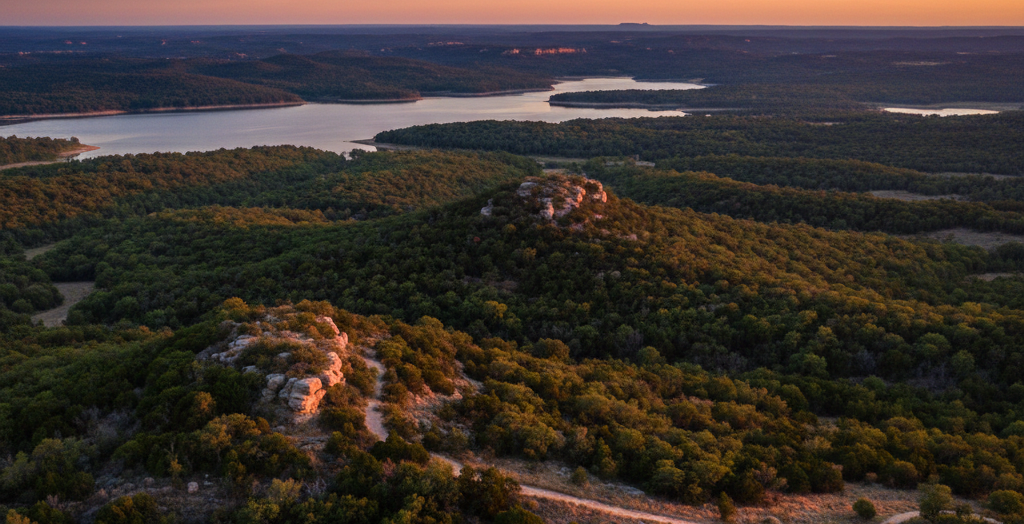
Understanding Palo Pinto Mountains State Park requires understanding the broader outdoor recreation landscape that makes North Texas increasingly attractive to buyers prioritizing lifestyle amenities.
The Existing Infrastructure
North Texas already offers an expanding network of outdoor recreation opportunities:
Trinity Trails: Over 100 miles of paved and unpaved trails winding through Fort Worth’s most beautiful natural spaces.
Fort Worth Nature Center and Refuge: Nearly 3,700 acres of preserved ecosystem offering extensive trails, wildlife viewing, and environmental education.
Cedar Ridge Preserve: A 633-acre natural sanctuary managed by Audubon Dallas, with approximately nine miles of hiking trails through diverse habitats.
Eagle Mountain Park: A 400-acre lakeside park offering several well-regarded hiking trails.
Palo Pinto Mountains State Park significantly expands this network, providing options for more extended outdoor experiences including overnight camping, backcountry hiking, and multi-day recreation that current facilities can’t easily accommodate.
Why Families Are Choosing North Texas for Outdoor Living
Recent surveys consistently identify outdoor recreation access as a top priority for relocating families. For North Texas specifically:
Climate advantages: More than 300 days of sunshine annually and mild winters enable year-round outdoor activities.
Affordability compared to Western recreation states: Families seeking outdoor lifestyles often compare Texas with Colorado, Utah, or Montana, where housing costs near quality recreation have escalated dramatically. North Texas offers similar outdoor access at substantially lower price points.
No state income tax: Texas’s lack of state income tax creates additional disposable income that can be allocated toward outdoor equipment, travel, or recreational property investments.
Growing outdoor recreation infrastructure: The Centennial Parks Conservation Fund is enabling historic expansion of Texas’s state park system, with multiple new parks under development or recently acquired.
Working with the Right Real Estate Professional

For buyers relocating from outside the region or unfamiliar with communities near Palo Pinto Mountains State Park, partnering with a knowledgeable local professional provides critical advantages.
What Actually Matters in an Agent
Local market expertise: Find an agent who demonstrates genuine authority in the specific communities you’re considering. This means detailed knowledge of current and past sales trends, pricing dynamics, neighborhood characteristics, school quality, tax rates, and community infrastructure.
Relocation experience: Agents who specialize in helping relocating buyers understand the unique challenges of purchasing property from a distance. They know how to coordinate remote viewings, leverage technology for virtual tours, and efficiently organize in-person visits.
Professional network: Top buyer’s agents maintain relationships with vetted inspectors, lenders, contractors, and other professionals whose services you’ll need, particularly valuable when buying in rural areas where finding qualified service providers may be more challenging.
Negotiation skills: In the more balanced 2026 market, professional negotiation capabilities matter significantly. Skilled agents employ data-driven, unemotional approaches that help buyers avoid overpaying while maintaining constructive relationships with sellers.
Questions to Ask Before You Commit
- How many transactions have you completed in communities near Palo Pinto Mountains State Park in the past 12 months?
- What percentage of your business involves buyers relocating from outside the region?
- Can you provide references from recent buyer clients who relocated?
- How familiar are you with properties near the new state park?
- What is your communication style and availability for buyers working remotely?
- How will you help me understand differences between communities in the area?
Post-NAR Settlement Reality
Following implementation of the National Association of REALTORS® settlement, buyer-agent compensation structures have changed. Buyers are now asked to sign written buyer representation agreements before touring homes, with clear terms specifying agent compensation and services provided.
This increased transparency benefits buyers by ensuring upfront clarity about costs and expectations. Review representation agreements carefully and feel comfortable discussing compensation structures, whether they involve flat fees, percentages, or other arrangements.
Frequently Asked Questions (The Real Answers)

When exactly will Palo Pinto Mountains State Park open to the public?
Texas Parks and Wildlife confirmed the park will open sometime in 2026 but hasn’t announced a specific date. A sneak preview with guided hikes took place January 1, 2026, and the park is substantially complete, suggesting a spring or summer 2026 opening is likely.
How far is Palo Pinto Mountains State Park from Dallas and Fort Worth?
The park is approximately 80 miles southwest of Fort Worth and about 100 miles west of Dallas. Drive time typically ranges from 90 minutes to two hours depending on traffic and your specific starting point within the metroplex.
What activities will be available?
Hiking, mountain biking, horseback riding, fishing, canoeing, kayaking, RV camping, tent camping, equestrian camping, picnicking, wildlife viewing, and stargazing. More than 16 miles of trails are currently complete, with motor-free Tucker Lake as the centerpiece amenity.
Are property values really likely to increase near the new state park?
Research consistently demonstrates that properties near parks experience value increases ranging from roughly 8% to 20% on average, with properties immediately adjacent to parks seeing the highest premiums. While past performance doesn’t guarantee future results, the pattern is well established across diverse markets.
What is the best community to buy in for access to Palo Pinto Mountains State Park?
The optimal community depends on your priorities:
- Strawn offers maximum proximity and small-town character
- Mineral Wells provides balance of park access and urban amenities
- Rural Palo Pinto County offers larger parcels, privacy, and ranch-style properties
Each option presents different trade-offs regarding commute times, amenities, and property types available.
Is now a good time to buy real estate in North Texas?
The 2026 North Texas market has shifted toward greater balance after years of seller dominance, with increased inventory, stable mortgage rates, and more negotiating power for buyers. For properties near Palo Pinto Mountains State Park specifically, buying before the park opens to the public may allow purchase before proximity premiums fully capitalize into asking prices.
The Bottom Line
Here’s what I want you to understand: most people will wait until the park opens, sees the crowds, reads the reviews, and then decides it’s a good investment. By that point, the proximity premium will already be baked into asking prices.
The strategic play, the “five steps ahead” thinking, is recognizing pattern repetition across markets and positioning before consensus forms. The state has made its $22 million bet on this property’s recreational value. The research shows what happens to property values near quality parks. The current market conditions provide inventory and negotiating leverage that may not persist.
You’re looking at a convergence of factors that creates opportunity: properties priced before the amenity opens, a balanced market favoring buyers, affordability compared to both metropolitan alternatives and Western recreation states, and documented patterns of proximity premiums that suggest value creation potential.
This isn’t about speculation. This is about understanding how real estate markets price amenities, recognizing timing windows, and making informed decisions based on data rather than emotion.
While your competition is waiting for confirmation, strategic buyers are already positioning. The question is: which group will you be in?
Bobby Franklin, REALTOR®
Legacy Realty Group – Leslie Majors Team
📲 214-228-0003 | northtexasmarketinsider.com
This article provides educational information about real estate market dynamics and outdoor recreation trends in North Texas. It does not constitute financial, legal, or investment advice. All real estate decisions should be made in consultation with licensed professionals familiar with your specific circumstances and objectives. Market data and projections are based on historical patterns and current information but cannot guarantee future results.