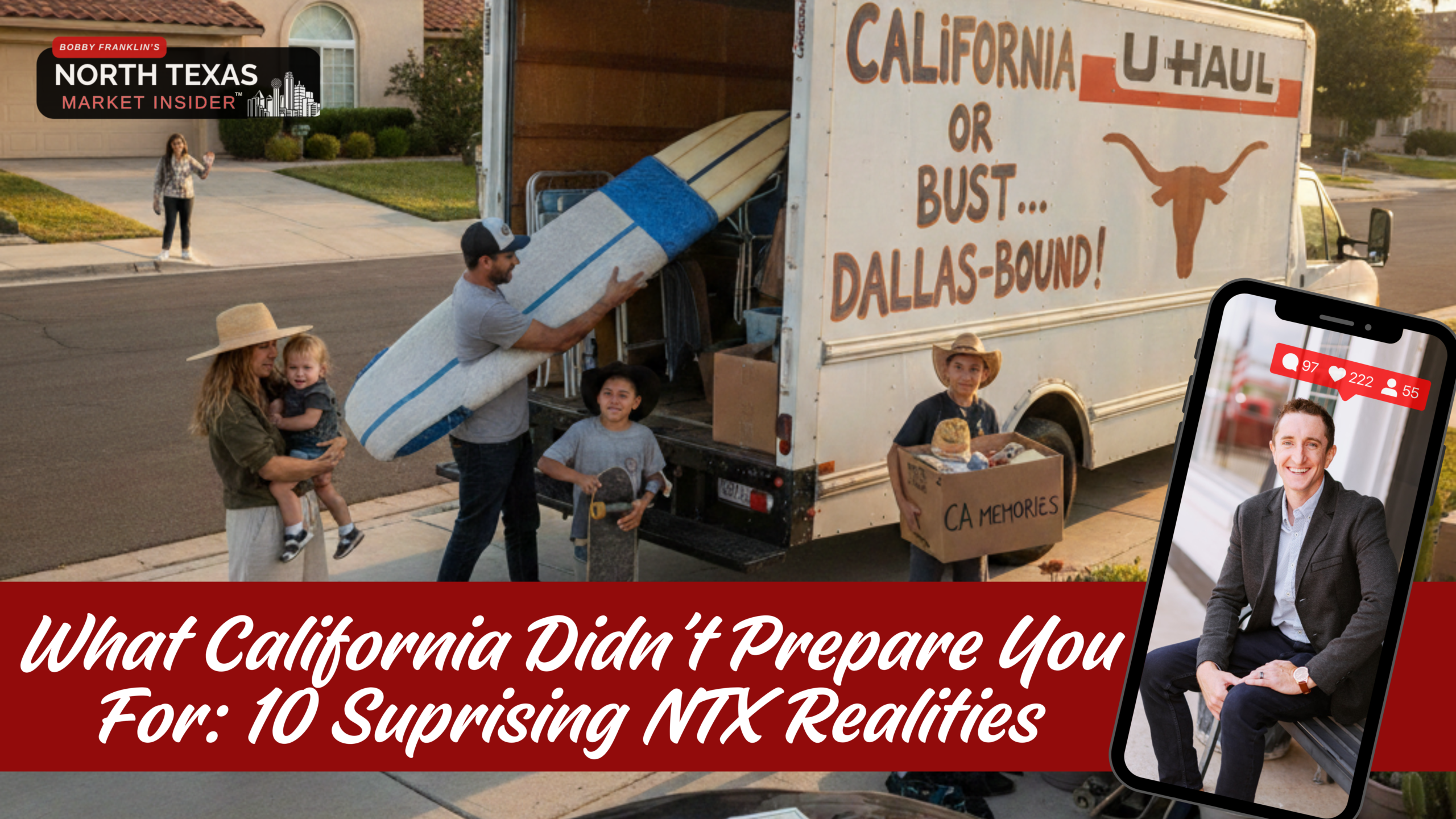
Intelligence briefing for Californians considering relocation to the Dallas-Fort Worth metroplex and Ellis County
Listen, I’m going to save you about six months of expensive learning curve right now.
After helping dozens of California families make the move to North Texas and watching just as many get blindsided by cultural and financial surprises that nobody mentioned during their “Texas is awesome” research phase, I’ve identified the ten biggest shocks that hit transplants hardest. Not the stuff your relocation packet mentions. The real operational differences that fundamentally change how you live, parent, budget, and exist in North Texas.
This isn’t a lifestyle blog post. This is market intelligence. The kind of information that determines whether your Texas move becomes the best financial decision you ever made or an expensive lesson in cultural translation costs.
Let’s get into it.
1. FFA Programs Are a K-12 Educational Institution, Not an Agricultural Curiosity
Here’s your first culture shock: In Texas public schools, the Future Farmers of America (FFA) operates as a parallel educational track with constitutional-level importance, not a quaint rural club.
The Texas FFA Association runs 1,095 active chapters embedded directly into public school districts. This isn’t California’s scattered agricultural programs in a few rural counties. Texas mandates that FFA chapters can only charter in schools providing recognized agriculture, food, and natural resources instruction under the official Texas State Plan for Career and Technology Education.
What This Actually Means for Your Family
Your third-grader can join Junior FFA at age eight, beginning systematic agricultural education that continues through high school graduation. School superintendents must approve out-of-district participation in writing annually. Junior members pay state dues equivalent to active FFA membership and work toward five achievement degrees—from Discovery FFA (middle school) through the prestigious American FFA Degree.
The Texas Education Agency provides direct oversight. This isn’t extracurricular—it’s curriculum.
If you’re moving to Ellis County communities like Waxahachie, Midlothian, Red Oak, or Ennis, your children will encounter FFA the same way California kids encounter sports programs: integrated into school identity, student schedules, and community expectations. Students raise livestock projects, compete in agricultural mechanics, participate in leadership development, and build career pathways in agriculture, veterinary science, and natural resources.
The surprise for Bay Area or LA families? This agricultural focus carries social weight. Livestock showing at the county fair matters. Agricultural mechanics skills matter. FFA leadership positions on college applications matter in ways that coastal parents don’t anticipate.
Strategic intelligence: If your children join FFA programs, you’re committing to project funding (livestock, equipment, competition fees) and time (weekend shows, early morning animal care). Budget $1,500-$3,000 annually for active participation. Consider this part of your Texas education cost structure.
To read more about the top FFA programs in North Texas read our complete guide:
(click on the image below)

2. Property Tax Bills Fluctuate Dramatically Despite Texas Having No Income Tax
You’ve heard the recruiting pitch: “Texas has no state income tax!” True. What they don’t emphasize: Texas compensates with property taxes averaging 1.8% of assessed value, but with annual reassessment based on market conditions that can spike your bill 15-20% year-over-year.
California’s Prop 13 Safety Net Doesn’t Exist Here
California’s Proposition 13 caps property tax increases at 2% annually until sale, creating predictable long-term bills. You bought that Orange County house in 2015 for $650,000? Your tax basis stays near purchase price with minimal creep, even as market value hits $950,000.
Texas operates differently. Your property gets reassessed annually based on current market comparables. If your North Texas neighborhood becomes hot – new development, corporate relocations, improved amenities – your tax burden rises proportionally, whether you sell or not.
The Multi-District Tax Layer
Each local school district, city, county, and special district independently sets tax rates. Two similarly valued homes in neighboring school districts can have bills differing by $2,000-$4,000 annually.
Example from my current market: A $425,000 home in Waxahachie ISD pays roughly $7,650 in annual property taxes. A comparable home in Red Oak ISD might pay $8,200. Same value, different districts, different bills.
Texas offers a homestead exemption reducing taxable value by at least $40,000 for school districts (and additional amounts for other jurisdictions). But even with exemptions, property taxes fund everything: schools, infrastructure, emergency services, parks. Without state income tax revenue, real estate carries the full local government funding burden.
The Californian’s sticker shock moment: Your $400,000 North Texas home’s taxes jump from $7,200 to $8,600 in one year because a new master-planned community nearby drove up comparable sales. You made no improvements. You didn’t refinance. The market simply moved, and your bill followed.
Strategic Intelligence
- Protest your valuation annually. Texas allows property owners to challenge appraisals through formal protest processes. Many homeowners use protest companies that work on contingency (typically 25-50% of tax savings).
- Factor property tax volatility into affordability calculations. That $3,500/month mortgage payment includes taxes that could be $4,200/month in three years if your area appreciates.
- Research school district tax rates before purchasing. This matters more than most buyers realize.
Want specifics on Ellis County tax rates and protest strategies? Let’s talk. This is exactly the kind of hyperlocal intelligence that prevents expensive surprises.
For more information on property taxes across the state read our full guide:
(click the image below)

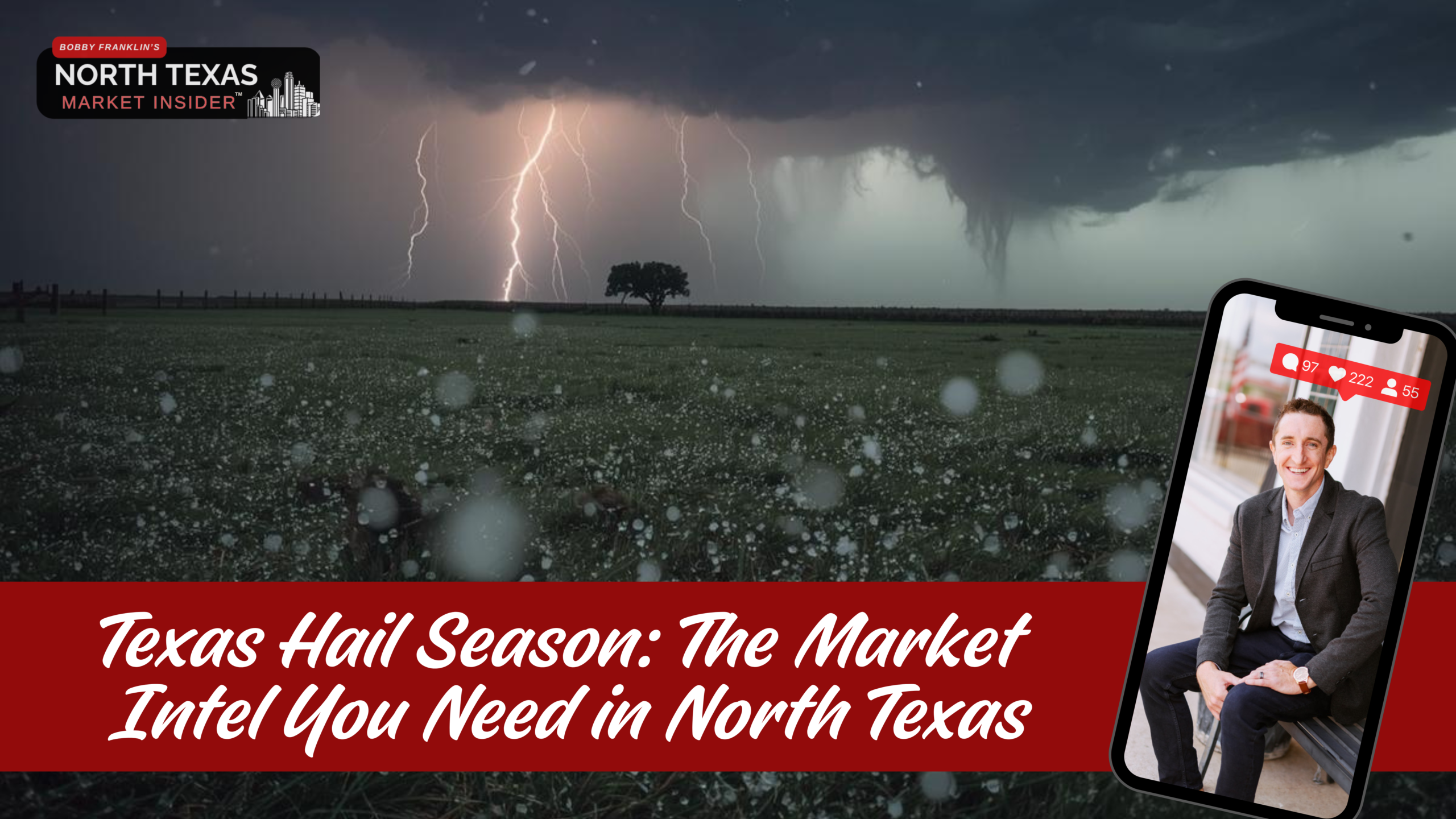
3. Weather Extremes Beyond Heat: Hail, Tornadoes, and Ice Storms That Paralyze the Region
You’ve prepared for Texas heat. You haven’t prepared for multi-billion dollar damage events from hazards that don’t exist in California coastal climates.
Hail That Totals Vehicles and Destroys Roofs
North Texas experiences severe thunderstorms sometimes producing 2-inch diameter hail that shatters windshields, dents vehicles beyond repair, and punches holes in roofing. The region sees severe thunderstorm watches rated 4 out of 5 on the Storm Prediction Center scale during spring and fall storm seasons.
Insurance companies know this. Expect higher comprehensive auto premiums and specific hail damage deductibles. Many North Texas homeowners budget for roof replacement every 10-12 years as a scheduled maintenance item, not an emergency.
Tornado Warnings Are Operational Realities
Tornado watches and warnings become part of your spring routine. Upper-level rotation visible on radar. Shelter-in-place protocols at schools. The constant mental calculation: “Is this the one that requires interior room protection, or routine monitoring?”
Most North Texas homes don’t have basements (clay soil makes them expensive and problematic). You shelter in interior bathrooms or closets. If you’re building new construction, budget for safe rooms or storm shelters, or above-ground reinforced spaces rated for EF5 tornadoes (starting around $4,000-$8,000 installed).
Ice Storms That Reveal Infrastructure Vulnerabilities
The bigger surprise for Californians? Ice storm paralysis.
Texas faces freezing rain events that accumulate two inches of ice, snapping power lines and closing entire metropolitan areas for days. The February 2021 winter storm brought 6-8 inches of snow east of I-35, with DFW Airport recording its highest total in over a decade.
Unlike California’s occasional rain, Texas infrastructure isn’t designed for prolonged freezing. Salt trucks are limited and snow plows exist in small numbers. When ice hits, everything stops: schools, businesses, major highways. The state’s electrical grid, operating independently from national grids, faces strain during extreme cold (remember February 2021’s catastrophic failures).
Operational adjustments required:
- Generator capability: Budget $3,000-$8,000 for whole-home standby generators. After multi-day power outages in extreme weather, this becomes insurance, not luxury.
- Emergency supplies: Three-day food, water, and heating alternatives are standard preparation.
- Hail-resistant roofing: Class 4 impact-resistant shingles add $1,500-$3,000 to roof replacement but qualify for insurance discounts (typically 15-35% on premiums).
- Storm shelter consideration: For families with young children or those in mobile/manufactured homes, this is a genuine safety investment.
The weather in North Texas isn’t California-deadly (earthquakes, wildfires). It’s Texas-expensive and operationally disruptive. Budget accordingly.
4. Friday Night Lights Operates as Multi-Million Dollar Community Religion
High school football in Texas isn’t a sport. It’s the primary social organizing principle for entire communities during fall semester.
The UIL Structure Creates Week-Long Celebrations
The University Interscholastic League (UIL) has governed Texas high school football since 1920, transforming it into infrastructure-level community investment. Homecoming isn’t just a game, it’s a week-long cultural celebration featuring:
- Themed dress-up days at school (decades day, country vs. country club, class color days)
- Pep rallies with competitive student section performances
- Community parades with elaborate class floats (junior and senior classes compete for best design)
- The “mum” tradition: Elaborate floral chrysanthemum corsages grown to absurd proportions with ribbons, trinkets, bells, lights, and stuffed animals (seriously, mthese can cost $50-$300 and weigh several pounds)
- Saturday night dances following Friday’s game
Halftime Shows and Booster Economics
Halftime often features 300-member marching bands that practice all summer. Drill teams and dance squads perform award-winning routines. The Netflix blockbuster Cheer was about a word-renowned North Texas Community College Cheer Team.
Stadiums seating 10,000-20,000 fans are common in major programs. Allen ISD’s Eagle Stadium cost $60 million (yes, for high school football). McKinney ISD operates multiple championship-caliber programs with similar community investment.
Booster clubs operate as major fundraising organizations, generating six-figure budgets through sponsorships, concessions, merchandise, and donor campaigns. These aren’t parent volunteers baking cookies, these are semi-professional operations with business plans and marketing strategies.
The Cultural Adjustment for California Families
Friday night games dictate community schedules. Restaurants plan staffing around game times. Local news provides extensive coverage. Churches schedule around games. Your neighbor’s entire weekend emotional state depends on whether the Waxahachie Indians or Midlothian Panthers won or lost.
If your children participate in band, drill team, cheerleading, or football, expect:
- Summer band camp starting in July/August
- Friday night commitments from August through November (potentially December for playoff runs)
- Saturday competitions for marching band
- Financial investment in uniforms, competition fees, booster club donations ($500-$2,000 annually depending on program)
- Social expectations around attendance, school spirit, and community participation
This level of football culture makes even Texas’s professional sports seem secondary. The Dallas Cowboys matter. But on Friday nights, high school football is religion.
Strategic intelligence: If you’re not interested in football culture, choose your community carefully. Some North Texas suburbs have less intense football focus. Others (Southlake Carroll, Allen, Highland Park) are legendary programs where football is identity. Know what you’re buying into.
5. MUDs: Invisible Government Layers That Tax Your Home for Decades
Here’s where Texas housing affordability gets complicated: Municipal Utility Districts (MUDs) are special-purpose taxing districts that fund infrastructure in new subdivisions. They exist almost exclusively in Texas and create hidden tax burdens lasting 20-30 years.
How MUDs Actually Work
When developers build new master-planned communities outside city limits, they petition the Texas Commission on Environmental Quality to create a MUD. This special district:
- Issues bonds to finance water, sewer, drainage, and roads
- Operates with an elected board (usually developer-controlled initially)
- Levies additional property taxes to repay bonds plus maintenance costs
- Functions independently from city or county government Source: Texas TCEQ
Developers must put up 30% of utility costs as a letter of credit. But homeowners pay off MUD bonds through their property tax bills for 20-30 years.
The Surprise for California Buyers
You find a beautiful new construction home in Frisco, McKinney, or one of the Ellis County growth corridors. List price looks attractive: $425,000 for 2,400 square feet with modern finishes. Great schools. Low crime. Your California equity makes it affordable.
Then you review the full tax disclosure. MUD taxes add $1,800-$3,500 annually on top of standard property taxes. That “affordable” $3,200/month payment just became $3,500-$3,700/month once you factor real tax obligations.
These districts often exist in the extraterritorial jurisdiction (ETJ), areas outside city limits but subject to eventual annexation. You’re paying:
- County taxes
- School district taxes
- MUD taxes
- Potentially PID (Public Improvement District) assessments
You receive county-level services (sheriff, not police; volunteer fire in some areas; limited parks). No city trash pickup. No city recreation centers. But you’re paying premium taxes to finance the infrastructure your neighborhood required.
MUDs aren’t inherently bad, they enable development in areas where cities won’t extend utilities. But the tax complexity and duration catches California buyers off-guard.
Strategic Intelligence
- Request full tax disclosure including MUD rates, bond maturity dates, and projected rate increases
- Calculate total monthly costs with MUD taxes included (not just base property tax estimates)
- Ask if the MUD will dissolve once bonds are repaid or transition to permanent district (some become permanent water/sewer providers with ongoing taxes)
- Understand service limitations in ETJ areas (longer emergency response, different trash services, etc.)
- Compare MUD vs. non-MUD properties in your target area (sometimes the premium for established neighborhoods equals MUD costs with better services)
Want to analyze MUD implications for specific properties you’re considering? This is exactly the kind of detailed financial intelligence that separates good deals from expensive learning experiences.
6. BBQ Is Regional Identity, Not Just Cuisine
You think you’re ready for Texas BBQ because you’ve been to some good spots in California. You’re not ready. This isn’t food, it’s cultural infrastructure with strict traditions, regional variations, and generational knowledge transfer that operates like craft guilds.
Four Distinct Regional Styles Define Texas Geography
- Central Texas (Austin/Lockhart): Post-oak smoked brisket with minimal sauce, meat-centric focus. This became the national standard for “Texas BBQ.” Simplicity and smoke quality are everything.
- East Texas: Saucy chopped beef, pork ribs, hot links. Closer to Southern-style BBQ with heavier seasoning and sauce.
- West Texas: Mesquite grilling with cowboy-style direct heat. Faster cooking, different smoke profile.
- South Texas: Barbacoa specialization, traditionally cow head steamed in underground pits, now evolved into various preparations.
The Cultural Structure That Surprises Californians
BBQ pilgrimage is real. People drive for hours to Franklin Barbecue in Austin and wait in line for several more hours more to buy brisket that sells out by noon. This isn’t Yelp tourism, it’s reverence for craft.
Pitmasters apprentice for years, learning fire management through feel rather than thermometers. The knowledge transfer happens in person, through observation and repetition. You don’t take an online course in Texas BBQ, you work the pit.
Right here in Ellis County, you see this cultural weight in operation. Bluebonnet BBQ (3921 US-287 in Waxahachie) operates as a family-owned restaurant where multi-generational recipes get passed down like inheritance. They partner with Ashcraft Beef in Ennis for locally sourced, grass-fed cattle that never see commercial feedlots. This isn’t farm-to-table marketing. It’s standard operating procedure for serious Texas BBQ operations.
Down on the Waxahachie town square, Meat Church BBQ Supply (114 W Main St) reveals another dimension of BBQ culture that stuns California transplants: it’s a retail store, not a restaurant, dedicated entirely to competition-grade rubs, smoking equipment, and BBQ education. Founder Matt Pittman gained national recognition on Food Network’s BBQ Pitmasters and now runs BBQ schools that draw students from 16 states and multiple countries to learn competition-level smoking techniques. The brand has 250,000+ Instagram followers.
Let that sink in. A BBQ supply store in a town of 40,000 people attracts international students for weekend classes. This is Texas BBQ as legitimate industry, complete with celebrity pitmasters, branded product lines sold nationwide, and educational infrastructure that rivals culinary schools.
Traditional Texas BBQ joints serve:
- Brisket (the centerpiece)
- Pork ribs
- Sausage (often jalapeño cheese or hot guts)
- Pinto beans
- Potato salad
- White bread (for soaking sauce and fat)
- Pickles and onions
NEVER the California Santa Maria style with grilled garlic bread and pinquito beans. Never fusion experimentation or “elevated” BBQ with truffle or Asian influences. Tradition is the point.
Why This Matters Beyond Food
The resistance to change and reverence for traditional methods extends beyond BBQ into broader Texas culture. Innovation happens, but respect for established tradition comes first. This shows up in:
- Business relationships (long-term loyalty valued over price shopping)
- Community involvement (generational family connections matter)
- Political culture (conservative in the root sense – conserving what works)
- Social expectations (new arrivals are welcomed but expected to adapt, not demand change)
Strategic intelligence: Learning Texas BBQ culture teaches you how Texas operates socially and professionally. The same principles that make Franklin Barbecue legendary; consistency, quality over speed, respect for craft, show up in how business gets done and relationships get built.
Want recommendations for the best BBQ in Ellis County and the stories behind these family operations? Let’s talk. This is the kind of local cultural intelligence that helps you integrate successfully.
7. Constitutional Carry Makes Open Carry the Default Legal Standard
As of September 2021, Texas House Bill 1927 established constitutional carry, allowing anyone 21 or older to openly carry a handgun without a license, provided they have no felony convictions.
What This Actually Means
The weapon must be in a holster (belt or shoulder). No permit required. No training required. No background check beyond federal purchase laws.
Non-residents legally eligible to possess firearms can also open carry under the same rules.
Open carry is prohibited only in specific locations:
- K-12 schools and school-sponsored activities
- Polling places during elections
- Court facilities and courtrooms
- Secured airport areas
- Private property with posted 30.07 signs (specific legal signage required)
The Cultural Adjustment for California Transplants
You will see armed citizens in:
- Grocery stores
- Restaurants
- Parks
- Gas stations
- Shopping centers
- Community events
This is normal. Legal. Expected.
While terroristic threats laws prohibit brandishing or threatening behavior, the visible presence of firearms in daily life requires psychological adjustment that many California transplants find deeply unsettling initially.
Understanding Texas Gun Culture Context
Constitutional carry operates within a broader gun culture where:
- Shooting sports are mainstream recreation (sporting clays, target shooting, hunting)
- Gun ownership is assumed across demographics (not just rural/conservative populations)
- Self-defense is culturally validated (both legally and socially)
- Firearms training is widely available and encouraged (even if not legally required)
Strategic intelligence: Whether you agree with gun policies or not, understanding the legal framework and cultural context helps you navigate social situations appropriately. Many Texans assume firearms competency and ownership as baseline. Conversations about hunting, range time, and personal defense are common in professional and social settings.
If you have strong feelings about gun control, recognize this is core identity politics in Texas. Vocal gun control advocacy will socially isolate you in most North Texas communities. You don’t have to own guns, but understanding the cultural centrality helps you integrate professionally and socially.
8. Scorpions and Fire Ants Are Indoor Pests, Not Outdoor Curiosities
The striped bark scorpion (Centruroides vittatus) regularly enters North Texas homes, not as rare invaders but as seasonal expectations you budget for and manage.
Scorpion Reality
Scorpions squeeze through gaps under doors, hide in attics and crawl spaces, and hunt crickets indoors during summer months. UV lights reveal them glowing blue-green at night, and professional pest control services receive peak calls when temperatures drive scorpions inside seeking water and cooler air.
Stings are painful but rarely dangerous to healthy adults. Young children and those with compromised immune systems face higher risk. Most stings cause localized pain, numbness, and swelling lasting several hours.
Fire Ants Compound the Problem
Red imported fire ants create large mounds in yards but also invade homes. During drought periods, they abandon visible mounds and burrow deeper into foundations, often entering through plumbing penetrations seeking moisture.
Their stings cause painful pustules that last days. Multiple stings can trigger allergic reactions. Unlike California’s relatively benign ant species, fire ants aggressively defend territory and swarm when disturbed.
Operational Adjustments Required
Year-round perimeter treatments become standard home maintenance (professional pest control runs $75-$125 monthly or $600-$1,200 annually for comprehensive service).
Weatherstripping inspection quarterly to seal entry points.
Yard shoes are mandatory – no barefoot grass walking during fire ant season (basically March-November).
Garage and porch protocols – shake out shoes before wearing, check clothing left outside, inspect stored items before bringing indoors.
Acceptance that seeing 1-2 scorpions weekly during peak season is “normal” in many North Texas neighborhoods. This isn’t pest infestation, it’s regional fauna.
Strategic Intelligence
- Budget $75-$125 monthly for professional pest control (or invest in DIY equipment and quarterly treatments at $200-400 annually)
- Expect additional costs for seasonal booster treatments ($150-250 quarterly)
- Seal home perimeter during construction or renovation (door sweeps, expansion foam in gaps, screened vents)
- Landscape choices matter: Rock beds near foundations attract scorpions. Mulch and ground cover away from the house reduces habitat.
This fundamentally alters outdoor recreation patterns. Kids don’t run barefoot through yards. You shake out towels and blankets stored outside. You check shoes before putting them on. These aren’t paranoid behaviors, they’re standard Texas childhood education.
Want pest control service recommendations in Ellis County? I work with several companies that specialize in scorpion/fire ant management and can provide referrals.
9. Frontage Roads (Service Roads) Create a Parallel Highway Universe
Texas operates over 6,500 miles of continuous frontage roads along highways – a system dating to 1940s chief highway engineer Dewitt Greer who prioritized property access and development over interchange efficiency.
How Frontage Roads Function
Officially called “frontage roads” but universally known as “service roads” or “access roads,” these parallel streets provide access to every adjacent property with frequent on/off ramps, eliminating the need for expensive interchanges every mile.
The Development Pattern This Creates
Commercial corridors stretch for miles along freeways with identical chain restaurants, gas stations and big-box stores repeating every few exits:
- Walmart, Target, Home Depot, Lowe’s
- Chick-fil-A, McDonald’s, Whataburger, Sonic
- CVS, Walgreens, Buccee’s
- Kroger, Tom Thumb, Walmart Supercenter
This pattern repeats exit after exit, creating endless signage clutter and visual monotony that astonishes California transplants accustomed to more concentrated commercial development and stricter signage controls.
Navigation Challenges
Missing your exit doesn’t mean a quick turnaround. You might drive 2-3 miles to the next exit, loop back via the frontage road, navigate service road traffic, and attempt re-entry to the highway, a 10-15 minute detour for what should be a simple correction. The most frontage roads in Dallas Fort Worth have a U-turn lane that goes immediately under the highway and back onto the frontage road in the other direction at almost every exit.
The system reduces right-of-way acquisition costs but creates:
- Traffic congestion on frontage roads (especially during rush hour when they function as pseudo-highways themselves)
- Dangerous merging situations where frontage road traffic crosses multiple lanes to access highway entrances
- Confusing navigation for newcomers unfamiliar with the “main lanes vs. feeder” mental framework
- Strip mall aesthetics that define Texas suburban growth patterns
Why This Matters
Understanding frontage road logic is essential for:
- Real estate decisions: Properties on frontage roads have different traffic patterns, noise levels, and commercial potential than interior subdivisions
- Navigation efficiency: Learning to think in terms of “main lanes” vs. “feeders” as separate networks
- Development analysis: Frontage road commercial strips indicate growth corridors and retail saturation
Strategic intelligence: When I show you properties in growth corridors like the South Creek Ranch development area or along I-35E south of DFW, understanding frontage road dynamics helps you evaluate commercial potential, residential privacy, and long-term development impact.
California uses frontage roads sparingly in dense urban cores. Texas extends them into rural areas as fundamental infrastructure. It’s sprawl-based growth as state policy.
10. Exotic Game Hunting Operates Year-Round as a Tourism Industry
Here’s one that catches California transplants completely off-guard: Texas classifies axis deer, blackbuck antelope, and dozens of other exotic species as “livestock,” allowing year-round hunting with no closed season, no tags, no lottery system.
How This Works Legally
High-fence ranches spanning 4,000-18,000 acres offer all-inclusive trophy hunts for animals native to Africa, Asia, and Europe:
- Axis deer (India)
- Blackbuck antelope (India)
- Fallow deer (Europe)
- Aoudad sheep (Africa)
- Scimitar-horned oryx (Africa – extinct in the wild)
- Zebras, giraffes, wildebeest
These operations provide:
- Transportation from major airports
- Guided hunts with professional staff
- Field dressing and meat processing
- Taxidermy coordination
- Gourmet meals
- Luxury lodging
Why Texas Became Exotic Game Capital
The state’s favorable climate and terrain mimic the animals’ native habitats, enabling breeding populations that thrive without regulatory constraints governing native game.
While California hunting requires:
- Competitive lottery systems for limited tags
- Strict seasonal windows
- Extensive permit processes
- Public land access competition
Texas ranches let hunters book expeditions on demand year-round. No lottery. No waiting. Pay the trophy fee, show up, hunt.
The Cultural Shock for Californians
This surprises transplants on multiple levels:
- “Canned hunt” normalization: High-fence operations guarantee success in controlled environments, which many view as contrary to hunting ethics
- Endangered-looking species as livestock: Seeing animals that appear endangered classified as agricultural property
- Economic scale: Ranches advertise machine gun shooting experiences, tank driving, and exotic animal packages as bundled tourism products
- Social acceptance: Trophy hunting exotic game is mainstream recreation, not fringe activity
Some ranches offer:
- Kangaroo hunts
- Zebra hunts
- Giraffe hunts (yes, really)
- Wild boar hunting with dogs or helicopters
- “Executive packages” combining hunting with luxury accommodations
Why This Matters for Real Estate
High-fence ranches are neighbors in rural areas. That 200-acre property adjacent to your 5-acre dream homesite? Could be an exotic game operation.
Understanding exotic game hunting as normalized industry helps you:
- Evaluate rural property with realistic expectations about adjacent land uses
- Understand recreational land values (hunting leases drive pricing in many areas)
- Navigate social situations where hunting is assumed baseline recreation
- Assess development patterns (ranching vs. residential vs. commercial pressures)
Strategic intelligence: If you’re considering acreage properties in Ellis County or surrounding areas, knowing whether adjacent land operates as exotic game ranch, cattle operation, or future development parcel fundamentally affects your quality of life and property values.
Want analysis of specific rural properties and their surroundings? This is exactly the hyperlocal intelligence that prevents expensive surprises.
The Due Diligence Process
Before you commit to any North Texas property:
- Calculate total monthly costs including realistic property taxes with MUD/PID assessments
- Research school district culture beyond test scores (athletics investment, agricultural programs, community expectations)
- Evaluate weather preparedness costs (generators, storm shelters, insurance structures, hail-resistant roofing)
- Understand adjacent land uses (especially in rural/suburban fringe areas)
- Assess cultural fit (gun culture, football culture, BBQ culture as proxy for broader social expectations)
Next Steps: Getting the Intelligence You Need
Schedule a California-to-Texas Relocation Consultation
I offer strategic consultations specifically for California families considering North Texas. We cover:
- Financial analysis of your California equity vs. North Texas buying power
- Property tax modeling including MUD/PID implications
- School district cultural fit assessment
- Community matching based on your priorities
- Weather preparedness budgeting
- Timeline optimization for your situation
No pressure. No sales pitch. Just strategic intelligence from someone who’s guided families through this exact transition and knows where the landmines hide.
The Bottom Line: Information Is Your Competitive Advantage
The California families who succeed in North Texas are the ones who treat relocation as a business decision requiring strategic intelligence, not a lifestyle upgrade requiring faith.
You’re competing with:
- Other California buyers bringing equity
- Corporate relocations from multiple states
- Local buyers who know the market intimately
- Investors with sophisticated analysis capabilities
Your competitive advantage is having better information and more strategic thinking.
That’s exactly what I provide.
Not generic relocation advice. Not cheerleading about Texas. Strategic market intelligence that helps you make better decisions, avoid expensive mistakes, and position your family for long-term success.
Ready to get the intelligence you need?
Bobby Franklin, REALTOR®
Legacy Realty Group – Leslie Majors Team
📲 214-228-0003
🌐 northtexasmarketinsider.com
Serving Ellis County and the Dallas-Fort Worth Metroplex
Strategic Real Estate Intelligence for California Families Moving to North Texas
Last Updated: January 2026
Market Intelligence | Cultural Translation | Strategic Relocation Guidance