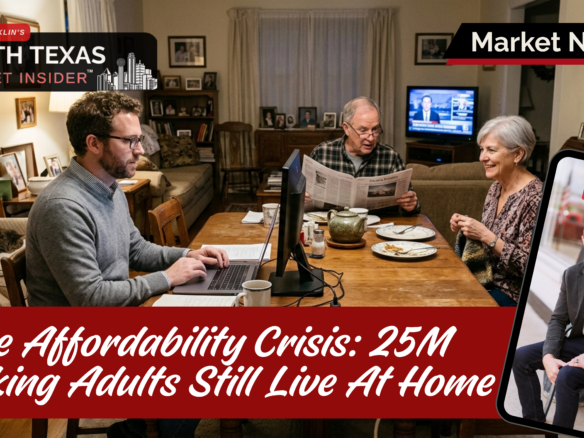
Listen, while every real estate agent in DFW is copying and pasting the same headlines about Trump’s mortgage announcement, I’m going to tell you what’s actually happening and what it means for your wallet if you’re buying in Ellis County, Tarrant County, or anywhere across North Texas.
On January 8th, President Trump dropped what looks like a bombshell: directing Fannie Mae and Freddie Mac to purchase $200 billion in mortgage bonds, promising to “drive mortgage rates DOWN, monthly payments DOWN, and make the cost of owning a home more affordable.”
Sounds great, right? Your Instagram feed is probably flooded with agents celebrating like rates are about to crash back to 3%.
Here’s what most of them won’t tell you: This isn’t the game-changer the headlines suggest, but it IS meaningful, and understanding exactly HOW meaningful puts you five steps ahead of everyone else in this market.
The Intel Most Agents Are Missing
I track North Texas market conditions daily, not just MLS numbers, but the underlying economic forces that actually move rates and prices. So when Trump announced this directive, I immediately started connecting dots that casual observers miss.
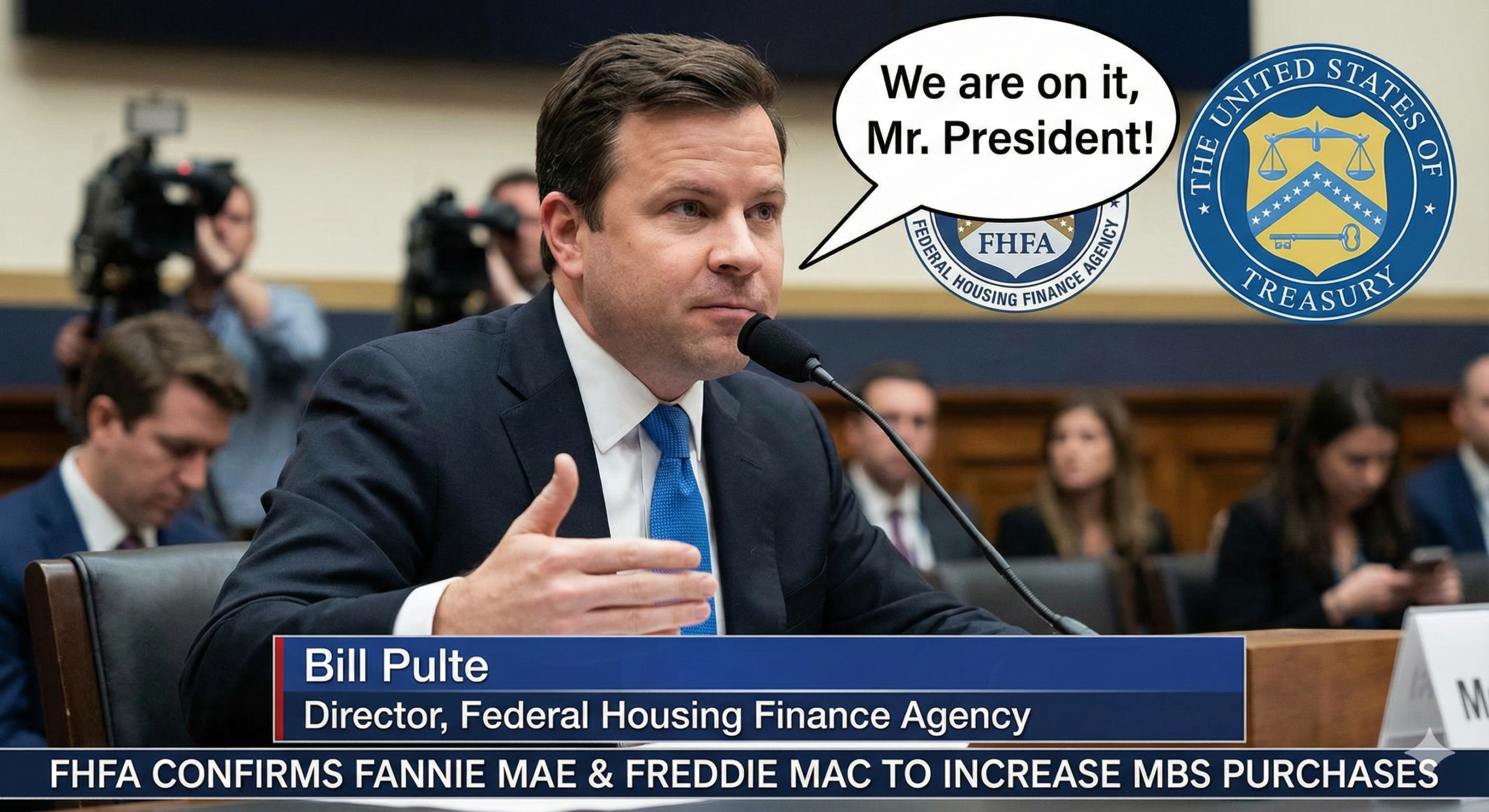
Federal Housing Finance Agency Director Bill Pulte confirmed within hours that Fannie and Freddie would execute the purchases, responding “We are on it, Mr. President!” But here’s the strategic context that changes everything: This move only works because Trump chose NOT to privatize these entities during his first term.
Think about that for a second. By keeping Fannie Mae and Freddie Mac under federal conservatorship after 2008, they accumulated roughly $200 billion in capital that FHFA can now deploy to buy mortgage bonds. This wasn’t luck, this was strategic positioning years in the making.
When these government-sponsored enterprises buy mortgage-backed securities, they increase demand in the secondary market. Basic economics: higher demand pushes MBS prices up and yields down. Since mortgage rates track closely with MBS yields and longer-term Treasury bonds, a sustained rally in MBS translates to lower borrowing costs for you.
That’s the mechanism. Now let’s talk about the magnitude, because this is where things get interesting.
The $200 Billion Reality Check

What the optimists are saying: Rates are about to plummet, creating a massive buying opportunity.
What the data actually shows: We’re looking at modest relief, not a market revolution.
Daryl Fairweather, Chief Economist at Redfin, estimates this $200 billion purchase program could lower mortgage rates by approximately 0.25 to 0.5 percentage points. She also warns, and this is critical, that this likely won’t fully eliminate the “mortgage rate lock-in effect” keeping owners with 3% pandemic-era loans from listing their homes.
As of early January 2026, the average 30-year fixed mortgage rate hovers near 6.2% according to national rate trackers. If Fairweather’s range proves accurate, we’re looking at rates potentially dropping into the 5.7% to 5.95% range.
That’s meaningful. But it’s nowhere close to the 2.5-3% rates we saw in 2020-2021.
Here’s where I’m going to give you some context that puts you five steps ahead: Let’s compare this to what the Federal Reserve did during COVID.
The Scale Differential Everyone’s Ignoring

In March 2020, the Fed pledged to buy at least $500 billion in Treasuries and $200 billion in mortgage-backed securities, then quickly pivoted to open-ended purchases with no upper limit. Their weekly MBS purchases briefly peaked at around $183.3 billion in a single week, nearly matching Trump’s entire proposed program.
From March 2020 to April 2022, the Fed’s agency MBS holdings rose by approximately $1.37 trillion, peaking near $2.74 trillion. At various points in 2020-2021, they were buying $40 billion in MBS per month on top of massive Treasury purchases.
Academic research on the Fed’s earlier 2008 MBS purchase program found that the initial announcement alone lowered mortgage rates by about 0.85 percentage points, with subsequent purchases contributing roughly another 0.5 percentage points.
Do the math: Trump’s planned $200 billion represents approximately 7.3% of the Fed’s COVID-era increase in MBS holdings, and it’s a small slice of the roughly $6.3 trillion U.S. agency MBS market.
Strategic insight: A 0.25-0.5 percentage point drop is a realistic upper bound, not a guaranteed floor. Anyone telling you rates are about to crash to 4% is either uninformed or selling you something.
What This Actually Means for Your North Texas Home Purchase
Let me translate economic theory into real dollars in your pocket, because that’s what actually matters when you’re making the biggest financial decision of your life.
Consider a typical scenario for a North Texas buyer in 2026:
- Texas forecast median home price: $350,000
- Down payment: 10% ($35,000)
- Loan amount: $315,000
At current 6.2% rate:
Principal and interest payment ≈ $1,933 per month
At potential 5.7% rate (with 0.5% drop):
Principal and interest payment ≈ $1,821 per month
That’s $112 per month in savings, or $40,320 over the full 30-year term.
Now here’s where the strategic thinking comes in: National housing affordability studies show that even a 0.25% rate movement can price over 1.1 million U.S. households in or out of homeownership qualification at current price levels. A sustained shift from 6.25% toward 5.75% would likely pull thousands of North Texas renters into the “can qualify” category.
But there’s a critical trap most buyers fall into, and most agents won’t mention it.
The Affordability Paradox You Need to Understand
Here’s the uncomfortable truth: Lower rates can actually make housing LESS affordable.
Research from the National Association of Home Builders shows that a 1 percentage-point change in mortgage rates significantly alters housing demand. Academic work on mortgage-rate elasticity suggests a 1-point drop in rates can raise home prices by around 10% over time as additional buyers bid up limited inventory.
Historical analysis consistently shows that when rates fall sharply, home prices often stabilize or rise, particularly in high-demand metros like DFW, offsetting some of the payment savings you thought you were getting.
Strategic takeaway: A 0.25-0.5% rate drop will help you individually, but it won’t “solve” affordability on its own, especially in a supply-constrained region like ours. Understanding this dynamic is what separates informed buyers from those who get caught in bidding wars thinking they’re getting a deal.
The Current North Texas Market Reality (January 2026)

Let me give you the hyperlocal intelligence that actually matters for your decision-making:
Ellis County Market Snapshot
- Median home value: Approximately $368,032, down 0.3% year-over-year
- Typical days to pending: Roughly 46 days, giving buyers significantly more negotiating leverage than during the 2021 frenzy
- Market character: Transitioning from seller-dominated to balanced, with strategic opportunities for buyers who understand positioning
I track every major listing, development, and price movement in Ellis County, from Waxahachie to Midlothian to Red Oak. The market dynamics in Q1 2026 favor prepared buyers who aren’t waiting for some mythical “perfect” rate.
Tarrant County Dynamics
- Median home price: Around $352,000, slightly below prior year’s median
- Sales volume: Fell roughly 12-13% year-over-year in mid-2025 as higher rates initially cooled demand
- Current trend: Stabilization with selective inventory opportunities in submarkets most agents overlook
Broader Texas and DFW Forecasts
Texas median home price projections for the 12 months ending summer 2026 cluster around $350,000 with modest 1.5% price growth expected. DFW builders and market analysts anticipate 30-year mortgage rates settling around 5.9% by late 2026 if inflation continues its gradual decline.
National forecasts from major rate trackers point to average 2026 mortgage rates in the 5.7% to 6.1% range, with Trump’s program potentially pushing toward the lower end of that spectrum.
Strategic context: Compared with high-cost metros like Austin, coastal California, or the Northeast, North Texas still offers substantially more square footage per dollar. That relative affordability drives continued inbound migration from higher-priced markets, a trend that supports long-term value appreciation even as short-term rates fluctuate.
The Legal Authority Question Everyone’s Asking
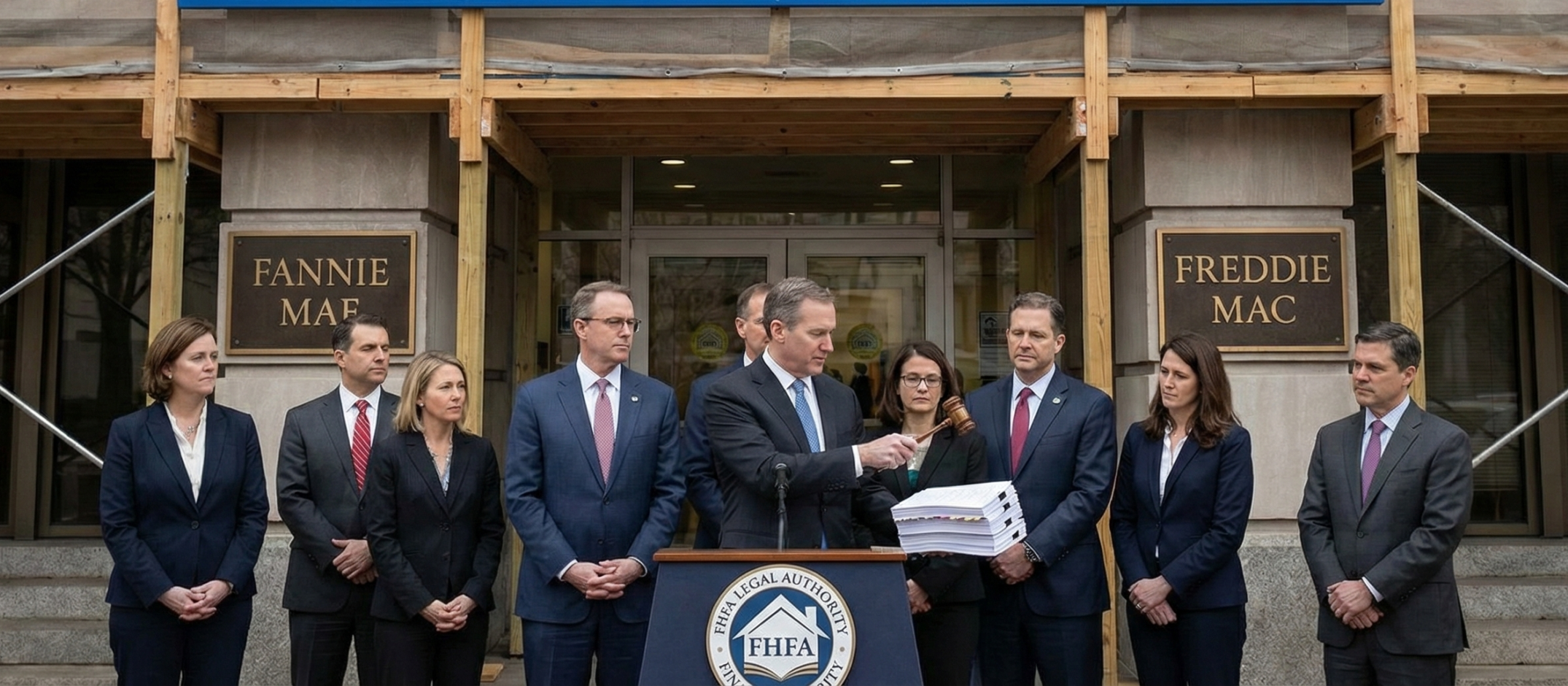
Can Trump actually do this without Congress? Short answer: Yes. Here’s why it matters.
Since September 2008, both Fannie Mae and Freddie Mac have operated under conservatorship of the Federal Housing Finance Agency. Under the Housing and Economic Recovery Act (HERA), FHFA as conservator assumes “all rights, titles, powers, and privileges” of the enterprises’ officers, directors, and stockholders.
The conservator can operate Fannie and Freddie in ways it believes will “preserve and conserve” assets and restore safety and soundness. Courts have consistently affirmed FHFA’s broad discretion to manage the GSEs’ portfolios, including buying and selling mortgage securities.
Strategic insight: FHFA Director Bill Pulte has clear legal authority to instruct these entities to deploy their capital into additional MBS purchases without new legislation, as long as actions align with safety-and-soundness goals.
Contrast this with the Federal Reserve, which Trump cannot order to launch or expand bond-buying programs due to its statutory independence. That’s precisely why this plan leverages the GSEs’ existing balance sheets rather than Fed quantitative easing.
The Risks Nobody’s Talking About
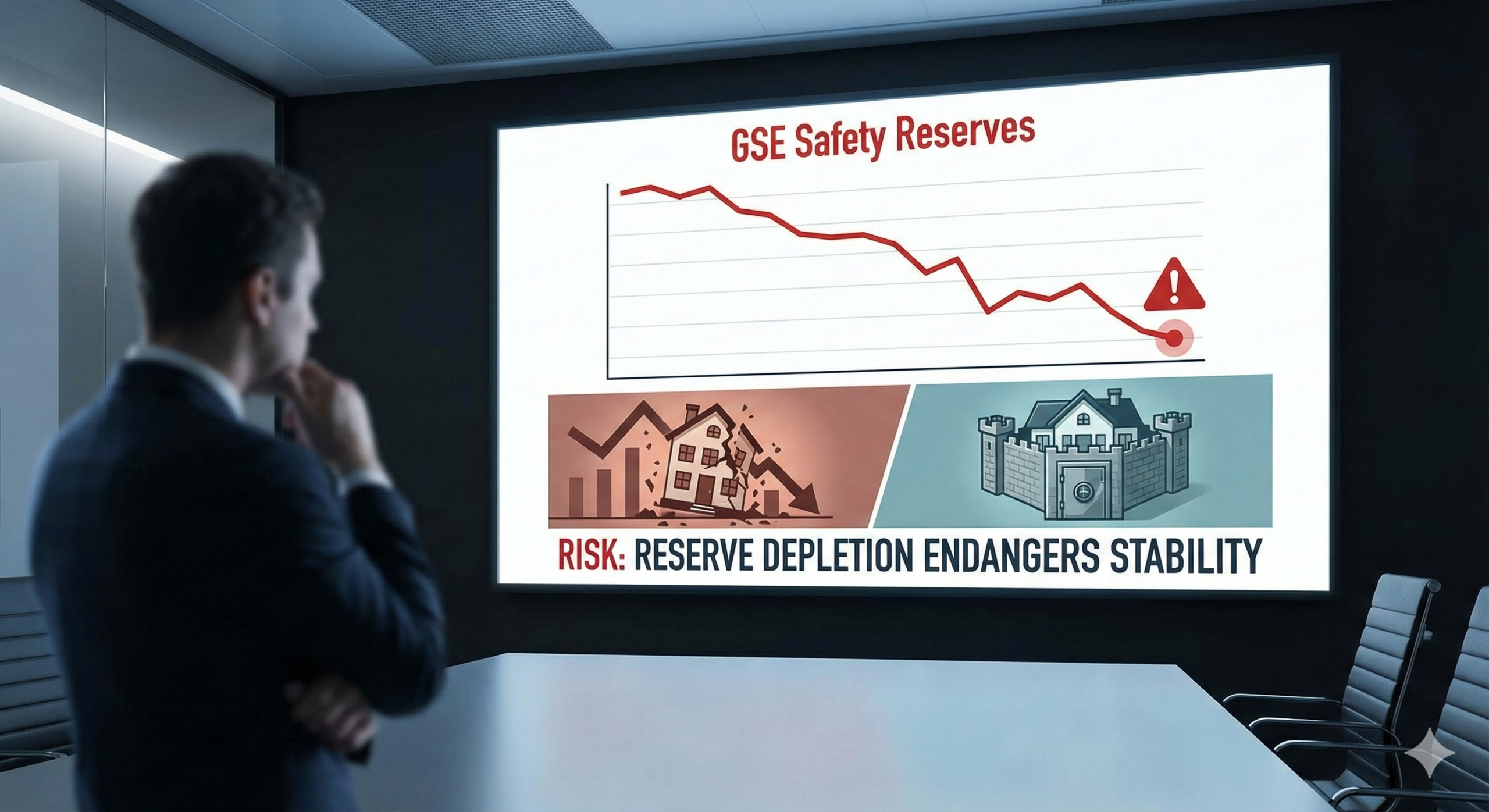
1. Depleting Safety Reserves in an Uncertain Economy
Fannie Mae and Freddie Mac’s capital buffer was designed to protect against severe downturns, not to manipulate rates in normal markets. Using $200 billion of that cushion for rate suppression potentially leaves the GSEs more vulnerable if recession or credit stress hits the mortgage market.
We’re not in 2008-level danger, but we’re also not in some risk-free environment. Federal banking regulators continue monitoring commercial real estate exposure, regional bank stability, and potential contagion risks from overseas markets.
2. Temporary Relief Without Structural Solutions
The Fed’s pandemic support worked partly because it was sustained and massive, $40 billion of MBS monthly for many months, plus trillions in Treasuries. A one-time $200 billion purchase may deliver only short-term rate relief unless broader capital-market conditions stay favorable.
Mortgage rates ultimately follow expectations for inflation, economic growth, and Fed policy, all reflected in Treasury yields. If inflation accelerates or fiscal deficits push yields higher, a finite MBS purchase program will struggle to keep mortgage rates suppressed.
What this means for you: Don’t make a 30-year housing decision based on a potentially temporary rate environment.
3. The Supply Shortage Everyone Ignores
Multiple research groups estimate the U.S. faces a shortage of millions of homes relative to household formation and demographic demand. A Goldman Sachs analysis places the national shortfall around 4 million homes, driven largely by years of underbuilding after the 2008 crisis.
Regulatory barriers, zoning restrictions, and high construction costs continue limiting new supply, especially in high-growth regions like ours. The massive South Creek Ranch development I’ve been tracking (5,200 acres purchased for homes and businesses) represents exactly the kind of supply response we need, but projects of that scale take years to deliver finished homes.
Strategic reality: Lowering financing costs without significantly boosting supply risks driving prices up instead of restoring true affordability. This is Economics 101, but most agents either don’t understand it or won’t mention it because it complicates their “buy now” messaging.
4. The Institutional Investor Ban Wild Card
Trump has also proposed banning or severely restricting large institutional investors from purchasing single-family homes, arguing they crowd out families. While this resonates politically, housing economists note that institutional owners represent well under 2% of U.S. single-family homes.
Analysts at Morningstar and other outlets warn that banning institutional buyers may actually reduce new construction and rental-home supply without significantly improving affordability. In other words, even if enacted, inventory may not grow enough to materially lower prices and might actually reduce supply in some submarkets.
Strategic insight: Watch this policy development closely, particularly in areas where institutional buyers have been active in new-build purchases for rental conversion. Some North Texas submarkets could see inventory impacts if this moves forward.
Fair Housing, Ethics, and Professional Standards
Before we get into strategic recommendations, let me be crystal clear about something: This analysis complies fully with the Fair Housing Act, RESPA, Texas advertising regulations, and the NAR Code of Ethics.
That means:
- No discrimination: This discussion focuses exclusively on economic and geographic factors, never targeting or excluding any protected class based on race, color, religion, sex, disability, familial status, or national origin per the Fair Housing Act.
- No RESPA violations: I’m not recommending specific lenders, products, or fee arrangements that could raise kickback concerns under the Real Estate Settlement Procedures Act.
- Transparent guidance: Following NAR Code of Ethics requirements, I present true market pictures without exaggeration and disclose relevant facts that affect decision-making.
- Consumer protection: I encourage you to compare multiple financing options, seek independent legal and financial advice, and make decisions based on your specific circumstances, not generic market hype.
This content is original, tailored specifically to North Texas market conditions, and reflects my daily tracking of local developments, pricing trends, and economic forces.
Strategic Action Plan for North Texas Buyers and Sellers

Alright, enough economic theory. Let’s talk about what you should actually DO with this information.
For First-Time Buyers in Ellis and Tarrant Counties
1. Stop Waiting for Pandemic-Era Rates to Return
Long-range forecasts from Freddie Mac, Fannie Mae, and major financial institutions suggest a “new normal” in the 5.5% to 6.5% range, not the ultra-low pandemic era. Waiting for 3% rates could mean sitting out years of potential equity growth in markets like Waxahachie, Midlothian, and Burleson.
Strategic reality: Every month you wait costs you both in rent paid and equity you could be building. If you’re financially ready, being right about market timing matters far less than time in the market.
2. Leverage Texas First-Time Buyer Programs Strategically
Programs like My First Texas Home and local city down-payment assistance can provide substantial support, often layered with FHA or conventional financing.
Combined with even a 0.25-0.5% rate drop from Trump’s program, these tools can bridge the qualification gap for many renters currently on the sidelines. I work with lenders who specialize in maximizing these programs while maintaining full RESPA compliance; never taking kickbacks, always prioritizing your best interest.
3. Target Value-Rich Submarkets
This is where local market intelligence creates massive advantage. Suburbs south and west of Dallas; Ellis County, southern Tarrant County, and select Johnson and Parker County communities, often offer 20-30% lower price points than northern DFW while retaining strong job access via Interstate 35W and Highway 67 corridors.
I track these submarkets daily, identifying neighborhoods where modest rate relief translates into maximum payment savings and long-term appreciation potential. While other agents chase listings in oversaturated markets, I’m positioning clients in emerging areas before they hit mainstream awareness.
4. Plan Your Refinance Strategy NOW
If you buy at ~6.2% and rates settle near 5.5-5.7% within 12-24 months, a refinance could dramatically recast your payment once you’ve built equity and paid down initial closing costs.
Most lenders suggest that a rate reduction of at least 0.75% with a break-even period under three years makes refinancing worth exploring. Factor this into your purchase decision, you’re not locked into today’s rate forever.
For Current Homeowners Considering Selling
If you’re sitting on a 2.5-3.5% pandemic-era mortgage, you’ve understandably hesitated to trade into a 6% rate environment. But market dynamics are shifting in ways that might make your move more feasible than you think.
As more owners gradually refinance out of ultra-low loans, the “lock-in effect” is slowly easing. A modest rate drop from Trump’s program could further normalize move-up and move-down transactions.
Strategic scenario: If this plan knocks rates closer to 5.7%:
- The payment differential between your current and new mortgage narrows substantially
- Buyer demand in your price bracket likely strengthens, especially for well-presented homes in move-in-ready condition
- You might capture today’s still-elevated prices while avoiding another wave of bidding wars if demand surges in spring
I can model your specific payment trade-offs and net-proceeds scenarios using real Ellis County and Tarrant County comps, not generic national averages that don’t reflect our actual market conditions.
Critical consideration: If you’re downsizing or relocating for lifestyle reasons (retirement, family proximity, lifestyle change), waiting for perfect rate alignment might cost you years of enjoying your ideal living situation. Sometimes the right move has more to do with life circumstances than rate optimization.
The Developments I’m Tracking That Will Impact Your Decision
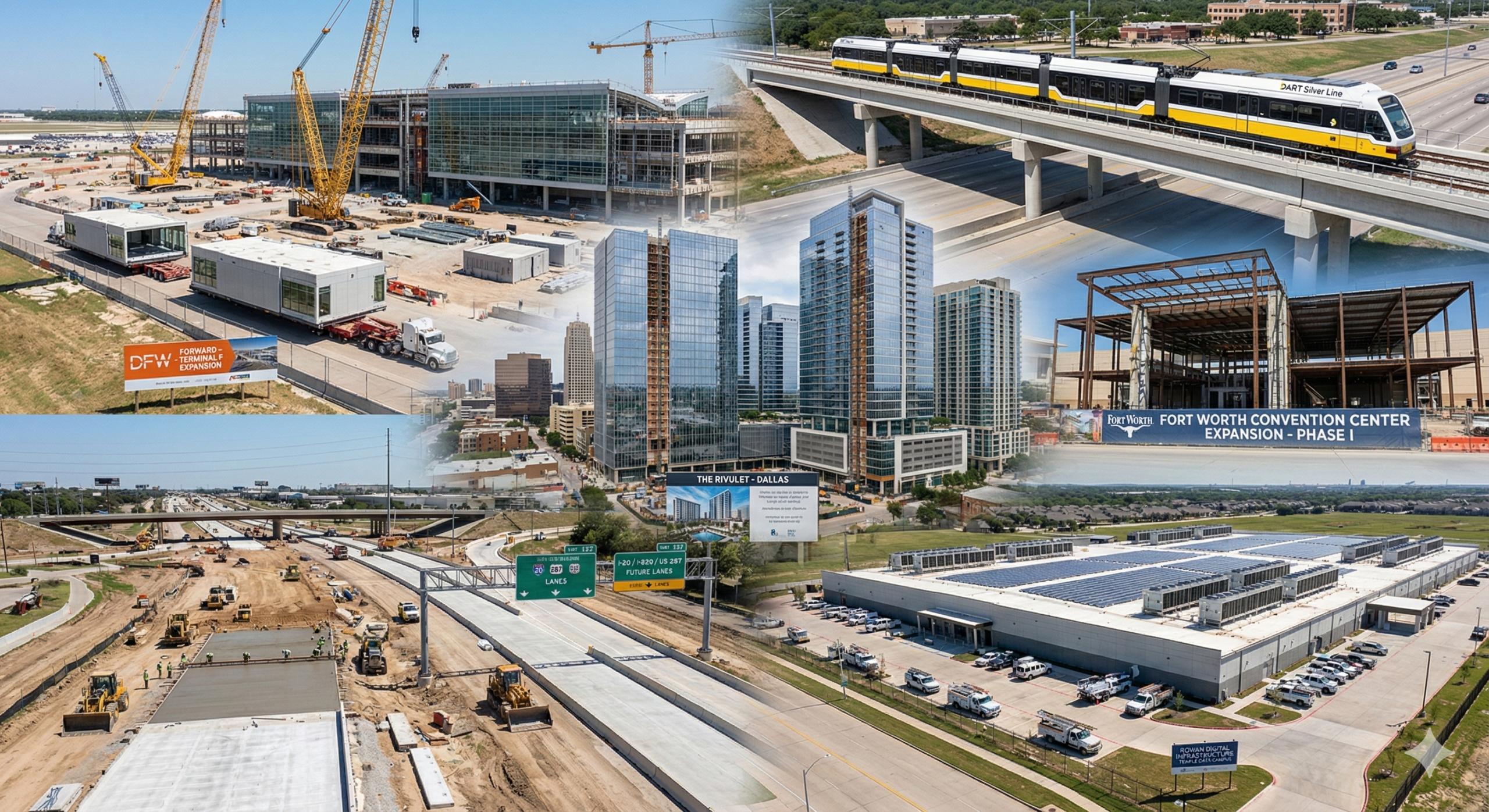
While other agents post generic rate updates, I’m tracking the actual projects and infrastructure changes that will drive long-term value in North Texas:
The Ferris Mega-Development: That 5,200-acre South Creek Ranch project I’ve mentioned isn’t just another subdivision, it’s a future city that will reshape Ellis County demographics, school districts, and commercial infrastructure. Understanding its timeline and impact zones gives my clients strategic advantage in positioning purchases.
Interstate 35W Expansion: TxDOT projects along this corridor will reduce commute times and open new development zones, creating value appreciation opportunities for buyers who understand infrastructure timing.
Waxahachie School District Capacity: New elementary school planning and boundary adjustments will affect desirability and prices in specific neighborhoods. I track these developments before they hit public awareness, positioning clients ahead of market reactions.
Commercial Development Indicators: New retail, medical facilities, and employment centers telegraph future residential demand. I monitor building permits, rezoning applications, and commercial lease activity to identify tomorrow’s hot neighborhoods today.
This is what “five steps ahead” actually means: not reacting to market changes, but anticipating them through systematic intelligence gathering.
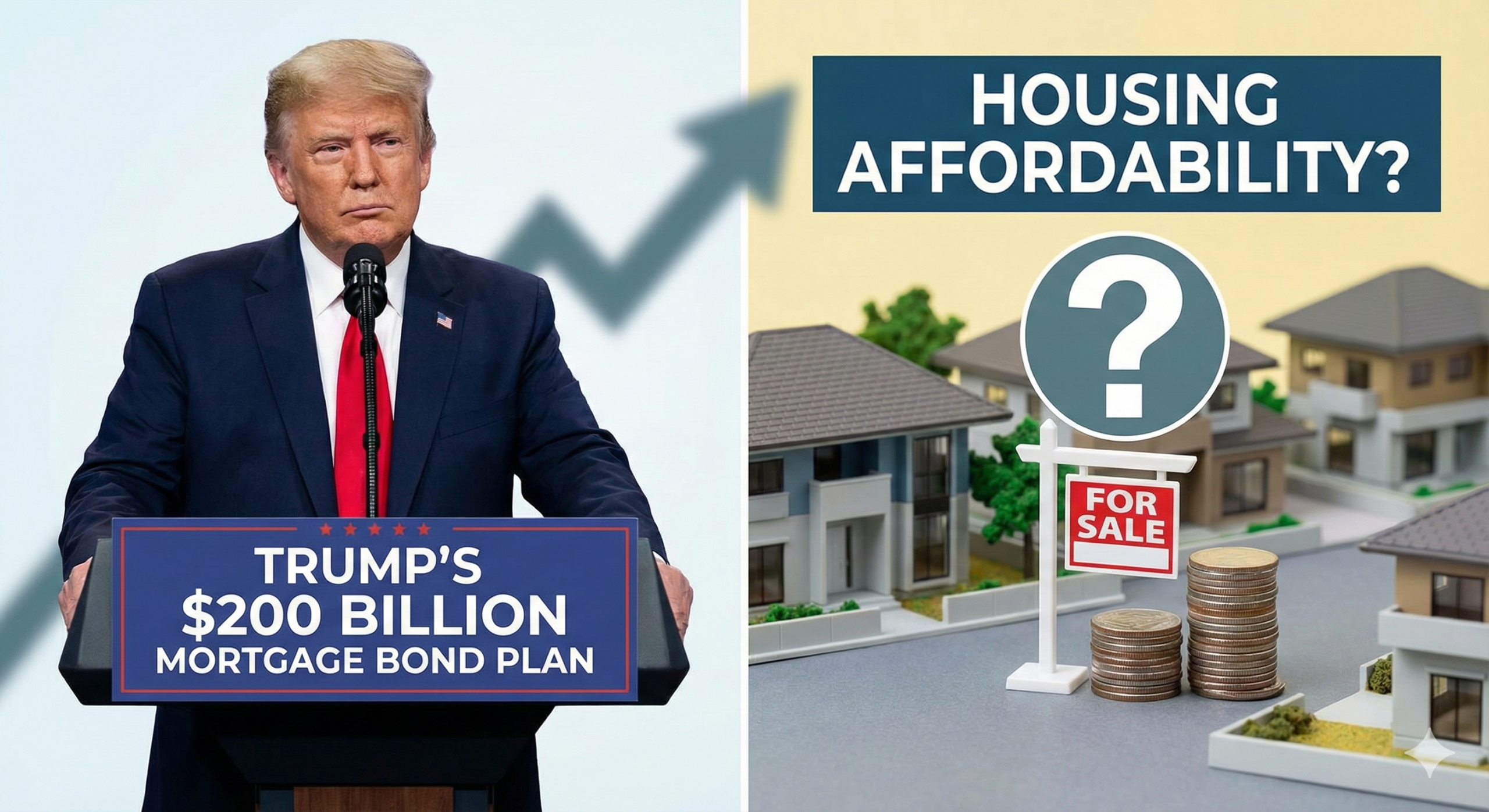
The Bottom Line: Will Trump’s Plan Fix Housing Affordability?
Let me give you the unvarnished truth that most agents won’t:
Trump’s $200 billion mortgage-bond purchase plan is meaningful but limited.
It may shave 0.25-0.5 percentage points off mortgage rates for a period of time, enough to matter for individual buyers, but not enough to revolutionize the market or restore 2020-level affordability.
It’s substantially smaller than the Fed’s COVID-era interventions and doesn’t directly address the structural shortage of housing supply that’s the real affordability driver.
Its ultimate success depends heavily on broader economic forces; Treasury yields, inflation trends, and Federal Reserve policy. All of which exist outside the administration’s control.
For North Texas specifically, the bigger story in 2026 is the combination of:
- Moderating price growth after the post-COVID surge, creating strategic entry points
- Gradually improving affordability as wage growth catches up to housing costs
- Ongoing population and job growth supporting long-term housing demand in the DFW region
- Infrastructure development opening new submarkets before they hit peak pricing
Smart buyers and sellers who understand these dynamics and who work with a data-driven agent who prioritizes Fair Housing compliance and transparent guidance over commission maximization, will be best positioned to navigate 2026 successfully.
The Strategic Mindset That Separates Winners from Followers
If you’ve read this far, you’re already thinking differently than 90% of buyers and sellers. Most people will read a headline, feel either excited or anxious, and make reactive decisions based on emotion.
You’re analyzing underlying mechanisms, understanding limitations, and thinking strategically about positioning.
That’s the Insider approach, staying five steps ahead by understanding systems while others react to symptoms.
The real opportunity isn’t in this specific Trump announcement, it’s in developing the mindset that lets you extract value from market chaos while competitors panic or chase trends.
When everyone’s celebrating rate drops, you’re asking “what does this do to inventory and prices?”
When everyone’s waiting for perfect conditions, you’re asking “what’s the opportunity cost of delay?”
When everyone’s following the crowd, you’re identifying the value zones they’re overlooking.
That’s how you build wealth in real estate, not by timing perfect market moments, but by making informed decisions based on comprehensive intelligence and strategic thinking.
Ready To Talk About Your Specific Situation?
This analysis gives you the framework. Now let’s apply it to your actual circumstances.
Are you a first-time buyer trying to figure out if this rate move changes your timing? A current homeowner weighing whether your move-up or downsize makes financial sense? An investor analyzing whether North Texas fundamentals support continued value appreciation?
I don’t pitch, I analyze. I don’t pressure, I educate. And I don’t sell generic national trends, I provide hyperlocal North Texas intelligence that actually matters for your decision.
Because here’s the truth most agents won’t admit: My success depends entirely on your success. If I position you in the wrong property, at the wrong price, at the wrong time, I might get a short-term commission, but I lose your referrals, repeat business, and reputation.
I’m building a media empire that happens to sell real estate. That means my authority depends on consistently providing accurate intelligence and strategic guidance, not closing maximum transactions at your expense.
So whether Trump’s program drops rates 0.25% or 0.5%, whether you buy next month or next quarter, whether you’re targeting Waxahachie or Midlothian or Whitney, let’s have a real conversation about what makes sense for YOUR situation based on actual data and strategic thinking.
Bobby Franklin, REALTOR®
Legacy Realty Group – Leslie Majors Team
📲 214-228-0003 | northtexasmarketinsider.com