
Why the inspection report is where deals die, and how strategic buyers turn these discoveries into negotiating power

Let me tell you something most North Texas real estate agents won’t: that perfectly staged home you just fell in love with? It’s probably hiding something.
Not because sellers are evil, though some are, but because homes, especially in our unique Ellis County market with its expansive clay soil and wild temperature swings, develop problems that most people either don’t notice or choose to ignore until they absolutely have to deal with them.
I’ve watched too many buyers walk through a home inspection completely unprepared for what they’re about to discover. They’re expecting a routine checkup. What they get is more like an autopsy that reveals the house has been dying slowly for years.
But here’s where I differ from most agents who treat inspection issues as deal-killing catastrophes: I see them as intelligence. As leverage. As opportunities.
While other agents panic when the inspection report arrives, I’m already three steps ahead, analyzing which issues are actually deal-breakers versus which ones are just negotiating ammunition. This is where you separate the strategic buyers from the emotional ones, and where you find out if your agent is actually worth their commission.
Let’s break down the real monsters hiding in North Texas homes, what they actually mean for your investment, and how to handle them like a strategic operator instead of a terrified first-timer.
The Foundation Reality Nobody Wants to Discuss
If you’re buying in Ellis County, Waxahachie, Midlothian, Red Oak, or anywhere in the DFW metroplex, we need to have an honest conversation about foundation issues that most agents dance around because they’re afraid of scaring you off.
Here’s the truth: Our soil is expansive clay. It swells when wet, shrinks when dry, and moves your house around like it’s sitting on a waterbed. This isn’t a defect, it’s geology. According to the Texas Real Estate Commission’s Standards of Practice, inspectors are required to observe foundation performance, but the real question isn’t “does this house have foundation issues?”
The real question is: “How bad are they, and what’s been done about it?”
I’ve seen buyers walk away from perfectly good homes because they saw the words “foundation movement” in an inspection report. Meanwhile, I’ve also seen buyers overpay for houses where previous foundation repairs were done poorly and will fail again within five years.
The strategic approach? Look for homes where foundation work has already been completed BY A REPUTABLE COMPANY with a transferable lifetime warranty. That’s not a red flag, that’s a feature. Someone else already paid $8,000-$15,000 to stabilize the house, and now you get the benefit of that investment plus warranty protection.
But if the foundation work was done by “Chuck’s Backyard Foundation Repair” with no warranty or documentation? That’s when I’m negotiating hard or walking you away from the deal.
The difference between a savvy buyer and a victim is knowing which foundation issues are maintenance realities in our market versus which ones indicate a house that’s genuinely failing. That’s why you need someone who’s seen hundreds of these reports and knows the difference between settling and structural failure.
Want to understand what inspectors are actually looking for? Review the TREC Standards for Foundation Performance before your inspection so you’re not blindsided by technical language that sounds worse than it actually is.
The Mold Panic: Separating Actual Threats from Negotiating Leverage

I need to tell you about the mold conversation because it’s where I watch buyers completely lose their minds over something that may or may not actually be a problem.
Not all mold is created equal. That small patch of mildew in a shower corner? That’s called “living in a humid climate.” It wipes off with bleach, and if your inspector is flagging that as a major issue, they’re either being overly cautious or they don’t understand North Texas conditions.
But active mold growth in the attic fed by a roof leak that’s been ignored for two years? That’s a different monster entirely.
The EPA’s Guide to Mold and Moisture provides excellent guidance: if the affected area is less than 10 square feet and there’s no ongoing moisture source, basic cleanup may be sufficient. But larger areas or active growth requires professional remediation, and more importantly, identifying and fixing the moisture source.
Here’s what I’m looking for when mold appears on an inspection report:
Surface mold from poor ventilation? That’s a bathroom fan and regular cleaning. Not a deal killer, maybe worth $200-500 in negotiation credit.
Mold in the attic from a roof leak? Now we’re getting serious. I need to know: How long has it been leaking? Is the roof damaged? Is the decking compromised? This could be anywhere from $1,500 to $15,000+ depending on severity.
Mold inside walls from plumbing leaks? This is where I’m bringing in specialists before we proceed, because now we’re talking about potential structural damage, drywall replacement, and remediation that could hit $10,000-$25,000.
The strategic buyer asks: “What’s causing this?” Not just “Is there mold?”
Because mold is a symptom. The disease is water intrusion, poor ventilation, or plumbing failures. Fix the disease, and the symptom goes away. Your inspector should be helping you identify root causes, not just documenting visible problems.
The Electrical Time Bombs in Older Ellis County Homes

If you’re looking at homes built between 1965-1980 in Waxahachie, Midlothian, or surrounding areas, and trust me, some of the best values in our market are in these neighborhoods, you need to understand the electrical issues that might be hiding behind those walls.
Aluminum wiring is the big one. During the copper shortage of the late 60s and early 70s, builders switched to aluminum wiring to save money. The problem? Aluminum expands and contracts with heat much more than copper, leading to loose connections at outlets and switches. Loose connections create resistance. Resistance creates heat. Heat creates fires.
According to the Consumer Product Safety Commission’s guidance on aluminum wiring, homes with aluminum wiring are 55 times more likely to have “fire hazard conditions” at outlets than homes with copper wiring.
But here’s what most agents won’t tell you: You probably don’t need to rewire the entire house.
The COPALUM crimp method, where special connectors join copper and aluminum wiring, is considered a permanent repair by the CPSC. Depending on the number of outlets and switches, this repair typically runs $3,000-$8,000 for an average-sized home. That’s not cheap, but it’s a lot better than the $15,000-$30,000 for a complete rewire.
Federal Pacific electrical panels are the other electrical nightmare that shows up in homes from this era. These panels have circuit breakers that sometimes fail to trip when they should, allowing circuits to overload and potentially start fires. If your inspection reveals a Federal Pacific panel (you’ll see “Stab-Lok” breakers), budget $2,000-$4,000 for immediate replacement.
I’m not trying to scare you away from these homes, some of them are in fantastic locations with mature trees, established neighborhoods, and great values. But you need to know what you’re buying and factor these costs into your offer price.
Strategic operators use this information as negotiating leverage. Emotional buyers just panic and walk away, leaving opportunities for smarter purchasers.
The Plumbing Nightmare Hiding Beneath Your Feet

Let’s talk about something most buyers never even think to check: the sewer line.
If you’re buying a home built before 1980, there’s a very good chance it has cast iron plumbing under the slab. And if it’s original to the house, that means those pipes have been corroding from the inside out for 40-50 years.
Cast iron sewer lines don’t fail suddenly, they deteriorate gradually until one day you flush your toilet and sewage backs up through your shower drain. By the time you notice the problem, you’re looking at $8,000-$20,000 in emergency repairs involving jackhammering through your foundation and replacing interior flooring.
Here’s the strategic move: On any home built before 1980, I’m writing into the inspection contingency that we’re conducting either a hydrostatic test or camera scope of the main sewer line. This costs $200-$400, but it can save you tens of thousands.
Modern pipe bursting and tunneling techniques allow contractors to replace sewer lines without destroying your floors, they tunnel from outside, pull the new pipe through the old one, and you never have to demolish your interior. But you need to know about the problem BEFORE you close, not six months after when you own it.
I learned this lesson the hard way watching a client discover catastrophic sewer line failure two months after closing on a 1972 home. The inspector didn’t flag it because there were no visible leaks. But the cast iron was so corroded that it collapsed during the first heavy rain.
$18,000 later, they had new plumbing. But that could have been $18,000 off their purchase price if we’d identified it during inspection.
This is exactly why experience matters in real estate. Newer agents don’t know to check these things because they haven’t seen enough deals go sideways. I have. And I make sure my buyers are protected.
The Termite Reality in North Texas

Let me give you the straight truth about termites: there are two types of homes in North Texas, those that have termites, and those that will get termites.
Our warm climate and moisture conditions create ideal termite habitats. According to Orkin’s termite probability map, we’re in a “moderate to heavy” termite pressure zone, meaning termite activity is common and expected.
But most buyers panic when they hear “termites” like it’s a death sentence. It’s not. It’s a manageable maintenance issue, if you catch it early and treat it properly.
What I’m looking for in the WDI (Wood Destroying Insect) Report:
Active infestation with visible damage? This needs immediate treatment and repair. Depending on severity, this could be $1,500-$5,000 for treatment plus structural repairs if framing is damaged.
Evidence of previous treatment with no current activity? This is actually good news, it means someone was proactive about protecting the house.
No evidence of termites but no treatment history? In our market, this is actually when I’m most concerned. It likely means nobody’s been monitoring or treating, and we need to do a thorough inspection before proceeding.
The strategic approach is to ALWAYS order the WDI report on any home with a pier and beam foundation or that shows any evidence of wood-to-ground contact. The $125-$200 cost of the report is nothing compared to discovering $10,000 in termite damage after you close.
And here’s a pro tip most agents won’t mention: you can often negotiate for the seller to pay for a termite bond (treatment contract) as part of the closing costs. This gives you ongoing protection and annual inspections, all paid for by the previous owner.
The HVAC Systems Everyone Ignores Until They Fail

In our North Texas climate where we hit 105° in summer and 25° in winter, your HVAC system isn’t a luxury, it’s survival equipment. And yet most buyers spend more time worrying about granite countertops than they do about the 15-year-old AC unit that’s one compressor failure away from death.
Here’s what you need to understand about HVAC in our market:
Expected lifespan in Texas heat: 12-15 years for AC units, 15-20 years for furnaces. If the system is within 2-3 years of these ages, I’m budgeting for replacement in your long-term costs even if it’s currently functioning.
Maintenance history matters: An 18-year-old system with documented annual maintenance might outlast a 10-year-old system that’s been neglected. During inspection, I’m asking to see service records.
Size and efficiency: An improperly sized HVAC system (too small or too large for the square footage) will never perform efficiently and will fail prematurely. Your inspector should be checking that the system is appropriate for the home size.
The Department of Energy provides guidelines on HVAC system efficiency and maintenance that can help you understand what questions to ask during inspection.
Replacement costs run $5,000-$12,000 depending on system size and efficiency ratings. This isn’t something you want to discover you need in July when it’s 103° outside and every HVAC company in DFW is booked for two weeks.
Strategic buyers factor this into their offer if the system is aging. Emotional buyers just hope it lasts and then panic when it doesn’t.
The Roof: Your First Line of Defense Against Texas Weather
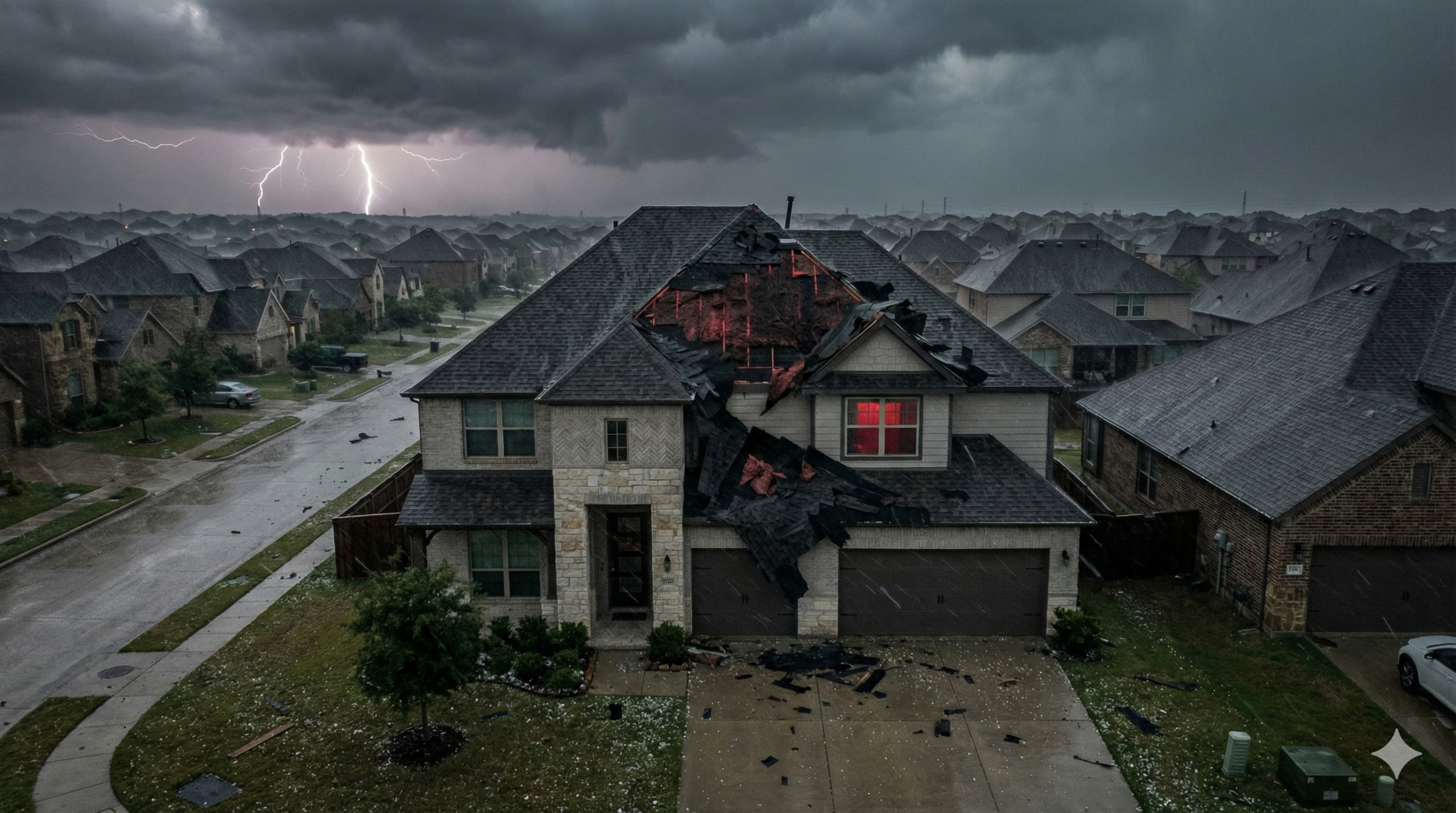
I’ve watched buyers obsess over cosmetic issues while completely ignoring that the roof has 3-4 years of life left. This is backwards thinking.
Roofs in North Texas take a beating from:
- Hail storms that can destroy a roof in 15 minutes
- Temperature extremes causing expansion/contraction
- UV radiation breaking down shingles
- High winds lifting and damaging shingles
Expected lifespan: 15-20 years for composition shingles, 20-25 years for architectural shingles, 50+ years for metal roofs.
But these are IDEAL conditions. A south-facing roof in direct Texas sun might only last 12-15 years. A roof that survived the 2016 or 2023 hail storms might have hidden damage that will cause leaks within a year.
What I’m checking during inspection:
- Age of roof (should be disclosed, verify with roofing company records if possible)
- Signs of previous hail damage
- Evidence of repairs or patches
- Condition of flashing around chimneys and vents
- Attic ventilation (poor ventilation shortens roof life significantly)
If the roof is over 15 years old, I’m negotiating for either replacement before closing or a credit equal to replacement cost ($8,000-$15,000 for average homes in our market).
Why? Because the moment you close on that house with a 17-year-old roof, it becomes YOUR problem. And your insurance company may not cover it because they’ll claim pre-existing condition.
Learn from This Old House’s comprehensive roof inspection guide about what professional inspectors look for and why it matters.
The Strategic Advantage: Using Inspection Reports as Negotiating Power

Here’s where most buyers, and frankly, most agents, completely fail to execute strategically.
They get a 40-page inspection report listing everything from “minor crack in driveway” to “major foundation movement” and they either:
A) Panic and walk away from the deal entirely, or
B) Send the entire report to the seller asking them to fix everything
Both approaches are terrible strategy.
The Franklin approach? Prioritize and execute.
I’m separating inspection items into strategic categories:
Deal Breakers (The Big Rocks):
- Active foundation failure
- Major structural damage
- Roof needs immediate replacement
- Electrical fire hazards
- Plumbing system failures
- Mold from active water intrusion
Significant Issues (Negotiating Points):
- Aging HVAC systems
- Minor foundation movement
- Older electrical panels
- Cast iron plumbing concerns
- Partial roof damage
Minor Items (Noise):
- Cosmetic issues
- Basic maintenance items
- Normal wear and tear
We’re negotiating hard on the deal breakers. We’re asking for concessions or credits on significant issues. And we’re completely ignoring the minor stuff because that’s just the cost of homeownership.
The strategic framework: Request repair estimates from licensed contractors for major items, then negotiate either for repairs to be completed by professionals (not the seller’s “handyman brother-in-law”) OR for credits that allow you to hire your own contractors after closing.
Sometimes the credit route is better because you control the quality of work and can choose contractors you trust. Plus, sellers are often more willing to give money than arrange repairs.
This is where having an agent who actually understands construction, contractors, and realistic pricing makes the difference between getting $15,000 in concessions versus $3,000 because your agent didn’t know how to properly document and negotiate the issues.
The Intelligence Advantage: Why Experience Beats Optimism

Every single week I’m tracking new developments, market trends, and yes, common issues in specific neighborhoods and builders.
I know which Ellis County subdivisions have foundation issues because they were built on improperly prepared lots in 2006-2008. I know which Waxahachie neighborhoods have cast iron plumbing that’s hitting failure age. I know which local builders used Federal Pacific panels in the 1970s.
This intelligence matters because it allows me to position you strategically BEFORE you even make an offer.
If I know a particular 1975 neighborhood has aluminum wiring issues, we’re factoring that into your offer price from day one. If I know a subdivision has a history of foundation problems, we’re building that into negotiations before you fall in love with a house.
This is the difference between reactive and proactive representation. Most agents react to inspection reports with surprise. I anticipate them based on decades of market intelligence and pattern recognition.
And when something unexpected DOES appear, because it always does eventually, I’m already networking with the right contractors, structural engineers, and specialists to get you accurate information and realistic pricing within 24 hours.
The Bottom Line: Chaos as Opportunity

While other buyers panic at inspection reports, strategic operators see opportunity.
That foundation issue? It just dropped the price $10,000 below market value, and now you’re buying a house that’s already been stabilized with a warranty.
That aging HVAC system? Seller just agreed to replace it with a brand new high-efficiency unit because they can’t sell the house without addressing it.
That cast iron plumbing concern? We just negotiated $8,000 in closing cost credits, and now you can replace it with modern PVC using contractors you trust.
Every inspection issue is leverage if you know how to use it strategically.
But this requires three things:
- An agent who actually understands construction and realistic repair costs
- A buyer who can separate emotion from strategy
- A willingness to walk away if the numbers don’t work
I’ve seen too many buyers overpay for problem houses because they fell in love and couldn’t walk away. And I’ve seen too many buyers walk away from great opportunities because they panicked over manageable issues.
The difference between winning and losing in North Texas real estate isn’t just about finding houses—it’s about having the intelligence and strategic framework to evaluate them correctly.
Your Strategic Next Step
If you’re preparing to buy in Ellis County, Waxahachie, Midlothian, Red Oak, or anywhere in the North Texas market, start building your team NOW:
- A buyers agent who has actually seen hundreds of inspection reports and knows the difference between “concerning” and “catastrophic”
- A home inspector who understands Texas-specific issues (not just generic checklist inspectors)
- Relationships with contractors who can provide realistic repair estimates quickly
And remember: the best time to negotiate is when you have information others don’t, and the willingness to walk away if the numbers don’t work in your favor.
That’s not being difficult, that’s being strategic.
While other agents are posting pretty pictures on Instagram, I’m tracking permit records, monitoring development projects, and building the contractor relationships that give my clients actual competitive advantages when inspection issues arise.
Because at the end of the day, you’re not just buying a house, you’re making a $300,000+ strategic investment that will either build or destroy wealth based on the decisions you make during these critical 10 days of inspection and negotiation.
Choose your team accordingly.
For more information on how to choose the right Home Inspector(click the image below)

Bobby Franklin, REALTOR®
Legacy Realty Group – Leslie Majors Team
📲 214-228-0003 | northtexasmarketinsider.com
The information provided in this article is for educational purposes and should not be considered professional engineering, legal, or structural advice. Always consult with licensed inspectors, engineers, and contractors for property-specific evaluations. Real estate regulations, including TREC standards, are subject to change. This article reflects market conditions and common practices as of December 2024.