

Let me be direct with you.
If you pulled your North Texas home off the market in 2025, you’re not alone. And the fact that you’re thinking about relisting right now, during the spring season, tells me you’re paying attention. But here’s the thing: attention without strategy is just anxiety. And anxiety doesn’t sell houses.
Nearly 45,000 U.S. homes that were delisted in 2025 came back to market in January 2026 alone, the highest January relist total in recorded history going back to 2016. That’s 3.6% of all active listings nationwide, showing up at once, hitting the MLS like a wave. And Redfin’s latest analysis shows that 36.1% of those relisted homes came back at a lower price than their original listing, also a record for January.
Meanwhile, existing home sales in 2025 dropped to just 4.06 million, the lowest annual total since 1995. Four consecutive years of declining volume. Home sales running 34% below the pandemic peak of 2021 with no dramatic recovery in sight.
Here’s what I want you to understand: these aren’t just numbers. They’re a map. And if you know how to read it, this market, right now, it contains more opportunity than most agents will ever tell you about. Whether you’re a seller trying to figure out your second attempt, or a buyer wondering if this is finally your window, I’m going to give you the full picture.
No fluff. No false optimism. Just the intelligence you need to move strategically.
Why Did So Many North Texas Sellers Pull Their Listings in 2025?
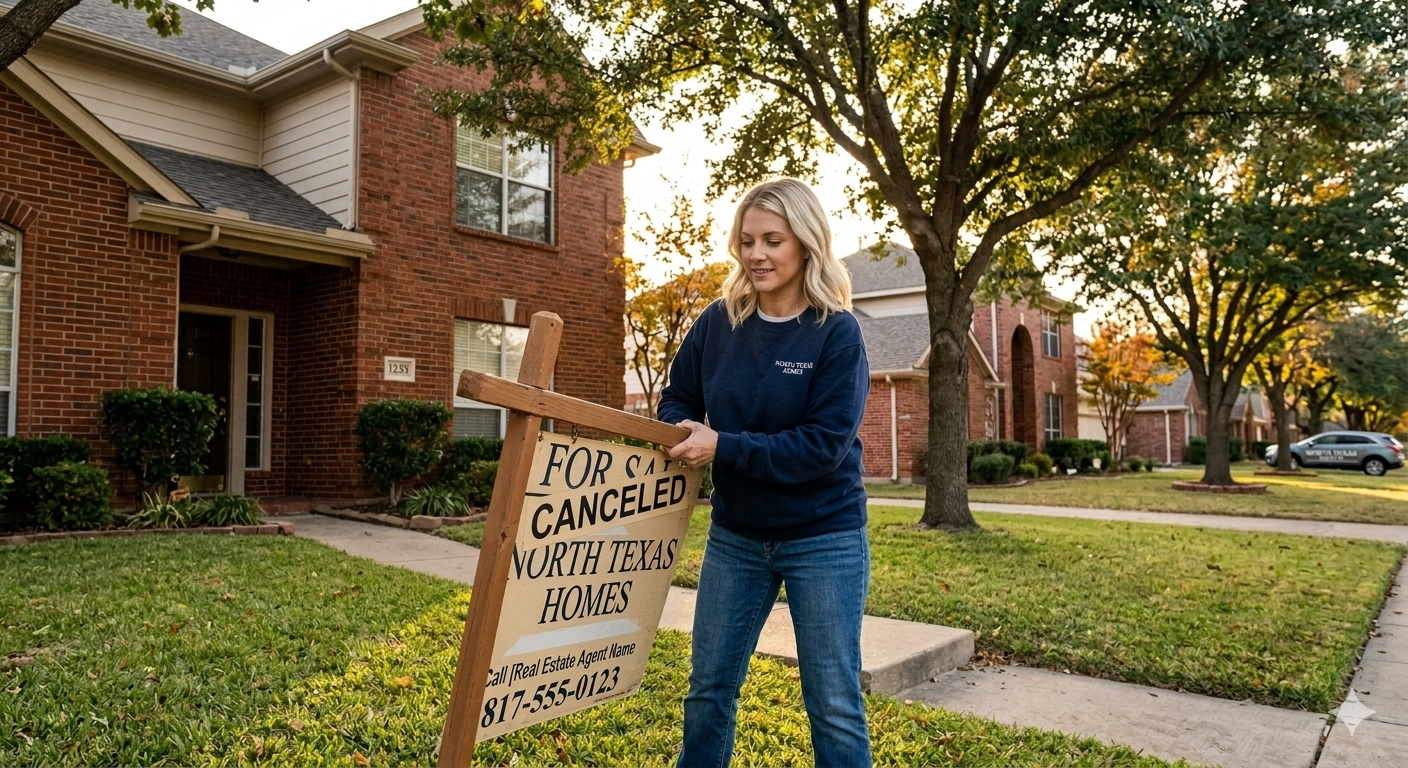
Before we talk about what’s happening now, you need to understand what created this moment.
December 2025 saw a record 112,788 homes delisted in a single month. Throughout 2025, the national delisting rate was the highest Redfin had recorded since they began tracking it in 2022, roughly 6% of active listings being pulled from the market every single month from June onward.
That’s not a blip. That’s a pattern. And here’s what was driving it:
Buyers retreated. Mortgage rates averaging 6.6% through 2025, stacked on top of home prices that hadn’t corrected meaningfully from their pandemic peaks, pushed qualified buyers to the sidelines. The number of active homebuyers dropped to an estimated 1.36 million in January 2026, the lowest level ever recorded.
Sellers dramatically outnumbered buyers. In January 2026, there were an estimated 44% more sellers than buyers nationally, the second-largest gap in Redfin’s data going back to 2013. By their own metrics, the U.S. has been a buyer’s market since May 2024.
Pandemic pricing created a psychological trap. Homeowners who purchased in 2021-2022 needed a specific sale price to break even, or at least to justify the move mentally. When the market didn’t deliver that number, sellers chose to wait rather than accept the reality in front of them.
Realtor.com senior economist Jake Krimmel nailed the psychology behind this: sellers were pulling their trump card, delisting, rather than cutting price. The problem? That behavior simultaneously kept the market stuck. Less supply meant prices didn’t fall enough to attract buyers, and buyers stayed away because prices hadn’t fallen enough. A self-reinforcing stalemate.
Right here in North Texas, NTREIS data showed median sales prices declining 5.3% year over year by December 2025, with days on market rising to 73 days. Sellers pricing off 2022 and 2023 comps were getting a hard education. Many chose to delist rather than face that reality publicly.
If that was you, I’m not judging it. I’m telling you it was rational given what you knew. Now let’s talk about what you need to know to get it right this time.
For context on how strategic pricing actually works in today’s North Texas market, start with our Pricing Strategies for North Texas Sellers guide before you do anything else.
What “Relisting” Actually Means and What Buyers Already Know

A relist is when a previously delisted home returns to the MLS after being off the market for at least 30 days. It’s framed as a fresh start. But here’s what you need to know before you convince yourself it’s a clean slate:
Buyers and their agents can see your history. Every price reduction. Every days-on-market count. Every time you came back. The MLS keeps records, and experienced buyer’s agents pull that data before their clients ever schedule a showing.
Redfin Premier agent W.J. Eulberg put it plainly: “If you delisted your home last year after cutting the price from $550,000 to $525,000, don’t try to relist it now at $550,000. Buyers are savvy.”
That’s not pessimism. That’s the market giving you real feedback and real feedback is the most valuable thing you can receive.
The Case for Relisting at a Lower Price
The data speaks here. With 36.1% of January relistings returning at a reduced price, a record share, sellers who are willing to align with current market realities are the ones actually closing deals.
A price reduction makes strategic sense when:
Your home had consistent showing traffic but no offers. That’s the market telling you: “We like the property, just not at that number.” Showings without offers is not a marketing problem. It’s a pricing problem.
Comparable homes in your neighborhood sold while yours sat. If the comps closed and yours didn’t, the market has told you everything you need to know.
Your original price was based on 2022 or 2023 data. Those comps are expired. The North Texas market has moved, median prices are down 3-5% depending on county, and yesterday’s numbers don’t justify today’s ask.
Your days on market exceeded the local average. In North Texas, correctly priced homes are selling in 45-65 days. The overall market average sits at 65-73 days and that average is high because mispriced inventory is dragging it up.
When a Price Cut Alone Isn’t the Answer
Sometimes the listing failed not because of price, but because of presentation or marketing. Before you automatically cut, ask:
Were showing feedback comments consistently about condition? Deferred maintenance, cosmetic issues, or dated finishes? A $10,000 price cut might create less traction than $4,000 in targeted improvements that remove buyer objections before they form.
Were your listing photos mediocre or outdated? In a market where buyers start their search online, photos are your first showing. Bad photos on a good house is a fixable problem and it doesn’t cost you equity.
Did your previous marketing reach buyers across all platforms, or just MLS and a Zillow auto-feed? If buyers didn’t see your home, price isn’t the issue.
The strongest relisting strategy usually combines both: meaningful presentation improvements and a price that reflects March 2026 comps. That combination gives the listing a genuinely new identity, not just a recycled one with a lower number attached. Check our Home Sellers’ Checklist for a pre-relist preparation blueprint you can actually execute.
Is This Really the Worst Housing Market in 30 Years?
The headline “Home Sales Hit Lowest Level Since 1995” has been making the rounds. And yes, 2025 existing home sales came in at 4.06 million, matching the worst annual volume since the mid-90s. The historical average is around 5 million transactions per year, which means this market has been running roughly 20% below normal for three consecutive years.
But “worst” is a lazy read. Let me give you the complete picture.
This is not 2008. There is no foreclosure crisis building beneath the surface. Today’s stagnation is driven by affordability constraints and rate sensitivity, not by distressed homeowners losing properties they couldn’t afford. The fundamentals of the housing stock are sound. Equity levels remain high. Unemployment is not the issue.
Home prices haven’t collapsed either. Nationally, the median home sale price rose 1.1% year over year in January 2026 to $422,921, modest growth, but growth. The market has not corrected dramatically because the supply shortage from years of underbuilding is still a structural backstop.
And here’s the shift that changes the calculus going forward: for the first time since Q3 2020, more American homeowners carry a mortgage rate above 6% than below 3%. The “lock-in effect”, the psychological and financial barrier that kept millions of homeowners from selling because their 3% mortgage was too good to trade, is dissolving. Inventory will grow as a result.
What we’re actually in is what I’ve been calling the Great Housing Reset, not a crash, and definitely not a boom. The first genuine rebalancing of supply and demand since the pandemic distorted everything in 2020 and 2021. For a full breakdown of what this reset looks like from an authority standpoint, read our 2026 Housing Market Forecast for North Texas.
University of Texas at Arlington real estate expert Sriram Villupuram described the DFW market as “transitioning from a frenzied seller’s market to a more balanced but slower environment,” with home values falling approximately 5% in 2025 and likely to remain flat or slightly lower through mid-2026. That’s a professional academic telling you what I’ve been tracking on the ground. The transition is real. The opportunity inside that transition is also real, if you know where to look.
How Is the DFW and North Texas Housing Market Actually Performing in 2026?

The DFW metro is living out the national story with regional amplification. More inventory growth, more price softening, but also stronger long-term demand fundamentals than nearly any comparable market in America.
Here are the numbers that actually matter:
Active inventory has surged dramatically. DFW has nearly 30,000 active listings – close to a record high and roughly 4x the inventory levels seen in 2021. Among the nation’s 50 largest metros, DFW had the fourth-largest increase in active inventory year over year. If you’re a seller, you have more competition. If you’re a buyer, you have more options than you’ve had in half a decade.
Prices have softened, but not collapsed. The DFW median sits around $375,000, with Zillow showing prices down 3-4% year over year. Tarrant County’s median sale price is approximately $340,000, down 0.73%, with average home values at $316,231, down 3.0%.
DFW has a relisting problem above the national average. Redfin’s metro data shows Dallas with 1,484 relistings in January (5.7% of active listings) and Fort Worth with 590 (5.2%) — both well above the 3.6% national average. Sellers in this market are struggling more than most.
Homes are moving slower across the board. Fort Worth homes spent a median of 66 days on market in January. Correctly priced properties are still selling, they’re just not selling in weekend bidding wars the way they did in 2021.
Rates have dropped into the 5% range for the first time since late 2022. As of early March 2026, the 30-year fixed rate sits at approximately 5.87-6.02%. This is the rate improvement the market has been waiting for. It’s starting to move buyers off the sidelines.

Where North Texas Diverges: The Hyperlocal Picture
This market is not uniform, and understanding where you are in the local landscape matters more than any national headline.
Northern suburbs are under the most pressure. Frisco, Prosper, Celina, these Collin and Denton County markets have experienced some of the steepest declines because heavy new construction is competing directly with resale inventory. Builders offering incentives and rate buydowns on brand-new product are tough competition for a resale home that needs work.
Southern DFW is holding value better and attracting serious buyers. Ellis County cities like Waxahachie, Midlothian, and Red Oak continue to draw first-time buyers and out-of-state relocators who are priced out of Dallas and Tarrant County but won’t sacrifice quality of life. This is where I operate daily, and I’m watching real buyer activity that national data doesn’t capture.
The “Westoplex” is the next major growth frontier. UTA’s Villupuram specifically identified Fort Worth and surrounding western counties as the region’s next expansion corridor, as eastern DFW faces land constraints and rising development costs. If you’re an investor or a buyer thinking five years ahead, pay attention to this.
Luxury is outperforming starter and mid-tier. Recent data shows starter and mid-tier homes declining more than 3% in price while the luxury segment gained 3.5%. Higher-end buyers are less rate-sensitive and that dynamic is really showing up in the numbers.
For the complete 2026 projections including where to find value across the corridor from South DFW to Waco, read our full North Texas Housing Market Forecast.
Will Mortgage Rates Keep Dropping? What This Means for Your Relisting Decision
I want to be direct with you about rates because there’s a lot of noise right now and you deserve a clear read.
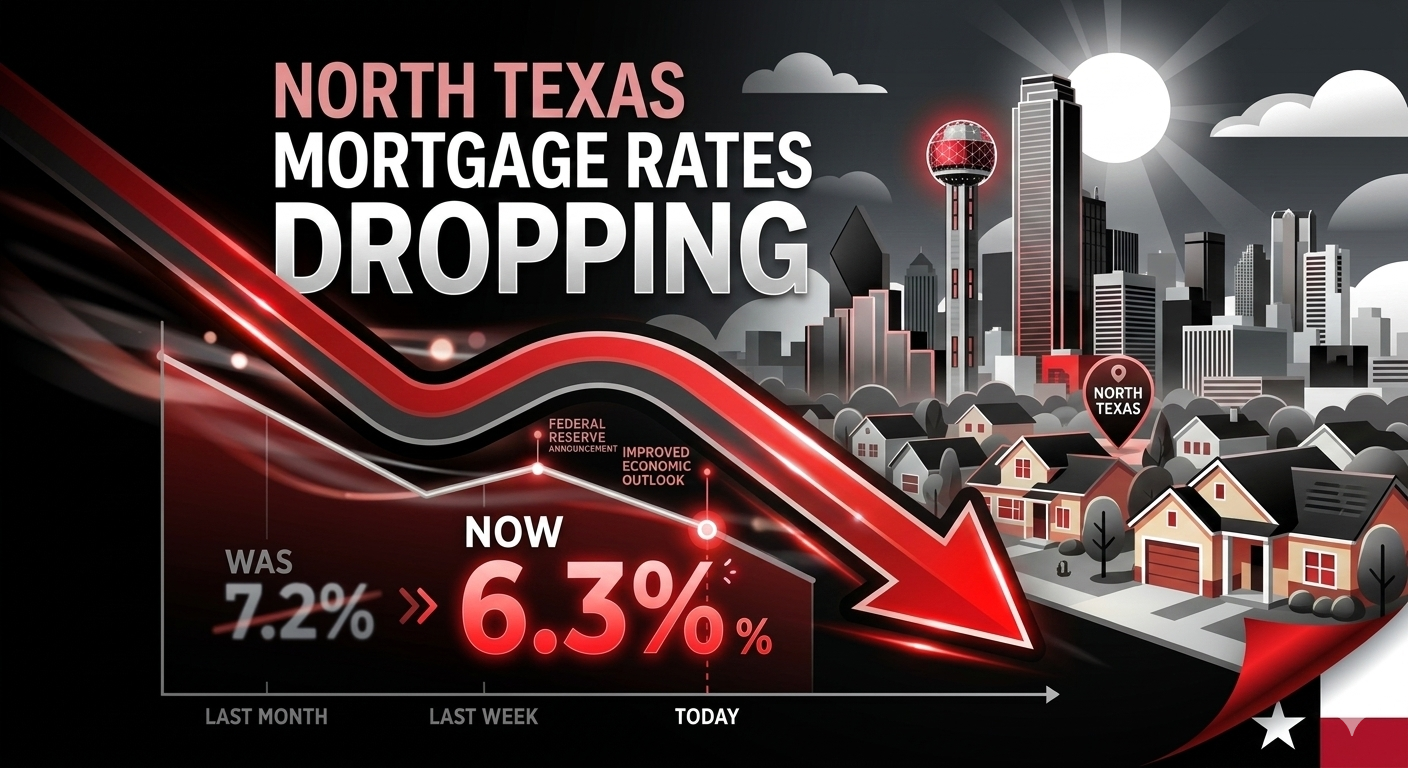
Rates have dropped from their 2024 peak near 7.2% to approximately 5.87-6.02% as of early March 2026, reaching the lowest levels since late 2022. Bankrate projects the 2026 average around 6.1%, with a possible range of 5.7% to 6.5%. J.P. Morgan forecasts fixed rates staying above 6% throughout the year, with adjustable-rate products potentially moving lower if the Fed continues to ease.
What nobody should be telling you: that rates are going back to 3%. That’s not where this is headed. The era of historically anomalous cheap money is over. Plan accordingly.
The Rate Window Is a Double-Edged Sword
Here’s the strategic reality for sellers who are relisting now:
Lower rates are pulling sidelined buyers back into the market. Mortgage purchase applications surged 16% in a single week after rates dipped. Spring 2026 is shaping up to be the most active buyer season in several years. That’s real demand forming right now.
But lower rates also incentivize more sellers to relist and list simultaneously. Redfin economist Asad Khan flagged explicitly that relistings could boost supply further, potentially giving buyers more negotiating leverage even as their financing improves.
The strategic window, the gap between buyer demand heating up and seller competition reaching peak spring intensity, is right now. It’s not next month. It’s not after Easter. The sellers who move in March, with correct pricing and strong presentation, are walking into the market before the wave of competing inventory arrives. That’s a meaningful tactical advantage.
For a deeper read on how the rate environment is playing out locally, see: Mortgage Rates Just Dropped Below 6%: What It Means for North Texas.
How to Relist Your Home Successfully in 2026: The Playbook
Let me be blunt about something. Relisting without a fundamentally different strategy is the most common mistake sellers make when they come back to the market. One experienced agent said it plainly: “It is delusional to think that it’s going to just sell itself. If it didn’t do it before, it won’t do it again.”
You have to earn the sale. Here’s how you do it.
Step 1: Price Based on March 2026 Comps Not What You Paid or What You Need
I understand the emotional math sellers do. You bought at a certain price, you made improvements, you have a number in mind that feels fair. I respect that. But the market doesn’t care about your emotional math. It cares about current comparable sales.
NAR data shows that 65% of sellers who sold at full price did it without reductions, because they priced right from day one. Sellers who made multiple reductions consistently achieved worse final outcomes than sellers who made one decisive adjustment upfront.
Pull comps from the last 60-90 days only. In a market where North Texas median prices have declined 3-5% over the past year, using 2024 data as your pricing anchor will put you 10-15% above where buyers are willing to go. And no amount of marketing fixes a 10% overpriced listing.
Step 2: Make the Home Look Different Before It Relists
Buyers who saw your home during its first run remember it. Their agents remember it. The MLS algorithm remembers it. If you come back with the same photos, the same description, and the same presentation, you are not relisting, you’re just reprinting the same rejection letter.
Before you repost:
Fresh professional photography is non-negotiable. Not updated with the same photographer. Fresh eyes, fresh angles, and ideally a different time of day or season to change the visual impression.
Address every single item that appeared in showing feedback. Deferred maintenance, cosmetic issues, staging problems, these are not negotiating chips. They’re disqualifiers. Fix them before you list, not during the inspection period.
Consider a targeted pre-list investment: fresh interior paint typically returns 107% according to NAR data. Updated light fixtures, landscaping refresh, and a deep clean cost far less than the first price reduction you’ll face if you skip them.
Step 3: Use Concessions Strategically Not Just a Lower Price
In today’s North Texas market, seller concessions are averaging over $17,000, or roughly 5% of asking price. Smart sellers are using those concessions as targeted tools rather than across-the-board price reductions.
Rate buydowns are the most powerful tool you have right now. Offering to buy down a buyer’s interest rate by 1-2 points through a temporary or permanent buydown can be more impactful on their monthly payment than a $15,000 price reduction and it costs you less from a net proceeds standpoint.
M three lender partners: Denise Donoghue at The Mortgage Nerd, Andrew Bryan at Miramar Mortgage, and Ethan Hester at Midtex Mortgage, can run the exact numbers so you can show buyers the real monthly impact side by side. That conversation changes the negotiation entirely.
Closing cost contributions. First-time buyers who now need a median 10% down payment, the highest in three decades, are often cash-constrained at closing even if they qualify on income. A closing cost credit speaks directly to their pain point.
Home warranties. A $500-$600 investment that removes a major psychological barrier for nervous buyers worried about what happens after closing. It’s cheap insurance on a deal you’ve already invested months in pursuing.
Step 4: Time the Relist With Precision
Don’t just throw it back on the market on a random Monday. Spring listing inventory surges in waves. You want to be in the market before the peak of that wave, not lost in it.
Mid-week listing launches, Wednesday or Thursday, maximize the weekend showing window. Buyers make showing lists on Thursday and Friday for Saturday and Sunday. Get in their queue.
Pre-spring timing right now, March through early April, captures the early buyers who are serious and motivated before the casual spring-break shoppers show up. Early buyers in a spring market are often the most qualified.
Step 5: Understand the Commission Landscape
Since the NAR settlement took effect in August 2024, sellers are no longer required to offer buyer’s agent compensation through the MLS. This is a genuine shift, and it creates both options and trade-offs.
Sellers who choose not to offer any contribution toward buyer representation may limit their buyer pool, particularly first-time buyers who are already stretched and whose agents now have written compensation agreements they need to address. Sellers who offer a contribution often attract a broader, more motivated buyer pool. Neither approach is universally right. It depends on your property, your price point, and your local market conditions.
What I’ll tell every seller: all commissions are negotiated individually. Nothing is fixed. Nothing is standardized. The right conversation with the right agent starts with your specific situation, not a formula.
For a complete pre-relist preparation checklist you can use starting today, download our Home Sellers’ Checklist: Prepare Your North Texas Home to Sell.
What Does This Market Mean for North Texas Buyers?

If you’re on the buy side, let me give you the honest read: you have leverage right now that hasn’t existed since before the pandemic. But markets don’t stay in one position indefinitely.
The gap between sellers and buyers is historically wide in your favor. A 44% surplus of sellers over buyers nationally means motivated sellers, multiple options, and real negotiating room. This is the market dynamic that produced the last generation of real estate wealth, buyers who moved when conditions favored them.
Discounts are on the table. The typical home that sold in January 2026 went for 2.1% below its final list price, the largest January discount since 2023. Only 20.8% of homes sold above list price, the lowest share for any January since 2020. You don’t have to fight for every home right now.
Concessions mean more than just price. Sellers offering rate buydowns and closing cost credits averaging $17,000+ are effectively subsidizing your purchase. In many cases, a buydown on a home with a slightly higher list price puts you in a better financial position than a bare-bones deal on a home priced $20,000 lower.
Affordability is actually improving. Income growth is outpacing home price growth for the first sustained period since the Great Recession, and housing affordability is expected to improve by 3% year over year by the end of 2026. The trajectory is moving in your direction.
But here’s what I need you to hear clearly: waiting for perfect is a strategy that costs you equity. With rates already below 6% and buyers responding, this window of maximum leverage will close as spring activity builds. The buyers who win in this market are the ones who move with intelligence and conviction, not the ones who wait to see if it gets a little better.
North Texas continues to offer exceptional long-term value. Cities like Mansfield deliver top-rated schools and major employment access. Red Oak offers entry-level price points under $320,000 with tech employer proximity that most buyers don’t even know about yet. Waxahachie brings quality of life, growth trajectory, and community that’s genuinely different from what you find inside Loop 12. These aren’t consolation prizes for buyers priced out of Dallas. They’re strategic positions in markets with long-term upside.
As I wrote in our Will Housing Become Affordable in 2026? analysis: the window for North Texas buyers exists in the gap between improving conditions now and full market recognition during the spring surge. Informed buyers act with predetermined triggers. Everybody else reacts.
What the Experts Are Projecting for the Rest of 2026
Here’s the consensus from the major forecasters. Not a guess. Not vibes. Actual projections from the organizations that spend their careers on this data.
| Forecaster | Home Price Projection | Sales Volume | Key Insight |
|---|---|---|---|
| J.P. Morgan | 0% (flat) | Slight improvement | Demand recovery offsets supply increases |
| Realtor.com | +2.2% nationally | 4.13 million (+2%) | “Most balanced market since the pandemic” |
| Redfin | +1.0% nationally | +3% sales volume | Income growth outpacing price growth |
| Zillow | +1.2% nationally | Gradual recovery | Regional variation significant |
| NAR | +4.0% nationally | Moderate increase | First-time buyers returning to market |
Sources: J.P. Morgan | CBS News / Realtor.com | Marketplace / Redfin | NAR
For DFW specifically, the expert projection is flat to slightly lower pricing through mid-2026, with potential stabilization in the second half as builder incentives, rate improvements, and steady job creation find equilibrium. NAHB chief economist Robert Dietz projects about 1% growth in single-family building and new-home sales for 2026, noting that Fed rate reductions positively impact construction and development loan costs which is good news for new supply and good news for buyers.
The picture isn’t dramatic in either direction. What it is, is clear: the market is rebalancing. The sellers and buyers who understand what rebalancing actually means will operate more effectively than those waiting for a return to 2021 or bracing for a 2008-style collapse. Neither of those is coming.
FAQ: Your Most Common Questions About Relisting and the 2026 Market

Is now a good time to sell my North Texas home?
Strategically priced homes in good condition are still selling. The spring 2026 season is projected to be the most active in several years as rates push below 6% and buyer demand responds. The sellers who win this season are the ones who price based on March 2026 data, not 2022 wishful thinking.
Why are so many homes being relisted right now?
The 45,000 January relistings represent sellers who pulled their homes in 2025 during historically low buyer activity and are now trying to capitalize on the spring season and improved rate environment. Most of them have unfinished business with the market and are trying again.
Should I relist at a lower price?
If you didn’t sell at your previous price, relisting at the same number rarely works. Buyers have long memories and agents track listing history. A meaningful one-time adjustment of 5-10% based on current comps outperforms multiple small reductions almost every time. See our Pricing Strategies guide for how to approach this correctly.
Are home prices going down in Dallas-Fort Worth?
Yes, modestly. DFW values fell approximately 3-5% in 2025 and experts expect flat to slight declines through mid-2026. Northern suburbs with heavy new construction have seen steeper softening. Ellis County communities like Waxahachie and established urban neighborhoods have held better.
What is a buyer’s market and are we in one?
When sellers outnumber buyers by 10% or more, Redfin classifies the market as buyer-favored. In January 2026, sellers outnumbered buyers by 44% nationally. The U.S. has been in a buyer’s market since May 2024. DFW is clearly in buyer’s market territory.
How long does it take to sell a house in North Texas right now?
The market average is 65-73 days, but correctly priced homes are selling in 35-45 days. The average is being pulled up by overpriced inventory sitting on the market. Don’t be part of that average.
Will mortgage rates go below 5% in 2026?
Unlikely. Bankrate projects the 2026 average around 6.1%. Most credible forecasters see rates in the high-5% to low-6% range through year-end. If you’re waiting for sub-5%, you’re waiting for something most economists don’t project happening without major economic disruption.
What are seller concessions and should I offer them?
Concessions are financial incentives for closing cost credits, rate buydowns, repair credits, etc., that help buyers get to the closing table. Texas sellers are currently averaging over $17,000 in concessions. In this market, strategic concessions, particularly rate buydowns, can be more effective than price reductions at motivating qualified buyers to close.
How do the NAR commission changes affect me as a seller?
Since August 2024, sellers are no longer required to offer buyer’s agent compensation through the MLS. Many still choose to in order to maximize their buyer pool. Buyers now sign written agreements with their agents before touring homes. All commissions are negotiated individually, none are fixed or standardized. Talk to your agent about what the right approach is for your specific property and market segment.
Is North Texas still a good long-term real estate investment?
Without question. Despite short-term softening, North Texas continues to benefit from major corporate relocations, consistent job creation, and steady population growth. DFW remains one of the most affordable major metros relative to income. The emerging “Westoplex” corridor centered on Fort Worth and western counties represents the next frontier of regional expansion. The long-term thesis for North Texas is not in question.
Your Next Move
Here’s what I know about this moment: the spring 2026 market is not going to wait for you to feel ready.
Buyers are coming off the sidelines as rates improve. Sellers are flooding back to the MLS in record numbers. The window between those two forces, where inventory is building but demand is accelerating faster, is narrow, and it’s happening right now.
If you’re a seller who relisted or is thinking about relisting: price off current data, invest in presentation, and move before the competition arrives. The sellers who win this spring are the ones who treat this as the strategic operation it is, not the ones who hope the market comes back to their number.
If you’re a buyer: you have leverage you haven’t had since before the pandemic. Use it. The informed buyers who move decisively in March and April are the ones who will tell their kids about the house they bought when the market finally turned.
Either way, I’m here for the strategy conversation, not just the transaction. I publish weekly market intelligence covering DFW, Ellis County, and the full North Texas corridor. If you want real analysis instead of hype, follow our Insider Daily News and let’s make sure you’re positioned correctly for what’s coming.
This content is original, written exclusively for North Texas Market Insider, and reflects the independent analysis and professional experience of the author. All information complies with the Fair Housing Act, RESPA, NAR Code of Ethics, Texas Real Estate Commission advertising standards, and all applicable federal and state regulations. No content in this article constitutes steering, commission fixing, or any practice prohibited by law. All commission structures referenced are general in nature — individual compensation is always negotiated independently.


Bobby Franklin is a REALTOR® with Legacy Realty Group | Leslie Majors Team, serving the Dallas-Fort Worth metroplex with a focus on Ellis County, Tarrant County, and the greater North Texas corridor from South DFW to Waco. Bobby specializes in data-driven market intelligence that helps buyers and sellers make strategic decisions backed by real-time analysis. Contact Bobby at 214-228-0003 or visit NorthTexasMarketInsider.com.




Join The Discussion