
The Dallas Mavericks have officially narrowed their search for a brand-new arena to two potential sites within Dallas city limits, and the ripple effects could reshape the North Texas real estate landscape for the next decade.
Whether you’re a homeowner wondering what this means for your property value, a buyer looking for the next high-growth neighborhood, or an investor scouting opportunities before the rest of the market catches up, this development demands your attention right now, not six months from now when everybody else finally figures it out.
I track this stuff daily. I’m reading permit filings, monitoring development timelines, following the money trail on mixed-use projects across the metroplex, and connecting the dots between macro headlines and hyperlocal opportunity. That’s what I do. And what I’m seeing with this Mavericks arena situation is one of the biggest real estate catalysts North Texas has seen since The Star landed in Frisco.
Let me break down everything you need to know. What’s happening, where, why it matters, and exactly how smart buyers, sellers, and investors should be positioning themselves right now.
What Is Actually Happening with the Dallas Mavericks Arena?
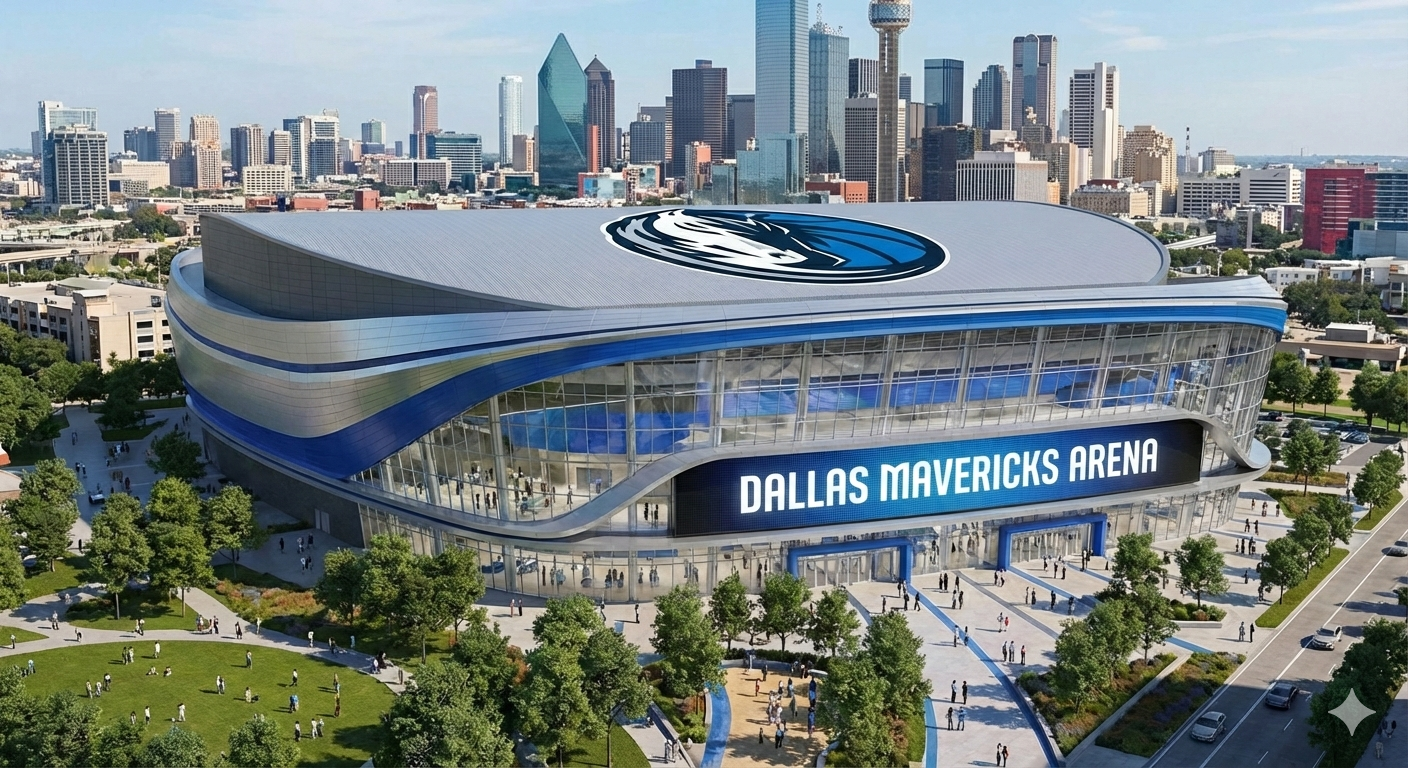
Mavericks leadership confirmed in January 2026 that the franchise has zeroed in on two finalist locations for a new arena and a 50-acre mixed-use entertainment district. Read that again. Fifty acres. This is not just a basketball arena. This is a city within a city.
The two finalists:
The former Valley View Mall site — a sprawling 110-acre tract at Preston Road and Interstate 635 in North Dallas.
Downtown Dallas — with the current Dallas City Hall site at 1500 Marilla Street as the leading candidate.
The team expects to make a final decision by approximately July 1, 2026, with a target opening in 2031 when their current lease at the American Airlines Center expires.
Here’s what most people are missing: the Mavericks aren’t just building a place to watch basketball. They’re envisioning a massive mixed-use hub with hotels, restaurants, retail, commercial space, residential development, and public gathering areas surrounding the venue. The franchise has already partnered with CAA Sports to secure naming rights and founding corporate partners. That tells you this project has moved from conceptual to concrete. The money is already moving.
Mavericks leadership has described this as one of the most significant evolutions in the team’s history, both on and off the court. And when ownership groups start using words like “evolution” and “transformation,” that’s when real estate professionals who are paying attention start mapping out the opportunity zones.
Why Are the Mavericks Leaving the American Airlines Center?
This is where the story gets interesting and where chaos creates opportunity.
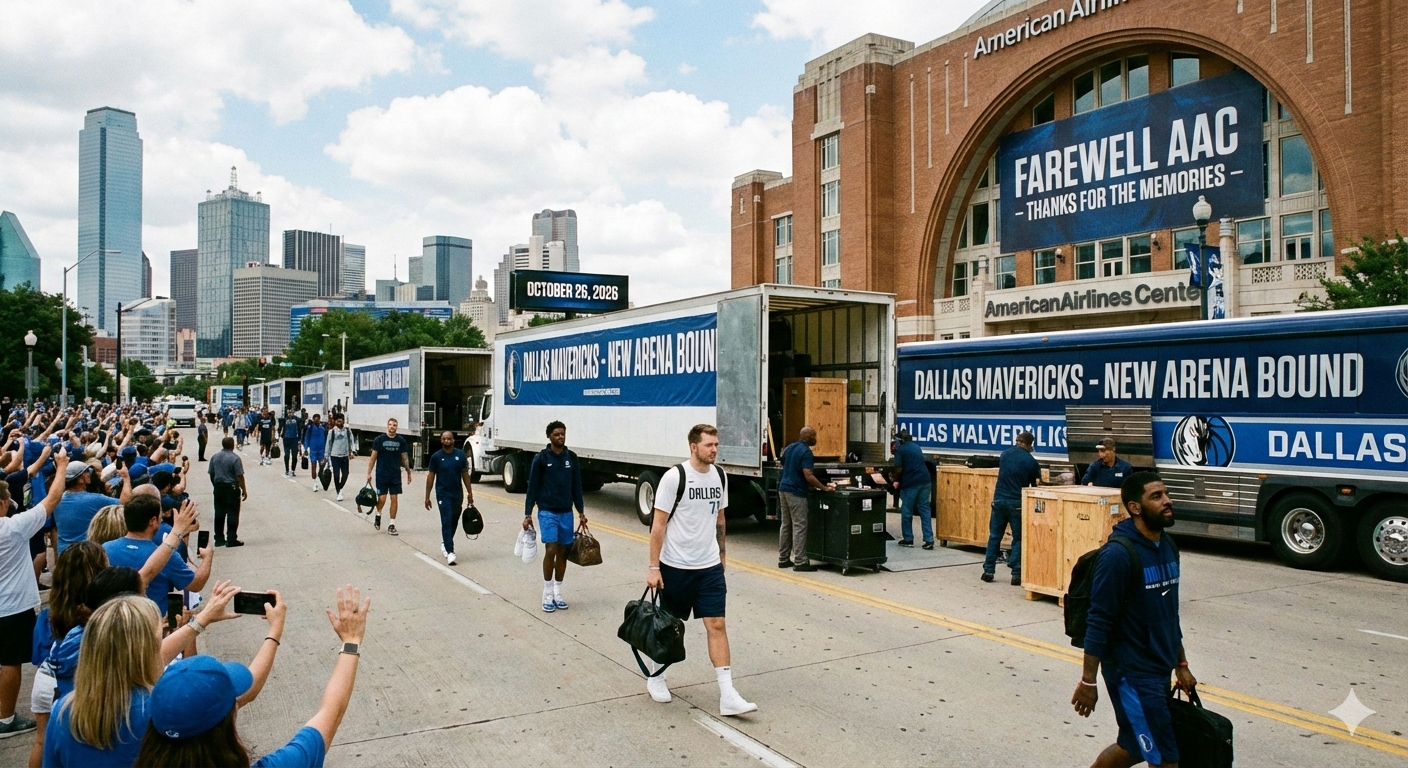
The Mavericks and Dallas Stars have shared the American Airlines Center since it opened in 2001, but a fierce legal battle has fractured the partnership. The Mavericks’ new majority owners, tied to the Las Vegas Sands Corporation, have alleged that the Stars blocked needed renovations and breached lease agreements. The Stars countersued, framing the dispute as an attempted power grab.
Corporate conflict. Legal drama. Billions of dollars in play. You know what Cory Ellison would say about this situation? “This could be fantastic.”
Because here’s the strategic read: the Mavericks’ ownership group has a long-term vision that goes way beyond basketball. They want to build a world-class entertainment district modeled after successful modern venues like the Golden State Warriors’ Chase Center in San Francisco, which has generated billions in economic activity since opening. They’re not running from a bad situation, they’re using the disruption as a launchpad for something dramatically bigger.
And the Mavericks aren’t the only franchise making moves. Reports indicate that the Dallas Stars are eyeing a possible billion-dollar arena at the Shops at Willow Bend mall site in Plano. That means the DFW metroplex could gain two brand-new professional sports venues by the early 2030s.
Both franchises’ current leases at the AAC expire in 2031. That’s the clock. And when the clock is ticking on decisions this big, the smart money starts moving well before the announcements go public.
How Does a New Sports Arena Affect Nearby Home Values?
This is the question every homeowner within a 10-mile radius of either proposed site should be asking. And the data here is compelling.
The Research Behind Stadium-Driven Property Appreciation
Multiple studies show that well-planned sports venues can boost surrounding property values in meaningful ways.
Housing values near sports stadiums have been found to increase by around 4-5% on average in many U.S. markets. That’s not speculation. That’s documented, peer-reviewed data across multiple metro areas and multiple decades of development.
Rental properties within about a mile of major stadiums can see rent premiums in the high single digits(7%-9% higher), especially when venues host year-round events, concerts, conventions, festivals, corporate gatherings on top of 41 home basketball games.
And here’s where it gets really interesting: when arenas are paired with broader urban regeneration strategies like mixed-use developments with offices, residential units, hotels, and restaurants, nearby home prices have shown increases in the double digits, sometimes exceeding 15%-20% or more over time.
The North Texas Precedent You Need to Understand
The precedent most relevant to what’s happening right now is local. When the American Airlines Center opened in 2001, the surrounding Victory Park district (formerly grain silos, meatpacking plants, and rail yards) transformed into one of Dallas’s most vibrant mixed-use neighborhoods. Today, Victory Park features museums, hotels, residential towers, and Class A office space. It hosts millions of visitors annually. That transformation didn’t happen by accident. It happened because a major sports venue anchored a strategic development vision.
Another DFW success story that proves the model: The Star in Frisco. The Dallas Cowboys’ 91-acre mixed-use campus brought office space, hotels, restaurants, and residential products to the area and helped cement Frisco’s reputation as a hub for elite sports and high-end suburban living. Before The Star, that corridor was just open fields. Now it’s one of the most desirable addresses in North Texas.
The pattern is clear. Major sports venue plus mixed-use development vision equals transformational real estate appreciation in surrounding communities.
What This Means If You’re a Seller Near the Proposed Sites
If you currently own a home near one of the potential Mavericks arena locations, the announcement alone can start influencing perceived value. Academic research has documented “announcement effects” where residential property values begin rising before shovels ever hit the ground, simply because buyers and investors start pricing in future development.
That’s intelligence you can act on right now. Not next year. Not when the bulldozers show up. Right now.
However, and this is critical, not every stadium project is a guaranteed win for property owners. Poorly planned projects that bring congestion, noise, parking issues, and inadequate infrastructure can actually drag down nearby values. The difference-maker is whether the arena is integrated into a thoughtful, walkable mixed-use district with green space, infrastructure improvements, and complementary amenities.
That’s exactly what the Mavericks say they want to build. And based on the ownership group’s track record and the scale of investment they’re signaling, I believe them.
Site One: The Former Valley View Mall North Dallas’s Biggest Opportunity?
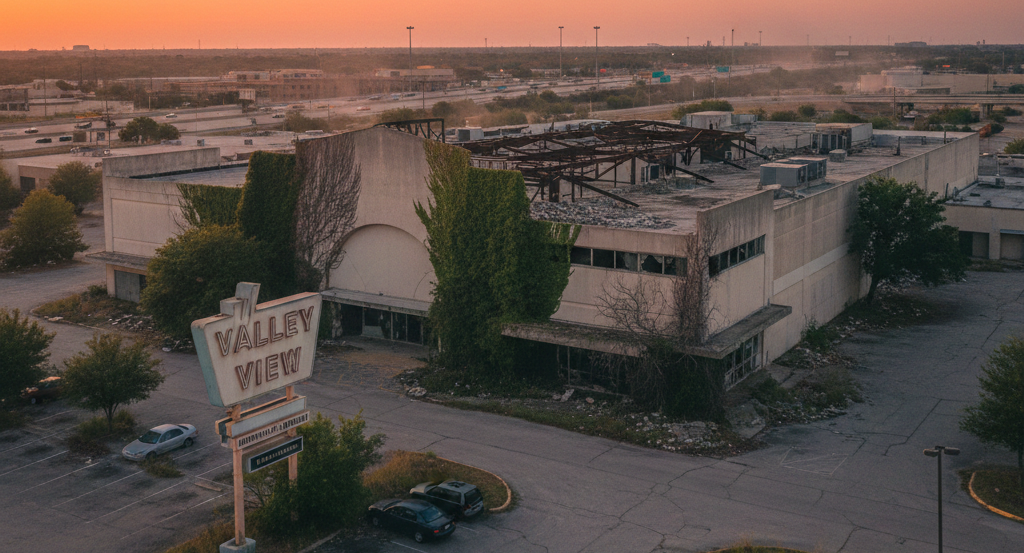
The Valley View Mall site sits on roughly 110 acres at Preston Road and I-635 in Far North Dallas. The mall mostly closed in 2015, was demolished in 2023, and has been sitting there waiting for its next chapter. That next chapter might be the most significant real estate development in North Dallas in a generation.
The broader area has been rezoned and branded as Dallas Midtown, with a multibillion-dollar vision that includes thousands of new residential units, Class A office towers, hotel and hospitality offerings, a large central park and green space, and an extensive lineup of retail, dining, and entertainment venues.
Why the Smart Money Favors This Location
Many commercial real estate analysts see Valley View as the logical choice, and when you look at the geography, it’s hard to argue.
From a location standpoint, this site is almost exactly midway between downtown Dallas and the booming Legacy/Plano corridor. It sits at the intersection of two major arterie, I-635 and Preston Road, its close to the Dallas North Tollway, and is within a short drive of both Love Field and DFW Airport. For a venue that needs to draw fans, corporate sponsors, and entertainment traffic from across the entire metroplex, this location checks every box.
Several major moves already suggest momentum is building. A luxury multifamily project, often described as a gateway development for Dallas Midtown, has broken ground on the site. Corporate giants like Toyota and Panasonic have been reported as supporters or stakeholders in aspects of the broader Midtown plan. And within just a couple of miles, Galleria Dallas has added Netflix House, a 100,000-plus square foot, permanent experiential entertainment venue that opened in late 2025 and is already drawing regional visitors.
If the Mavericks choose Valley View, the arena and surrounding district would effectively become the crown jewel of Dallas Midtown, tying together existing projects and spurring new ones. That’s not hope. That’s the trajectory the development data is already showing.
Neighborhoods That Could See the Biggest Impact
If Valley View wins the bid, here are the neighborhoods I’d be watching closely for heightened attention and potential appreciation:
Prestonwood — established, desirable, and positioned for a proximity premium to a world-class entertainment district.
Preston Hills and Preston Highlands — already solid residential communities that would benefit from the infrastructure upgrades and commercial investment the arena project would bring.
Northwood Hills — one of North Dallas’s hidden gems, with mature trees, strong schools, and the kind of neighborhood character that becomes even more valuable when a major amenity anchor drops nearby.
Campbell Green — close enough to capture spillover demand without being so close that traffic and noise become negatives.
Addison — already a dining and entertainment hub with its own identity. An arena two miles away turns Addison from a suburban destination into a legitimate entertainment corridor.
Condo and apartment communities surrounding Galleria Dallas — particularly with Netflix House already driving foot traffic, adding a Mavericks arena to the equation creates a density of attractions that dramatically increases rental demand and property values.
Many of these areas already offer strong schools, established streetscapes, and excellent access to employment centers. Layer in a world-class arena and entertainment district, and the long-term value proposition becomes something that’s hard to replicate anywhere else in the metroplex.
Site Two: Downtown Dallas City Hall Can an Arena Save the Urban Core?
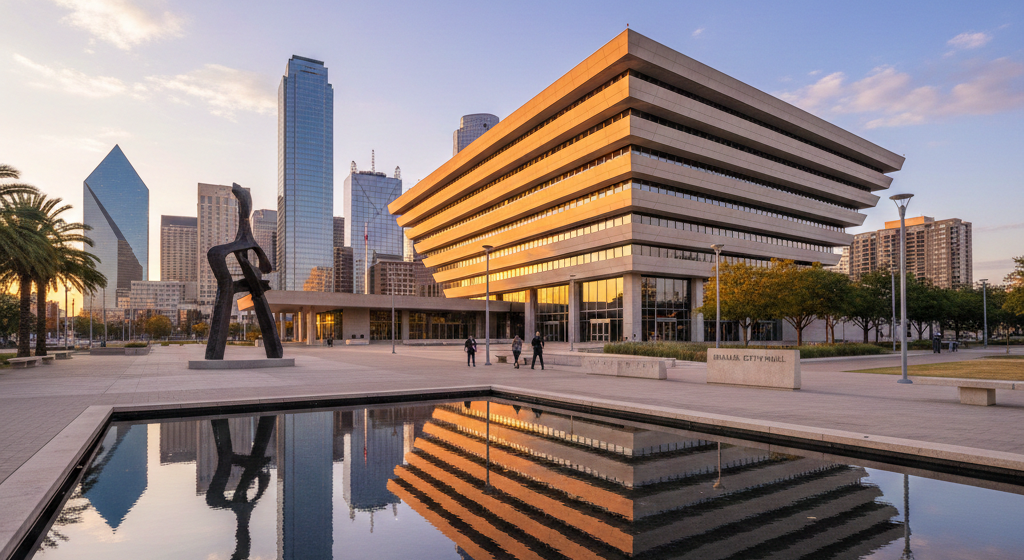
The alternative location under serious consideration is the Dallas City Hall site at 1500 Marilla Street. The iconic, I.M. Pei-designed structure is architecturally significant but functionally aging, and aging badly.
A 2026 report estimated that fully modernizing City Hall could cost a staggering 900 million to more than 1.1 billion dollars over the next two decades, with hundreds of millions needed just for urgent repairs. When the cost to maintain an existing building approaches a billion dollars, the conversation shifts quickly from “should we renovate?” to “what else could this land become?”
City leaders have begun exploring relocation options, effectively opening the door for a transformative reuse of the City Hall site, potentially as the anchor for the Mavericks’ new arena district.
Why Downtown Makes Strategic Sense
Downtown Dallas has been struggling with some fundamental challenges that an arena project could directly address.
High office vacancy rates have been dragging down the urban core. Corporate relocations to suburban hubs like Frisco, Plano, and McKinney have pulled talent and investment out of downtown. There’s a recognized need for more residential density, more nightlife, more reasons for people to actually be downtown after 6 PM on a weeknight.
An arena and entertainment district could inject exactly the kind of energy the urban core needs by driving foot traffic to restaurants and retail, supporting office-to-residential conversions that are already being discussed by developers, increasing demand for downtown apartments and condos, and leveraging existing DART light rail and transit infrastructure that suburban sites can’t match.
For buyers who love urban living and want to get ahead of a potential downtown renaissance, this scenario makes the following neighborhoods particularly interesting: The Cedars, Deep Ellum, Farmers Market District, Downtown proper, and even parts of Uptown and Victory Park.
The downtown play is the higher-risk, higher-reward scenario. If the arena lands here and the surrounding mixed-use vision executes, the transformation could rival what Victory Park did in the early 2000s, except on a much larger scale with much more sophisticated urban planning.
How Should Home Sellers in North Texas Prepare Right Now?
Whether you’re near a proposed arena site or elsewhere in DFW, the Mavericks’ decision will play out against the backdrop of a shifting but still healthy housing market. And sellers who understand the landscape have a significant advantage over those who are just hoping for the best.
The Current Dallas Real Estate Market Reality
As of early 2026, the Dallas-Fort Worth housing market is more balanced than the frenzied pandemic years. Home sales have ticked up year-over-year, but prices have seen modest corrections in some segments, and inventory has increased, giving buyers more choices than they’ve had in years.
Many analysts describe this as a “move-up and move-smart” market. Properly priced, well-presented homes are still selling, some of them quickly. But overpricing or cutting corners on presentation leads to longer days on market and deeper price reductions. The margin for error has gotten thinner, which means your strategy matters more than it has in years.
Positioning Your Home for Success
If you’re a homeowner near Valley View or downtown, here’s how to think about this strategically.
Leverage proximity. As specifics become clearer about the arena location, marketing that highlights walkability or quick access to the planned arena and district can be a genuine value booster. Buyers don’t just buy houses they buy into neighborhoods, and a world-class entertainment district fundamentally changes the neighborhood story.
Monitor timing. A major announcement: site selection, groundbreaking, corporate partnership reveals, can be a strategic moment to list. Buyer enthusiasm spikes around milestones. The agent who understands development timelines and can time a listing to capitalize on positive momentum creates real value for their clients.
Focus on fundamentals. Even with a macro tailwind like a new arena, condition, staging, and pricing strategy still make or break your sale. A rising tide lifts all boats, but a well-prepared home captures dramatically more of that upside than one that’s been neglected.
Across the metroplex, sellers should be working with a real estate professional who understands both neighborhood-level comps and region-wide development trends so your pricing reflects today’s reality while positioning you to capture tomorrow’s upside. That’s not something you get from an algorithm. That’s something you get from someone who’s tracking this market every single day.
What Buyers Should Know: Is Now the Time to Buy Near the Proposed Arena Sites?

For buyers, the strategic question is simple: do you want to get ahead of the curve, or do you want to chase it?
DFW’s Growth Engine Still Has Fuel
North Texas continues to be one of the fastest-growing regions in the country. The Dallas-Fort Worth metroplex adds well over 100,000 residents per year. Fort Worth has joined Dallas as a 1-million-plus city. Corporate relocations and expansions keep fueling job growth in finance, tech, logistics, healthcare, and more.
The population growth isn’t slowing. The corporate investment isn’t slowing. The infrastructure spending isn’t slowing. What is happening is that the nature of growth is evolving, from pure suburban sprawl to more mixed-use, entertainment-anchored, walkable development. And the Mavericks arena project is the latest and arguably most significant example of that evolution.
Add to this a wave of entertainment and mixed-use projects, from Netflix House at Galleria Dallas to the Universal Studios project in Frisco, other large-scale developments across the metroplex and it’s clear that North Texas is building not just homes, but lifestyle destinations. A new Mavericks arena district will amplify that story, especially wherever it lands.
First-Time Buyers, Veterans, and Relocating Families
If you’re relocating from out of state, and I work with relocation clients from California, Arizona, Utah, and Colorado regularly, today’s conditions in North Texas are genuinely favorable. You’re coming from markets where median home prices are double or triple what you’ll find here, and you’re entering a market with more inventory and more negotiating power than buyers have had in years.
If you’re a first-time buyer trying to time your entry, stop trying to time it perfectly and start thinking strategically about location. Buy in the path of growth. Buy near infrastructure investment. Buy where the smart money is already moving. The buyers who purchased near The Star in Frisco before it was fully built out are sitting on significant equity gains right now. The same opportunity is presenting itself with the Mavericks arena, whichever site wins.
If you’re a move-up buyer looking for more space or a different school district, today’s combination of higher inventory, longer days on market, and motivated sellers means you can negotiate from a position of strength. Combine that with a strategic location near a future arena district, and you’re building a real estate position that benefits from both near-term affordability and long-term appreciation.
That’s the kind of intelligence-driven decision that separates the clients who build wealth through real estate from the ones who just buy a house.
The Bigger Picture: How This Fits Into DFW’s Sports-Driven Development Boom
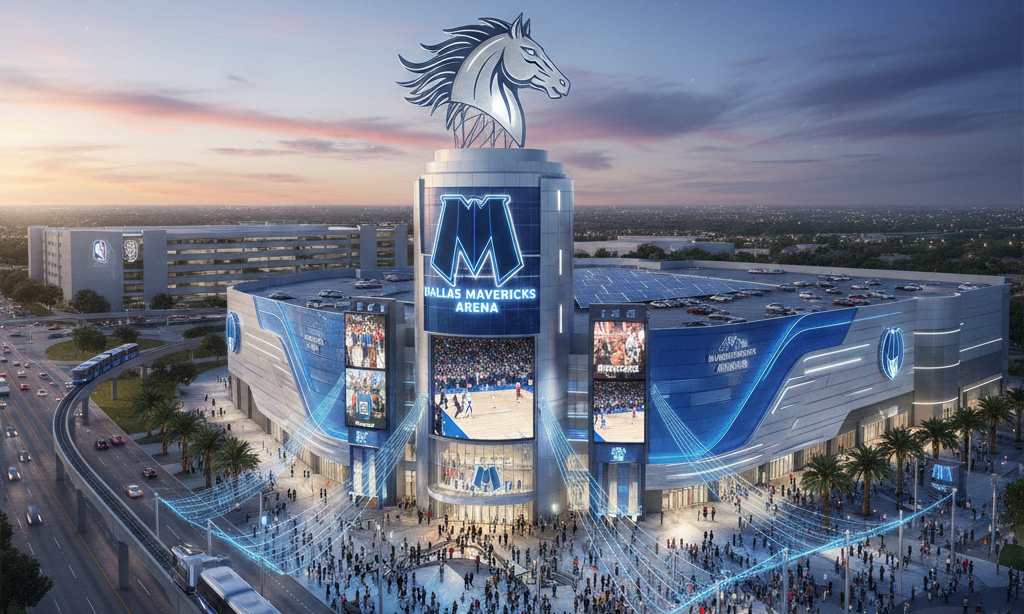
The Mavericks’ arena plan doesn’t exist in isolation. It’s part of a larger pattern in North Texas where sports franchises are functioning as urban planners and master developers as much as they are sports teams.
Look at the track record:
Victory Park in Dallas – The American Airlines Center anchored a transformation that turned industrial wasteland into a high-rise residential and entertainment district. Millions of visitors annually. Class A office space. Residential towers. Museums. That development happened because a sports venue provided the anchor that attracted private investment at scale.
The Star in Frisco – The Dallas Cowboys’ headquarters and practice facility became the centerpiece of a 91-acre mixed-use campus with offices, hotels, dining, residential, and event spaces. It didn’t just change Frisco’s skyline — it changed Frisco’s identity.
The Arlington Entertainment District – AT&T Stadium and Globe Life Field represent billions in combined investment around sports, convention, and entertainment uses. The surrounding infrastructure and commercial development created a destination that draws visitors from across the state and the country.
The Potential Mavericks Arena District – A planned 50-acre district with hotels, dining, retail, and residential. All designed from the ground up as a mixed-use destination rather than a standalone arena.
The Potential Stars Arena in Plano – Another proposed arena at a redeveloped mall site, potentially adding yet another sports-anchored district to the North Texas landscape.
Each of these projects has driven infrastructure upgrades, job creation, and new residential demand in surrounding neighborhoods. The Mavericks’ project will follow the same playbook and the neighborhoods positioned in the growth corridor will be the primary beneficiaries.
What Happens to the American Airlines Center and Victory Park?
This is a question I get from homeowners and investors in the Victory Park area, and it deserves a direct answer.
Right now, signs point toward resilience. Major institutions continue to invest in the area, including new corporate offices and hospitality projects. Victory Park has matured beyond being just “the neighborhood next to the arena.” It’s become a fully formed community with its own identity, walkability, and amenity base. That kind of neighborhood maturation creates stability that doesn’t evaporate when an anchor tenant relocates.
That said, if both the Mavericks and Stars eventually move out, the AAC will need a clear long-term plan. The most likely scenarios include repositioning as a dedicated concert and events venue, reconfiguring as a mixed-use site with residential and commercial components, or becoming part of a larger redevelopment vision that reimagines the entire footprint.
Local leadership and private stakeholders will play a crucial role in ensuring Victory Park continues to thrive. But the foundation is solid, and smart money isn’t running from Victory Park, it’s evaluating the next phase of its evolution.
Why Working with the Right Agent Matters More Than Ever Right Now

Major development announcements create both opportunity and complexity. The opportunity is obvious, strategic positioning near a transformational project can build significant long-term wealth. The complexity is what most people underestimate.
Which neighborhoods are positioned to benefit most? Which ones might see construction disruption before they see appreciation? What’s the realistic timeline for development phases? How do zoning changes, infrastructure plans, and school district impacts factor into your buying or selling decision?
These aren’t questions you can answer with a Zillow search. These are questions that require someone who’s tracking development timelines, reading city council agendas, monitoring permit filings, and connecting dots between macro trends and hyperlocal opportunity every single day.
That’s the kind of market intelligence I deliver to my clients. Not hope. Not generic advice. Intelligence that arrives early enough to act on.
Whether you’re a seller trying to maximize your home’s value in the path of this development, a buyer looking to invest before the opportunity is priced in, or a homeowner simply wanting to understand what this means for your community, the strategic conversation needs to happen now, not after the announcement.
Frequently Asked Questions

Where will the new Dallas Mavericks arena be built?
The Mavericks have narrowed their search to two primary locations. The first is the former Valley View Mall property at Preston Road and I-635 in North Dallas. The second is a downtown site, with the current Dallas City Hall property as a leading candidate. A final decision is expected around July 1, 2026.
When will the new Mavericks arena open?
The target opening date is 2031, which lines up with the expiration of the Mavericks’ lease at the American Airlines Center.
Will a new Mavericks arena increase property values nearby?
Research on sports stadiums and mixed-use districts consistently shows that well-planned developments tend to increase nearby property values, especially when accompanied by infrastructure upgrades, entertainment options, and job creation. While every neighborhood responds differently based on existing conditions and proximity, the long-term impact near a thoughtfully designed arena district is typically positive and in many cases significantly so.
What is happening with Dallas City Hall?
A 2026 report estimated that bringing the existing City Hall building up to modern standards would cost close to one billion dollars or more over two decades. As a result, city leaders are exploring relocation, which could open the way for significant redevelopment of the current site, including the potential Mavericks arena district.
Are the Dallas Stars also building a new arena?
Reports indicate that the Dallas Stars are exploring a new arena option in Plano, potentially at the Shops at Willow Bend mall site. Nothing is final, but if both teams eventually move, the DFW region could see multiple new arena-anchored districts in the 2030s.
Is the Dallas housing market a buyer’s or seller’s market right now?
As of 2026, the market is more balanced and leaning toward buyer-friendly in many submarkets. Inventory has grown, days on market have lengthened, and pricing has become more sensitive to condition and presentation. That said, well-located, move-in-ready homes still sell quickly when priced correctly. The agents and clients who understand the interplay between macro development trends and neighborhood-level fundamentals are the ones capturing the most value in this market.
The Bottom Line
The Dallas Mavericks’ new arena project is far more than a sports headline. This is a generational real estate event for North Texas. Whether the team chooses the Valley View corridor in North Dallas or reimagines the Dallas City Hall site downtown, the surrounding neighborhoods will undergo profound change and the smart money is already paying attention.
Every market disruption, every major development announcement, every billion-dollar infrastructure project, these are the moments that separate the people who build real wealth through real estate from the people who watch it happen and wish they’d moved sooner.
I track these developments daily. I connect the macro trends to the hyperlocal opportunities. And I deliver that intelligence to my clients before the rest of the market figures it out.
If you’re thinking about buying, selling, or investing in North Texas real estate, the strategic conversation needs to happen now. Not when the site is selected. Not when ground breaks. Now, while you still have time to position yourself ahead of the wave.
Bobby Franklin, REALTOR®
Legacy Realty Group – Leslie Majors Team
📲 214-228-0003 | northtexasmarketinsider.com
Trusted Lending Partners:
- Denise Donoghue — The Mortgage Nerd | yourmortgagenerd.com
- Andrew Bryan — Miramar Mortgage | miramarmortgage.com
- Ethan Hester — Midtex Mortgage | mid-texmortgage.com
Compliance and Ethics Notice:
All information in this article is provided for general educational purposes and does not constitute legal, tax, or investment advice. Real estate services are delivered in full compliance with the Fair Housing Act, RESPA (Real Estate Settlement Procedures Act), federal and state regulations prohibiting steering, commission fixing, or any other anticompetitive or discriminatory practice, the NAR Code of Ethics, and Texas Real Estate Commission (TREC) advertising standards. All content is original and uniquely tailored to North Texas real estate consumers.





Join The Discussion