
By Bobby Franklin, REALTOR® | Legacy Realty Group – Leslie Majors Team
Published March 10, 2026 | Serving Ellis County, DFW & Greater North Texas
Here’s a number that should stop you cold: the average age of a first-time homebuyer in Texas is now 54 years old.
Read it again. Fifty-four.
That’s not a market inefficiency. That’s not a blip. That’s a structural failure, an entire generation priced out, locked out, and waiting for a market that kept moving faster than their savings could follow. And into that gap, a $14 billion industry is growing fast enough that the traditional housing world is finally being forced to pay attention: tiny homes.
I’m going to be straight with you the way I always am. I’m not a tiny home builder. I’m not here to sell you on a lifestyle trend. I’m a North Texas real estate agent who studies housing data, pricing movements, and what’s actually happening on the ground in Ellis County, Tarrant County, and the broader DFW metroplex, every single day. When CBS 11 News asked me to visit a tiny home community where homes are priced at $150,000 or less, I did what I always do before I go on camera: I went deep into the data first.
What I found surprised me. It should surprise you, too.
Whether you’re a first-time buyer who’s been delaying your purchase for three or more years, a retiree ready to simplify without sacrificing quality, or an investor looking for the next strategic play before the market figures it out, tiny homes under $150,000 are a conversation worth having. But only if you understand the full picture. That’s what I’m giving you here.
First: What Is a “Tiny Home” in 2026, Really?
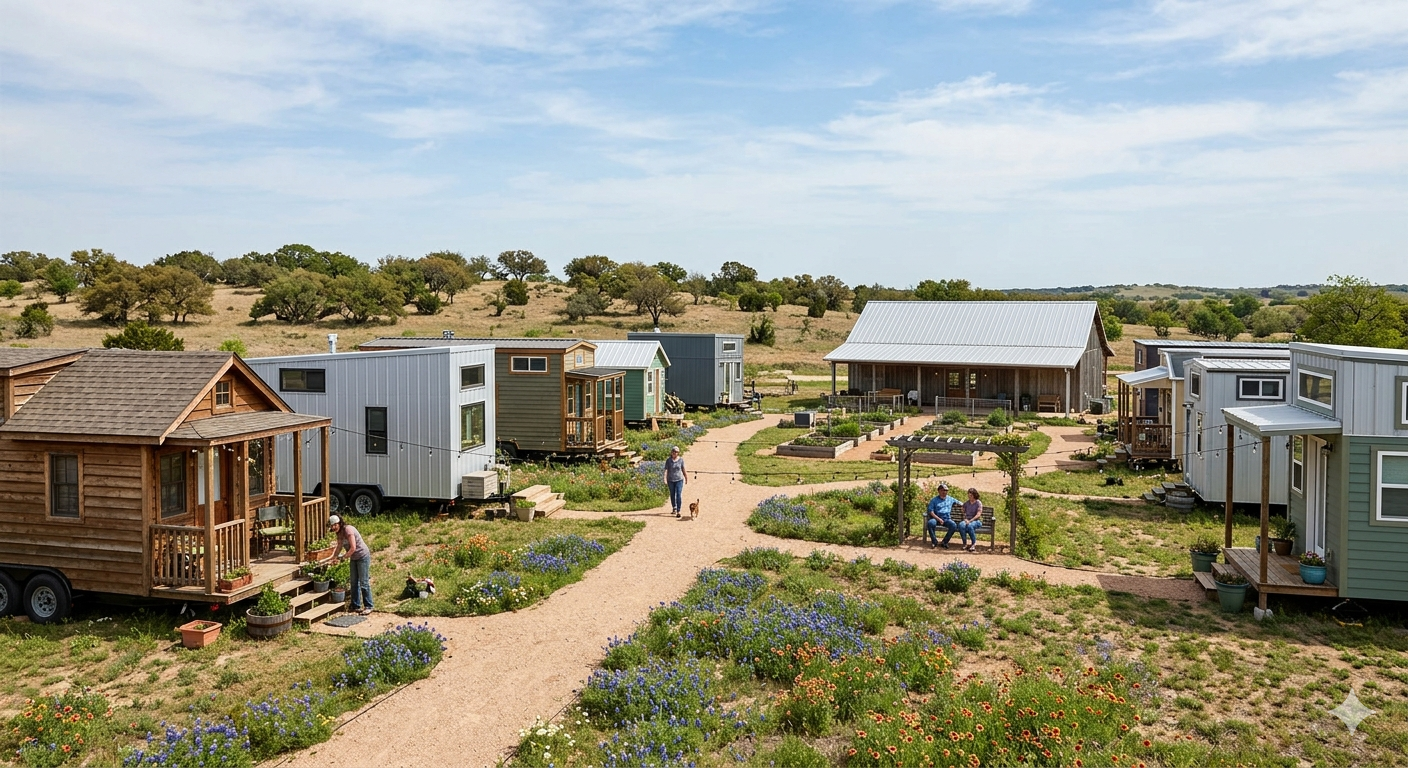
The term gets thrown around loosely, and that vagueness creates real problems for buyers who don’t know the difference between categories. Let’s be precise, because your financing, your zoning compliance, and your long-term equity depend on it.
A tiny home is generally any dwelling under 400 square feet, though the practical definition in the real estate world now extends to compact homes up to 600–700 square feet when built on permanent foundations within planned communities. The International Residential Code (IRC) sets minimum standards for foundation-based tiny homes: at least 150 square feet of floor area and 7-foot ceiling heights.
But “tiny home” isn’t a single product. It’s a category with meaningfully different subcategories:
Tiny Homes on Wheels (THOWs): Built on trailers, towable, and legally classified as personal property, not real estate. These are the ones you see on Instagram. They range from 100–400 square feet and are the most photogenic, least financeable option in the category.
Tiny Homes on Permanent Foundations: Affixed to land, treated as real property, subject to local building codes, and far more likely to qualify for traditional financing. This is where long-term equity actually lives.
Park Model RVs: Built to ANSI 119.5 standards, capped at 400 square feet, designed for placement in designated communities. Think of them as the middle ground between an RV and a permanent residence.
Small-Footprint Builder Homes: The newest and, frankly, most interesting development in this space. Major national builders, I’m specifically looking at Lennar, are now producing compact single-family homes under 700 square feet, starting below $150,000, inside master-planned communities with full amenity packages. This is the category that’s about to change everything.
The distinction between these four types matters enormously. Same price point, completely different outcomes for financing, insurance, zoning compliance, and resale value. Read every section of this article before you make a move.
The Real Numbers: What Does a Tiny Home Cost in North Texas?
Let’s talk about what the market actually looks like, not the national averages you find in lifestyle articles, but what’s real on the ground in and around DFW.
Nationally, tiny homes range from approximately $30,000 for a basic DIY build to well over $150,000 for a custom or builder-grade model with high-end finishes. The final number depends on size, materials, foundation type, land costs, and build complexity. Here’s how that breaks down in the North Texas context:
| Type | Typical Price Range | Key Notes |
|---|---|---|
| DIY THOW | $30,000 – $60,000 | Requires your labor plus land/lot access |
| Custom-Built THOW | $60,000 – $100,000+ | Professional build, high-end finishes |
| Park Model / Community Home | $50,000 – $150,000 | Placed in designated communities, lot rent adds $350–$950/month |
| Lennar Dream Collection (Princeton, TX) | $149,674 – $172,000 | 661 sq ft, 1 bed/loft, 2 bath, permanent foundation, full HOA amenities |
| Traditional Starter Home (Ellis County) | $280,000 – $368,000+ | Median home value in Ellis County: ~$368,032 |
Sources: Lennar Tillage Farms listings; local MLS data
The number that deserves your full attention: $149,674. That’s the entry price for a Lennar Dream Collection home at Tillage Farms in Princeton, Texas. Two stories. Two bathrooms. A loft. Six-hundred-sixty-one square feet on a permanent foundation inside a master-planned community with a pool, community center, basketball courts, and a playground.
This is one of the first times a major national homebuilder has entered the sub-$175,000 single-family market in North Texas. And it’s happening in Princeton, which U.S. Census data identifies as the fastest-growing city in America among cities with populations over 20,000, having surged 116.9% in population between 2020 and 2024.
That growth trajectory matters for long-term property values. Put a pin in that.
For full context: the Ellis County median home value sits at approximately $368,032. A $150,000 tiny home represents roughly 40 cents on the dollar compared to a traditional home purchase in my core market. That’s not a rounding error. That’s a fundamentally different path to ownership.
Zoning: Where Most Tiny Home Dreams Go to Die
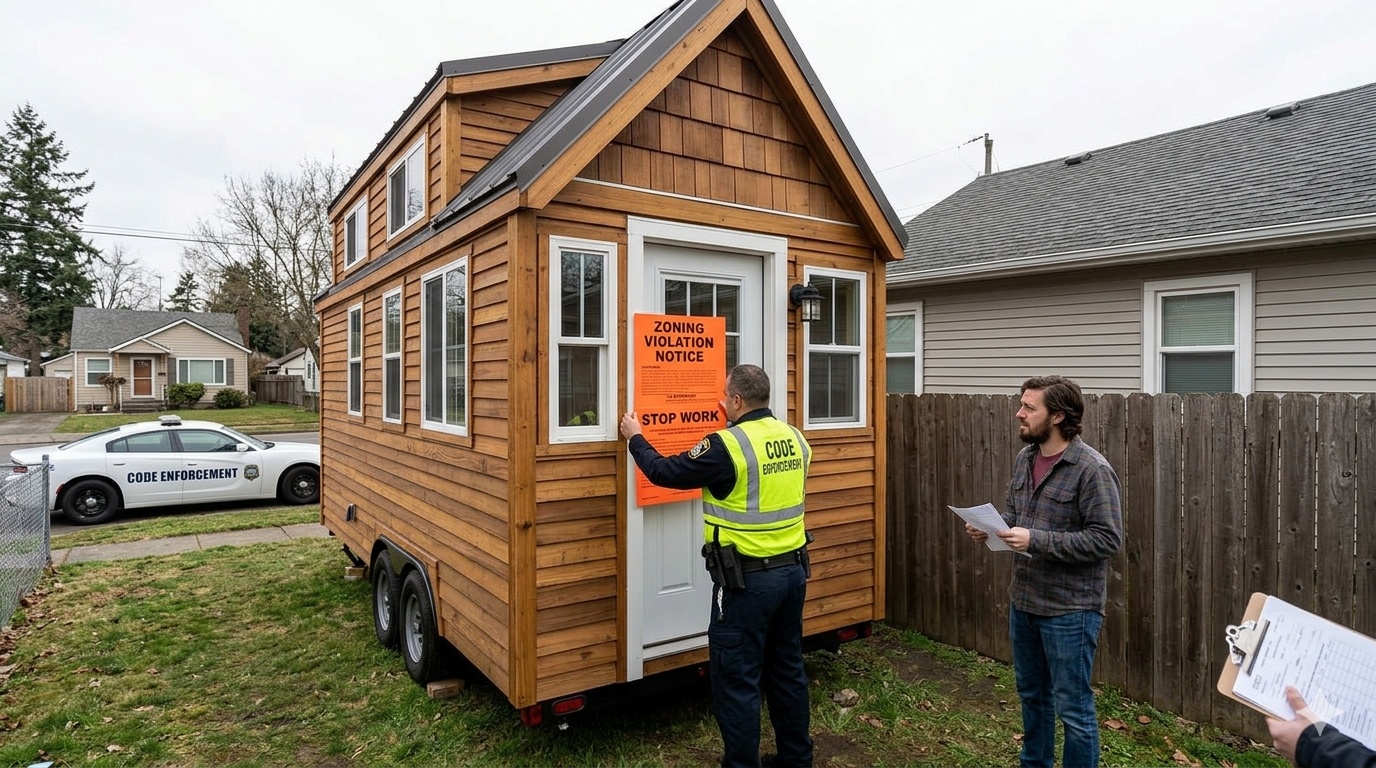
I’m going to give you the section that most tiny home articles skip entirely, because they’re written by content marketers, not real estate professionals. Zoning is where the dream either survives or gets buried.
Texas has no statewide tiny home regulations. Every city and county sets its own rules, and the variance is dramatic. According to Nolo’s legal analysis, your first step must always be identifying your property’s specific zoning district and reviewing the applicable development code before you commit to anything.
Here’s the framework:
Tiny homes on permanent foundations are generally permitted in most residential zones across Texas, provided they meet IRC standards. Most cities require a minimum of 320 square feet and standard utility connections.
Tiny homes on wheels — this is where people get burned, are typically classified as recreational vehicles. That means they can’t legally serve as a primary residence in standard residential zones. They’re permitted in designated RV parks, approved tiny home communities, or on rural land outside city limits where fewer restrictions apply.
Ellis County is one of the most accommodating counties in North Texas for unconventional housing. In unincorporated areas of the county, there’s no formal zoning. Which gives property owners significantly more flexibility than they’d have inside city limits. You still need to comply with county building, engineering, drainage, and platting requirements, but the baseline is more open than most of DFW.
Texas Senate Bill 15: The Policy Shift That Changes the Trajectory
Here’s the intelligence that most real estate coverage is still sleeping on. Texas Senate Bill 15, signed by Governor Abbott on June 20, 2025, and effective September 1, 2025, fundamentally reshapes what compact housing can look like in Texas cities.
SB15 prohibits large Texas cities from requiring single-family lots in new subdivisions to exceed 1,400 square feet. It limits setback requirements and prevents cities from imposing height limits below three full stories. The intent is direct: create room for smaller, more affordable housing in markets that have used zoning as an affordability barrier for decades.
During the Senate debate, bill author Sen. Paul Bettencourt cited the same number I opened this article with, the average Texas homebuyer is now 54 years old, as evidence that the current system isn’t working.
The practical result: developers can now build significantly smaller homes in Dallas, Fort Worth, Houston, and Austin without fighting local zoning codes designed for a different era. What Lennar is doing at Tillage Farms isn’t just one development. It’s a proof of concept for what happens when a major builder meets more flexible policy. Expect to see more of this.
If you’re tracking markets like Red Oak, Midlothian, and Waxahachie, this is a policy shift with direct implications for what gets built in your backyard over the next three to five years.
Tiny Home Communities Near Dallas–Fort Worth: What’s Actually Available Right Now
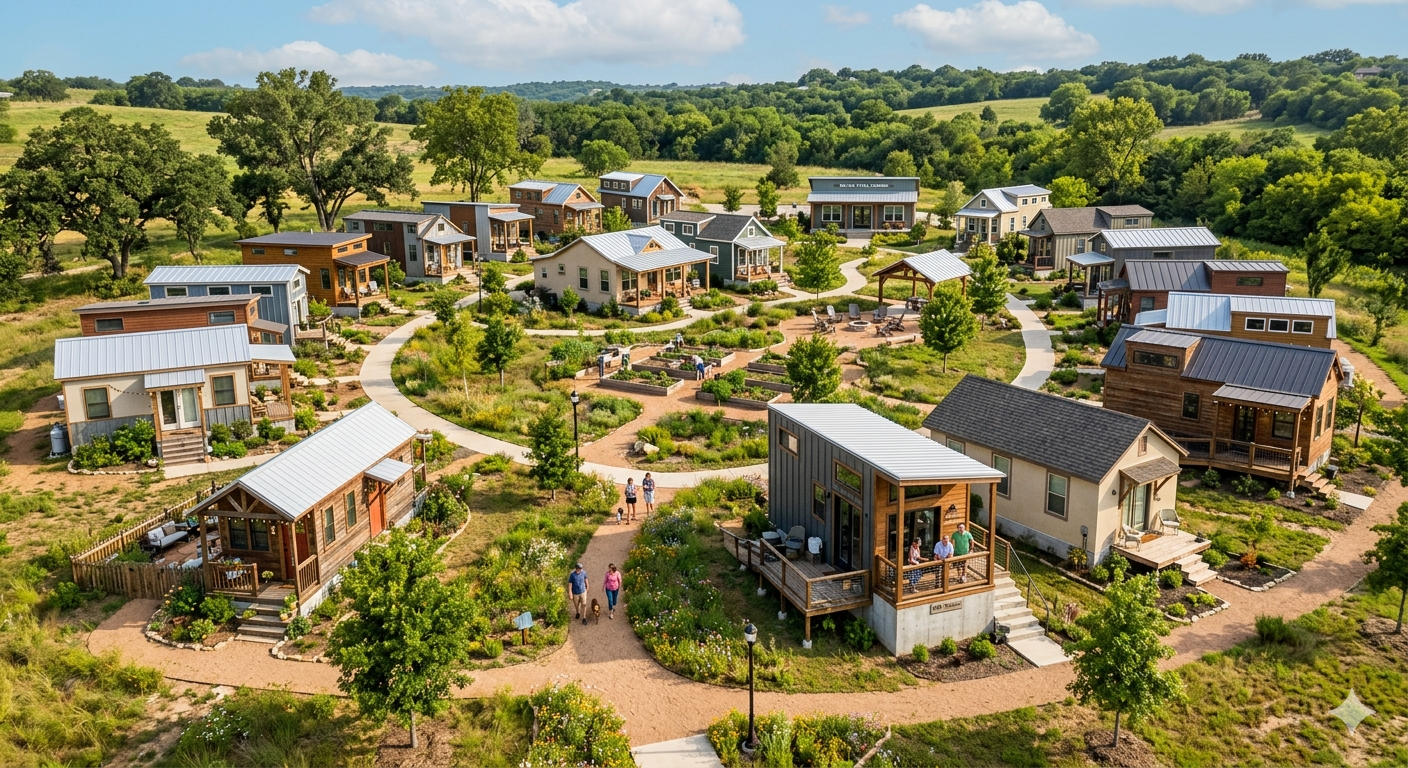
The DFW market has a growing but still limited number of dedicated tiny home communities. Here’s where things stand as of early 2026:
Lake Dallas Tiny Home Village (Lake Dallas, Denton County): The first tiny home village in Texas built inside city limits from the ground up. Designed specifically for homes on wheels and built under IRC Appendix Q. Lot rent runs $500–$550/month and includes a community garden, courtyard, fire pit, and a renovated 1910 farmhouse community center. It’s currently full with a waitlist. That waitlist is not a minor detail, it’s direct evidence that demand is outpacing supply by a wide margin.
Shady Creek Tiny Home Village (Aubrey, Denton County): Newer, with resort-style amenities like a pool, gym, clubhouse, fishing pond and dog park. Lot rent is $950/month. Homes must be 399 square feet or under and built by approved manufacturers (Clayton, Champion, or Platinum).
The Timbers at The Pines (Azle, near Fort Worth): Eighteen acres with mature tree cover. Lot rent from $350–$500/month. Notably offers rent-to-own options, owner financing, and on-site tiny home sales, making it one of the most accessible entry points for buyers who aren’t ready to commit to full ownership immediately.
NamaStay Hideaway (Van Alstyne, Collin County): An intentional community for THOW enthusiasts with lot rentals.
Tillage Farms by Lennar (Princeton, Collin County): Not a traditional tiny home community in the classic sense, it’s a master-planned development where compact homes starting under $150,000 exist alongside larger product. This blended model may well represent where the market is heading: tiny-scale housing integrated into mainstream development rather than siloed into specialty communities.
Notice what’s missing: South DFW. Ellis County. The I-35 corridor. Dedicated tiny home communities south of the metroplex are still sparse and that’s both a gap in the current market and a signal about where the next wave of development pressure is likely to go. If you’re exploring North Texas cities for affordable housing options, understanding this geographic imbalance matters.
Financing: Where Excitement Meets Reality
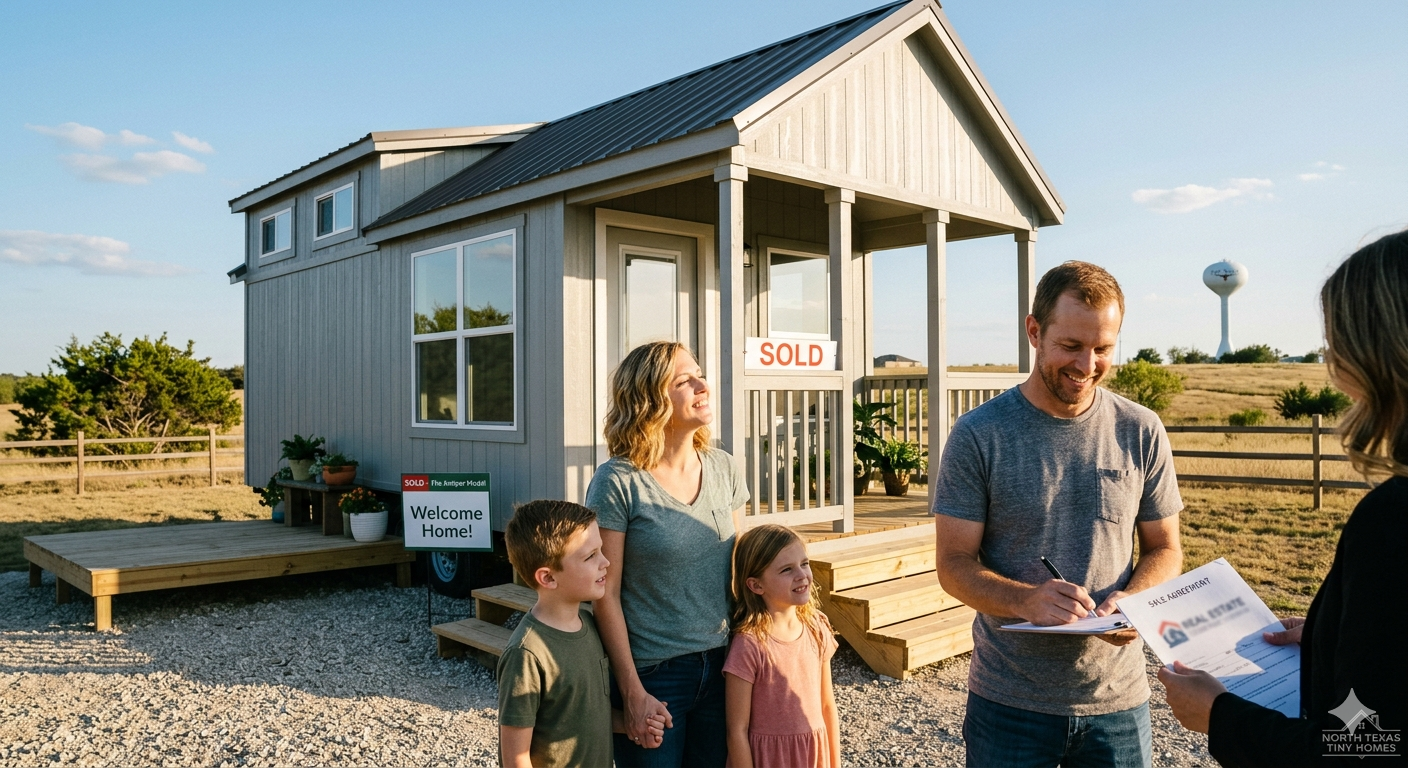
I’ve worked with enough buyers to know that financing is where the gap between “I want this” and “I can actually do this” reveals itself. With tiny homes, that gap is bigger and more complicated than with traditional real estate.
As certified financial planner Laura Lynch, who specializes in tiny home clients, told U.S. News: tiny home financing isn’t a paved path, and there’s no mortgage product specifically designed for it.
Here’s why: traditional mortgages require permanent foundations, minimum loan amounts (usually $50,000+), and comparable sales data for appraisals. Most tiny homes, especially those on wheels, fail one or more of those criteria. That doesn’t mean financing is impossible. It means you need to know which path fits your situation.
Personal Loans: Unsecured, no collateral needed, terms up to 7 years. Works for builds under $50,000–$100,000. The trade-off: shorter terms mean higher monthly payments, and rates sit above mortgage levels.
RV Loans: If your tiny home is on wheels and RVIA-certified, RV lending can finance up to 100% of the cost with loan amounts above $100,000 and terms up to 20 years. Often the best available path for THOWs.
Chattel Loans: Similar to manufactured home financing. The home itself serves as collateral. Terms typically run 15–20 years with rates slightly above conventional mortgages.
Builder Financing: Lennar offers its own financing packages at developments like Tillage Farms. Because these homes are on permanent foundations and appraised like traditional real estate, conventional loan products, including FHA and conventional mortgages with as little as 3% down may apply here.
Freddie Mac CHOICEHome Mortgage: Designed for manufactured homes built to HUD code, with down payments as low as 3%. If your tiny home qualifies under HUD standards, this is as close to a traditional mortgage as the tiny home world currently offers.
Cash or Home Equity: Many buyers in this space pay outright. Either using savings, inheritance, or equity from a current home. This eliminates the financing problem entirely and is more common in this segment than in traditional real estate.
The rule I give every buyer: know your financing path before you fall in love with a floor plan. The financing type you qualify for will likely determine what kind of tiny home you can actually purchase, where it can be located, and what your long-term equity story looks like.
Before any of those conversations, talk to a lender. My preferred partners for North Texas buyers are Denise Donoghue at The Mortgage Nerd (yourmortgagenerd.com), Andrew Bryan at Miramar Mortgage (miramarmortgage.com), and Ethan Hester at Midtex Mortgage (mid-texmortgage.com). Between those three, you’ll get a clear picture of what’s actually available for your specific situation.
For broader context on how financing dynamics are shifting across North Texas, see our analysis on what happens when mortgage rates drop below 6%.
Will a Tiny Home Hold Its Value? The Honest Answer
This is the question I’m asked most often, and it’s where I have to be the most direct with you because the honest answer depends entirely on what type of tiny home you buy and where you put it.
Tiny homes on wheels tend to depreciate, not appreciate. Like vehicles, THOWs can lose 15–25% of their value in the first year and may be worth only 40–60% of their original price within a few years. The resale market for used tiny homes is thin, comps are scarce, and the buyer pool is small. These are real headwinds.
Tiny homes on permanent foundations behave more like traditional real estate. When a home is legally attached to land, properly permitted, and treated as real property, it benefits from area appreciation. Particularly in high-growth markets. Location, demand fundamentals, and market momentum matter here exactly as they do for a traditional home purchase.
The factors that determine tiny home resale value, in order of impact:
Location above everything. A tiny home in a growing, well-connected market with job access, quality schools, and infrastructure investment will hold value in ways that remote or static markets can’t support. Princeton’s 116.9% population growth creates a fundamentally different resale environment than a rural lot with minimal demand drivers.
Foundation type is the single biggest variable. Permanent foundation homes are easier to sell, easier for the next buyer to finance, and easier to insure. If you’re purchasing for long-term value retention, this is non-negotiable.
Build quality. Homes built to IRC standards with quality materials hold value. Budget builds with shortcuts lose it fast. The tiny home market has no shortage of either.
Community context. A tiny home inside a master-planned community with maintained common areas, professional management, and amenities is far more marketable than a standalone unit on a private lot with no comparable sales.
One more number for investors: The 100% bonus depreciation restored under the 2025 tax legislation allows THOWs used for business purposes to be fully depreciated in year one as business personal property. On an $80,000 tiny home used as a rental, that’s approximately $24,000 in tax savings in a 30% bracket. This doesn’t build resale equity, but it fundamentally changes the investment math for income-focused buyers.
What This Means for the North Texas Affordability Story

Let me put all of this in the local context that actually matters.
The Ellis County median home value is approximately $368,032. Fort Worth’s median fell 6.3% year-over-year to $318,495 as of late 2025. And 67% of millennials report having delayed their home purchase, with nearly a quarter waiting five years or more.
Meanwhile, the mortgage lock-in effect is finally unwinding. Inventory is surging and DFW now has nearly 30,000 active listings. More sellers are competing for buyer attention than at any point since 2019. The market is rebalancing.
Into that environment, a $150,000 tiny home on a permanent foundation hits differently than it would have in 2021. For the right buyer, it represents:
- Actual homeownership, not “someday” ownership, for someone who might otherwise be renting for another three to five years
- A monthly payment potentially under $1,000 with 10% down at current rates
- Access to community amenities that standalone apartments don’t offer
- Equity building rather than paying a landlord’s mortgage
Is it a direct substitute for a traditional three-bedroom home in Waxahachie or Midlothian? No. But for a single professional, a young couple starting out, a retiree looking to simplify, or a remote worker who values low overhead and community, the math works in ways the traditional market currently doesn’t.
North Texas’s population momentum gives the long-term picture a foundation that other markets lack. Cities like Mansfield have seen 188% population growth. Red Oak is positioned for significant expansion driven by Google’s $600 million data center investment in the area. That demand underpins property values, including compact and tiny homes, in ways that slower-growth markets simply can’t replicate.
Texas Senate Bill 15, Lennar’s Dream Collection, and the proliferation of tiny home communities across the Metroplex aren’t random. They’re the market responding, as markets always do, to a structural problem that other mechanisms have failed to solve.
For sellers of traditional homes, this is context that belongs in your strategic planning. If you’re pricing your North Texas home in 2026, you’re not just competing with other resale listings and new construction with builder incentives, you’re competing with an entirely new housing category that reaches price points your home can’t touch. Understanding that landscape is the difference between pricing strategically and pricing emotionally.
And as I’ve written about why so many homes are being relisted in 2026, sellers who understand the full competitive picture, including emerging alternatives, are the ones who close deals. The ones who don’t are the ones on their third price reduction wondering what happened.
Tiny Home Insurance: The Cost Nobody Talks About

Before I get to the FAQ, there’s one more topic that most tiny home articles gloss over because it’s unglamorous: insurance.
According to InsuredBetter’s analysis, tiny home insurance generally runs $200–$1,000 per year. Which is significantly less than traditional homeowners insurance. But finding coverage can be more complicated:
- Foundation-based tiny homes may qualify for standard homeowners insurance, but many carriers won’t write policies for homes under 400–500 square feet. Specialty or surplus carriers are often required.
- Tiny homes on wheels require RV insurance or specialized tiny home policies. Standard homeowners insurance doesn’t apply.
- Park models fall into a separate category requiring mobile home or park model-specific coverage.
With homeowners insurance premiums projected to rise 8% in both 2026 and 2027, the lower insurance costs for tiny homes represent real ongoing savings — but only if you can actually find a carrier. Work with an independent insurance agent who has experience with alternative housing before you assume coverage will be straightforward.
Working with an insurance broker like my preferred insurance agent Caroline Amling with Goosehead Insurance, who handles my personal insurance, will significantly increase your chances of finding the right policy at a good price.
Your Biggest Questions Answered

How much does it cost to build a tiny home in Texas?
Plan on $30,000 at the low end for a basic owner-built model, to $100,000+ for a professional custom build. Don’t forget land or lot rent, utility hookup fees, permits, and site preparation. All of which typically add another $10,000–$30,000 to your first-year total. Budget 20–30% above the sticker price.
Can you legally live in a tiny home full-time in Texas?
Yes, but with conditions. Tiny homes on permanent foundations that meet IRC standards are legal for full-time occupancy in most Texas jurisdictions. THOWs are typically classified as recreational vehicles and can only serve as primary residences in designated RV parks, approved communities, or on rural land outside city limits. Always verify with your local planning department before purchasing.
What’s the cheapest tiny home community near DFW?
The most affordable lot rent in the area is at The Timbers at The Pines in Azle, starting around $350–$500/month with full hookups. Lake Dallas Tiny Home Village offers $500–$550/month but is currently full with a waitlist. Remember: lot rent is separate from the cost of the home.
Can you get a mortgage on a tiny home?
Traditional mortgages are difficult to obtain for most tiny homes. Alternatives include personal loans, RV loans for THOWs, chattel loans, builder financing, and the Freddie Mac CHOICEHome program for HUD-code manufactured homes. Foundation-based homes in developments like Tillage Farms may qualify for FHA or conventional loans.
Do tiny homes appreciate or depreciate?
Depends entirely on type. THOWs generally depreciate like vehicles, potentially 15–25% in year one. Foundation-based tiny homes in growing areas can appreciate over time, particularly when treated as real property with proper permitting and comparable sales to support appraisals.
Are tiny homes a good Airbnb or rental investment?
They can be, especially in unique or tourist-accessible locations. The restored 100% bonus depreciation under 2025 tax legislation creates significant first-year tax advantages for THOWs used as business property. But verify that your community and jurisdiction permit short-term rentals before purchasing with income in mind because many don’t.
What are the biggest hidden costs?
Lot rent ($350–$950/month in DFW communities), utility hookup fees, site preparation, specialty insurance, maintenance of off-grid systems, moving costs for THOWs, and permitting. Budget 20–30% above the purchase price for total first-year costs.
Is Ellis County good for tiny homes?
Yes, it’s one of the most tiny-home-friendly counties in North Texas. Unincorporated areas have no formal zoning, giving property owners significantly more flexibility than inside city limits. County building, engineering, drainage, and platting requirements still apply. The combination of flexibility, strong long-term growth signals, and proximity to Dallas employment makes Ellis County worth serious consideration for compact housing buyers.
How does a tiny home compare to a manufactured home?
Manufactured homes are built to federal HUD code, typically run 600–2,400+ square feet, and are widely accepted by lenders and local zoning authorities. Tiny homes have no universal federal standard (they may meet IRC, RVIA, or ANSI codes depending on type), are generally under 400–700 square feet, and face more financing and zoning friction. Tiny homes typically feature higher-quality materials and design; manufactured homes offer more space and easier financing at comparable price points. Know which product you’re buying.
The Bottom Line
I’m not here to push you toward a tiny home. I’m here to give you the intelligence you need to make a smart housing decision, whatever that decision looks like.
If a $150,000 tiny home on a permanent foundation puts you on a path to homeownership that the traditional market has blocked, that’s worth serious exploration. If you’re an investor who sees the tax math and rental income potential, the numbers are compelling at the right entry point. And if you’re a traditional buyer or seller who needs to understand how this emerging category is reshaping the competitive landscape, now you have the framework.
The North Texas housing market is more complex, more competitive, and more full of genuine options than at any point in the last decade. I track live DFW market data every week, and the trend line is clear: the market is fragmenting into tiers, and tiny homes represent a tier that’s growing too fast and too strategically important to ignore.
The buyers and investors who understand the full picture, financing paths, zoning realities, appreciation dynamics, the policy tailwind from SB15, are the ones who move first and move smart. The ones who don’t are the ones who scroll past the opportunity and wonder later why they waited.
If you’re ready to explore your options in Ellis County, Johnson County, Tarrant County, or anywhere across the DFW Metroplex, text or call me at 214-228-0003 or schedule a buyer consultation. The conversation is free. The intelligence you leave with isn’t.
Bobby Franklin, REALTOR® | Legacy Realty Group – Leslie Majors Team
📲 214-228-0003 | northtexasmarketinsider.com
This article is for informational and educational purposes only and does not constitute legal, financial, or tax advice. All information is believed to be accurate as of the publication date and is subject to change. Zoning regulations, financing options, and market conditions vary by location and individual circumstances. Consult appropriate professionals before making real estate or financial decisions. All content complies with the Fair Housing Act, RESPA, the NAR Code of Ethics, Texas Real Estate Commission advertising policies, and applicable federal and state regulations. Commission structures are always independently determined and individually negotiated. Bobby Franklin | Legacy Realty Group – Leslie Majors Team | 16 Northgate Dr. Ste 100, Waxahachie, TX 75165





Join The Discussion