From Spec Homes to Design Center Decisions: Your Strategic Framework for North Texas New Construction
A Market Intelligence Guide by Bobby Franklin, REALTOR®
Why This Guide Exists
The North Texas new construction market is experiencing something remarkable right now. Dallas-Fort Worth claimed the #1 spot nationally in 2024 with 71,788 new residential building permits, more than any metro in America. But here’s what most buyers don’t understand: unprecedented supply creates unprecedented opportunity for those who know how to navigate it.
This isn’t your typical “buyer’s guide” filled with generic advice you could find anywhere. This is a strategic framework built on market intelligence, informed negotiation tactics, and the kind of insights that separate buyers who overpay from buyers who win. Because in 2026’s North Texas market, builder incentives are at five-year highs, payment affordability is driving every conversation, and builder margins are tight enough to create real negotiation leverage, if you know where to look.
Most real estate content treats new construction as a simple transaction: pick a floor plan, choose some finishes, close on the house. That approach leaves tens of thousands of dollars on the table and creates homes that don’t truly serve your needs. Smart buyers understand that new construction is actually a complex strategic game involving builder psychology, market timing, upgrade economics, and long-term value positioning.
This playbook gives you the framework to play that game at an elite level. Whether you’re considering your first new construction purchase or you’ve bought new before but want better results this time, the strategic approach outlined here will position you to extract maximum value while creating the home that actually serves your life, not just the one the builder wanted to sell you.
Understanding Your Three Core Options
Before you fall in love with a floor plan or get seduced by granite countertops, you need to understand the fundamental strategic choice every new construction buyer faces: spec home, to-be-built, or custom. Each option represents a different value proposition, timeline commitment, and control trade-off. Most buyers stumble into one option based on what they see first rather than making a strategic choice aligned with their actual priorities.
Spec Homes: The Negotiation Opportunity

A spec home, short for “speculative”, is a house the builder constructed without a specific buyer, hoping someone like you would come along and purchase it. Think of it like buying a car off the lot versus ordering one from the factory. The builder has already made every design decision, spent all the money, and now they’re motivated to convert that finished inventory into cash.
Strategic advantages:
- Speed to occupancy: if complete, you can often close in 30-90 days instead of waiting 6-9 months
- Maximum negotiation leverage: sitting inventory costs builders money daily in carrying costs and opportunity cost
- Predictable pricing: no surprise upgrade costs or change orders
- What you see is what you get: no construction delays, supply chain issues, or quality surprises
Strategic disadvantages:
- Zero customization if complete, limited if under construction
- Someone else’s design choices – you’re buying their color palette, their upgrade selections, their compromises
- Potentially less desirable lot if it sat unsold for months
The strategic play: Spec homes are your best negotiation opportunity. Builders are highly motivated to move sitting inventory, especially approaching quarter-end or year-end. I’ve negotiated $20,000+ in closing cost credits, free upgrades, and lot premium reductions on spec homes that had been sitting for 60+ days. The key is understanding the builder’s carrying costs and timeline pressure.
To-Be-Built Homes: The Balanced Approach
To-be-built means you’re selecting a specific lot and floor plan before construction begins, with opportunities to customize finishes during the design center process. This is the middle ground, more personalization than a spec, less complexity than full custom, with timeline flexibility built in.
Strategic advantages:
- Meaningful customization through design center selections
- You choose your specific lot location, orientation, and features
- Timeline flexibility. You can coordinate with home sale, lease end, or life circumstances
- Opportunity to walk the construction process and catch issues early
Strategic disadvantages:
- 6-9 month wait minimum (often longer with delays)
- Upgrade costs can spiral quickly in the design center
- Construction risks: delays, quality issues, change order complications
- Less negotiation leverage than spec homes
The strategic play: To-be-built gives you the best combination of personalization and manageable complexity. The key is entering with a clear upgrade budget (typically 10-15% of base price) and understanding which selections deliver real value versus builder profit. Most buyers blow their budget on visible upgrades that don’t meaningfully impact their daily life or resale value. Strategic buyers focus on structural changes that can’t be easily changed later and functional upgrades that directly serve their lifestyle.
Full Custom: The Premium Control Option
Custom construction means building exactly what you want on land you own or purchase, working with an architect and custom builder to create a completely unique home. This is the premium option in every sense; maximum control, maximum timeline, maximum cost.
I won’t dive deep into custom construction in this guide because it’s a fundamentally different process requiring different expertise. If your needs truly require custom—unusual lot constraints, highly specific layout requirements, architectural vision that production builders can’t accommodate—that’s a separate conversation requiring architects, custom builders, and significantly longer timelines (12-24+ months).
Most buyers who think they need custom actually just need strategic to-be-built with the right builder. Custom typically costs 20-40% more per square foot than production building, and that premium only makes sense when your requirements genuinely can’t be met any other way.
For more information on how to get started with a custom home visit our Custom Homes page
Builder Selection: Beyond Star Ratings and Marketing Promises
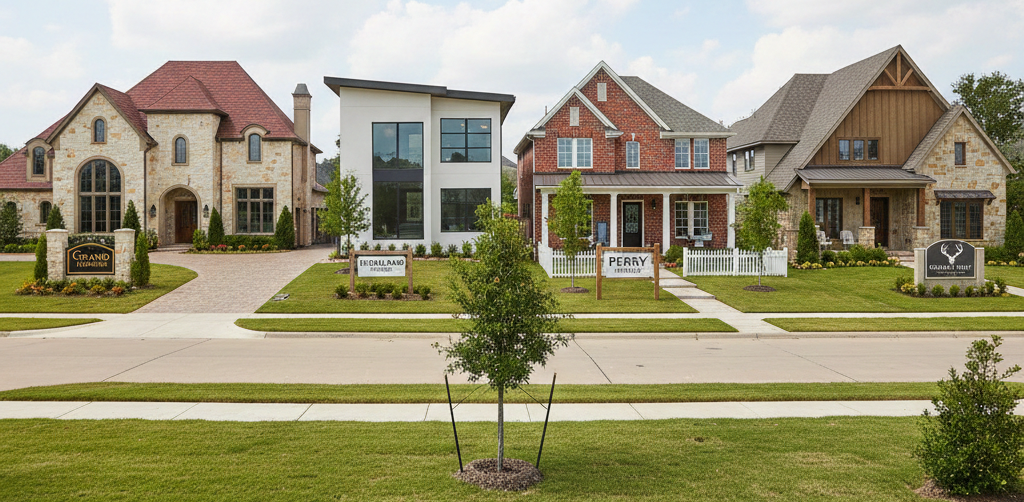
Choosing your builder is arguably more important than choosing your floor plan. The builder determines construction quality, warranty responsiveness, design center value propositions, and your overall experience. Yet most buyers select builders based on whoever has a model home in their desired community or whose marketing looked most appealing.
Here’s the framework I use when evaluating North Texas builders, organized by market positioning rather than arbitrary quality tiers. This isn’t about “best” and “worst”, it’s about understanding what each builder optimizes for and whether that aligns with your priorities.
Premium Positioning: Design-Forward with Service Focus
Builders in this category compete on architectural distinction, elevated standard features, and responsive service rather than price. You’re paying 10-20% more per square foot compared to volume builders, but that premium buys you better materials, more attentive construction management, and fewer warranty headaches.
Grand Homes: The architectural statement builder. If you want dramatic curved staircases, soaring two-story entries, and design details that make neighbors stop and stare, Grand delivers. They’ve earned “America’s Best Builder” recognition from BUILDER Magazine, and their homes typically hit the $500K-$1M+ range. Trade-off: you’re paying for that drama.
Highland Homes: The consistency play. Highland operates across nearly every major DFW master-planned community with thoughtful floor plans and solid fit-and-finish. They’re not the cheapest, but they deliver reliable quality and relatively responsive communication. Good choice for buyers who want predictable outcomes without custom-level complexity.
Perry Homes: The warranty differentiator. Perry offers a 2-year workmanship warranty (versus the standard 1-year most builders provide) and attractive architectural designs. They position in the $300K-$600K range depending on community, delivering good value for buyers who prioritize structural warranties and attractive exteriors.
Graham Hart Homes: The boutique option. Smaller operation focused on elevated communities and larger homesites, typically $600K-$800K+. More custom-oriented process than volume builders. Good fit for buyers who want semi-custom attention without full custom timeline and cost.
Volume Positioning: Competitive Pricing with Process Efficiency
These builders compete primarily on price and included features, operating at scale to deliver affordable new construction. Quality and service can be solid when you get a good superintendent and community, but consistency varies more than premium builders.
Bloomfield Homes: The value inclusion leader. Bloomfield markets heavily on “all-included” standard features and operates in 50+ DFW communities. They deliver competitive pricing with attractive base packages. Reviews are mixed—some buyers love their experience, others report quality inconsistencies and warranty responsiveness issues. The superintendent running your specific community matters enormously with Bloomfield.
Centre Living Homes: The urban infill specialist. Founded in 2012, Centre focuses on urban and infill developments across DFW. Smaller scale than national builders can mean more personalized attention. Good option for buyers targeting inner-ring communities rather than far-flung suburbs.
John Houston Homes: The employee-owned option. Building 600+ homes annually across DFW, Waco, and Temple, John Houston emphasizes community focus and people-first approach. Employee ownership structure theoretically aligns incentives better than corporate-managed builders, though individual community experience still varies.
Budget Positioning: Maximum Affordability, Buyer Beware
These builders compete almost exclusively on price, delivering the most square footage per dollar through operational efficiency and standardization. Can be appropriate for budget-constrained buyers who understand the trade-offs, but require careful due diligence.
D.R. Horton: The nation’s largest builder with aggressive pricing and concerning quality patterns. Multiple buyer reports across markets detail water intrusion issues, poor finishing standards, and difficult warranty processes. Several ongoing legal actions allege construction defects and inadequate warranty performance. If you’re considering D.R. Horton, budget extra for independent inspections at pre-pour, pre-drywall, and final stages, and document everything extensively.
Lennar and Meritage: Large production builders with typical high-volume inconsistency—some communities are fine, others have significant issues. Attractive incentives and pricing, but quality and service levels vary dramatically by superintendent and community. Extensive community-specific research required before committing.
Strategic framework: Don’t choose a builder based on their marketing or model home appeal. Tour recent completed homes, talk to actual buyers in specific communities (knock on doors if necessary), and evaluate the superintendent running your target community. The superintendent matters more than the builder’s brand—a great superintendent can deliver excellent outcomes with a mid-tier builder, while a poor superintendent can create nightmare experiences with premium builders.
For more information on the different builders in North Texas visit our How To Choose A Builder page
The Buyer Representation Advantage

The most expensive mistake new construction buyers make is walking into a model home alone for their first visit. Here’s why that matters and what most buyers don’t understand about representation in new construction.
Understanding Builder Sales Representatives
That friendly person greeting you in the model home is an employee of the builder. They’re NOT a neutral advisor, NOT your advocate, and NOT someone who can prioritize your interests when they conflict with the builder’s objectives. They’re salespeople, and good ones at that. Their job is to move inventory, maximize builder profit margins, and minimize builder concessions.
They’ll tell you the builder “doesn’t negotiate” (usually false). They’ll suggest you don’t need an agent because “it’s new construction” (definitely false). They’ll position lot premiums, upgrades, and base prices as fixed when there’s often significant flexibility. And they’ll make you feel like you’re getting a great deal when you’re actually leaving substantial value on the table.
This isn’t about demonizing builder sales reps, many are genuinely nice people. It’s about understanding their fundamental incentive structure and who they represent. They work for the builder, get paid by the builder, and succeed when the builder succeeds. That’s not representation; that’s sales.
What Realtor Buyer Representation Delivers
Expert Negotiation
Experienced new construction agents understand precisely which concessions builders typically offer and how to structure requests for maximum acceptance. I routinely negotiate design center credits ($5,000-$15,000), closing cost assistance, waived or reduced lot premiums, rate buydown contributions, extended warranties, and included structural upgrades like extended garages or covered patios. Builder sales reps will tell you none of this is possible. I’ve done it hundreds of times.
Contract Protection
Builder contracts are lengthy, complex documents written entirely to favor the builder. Construction timelines with no penalty for delays, warranty limitations that exclude common issues, inspection rights that may be restricted, change order procedures that shift all risk to buyers, dispute resolution clauses that favor builders. Your agent reviews every clause, identifies problematic language, and negotiates better terms where possible.
Design Center Strategy
Design center appointments are where builders recapture margin lost in base price negotiations. A skilled agent that attends with you can provide perspective on which upgrades deliver actual value versus builder profit, which items you can install later for less money, how your selections impact appraisal concerns, and whether your total spend keeps you aligned with neighborhood values.
Construction Oversight
Throughout your 6-9 month build, your agent monitors progress, attends critical inspections (pre-pour, pre-drywall, final walkthrough), documents issues with photos and written communication, escalates unresolved problems appropriately, and keeps the builder accountable to agreed timelines and quality standards. Most buyers visit their construction site a few times. Your agent is there regularly.
The First-Visit Registration Rule
Here’s the critical timing issue: most builders require your buyer’s agent to accompany you on your very first visit to the model home to be recognized in their system. If you visit alone first and register without an agent, the builder typically refuses to pay buyer’s agent commission later, effectively eliminating your ability to have professional representation without paying out of pocket.
This rule exists specifically to discourage buyer representation. Builders know informed buyers with experienced agents negotiate better outcomes. By requiring first-visit registration, they create pressure for buyers to visit alone, get emotionally attached to a home, and then feel awkward bringing in an agent later.
The strategic play: contact a buyer’s agent before visiting any model homes in communities you’re seriously considering. Even a brief phone conversation allows them to register you in their system and accompany you on that first visit. This costs you nothing, builders budget for agent commissions as a standard cost, and protects your access to professional representation throughout the process.
Builders will tell you using an agent makes no difference. In my experience, buyers with representation save an average of $15,000-$35,000 in better negotiation outcomes, design center strategy, and avoided mistakes compared to unrepresented buyers. That’s not including the value of having someone who actually works for you managing a complex 6-9 month process.
Design Center Mastery: Where Budgets Collapse

The design center appointment is where your new construction home transforms from generic builder floor plan into your personalized space. It’s also where the average buyer spends 10-25% of the home’s base price on upgrades, often without clear understanding of which selections deliver value and which just deliver builder profit.
Builder design centers are psychologically engineered to maximize upgrade spending. Beautiful displays, helpful consultants creating urgency, emotional pressure to “make your dream home,” and strategic sequencing that commits you to expensive choices before you’ve seen the full price impact. Most buyers walk out having spent $40,000-$80,000 more than they planned.
Here’s the framework for approaching design centers strategically rather than emotionally.
Pre-Design Center Preparation
Establish Your Upgrade Budget
Work with your lender to determine your maximum upgrade spend – both what can roll into the mortgage and what you’re willing to pay cash at closing. Add a 10-15% buffer for unexpected “must-haves” you discover during appointments. Typical upgrade budgets run 10-15% of base home price for most buyers, though luxury buyers may spend 20-25% or more.
Build Your Visual Reference Library
Create Pinterest boards or saved collections showing your preferences for kitchen styles, color palettes, bathroom tile patterns, flooring types, cabinet finishes, lighting aesthetics. Having visual references prevents you from getting overwhelmed by hundreds of options and keeps you anchored to your actual style preferences rather than whatever the design consultant suggests.
Study the Standard Features Sheet
Carefully review what’s included in your base price versus what counts as an upgrade. Understand which countertop materials are standard, what flooring is included where, whether appliances and hardware are standard or upgrades. This prevents paying for “upgrades” that are actually just standard features presented as special.
Create Your Tiered Priority List
Before entering the design center, categorize your wish list: Tier 1 non-negotiables (structural changes, critical functional upgrades, key aesthetic choices), Tier 2 nice-to-haves (features you’ll add if budget allows), Tier 3 easy post-closing additions (things you can change later without major cost). This framework prevents emotional spending.
Strategic Upgrade Framework
Upgrades Worth Doing with the Builder
These selections are difficult or expensive to change later, making design center timing optimal:
- Structural changes – extended garage, covered patio, additional windows, layout reconfigurations, plumbing rough-ins for future bathrooms or wet bars
- Kitchen cabinet upgrades -height extension to ceiling, soft-close hardware, pull-out storage features
- Quality countertops – quartz for durability and resale value beats laminate or basic granite
- Hard surface flooring in high-traffic areas – LVP, hardwood, or tile beats carpet for longevity
- Upgraded carpet pad – dramatically extends carpet life and comfort
- Additional electrical – extra outlets in kitchen/garage/office, recessed lighting, ceiling fan pre-wiring, home theater conduit
- Tile in wet areas – kitchen backsplash, bathroom surrounds
Upgrades Better Done After Closing
Builder markups on these items are excessive. Install them yourself for 30-50% savings:
- Decorative light fixtures – builder charges $800 for fixtures you can buy for $200
- Cabinet hardware – pulls and knobs with 300% builder markup
- Backsplash tile – easy DIY or contractor install after closing
- Interior paint beyond builder standard – professional painters charge less than builder upgrades
- Window treatments – massive builder markups on blinds and shades
- Landscaping beyond HOA minimum – independent landscapers deliver better value
The strategic principle: Invest in structural changes and functional upgrades you can’t easily add later. Defer cosmetic upgrades with high builder markups to post-closing when you can shop competitively. This approach maximizes long-term value while minimizing unnecessary spending.
Lot Selection and Premium Strategy

Not all lots in a community are created equal. Builders charge lot premiums ranging from a few thousand dollars to $100,000+ for lots with desirable characteristics. Understanding lot premium economics and negotiation dynamics can save you substantial money or ensure you’re paying for value that actually delivers.
What Drives Lot Premiums
Common premium triggers:
- Cul-de-sac locations – reduced traffic, enhanced privacy, larger yards
- Corner lots – bigger yards, architectural presence, extra windows
- Greenbelt or open-space backing – no rear neighbors, natural privacy
- Water or golf course frontage – premium views, lifestyle amenity
- Larger-than-standard lot size – more yard, better setbacks
- Superior orientation – better natural light, energy efficiency
- Proximity to amenities – near pools, playgrounds, trails
Lot premiums are often more negotiable than base home prices. Builders have flexibility on premium amounts, especially when lots have sat available for extended periods, when you’re buying spec homes tied to specific lots, or near fiscal quarter/year end when they’re motivated to close transactions.
Evaluating Premium Value
Ask yourself three questions before paying lot premiums:
1. Resale appeal: Will future buyers also value this lot enough to pay premium pricing? Water frontage and cul-de-sac locations typically maintain premium resale value. Interior lots with modest premiums often don’t.
2. Lifestyle impact: Does this lot meaningfully improve your daily living experience? Backing to greenbelt provides real privacy value if you use your backyard extensively. Paying $15,000 premium for being three houses closer to the pool you’ll never use is waste.
3. Alternative value: Could you achieve similar lifestyle benefits in another community or through other upgrades? Sometimes a standard lot in a better community location beats a premium lot in a less convenient neighborhood.
Strategic principle: Modest premiums ($5,000-$15,000) for clearly superior lots (cul-de-sacs, greenbelt backing, better orientation) often represent excellent value and maintain resale appeal. Large premiums ($30,000+) require careful evaluation of whether that money delivers proportional lifestyle benefit or would be better invested in home features or saved for other purposes.
Builder-Preferred Lenders: The Hidden Economics

Builders strongly encourage using their preferred lenders, often offering substantial incentives tied to that choice. Understanding the real economics helps you make informed decisions rather than default decisions.
Why Builders Push Preferred Lenders
Builder-affiliated lenders typically pay builders fees for referrals or have co-marketing arrangements. Builders prefer their affiliated lenders because these lenders understand builder processes, offer more flexibility around construction timelines, and close transactions more reliably. Some builders receive financial benefit from steering buyers to specific lenders, though RESPA regulations prohibit requiring you to use any particular lender.
The Incentive Trade-Off
Preferred lender advantages:
- Substantial incentives often $5,000-$20,000 in closing cost credits, design center allowances, or rate buydown contributions
- Extended rate locks 90-120+ day locks protecting against rate increases during construction
- Smoother process established relationships with builder’s closing coordinators
- More flexibility around construction delays and timeline adjustments
Preferred lender disadvantages:
- Potentially higher interest rates – sometimes 0.125%-0.375% higher than competitive outside lenders
- Higher long-term cost – even 0.25% rate difference costs thousands over 30 years
- Limited loan product options – may not have access to specialized first-time buyer programs or niche loan types
Strategic approach: Obtain detailed quotes from 2-3 outside lenders (include at least one local lender) in addition to the builder’s preferred lender. Compare total costs over your expected ownership period, not just upfront incentives. If you plan to own the home 5-7 years and may refinance when rates drop, upfront incentives often make sense. For long-term holds in stable rate environments, lower interest rates typically deliver better overall value.
Calculate your break-even point: if the preferred lender offers $10,000 in credits but charges 0.25% higher rate, determine how many months of lower payments with outside lender equal that $10,000 credit. This math gives you objective comparison rather than emotional reaction to large upfront numbers.
Hidden Costs and Budget Reality
New construction creates an illusion of move-in readiness. You’re buying a brand-new home with no maintenance needs and nothing broken, so it should be truly complete, right? Wrong. Most new construction buyers spend $15,000-$40,000+ on items they assumed would be included but aren’t.
The ‘White Box’ Reality
Commonly missed costs:
- Window treatments – blinds, shades, curtains throughout the home ($2,000-$6,000)
- Appliances – refrigerator, washer, dryer often not included ($2,000-$5,000)
- Backyard fencing – many communities require fencing but don’t include it ($4,000-$12,000)
- Backyard landscaping and irrigation – basic sod is standard, but functional yards need more ($3,000-$15,000)
- Additional garage door openers – typically one included, families need more ($150-$300 each)
- Bathroom accessories – towel bars, toilet paper holders, robe hooks ($200-$600)
- Mailbox and house numbers – in some communities these aren’t provided ($100-$400)
- Extra shelving and organization systems – builders provide minimal closet shelving ($1,000-$4,000)
Budget an additional 3-5% of home purchase price for true move-in readiness beyond closing costs and down payment. This prevents post-closing financial stress and ensures you can actually live comfortably in your new home immediately.
Property Tax Timing Trap
During construction and your first partial tax year, property taxes reflect land value only, typically $1,200-$3,000 annually. Once the home is complete and assessed at full improved value, taxes jump to $6,000-$15,000+ annually in most North Texas communities. This increase often hits 12-18 months after closing when your escrow account recalculates.
Many buyers qualify for mortgages based on artificially low initial tax estimates, then face payment shock when escrow adjusts to reflect full assessed value. Always budget your housing payment based on full improved-value taxes, not first-year land-only amounts. Your lender should provide estimates based on comparable completed homes in the community.
HOA Costs and Surprises
Master-planned communities typically charge $150-$400+ monthly in HOA dues, plus one-time initiation fees at closing (often 2-3 months of dues). These dues cover community amenities, landscaping, and reserves for major repairs. Some communities also assess special assessments for unexpected major expenses.
Lenders include HOA dues in debt-to-income calculations, meaning $300/month in HOA dues reduces your maximum loan qualification by approximately $60,000-$75,000. Factor HOA costs into your target home price to avoid qualification surprises.
Timeline and Delay Management
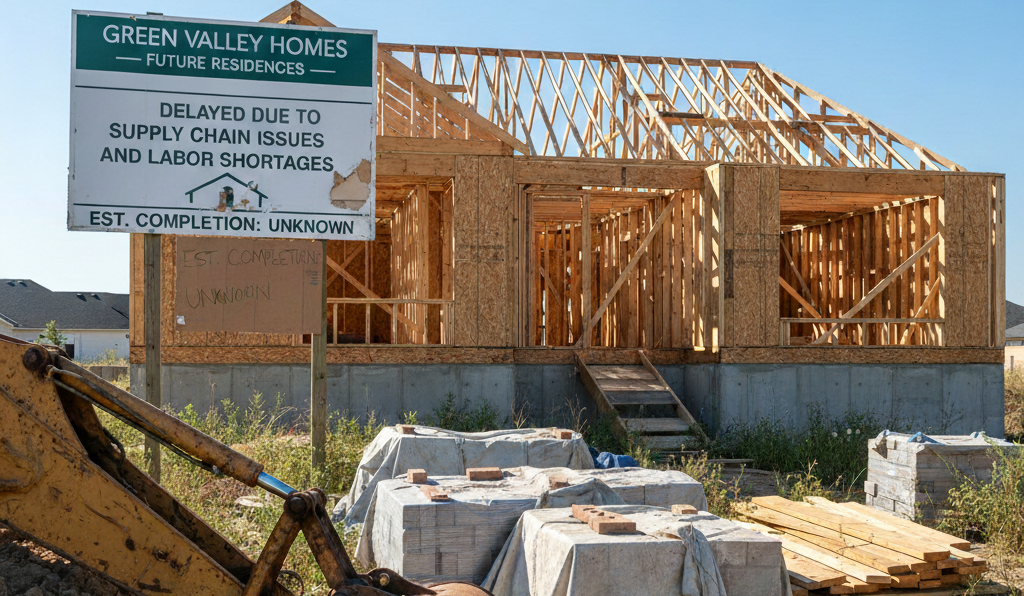
Construction timelines in North Texas typically run 6-7 months for production homes, but delays are common. Understanding realistic timelines and planning appropriate buffers prevents expensive mistakes like breaking leases too early or selling your current home before you can move.
Common Delay Drivers
- Severe weather -heavy rain, ice storms, extreme heat all pause construction
- Material shortages or backorders – specialty items, appliances, custom features
- Labor shortages – critical trades like electrical, HVAC, plumbing
- Municipal inspection backlogs – cities struggling with permit volume
- Buyer change orders – modifications after construction starts
Strategic buffer: Add 60-90 days to the builder’s estimated completion date when planning your move timeline. This protects you from breaking leases too early, selling current homes prematurely, or incurring temporary housing and storage costs. It’s far better to be pleasantly surprised by early completion than scrambling for housing when delays occur.
Don’t schedule major life events (weddings, job changes, school enrollments) around builder-provided completion dates. Use your buffered timeline for firm commitments.
Final Walkthrough Strategy
Your final walkthrough, typically 7-10 days before closing, is your last opportunity to identify and document issues before accepting the home. Builders want quick walkthroughs focusing on major items. Strategic buyers conduct thorough inspections documenting everything that doesn’t meet standards.
Critical Inspection Areas
Bring these tools:
- Blue painter’s tape for marking issues
- Outlet tester for electrical verification
- Flashlight for inspecting dark areas
- Phone/camera for documentation
- Notepad for detailed punch list
- Your contract and selection sheets for verification
High-priority checks:
- Test every electrical outlet with outlet tester – verify proper wiring and GFCI function
- Run all plumbing fixtures – check for leaks, proper drainage, water pressure
- Test HVAC in both heating and cooling modes – verify airflow at every vent
- Check all doors and windows – operation, latching, weatherstripping, locks
- Inspect walls and ceilings – for major drywall cracks, unfinished areas, poor finishing
- Test all appliances – run dishwasher, check oven and cooktop, verify installation quality
- Verify smoke detectors – also CO detectors need to be installed and functioning
- Check exterior grading – slopes away from foundation
Documentation protocol: Mark every issue with blue tape and detailed notes. Take photos of each problem. Create written punch list with photos attached. Clarify in writing which items must be resolved before closing, which can be addressed post-closing and establish specific deadlines for post-closing items.
Builders prefer addressing items after closing because they’ve already received payment and can delay repairs indefinitely. Push for pre-closing resolution of anything significant. Accept post-closing repair schedules only for minor cosmetic items that won’t impact your ability to live in the home.
Strategic Framework Summary

New construction in North Texas offers incredible opportunities in 2026 – builder incentives at five-year highs, competitive pricing driven by elevated supply, and hundreds of communities across the metroplex providing options for every lifestyle and budget. But, capturing that opportunity requires strategic thinking rather than emotional reaction.
Your strategic checklist:
- Choose your purchase type strategically – spec for negotiation leverage, to-be-built for personalization balance, custom only when requirements genuinely demand it
- Select builders based on – quality reputation, superintendent competence, not marketing appeal
- Engage buyer representation – before your first model home visit
- Approach design centers -have a clear upgrade budget and tiered priority lists
- Evaluate lot premiums – base value on resale and lifestyle impact, not emotional attachment
- Compare builder-preferred lender incentives – compare against long-term interest rate costs
- Budget for hidden costs – builders don’t always include everything in base prices
- Plan construction timelines – have 60-90 day buffers for inevitable delays
- Conduct thorough final walkthroughs – document everything that needs correction
The difference between mediocre new construction outcomes and exceptional ones isn’t luck, it’s strategic thinking applied consistently throughout the process. Builders want compliant buyers who accept standard terms and maximize upgrade spending. Strategic buyers understand the game being played and optimize for long-term value rather than short-term emotional satisfaction.
North Texas new construction in 2026 offers some of the best buyer opportunities we’ve seen in years. Capture them by thinking strategically, negotiating assertively, and building the home that genuinely serves your life rather than the one the builder wanted to sell you.
Important Disclosures
This guide provides educational information about new construction home purchases in the North Texas market. It does not constitute legal, tax, financial, or professional advice. Always consult appropriate licensed professionals for advice specific to your situation.
Builder information, incentives, and market conditions described reflect circumstances as of January 2026 and may change. Always verify current information directly with builders, lenders, and qualified real estate professionals.
This content complies with Fair Housing Act requirements, RESPA regulations, NAR Code of Ethics, and Texas Real Estate Commission advertising policies. All recommendations are based on quality and service considerations, not compensation structures.
All content is original and created specifically for professional real estate representation focused on North Texas new construction buyer advocacy and long-term client success.
Bobby Franklin, REALTOR®
Legacy Realty Group – Leslie Majors Team
214-228-0003
northtexasmarketinsider.com