

By Bobby Franklin, REALTOR® | North Texas Market Insider™ | Legacy Realty Group – Leslie Majors Team | TREC #0805459
Last updated: July 23, 2026

Ellis County has 29 data center power requests on file totaling roughly 23.9 gigawatts, the most of any county in Texas, and the man who runs the grid has said out loud that most of them will never get built.
Hold both of those facts at the same time, because everything that matters in this market lives in the space between them. One number is generating panic at council meetings and breathless headlines about a county being swallowed whole. The other is a quiet admission from the person with the best information in the state that the panic is based on a fantasy. The homeowners, buyers and landowners who understand the difference are going to make better decisions over the next thirty-six months than the ones reacting to whichever headline crossed their feed this morning.
I live and work in Waxahachie. I have watched this land in our county in real time, from the Google announcement in Midlothian to the Red Oak council chamber where 70 people stood outside in the dark because the room only held 136. I built the North Texas Data Center Intelligence Map because my clients kept asking the same questions and getting answers that were lifted from either a developer brochure or a doomsday post. What follows is sourced, honest, and built to help you decide rather than to sell you a mood.
Why Is Ellis County the Number One County in Texas for Data Centers?
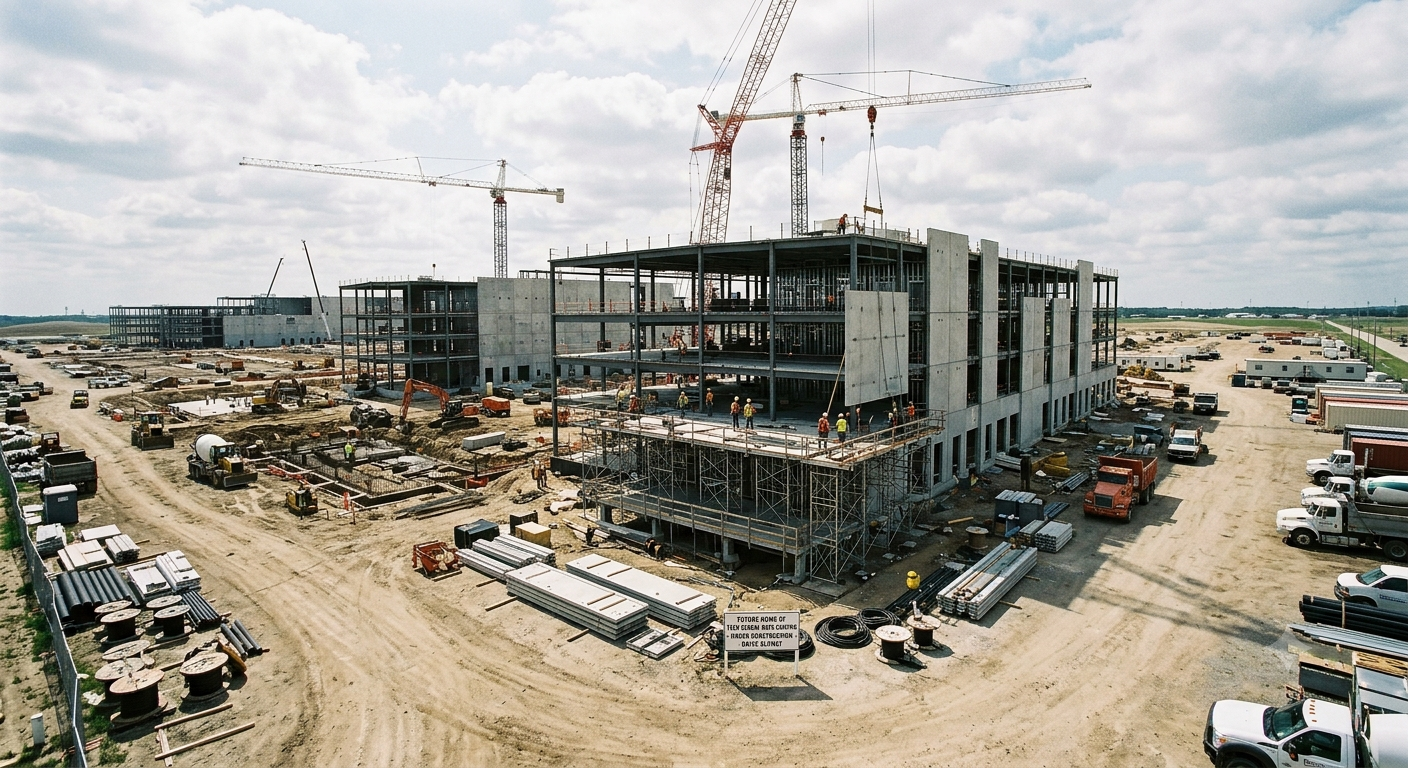
Ellis County sits at the center of the largest data center land rush on the planet, and the reasons are unglamorous and structural. Available agricultural land at scale. Proximity to the Dallas fiber and cloud backbone. Existing high-voltage transmission already crossing the county. A state government that spent a decade recruiting exactly this kind of capital.
The raw numbers are genuinely staggering. According to ERCOT data reported by the Houston Chronicle and mapped by Newsweek in its June 2026 analysis, Ellis County leads all 254 Texas counties with 29 large-load interconnection requests totaling 23.9 thousand megawatts, which is more electricity than the entire Houston area pulls on a hot summer afternoon. Johnson County ranks second with 12 requests totaling 19.3 thousand megawatts. Dallas County ranks third with 27 requests totaling 18.9 thousand megawatts. Thirty-four Texas counties have now received five or more requests.
Statewide the picture crosses into the surreal. More than 480 large data centers have requested to connect through 2032, seeking over 418 gigawatts, close to five times ERCOT’s all-time peak demand record of 85.5 gigawatts set during the brutal summer of 2023. Texas has never operated a grid remotely that size and is not about to.
The global context explains why the capital is pointed here rather than somewhere else. Dallas ranked as the number one primary data center market in the world in Cushman & Wakefield’s 2026 Global Data Center Market Comparison, finishing ahead of Atlanta, Northern Virginia, Columbus and Johor. John McWilliams, the firm’s Head of Data Center Insights, framed the moment with more restraint than most of the coverage that followed, noting that the industry has entered a period of managed growth in which power delivery timelines, land availability, community sentiment and regulation now determine where projects actually land.
Read that list of constraints again, because three of the four are being fought out in Ellis County right now.
The Number Nobody Wants to Put Next to the Headline
ERCOT CEO Pablo Vegas addressed the flood of requests at the grid operator’s quarterly board meeting: “This is not what we expect to come online. It is too high of a figure based on realistic expectations.”
Grid experts back him without much hedging, pointing to shortages of AI chips, transformers and heavy grid equipment as physical ceilings on how much of that 418-gigawatt wish list can be poured, wired and energized. The queue’s own growth curve is the tell. As documented by Latitude Media, ERCOT’s large load queue climbed from roughly 15 gigawatts in December 2022 to 41 gigawatts a year later, to 63 gigawatts by late 2024, then detonated to 226 gigawatts by November 2025, with data centers accounting for somewhere between 73 and 77 percent of the total.
A queue that quadruples in twelve months is not a construction forecast. It is a speculation ledger. Developers file at multiple sites to preserve optionality, commit to only a few, and let the aggregate number do public relations work they never intended. A line on an ERCOT spreadsheet does not pour a foundation, hire a crew or draw a single gallon of water.
Ellis County will get real data centers. Several are already under construction and I will name them in a moment. Ellis County is not getting 24 gigawatts of them, and anyone telling you your neighborhood is about to disappear under server farms is reading a column of intentions and calling it a map. That is the chaos, and chaos has always favored those who read the fine print while everyone else is reacting to the headline.
Google’s $40 Billion Bet, and the Cooling Detail Almost Nobody Reported
Closed-Loop (Air-Cooled) Data Center: A Cutaway View
The same coolant circulates in a sealed loop and sheds its heat into the air, not by evaporating water. Follow the loop: warm coolant rises, releases heat on the roof, and cool coolant returns.
Why it matters for buyers: a closed-loop, air-cooled campus uses very little water. An evaporative-cooled campus consumes water continuously. Before you buy near a proposed site, ask which one it is.
Google is the anchor tenant of this story, and one technical decision the company made tells you more about the future of water in this county than a hundred council-meeting speeches.
The company operates two campuses in Ellis County, one in Midlothian and one in Red Oak, with the first Red Oak building now operational. On November 14, 2025, Sundar Pichai stood at the Midlothian facility alongside Gov. Greg Abbott and announced a $40 billion investment in Texas through 2027 for cloud and AI infrastructure, which the Governor’s office identified as Google’s largest investment in any state in the country. The money funds new campuses in Armstrong and Haskell counties alongside continued buildout here and in the Dallas cloud region.
Now the detail that matters. The existing Midlothian and Red Oak campuses are evaporative cooled, meaning they consume water to shed heat. The expansion and Google’s new Texas campuses will run closed-loop air cooling, which cuts water use down to ordinary building operations like restrooms and kitchens. Alongside that shift, and as reported by FOX 4, Google announced a $10 million Texas water impact fund and a 2026 Water Stewardship Plan committing to replenish more water than it consumes at its sites by 2030, help modernize water and wastewater infrastructure, and protect at-risk watersheds specifically through air-cooled designs. The company says it has already put more than $500 million into water infrastructure in communities where it builds.
None of that makes Google a philanthropy. It is a company buying back a social license in counties where residents got organized faster than anyone in Mountain View expected. The useful takeaway for a homeowner is narrower and far more actionable: the cooling architecture of the specific facility near you is not a technical footnote, it is the entire question. An air-cooled campus and an evaporative-cooled campus are two completely different neighbors wearing the same name.
The Fight on the Ground: Red Oak, Compass and DataBank
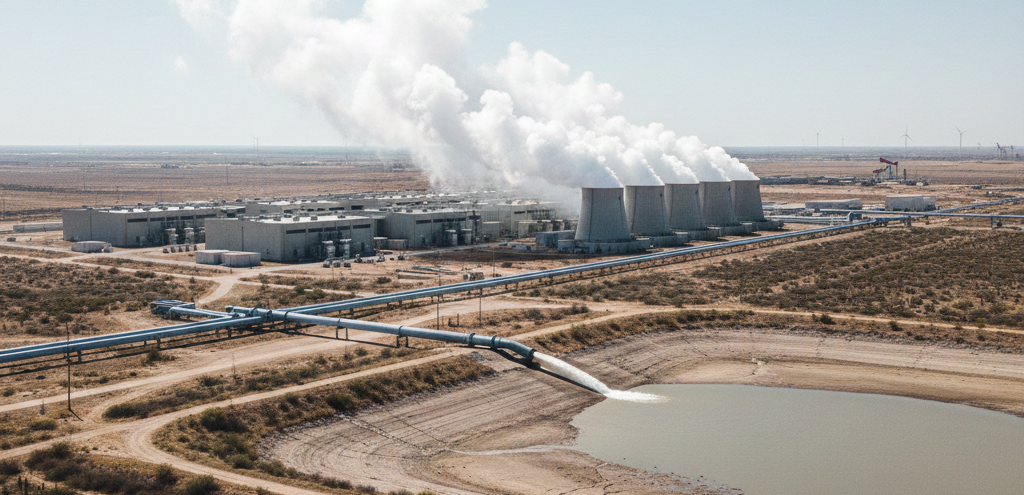
State-level gigawatt totals get the headlines. The decisions that will actually touch your property line get made in city council chambers on Monday nights, and in Ellis County those rooms have been overflowing.
Red Oak is the flashpoint. In May 2026 the Red Oak City Council voted to rezone an 830-acre tract from agricultural use for a Compass Datacenters campus, and it did so around midnight after a meeting that ran nearly five hours. FOX 4 reported that the council approved the project despite more than 150 residents turning out, with the chamber holding 136 and at least 70 more waiting outside in the dark. Residents raised noise, grid strain and proximity to schools.
Look at the terms the council actually approved before you judge them, because the record is more complicated than the outrage. The rezoning came with conditions rather than a blank check. Per WFAA, a city representative told residents the ordinance caps noise at 70 decibels at the property line, and the Dallas Observer reported the ordinance requires Compass to maintain the surrounding roads, this is enforceable through notices and fines. City officials said the facility would avoid city water for cooling. The developer received a tax abatement reported at $2.82 million over ten years, approved on a 4-1 vote, while staff acknowledged that construction is when people will feel the impact and that most permanent jobs would be few.
To be clear, the council did not hand over the keys with nothing attached, and any honest account has to say so. A 70-decibel low-frequency hum at the property line is not silence, it is a sound some homeowners will hear on a quiet evening, and enforcement by complaint-and-fine puts the burden on the resident to prove the nuisance rather than on the operator to prevent it. The city’s own planning and zoning board had recommended against the rezoning, and the council overrode its own advisory body at midnight, over a room that could not physically hold the objectors, in exchange for a decade of forgone property tax revenue and a permanent employment base that would not fill a mid-size restaurant. Approving data centers is defensible. Approving this one, on these terms, over that much internal and public resistance, was a negotiation that left leverage on the table. Cities in this corridor hold more cards than they are playing, and the next council that reads this should play them.
Red Oak is not the only Ellis county project right now. Per the Ellis County Press, DataBank secured a $2 billion construction loan for a campus south of Red Oak and will fund the first three of eight planned buildings on a 300-acre site on Stainback Road. Those first three, DFW 9, DFW 10 and DFW 11, total 600,000 square feet and 180 megawatts, and they are already leased with completion running through early 2027.
The opposition is organized and getting more sophisticated. Ellis County commissioners passed a resolution calling for stricter state-level regulation, joining counties across Texas. A Red Oak nonprofit has retained counsel to challenge data center development and is funding the effort through car shows and community fundraising. That pattern is statewide, and the Texas Tribune identified the structural reason it keeps escalating: nearly half of Texas’s planned data centers are slated for unincorporated areas where county officials have almost no authority to regulate them.
That jurisdictional gap deserves your attention if you are shopping for rural acreage. Many of the residents most affected by the Red Oak campus live outside the city limits, which gave them a microphone at the podium and no vote at the ballot box. Before you buy land near a city edge, find out which government actually controls what gets built across the fence, because it may not be the one whose name is on your mailbox.
Ellis County Leads Texas in Data Center Power Requests
Of all 254 Texas counties, Ellis has the most requested data center load on file with the state grid operator. Here is where the corridor stands, and the honest limit behind the number.
Rounding out the statewide top five: #4 Mitchell and #5 Scurry, both in West Texas. Note the pattern in the corridor: Johnson ranks second on load with only 12 requests, while Dallas sits third despite 27, a reminder that request count and requested megawatts are two different stories.
Roughly 73 to 77 percent of that queue is data centers.
ERCOT CEO Pablo Vegas on the request flood: “This is not what we expect to come online. It is too high of a figure based on realistic expectations.” A filing is not a foundation. Chip, transformer and equipment shortages mean most of this queue will never be built.
Sources: ERCOT large-load interconnection data reported by the Houston Chronicle and mapped by Newsweek (June 2026); queue growth via Latitude Media. Figures reflect requests, not confirmed construction.
Do Data Centers Lower Property Values Near Homes?

Start with the evidence, because this is the question where emotion runs hardest and where the research says something most people do not expect.
George Mason University’s Center for Regional Analysis examined 2023 home sales against data center locations in Northern Virginia, the densest data center market on earth, and found that homes closer to data centers sold for higher prices on average, not lower. As covered by Newsweek, GMU researcher Keith Waters described the result with admirable candor: it was not necessarily what they expected. A separate 2026 analysis in Indiana landed in the same place, concluding the data fails to demonstrate statistical evidence that proximity to a data center negatively impacts housing values.
Two independent datasets in two different states, both pointing away from the fear. The conclusion follows the evidence rather than the other way around: at this time, data centers are not a systemic drag on residential value.
Now the part a developer will not volunteer. Those Northern Virginia facilities largely sit near an airport and along highway corridors, in locations where prices were already suppressed and industrial noise already blended into the ambient background. That is a genuinely different situation from an 830-acre campus dropped beside a rural subdivision on former farmland. Community & Environmental Defense Services notes that independent research on residential property effects remains thin, and identifies noise as the impact most likely to reduce nearby home values, particularly where a facility is poorly screened, sits within a few hundred feet of houses, or exercises backup diesel generators.
My read as a working agent in this corridor is that the study answers the wrong question for most of my clients. The right question is never whether data centers hurt values in aggregate. It is whether this facility, at this distance, with this cooling system, behind this screening, affects this house. A well-buffered air-cooled campus a half-mile out behind a berm and a mature tree line is a non-event for nearly every buyer I work with. An unscreened evaporative-cooled facility humming three hundred feet off a back fence is a resale conversation you will be managing for years. The research protects you from the panic. The site plan determines your outcome.
Data Centers and Texas Water: The Fight That Unites Everybody
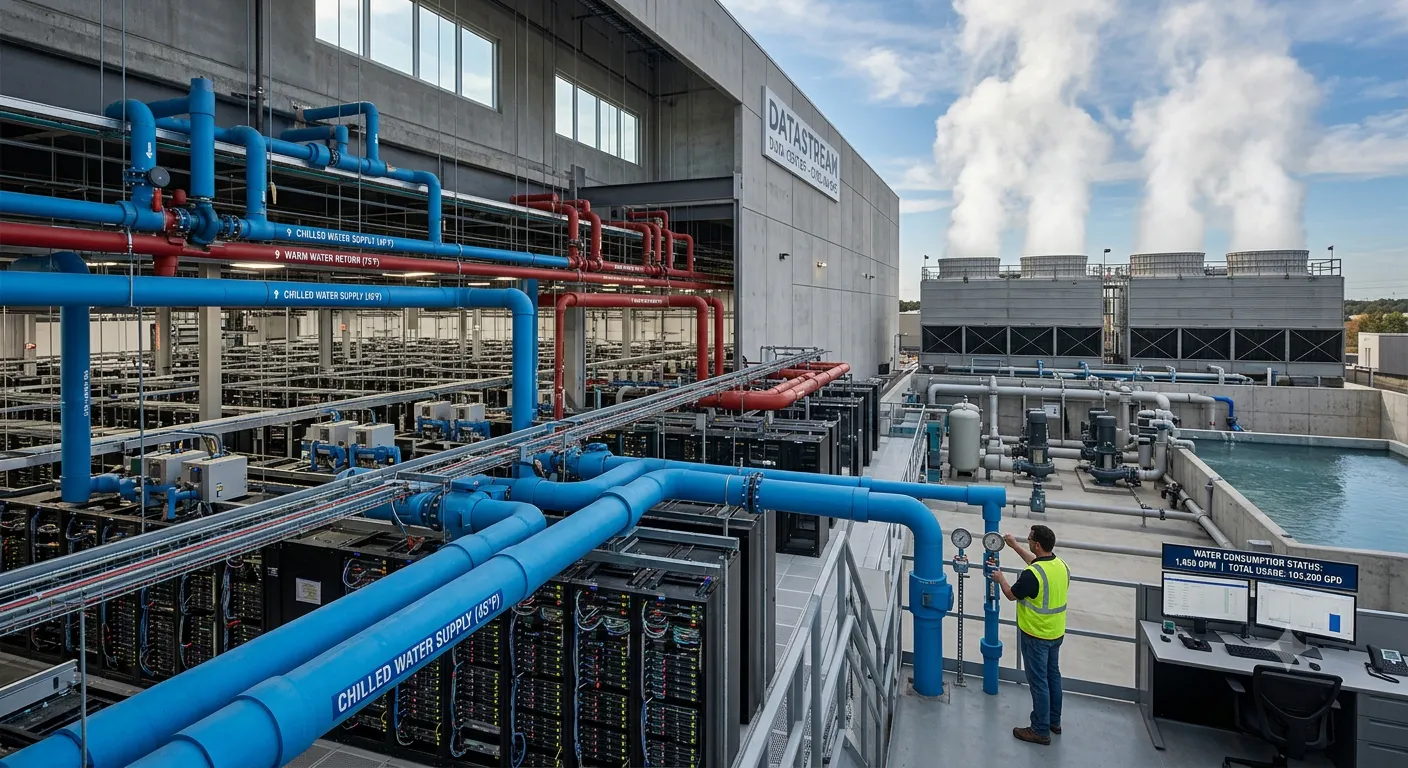
Water usage is where opposition stops breaking along political lines and starts uniting. For a state that lived through the historic drought of 2011, that instinct is earned rather than hysterical.
The anchor research comes from the University of Texas at Austin. A white paper released May 6, 2026 by UT’s Bureau of Economic Geology projected that data centers could account for between 3 and 9 percent of total Texas water use by 2040, up from under 1 percent today. Manufacturing currently uses roughly 7 percent, which gives you the scale. The study counted 484 facilities operating, under construction or planned as of September 2025, and deliberately counted both direct cooling water and the water consumed generating the electricity these facilities burn, since much of Texas power still comes from water-cooled thermal plants.
The 9 percent is a ceiling rather than a forecast, and it swings almost entirely on two variables: how many facilities actually get built, and which cooling technology they choose. Which brings us to the transparency problem, and to my favorite quote of this entire legislative cycle.
State agencies surveyed data center companies about water use and according to the Texas Tribune, fewer than a third responded. At the June 23, 2026 Texas House Natural Resources Committee hearing, State Rep. Brad Buckley, a Salado Republican, delivered the verdict in four words: “Bad data, bad study.” He added that this is simply how science works, that you either have enough data or you do not. Only 28 companies answered both surveys, and the industry’s trade group cited the need to protect proprietary and competitive information.
When the companies asking to draw the water decline to say how much water they will draw, they should not be surprised when a county commissioners court stops taking their projections on faith. That refusal has done more damage to the industry’s position in Ellis County than any activist, and it is entirely self-inflicted.
Here is what I actually hear in this market. The water question rarely comes up in buyer conversations, but when it does, it can be a deal breaker. Especially with buyers in Midlothian, Red Oak and the outskirts of Waxahachie. It rarely arrives as a technical question. It usually arrives as a homeowner asking whether their kids will be under watering restrictions in 10-15 years, which is more of a question about fairness than hydrology. Sadly, the industry has consistently answered the hydrology question and ignored the one about fairness.
Ellis County’s supply is more diversified than most people assume: Lake Bardwell, Lake Waxahachie, Joe Pool Lake, purchased water from the City of Dallas, the Tarrant Regional Water District, groundwater and reuse. Lake Waxahachie is owned and operated by the Ellis County Water Control and Improvement District No. 1. The county sits in Region C of the Texas Water Development Board’s regional planning area, a 16-county North Texas region feeding the 2027 State Water Plan. Diversification is real protection. It is also protection under load, because every source on that list already serves a population that grew from 192,455 in the 2020 census to an estimated 240,867 by 2025, with Waxahachie alone climbing from 41,140 to roughly 50,504 over the same stretch.
The state has finally put real money behind the problem. In November 2025 voters approved Proposition 4, dedicating up to $1 billion per year of existing sales tax revenue to the Texas Water Fund from 2027 through 2047, a $20 billion commitment Texas 2036 called the largest water investment in state history. Abbott had already declared water infrastructure an emergency item in the 2025 session, and both Speaker Dustin Burrows and Lt. Gov. Dan Patrick placed water on their 2026 interim lists. Abbott’s own standard is the one every project in this county should be measured against: data centers must operate in ways that reduce costs for residential electricity customers, must not drain water needed for our communities, and take into consideration the needs of our neighborhoods.
Which brings me to the position I will defend, because I framed cooling technology as the whole question and it would be a dodge to leave the question hanging. Ellis County should stop approving new evaporative-cooled data centers. The technology that resolves the water fight already exists, it is being deployed here, and Google is building its Ellis County expansion as air-cooled precisely because closed-loop cooling protects the watershed.
When the water-sparing option is proven, available, and already going up in your own county, there is no defensible reason for a city to approve a new campus that consumes millions of gallons to shed heat. Air cooling costs the developer more and uses more power, which is exactly why an operator will choose evaporative unless a community requires otherwise. That requirement is the single most powerful lever a council in this corridor holds, it is cleaner to write into an ordinance than any decibel limit, and any city granting a fresh water-cooled approval in 2026 is giving away leverage it did not have to give.
Where Ellis County’s Water Comes From
The water question is the one that unites data center opposition across the political spectrum. Here is the supply that actually serves the county, why diversification is real protection, and why it is protection under growing load.
Ellis County sits in Region C of the Texas Water Development Board planning area, the same 16-county North Texas region feeding the 2027 State Water Plan. A diversified portfolio is genuine protection. It is also protection under load, because every source on this list already serves a fast-growing population.
Cooling technology is the variable that decides how heavily data centers draw on this supply. An air-cooled campus uses very little water. An evaporative-cooled campus consumes it continuously. Before you buy near a proposed site, ask which one it is.
Sources: Ellis County and municipal water supply records; Texas Water Development Board Region C planning data; University of Texas at Austin Bureau of Economic Geology water-use study (May 2026); U.S. Census Bureau population estimates. Figures current as of source publication dates.
Will Data Centers Raise My Electric Bill?

This debate is genuinely unsettled, and I am not going to pretend the evidence is cleaner than it is. It points in two directions depending heavily on who funded the analysis.
On the concern side, a U.S. Energy Information Administration analysis covered by Utility Dive found that rapid data center load growth could push average wholesale electricity prices at the ERCOT North hub as much as 78.9 percent above prior forecasts in 2027. Wholesale is not retail, though wholesale flows downstream eventually. When Sen. Elizabeth Warren claimed bills near data centers had risen as much as 267%, PolitiFact correctly flagged that the number described wholesale rather than retail prices, which is a useful reminder to read every claim in this fight precisely, including the ones you agree with.
On the reassurance side, several industry-funded studies found no historical evidence that data centers raised residential rates, arguing large customers absorb a growing share of utilities’ fixed costs. The argument has genuine merit. It also comes from parties with an obvious stake in the answer, and you should weigh it accordingly.
The policy backstop is Texas Senate Bill 6, signed by Abbott in June 2025. As detailed by McGuireWoods, SB 6 requires large loads of 75 megawatts or more to help pay their own interconnection costs, demonstrate site control and financial commitment before entering the queue. They must also install equipment allowing ERCOT to curtail or disconnect them during grid emergencies, a provision the industry nicknamed the kill switch. The provision that matters most for our county total is the disclosure requirement forcing developers to reveal duplicate requests filed at multiple sites, which is designed to purge exactly the phantom projects inflating that 23.9 gigawatt figure.
My position: SB 6 is a real guardrail rather than a press release, ERCOT’s market design has kept Texas retail prices steadier than markets like PJM back East, and the risk to your bill is real, manageable, and almost entirely dependent on how the Public Utility Commission finalizes cost allocation in rules still being written. Watch it closely, but don’t sell a house over it, yet.
The Jobs Question, and the Argument Nobody in This Market Is Making
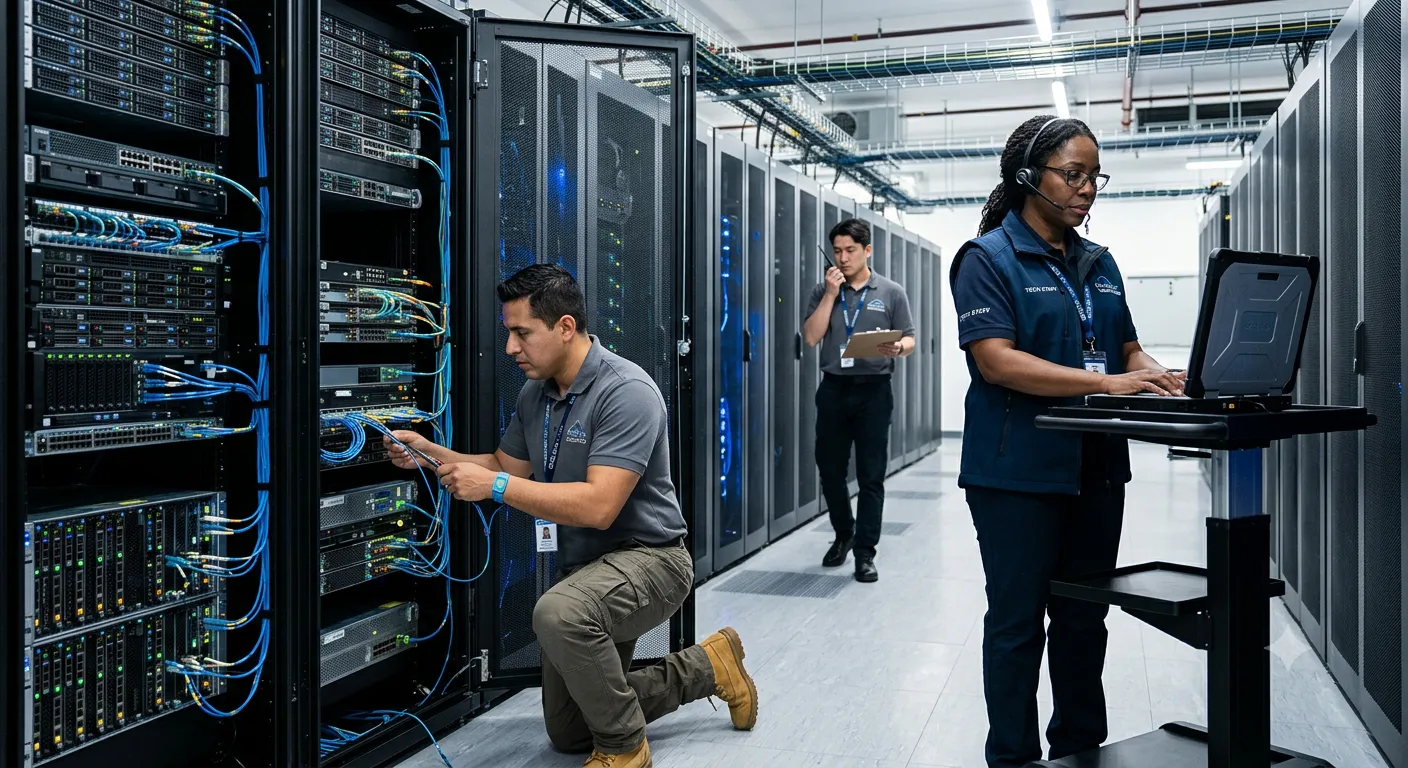
If a chamber of commerce tells you a data center is about to flood your submarket with well-paid permanent employees, smile, thank them, and check the operations headcount, because the housing math does not survive contact with the numbers.
Quartz reported that in Abilene one developer was contractually obligated to maintain a permanent staff of 57 workers once the facility was running, while thousands of construction workers flooded the area during the build and drove average monthly rents up roughly $1,000 in a single year. Research from Good Jobs First found many data centers employ fewer than 125 permanent workers, and that academic work shows data centers do not reliably generate net local tech job growth.
Data centers are a land story and a construction story, they are not a housing demand story. The workforce arrives, rents short-term, wears out the roads, and leaves. The permanent staff that remains would not fill the sanctuary of a small church. A manufacturing plant or a hospital expansion of comparable capital cost generates vastly more of the move-up, mortgage-carrying households that sustain a healthy resale market, and the two get discussed as though they are interchangeable economic development wins. They are not remotely interchangeable, and pretending otherwise is how a city ends up trading a decade of tax base for 57 jobs.
To be fair, construction phase is genuinely lucrative for the trades, for aggregate suppliers, for dirt work contractors and for landowners, and that is real money moving through real families in this county. Count it honestly. Then count the operations jobs conservatively, and time your buying or selling decision on the second number rather than the first.
Tax Abatements, School Funding, and Where the Money Actually Goes

Incentives shape both your tax picture and your school district’s finances, so they belong in any analysis that claims to be complete.
The current state framework is the Texas Jobs, Energy, Technology and Innovation Act, or JETI, codified at Chapter 403 of the Government Code, effective January 1, 2024 as the replacement for the much-criticized Chapter 313 program. As the Texas Comptroller explains, JETI lets a school district limit the taxable value of qualifying projects for maintenance and operations taxes over ten years, with the state making the district whole. The rewrite tightened things considerably, eliminating the job-waiver loophole, requiring at least 110 percent of the county average wage plus health benefits, and adding Governor’s office oversight.
There is a wrinkle worth understanding. Traditional data centers are generally not eligible for JETI at the state level, because the statute limits eligibility to specified industries and excludes many data center uses. That is precisely why the incentives you see in Ellis County are local city and county abatements instead, like Red Oak’s $2.82 million ten-year deal. Local abatements defer property tax revenue during the exact years a community absorbs construction disruption, which is why residents keep asking what they are getting and when, and why the answer keeps arriving vague.
Now connect that back to the number this whole article is built around. Cities are granting decade-long abatements against projected buildouts, and the projections come from the same queue ERCOT’s own CEO has publicly discounted as too high to be realistic. A community that forgoes ten years of revenue on the promise of a full campus is pricing its sacrifice off a filing, not a foundation, and the gap between those two things is exactly where a bad municipal deal gets made. The disciplined move for any council in this corridor is to tie the abatement to what actually gets built and energized, phase by phase, rather than to the developer’s opening vision of the site. A project that delivers three buildings out of a planned eight should earn three buildings’ worth of incentive, not the whole package on day one. That is not anti-growth. That is refusing to pay full price for a number the grid operator has already told you to discount.
One local trap that costs families real money: in Ellis County, your mailing city is not your school district. A home with a Midlothian address can fall inside Waxahachie ISD, Midlothian ISD or another district entirely, and any school-related abatement affects only the district that granted it. If schools factor into your purchase, and for most families they are the whole purchase, go past the mailing address and find the actual zoned campus.
Transmission and Substations: The Infrastructure Reshaping Rural Ellis County
Data centers need land, and then they need power delivered to that land, and the transmission buildout is redrawing the county map in ways that hit rural property directly.
Oncor is spending accordingly. In March 2026 the utility announced via Business Wire that it acquired land on Farrar Road in Ellis County for a future 765-kV/345-kV substation and switch station, describing it as a step toward building the state’s emerging extra-high-voltage transmission backbone. More broadly, Oncor announced a $47.5 billion base capital plan for 2026 through 2030, up more than $11 billion from its prior plan, explicitly citing new commercial, industrial and data center load.
Several 345-kV projects are already moving through ERCOT and the PUC inside Ellis County, including the Venus Switch to Sam Switch line and the Wilmer switch project, together representing hundreds of millions in investment with 2026 in-service dates. Many of these development hot spots cluster near the endpoints of the CREZ transmission lines completed in 2014, infrastructure originally built to move West Texas wind that now functions as a magnet for enormous loads.
For a buyer this is a due-diligence item with real resale consequences. A new 345-kV or 765-kV line or a substation near a property affects sightlines, and a row of lattice towers is a live objection for a future buyer even where appraisers find no measurable value impact. If you are buying acreage anywhere in this corridor, pull the Oncor and ERCOT project maps for that specific parcel before you fall in love with the sunset off the back porch.
The Ellis County Data Center Corridor
Confirmed campuses and infrastructure strung down the I-35E corridor south of Dallas. This is a corridor schematic showing where projects sit relative to the towns, not a survey map. Positions are approximate.
Sources: municipal council records and reporting for Red Oak (Compass, DataBank); Google Texas data center announcements; Oncor infrastructure filings. Schematic positions are approximate along the corridor and are not survey-accurate. Figures current as of source publication dates.
The National Mood, and Why It Moves Your Market
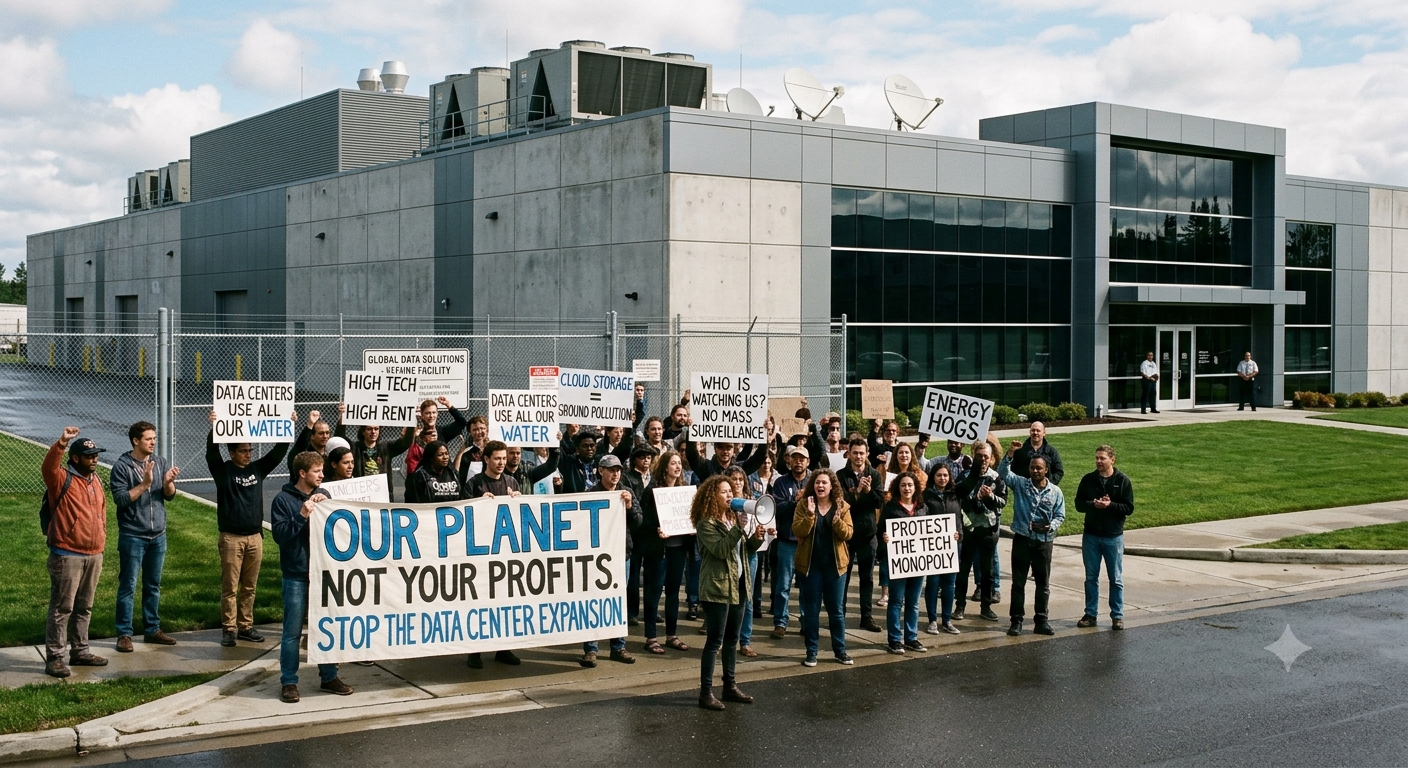
Public sentiment on data centers has soured fast and in a bipartisan way like almost nothing else in American life.
A Gallup poll released in May 2026, the firm’s first ever on local data center construction, found that seven in ten Americans oppose building an AI data center in their local area, including 48 percent who strongly oppose. Among opponents, half cited resource use, with 18 percent naming water specifically and another 18 percent naming energy. Opposition ran higher than opposition to a local nuclear plant, which drew 53 percent.
That mood is the weather you are buying and selling in, and it cuts both directions. Organized opposition slows projects, forces screening and noise conditions into approvals, and hands communities leverage they did not have two years ago, all of which protects nearby homeowners. Organized opposition also creates buyer hesitation in the short term regardless of what the property-value research says, because perception moves a market well before data does.
Knowing which projects near you are contested, and which way those fights are trending, is exactly the intelligence I track across Waxahachie, Midlothian, Red Oak and the Ennis, Ferris and Palmer frontier.
What Is Actually Happening to Land Values in Ellis County?

The data center story splits into two completely different real estate markets here, and confusing them is the most expensive mistake I watch people make.
The residential resale market has softened in line with the broader region. Per Redfin, the Ellis County median sale price ran roughly $429,000 in early 2026, and several corridor cities posted year-over-year slips consistent with the eleven straight months of price softening across DFW. Data center announcements have not sent finished-home prices climbing, and anyone claiming a boom is selling a narrative the MLS does not support.
Raw land is a different animal entirely. Development-ready acreage near power and transmission has become some of the most strategically valuable dirt in the state, and where a parcel qualifies as data center ready, the premiums are extraordinary. In neighboring Hill County, KWTX reported in June 2026 that an $80 million offer valued a proposed data center parcel at roughly $100,000 an acre, about 14 times its appraised value, in a county where the Texas Real Estate Research Center tracked land appraisals rising from around $3,800 per acre in 2020 to roughly $8,000 by 2025. That is Hill County, not Ellis, so it is not your comp. It is the direction the wind is blowing, and it is blowing straight up I-35 toward us.
The split screen is the opportunity. Softening prices on finished homes, extraordinary premiums on the right raw acreage in the right location relative to transmission. If you own rural land in this corridor near power, this is a genuine window and it will not stay open indefinitely, which is why I built a dedicated land and farm and ranch page. If you are buying a home here, the boom is not inflating your purchase price, and in a softening market you likely hold more negotiating leverage than the headlines have led you to believe.
What Should You Check Before Buying Near a Proposed Data Center Site?
8 Things to Check Before Buying Near a Data Center
Run this before you tour, not after you fall in love with the house. Chaos rewards the prepared.
This is the checklist I run before we tour, not after you have emotionally moved into a house. Work it in order.
- Pull zoning and pending applications for every parcel surrounding your target property at both the city and county level, because a hay field today can become an 830-acre campus after one midnight vote.
- Identify the cooling technology of any confirmed nearby facility. Air-cooled and evaporative-cooled are different neighbors with different water and noise profiles.
- Measure distance and read the site plan, specifically screening, berms, tree buffers, and how close cooling infrastructure and backup generators sit to the nearest homes. Noise is the documented risk factor, not the building itself.
- Review Oncor and ERCOT transmission maps for new lines and substations crossing or bordering the parcel.
- Confirm the actual zoned school district and campus rather than trusting the mailing city, which is a genuine trap in this county.
- Ask whether nearby projects carry active tax abatements and when the community benefit is scheduled to arrive.
- Read the local coverage and find the opposition, because a contested project affects buyer perception in the near term even where it never affects appraised value.
- Price in the construction phase honestly, including truck traffic, mud runoff, road wear and the rental pressure that residents near existing sites consistently report.
I run this verification personally for buyers across Ellis County and the I-35E corridor. Chaos rewards preparation, which is the entire reason the North Texas Data Center Intelligence Map exists and why CBS News Texas keeps calling when this story moves.
Frequently Asked Questions About Data Centers and North Texas Real Estate

Do data centers lower property values of nearby homes?
Research to date does not show that data centers systematically lower nearby home values. A George Mason University study of Northern Virginia, the densest data center market in the world, found homes closer to data centers actually sold for higher prices on average, and a 2026 Indiana analysis reached the same conclusion. That surprises almost everyone who asks, so hold onto the nuance rather than just the headline. The risk is not the data center itself, it is a badly designed one close to you. Noise from cooling equipment, thin visual screening, and backup generator testing can all weigh on homes within a few hundred feet of a poorly planned facility. Distance, cooling type, and screening decide your outcome far more than the mere presence of a campus in your area.
Which Texas county has the most data centers?
Ellis County leads all 254 Texas counties in large data center power requests, with 29 interconnection requests totaling roughly 23.9 gigawatts on file with ERCOT, per data reported by the Houston Chronicle. Johnson County ranks second and Dallas County third. ERCOT’s own CEO has stated that most requested projects will never be built, so the number of operating facilities will end up dramatically smaller than the request total suggests.
How much water do data centers use in Texas?
Texas data centers currently use less than 1 percent of the state’s water, but a University of Texas at Austin study released May 6, 2026 projected that figure could reach between 3 and 9 percent by 2040, counting both direct cooling water and the water used to generate their electricity. Actual consumption depends heavily on cooling technology, since evaporative-cooled facilities consume substantial water while closed-loop air-cooled facilities, including Google’s Ellis County expansion, use very little.
Will data centers raise my electricity bill in Texas?
The evidence is genuinely mixed. A U.S. Energy Information Administration analysis found data center demand could push ERCOT wholesale prices as much as 78.9 percent higher in 2027, while industry-funded studies found no historical evidence of residential rate increases. Texas Senate Bill 6, signed in June 2025, requires large loads to help pay their own interconnection costs specifically to protect residential ratepayers, though final cost-allocation rules are still being written by the Public Utility Commission.
How many jobs does a data center actually create?
Very few permanent jobs relative to their size and cost. One Abilene developer was contractually obligated to keep just 57 permanent workers on staff once the facility was running, and Good Jobs First research found many data centers employ fewer than 125 permanent people. Think about what that means for housing. The construction crews that build these campuses number in the thousands, but they leave when the job is done. The small staff that stays behind often will not even fill a mid-size restaurant. A data center is a land story and a construction story. It is not the sustained housing demand engine that a factory or a hospital of the same cost would be.
Are there data centers in Waxahachie, Midlothian and Red Oak?
Google operates two campuses in Ellis County, in Midlothian and Red Oak, with the Red Oak campus now operational. Red Oak’s City Council approved an 830-acre data center campus in May 2026, and DataBank is building a 300-acre, eight-building campus on Stainback Road backed by a $2 billion construction loan, with its first three buildings already leased. Additional projects and transmission infrastructure continue moving through approval along the I-35E corridor. To see all North Texas data centers, both planned and functional, visit our DFW Data Center Map.
Can a Texas city or county stop a data center?
Local authority is limited and actively contested. San Marcos became the first Texas city to ban data centers through zoning in June 2026 and Hill County issued a moratorium in unincorporated areas, but state officials have signaled they will challenge such restrictions as conflicting with state law. Ellis County passed a resolution urging stricter state regulation, while cities including Red Oak have approved projects over heavy resident opposition.
What is Texas Senate Bill 6 and how does it affect data centers?
Senate Bill 6, signed in June 2025, is the state’s primary data center grid law. It requires large electricity loads of 75 megawatts or more to demonstrate site control and financial commitment before entering the interconnection queue, disclose duplicate requests filed at other sites, help pay interconnection costs, and install equipment allowing ERCOT to curtail or disconnect them during grid emergencies. The disclosure requirement is expected to substantially shrink the speculative portion of Ellis County’s request total.
Does a data center tax abatement affect my property taxes or schools?
Data centers in Ellis County typically receive local city or county abatements rather than state JETI agreements, such as the $2.82 million ten-year abatement Red Oak granted, which defers property tax revenue during construction years. There is a trap here that catches families every season. Your mailing city is not your school district. A house that says Midlothian on the envelope can sit inside Waxahachie ISD, Midlothian ISD, or another district entirely, and an abatement only touches the district that actually granted it. Confirm the zoned campus before you assume anything about your taxes or your kids’ schools, because the address on the listing will not tell you.
Is now a good time to buy or sell a home in Ellis County?
The residential resale market has softened, with the Ellis County median sale price around $429,000 in early 2026 following eleven straight months of price softening across DFW, which generally favors buyers with negotiating leverage. Raw development land near power and transmission has seen sharp premiums, which favors landowners. The right move depends on your specific parcel, its position relative to confirmed projects, and your timeline.
The Bottom Line

Most of the 23.9 gigawatts sitting in Ellis County’s queue will never be built, and SB 6’s disclosure requirements are already designed to prove it. The facilities that do rise will be shaped by Proposition 4 water money, by organized residents who have gotten considerably better at this over eighteen months, and by a cooling technology curve bending decisively toward air and away from water. Home values near data centers have not systematically fallen. Permanent job creation is modest enough that no city should trade a decade of tax base for it without extracting far more in return. Your electric bill sits behind real but manageable guardrails that the Public Utility Commission is still writing.
So don’t panic, but don’t look the other way either, because both reactions hand the advantage to someone else. The edge in this corridor over the next three years goes to whoever reads the specific parcel, the specific project and the specific district instead of the headline. That is the work, and it is the work I do before my clients ever write an offer.
If you own land, own a home, or are moving into this corridor, get the ground truth before you commit. Call me at 214-228-0003 and we will look at your situation on a map with the actual filings open in front of us.
The headlines will keep swinging between boom and doom because that is what headlines are built to do. Your decision deserves better than a headline, and my job is to make sure it gets it.
Bobby Franklin, REALTOR®
Legacy Realty Group – Leslie Majors Team | TREC License #0805459
North Texas Market Insider™ | 16 Northgate Dr. Ste 100, Waxahachie, TX 75165
214-228-0003 | northtexasmarketinsider.com
A note on financing. If a purchase or refinance in this market needs a lender, these are professionals I trust:
- Andrew Bryan — Miramar Mortgage | andrewthelender.com
- Jennifer Nelson — Eustis Mortgage | eustismortgage.com
- Taylor Fruge — Lower Mortgage | lower.com
I recommend these lenders based on their expertise and service. I do not receive compensation for referrals.
This article is provided for general informational purposes and does not constitute legal, financial, tax or appraisal advice. All real estate services are offered without regard to race, color, religion, sex, handicap, familial status or national origin, in full compliance with the Fair Housing Act. Bobby Franklin is a licensed Texas REALTOR® (TREC #0805459) with Legacy Realty Group – Leslie Majors Team and abides by the NAR Code of Ethics, RESPA and all TREC advertising rules. Market data cited is current as of the sources’ publication dates and is subject to change.