
By Bobby Franklin, REALTOR® | North Texas Market Insider™ | Legacy Realty Group – Leslie Majors Team
Last updated: September 15, 2026
Everyone in Dallas is celebrating the $100 billion number, and that number is telling the wrong story.
On October 5, 2026, Energy Transfer LP, Sunoco LP, SunocoCorp LLC and USA Compression Partners are scheduled to begin trading on the Dallas-based Texas Stock Exchange under their existing ticker symbols, after their securities stop trading on the New York Stock Exchange at the close on October 2, according to Energy Transfer’s investor announcement, Sunoco’s joint listing release and USA Compression’s investor notice. WFAA reported that these are the young exchange’s first corporate listings, following two Texas Capital exchange-traded funds that moved over in August, and the social feeds have already turned that milestone into a story about a tidal wave of money, jobs and homebuyers rolling into North Texas.
Here is the read that matters if you own a home here, plan to sell one, or are about to move to DFW. The ticker move is a signal, not a stimulus. None of that $100 billion arrives in Dallas as cash, none of these companies is relocating a headquarters, and no seller in the metroplex just earned a “Y’all Street premium” on their asking price. What the move does accomplish is far more interesting: it starts a clock on whether Dallas becomes a genuine national listing center, and the people who track the right signals over the next two years will see the housing impact coming long before it ever shows up in the comps.
What Actually Happened
Energy Transfer is moving its common units and Series I preferred units to TXSE while keeping the symbols ET and ETprI, Sunoco LP and SunocoCorp keep SUN and SUNC, and USA Compression keeps USAC. All three announcements state that current unitholders do not need to take any action.
The ticker move, decoded
What moved to Dallas, and what stayed exactly where it was
Energy Transfer, Sunoco, SunocoCorp and USA Compression begin trading on the Texas Stock Exchange on October 5, 2026. Here is what that transfer changes and what it leaves untouched.
Moved
- Primary listing venueFrom the New York Stock Exchange to TXSE, with tickers ET, SUN, SUNC and USAC unchanged.
- Exchange relationshipIssuer services and listing oversight now run through a Dallas exchange.
- Legal homeAll four entities converted from Delaware to Texas entities in July 2026.
Did not move
- HeadquartersEnergy Transfer and Sunoco were already in Dallas, and USA Compression was already in Austin.
- $100 billion in cashThe figure is combined market value, not money arriving in the local economy.
- Employees and new householdsNo workforce relocation was announced, so no new wave of homebuyers follows the ticker.
Signal, not stimulus. The housing impact depends on what comes next: unaffiliated listings, real hiring and signed office leases.
Sources: Energy Transfer, redomiciliation announcement, D Magazine. North Texas Market Insider™
Treat this as one corporate family making one decision rather than four independent companies each shopping for a new exchange. Energy Transfer holds general-partner and equity interests tied to both Sunoco and USA Compression, and in July 2026 all four entities announced they were changing their state of formation from Delaware to Texas while preserving investors’ economic and governance rights. The listing transfer is the second move in a deliberate Texas consolidation, and D Magazine’s coverage placed the group’s combined market value at nearly $100 billion when the news broke, a figure that will float with daily security prices.
TXSE Is Already a Working Exchange

Anyone still treating the Texas Stock Exchange as a branding exercise is a year behind. The U.S. Securities and Exchange Commission approved TXSE’s registration as a national securities exchange on September 30, 2025, and the exchange rolled out live trading in phases beginning July 6, 2026, with every National Market System symbol available by July 31, according to the State of Texas trading-launch announcement.
Trading volume matters, but primary listings matter more, because they give an exchange a direct relationship with the companies themselves and a credible claim to compete with New York. TXSE’s rollout plan put exchange-traded products on the platform in the third quarter, corporate listings in the fourth quarter and its first initial public offerings in early 2027, according to WFAA’s reporting, so the Energy Transfer group landing on October 5 puts the exchange right on its own timeline.
From approval to first trade
The Texas Stock Exchange timeline
TXSE went from federal approval to live trading in ten months. The Energy Transfer family’s arrival keeps it on the schedule it set for itself.
- Sep 30, 2025
SEC approves TXSE
Registration as a national securities exchange is granted.
- Oct 31, 2025
Capital tops $250 million
Second funding round adds J.P. Morgan to TXSE Group’s investors.
- Jul 2, 2026
Energy Transfer family heads to Texas
All four entities announce conversion from Delaware to Texas.
- Jul 6 to 31, 2026
Live trading rolls out
Phased launch ends with every National Market System symbol tradable.
- Aug 2026
First listings arrive
Texas Capital moves two exchange-traded funds to TXSE.
- Sep 10, 2026
Corporate transfers announced
Energy Transfer, Sunoco, SunocoCorp and USA Compression confirm the move.
- Oct 2, 2026
Last day on the NYSE
Securities stop trading in New York at the close.
- Oct 5, 2026
First day on TXSE
Trading begins in Dallas under the same ticker symbols.
- Early 2027
First IPOs targeted
The real test: can TXSE win brand-new issuers?
On schedule. TXSE planned corporate listings for the fourth quarter of 2026 and its first IPOs for early 2027. Transfers prove the platform works. IPOs will prove companies want it.
Sources: Office of the Texas Governor, TXSE Group, WFAA, company announcements. Scheduled dates may change. North Texas Market Insider™
The money behind it is serious. TXSE filed for registration with $161 million in initial backing, then pushed total capital above $250 million in a second round that added J.P. Morgan to an investor base including BlackRock, Charles Schwab and Citadel Securities, with 82 institutions and business leaders now holding equity in TXSE Group. The exchange is also competing on structure, operating as a single-tier exchange aimed at mid- and large-cap issuers and requiring a formal confidential pre-application review for every listing, a process NYSE and Nasdaq offer only as an option, according to Jones Day’s analysis of the SEC approval.
Why Dallas Won This Round
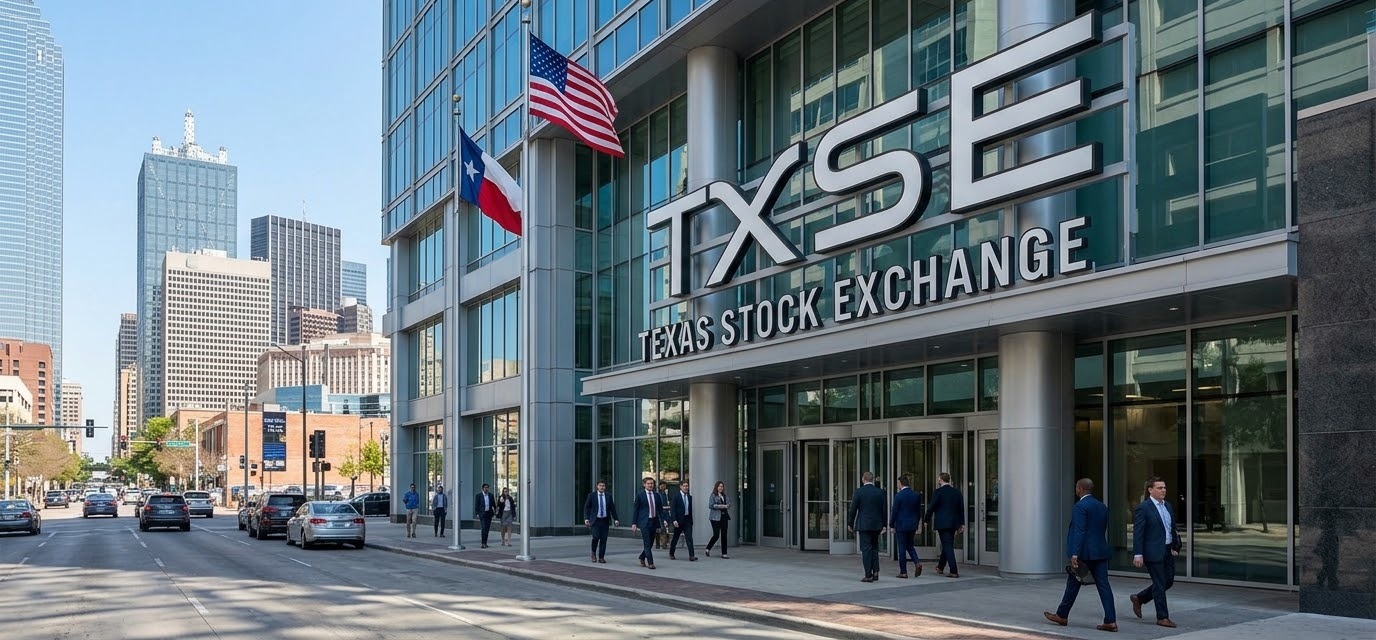
Dallas did not become a financial center the day someone hung a stock exchange sign downtown. The Federal Reserve Bank of Dallas reports that the Dallas financial-services cluster grew 22% from 2016 through 2023, while employment in the region’s real estate, construction and development cluster climbed 23% over the same stretch. “Y’all Street” is a nickname for a concentration of banks, investment firms, insurers, law practices and corporate headquarters that was already here and already compounding.
The headquarters pipeline tells the same story at state scale. The governor’s economic development office tracked 314 corporate headquarters relocations to Texas from 2015 through 2024, and Newsweek’s analysis found that 154 of them chose the Dallas-Fort Worth area. TXSE is less the cause of that momentum and more of a result of it.
Why Dallas
Y’all Street was built before the exchange arrived
The nickname describes a concentration of finance, headquarters and development that was already compounding. TXSE is the newest layer on top of it.
22%
Growth in the Dallas financial-services cluster, 2016 to 2023
Dallas Fed
23%
Employment growth in the region’s real estate, construction and development cluster, 2016 to 2023
Dallas Fed
154
Of the 314 corporate headquarters that moved to Texas from 2015 through 2024 chose DFW
Texas EDT data via Newsweek
$250M+
Raised by TXSE Group, now backed by 82 financial institutions and business leaders
TXSE Group
Momentum came first. TXSE is infrastructure built on top of North Texas growth, not the cause of it.
Sources: Federal Reserve Bank of Dallas, Texas Economic Development and Tourism, Newsweek, TXSE Group. North Texas Market Insider™
If you are weighing where to live inside this region, the financial core is jus one piece of a much larger map. The North Texas Market Insider Dallas Metro guide lays out the tradeoffs between the urban core, established neighborhoods and airport-access markets, and the Dallas Metro area-fit quiz will organize your lifestyle and commute priorities in about two minutes.
The Relationship Every Reader Should Know About
Energy Transfer’s public explanation centers on aligning its Texas legacy with TXSE’s technology platform and positioning the company for continued growth. Those are issuer statements, and they carry no promise of better stock performance or lower volatility.
There is also a fact the celebratory posts are skipping. D Magazine reported that Energy Transfer founder and chairman Kelcy Warren owns nearly 30% of TXSE Group, the exchange’s parent company, making him its largest shareholder. That ownership does not make the move a bad decision. It does mean the first big corporate listings came from inside the family, which is a very different proof point than an unaffiliated Fortune 500 company comparing every venue in the country and choosing Dallas on the merits.
TXSE’s leadership sees it differently. Chairman and CEO James H. Lee called the transfer the start of primary listings leaving New York for Texas and predicted a trend that will reshape the U.S. listings landscape for decades. He may be right, and the capital, the regulatory approval and the on-schedule launch all give that prediction real weight. A trend, though, is proven by the second, third and tenth companies, not by the first one whose chairman owns the largest stake in the exchange. As of this writing, that independent corporate win has not happened yet, and it is the one to watch.
A Ticker Move Is Not a Headquarters Move
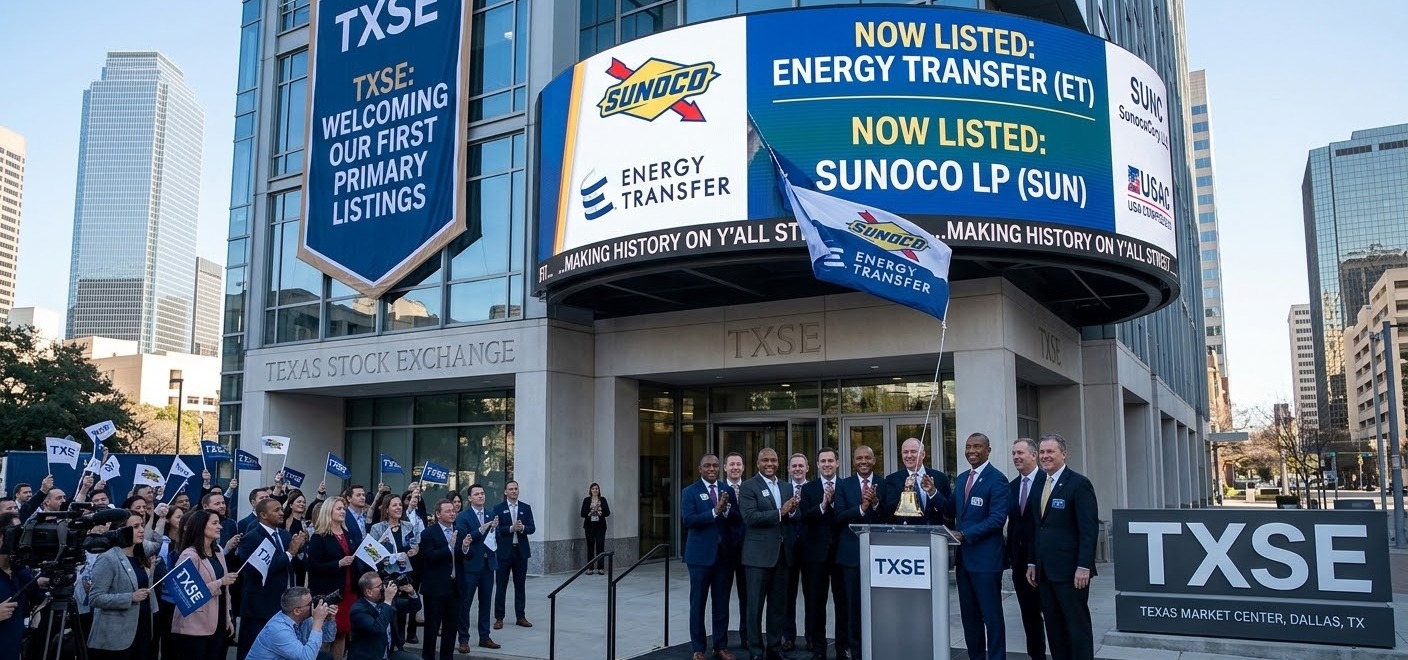
This is where the viral framing breaks down, and it is the single most important correction for anyone making a real estate decision off this headline. Moving a primary listing changes the venue where a security trades, the exchange relationship and the issuer-services provider. It does not move pipelines, offices, payroll or people. Energy Transfer and Sunoco were already headquartered in Dallas before September 10, and USA Compression was already based in Austin.
A company relocating its headquarters from California or Illinois creates direct housing demand the moment employees start house hunting. A Texas company moving its ticker from New York to Dallas generates prestige, exchange revenue and some professional-services work, without shipping a single new household into Ellis County or Collin County.
Compare that with the moves that actually put people in houses. Goldman Sachs is building an 800,000-square-foot Dallas campus that will house 5,000 employees when it opens in 2028, Charles Schwab had 7,000 workers at its Westlake campus at the end of 2024, and Wells Fargo opened an Irving campus in October 2025 that will become the operating base for 4,500 employees, according to the Federal Reserve Bank of Dallas. Those are the headlines that create buyers, and they deserve far more of your attention than a ticker symbol changing addresses.
Where buyers come from
Campus headcount moves housing. Ticker symbols do not.
Major North Texas financial campuses measure their impact in employees. The Texas Stock Exchange transfer changes where shares trade, and no workforce moves with it.
Charles Schwab
Westlake campus, workers at year-end 2024
Goldman Sachs
Dallas campus, employees when it opens in 2028
Wells Fargo
Irving campus, planned operating base
Energy Transfer family
TXSE listing transfer, relocation announced
Watch the payroll, not the prestige. Housing demand follows people with paychecks, and the effect is strongest where large workforces land.
Campus figures from the Federal Reserve Bank of Dallas. Headcounts include employees who may already have lived in DFW, so they are not all new households. Listing transfer details from Energy Transfer. North Texas Market Insider™
The housing impact, if it comes, arrives one or two steps downstream. A growing listings business needs compliance staff, market-operations teams, technologists, securities attorneys, accountants, investment bankers and data vendors. When those jobs are genuinely new to the region, rather than people changing desks inside DFW, they add household income and real buyer demand. The headcount, salary mix, office location and in-office requirements of those jobs will move home values far more than the market capitalization of anything listed on TXSE.
Will TXSE Raise DFW Home Values?
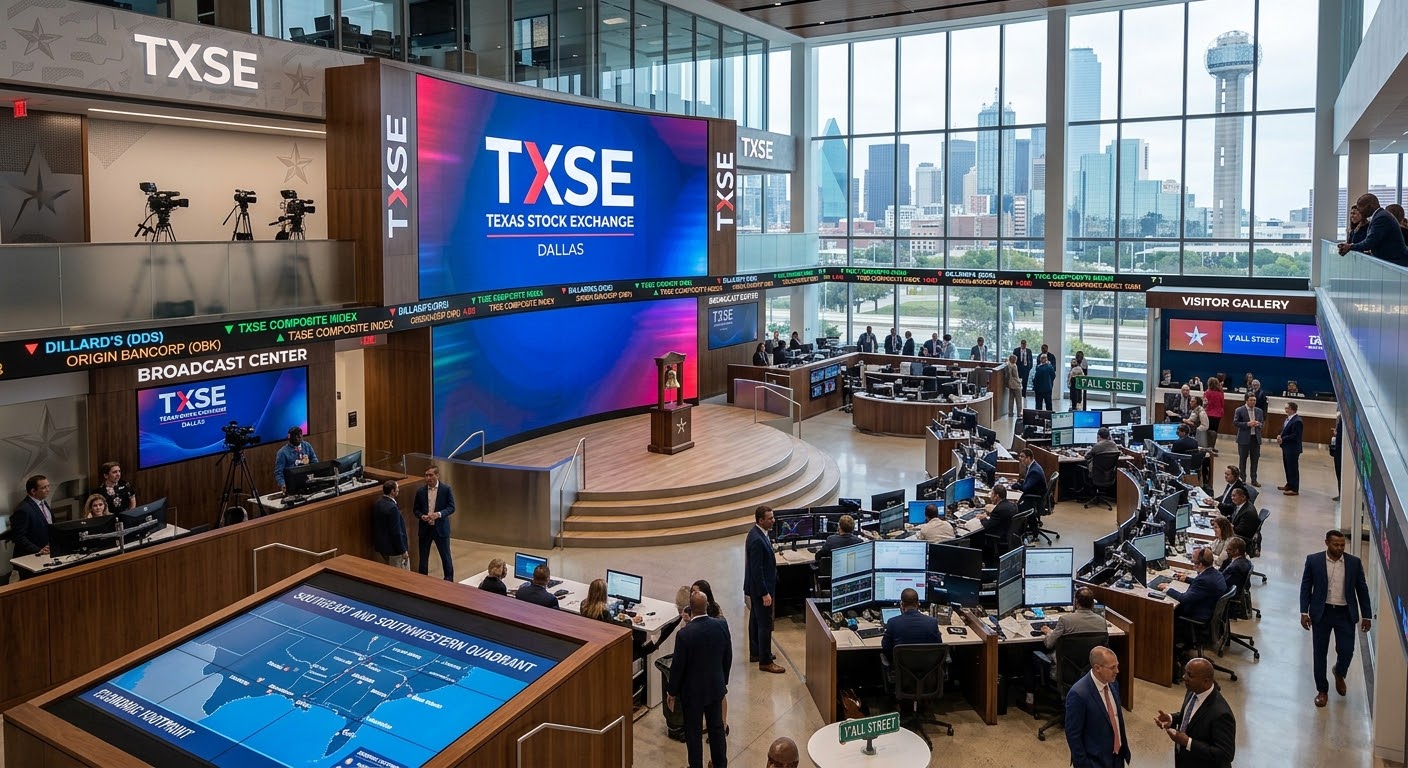
The evidence does not support the claim that the Texas Stock Exchange by itself will push Dallas-Fort Worth home values higher. It is a meaningful piece of regional economic infrastructure, and it still ranks well behind mortgage rates, inventory, new construction, household formation, property taxes, insurance costs and local job growth as a force on what your house sells for next spring.
The research on genuine corporate moves is compelling, which is exactly why precision matters here. A 2025 study in Management Science examining U.S. headquarters relocations from 1994 through 2017 found that a headquarters arriving in a ZIP code led to 10% higher housing-price growth, with prices rising a year before the move, climbing further for two years after it, and spilling into ZIP codes as far as 15 miles away. The effect was strongest when the relocating company brought a larger workforce. That finding describes higher price growth, not a 10% jump in prices, and it describes headquarters relocations, not a listing transfer by companies that were already here.
What the research says
What a real headquarters move does to nearby home prices
A 2025 Management Science study tracked U.S. headquarters relocations from 1994 through 2017. This is the effect to look for if TXSE starts pulling outside companies into North Texas.
Illustrative shape of the published finding, not plotted data.
10%
Higher housing-price growth in the ZIP code receiving the headquarters
1 yr
Prices start rising before the move is complete
15 mi
Spillover reaches nearby ZIP codes up to 15 miles away
Bigger
The effect grows with the size of the relocating workforce
Growth, not a price jump. The finding measures faster price growth after genuine headquarters relocations. The Energy Transfer family was already based in Texas, so this effect only becomes relevant if outside headquarters follow TXSE here.
Source: Hu, Tsang and Wan, “Corporate Relocation and Housing Market Spillovers,” Management Science 71(5), 2025. North Texas Market Insider™
That study is the roadmap for what to watch. If TXSE becomes a magnet that pulls outside companies, their headquarters and their talent into North Texas, the relocation research becomes directly relevant. Until that happens, a Dallas ticker is a validation of the story rather than a new chapter of it.
The Signals That Turn a Headline Into Housing Demand
Most viral posts are measuring the wrong thing. Market capitalization tells you nothing about who will be buying houses in 2028. These are the indicators that will, and every one of them is measurable rather than promotional.
The Insider signal tracker
Seven signals to watch before TXSE moves home prices
Market capitalization tells you nothing about who buys houses in 2028. These measurable signals will.
- Not yet
Unaffiliated corporate listings
The first corporate listings came from the Energy Transfer family, whose chairman is TXSE Group’s largest shareholder.
- Targeted early 2027
Initial public offerings
TXSE has not yet hosted an IPO. The first ones will test whether new issuers choose Dallas.
- No headcount disclosed
Direct local hiring
The listing announcements did not include a number of new Dallas jobs.
- Watching
Supplier clustering
Investment banks, securities law firms and market-data providers opening offices because of TXSE.
- Watching
Office commitments
Signed and occupied space tied to exchange activity, not announcements without staffing.
- Softening metro-wide
Housing absorption near job centers
DFW median days on market rose from 46 in April to 58 in August 2026.
- Watching
Infrastructure and new supply
Roads, utilities and approved housing pipelines decide whether growth becomes appreciation or congestion.
No signal has turned green yet. That is the honest read today, and it is exactly why the next unaffiliated listing, IPO or hiring announcement will matter more than the first transfer did.
Sources: D Magazine, WFAA, Realtor.com via FRED. Statuses are North Texas Market Insider™ assessments and will be updated as signals move.
The downside case deserves equal honesty. A new exchange has to compete for order flow, liquidity, issuers and public trust against deeply entrenched venues, and a few affiliated listings can create momentum without proving that a broad roster of independent companies will follow. Buy and sell based on what a home does for your household today and on defensible market evidence, and treat TXSE as a long-term economic signal worth tracking closely rather than the entire investment thesis.
The Housing Market This News Is Landing In

The exchange news arrives in a DFW market that is far more balanced and payment-sensitive than the frenzy of 2021. Texas A&M’s Texas Real Estate Research Center put the DFW median sale price at $390,000 in April 2026, and the same analysis found that 61% of DFW sales in 2025 closed at least 3% below the seller’s original asking price, with the typical DFW price reduction reaching 4.1% in the first four months of this year.
By August, Realtor.com data published through the Federal Reserve showed 29,549 active listings across the Dallas-Fort Worth-Arlington metro, up from 26,490 in April, while the median time on market stretched to 58 days from 46 days in April. Inventory is building and homes are sitting longer heading into fall. Buyers in that environment have choices, time and leverage, and they compare your home against every alternative they can finance today. A headline about an exchange in downtown Dallas will not change that math for a four-bedroom in Red Oak.
DFW market pulse
The housing market this news is landing in
Inventory built through the summer and homes are taking longer to sell. Buyers across the Dallas-Fort Worth-Arlington metro have time, choices and leverage.
Active listings, April to August 2026
Median days on market, April to August 2026
$390K
DFW median sale price, April 2026
61%
Of 2025 DFW sales closed at least 3% below the original asking price
4.1%
Typical DFW price reduction, January through April 2026
Price against today’s competition. A new exchange in downtown Dallas does not change the comparison a buyer makes between your home and every other listing they can finance this month.
Sources: Realtor.com via FRED, active listings and median days on market, updated September 4, 2026; Texas Real Estate Research Center. Bars start at zero. North Texas Market Insider™
For the numbers moving underneath the headlines, check the live DFW housing market dashboard and the 2026 North Texas housing forecast before you make a pricing or timing call.
Where the Upside Would Show Up First
No neighborhood is guaranteed to appreciate because of TXSE. If the second wave arrives, the earliest effects will concentrate around the places where real jobs, occupied offices and employee spending land, then radiate outward along commute routes, highways and airport access.
Downtown, Uptown and Close-In Dallas
Urban Dallas has the most direct exposure if the exchange expands its footprint, hosts listing events and pulls legal, banking, compliance and market-data firms into nearby towers. How much that moves housing depends on how many of those workers must be physically present, what they earn, and whether they choose apartments, condos, townhomes or established neighborhoods nearby. Buyers here should underwrite HOA financials, building reserves, insurance, parking and resale competition carefully, because a short commute to a new employer does not lift every building equally.
North Dallas and the Airport Corridor
North Dallas, Las Colinas and Irving already sit at the intersection of downtown access, corporate campuses and DFW International Airport. That diversification is the real strength of the corridor, since demand does not depend on any single employer. Property-level differences still decide outcomes, and two homes the same distance from an office can carry very different tax rates, noise exposure, flood considerations and future construction nearby.
Fort Worth and Western DFW
Fort Worth is its own employment and cultural center, and TXSE’s direct pull will be weaker there than near Dallas financial offices. A stronger metro-wide financial cluster still feeds professional networks and business formation on both sides of the metroplex. The Fort Worth Metro overview, the Fort Worth area guide and our breakdown of Fort Worth’s Panther Island Riverwalk cover the growth drivers that matter most on the west side.
Ellis County and the I-35E Corridor
Waxahachie, Midlothian, Red Oak and Ennis will not see a direct stock exchange premium, and anyone telling you otherwise is selling a headline. The corridor’s advantage is different and more durable: newer inventory, more square footage per dollar, and I-35E and U.S. 67 access to the job centers that TXSE could eventually grow. The Dallas Fed also counts Ellis County inside the Dallas-Plano-Irving metropolitan division, the same economic unit that contains downtown’s financial core, so this corridor is part of the Dallas economy by the Fed’s own definition rather than a far-flung exurb. When Dallas professionals decide that home size and new construction outweigh a 15-minute commute, Ellis County is where a meaningful share of that household growth lands.
Start with the Waxahachie city guide, the Midlothian city guide and the Waxahachie-Ellis County area hub. Supply deserves equal attention to demand, and the approved 13,270-home master-planned community covered in our Westlake development analysis shows why “more jobs equals higher prices” is never the whole equation south of Dallas.
The Seller Play

Sellers win this news cycle through preparation, not speculation. The TXSE milestone strengthens Dallas’s long-term economic narrative, while every offer you receive will still be built on comparable sales, condition, monthly payment and the competition sitting on the market next to you.
With 61% of DFW homes selling below their original asking price last year and median time on market climbing all summer, the first price you set is the one that decides whether buyers show up, so it has to be built from the homes a buyer can actually purchase this month in your immediate submarket rather than from a metro-wide headline. That same buyer is weighing your location against every alternative, which is why objective facts such as drive times to employment centers, airports and highways do more work in your marketing than any Y’all Street reference ever will. Once a buyer is inside, the property carries the sale, and maintenance records, recent improvements, energy efficiency, floor plan and total cost of ownership persuade far better than a vague promise of regional appreciation.
The buyers coming out of finance, law and compliance will read your tax bill, HOA reserve study and insurance quote with the same scrutiny they bring to a balance sheet, and having those documents ready signals the kind of seller they trust. That scrutiny is also why no listing should ever be advertised as guaranteed to appreciate because of TXSE or any company’s listing decision, since the most sophisticated buyer in the room is exactly the one who will discount that claim. Because inventory is still building, the strategy you launch with has to be reviewed on a schedule against showings, online engagement, competing listings and buyer feedback, so your pricing moves as fast as the market does.
Every regional story eventually has to answer to a specific property: what inventory is doing in your ZIP code, where the actual jobs are, how long the real commute runs, what new supply is already approved, and how your home stacks up against everything a buyer can purchase today. For current context before you set a number, North Texas real estate news and market intelligence is the starting point, and a property-specific comparative market analysis is the finish line, because metro statistics cannot price an individual house.
The Relocating Buyer Play

If you are a finance, legal, technology or energy professional moving to North Texas, build your search around your confirmed work pattern and your household’s priorities rather than a generic ranking of “best neighborhoods.” The criteria that belong in the decision are the ones you choose: budget, property type, commute tolerance, airport access, taxes, HOA terms and the amenities you actually use.
Your work location and in-office schedule come first, because Downtown Dallas, Uptown, Las Colinas, Plano and Fort Worth produce completely different commute maps, and that map defines which homes are even worth pricing out. Pricing them honestly means the full monthly payment, including principal, interest, property taxes, homeowners insurance, mortgage insurance where it applies and HOA dues, since the list price alone hides the numbers that separate one suburb from the next. That full-payment view is also where the resale versus new construction decision gets settled, because builder incentives can reshape the financing math while established homes may offer larger lots, mature trees and shorter drives.
Once the list narrows, the diligence gets personal: school boundaries, flood maps, tax jurisdictions, transportation plans and municipal development proposals should come directly from public sources, and the commute you plan to live with should be driven at real rush hour before you commit to it. Through all of it, protect your optionality: a home that works under several employment scenarios is far more resilient than one that only makes sense if a single employer keeps a single office policy forever.
The North Texas Relocation Playbook, the Relocating to North Texas guide and the Explore North Texas hub will organize the search, and the North Texas relocation consultation builds a property and commute plan around your specific move.
Frequently Asked Questions

What is the Texas Stock Exchange?
The Texas Stock Exchange, or TXSE, is a fully electronic, SEC-regulated national securities exchange built, headquartered and incorporated in Texas and based in Dallas. It is a subsidiary of TXSE Group Inc. and received SEC approval on September 30, 2025, with authority to trade securities and host corporate and exchange-traded-product listings.
Is the Texas Stock Exchange open for trading?
Yes. TXSE began a phased trading launch in July 2026 and made all National Market System symbols available by July 31, with corporate primary listings scheduled to begin in October 2026.
What companies are moving to the Texas Stock Exchange?
Energy Transfer LP, Sunoco LP, SunocoCorp LLC and USA Compression Partners have announced plans to transfer their primary listings from the NYSE to TXSE, including Energy Transfer’s Series I preferred units.
When will Energy Transfer, Sunoco and USA Compression move to TXSE?
NYSE trading is expected to end after the close on Friday, October 2, 2026, with TXSE trading beginning Monday, October 5, 2026, under the same ticker symbols.
Do current ET, SUN, SUNC or USAC investors need to do anything?
The companies say no action is required from current unitholders. Account-specific questions belong with your brokerage or a qualified financial adviser.
Is the Texas Stock Exchange replacing the NYSE or Nasdaq?
No. TXSE is an additional national exchange competing for trading activity and listings, and the NYSE and Nasdaq remain far larger and more established.
Can regular investors buy stocks on the Texas Stock Exchange?
Retail investors reach exchange-traded securities through a brokerage account rather than through the exchange directly. Whether a given order executes on TXSE depends on the security, the broker’s routing and best-execution process, and buying a TXSE-listed stock is not the same as owning a piece of privately held TXSE Group.
Why are companies moving their listings from New York to Texas?
The Energy Transfer group says the move aligns its Texas legacy with TXSE’s technology platform and supports continued growth. Energy Transfer chairman Kelcy Warren’s reported stake of nearly 30% in TXSE Group is material context for evaluating that decision.
Will the Texas Stock Exchange bring more jobs to Dallas?
It may support new exchange, technology, compliance, legal and financial-services work, but the listing announcements do not establish a specific number of new Dallas jobs. Actual hiring, occupied office space and outside companies setting up operations will be the proof.
Will the Texas Stock Exchange increase Dallas home prices?
Not automatically. Genuine headquarters relocations have been linked to faster housing-price growth near the receiving locations, but these companies were already based in Texas and are changing listing venues, so any housing effect would develop indirectly through future jobs, business formation and migration.
The Insider Take
The Texas Stock Exchange has crossed from concept to operating market, and the Energy Transfer group’s transfer is its most important corporate validation to date. It gives “Y’all Street” a concrete milestone and confirms that financial-market infrastructure is deepening in North Texas.
The disciplined conclusion is more valuable than the viral one. This is not $100 billion in cash landing in Dallas, it is not a headquarters relocation, and it does not justify raising a single asking price this fall. It is the opening move in a multi-year game, and the real payoff for homeowners depends on whether independent listings, IPOs, hiring and supplier firms follow.
I will be tracking every one of those signals as they move and reporting them here and in the monthly North Texas market report, so when the second wave shows up in the data, you will read about it before it shows up in the comps. The people who win this game will be the ones watching those signals now, while everyone else is still quoting the headline.
Buying, selling or relocating in Dallas-Fort Worth, Ellis County or greater North Texas? Call Bobby Franklin, REALTOR®, at 214-228-0003 for a property-specific market analysis or a relocation strategy built around your move.
This article is general market education, not investment, legal, tax, mortgage or appraisal advice. It does not recommend buying or selling ET, SUN, SUNC, USAC or any other security, and it makes no representation about future investment performance or property appreciation. Brokerage services are provided through Legacy Realty Group – Leslie Majors Team. All consumers are entitled to equal professional service without regard to any protected characteristic under the Fair Housing Act. Brokerage fees and commissions are negotiable and not set by law.
Bobby Franklin, REALTOR® | Legacy Realty Group – Leslie Majors Team 📲 214-228-0003 | northtexasmarketinsider.com




Join The Discussion