

There’s a conversation happening right now in Austin that is already changing how people think about buying, selling, and holding real estate across the Dallas–Fort Worth metroplex, and most homeowners don’t have the full picture yet.
In February 2026, Governor Greg Abbott unveiled a five-point property tax reform plan that could, if voters approve it, eventually eliminate school district property taxes on owner-occupied homes in Texas. That’s a seismic shift. And in a market where property taxes are consistently one of the biggest concerns I hear from buyers relocating from California, Colorado, Arizona, and Washington, the implications for North Texas real estate are enormous.
But here’s what separates smart market decisions from reactive ones: understanding the difference between what is law today and what is proposed for tomorrow.
I’ve watched too many buyers either panic or get irrationally excited over legislation that hasn’t passed yet. My job as the North Texas Market Insider is to cut through the noise, hand you the real intelligence, and help you make decisions based on facts, not headlines. So let’s break this down properly.
“Is Texas Really Going to Eliminate School Property Taxes for Homeowners?”

The short answer: it’s being seriously pursued by state leadership, but it is not current law, and it is not guaranteed.
Here’s what Governor Abbott actually proposed. His five-point property tax reform plan includes a constitutional amendment that would allow Texas to fully eliminate school district maintenance-and-operations (M&O) taxes on homesteads aka owner-occupied primary residences. For that to actually happen, a very specific sequence of events must occur:
The Texas Legislature would need to pass the proposed constitutional amendment by a two-thirds supermajority vote in both the House and Senate. The amendment then goes to a statewide ballot. A majority of Texas voters would need to approve it in a statewide election. And then, critically, lawmakers would still need to design and fund a replacement mechanism for the billions of dollars in school revenue that currently comes from local property taxes.
That last point is where a lot of these conversations get complicated. The Tax Policy Center has raised serious concerns about whether a stable, long-term state-level funding source can be built to replace that revenue without unintended consequences down the road.
So yes, this is a serious policy goal backed by the Governor of Texas. But no, it is not done, and there is no official date on the calendar when it happens. If you’re making a real estate decision right now based on the assumption that your school property taxes are disappearing, you’re getting ahead of the facts.
What Has Already Changed: The Property Tax Relief That’s Real Right Now
Before we talk about what might happen, let’s talk about what already happened, because there’s meaningful relief already in force that many North Texas homeowners aren’t fully utilizing.
The 2023 Homestead Exemption Increase: From $40,000 to $100,000
In November 2023, Texas voters approved Proposition 4, a constitutional amendment that more than doubled the school-district homestead exemption, jumping from $40,000 to $100,000 of taxable value for qualifying primary residences.
Here’s what that means in practical terms. If your North Texas home is valued at $400,000, the first $100,000 of that value is now exempt from school maintenance-and-operations taxes. You’re only paying M&O school tax on $300,000. That is real money back in your pocket every single year, not a proposal, not a maybe. It’s already happening. A detailed breakdown of who benefits from this relief shows that middle-market homeowners in areas like ours, where $300,000 to $600,000 homes dominate, see some of the most meaningful per-household savings.
School Tax Rate Compression: The State Is Actively Lowering Your Rate
Beyond the exemption increase, the state has been systematically “compressing” school district M&O tax rates. The mechanism: the state sends additional funds to school districts so they can reduce their local tax rates without cutting their budgets. Senate Bill 2 from the 88th Legislature was a significant driver of this compression strategy.
The combined effect of the higher exemption plus rate compression means many North Texas homeowners are already paying less in school taxes than they were just a few years ago, even as their home values have risen. That’s not an accident. It’s intentional policy movement in the direction of the larger reform Abbott is now pushing.
Extra Relief for Seniors and Disabled Homeowners
If you’re 65 or older, or you have a qualifying disability, the relief available to you is even more significant. Existing provisions already provide enhanced exemptions and tax-ceiling protections — your school taxes are frozen at a certain level once you qualify. Lt. Gov. Dan Patrick recently highlighted legislation that would increase those combined exemptions to as much as $200,000 for many seniors, contingent on voter approval. If that passes, some homeowners could see escrow refunds from lenders who collected higher estimated taxes.
The bottom line on what’s already in force: a $100,000 homestead exemption and meaningful school tax rate compression are current law. That is not nothing. That is a substantial, real benefit that every eligible North Texas homeowner should be taking full advantage of right now.
Abbott’s Five-Point Plan: What’s Proposed and What It Would Mean

Let me walk through each piece of Abbott’s plan, because this is where I see the most confusion in online conversations and with buyers I’m talking to. A detailed breakdown is available from a Texas property tax consulting firm for those who want to dig deeper.
Point One: Local Spending Limits
The plan would cap how fast local government spending can grow, typically tying increases to population growth plus inflation. The logic: if local governments can’t grow spending as aggressively, they won’t need to raise property taxes as aggressively. Similar caps have been part of Texas property tax legislation before, and the debate around them is real, local governments argue they limit their ability to fund services, while taxpayers argue they’re necessary guardrails.
Point Two: Two-Thirds Voter Approval for Certain Tax Increases
Under this proposal, local governments would need a two-thirds supermajority of voters, not a simple majority, to approve certain property tax increases beyond set thresholds. This is a significant shift that makes meaningful tax hikes considerably harder to push through. Abbott’s campaign materials outline this proposal as a core piece of long-term taxpayer protection.
Point Three: Easier Rollback Elections
Abbott has floated the idea that if around 15% of local voters sign a petition, they could trigger a rollback election to reverse a tax increase. Texas already has rollback provisions, but this would lower the bar to trigger them significantly, putting more power in the hands of individual taxpayers.
Point Four: Tighter Appraisal Caps and Less Frequent Appraisals
This is the piece that gets complicated fast. The proposal would lower the annual cap on taxable value increases for homesteads from 10% to 3%, and would extend similar caps to rental and commercial properties. Appraisals would shift to every five years instead of annually.
Here’s the honest intelligence you need on this: policy experts have raised legitimate concerns that aggressive appraisal caps can actually reduce housing inventory and push prices higher by discouraging long-time homeowners from selling, because selling means the new buyer loses their capped taxable value and gets reassessed at full market price. In fast-growing regions like DFW, that dynamic can quietly inflate prices in ways that offset the tax savings for new buyers.
Point Five: Constitutional Amendment to Eliminate School Taxes on Homesteads
The headline piece. A constitutional amendment that, if the Legislature passes it and voters approve it, would allow Texas to eliminate school district property taxes on homesteads entirely and fund schools from state-level revenue instead. An honest feasibility analysis shows this is achievable in theory but requires solving a serious structural revenue replacement challenge.
All five elements are proposals or campaign goals. None are current law.
How North Texas Property Taxes Actually Work Right Now

I talk to buyers every week who are confused about how their property tax bill is calculated. Let me give you the real breakdown, because understanding the current system is essential to evaluating any proposed changes.
Breaking Down a Typical DFW Tax Bill
Your total annual property tax bill is your home’s taxable value, after exemptions, multiplied by the combined rate for every taxing jurisdiction that covers your address. North Texas rates vary significantly by location, and the Texas Comptroller provides statewide context.
A typical Ellis County homeowner is paying taxes to the school district (almost always the largest line item), the county, the city if they’re incorporated, and potentially special districts; a junior college district, a hospital district, or a Municipal Utility District (MUD) if they’re in a newer development. Each of these has its own rate, and they all stack.
Texas consistently ranks among the highest states nationally for effective property tax rate or taxes as a percentage of home value. Current state rankings show us near the top of that list. This is one of the core reasons why Abbott’s reform push has genuine political momentum and why it’s such a compelling story for relocation buyers who are comparing Texas to the states they’re leaving.
A Real-World Example: The $100,000 Exemption in Action
Let me show you how this plays out on an actual purchase. Say you’re buying a $450,000 home in a DFW suburb with a combined tax rate of 2.4%, split evenly, lets say 1.2% for school M&O and 1.2% for everything else.
With the current $100,000 homestead exemption applied to the school portion: your school taxes are assessed on $350,000 rather than the full $450,000. Your non-school taxes still apply to the full $450,000. This is a simplified illustration, your actual numbers depend on your specific district and exemption eligibility, which you can verify directly through your county appraisal district or the Texas Comptroller’s property tax tools.
This is exactly why I tell every buyer I work with: don’t just look at the listing price and the interest rate. We need to look at total cost of ownership, including the actual current tax bill for that specific address. Not a county average, not a neighborhood estimate. The specific address.
What a Full Elimination Would Actually Mean for the Market
If the state and voters eventually approve the full elimination of school property taxes on homesteads, the directional impact is clear: most homeowners’ annual bills would drop significantly, particularly in districts where school taxes represent a large percentage of the overall rate. But let’s think like the an Insider and consider the full picture.
The replacement funding challenge is real. Analysts point out that replacing school property tax revenue requires building a stable, long-term state-level funding source and the Tax Policy Center warns the transition could backfire if not structured correctly.
Renters don’t benefit directly from homestead exemptions. Even if landlords see lower tax bills, there’s no guarantee those savings get passed to tenants. Meaning, the relief skews heavily toward homeowners, not the full housing market.
And perhaps most importantly for buyers: aggressive appraisal caps combined with tax reductions can actually reduce inventory over time. When long-term homeowners have a locked-in low taxable value that would reset on sale, they have a financial disincentive to sell. Less inventory in a growing market like DFW means upward pressure on prices. The Texas Tribune has covered this dynamic in depth and it’s a real variable in how this all plays out.
We’ve seen a similar dynamic layout in real time over the last few years with what experts called the “mortgage rate lock-in effect”. If it happened with rates, don’t think it won’t happen with taxes. For more information on the mortgage rate lock in effect check out my Stranger Things themed article: Vecna’s Curse: How the Mortgage Lock-In Effect Trapped North Texas Homeowners
My read as the North Texas Market Insider: potential property tax relief is a legitimate upside factor in the long-term equation for North Texas real estate. But it’s an enhancement to a strong underlying case, not the foundation of that case.
The 2026 North Texas Housing Market: Context That Matters
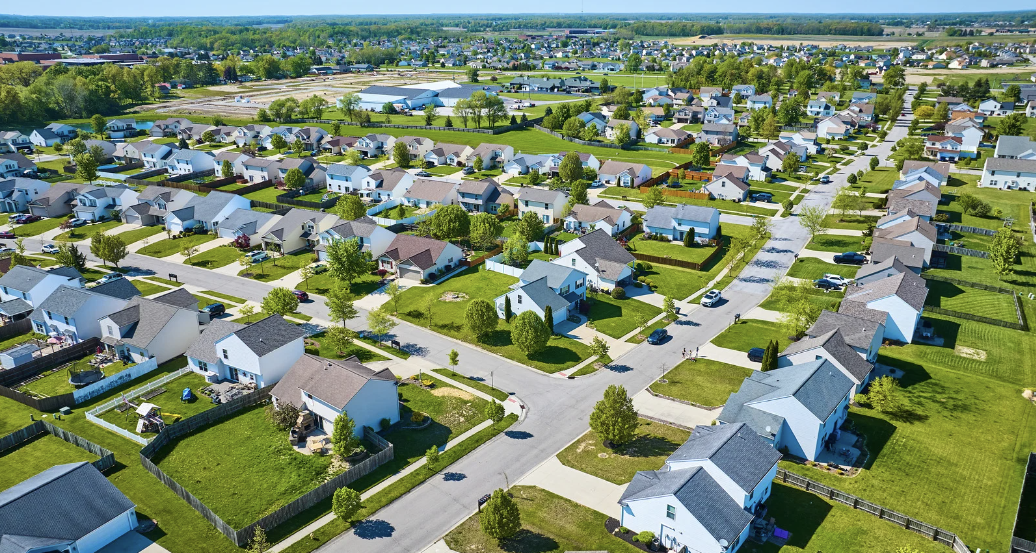
Texas isn’t debating property taxes in isolation. This conversation is happening against the backdrop of a North Texas housing market that is shifting toward steady, sustainable recovery rather than the boom-and-bust volatility we saw during COVID.
Texas housing researchers are projecting modest statewide home sales increases in 2026 as mortgage rates drift toward the low-6% range and affordability slowly improves. In North Texas specifically, we’re seeing inventory gradually rebuild toward pre-pandemic norms while prices show low single-digit appreciation, typically 1-2% annually in many DFW submarkets.
For buyers, that combination matters: moderate price growth, slightly better mortgage rates, the current $100,000 homestead exemption already in force, and the possibility of deeper tax relief down the road. The cost of waiting isn’t about hoping prices crash. It’s about calculating what you’re leaving on the table in equity building and tax benefits every year you stay on the sidelines.
Corporate relocations and job growth continue to funnel people into DFW from across the country, and Ellis County specifically is sitting in the path of that growth. The Ferris 5,200-acre development, the expansion activity around Waxahachie, the infrastructure investment in Midlothian, these aren’t speculative. They’re happening on the ground right now. Any property tax relief that comes through makes this region’s value proposition even more compelling to the California, Utah and Colorado buyers I work with daily.
How Homestead Exemptions Actually Work: The Mechanics You Need to Understand
I get this question constantly, and it’s the right question to ask. Hearing “there’s a $100,000 exemption” is different from understanding how it translates to your actual bill.
The Texas Comptroller defines a residence homestead as an owner-occupied principal residence where you have a qualifying ownership interest and don’t claim a homestead exemption anywhere else. One property, one homestead. The Comptroller’s homestead exemption FAQ is the most authoritative resource for the specifics.
One important change that benefits new buyers specifically: under current law, you can typically receive the general residence homestead exemption for the portion of the year once you qualify, you don’t have to wait until January 1 of the following year. That means if you close in the spring, you’re not paying full taxes all year while waiting to qualify for the exemption.
For seniors and disabled homeowners, Senate Bills 4 and 23 aim to increase combined exemptions to up to $200,000 for many qualifying homeowners. If voters approve the associated constitutional changes, they would apply retroactively to the 2025 tax year, which could generate escrow refunds for some homeowners whose lenders collected higher estimated taxes.
The takeaway: properly filing and actively maintaining your homestead exemption and staying current on any new senior or disability exemptions you might qualify for can be just as financially impactful as any future large-scale legislative reform. Don’t overlook what’s already available to you.
What Real Texas Homeowners Are Actually Saying Online
I spend time in the real conversations happening on Reddit and in Texas-focused forums, because that’s where you hear the unfiltered truth about how policy changes land with actual homeowners. And the pattern is consistent.
New buyers routinely report being shocked by their first full-year tax bill. Even with the $100,000 exemption in place, buyers who purchased at today’s market prices discover quickly that the appraised value used for their taxes is close to, or in some cases at, their purchase price, which means they’re paying close to full freight even with the exemption applied.
Long-time homeowners, meanwhile, are frustrated by big appraisal value jumps even when the 10% annual cap limits how much their taxable value can rise. The disconnect between market value and taxable value is real but confusing, and there’s a lot of misinformation in those threads about how it actually works.
Other discussions highlight the school funding tension: some Texas voters have actively opposed tax cut measures because they’re worried about long-term impacts on teacher pay and class sizes. That political dynamic is real, and it matters how quickly and aggressively the legislature can move on additional reform. Not every Texas homeowner wants maximum tax cuts if they believe it compromises their local schools.
This is where having a local agent who actually follows these conversations, not just the press releases, becomes a genuine advantage. I can help you separate the myths from the facts, because the gap between what people think is true and what’s actually true about Texas property taxes is wider than most realize.
The Questions You Should Be Asking Before You Buy in North Texas

Whether you’re relocating from out of state or moving within the market, here are the specific property-tax questions that should be part of every purchase conversation, and that I proactively walk every client through.
Ask your agent to pull current and historical tax records from the county appraisal district for the specific address you’re considering. Look at the gap between market value and taxable value. Understand where caps or existing exemptions are already in play for the current owner and recognize that when you buy, you take the property at a new assessed value.
Ask how the local tax rate for that specific address compares with neighboring cities and school districts. The difference between two zip codes just a few miles apart can be meaningful. Ask about upcoming bond elections, infrastructure projects, or any annexation discussions that could affect future tax rates in that area.
If you’re working with a lender, ask them to estimate your monthly escrow based on current rates and values, not outdated numbers that under- or over-shoot your actual bill. I work with three preferred lenders who are exceptional at building accurate total-payment estimates:
1. Denise Donoghue (The Mortgage Nerd) at yourmortgagenerd.com
2. Andrew Bryan at Miramar Mortgage
3. Ethan Hester at Midtex Mortgage.
Commissions and lender relationships are fully negotiable; I mention these three because they consistently do excellent work for my clients, are consistent with NAR settlement guidance on transparent, and practice client-first representation.
Finally, ask about timing: when you’ll be eligible to file your homestead exemption, whether any age- or disability-based exemptions apply in your situation, and how proposed statewide changes could shift your payments over the next three to five years. Those answers paint a picture of your true long-term cost of ownership, not just the number on the listing.
FAQs: Texas School Property Taxes, Answered for North Texas Homeowners

Are school property taxes in Texas going away?
Not under current law. Governor Abbott has proposed a constitutional amendment to eliminate them for homesteads, but it must pass the Legislature with a two-thirds supermajority and then be approved by Texas voters in a statewide election. Until that process is complete and legislation is in place, school property taxes remain fully in effect.
What is the current Texas homestead exemption for school taxes?
As of the most recent amendments, the school-district homestead exemption is $100,000 for a qualifying primary residence. You can confirm current amounts and eligibility directly at the Texas Comptroller’s homestead exemption page.
How do I apply for a homestead exemption in North Texas?
Apply through your county appraisal district. Recent law changes now allow new homeowners to apply as soon as they occupy the property rather than waiting until the next tax year. Step-by-step instructions and downloadable forms are available from the Texas Comptroller.
Will my DFW property taxes go down if Abbott’s plan passes?
If school taxes on homesteads are substantially reduced or eliminated and other local rates hold steady, most North Texas homeowners would see meaningfully lower annual bills. The exact impact depends on future legislation, local rate decisions, and how the state structures the replacement funding mechanism.
Does the annual 10% appraisal cap protect me as a new buyer?
No, and this is one of the most important misconceptions I correct regularly. The 10% annual cap applies to your taxable value increases after you establish your homestead. When you purchase a home, the taxable value resets to near market value. The cap then protects you from large increases in subsequent years, but it doesn’t limit what you pay in year one.
What’s the difference between appraised value and taxable value in Texas?
Your appraised value is the county’s estimate of your home’s market worth. Your taxable value is your appraised value minus any exemptions you qualify for. For a $400,000 home with the $100,000 school homestead exemption, your taxable value for school M&O taxes is $300,000. Other taxes may still apply to the full $400,000 depending on the exemption type.
Should I wait to buy until property taxes are eliminated?
I’d push back on that framing. Property tax reform, even if it eventually passes, goes through multiple legislative and voter approval steps over years, not months. In the meantime, you’re not building equity, you’re not locking in current pricing, and you’re not taking advantage of the $100,000 exemption that exists right now. Treat potential future reform as an eventual upside, don’t build your buying timeline around it.
What This Means for Your North Texas Decision Right Now
Here’s the Insider take on all of this. While other buyers are paralyzed by uncertainty about what Austin might do, smart buyers are moving on real opportunities with clear eyes and real intelligence.
The case for North Texas real estate right now is strong on its own merits. Job growth, corporate relocation, new construction pipeline, infrastructure investment, and affordability relative to the coastal markets where many of my clients are coming from. Any property tax relief that materializes on top of that is a bonus, it shouldn’t be the foundation of your investment thesis.
What I offer my clients is exactly what this article attempts to do: cut through the noise, separate what’s real from what’s proposed, and build a decision-making framework that holds up regardless of what happens in Austin.
If you want a personalized breakdown of how current law and potential reforms could affect your specific property search or sale, whether in Waxahachie, Midlothian, Grand Prairie, Whitney, or anywhere across the DFW to Waco corridor, schedule a consultation and let’s explore your options. No pressure, no pitch. Just real market intelligence.
This article is educational and informational only and does not constitute legal, tax, or financial advice. Consult a qualified attorney, CPA, or financial professional before making decisions about property taxes, financing, or real estate investments. All content complies with the Fair Housing Act, RESPA, the NAR Code of Ethics, and TREC advertising rules. Commissions are fully negotiable between consumers and their chosen broker.
Bobby Franklin, REALTOR®
Legacy Realty Group – Leslie Majors Team
📲 214-228-0003 | northtexasmarketinsider.com