
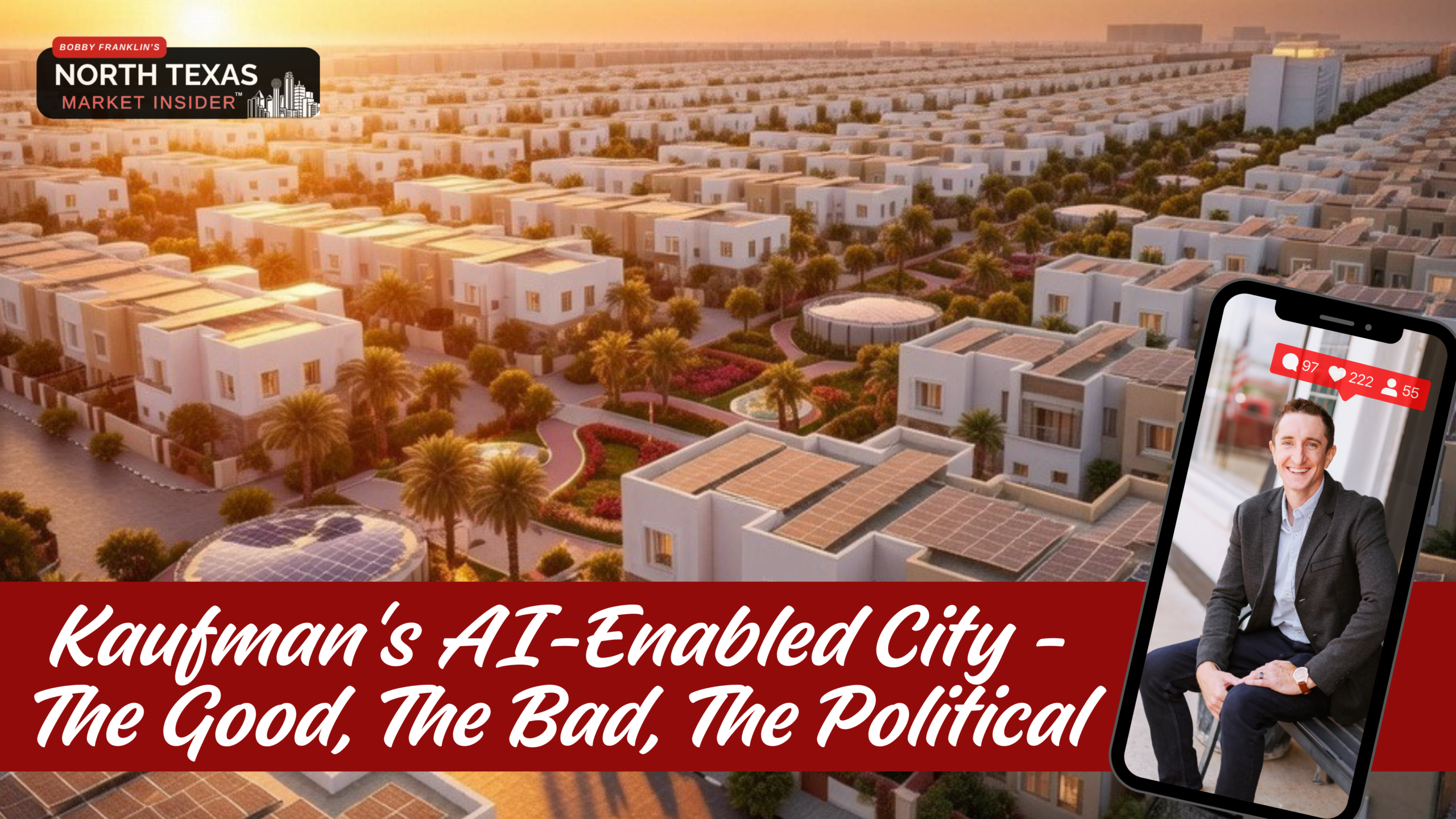
By Bobby Franklin, REALTOR® | Legacy Realty Group – Leslie Majors Team | North Texas Market Insider
Last Updated: February 22, 2026
Let me be direct with you. When I saw the headlines about a Dubai developer proposing a 2,300-acre AI-enabled sustainable city in Kaufman County, my first reaction wasn’t skepticism, it was “This could be fantastic.”
That’s the Insider response. Not panic. Not politics. Strategic recognition of what’s embedded in this story for buyers, sellers, and anyone trying to figure out where South DFW is actually headed.
My second reaction was to do what I always do: go deeper than the headline. Because the headline, “Dubai Developer Wants to Build AI City Near Dallas”, is built for clicks, not for decisions. And you need this information to make decisions.
Whether you’re a Kaufman County homeowner wondering what this means for your equity, a relocating family evaluating where to plant roots in North Texas, or an investor looking for the growth corridor before it gets priced in, this is your brief. No spin. No softening. Just market intelligence delivered early enough for you to act on it.
“Chaos is opportunity. And right now, Kaufman County is experiencing chaos. Which means it’s also opportunity.”
What Is the Sustainable City USA Proposal And Where Does It Actually Stand?
The proposal comes from SEE Holding, a Dubai-headquartered sustainability development group led by founder and chairman Faris Saeed. The company is pitching a 2,300-acre mixed-use development in unincorporated southeastern Kaufman County, specifically near FM 1836, County Road 146, and State Highway 243. They’re calling it The Sustainable City USA.
Based on reporting from Bisnow DFW and The Dallas Morning News, the proposal includes:
- A mix of apartments, townhomes, and senior living units at attainable price points
- Integrated commercial and employer space with projected first-phase job creation of 4,000–5,000 positions in construction, clean energy, technology, and food production
- AI-enabled energy management and smart grid infrastructure
- Indoor vertical farming, 100% wastewater recycling, renewable energy covering up to 150% of community needs, EV infrastructure, and zero-waste goals
- Walkable retail, medical services, and daily essentials within the development footprint
Here’s the part most coverage buries: this project is in its absolute earliest stages. Let me give you the real picture:
- SEE Holding does not own the land. No property has been purchased, per Kaufman County deed records.
- No plans, no plat, no formal development proposal has been submitted to Kaufman County.
- The developer has initiated the process of seeking three freshwater supply district designations, a procedural first step that came before county commissioners in January 2026.
- Kaufman County Judge Jakie Allen stated on February 3, 2026 that developers agreed to return with a “full set of plans” before any approvals would be considered.
- Legal representation is being handled by Ross Martin of Dallas-based Winstead PC.
The bottom line: this is a real proposal from a legitimate international developer going through the proper channels. It is not approved, not funded publicly, and not breaking ground. But the signal is real, and in this market, signals matter.
Who Is SEE Holding? Their Track Record Tells You Everything You Need to Know
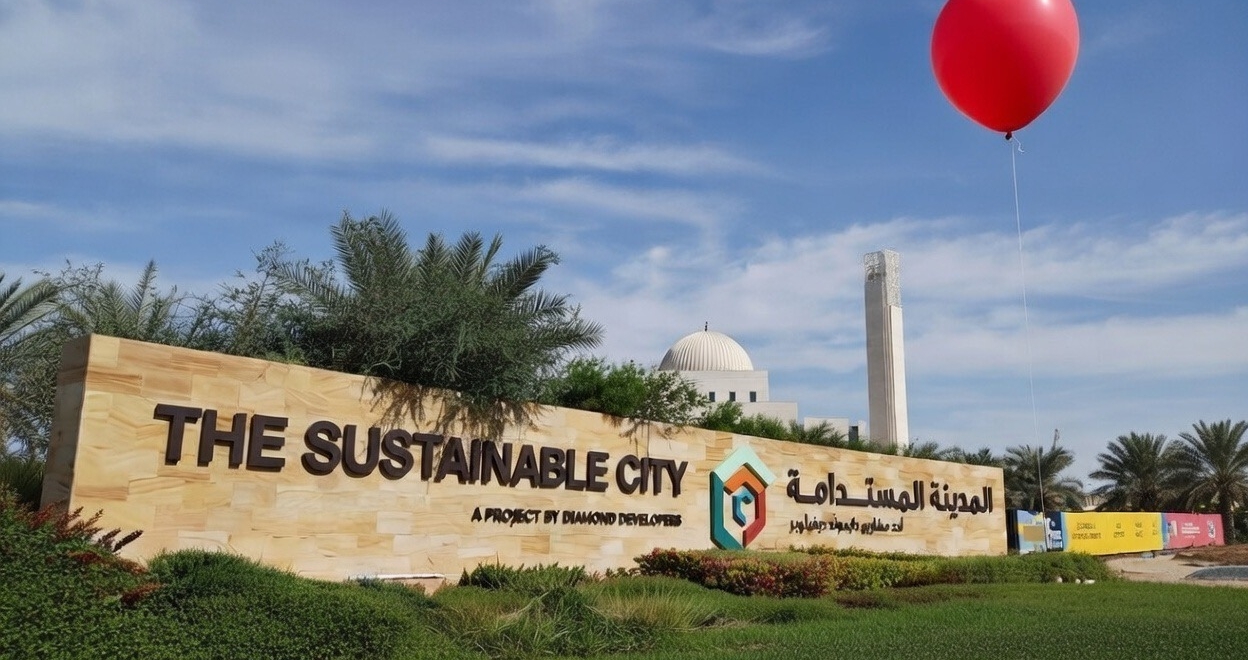
Before you evaluate any development proposal, you evaluate the developer. Because a vision is only as credible as the entity behind it.
Their flagship project, The Sustainable City – Dubai, launched in 2016 in Dubailand. Five million square feet. Five hundred villas. Eleven biodome greenhouses. A central green spine. Car-free residential clusters. Rooftop solar on every home. An equestrian center. It has been named the “happiest community in the GCC” for three consecutive years. That’s not marketing, that’s an operational proof of concept.
In January 2026, SEE Holding and Shurooq launched Sharjah Sustainable City II: 7.8 million square feet, 1,032 homes including 944 townhouses and 88 villas, a 2km green spine, biodome farms, and smart home technology. They also have The Sustainable City Yiti in Oman, designed to become the first net-zero emissions community in the world by 2040.
Maye Musk(Elon’s mother) was appointed Global Voice of The Sustainable City in January 2026. Their SEE Institute hosted Will Smith for a Middle East documentary premiere. These aren’t vanity moves, they’re brand-building plays by a company that knows how to operate on the world stage.
The critical number: every SEE Holding project to date has been 165 acres or smaller. The Kaufman County proposal is 2,300 acres. That’s nearly 14 times larger than anything they’ve ever built.
For context, that puts this proposal on par with Hillwood’s 3,200-acre Landmark development in Denton, one of the largest master-planned communities in North Texas history. The ambition is extraordinary, but execution gap between their existing portfolio and this proposal is real. Keep both facts in your analysis.
“AI-Enabled” What That Actually Means for a Texas Neighborhood
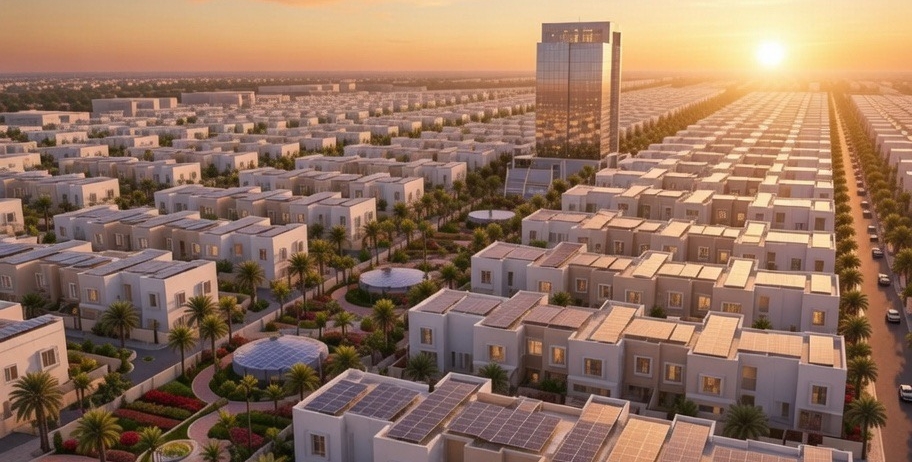
Strip away the buzzwords. Here’s what AI integration actually looks like at the community level and why it matters for property values and livability.
Smart Energy Management
AI systems monitor real-time energy usage, predict demand patterns, and automatically optimize power distribution. In SEE Holding’s Dubai community, rooftop solar generates surplus energy, and AI determines when it’s consumed, stored, or fed back to the grid. Smart grid technology matches supply and demand with precision, reducing exposure to the ERCOT grid stress events Texas has experienced. If you lived here during Winter Storm Uri, you understand why this matters.
Predictive Infrastructure Maintenance
Sensors embedded in water lines, roads, and utility systems feed continuous data to platforms that predict maintenance needs before failures occur. Cities like Tokyo and Singapore have used this approach to reduce service disruptions and control long-term infrastructure costs. For a county where utility strain is already a growth-era concern, this is a meaningful design difference.
Integrated Mobility
AI-driven traffic management combined with walkable mixed-use planning and EV infrastructure reduces car dependency. For Kaufman County, where FM 548, Highway 80, and Reeder Road are already bottlenecks during peak hours, a development at this scale that genuinely reduces vehicle trip generation would be a regional infrastructure story, not just a neighborhood one.
What AI Doesn’t Mean
SEE Holding has been explicit: the technology is embedded in systems and operations, not residents’ personal lives. This is not surveillance infrastructure. It’s operational optimization for energy, water, waste, and transportation at the community level. Texas law doesn’t allow anything else.
Why Kaufman County? Because the Data Doesn’t Lie
You want to understand why a global developer is targeting this specific county? Run the numbers.
According to U.S. Census Bureau data, Kaufman County’s estimated 2026 population is 220,057, reflecting a 5.32% annual growth rate and a 111.84% population increase since 2010. The county has been one of the fastest-growing in Texas and the nation for years. That’s not a trend, that’s a trajectory.
Here’s what’s driving it:
- The median home value sits at approximately $296,237 per Zillow’s January 2026 data — meaningfully below the DFW metro median of approximately $375,000
- Proximity to Dallas via I-20 and US-80
- Forney ISD and other quality school districts attracting families
- Major retailers including Target, H-E-B, Home Depot, and Costco either recently opened or have been approved
- Forney alone issued over 3,000 new housing permits in 2024, with its population surging past 40,000 residents
Kaufman County has attracted over $1.5 billion in capital investments in recent years. Global developers don’t stumble into markets. They follow the data and the data on southeastern Kaufman County is screaming.
Kaufman County Housing Market Snapshot 2026
| Metric | Value | Source |
|---|---|---|
| Median Home Value | $296,237 | Zillow (Jan 2026) |
| Median Sale Price | $299,000 (Dec 2025) | Redfin |
| YoY Price Change | -4.0% to -10.2% | Zillow / Redfin |
| Average Days on Market | 71–91 days | Zillow / Redfin |
| Active Listings | ~3,466 | Realtor.com |
| Median Price/Sq Ft | $146–$166 | Redfin / Realtor.com |
| Median Rent | $2,000/month | Realtor.com |
Here’s what this snapshot tells me: Kaufman County is experiencing a correction that mirrors what’s happening across DFW, where Zillow data shows nearly 30,000 active listings, close to a record high. Home prices were down 10.2% year-over-year per Redfin’s December 2025 data. But population growth has not paused.
The fundamentals driving demand; affordability, proximity, schools, commercial infrastructure, are firmly intact. This is a rate-driven correction, not a demand collapse. Understand the difference. It changes everything about your next move.
How a 2,300-Acre Development Could Move Your Property Value
This is the question every homeowner and buyer in southeastern Kaufman County is asking. I’m going to give you an honest answer, not a comfortable one.
The Upside Case for Surrounding Properties
Real estate research is consistent: well-planned, large-scale master-planned developments lift surrounding property values over the long term. The Community Associations Institute has documented that homes near master-planned communities are valued at least 4% higher than comparable properties. The amenity lift, infrastructure investment, and job creation ripple outward beyond the development’s boundaries.
The specific vectors here:
- Job creation: 4,000–5,000 projected first-phase jobs. More local employment means more housing demand in the surrounding market.
- Infrastructure investment: Water, sewer, road, and utility upgrades at this scale typically benefit neighboring communities beyond the site itself.
- Commercial amenity uplift: Retail, medical, and dining options within the development serve surrounding areas, closing the amenity gap that parts of southeastern Kaufman County currently experience.
- Expanded tax base: A development of this size significantly expands local tax revenues, which can fund school improvements, road projects, and public services across the county.
The Risk Factors | Because You Need Both Sides
- Construction disruption: A multi-phase, multi-year project creates temporary noise, traffic, and visual impact for adjacent properties. Plan for it.
- Water supply strain: Kaufman County is already navigating water supply planning challenges. A 2,300-acre development requires massive new water infrastructure, hence the freshwater supply district petitions.
- Oversupply risk: Adding thousands of housing units to a market already experiencing price corrections could temporarily suppress values if supply outpaces demand absorption.
- Traffic congestion: Without corresponding road infrastructure investments, additional residents worsen existing bottlenecks. Watch what transportation commitments the developer makes as the approval process moves forward.
Insider Take: Large-scale, well-executed developments with strong mixed-use planning generally lift surrounding long-term values. Especially in high-growth corridors. But timing matters. The construction phase creates uncertainty. If you own property near the proposed site, you’re not in a crisis, you’re in a window. Use it to understand your position.
The Political and Legal Landscape | What’s Actually Happening
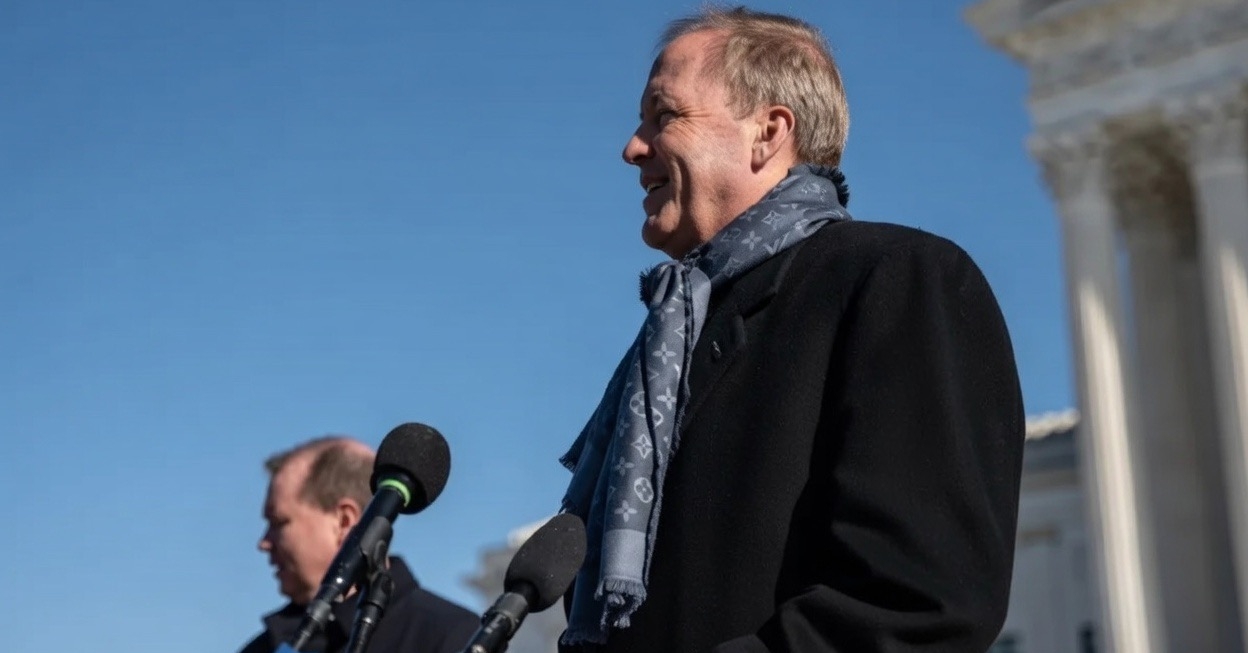
Texas Attorney General Ken Paxton announced on February 10, 2026 that he’d launched a formal investigation into the project, citing concerns about whether the development could incorporate Sharia law. He issued formal Requests to Examine to both SEE Holding and Kaufman Solar LLC, seeking documentation about communications with local officials and real estate transaction details.
U.S. Representative Lance Gooden stated that SEE Holding agreed in writing that no mosques, religious buildings, or religious schools would be built. Kaufman County Judge Jakie Allen confirmed developers agreed to write deed restrictions preventing mosque construction.
SEE Holding’s response has been consistent. Spokesperson Hadeel Ahmed confirmed the company would comply with the investigation and stated that The Sustainable City USA “is open to all residents and businesses and will be planned, approved, and governed through existing Texas land-use, zoning, and local approval processes.”
Here’s what you need to understand from a real estate and legal standpoint: under the Fair Housing Act, every housing development in the United States: regardless of developer nationality or origin, must comply with federal anti-discrimination law. Developments cannot legally restrict residents based on race, color, national origin, religion, sex, familial status, or disability. Period.
Texas law and the full local approval process are governed by the Fair Housing Act. Any “no-mosque” language would be legally unenforceable from a federal standpoint and could draw the ire of the federal government against state officials pressuring such language.
The political noise is real. The legal framework is also real. Both exist simultaneously. Don’t let either one become the entire story.
What This Means for Buyers in 2026

Let me give you the market intelligence that matters if you’re considering a purchase in Kaufman County right now, regardless of whether this specific project ever breaks ground.
Price corrections create buying leverage that didn’t exist 18 months ago. With home values down 4–10% year-over-year and inventory at elevated levels, you have more negotiating power, more choices, and more time to be strategic than buyers have had in years. That’s not a reason to be reckless, it’s a reason to be prepared.
Population growth hasn’t paused. Despite the correction, Kaufman County continues adding thousands of residents annually. The softness is rate-driven and macro-driven, not a demand collapse. That distinction matters enormously for a long-term value thesis.
Buying in the path of growth before infrastructure completes is the play. Whether or not SEE Holding breaks ground, Kaufman County’s trajectory is supported by forces larger than any single development proposal. Communities in Forney, Crandall, Terrell, and the Kaufman city limits stand to benefit from continued infrastructure investment and population inflows regardless of what happens on those 2,300 acres.
If you’re financing a purchase, I work with three lender partners I trust to get you the best execution and I mention all three for your benefit:
Denise Donoghue – The Mortgage Nerd
Andrew Bryan – Miramar Mortgage
Ethan Hester – Midtex Mortgage.
Shop your rate. Understand your options. A 0.25% difference on a $300K loan is real money over 30 years.
What This Means for Sellers in Southeastern Kaufman County
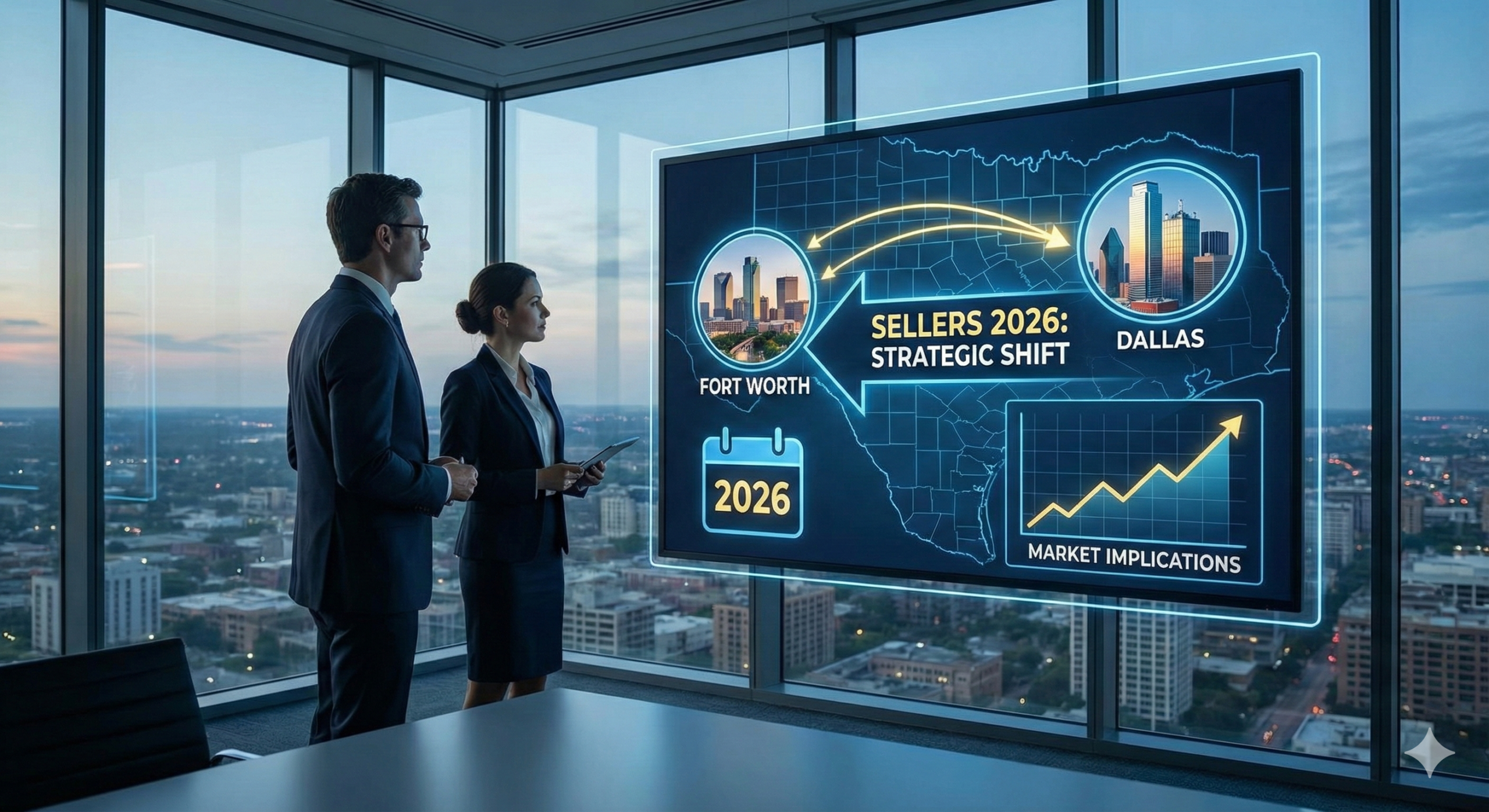
If you own property near the proposed development site, your situation is more nuanced than a simple buy/sell calculation.
Speculative interest is real even before approvals. The announcement alone creates increased investor attention on the southeastern Kaufman County corridor. Land values near significant proposed developments historically increase in response to the announcement, not just the approval. That interest may present a window for landowners who’ve been considering an exit.
Uncertainty creates hesitation in some buyer segments. Until the project’s status becomes clearer, particularly as the AG investigation and county approval process play out, some buyers, especially families looking for near-term certainty, may adopt a wait-and-see posture on properties directly adjacent to the proposed site.
The play here is getting a current, hyperlocal comparative market analysis from someone who understands the micro-market dynamics of your specific parcel. Don’t price based on county-wide averages. Price based on your property’s specific position within the growth corridor.
The Bigger Picture: AI and Sustainability Are Already Reshaping Texas Real Estate
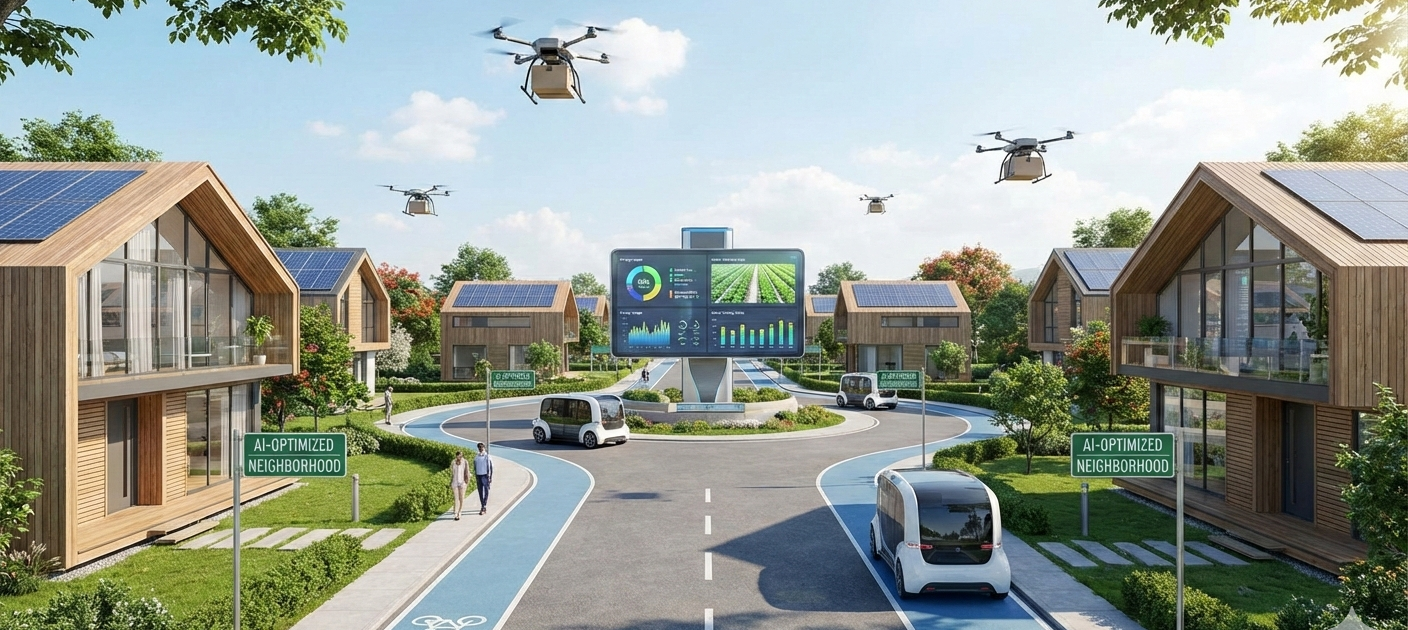
The Sustainable City USA proposal, whatever its ultimate fate in Kaufman County, represents a macro trend that’s already transforming how communities are designed across Texas. Understand this trend because it will affect your property values and buying decisions for the next decade.
Texas issued 781,020 new single-family permits between 2020 and 2024. That’s a 40.9% increase over the prior five years. The Community Associations Institute forecasts that community associations will become the dominant housing model nationwide by 2040. The buyers driving that shift, millennials and younger families, are increasingly seeking walkable access to amenities, smart home integration, energy efficiency, and sustainability features. This isn’t a niche preference. It’s the mainstream.
Beyond this proposal, AI is already reshaping North Texas real estate infrastructure. The Stargate project in Abilene, backed by OpenAI, Oracle, and SoftBank, is building massive AI data centers that are reshaping local housing markets in real time. Digital twin technology is allowing urban planners to simulate development impacts before breaking ground. Smart grid technology is becoming increasingly relevant as Texas navigates the challenges of ERCOT’s independent power grid.
AI-integrated communities aren’t the future of North Texas real estate. They’re the present. And Kaufman County is now at the center of that conversation.
Your Questions, Answered

Will the Sustainable City USA actually be built?
As of February 2026: unknown. No land purchased, no plans submitted, no approvals granted. The developer must complete the full Texas land-use, environmental, and zoning approval process. That process takes time — and it requires community and county buy-in. The signal is real; the project is not yet real.
How many homes could this development include?
The exact number hasn’t been finalized publicly. Based on SEE Holding’s project density precedents and the 2,300-acre scope, you could be looking at thousands of residential units across a mix of product types. First-phase numbers will be clearer once formal plans are submitted.
Will there be a mosque on this property?
SEE Holding has stated no mosque is planned. Kaufman County officials have confirmed developers agreed to put this restriction in deed language. All housing in the U.S. is governed by the Fair Housing Act regardless of developer origin, creating a real legal challenge to this.
What about my property taxes near the development?
New developments typically expand the local tax base, which can reduce individual tax rates over time as service costs are shared across more properties. However, residents within the freshwater supply district boundaries would carry additional district-level taxes to fund water, sewer, drainage, and road infrastructure. Standard practice for large Texas developments, overseen by the Texas Commission on Environmental Quality.
What are the freshwater supply districts being requested?
These are political subdivisions that can issue bonds to fund infrastructure for large developments. SEE Holding has petitioned for three. This is a standard Texas mechanism for master-planned communities, overseen by TCEQ.
How long would this take to build if approved?
A development of this scale would almost certainly be built in multiple phases over 10–20 years. Infrastructure and first residential phases come first; commercial and institutional components are added as population grows. You’re looking at a generational build-out.
Is Kaufman County still a smart buy in 2026?
Yes, with eyes open. It remains one of the fastest-growing counties in Texas with strong affordability relative to DFW, quality schools, expanding commercial amenities, and proximity to major employment centers. The current price correction is creating buying windows that prepared buyers should be evaluating right now.
How to Navigate the Kaufman County Market Right Now
Here’s what I recommend for anyone with equity or capital at play in southeastern Kaufman County:
- Stay informed. Follow Kaufman County Commissioners Court agendas. The freshwater supply district hearings and future public comment sessions are where the real information surfaces before it hits the news cycle.
- Get a current property valuation. If you own in southeastern Kaufman County, get a real comparative market analysis, not a Zillow estimate. Understand your actual equity position before making any decisions.
- Think long-term. Kaufman County’s growth fundamentals are real regardless of whether SEE Holding breaks ground. Position for the trajectory, not the headline cycle.
- Work with a local expert. The difference between a good decision and a great one in this market is hyperlocal intelligence, knowing what’s happening on FM 1836 versus Highway 80 versus inside Forney’s ETJ. Generic DFW advice won’t get you there.
I’m not here to tell you what you want to hear. I’m here to tell you what the market is actually doing, so you can move with intelligence instead of hope.
If you have questions about buying or selling in Kaufman County, Ellis County, or anywhere across the South DFW to Waco corridor, reach out. A conversation costs nothing. The right decision, made early, compounds for decades. Click here to schedule a Buyer’s Consultation Today.
Bobby Franklin, REALTOR®
Legacy Realty Group – Leslie Majors Team
📲 214-228-0003 | northtexasmarketinsider.com
Disclaimer: This article is for informational purposes only and does not constitute legal, financial, or investment advice. All information is based on publicly available sources as of February 22, 2026 and is subject to change. Bobby Franklin is a licensed Texas real estate agent and is not affiliated with SEE Holding, Kaufman County government, or any developer mentioned in this article. All housing services are provided in full compliance with the Fair Housing Act, RESPA, the NAR Code of Ethics, and Texas Real Estate Commission (TREC) advertising standards.




Join The Discussion