

By Bobby Franklin, REALTOR® | Legacy Realty Group – Leslie Majors Team | North Texas Market Insider™
Serving Ellis County, DFW & Greater North Texas | 214-228-0003 | northtexasmarketinsider.com
The Number That Changes Everything You Think You Know About Housing Affordability
Let me stop you right there before you skip to the next reel.
I know what you’ve been reading. Hedge funds are buying up all the houses. Investors are pricing out first-time buyers. The American dream is being stolen by corporate landlords. The algorithm has been feeding you that story for two years, and it feels right because the starter home market does look like a wasteland from the outside.
But here’s the data that the doom-scroll doesn’t want you to see:
Local, independent investors delivered 216.9% more starter homes to the U.S. housing market than homebuilders did in 2025.
That’s not a rounding error. That’s not a quarterly blip. That’s from New Western’s 2026 Flip Side Report, the most comprehensive analysis of entry-level housing supply in the country.
Investors: 120,193 starter homes brought to market.
Builders: 37,931 in the same price range.
Read it again. Then let me tell you why this matters specifically to you. Whether you’re a first-time buyer hunting for something under $300K in Ellis County, a seller trying to figure out if spring 2026 is your window, or a local investor trying to decide where to put capital in North Texas right now.
I track this market every single day. Ellis County, the southern DFW corridor, all the way to the Waco end of the territory. This isn’t a national trend piece. This is intelligence you can act on.
Let’s get into it.
Why Starter Homes Disappeared in the First Place And Why Builders Aren’t Coming Back for Them
Before we talk about investors, we need to understand the structural failure that created the vacuum they’re filling.
A starter home, as Realtor.com’s chief economist Danielle Hale defines it, is the entry point to homeownership, typically under $300,000 nationally, under $261,000 in the price band New Western studied. For decades, this was the backbone of American housing. William Levitt’s iconic post-war Levittown homes were 800–1,000 square feet and cost the equivalent of an honest year’s wages. That was the deal. Work hard, build equity, move up.
That deal is gone.
In 1982, 40% of newly constructed homes were below 1,400 square feet. By 2023, the U.S. Census Bureau reported that only 9% of newly built homes fell below that threshold. And in 2025, only 10.6% of all new construction landed in the starter-home price band of $261,000 or less. Over 89% of new construction was built above entry-level pricing. That’s not a market trend. That’s a structural abandonment.
Here’s why it happened, and it’s not complicated once you see the mechanics:
Land costs exploded. CoreLogic chief economist Selma Hepp has documented that land costs have risen 2.5 times faster than labor and materials over the past decade. When land is expensive, small footprints don’t pencil out. Builders need the square footage to justify the lot price.
Zoning strangled density. Municipalities across the country have maintained restrictive zoning that drives up construction costs and makes compact, affordable builds financially impractical. You can’t build a $200,000 house on a lot that costs $80,000 in a market where code requires 2,000 square feet minimum.
The 2008 collapse restructured the entire industry. Freddie Mac chief economist Sam Khater didn’t soften it: “Many builders are not leaving money on the table. They are simply unable to build, or the costs have escalated to the point where they can only construct high-end single-family and multifamily homes.” The surviving large builders, Lennar, D.R. Horton and PulteGroup to name a few, rebuilt their entire business models around margin, not volume. High-end builds with design center upgrades generate the ROI their shareholders expect. A 1,200-square-foot starter home does not.
Tariffs are making it worse. Current tariffs on lumber, steel, and appliances are adding approximately $10,900 per home to construction costs. Even in Q4 2025, nearly 20% of new homes faced a price cut, and Lennar’s average sales price dropped 10% year-over-year to $386,000, already at the low end of their range. Builders are struggling at $386,000. The math of building at $250,000 doesn’t exist for them.
The result: the U.S. is now roughly 4 million homes short of demand, with the worst shortage concentrated at the most affordable price points. That’s the market you’re operating in. That’s the intelligence you need before you make a move.
The Real Investor Story And It’s Nothing Like What You’ve Been Told
Here’s where I want you to slow down and actually absorb what I’m about to say, because this is where the narrative completely inverts.
When most people hear “real estate investor buying homes,” they picture Blackstone or some hedge fund with infinite capital and no conscience. And that concern is not entirely wrong because at scale, institutional buying does compress inventory in specific markets and specific price bands. I’ll address that directly in a moment.
But here’s the data that gets buried: institutional investors account for only 1.93% of all home purchases. Their share of the market has actually dropped 62% from their 2021 peak. The institutional investor threat is real but dramatically overstated relative to its actual market footprint.
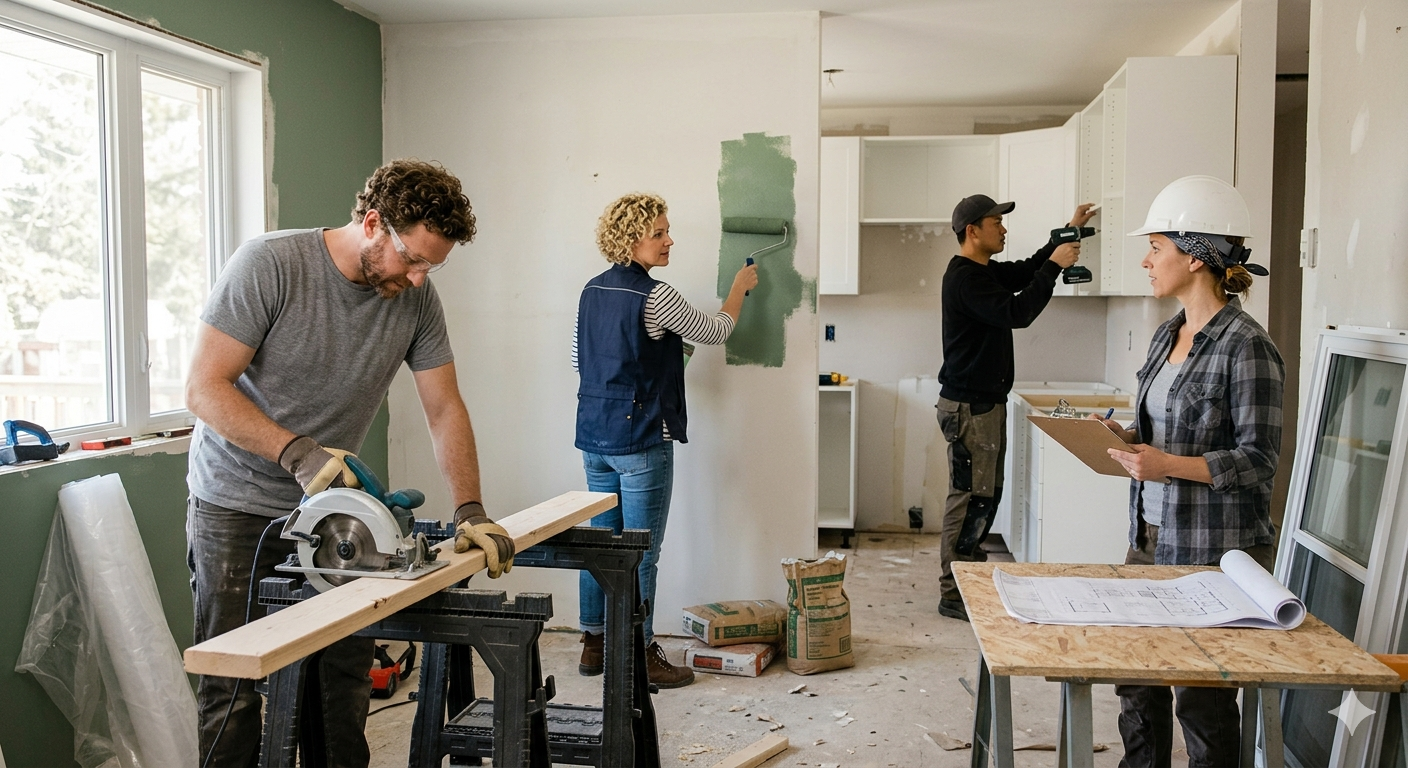
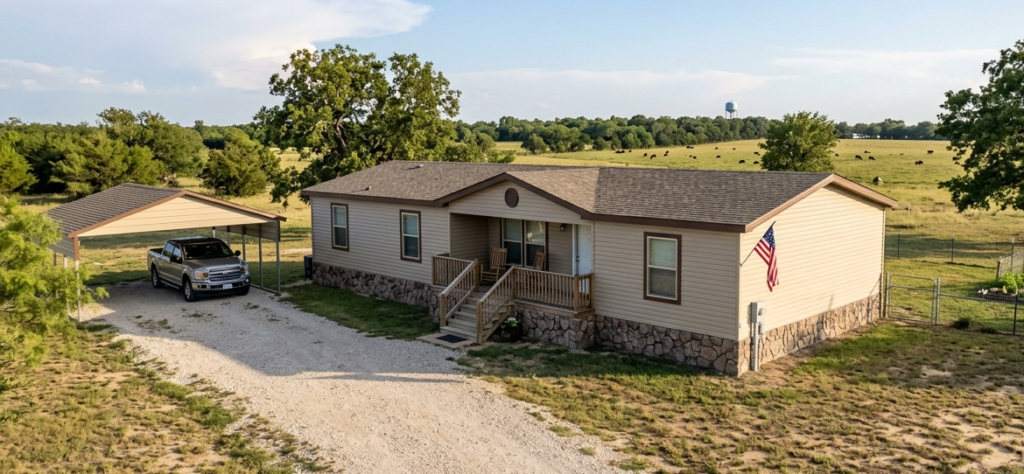
The real investor story is about your neighbor who renovates four houses a year. The contractor who buys a distressed property on your street, puts $45,000 of work into it, and sells it to a first-time buyer six months later. More than 90% of investor-owned homes in the U.S. belong to small landlords with fewer than 11 properties. 68% of these investors operate within 30 miles of where they live. These are local operators with local knowledge who are bearing risk that no builder will touch and no traditional buyer can handle.
And in 2025, they quietly became the largest suppliers of starter homes in America.
The New Western 2026 Flip Side Report analyzed 35 U.S. markets and landed on data that should reframe the entire housing affordability conversation:
- Investors accounted for 83.75% of new inventory priced under $215,000 and 69.5% of inventory under $250,000
- 72% of homes purchased by investors were not listed on the open market because they required significant repairs and wouldn’t attract traditional buyers
- Renovated homes are priced 35% to 80% lower than comparable new builds and 17% below the median existing home price
That last point is critical. These aren’t homes that first-time buyers were competing for before investors bought them. They were homes that a traditional buyer couldn’t purchase in their pre-renovation condition, properties with no functioning HVAC, foundation issues, deferred maintenance across every system. Investors absorbed the risk, executed the work, and returned a move-in-ready home to the market at a price point builders won’t touch.
With 15 million unoccupied homes across the nation, that renovation pipeline isn’t running out of raw material anytime soon.
The market comparison data drives this home at the city level. Across major U.S. markets, investors are dramatically outpacing builders at entry-level price points: St. Louis at 1,069% more starter homes from investors than builders, Boston at 571% more, Atlanta at 296% more. These aren’t outlier markets. This is the national pattern.
And in Dallas-Fort Worth, which has been consistently recognized as the nation’s top market for real estate investment and development, driven by population growth and economic expansion that isn’t slowing, this investor activity is reshaping the affordable end of the market in ways most agents aren’t tracking.
I’m tracking it. Here’s what it means for you.
First-Time Buyers in North Texas: The Intelligence You Actually Need Right Now

If you’re a first-time buyer in Ellis County or greater DFW and you’ve been sitting on the sidelines waiting for the market to make sense, I’m going to give you the honest read.
North Texas is still one of the most accessible major housing markets in America. Fort Worth’s median home price remains approximately 15% below the national average, and the broader DFW median sits around $425,000–$435,000, but in the southern corridor I specialize in, real first-time buyer inventory exists in the $270K–$380K range. That inventory is not advertised. You find it with the right agent and the right intelligence.
Here’s where the opportunity is concentrated right now:
In Ellis County, my home territory, the value proposition is still legitimate. Waxahachie sits 30 minutes from Dallas with small-town character and genuine starter-home inventory. New developments like the 13,000-home Westlake project are actively reshaping the southern DFW corridor’s growth trajectory, which means buying in Waxahachie today is buying in tomorrow’s established market. Midlothian carries an 87-rated school district from the TEA and housing that still makes financial sense for a first-time buyer. Red Oak is one of the fastest-growing cities in the county with excellent I-35E access and homes still in the $300Ks. Ennis on the I-45 corridor gives you genuine starter-home inventory in a market most buyers from the northern suburbs have never even looked at. Track current Ennis market data here.
Outside Ellis County, DeSoto in Dallas County gives you 15 minutes to downtown Dallas at prices that would shock buyers who’ve only looked north. Grand Prairie and Arlington offer central DFW location with median prices in the $300,000–$400,000 range. In outer Collin County, new construction from builders like Bloomfield Homes, HistoryMaker, and Starlight Homes starts in the low $300,000s in Princeton, Anna, and Forney.
Now let me address the question I hear more than any other: “I don’t have 20% down. Am I even in this game?”
Yes. Decisively yes.
The City of Fort Worth’s Homebuyer Assistance Program offers up to $25,000 in down payment and closing cost assistance for income-eligible first-time buyers within Fort Worth city limits. The Texas State Affordable Housing Corporation (TSAHC) provides statewide down payment assistance as an outright grant, no repayment required, or a deferred loan, with a 620 credit score requirement. FHA loans are available at 3.5% down starting at a 580 score. Conventional 97, HomeReady, and Home Possible programs go as low as 3% down for first-time buyers.
You don’t need six figures in savings. You need a plan, a qualified lender, and an agent who has done this enough times to navigate the process without surprises. I work alongside three lender partners who understand this market and these programs deeply.
- Denise Donoghue at The Mortgage Nerd
- Andrew Bryan at Miramar Mortgage
- Ethan Hester at Midtex Mortgage.
Between them, you’re going to find out exactly what you qualify for and what your real path looks like.
What This Data Means If You’re Thinking About Selling in 2026

This is where sellers need to shift their mental model, because the investor data above has a direct, actionable implication for your listing strategy.
The shortage of entry-level homes is not a temporary cycle. It’s the product of 15 years of structural supply failure at the affordable end of the market. That means well-priced, well-presented homes in the $250K–$400K band are still moving in a market that has cooled significantly above $500,000. Demand at this price point is structural, not seasonal. The buyers exist. The question is whether your pricing is aligned with the market as it is right now, not as it was in 2022.
Here’s the honest 2026 read: the typical home that sold in January 2026 went for 2.1% below its final list price, the largest January discount since 2023. In December 2025 alone, a record 112,788 homes were delisted nationally. Many of those were sellers who convinced themselves the 2022 market hadn’t left. Sellers who are pricing off March 2026 comps are closing deals. Sellers pricing off 2022 nostalgia are relisting and relisting trains buyers to negotiate harder.
The spring window is real. As of early March 2026, the 30-year fixed rate sits at approximately 5.87–6.02%, the lowest point since late 2022. Mortgage purchase applications surged 16% in a single week when rates dipped below 6%. The buyer pool that’s been waiting for a rate break is starting to move. Spring 2026 is shaping up to be the most active buyer season in several years. That’s your window.
Price correctly. Prepare the property. Move decisively.
👉 Before you list, read my complete North Texas Home Sellers’ Checklist.
For North Texas Investors: The Honest Local Intelligence
I want to give you the unvarnished DFW investor picture because the national headlines about DFW being the top investment market deserve some local context.
DFW has been recognized as the nation’s top market for real estate investment and development, driven by genuine economic growth and population expansion that is not slowing down. That recognition is earned. But profitability in this market is more complex than the headline suggests.
ATTOM data shows DFW’s house-flipping ROI at 4.4% in recent periods, significantly below peak years, and lower than San Antonio and Houston in raw flip profitability. This doesn’t mean the DFW opportunity is gone. It means the easy money is gone and the intelligent-money opportunity remains.
Here’s what that looks like in practice:
Submarket selection is everything. Neighborhoods like Lakewood, Far North Dallas, Celina, and Forney offer affordable entry points with real return potential. In Ellis County, the southern DFW corridor is underpriced relative to where it’s going. The infrastructure investment alone, the Westlake development, the AI and data center expansion currently transforming property value dynamics in North Texas, signals a corridor that’s in the early innings of a multi-decade run.
Know your exit before you buy. With mortgage rates averaging in the mid-6% range, the fix-and-flip model requires tighter execution than it did in 2021. Some investors are adapting by shifting to fix-and-hold strategies that generate rental income while they wait for the next rate-driven appreciation cycle. Both strategies work. The mistake is entering a deal without knowing which one you’re running.
The $250K–$400K band is where demand is holding. Entry-level homes are maintaining premium demand even as the luxury segment above $750,000 softens. The investor who targets the bottom of this band, executes a clean renovation, and exits into the first-time buyer market is operating in the most structurally sound demand pocket in the entire DFW market.
Off-market is where the math works. The New Western data makes this explicit, 72% of profitable investor acquisitions start as properties not listed on the open market. If you’re running your entire acquisition strategy through the MLS, you’re competing on inventory that’s already priced to reflect its opportunity. The deals that still generate real returns in 2026 start with relationships, probate pipelines, estate connections, and direct-to-seller outreach. That’s the infrastructure you need to build.
New Construction vs. Renovated: The 2026 Decision Framework

I have this conversation with buyers every single week, and I want to give you the honest framework rather than a sales pitch for either option.
New construction in the DFW market, particularly with builders like Bloomfield Homes in Waxahachie’s North Grove community, or HistoryMaker and Starlight in the outer Collin County suburbs, offers real advantages that matter. You get warranties. You get modern energy efficiency. You get builder incentive programs, including rate buydowns and closing cost assistance that can meaningfully reduce your effective cost. And you’re often buying in a community where the infrastructure investment is already mapped out.
The tradeoff is price and timeline. Most DFW new construction starts in the mid-$300,000s and climbs quickly once you start in the design center. Build timelines run 6–12 months for custom builds, though inventory homes can close faster.
Renovated existing homes, the product that local investors are creating at scale, come in at lower absolute price points in established neighborhoods closer to employment centers. In Ellis County, you can still find renovated starter homes in the $250K–$300K range that a new construction equivalent would price at $350K+. The tradeoff is that you’re buying someone else’s renovation decisions, and the quality spectrum is wide. Knowing how to evaluate an investor flip, what to look for, what questions to ask, what due diligence matters, is part of what a good buyer’s agent brings to the table.
The right answer for your situation depends on your timeline, your priorities, and what’s actually available in your target submarket right now. That’s a conversation, not a formula. Call me at 214-228-0003 and let’s figure out what makes sense for your specific situation.
The Bigger Picture: Is a Crash Coming?
No. And I’ll be direct about why the crash narrative is not just wrong, it’s actively costing buyers who wait on it.
The top economists at NAR, Realtor.com, Zillow, and Redfin are not predicting a crash, they’re describing 2026 as a normalization, a reset, a rebalancing. That’s a very different thing. Normalizations create opportunity for prepared buyers. Crashes create distress across the board. We’re in the former, not the latter.
The structural reason is simple: you cannot have a housing crash in a supply-deficient market the same way you can in a supply-surplus market. The U.S. is approximately 4 million homes short of demand. That shortage is concentrated at the most affordable price points, exactly the segment where investor renovation activity is the primary supply mechanism. The supply-demand imbalance that prevents a crash is the same imbalance that makes local investors’ market role so critical.
What we have is affordability stress, which is painful and real, not a bubble about to burst. Texas housing researchers project modest home sales increases in 2026 as mortgage rates drift toward the low-6% range. DFW is showing 1–2% annual appreciation across most submarkets. Not a correction. Not a boom. A soft landing.
For buyers: waiting for a crash that isn’t coming means missing the spring 2026 window at the best rates since late 2022. For sellers: the market is real, the buyers are active, and the question is whether your pricing reflects where we actually are.
Texas property tax reform currently moving through Austin, the proposal to eliminate school district property taxes on owner-occupied homes, could be a seismic affordability shift that accelerates home values in the strongest school districts. Midlothian, Waxahachie, Mansfield. These are markets to watch closely as that legislation develops.
Frequently Asked Questions

Why are there so few starter homes under $300,000 in DFW?
Over a decade of underbuilding at the entry level. Since 2008, large builders have reorganized their entire business models around higher-margin homes above $400,000. Only 10.6% of new construction in 2025 was delivered in the starter-home price band, regulatory constraints, land costs, and zoning barriers make building small affordable homes financially unviable at scale. In North Texas, your best options for under-$300K are outer Ellis County markets, Ennis, Waxahachie, Maypearl, and fast-growing Collin County suburbs like Princeton and Anna.
Are investors buying all the homes and pricing out regular buyers?
The large institutional version of this story is real but represents only 1.93% of all purchases and their market share has dropped 62% since 2021. In Q2 2025, investors made up 33% of all home purchases, but 93.4% of that was small local operators, not corporations. The small local investor is creating starter home supply, not eliminating it, by renovating distressed properties that traditional buyers can’t purchase in their current condition.
Is 2026 a good time to buy a first home in North Texas?
Yes. Mortgage rates have dropped to approximately 5.87–6.02%, lowest since late 2022. Seller motivation is higher than it’s been in years. Inventory is building. Down payment assistance programs in Texas offer up to $25,000, and 3–3.5% down options exist for qualified buyers. The risk isn’t buying in 2026. The risk is waiting for conditions that aren’t coming while this window closes.
What down payment assistance is available for first-time buyers in North Texas?
The City of Fort Worth’s Homebuyer Assistance Program offers up to $25,000 for income-eligible buyers. TSAHC offers statewide grant-based and forgivable-loan options with a 620 credit score requirement. FHA at 3.5% down. Conventional 97 at 3% down. Reach out to one of my lender partners to see exactly what you can qualify for.
- Denise Donoghue at The Mortgage Nerd
- Andrew Bryan at Miramar Mortgage
- Ethan Hester at Midtex Mortgage.
What is the NAR settlement and how does it affect buyers and sellers in 2026?
The NAR settlement went into effect August 17, 2024, changing how buyer’s agent compensation is structured. Sellers’ agents can no longer advertise compensation offers to buyers’ agents on the MLS. Buyers must sign a written agreement specifying compensation before viewing homes. Post-settlement data shows buyer agent commissions have remained largely unchanged in practice, but the transparency is greater. All commission structures are fully negotiable and disclosed.
What’s happening to home prices in Ellis County and South DFW in 2026?
North Texas median sales prices declined approximately 5.3% year-over-year by December 2025, with rising days on market. Motivated sellers who are pricing accurately are closing deals. Overpriced listings are sitting. The markets showing the most resilience are those with strong school districts and genuine infrastructure investment like Waxahachie, Midlothian, and Mansfield. View real-time Mansfield market data here.
How do I find off-market starter homes in North Texas?
Off-market acquisition requires either investor relationships, probate and estate sale connections, or agent-level access to pre-market intelligence. I share market intelligence with my buyers before properties hit public listing platforms along with permit activity, estate transactions and builder closeout opportunities. Text 214-228-0003 to get on the insider list.
The Bottom Line

The headline is accurate: local investors delivered 216.9% more starter homes than builders in 2025. The data is not in dispute. But the story that headline tells is more nuanced, more hopeful, and more actionable than two years of social media doom-scrolling would suggest.
The affordable housing crisis is structural and real, but local investors are actively solving a piece of it that builders currently cannot. North Texas, and Ellis County in particular, remains one of the most viable paths to first-time homeownership left in America at this price point. Spring 2026 is a genuine, data-backed window for buyers who are ready to move, with rates down, inventory building, and sellers at the table. For sellers, accurate pricing based on today’s comps is the difference between closing in spring and re-listing in summer. For investors, the entry-level DFW market still offers real opportunity, but only with local intelligence, correct submarket targeting, and a clear exit strategy before you buy.
The North Texas Market Insider isn’t a brand name. It’s a commitment to giving you the intelligence you need to make the most consequential financial decisions of your life with confidence, not guesswork.
The window is open. The data is clear. What’s your next move?
📲 Call or text 214-228-0003 | northtexasmarketinsider.com | Bobby Franklin, REALTOR® | Legacy Realty Group – Leslie Majors Team | 16 Northgate Dr. Ste 100, Waxahachie, TX 75165
Bobby Franklin, REALTOR® | Legacy Realty Group – Leslie Majors Team | 214-228-0003 | northtexasmarketinsider.com
This article is intended for general informational purposes only and does not constitute legal, financial, or tax advice. All services are provided in full compliance with the Fair Housing Act, RESPA, the NAR Code of Ethics, and all applicable Texas Real Estate Commission regulations. Bobby Franklin does not discriminate on the basis of race, color, national origin, religion, sex, familial status, disability, or any other protected class. Commission structures are fully negotiable and disclosed transparently per NAR settlement guidelines.
Sources: New Western 2026 Flip Side Report, CNBC, Realtor.com, Redfin, HousingWire, Bankrate, Fortune, NAR, TSAHC, City of Fort Worth, ATTOM, NorthTexasMarketInsider.com.





Join The Discussion