
Published February 17, 2026 | Bobby Franklin, REALTOR® | North Texas Market Insider
Let me tell you something I tell my clients every single week: the agents who are panicking right now are the ones who weren’t paying attention six months ago.
When the Dallas Morning News broke the story that ICE had quietly identified a massive warehouse in Hutchins, Texas as the site of what could have become the nation’s largest immigration detention center(capable of housing 9,500 people) the phones in this market started ringing. Worried homeowners. Buyers pumping the brakes. Investors asking if they needed to bail.
Here’s what I told every single one of them: stay calm, get the facts, and let’s figure out what this actually means for your position.
That’s what this article is. Not panic. Not politics. Pure market intelligence, the same intelligence I use every day to keep my clients five steps ahead of whatever the market throws at them.
As of February 16, 2026, Majestic Realty Co., the California-based owner of the warehouse in question, has officially confirmed it will not sell or lease that property to the Department of Homeland Security. THE DEAL IS DEAD. But the questions this situation raised about property values, market trajectory, and the broader federal detention expansion initiative? Those are worth answering, because the next time something like this surfaces, you’re going to want to already understand the playbook.
What Actually Happened in Hutchins
Here’s the play-by-play, stripped of the noise.
In late December 2025, the Washington Post reported that the Trump administration was moving to convert industrial warehouses across the country into large-scale immigration detention centers. The goal: hold approximately 80,000 people simultaneously as part of an accelerated deportation initiative. Texas, given its geography and existing industrial infrastructure, was squarely in the crosshairs.
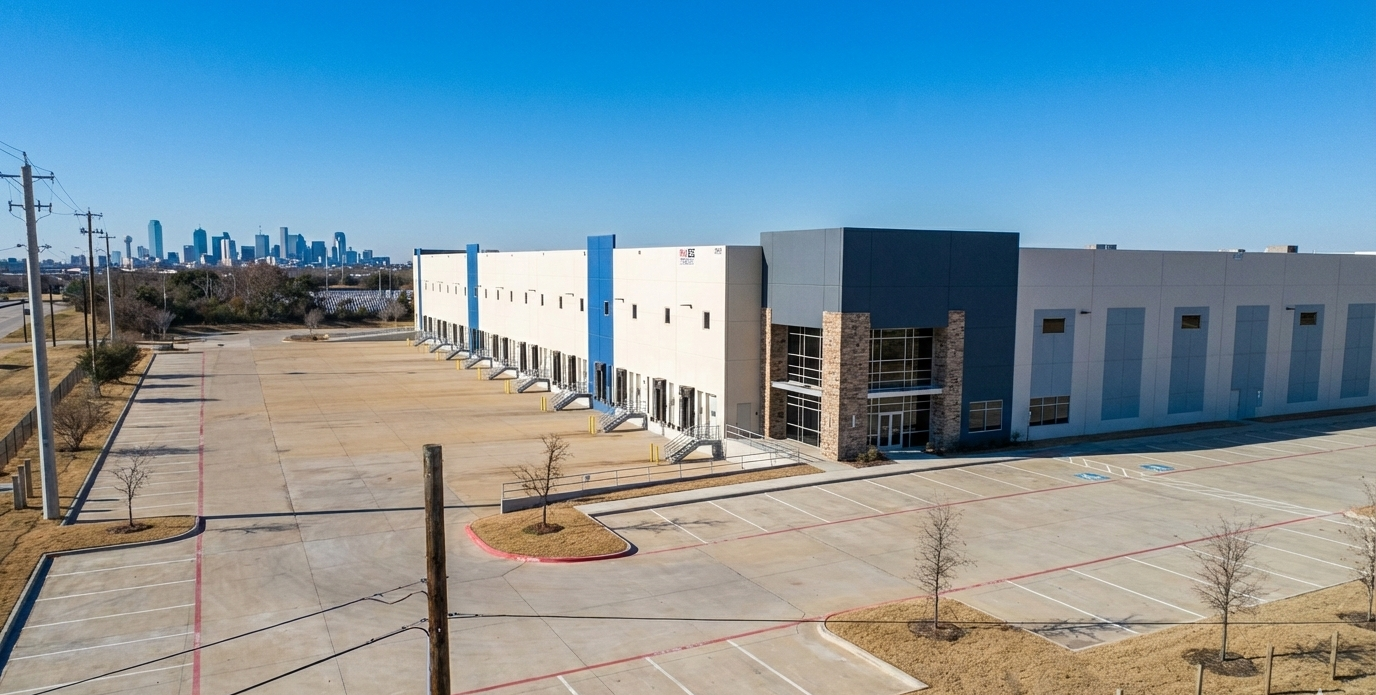
The specific property identified in Hutchins sits at 950 N. IH-45. Its a Class A, brand-new, 1,013,833-square-foot logistics building sitting on approximately 54 acres at the southeast corner of the I-45 and I-20 interchange. Built in 2023. Completely vacant. The PointSouth Logistics & Commerce Centre was designed to move freight not house people, with 40-foot clear heights, 165 loading docks, and positioned right next to one of the nation’s largest FedEx Ground facilities and the Union Pacific Dallas Intermodal Terminal.
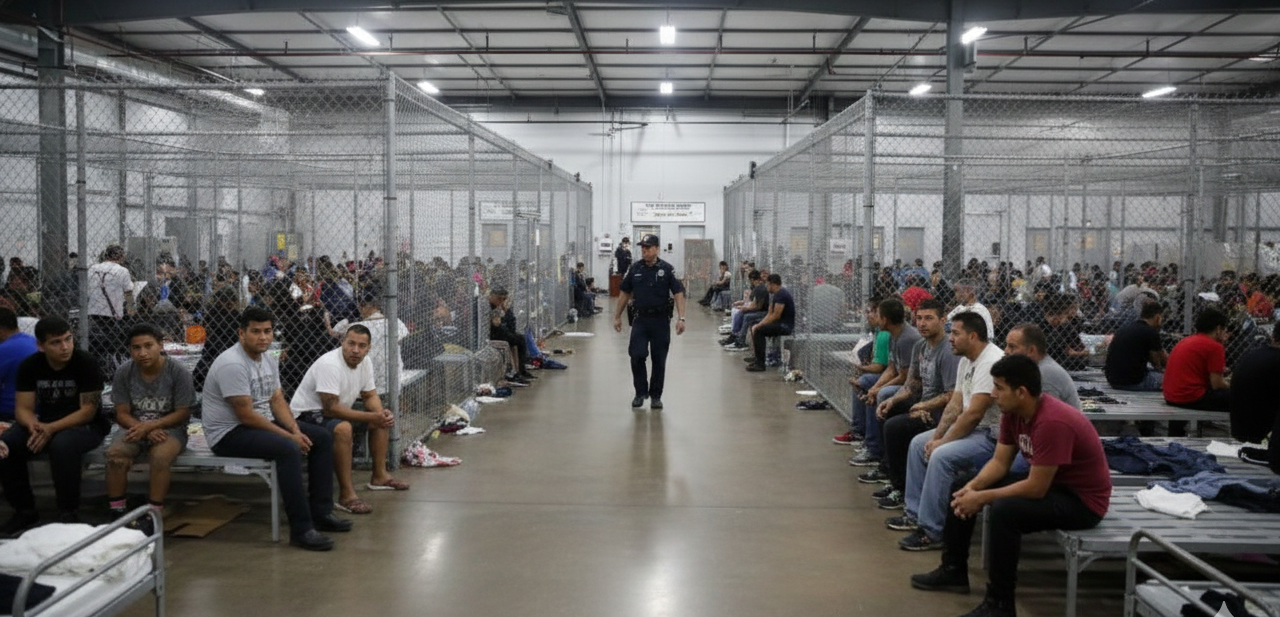
Internal ICE documents reviewed by the Dallas Morning News spelled it out plainly: up to 9,500 detainees. To put that number in context, the entire population of Hutchins is roughly 8,380 people. This proposed facility would have held more people than every man, woman, and child currently living in that city.
The community responded exactly the way you’d expect a community to respond when its future is on the line.
The Community Said No — And It Worked
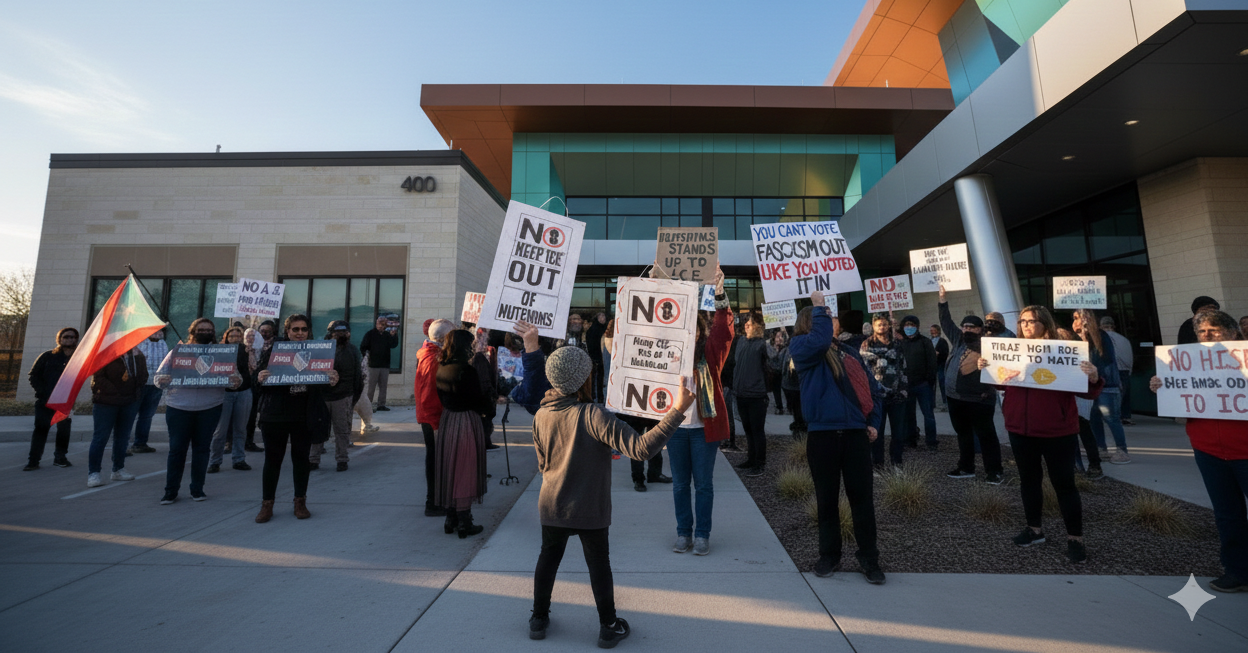
Hutchins Mayor Mario Vasquez made his position crystal clear at a city council meeting: “If you think anybody up here is on board with it, you’re in the wrong building.”
That wasn’t just political posturing. It was a signal that this community understood its own trajectory and wasn’t willing to let a federal decision-maker in Washington define it for them.
The opposition was broad and deep. U.S. Rep. Jasmine Crockett (TX-30) called Hutchins “a city on the rise” and warned the proposal would jeopardize that progress while raising serious concerns about public safety and infrastructure capacity. Dallas County Commissioner Elba Garcia was direct: “Dallas County is a place of opportunity, not of incarceration.” State Representatives Aicha Davis, Linda Garcia, and Cassandra Garcia Hernandez held a public press conference outside Hutchins City Hall. The Dallas NAACP and LULAC National joined the coalition.
Residents packed city council meetings. Longtime resident Deborah Bloomer put it plainly to CBS News Texas: “If you’re off I-45, you wouldn’t think there’s a community behind the warehouses, but there’s a whole community.”
On February 16, 2026, Majestic Realty released its official statement confirming it would not enter any agreement with DHS for the purchase or lease of any building for use as a detention facility. The company also pledged to continue working with Mayor Vasquez to find a buyer or tenant that would “help drive economic growth” in the community.
That’s the outcome. Community engagement, property owner integrity and local political alignment. It worked.
But let me be clear: just because this specific proposal was stopped doesn’t mean the broader conversation is over. And that’s exactly why you need to understand what the data actually says about how these facilities affect real estate markets.
What the Research Says About Detention Centers and Property Values
I’m a numbers person. I’m not going to traffic in fear or speculation, I’m going to tell you what peer-reviewed research and market data actually show.
A study published in the Review of Economics and Statistics examined the economic impact of correctional facilities on surrounding communities. The findings were nuanced but important for any real estate market discussion:
Housing values declined 2-4% in neighborhoods closest to correctional facilities. The effect was localized, primarily in the immediate vicinity, not across entire counties or metro areas. Demographic shifts occurred in neighborhoods nearest to facilities. Any positive employment effects were concentrated at the facility level and did not generate meaningful private-sector economic spillover into surrounding communities.
There’s also what researchers call the “stigma effect.” The Innovation Law Lab, a nonprofit that works with communities near immigration detention centers, has documented that detention facility designations often repel the development dollars and talent that communities are actively trying to attract. Money gets extracted rather than invested.
This was precisely the threat to Hutchins. The city has spent years building momentum, attracting FedEx Ground (one of its largest national facilities, processing over 230,000 packages daily), Chick-fil-A, and leveraging its prime position along the I-45 and I-20 corridors. A 9,500-bed detention facility would have been fundamentally incompatible with that growth story.
The good news: that incompatibility is now a non-issue in Hutchins. The threat was neutralized before it could materially impact the market.
The Real Hutchins Market Numbers (Not the Noise)
Let’s talk about what’s actually happening in the Hutchins real estate market right now, because the data tells a more nuanced story than headlines on either side.
Here’s where Hutchins stands as of early 2026, according to Zillow, Redfin, and HAR.com:
| Metric | Current Value | Year-over-Year |
|---|---|---|
| Average Home Value | $245,461 | -5.9% |
| Median Sale Price | $337,000 | -1.2% |
| Median Price Per Sq Ft | $208 | +19.9% |
| Median Days on Market | 101 days | Up from 86 |
| Active Listings | 50+ | +140% YoY |
| Median Rent | $2,235/month | +6.58% YoY |
Here’s how to read these numbers like an investor rather than a headline-skimmer.
Yes, home values are down approximately 5.9% year over year. But this isn’t a Hutchins-specific story, Dallas County overall is down 4.3%. The entire DFW market is working through an inventory normalization after years of pandemic-era distortion. Hutchins is moving in lockstep with the broader county, not diverging from it. That matters.
What jumps out to me is the rental market. Median rent up 6.58% to $2,235 per month tells me there is sustained, real demand for housing in this area. People want to live here. They’re working here. They’re building lives here. That’s the foundation of long-term appreciation.
And that median price per square foot figure, up 19.9% year over year, is interesting. It suggests that when properties do sell, buyers are paying more per foot than they were a year ago. That’s not a collapsing market. That’s a market in transition.
Compare Hutchins to the broader context:
| Area | Avg Home Value | YoY Change |
|---|---|---|
| Hutchins | $245,461 | -5.9% |
| Dallas County | $302,449 | -4.3% |
| DFW Metro | ~$420,000 | +2-4% (projected) |
Hutchins is priced below the county average, which is exactly what attracts first-time buyers and investors looking for DFW entry points without paying metro premiums. The location, 12 miles from downtown Dallas, right at the I-45/I-20 interchange, is a legitimate asset that doesn’t get cheaper over time as the metro continues to grow.
The Bigger Picture: ICE’s $38.3 Billion Detention Expansion Is Still Happening
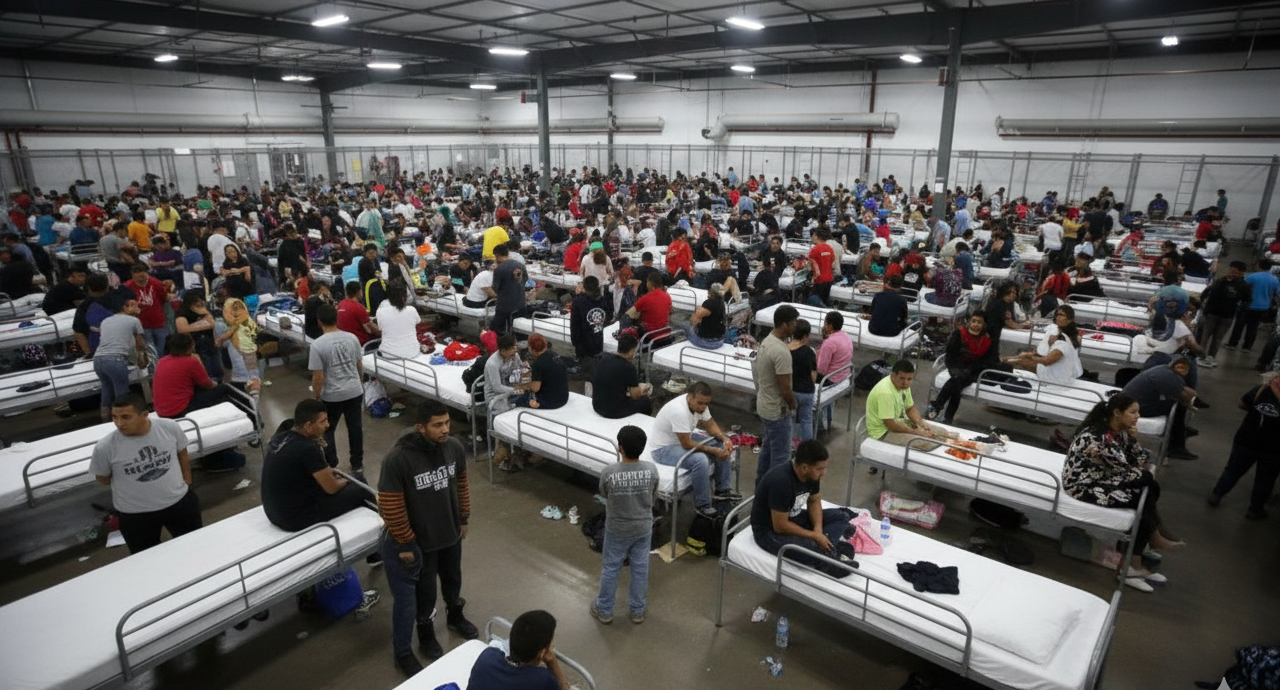
Here’s where I need to give you a piece of intelligence that most agents aren’t talking about: the Hutchins deal being stopped doesn’t mean the federal government’s detention expansion program is finished.
According to documents reported by Bloomberg, Axios, and Bisnow, the federal Detention Reengineering Initiative is targeting:
- 8 large-scale detention centers, each holding 7,000-10,000 detainees
- 16 regional processing sites, each holding 1,000-1,500 people for up to 7 days
- 10 “turnkey” acquisitions of existing ICE-contracted facilities
- Target national capacity: 92,600 beds
- Estimated cost: $38.3 billion
In Texas specifically, the federal government has already purchased a warehouse in El Paso with an 8,500-bed capacity. A nearly 640,000-square-foot warehouse near Loop 410 in San Antonio, known as Oakmont 410, has been acquired and is reportedly expected to be operational by November 2026, according to the San Antonio Report.
Hutchins was stopped. El Paso and San Antonio were not.
What this means for North Texas buyers and investors: the initiative continues, and new locations in the DFW area have not been publicly ruled out. Smart investors monitor this. They don’t panic when a story surfaces, but they also don’t ignore it when it does. They ask the right questions early, before headlines drive decisions.
I pay attention to this so you don’t have to do it alone.
The National Pattern: Community Opposition Works
The Hutchins situation wasn’t unique, and neither was its outcome. Communities across the country have faced the same scenario and the pattern of organized opposition leading to cancellations has been remarkably consistent.
In Oklahoma City, the property owner withdrew from negotiations after passionate resident testimony at city council. Republican Mayor David Holt publicly thanked the owner for the decision. In Ashland, Virginia, Canadian-based Jim Pattison Developments walked away from the sale of a 552,000-square-foot warehouse after local opposition mounted. In Social Circle, Georgia, city officials declared the proposal “infeasible” due to inadequate infrastructure. In Merrimack, New Hampshire, the town council sent a formal letter opposing the proposal, citing among other concerns that federal acquisition would reduce the city’s property tax revenue by over $500,000 annually. In the Minneapolis suburbs, two separate warehouse owners withdrew from potential deals in Woodbury and Shakopee after public backlash.
Sources: Bisnow, Facilities Dive, Yahoo News/AP
The common denominator in every successful outcome: organized, early, unified community response. The Hutchins story fits that pattern exactly and it should give every property owner in southern Dallas County reason for confidence in the path forward.
What This Means for You Right Now
Let me break this down by where you sit in the market.
If you’re a current Hutchins homeowner considering selling: The detention center threat has been officially removed, which eliminates what was arguably the area’s most significant near-term uncertainty. The buyer hesitation created by weeks of headlines should fade as the news cycle moves on. That being said, you’re selling into a market with 140% more inventory than a year ago, and median days on market is up to 101 days. Price your home competitively, not emotionally. The days of list-high-and-wait are not this market. Work with your agent to position aggressively and strategically.
If you’re considering buying in Hutchins: This may be one of the better windows you’ll see in this submarket for some time. You’ve got a market where values have pulled back approximately 5.9% from peak, the detention center uncertainty is gone, and new construction is actively available through builders like LGI Homes in communities like Southaven and College Park with homes starting in the mid-$200,000s. Those are real numbers for real families who want proximity to Dallas without paying Dallas prices.
If you’re an investor: The rental fundamentals here are stronger than the for-sale market headlines suggest. With median rent at $2,235 per month and climbing 6.58% year over year, and for-sale prices below the county average, there’s a genuine yield play in Hutchins. The question isn’t whether there’s demand, it’s whether you can acquire at the right basis to make the numbers work. Let’s run the numbers together.
If you’re relocating to DFW from out of state: Hutchins is part of the broader southern Dallas County corridor that offers extraordinary value relative to what you’re likely coming from, whether that’s California, Colorado, Arizona, or Washington. Twelve miles from downtown Dallas, immediate access to major logistics employment corridors, active new construction, and home prices well below the metro average. This is a market worth understanding before you settle on a neighborhood. If you’re thinking about making a move from another state, let’s talk.
What’s Coming for Hutchins Long-Term
Here’s the intelligence play that most people are missing while they’re focused on the drama: the South Dallas/I-45 corridor is undergoing a generational transformation that has nothing to do with detention centers.
According to research from Colliers reported by D Magazine, data center developers have secured nearly 1,500 acres within the industrial market, effectively removing over 21.7 million square feet of potential industrial pipeline. This matters enormously for housing because data center jobs aren’t logistics jobs, they’re technology jobs, higher-wage jobs, jobs that create demand for the kind of housing that appreciates over time.
Meanwhile, CBRE’s 2026 DFW Real Estate Market Outlook continues to project the DFW metroplex as one of the nation’s strongest real estate markets, driven by consistent corporate relocation, population growth projected to add over one million new residents by 2030, and a diversified economic base that few cities can match.
Majestic Realty has stated clearly that it intends to find a buyer or tenant for the PointSouth warehouse that will drive economic growth for Hutchins. Watch that space. Any major logistics, data center, or advanced manufacturing tenant announcement for that 1 million-square-foot facility would be a significant catalyst for the local economy and housing demand.
Hutchins, as Rep. Crockett correctly identified, is a city on the rise. Its comprehensive plan envisions balanced growth between industrial and residential, reinvestment in infrastructure, and community amenities. Including that grocery store residents have been asking for. This is a community with a plan, with leadership that showed up when it mattered, and with a location that the market will eventually properly price.
Frequently Asked Questions: Hutchins, ICE, and Your Real Estate Decisions

Is the Hutchins ICE detention center actually happening?
As of February 16, 2026, Majestic Realty Co. has officially confirmed it will not sell or lease the PointSouth warehouse to the Department of Homeland Security for use as a detention facility. The property remains on the market for a commercial buyer or tenant. However, and this is important, DHS did not respond to WFAA’s direct question about whether it would pursue the property through eminent domain. This story is not fully closed. The immediate threat has been neutralized, but the federal government has not publicly confirmed it has abandoned interest in the site.
Did ICE actually purchase the Hutchins warehouse?
This is where early reporting created real confusion. In January 2026, multiple outlets reported signs suggesting a sale had occurred, including a title commitment document dated January 22 obtained by the Dallas Observer. However, Majestic Realty’s February 16 statement confirmed the property was never transferred. The company said it was “contacted about the potential sale” but has not and will not enter into any agreement with DHS. As of this writing, Majestic still owns the property.
What would have been the financial impact on Hutchins if the federal government had taken ownership?
This is a real and serious issue that didn’t get enough attention in the initial coverage. According to bond documents from the City of Hutchins reviewed by D Magazine and confirmed by Dallas County Commissioner John Wiley Price, the PointSouth warehouse is one of the city’s top 10 taxpayers, generating approximately $1.7-1.8 million annually, roughly 3.8% of Hutchins’ entire tax base. The federal government is generally exempt from local property taxes. Had DHS taken ownership, that revenue would have disappeared, directly threatening the city’s ability to service its existing bond obligations. This is not a theoretical concern, similar property tax loss warnings have been raised in Berks County, Pennsylvania, Chester, New York, and Merrimack, New Hampshire, where proposed ICE facility acquisitions prompted detailed fiscal analysis.
Can the federal government force Majestic Realty to sell through eminent domain even after this refusal?
Yes, and this is the part of the story most media glossed over. WFAA spoke directly with Texas condemnation attorney Matt Hurt, who represents landowners in condemnation cases. Hurt confirmed that in federal eminent domain proceedings, the government can file a federal case, deposit an appraised amount, and take physical possession of the property while compensation disputes are litigated. “Challenging right to take is a challenge. It’s almost always a long shot,” Hurt said. Federal condemnations of private commercial property are historically rare. Hurt said he has never seen one in his career, but the legal authority does exist. Any such case involving the Hutchins property would be filed in the Northern District of Texas. DHS did not respond to WFAA’s direct question about whether eminent domain remains an option.
Can local government actually stop an ICE facility once the federal government is determined to proceed?
This is where the honest answer is sobering: largely, no. Multiple legal experts quoted by NBC News, Stateline, and Facilities Dive have confirmed that once the federal government purchases private property, local zoning, permitting, and land-use regulations generally cannot override federal authority. In Orlando, Florida, the city attorney directly advised officials that “ICE is immune from any local regulation that interferes in any way with its federal mandate.” The federal government is also generally exempt from local property taxes. What communities can do is apply public pressure on private property owners before a sale occurs, which is exactly what worked in Hutchins, Kansas City, Oklahoma City, Ashland, and the Minneapolis suburbs.
Did this story affect home values in Hutchins?
The available data doesn’t isolate a detention-center-specific price impact separate from the broader market correction already underway across Dallas County. Hutchins values are down approximately 5.9% year over year, compared to 4.3% across Dallas County. That gap existed before this story broke. What the uncertainty likely did was create buyer hesitation and extend days on market, and that effect should ease as the news cycle moves on and the Majestic Realty statement becomes established fact. The more important factor for Hutchins home values going forward is not the detention center story, it’s whether the city’s commercial development momentum continues and what tenant ultimately occupies the PointSouth building.
Could ICE target another property in the DFW area?
This remains a real possibility. The federal Detention Reengineering Initiative is ongoing, targeting 92,600 detention beds nationally. DHS has already purchased properties in El Paso and San Antonio, and the initiative has a stated goal of having all facilities operational by November 30, 2026. The program specifically targets properties near major logistical hubs, which describes much of the I-20, I-35, and I-45 corridors in North Texas. No additional specific DFW locations have been publicly confirmed, but the broader program is active. This is exactly the kind of intelligence I track for my clients.
Is Hutchins a good place to buy a home right now?
At the right price, with clear expectations, and with the detention center threat removed, yes. Hutchins offers some of the most affordable home prices in Dallas County, genuine proximity to downtown Dallas (12 miles), a strong logistics employment base anchored by FedEx Ground, and active new construction through builders like LGI Homes. The rental market is posting 6.58% year-over-year rent growth, which is a strong indicator of sustained housing demand. For first-time buyers, investors seeking yield, and families who prioritize value, Hutchins deserves serious consideration. What you need to watch: whether Majestic Realty finds a quality commercial tenant for the PointSouth building. That announcement will be a meaningful data point for the neighborhood’s long-term trajectory.
What should I do if another detention center proposal surfaces near a property I own or want to buy?
The playbook from Hutchins, Kansas City, Oklahoma City, and others is clear: organized, early, public community opposition, combined with property owners who value their community relationship over a federal check is the most effective lever available. But on the real estate side, the advice is: don’t make permanent financial decisions based on an unfinalized proposal. The gap between “federal government expresses interest” and “federal government takes possession” involves many steps, and community pressure has successfully interrupted that process multiple times in 2026 alone. Get the facts, monitor the situation, and make decisions on data rather than headlines. That’s what I help my clients do every day.
The Bottom Line
The proposed ICE detention center in Hutchins was a real threat to a community that has been quietly building something worth protecting. The community organized, the property owner made a principled decision, and the threat was eliminated.
But this isn’t a story that ends with a sigh of relief and a return to business as usual. The federal detention expansion initiative continues nationally. Property values across Dallas County are navigating a real correction. And opportunity for buyers, for investors, for families relocating, is present right now in southern Dallas County in ways it hasn’t been since before the pandemic distorted everything.
The agents who are going to win in this market are the ones who show up with intelligence, not just listings. The buyers who are going to build wealth are the ones who understand what the data actually says, not what the headlines suggest.
Ready to Talk North Texas Real Estate?
Whether you’re buying your first home, evaluating an investment, relocating from out of state, or trying to figure out what your home is worth in this market, I’m here with the market intelligence you need to make a confident decision.
Schedule a Buyer’s Consultation or Listing Appointment Today
Bobby Franklin, REALTOR® | Legacy Realty Group – Leslie Majors Team
Licensed Texas Real Estate Professional serving the South DFW to Waco corridor including Waxahachie, Midlothian, Hutchins, Ennis, Red Oak, Cedar Hill, Mansfield, and the greater Ellis County area. Equal Housing Opportunity. All content complies with the Fair Housing Act, RESPA, the NAR Code of Ethics, and TREC advertising standards.
Disclaimer: This article is for informational and educational purposes only. It does not constitute legal advice, political advocacy, or an endorsement of any political position. All information is sourced from publicly available news reports, government statements, and real estate market data. As a licensed real estate professional in the state of Texas, all content complies with the Fair Housing Act, RESPA, the NAR Code of Ethics, and TREC advertising standards.