

By Bobby Franklin, REALTOR® | North Texas Market Insider™ | Legacy Realty Group – Leslie Majors Team
Serving Ellis County, DFW & Greater North Texas | 214-228-0003 | northtexasmarketinsider.com
Let me give it to you straight.
On March 13, 2026, President Trump signed two executive orders aimed directly at the housing affordability crisis in this country. And within about 48 hours, my phone was buzzing, buyers in Waxahachie asking if prices were about to drop, builders in Midlothian wondering what changes were coming, first-time buyers from California wanting to know if now was finally the time to make the move to North Texas.
Here’s the thing: I’ve been watching this policy environment build for months. The Fannie and Freddie MBS move in January. The institutional investor restrictions. The Senate bipartisan housing bill. These March orders didn’t come out of nowhere, they’re the next piece of a deliberate, multi-layered federal intervention in the housing market. And if you understand what’s actually in these orders versus what the headlines are saying, you’re going to see this market very differently than the people reacting to noise.
That’s what I do here. Not noise. Intelligence.
So let’s break down exactly what Trump signed, what it means for buyers and builders on the ground in North Texas, and critically, what it doesn’t do, because I’m not going to hype you into a bad decision.
Two Executive Orders, Two Different Problems
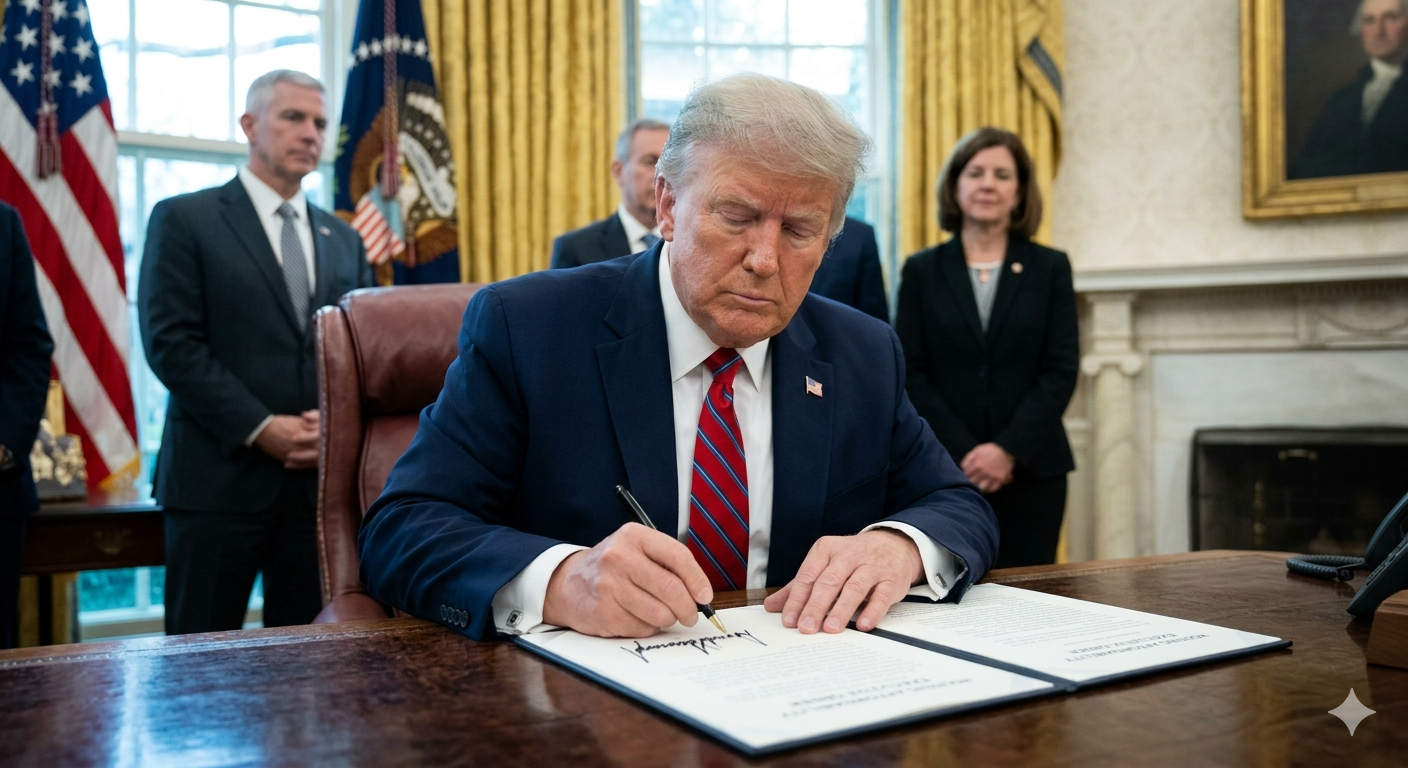
The federal housing affordability crisis has two sides: supply is too expensive to build, and credit is too hard to access. Trump’s March 2026 executive orders orders take a direct swing at both.
Executive Order #1: “Removing Regulatory Barriers to Affordable Home Construction”
This one targets the cost of building homes and the number buried inside it tells you everything you need to know about why housing has gotten so expensive.
According to the official White House fact sheet, government regulations at every level added more than $90,000 to the cost of a new single-family home in 2021. The National Association of Home Builders put that number even higher, $93,870 per home, representing 23.8% of the average new home price. Nearly $100,000 per home that has nothing to do with lumber, labor, or land. It’s pure regulatory drag baked into every closing.
That is the problem this order is trying to solve. Here’s how it goes after it:
EPA and Army Corps of Engineers are directed to review and revise stormwater, wetlands, and water-related permitting requirements to reduce costs and improve insurability. For Texas builders, where drainage reviews have been adding months to project timelines, this matters.
Energy efficiency mandates specifically the Biden-era HUD and Agriculture Department guidelines are going under the microscope. The White House signaled these mandates alone add up to $9,000 per home, and the direction is clear: reduce or eliminate them.
NEPA categorical exclusions will be maximized for housing construction. What that means in plain language: fewer time-consuming environmental impact reviews for standard residential projects. The projects that have been sitting in permitting purgatory for six months get a shorter runway.
A 60-day permitting deadline is being put forward as a federal benchmark and the threat is implicit. Local governments that want access to federal discretionary funding are going to be looking at this number. Right now, some Texas municipalities are taking 90 to 180+ days to issue permits. That gap represents real dollars in carrying costs that builders pass directly to buyers.
Opportunity Zone incentives will be aligned with single-family home development and New Markets Tax Credits. This is the provision I want you to pay attention to and I’ll come back to why it matters specifically for Ellis County in a minute.
The NAHB’s response was direct. NAHB Chairman Bill Owens stated the order will help builders “build more housing by reducing red tape, streamlining permitting requirements and easing costly environmental regulations.” That’s not a lobbying group spinning a talking point, that’s an industry that has watched regulatory costs compound for 15 years finally getting policy movement in the right direction.
Executive Order #2: “Promoting Access to Mortgage Credit”
The second order is about who can actually lend you money to buy a home and right now, that pool is smaller than it should be.
Since the Dodd-Frank Act of 2010, community banks have been systematically squeezed out of the mortgage market. The compliance burden that made sense for trillion-dollar institutions became an existential problem for smaller regional lenders. The result: rural buyers, first-time buyers, and low-to-moderate income borrowers lost access to the lenders who historically served them best.
According to the White House fact sheet on mortgage access, this order corrects that. Here’s the mechanism:
The CFPB is directed to modernize HMDA reporting requirements and reduce compliance documentation burdens for smaller banks. Federal banking regulators are told to revise supervisory guidance to emphasize sound underwriting judgment rather than checkbox compliance. Capital and liquidity rules are being reformed to remove undue burdens on residential lending specifically. And targeted FHLB liquidity programs are being created for entry-level housing and small residential builders, a direct lifeline for the starter home market.
FHFA Director Bill Pulte put it plainly on Fox Business after the signing: Trump “is unleashing the community banks to give mortgages again in this country.”
More lenders competing for your business. More loan products for buyers who’ve been turned away. More construction financing for smaller regional builders who have been getting outcompeted by the big production builders with institutional backing. That’s the strategic picture here.
This Didn’t Come Out of Nowhere The Full Policy Stack
These two orders are the latest piece of a deliberate, layered federal housing push. If you want to understand where the market is going, you need to see the complete picture:
January 2026: Trump directed Fannie Mae and Freddie Mac to purchase up to $200 billion in mortgage-backed securities. That move helped push the 30-year fixed rate below 6%, which, as I covered in detail in my analysis of sub-6% mortgage rates, is the lowest we’ve seen since September 2022.
January 2026: A separate executive order directed federal agencies to restrict large institutional investors from purchasing single-family homes through federal programs. Wall Street competing with first-time buyers using cash offers was one of the defining dynamics of 2021-2023. That lever is now being pulled.
March 12, 2026: A Senate bipartisan housing bill passed addressing construction policy and further limits on institutional investment. Its path through the House is uncertain, but the legislative direction is clear.
March 13, 2026: The two orders we’re breaking down today.
Read that stack together. Supply-side deregulation. Credit expansion. Institutional investor restrictions. MBS purchases to push rates down. This is the most sustained federal housing intervention in decades and it’s all pointing in the same direction. North Texas buyers who understand what’s happening here are positioned to move with confidence. Everyone else is reacting to yesterday’s news.
Why North Texas – And Ellis County Specifically – Is Ground Zero for This Opportunity
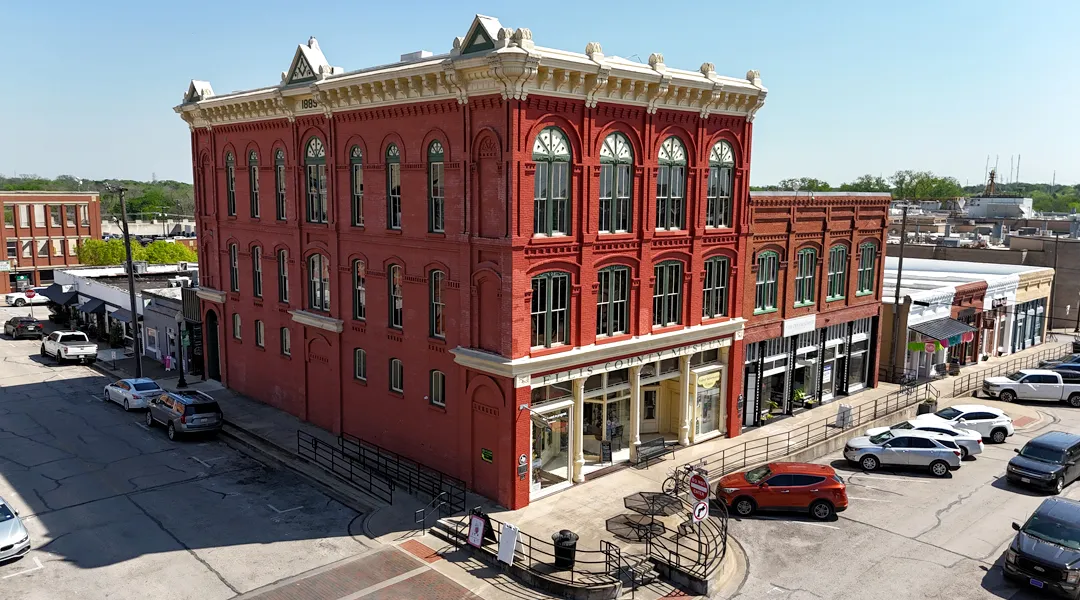
Here’s what I want you to understand: the fundamentals that made DFW the #1 new construction market in the United States are still firmly in place. Texas accounted for 225,756 residential building permits in 2024. DFW leads the state. January 2026 alone recorded 1,523 new residential building permits in the Dallas metro totaling over $583 million in construction value. These are not the numbers of a market in decline, they’re the numbers of a market that was constrained by regulatory drag, and that constraint is now being systematically removed.
Even in the strongest building market in America, permit activity slowed approximately 8-10% year-over-year in 2025. The cause: the exact regulatory friction these orders target. Slow permitting. Costly environmental reviews. Energy mandates. Those headwinds ease, and we’re likely looking at a meaningful rebound in permit activity — right as buyer demand is recovering.
Now zoom into Ellis County. This is where the intelligence gets specific.
The 13,270-home Minto Communities development that’s been approved in Waxahachie, 3,170 acres on the I-35E corridor with construction projected to begin mid-2026, sits directly in the crosshairs of the Opportunity Zone incentive alignment in Executive Order #1. Federal incentives designed to accelerate single-family development in underserved census tracts? That’s not abstract policy for Waxahachie. That’s a tailwind to one of the most significant masterplanned community projects in South DFW.
Meanwhile, the Midlothian corridor keeps expanding. Red Oak is absorbing growth driven by the Google data center investment. Ennis and Ferris are seeing infrastructure investment that’s years ahead of what the price points in those markets would suggest. I’ve been documenting all of this in real time at North Texas Market Insider and the picture is consistent: Ellis County is where the value-to-opportunity ratio is the most compelling in the entire DFW corridor.
Dallas home affordability already improved more than any other U.S. metro heading into 2026. Buyers now need $112,175 annually to afford a median-priced home, down 7.4% year-over-year. These executive orders don’t create that trend. They accelerate it.
What This Means Depending on Where You Stand

If You’re a First-Time Buyer
You are the primary target of this entire federal housing push, and the conditions right now are the most buyer-favorable in three years. Here’s what’s stacking in your favor simultaneously:
The 30-year fixed rate is sitting below 6% for the first time since September 2022. Community banks are being re-engaged in mortgage lending, which means more loan products and more competition for your business. Builder incentives such as rate buy-downs, closing cost assistance and design credits are still active across Ellis County because builders are still managing stagnant inventory. The institutional investor restrictions mean you’re not losing homes to cash offers from private equity firms the way buyers were in 2021 and 2022.
My trusted lender partners: Denise Donoghue at The Mortgage Nerd, Andrew Bryan at Miramar Mortgage, and Ethan Hester at Midtex Mortgage are all actively working these programs and can walk you through exactly what you qualify for right now.
If you want to see what’s actually attainable in your price range today, check my guide to the top 5 new construction communities under $350K in South DFW. The answer might surprise you.
If You’re a Move-Up Buyer
The DFW mid-tier market — $400,000 to $750,000 is where builder incentives and buyer leverage intersect most powerfully right now. New construction in that range is offering rate buy-downs and flex cash that compress the effective cost of ownership in ways the list price doesn’t show.
A recent buyer client of mine just got $54,000 in credits from Highland Homes in Waxahachie. That’s definitely something to consider and something that the majority of preowned sellers cannot offer you.
Your challenge, if you’re a move-up buyer, is the sell side. Homes being relisted in 2026 are relisted for one reason: they were priced to 2022 comps that don’t exist anymore. Sellers who price accurately are closing. Sellers who don’t are sitting and watching the market move without them. Get that pricing conversation right before anything else.
If You’re a Builder or Developer
The NAHB said it clearly, and the NAR agreed: these orders address the regulatory bottlenecks that have been inflating the cost of new construction for years. The direction of travel on permitting timelines, environmental review costs, energy mandates, and construction financing is unambiguous.
The community bank construction lending provisions are especially significant for smaller regional builders who’ve been competing at a disadvantage against production builders with institutional capital behind them. That’s the provision that levels the playing field and if you’re a smaller developer watching this, that’s the number to track as agencies begin rule-making.
For buyers working with builders, and I walk model homes across Ellis County regularly, my complete guide to the new construction building and buying process in DFW will tell you exactly how to navigate builder contracts, incentive negotiations, and the timeline realities before you sign anything.
The Honest Briefing: What These Orders Don’t Do
I’ve given you the opportunity side. Now let me give you the complete picture, because this is where I separate from the hype.
As the AP noted when covering the orders, it’s not clear how quickly federal efforts can meaningfully reduce mortgage costs or produce new construction, because “the key regulatory issues on home development involve state and local government policy choices and mortgage rates will (first and foremost) reflect changes in financial markets.”
That’s accurate. Here’s what that means practically:
Federal orders still flow through state and local governments. Texas has been more deregulation-friendly than virtually any other state but even here, implementation timelines are measured in months to years, not weeks. The agencies involved have rule-making processes, public comment periods, and regulatory review cycles that don’t move at executive order speed.
Builders don’t immediately pass savings to buyers. When regulatory costs decrease, builders recover margin before lowering prices. That’s not cynicism, that’s just how capital allocation works. Meaningful downward pressure on new home prices is a 1-3 year story, not a next-quarter story.
Mortgage rates still follow the bond market. The executive order improves lending access and credit availability BUT it doesn’t control the 10-year Treasury yield, which is the primary driver of the 30-year fixed rate. Those rates are going to move based on Fed policy and macroeconomic conditions regardless of what gets signed.
Some of these regulations exist for real reasons. The stormwater and wetlands rules being targeted serve public health and environmental functions that don’t disappear because they’re inconvenient for builders. The Advisory Council on Historic Preservation has flagged legitimate concerns about balancing housing expansion with community character. This is a real tension, not a fringe objection.
And as the Georgetown Center on Poverty and Inequality noted, Dallas already adds housing faster than almost any other metro, but affordability for low-to-moderate income families remains a challenge that supply-side deregulation alone doesn’t solve. The affordable housing provisions in the Senate bipartisan bill that passed March 12 address that gap, but that bill still has to move through the House.
If someone tells you these executive orders are going to immediately drop home prices across the board, they’re selling you something. The honest read: these orders are directionally significant, medium-term in their impact, and most powerful for buyers who are already positioned to move now rather than waiting for a price drop that may not arrive on the timeline they’re expecting.
Will Home Prices Actually Drop? The Direct Answer
I know this is the question. Let me answer it directly.
In the next 12 months: Probably not meaningfully. The regulatory review processes set in motion by these orders take time. Builders don’t compress margins on existing pipeline. The agencies have rulemaking work ahead of them before a single permit deadline changes.
In years 1 to 3: Potentially significant. If permitting timelines compress, environmental review costs decrease, and community banks re-enter construction financing in meaningful volume, the supply increases. More supply with stable demand creates downward pressure on price growth, if not outright price reduction.
Specifically in North Texas: Understand that we’ve already had our correction. DFW prices declined approximately 4% over the last 12 months heading into late 2025. The North Texas median sales price declined approximately 5.3% year-over-year by December 2025 per NTREIS data. The reset already happened here. These orders don’t create the next phase of this market, they provide the foundation for it.
The buyers who win in this environment are not the ones waiting for a perfect bottom that may never come. They’re the ones who understand the conditions, build the right team, and move with precision while everyone else is paralyzed by noise.
That’s all covered in the 2026 North Texas Housing Market Forecast I laid out at the start of the year, and nothing in these executive orders immediately changes that read. Fort Worth median home prices are still at $359,000, with DFW overall hovering around $375,000–$418,000. We’re still expecting sub-6% rates and builder incentives to slowly fade as market conditions improve. The window is open, but it will not stay open indefinitely.
FAQ: The Questions I’m Actually Getting Asked

Q: What did Trump’s housing executive order do in 2026?
Trump signed two orders on March 13, 2026. The first, “Removing Regulatory Barriers to Affordable Home Construction”, directs federal agencies to reduce permitting delays, environmental mandates, and energy regulations that inflate construction costs. The second, “Promoting Access to Mortgage Credit”, directs the CFPB and federal banking regulators to bring community banks back into the mortgage market. Both are directional, medium-term policies, not immediate price-cut mechanisms.
Q: Will these orders make homes more affordable?
Over time, yes, the design is sound. Regulatory costs that currently add nearly $100,000 to new home prices are being targeted. Credit access is being expanded. But implementation timelines are real, and most of the core regulatory issues involve state and local government. Meaningful price impact is a 1-3 year story in most markets.
Q: How does this affect new construction in Texas specifically?
Texas is the primary beneficiary. As the #1 new construction state by permits, Texas builders have been navigating environmental reviews, energy mandates, and permitting delays that these orders directly target. The Opportunity Zone incentive aligning with single-family development could accelerate affordable starter-home construction specifically in fast-growing corridors like Ellis County. I’m watching this closely and will update my Live DFW Market Updates page as conditions change.
Q: What does the mortgage executive order mean for me as a buyer?
More lenders in the market will be competing for your business, specifically smaller community banks that historically served entry-level, rural, and first-time buyers better than large institutions. More competition means better rates and more flexible loan products, especially for construction loans and starter home purchases. Connect with one of my lending partners – Denise at The Mortgage Nerd, Andrew at Miramar Mortgage, or Ethan at Midtex Mortgage to see what’s available right now.
Q: Did Trump ban institutional investors from buying homes?
In January 2026, a separate executive order directed federal agencies to restrict large institutional investors from purchasing single-family homes through federal programs. That’s distinct from the March orders. The goal is to remove the dynamic where first-time buyers compete against investment firm cash offers. Think of it as directional policy, not an outright market ban.
Q: Are there legitimate concerns about these orders?
Yes, and I’m going to be straight with you about them. Some of the regulations being reduced like stormwater, wetlands and energy efficiency, serve real public health and environmental functions. The Advisory Council on Historic Preservation has raised concerns about community character preservation. And supply-side deregulation alone doesn’t solve affordability for the lowest-income households, that requires the affordable housing provisions in the Senate bill, which still has to clear the House.
Q: Which builders in North Texas will benefit most?
Production builders with active pipeline in Texas like Highland Homes, Bloomfield Homes, John Houston Homes and Meritage Homes, will benefit as permitting and environmental review costs decline. Smaller regional builders get an additional boost from the community bank construction lending provisions, which are specifically designed to give them access to financing that’s been harder to secure. In my new construction buyer’s guide for DFW, I walk through how to evaluate builders and negotiate effectively regardless of market conditions.
Q: How do I actually take advantage of this as a first-time buyer right now?
Get pre-approved today, not next month, today. Rates below 6% combined with active builder incentives in Ellis County represent the best intersection of conditions in three years. Communities in Waxahachie, Midlothian, Red Oak, and Ennis offer new construction well below the metro median, with builders currently offering rate buy-downs, closing cost assistance, and design credits. Those incentives compress as market conditions improve. Schedule a consultation and let’s build your strategy.
The Bottom Line

Here’s my read, and I’m going to state it without hedging:
These executive orders matter. They’re not a silver bullet, and anyone telling you home prices are about to drop 20% because of a policy directive doesn’t understand how regulatory implementation works. But the direction of travel, on supply, on credit access, on institutional investor competition, is the most buyer-favorable federal policy stack we’ve seen in years.
North Texas was already the story. DFW was already the #1 building market in America. Ellis County was already delivering the most compelling value proposition within 30 miles of downtown Dallas. These orders are federal wind at the back of a train that was already moving.
The buyers who act on this intelligence while others are still waiting for the headline that tells them it’s safe, those are the buyers who look back in 18 months and feel like they made the right call.
I track this market daily. I’m in model homes, on city council agendas, reading permit filings, and watching what builders are actually doing on the ground in across Ellis County and DFW. Bookmark northtexasmarketinsider.com and follow the Live DFW Market Updates to stay ahead of what’s coming, not behind it.
Let’s talk strategy.
📞 Bobby Franklin, REALTOR®
Legacy Realty Group – Leslie Majors Team
214-228-0003
northtexasmarketinsider.com
Serving Ellis County, DFW & Greater North Texas
Disclosure: This article is provided for informational and educational purposes only and does not constitute legal, financial, or investment advice. All real estate transactions involve individual circumstances; consult with a licensed professional for guidance specific to your situation. Bobby Franklin is a licensed REALTOR® in the state of Texas, serving buyers and sellers across Ellis County and the greater DFW Metroplex. Content complies with the Fair Housing Act, RESPA, NAR Code of Ethics, and Texas Real Estate Commission advertising guidelines. All content is original and uniquely produced for North Texas Market Insider™.






Join The Discussion