By Bobby Franklin, REALTOR® — North Texas Market Insider | Serving Ellis County, the I-35E Corridor, and the DFW Metroplex
Last updated: July 19, 2026
Two headlines hit your feed this month. CNBC ranked Texas the second-worst state in America to live in, and WalletHub called it the fourth most financially distressed state in the country. Both studies are real. Both are being screenshotted by people who have never driven I-35E.
Here is the part nobody put in the caption. Texas has ranked 49th or 50th in that same CNBC category every year since 2023, and across those four years the state added roughly 2.6 million residents and led the nation in population growth three times.
Dead last in 2023. Dead last in 2024. Second-to-last the two years since. Four straight verdicts, and Americans kept pointing their moving trucks at Texas anyway. A scorecard that has been that far off from actual human behavior for that long is not predicting anything. It is measuring something other than what families weigh when they decide where to live.
I am not going to tell you the ranking is fake, because parts of it are painfully accurate and I will walk you through those parts. We’ll also look at what it does and doesn’t say about the value of your house.
North Texas Market Insider™ · Data Brief
Texas Has Ranked 49th or 50th for Quality of Life Every Year Since 2023
Over that same four-year stretch, Texas led the nation in total population gain three years running and added roughly 2.6 million residents.
The Contradiction: Two CNBC Rankings, Same Study
| Year | Quality of Life Rank | Overall Business Rank |
|---|---|---|
| 2023 | 50th | 6th |
| 2024 | 50th | 3rd |
| 2025 | 49th | 2nd |
| 2026 | 49th | 4th |
Point totals are not directly comparable year to year. CNBC revised its methodology, and the quality-of-life category now carries 11.6% of a state’s total score across 138 metrics in 2026.
CNBC’s 10 Worst States for Quality of Life, 2026
- Tennessee (64 pts)
- Texas (78 pts)
- Indiana
- Louisiana
- Georgia
- Utah
- Missouri
- Alabama
- Oklahoma
- Arkansas
Scored out of 290 possible points. All ten states are Republican-led, a pattern that drew criticism of the methodology on release.
Texas Category Grades, 2026 Top States for Business
Texas earned an A or A+ in each of the five categories marked above. Within the quality-of-life category itself, CNBC identified childcare costs and air quality as relative Texas strengths.
Sources: CNBC, America’s Top States for Business 2026 full rankings · CNBC, America’s 10 Worst States to Live In for 2026 · Washington Times, bottom-10 ordering · Newsweek, category scoring detail · USA Today, Texas category grades · CNBC, Texas 2025 business ranking · U.S. Census Bureau Vintage 2025 estimates
Compiled by Bobby Franklin · northtexasmarketinsider.com
Two Studies, Two Completely Different Questions
Social media has been treating these as one story, when in reality they are not remotely the same measurement, and the difference matters before anyone builds a life decision around them.
The CNBC ranking is a single category buried inside its annual Top States for Business study, now in its twentieth year and scoring all fifty states across 138 metrics. Texas landed 49th of 50 for quality of life with 78 out of a possible 290 points, which rounds to an F on their scale. That category blends crime rates, health care access, worker protections, inclusiveness, reproductive rights, childcare costs, voting access, and environmental quality into one number, and under the revised 2026 methodology it accounts for 11.6% of a state’s total score (CNBC).
Tennessee took the bottom spot, with Texas right after. Behind Texas came Indiana, Louisiana, Georgia, Utah, Missouri, Alabama, Oklahoma, and Arkansas where every one of the bottom ten is Republican-led. That pattern drew immediate criticism that the rubric grades policy preference rather than daily life, and CNBC’s own response was that quality of life is one of ten business-climate categories and was never built as a comprehensive verdict on living in a state. That caveat traveled nowhere near as far as the headline did (Washington Times).
WalletHub was measuring something else entirely. Their financial distress study runs on account-level credit data, looking at credit scores, bankruptcy filings, and the share of accounts where a lender has agreed to pause or reduce payments. Kansas ranked most distressed, then Louisiana, Florida, and Texas at number four (WalletHub).
One study grades policy. The other grades household balance sheets. Neither one grades your ZIP code, and your ZIP code is the only geography that prices your house.
Where the Ranking Is Right, and I Am Not Going to Soften It
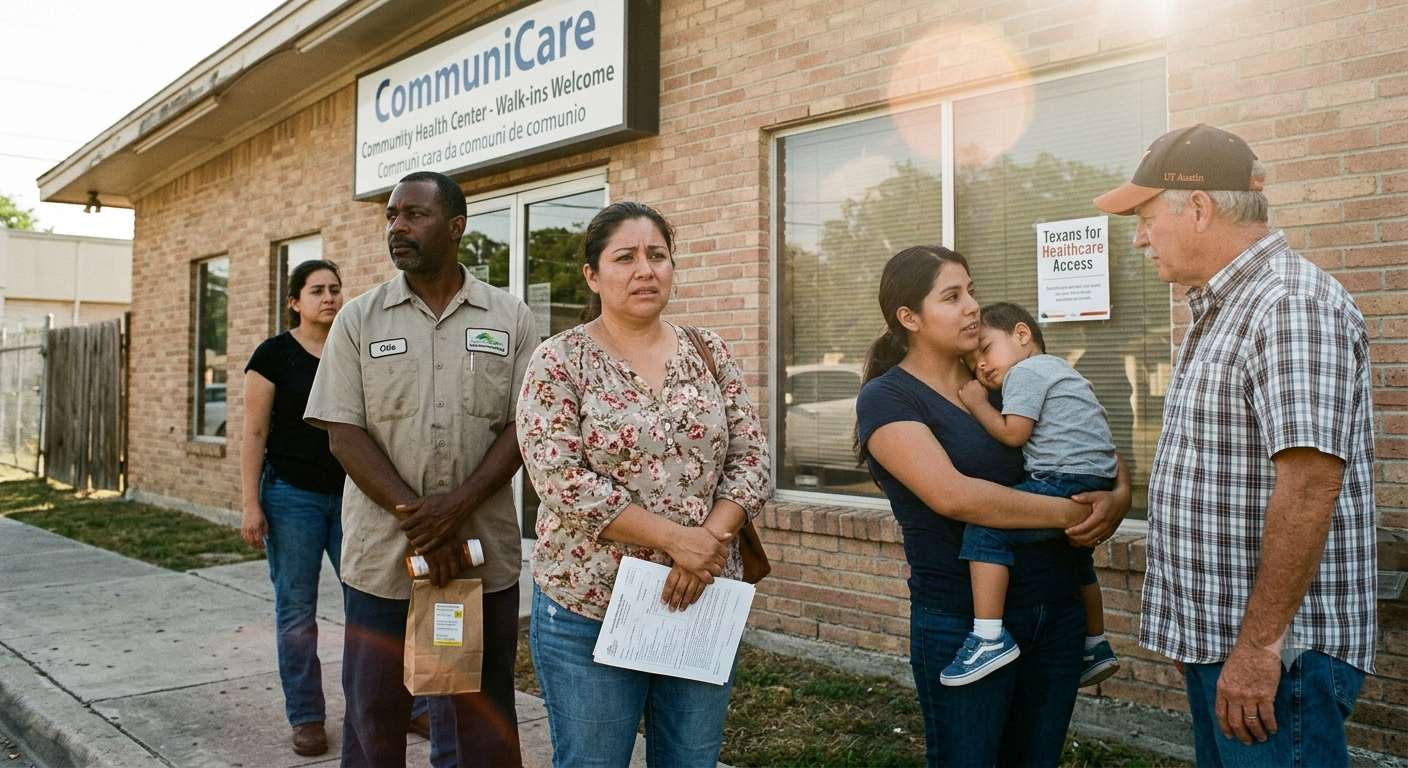
The health care numbers are what actually sank the Texas score, and they deserve to be taken seriously rather than argued away.
Texas carries the highest uninsured rate in the country at 16.7%, which is more than double the national average. The state also ranks dead last among all fifty for primary care physicians per capita, and more than 17% of Texas adults skipped a doctor visit they needed in the past year strictly because of what it would cost (Austin American-Statesman).
If you are relocating here with a chronic condition, an aging parent, or a kid who needs a specialist, that is a real constraint and you should be researching it before you fall in love with a floor plan.
The rest of the picture inside that same category is less grim than the headline suggests. CNBC credited Texas on childcare costs and air quality as relative strengths, with average annual infant childcare running around $11,349 against a national average closer to $13,128 (Austin American-Statesman via Yahoo).
And in the broader study encompassing the quality-of-life category, Texas finished fourth overall. The state pulled an A or A+ for economy, workforce, cost of doing business, technology and innovation, and access to capital, plus a B for infrastructure. Texas did not fail as a place to build a career or a balance sheet. It failed a narrow livability rubric weighted heavily toward health and social policy (USA Today).
The Ledger That Did Not Make the Caption

Six days after the “worst state to live in” story ran, the Texas Workforce Commission reported that the state added 43,400 jobs in June and hit an all-time employment record of 14,469,600. Over the previous twelve months Texas added 177,900 jobs at a growth rate that outpaced the nation. One of those stories went viral. The other went to page nine of the business section (Texas Workforce Commission).
Dig into that jobs report and you’ll find the number that should matter most to anyone who owns a home in a growth corridor. Construction has posted the highest annual growth rate of any major Texas industry for twenty consecutive months. Sustained construction employment is the most honest leading indicator available for where rooftops, retail, and road money are headed next (Texas Workforce Commission).
The corporate picture tells the same story just from a different angle. Texas now hosts more Fortune 500 headquarters than any state in the country at 57 corporate HQ’s, edging past California and New York, and it is the only state that placed two cities in the national top five for headquarters count (The Center Square). Put all of that output together and the state economy runs around $2.9 trillion, which would make Texas the eighth-largest economy on earth if it were a country. The Dallas-Fort Worth region alone produces more than Poland does (Texas Comptroller).
Then there is the migration number that started this whole argument. Texas added 391,243 residents between July 2024 and July 2025, more than any other state for the third consecutive year, which works out to better than a thousand new Texans every single day (U.S. Census Bureau via KXAN).
Where I Break From the Boom Narrative
Most agents in my market will stop right there, post the population number, and call it a day. I am not going to, because the composition of that growth changed and the shift matters more than the headline total does.
Net domestic migration into Texas was 67,299 people last year, which put the state behind North Carolina. Three years earlier that same figure was 222,154. The flood of Californians and Coloradans buying sight-unseen is simply not what it was in 2022, and a large share of last year’s gain came instead from births outpacing deaths and from international arrivals, a category the Census Bureau expects to fall sharply nationwide (Texas Tribune). DFW added roughly 123,557 residents in that same twelve-month window, the second-largest numeric gain of any metro in America behind Houston, which is about 339 new neighbors a day showing up in North Texas while pundits argue about scoring rubrics (The Real Deal).
You can see that recomposition working its way into local pricing. North Texas closed June with 8,961 single-family sales, up 7% year over year, and the median sales price held completely flat at $405,000 while price per square foot slipped 2% (MetroTex Association of Realtors). Volume rising while price per foot softens is exactly what a normalizing market looks like. Buyers are transacting, and they are transacting on their terms.
Here is what that means for a seller in Ellis County. The relocation buyer still exists, still arrives, and still pays real money for a good house on a good street. There are just fewer of them competing for your listing than there were three years ago, which is why pricing discipline and presentation now decide outcomes that momentum used to decide for you. Anyone telling you the market will bail out an overpriced listing because people are moving here is quoting an era that already ended.
So Does Any of This Move Your Home Value?
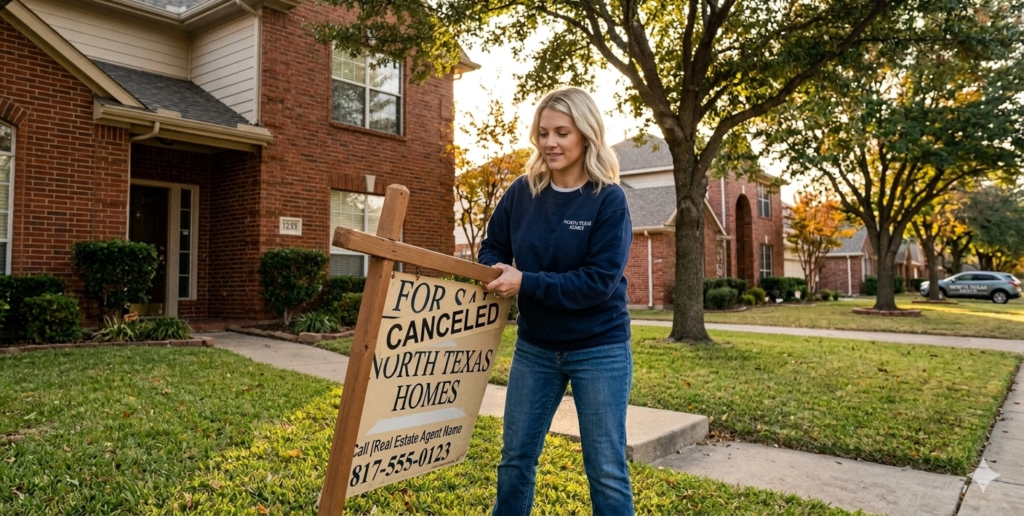
Almost never directly, and the four-year record settles the argument. Texas has been graded 49th or 50th for quality of life since 2023 while leading the country in population gain. If the ranking moved buyers opinions, the moving trucks would have turned around by now.
What actually sets your price is hyperlocal market data and always has been. Job growth in your specific metro, the campus your address is zoned to, the new construction pipeline within three miles, interest rates, and how much active inventory is sitting in your ZIP code. A composite score averaged across 31.7 million people spread from El Paso to Texarkana cannot price a house on Kingsbridge Drive.
What rankings do move is perception, and perception shows up in relocation searches. A buyer coming from Illinois or California reads the CNBC headline, gets nervous, and asks about it on the first call. The agent who can put that headline against the actual numbers for Waxahachie, Arlington, or DeSoto keeps that deal alive. The agent who never read the study loses it.
The Distress Ranking, Decoded for Homeowners
If the WalletHub headline made you wonder whether you are personally exposed, you need to understand what feeds that score. It draws on TransUnion credit data measuring accounts in distress, bankruptcy filing rates, and average credit scores by state.
For Texas, coverage has pointed to rising home and auto insurance premiums, higher property tax bills in the fast-growing suburbs, and heavier consumer debt loads tied to a lower cost of entry into ownership than coastal states carry (Newsweek). Every one of those is a household cash-flow issue rather than a home equity issue. Treat the ranking as a prompt to audit your escrow, shop your homeowners policy, and kill any variable-rate consumer debt you are carrying. If you’re treating it as a warning about your equity then you have misread it entirely.
There is also relief moving the other direction that never seems to make the distress coverage. The 2025 Legislature and Texas voters approved the largest homestead exemption increase in state history, lifting the mandatory school district exemption from $100,000 to $140,000, with seniors and disabled homeowners receiving an additional $60,000 on top of that (Office of the Texas Governor). The average Texas homeowner is projected to save around $1,700 a year as those changes phase in (Texas Standard).
If you have not confirmed your exemption is filed correctly, go verify it through the Texas Comptroller’s exemption page. Unclaimed exemptions are the most common piece of free money I find sitting on the table at listing appointments.
The Good, The Bad, The Texas

Texas is a state where it is unusually easy to build wealth and unusually hard to see a primary care physician. Both of those sentences are supported by the same 2026 data set. A ranking that weights the second heavily will put Texas near the bottom, and a ranking that weights the first will put it near the top, and this month both of those answers came out of the same study.
The person who moves here for the job market, the no-income-tax structure, the cost of entry into ownership, and the room to raise a family is making a rational decision that 391,243 people made last year. The person who needs dense specialist coverage and reliable insurance access should build that into their search before they build it into their regret.
What I will tell you plainly is this. In four years of these rankings I have never once seen an Ellis County transaction repriced by a CNBC score, but I have seen plenty repriced by a school zoning line, by a new construction phase releasing two miles away, and by a seller who trusted momentum instead of comps.
Frequently Asked Questions

Was Texas actually ranked one of the worst states to live in for 2026?
Yes. Texas ranked 49th of 50 in CNBC’s quality-of-life category with 78 of 290 possible points, behind only Tennessee. In that same study, Texas finished fourth overall for business.
How long has Texas ranked this low?
Four consecutive years. Texas ranked 50th in 2023, 50th in 2024, 49th in 2025, and 49th in 2026. Point totals are not directly comparable across years because CNBC revised its methodology.
What are the ten worst states for quality of life in 2026?
From worst upward: Tennessee, Texas, Indiana, Louisiana, Georgia, Utah, Missouri, Alabama, Oklahoma, and Arkansas.
Is Texas still gaining population?
Texas added 391,243 residents between July 2024 and July 2025, the largest numeric gain of any state for the third straight year. Net domestic migration cooled significantly, falling to 67,299 from 222,154 in 2022.
How many jobs did Texas add this year?
Texas reached a record 14,469,600 total nonfarm jobs in June 2026, adding 43,400 that month and 177,900 over the prior twelve months, outpacing the national growth rate.
Does a bad state ranking lower my home value?
Not directly. Home values are driven by local supply/demand, school zoning, inventory, and rates. State rankings mainly affect out-of-state buyer perception during a relocation search.
What is the new Texas homestead exemption amount?
The mandatory school district homestead exemption rose from $100,000 to $140,000, with an additional $60,000 for seniors and disabled homeowners.
Why is Texas ranked high for financial distress?
WalletHub’s ranking measures credit scores, bankruptcy filings, and accounts in forbearance or deferment. Contributing factors cited include rising insurance costs, higher property tax bills in fast-growing suburbs, and consumer debt loads.
If you are weighing a move into North Texas, or deciding whether to list this fall, the state-level noise is not your variable. Your zoned campus, your submarket inventory, and your pricing strategy are. Call me at 214-228-0003 and I will walk you through the numbers for your specific street instead of the numbers for 31.7 million people.
Bobby Franklin, REALTOR®
Legacy Realty Group – Leslie Majors Team
📲 214-228-0003 | northtexasmarketinsider.com
Market data is current as of publication and subject to change, nothing here is financial, legal, or investment advice, and all real estate services are provided in full compliance with the Fair Housing Act and TREC