

Published: April 2026
By Bobby Franklin, REALTOR® | North Texas Market Insider™ | Legacy Realty Group – Leslie Majors Team | Serving Ellis County, Waxahachie, and the Greater DFW Metroplex
You saw the viral social media post. “40 New Laws Have Gone Into Effect in Texas in Order to Attract More Residents to the State.”
And you probably thought what most people think: Is that even real? What are these laws? And does any of this actually affect me?
The short answer: Yes, it is real. Yes, these laws matter… a lot. And if you are thinking about relocating to North Texas, buying a home in Ellis County, or simply want to understand what is happening to the Texas real estate landscape right now, this is the most important article you will read all year.
Texas’s 89th Legislative Session (2025) produced over 1,100 signed bills with many of them explicitly designed to lower the cost of living, reduce housing barriers, cut property taxes, and make Texas the most homeowner-friendly state in the nation. Combined with zero state income tax, a booming job market, and a quality of life that is genuinely hard to beat, Texas is doing something very deliberate: rolling out the welcome mat with legislation.
As a REALTOR® who lives and works right here in Waxahachie and Ellis County, I want to break down exactly what these laws are, what they mean for you as a buyer or seller, and why North Texas, specifically the I-35E corridor south of Dallas, continues to be one of the smartest relocation decisions in America.
Let’s get into it.
Why Are People Still Moving to Texas? The Data-Backed Truth
Before we dive into the laws themselves, let’s ground this conversation in facts, because there is a lot of noise out there.
According to the U.S. Census Bureau’s Vintage 2025 data, Texas added 391,243 new residents in 2025, more than any other state in the country. The state’s total population now stands at approximately 31.7 million people. While growth has moderated compared to the post-pandemic surge, Texas still dominates national migration patterns.
More than 265,000 people moved to Texas from other states in the past year, according to a comprehensive migration study. Californians made up 14.05% of those newcomers, followed by Florida residents at 9.2% and Coloradans at 4.55%. The Dallas-Fort Worth metroplex itself received 519,078 new residents, far and above any other Texas metro.
Population projections from the Texas Demographic Center at UT San Antonio project the state will reach 42.6 million residents by 2060, a number driven almost entirely by continued in-migration. That means the demand for housing in Texas is not a trend. It is a structural, generational shift.
So what is Texas doing to keep this momentum going? Passing laws. A lot of them. And they are good ones.
The Big Picture: What Texas’s 89th Legislative Session Actually Did
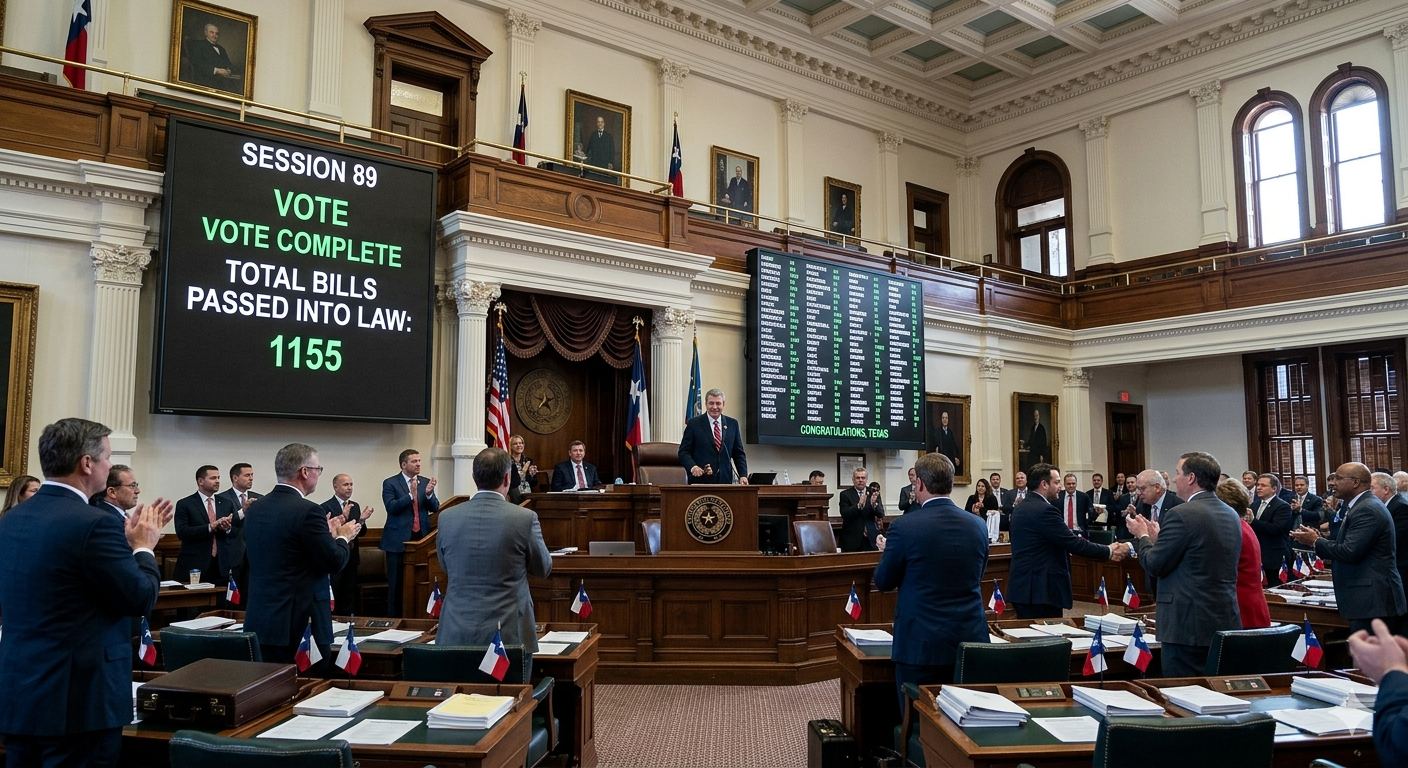
The 89th Texas Legislature convened in January 2025 and wrapped its regular session in June, with Governor Greg Abbott signing over 1,155 bills into law, many with direct implications for homeowners, buyers, sellers, and developers. The Texas Public Policy Foundation called the housing reform package “the most pro-housing legislative session in Texas history.”
The reforms focused on three primary goals:
- Cutting property taxes for homeowners, seniors, and businesses
- Removing zoning and regulatory barriers that were blocking new housing construction
- Strengthening property rights and buyer protections
Every single one of these priorities directly benefits people who are thinking about moving to, or are already living in, North Texas. Let me break them down category by category.
The Property Tax Revolution: How Much Money Are We Actually Talking About?
Texas has famously high property taxes, often cited as the #1 drawback for people considering a move here. The Legislature heard you, and they went big.
SB 4: Homestead Exemption Jumps from $100,000 to $140,000
Senate Bill 4 increased the mandatory homestead exemption for school district taxes from $100,000 to $140,000. This was approved by Texas voters in November 2025 as a constitutional amendment and applies retroactively to the 2025 tax year. For the typical Texas homeowner, this means savings of approximately $490 per year on school property taxes alone, according to a Texas Tribune analysis.
Not sure what that means for your specific home? I break it down in detail here: New Property Tax Exemptions For Married Homeowners in Texas.
SB 23: Seniors and Disabled Homeowners Get an Extra $50,000 Exemption
Senate Bill 23 increased the additional homestead exemption for Texans aged 65 and older, or those living with disabilities, from $10,000 to $60,000. When combined with the general SB 4 exemption, eligible homeowners can now receive a combined $200,000 exemption from their home’s taxable value. The result? An estimated savings of over $950 per year for qualifying senior and disabled homeowners, according to Texas legal experts.
HB 9: Business Personal Property Tax Relief
House Bill 9 raised the business personal property tax exemption threshold from $2,500 to $125,000, providing massive relief for small business owners and entrepreneurs. If you own a business and are considering relocating it to Texas, this law just made that decision significantly easier, according to 2025 Texas Property Tax Changes analysis.
The Capital Gains Tax Constitutional Prohibition
Senate Joint Resolution 18 put a measure on the November 2025 ballot to explicitly prohibit any future capital gains tax in Texas by extending protections not just to income but to individuals, families, estates, and trusts. This is particularly significant for real estate investors and high-net-worth individuals relocating from states like California, where capital gains taxes can be punishing.
Speaking of California: if you are relocating from there to North Texas, I have an entire intelligence briefing written specifically for you at Relocating From California To Texas.
And the combined weight of these tax changes? Texas will spend $51 billion over the next two years on property tax cuts alone. That is not a talking point, that is a fiscal commitment written into the state constitution.
The Zoning and Housing Supply Revolution: Building More Homes, Faster
Here’s a dirty secret about the Texas housing market: high demand wasn’t the only problem driving up prices. Restrictive zoning laws were quietly making it nearly impossible to build enough homes to keep pace. The 2025 Legislature attacked that problem head-on with a package of seven bipartisan housing reform bills that the Pew Research Center called a landmark step toward improved housing affordability.
SB 840: The By-Right Development Law That Changes Everything
Senate Bill 840 is arguably the most transformative housing law passed in Texas in decades. Effective September 1, 2025, it requires all Texas municipalities with populations over 150,000 (in counties over 300,000), including Dallas, Fort Worth, Arlington, Plano, and Frisco, to allow multifamily and mixed-use residential development “by right” in zones currently designated for office, commercial, retail, or warehouse use.
What does “by right” mean? It means no rezoning, no variance hearings, no discretionary city council votes that can kill a project at the last moment. Developers get administrative approval, period. The law caps parking requirements at one space per unit, prohibits density limits below 36 units per acre, and restricts height caps to no less than 45 feet, according to Haynes Boone real estate attorneys.
The result: more housing units coming online in more parts of DFW. More supply helps keep prices from spiraling. And for buyers shopping in North Texas, this means more inventory is coming, which is already reflected in our 2026 North Texas Housing Market Forecast.
SB 15 / HB 15: Smaller Lots Mean More Affordable “Starter Homes”
One of the biggest barriers to entry-level homeownership in Texas was minimum lot size requirements. Cities were requiring lots so large that builders couldn’t produce affordable homes without losing money. SB 15 changed that by allowing lots as small as 3,000 square feet in new single-family subdivisions on parcels of 5 acres or more in Texas’s major and mid-size cities. When Houston did something similar back in 1998, homebuilding flourished and new homes cost measurably less, according to Pew’s housing reform analysis.
HB 24: Ending the “Tyrant’s Veto”
For decades, a small minority of neighboring landowners could block new housing construction through what planners called the “notice-and-protest” provision which was a legal mechanism that gave just a handful of neighbors the power to veto new developments regardless of broader community need. House Bill 24 eliminated this barrier, according to Texas 2036’s policy analysis, streamlining the rezoning process and making it harder for a vocal minority to prevent the housing communities need.
SB 2477: Vacant Office Buildings Becoming Homes
The pandemic left Texas with millions of square feet of underutilized office space. Senate Bill 2477 created a fast-track pathway for converting vacant office buildings into residential housing units in major Texas cities. A creative solution that addresses both the commercial vacancy problem and the housing shortage in a single legislative stroke, as detailed by the Texas Public Policy Foundation.
New Homebuyer and Property Rights Protections

The 2025 Legislature didn’t just build supply, it also strengthened the rights of buyers and homeowners in ways that every person considering a real estate transaction in Texas needs to understand.
HB 2468: Your Right to Walk Away Just Got Stronger
House Bill 2468 expanded buyer rights by allowing a purchaser of real property to terminate a contract if the seller fails to disclose that the property is located within a Public Improvement District (PID). PIDs are special tax districts that can add significant assessments to your property tax bill, sometimes hundreds of dollars per year, and many buyers never find out about them until closing. Under HB 2468, buyers now have a seven-day window after receiving PID notice to terminate without penalty, according to Texas real estate law analysts.
This is exactly the kind of protection that makes working with a knowledgeable buyer’s agent, not a transaction coordinator, not an app, so critical. If you want help understanding PIDs and all the hidden cost layers in North Texas real estate, check out our Relocation Resources page.
New Written Buyer Representation Agreements (Effective January 1, 2026)
Building on the landmark NAR settlement that reshaped how real estate commissions work nationwide, Texas went a step further in 2026 by requiring all agents to have a written buyer representation agreement in place before showing any home. This is now Texas law under TRELA Sections 1101.562 and 1101.563, as explained by the Texas Real Estate Commission.
What this means for you as a buyer: you have the right to know exactly what your agent is being compensated, how that compensation is structured, and what services you are receiving in exchange before you ever walk into a showing. This is a transparency win that protects buyers, and it aligns with RESPA requirements that have long governed how settlement service fees must be disclosed. For more on RESPA, see the Consumer Financial Protection Bureau’s RESPA overview.
HOA Reform Laws: Your Home, Your Rules
The 2025 Legislature passed several bills that reined in overreaching HOAs, and all three took effect September 1, 2025, according to Winstead Real Estate’s legislative analysis:
HB 517 — HOAs must suspend enforcement of grass and turf maintenance requirements during any government-declared drought or watering restriction period, and for 60 days afterward.
HB 431 — Added “solar roof tiles” to the definition of protected solar energy devices, meaning HOAs cannot prohibit you from installing Tesla-style or similar solar roof systems.
HB 621 — HOAs cannot block political candidates or elected officials from addressing residents in common areas. Your community space is, in fact, a community space.
SB 17: Foreign Real Estate Ownership Restrictions
Senate Bill 17, effective September 1, 2025, prohibits individuals and entities tied to China, Iran, North Korea, and Russia from purchasing most types of Texas real estate, including homes, farmland, and commercial property. People in Texas on student or work visas from those countries may purchase a single residence but are barred from additional properties, according to KERA News reporting. This law remains under legal challenge by civil rights advocates who argue it is discriminatory, so buyers and sellers should stay informed about ongoing litigation.
The Financial Case for Moving to Texas Is Overwhelming
Let’s stack the numbers, because the financial case for relocating to Texas, specifically North Texas, is stronger in 2026 than it has ever been.
Zero State Income Tax: A Constitutionally Protected Advantage
Texas is one of just nine states with no personal state income tax and unlike other states that merely lack income tax by statute, Texas has it embedded in the state constitution. It cannot be changed by a simple majority legislature vote; it would require a full constitutional amendment and voter approval, according to Texas relocation tax experts.
High-income earners relocating from California, New York, or Illinois can realistically expect to save 5–15% of their gross income annually through this one change alone. For a household earning $150,000 per year, that can translate to $7,500–$22,500 in annual savings, money that can go directly toward a mortgage, savings, or a dramatically improved quality of life.
And it doesn’t stop with income. Texas also does not tax Social Security benefits, pension income, 401(k) distributions, IRA withdrawals, or investment income — as explained by Mariner Wealth Advisors. This makes Texas one of the most retirement-friendly states in the country.
The DFW Job Market: Still One of America’s Strongest
The Dallas-Fort Worth Metroplex is home to 22 Fortune 500 company headquarters and a total workforce of over 4.3 million people, according to UT Dallas labor market data. While job growth moderated in 2025, the Dallas Federal Reserve forecasts a recovery to 1%+ job growth in 2026, with the information and technology sectors showing the strongest acceleration.
Major employers like Oracle, Tesla, Capital One, Charles Schwab, and Toyota have established or expanded North Texas operations in recent years. The Texas unemployment rate dropped to 3.9% at the close of 2025, well below the national average, making DFW one of the most resilient labor markets in the country.
Why North Texas Is the Smart Relocation Choice
DFW is massive. Over 200 cities, 8+ million residents, spanning multiple counties. If you are relocating here, the question isn’t just “why Texas?”, it’s “where in Texas?” And this is where I want to give you my honest, on-the-ground perspective as someone who lives and works this market every single day.
Waxahachie: The Smartest Value in the Southern DFW Corridor
Waxahachie, Texas, the county seat of Ellis County and the city I call home, sits about 30 miles south of Downtown Dallas on Interstate 35E. The median home value here is approximately $368,000–$445,000, depending on the source and time period, compared to far higher prices in the northern suburbs. You get more home, more yard, more community, and a shorter commute than most people expect.
But what makes Waxahachie particularly special right now isn’t just price, it’s trajectory. The I-35E corridor south of Dallas is undergoing the same kind of suburban expansion that turned Frisco and McKinney into powerhouse markets 15 years ago. Communities like Waxahachie, Ennis, and DeSoto are attracting buyers that are priced out of northern DFW markets, and infrastructure investment in these cities is following close behind.
New Construction: The Opportunity Most Buyers Are Missing
Ellis County right now has a significant inventory of new construction homes, from affordable starter homes to luxury custom builds. I’ve written extensively about specific builders and communities, including a deep dive on Bloomfield Homes in Waxahachie, one of DFW’s top-rated builders. If you want to understand the entire process from contract to closing, my Complete North Texas New Construction Timeline covers every step.
Mansfield: Where Suburban Excellence Meets Accessibility
If you need to be closer to the Mid-Cities or Fort Worth, Mansfield deserves serious consideration. Its population has exploded over recent decades, and it consistently ranks among DFW’s most livable communities. Midlothian, Red Oak, and other communities throughout Ellis and Johnson counties round out a region that is growing intelligently with infrastructure, schools, and community amenities keeping pace with population.
I cover all of these markets with real data, real charts, and real insights through my Relocating To North Texas resource archive.
What Does All of This Mean for the 2026 North Texas Real Estate Market?

Here is my honest market read, grounded in the data I track daily.
The 2025 legislative reforms are beginning to work their way through the market. New zoning flexibility means more housing units are in the pipeline for DFW. Inventory has risen, Waxahachie currently has approximately 550 homes for sale, with inventory up year-over-year. Days on market have stretched to around 84 days compared to 49 days a year ago, giving buyers more time and negotiating leverage than they’ve had in years.
But here is what most buyers miss: more inventory and more days on market does not mean falling prices. It means a normalizing market. Prices in Waxahachie have remained strong, with a median sale price in the high $300s to mid-$400s, up significantly over the prior three years. The market is rebalancing, not crashing, you can read more about this in my Complete 2026 North Texas Housing Market Forecast.
For sellers wondering about timing: the Federal Reserve’s decision to pause rate hikes in early 2026 has stabilized the mortgage market. Rates in the 6.5–7.0% range are now the new baseline, and buyers are adjusting their expectations accordingly. Read my full breakdown of why this rate environment actually favors strategic sellers: Why the Fed’s March 2026 Rate Pause Is the Green Light to Sell In North Texas.
What First-Time and Millennial Buyers Need to Know
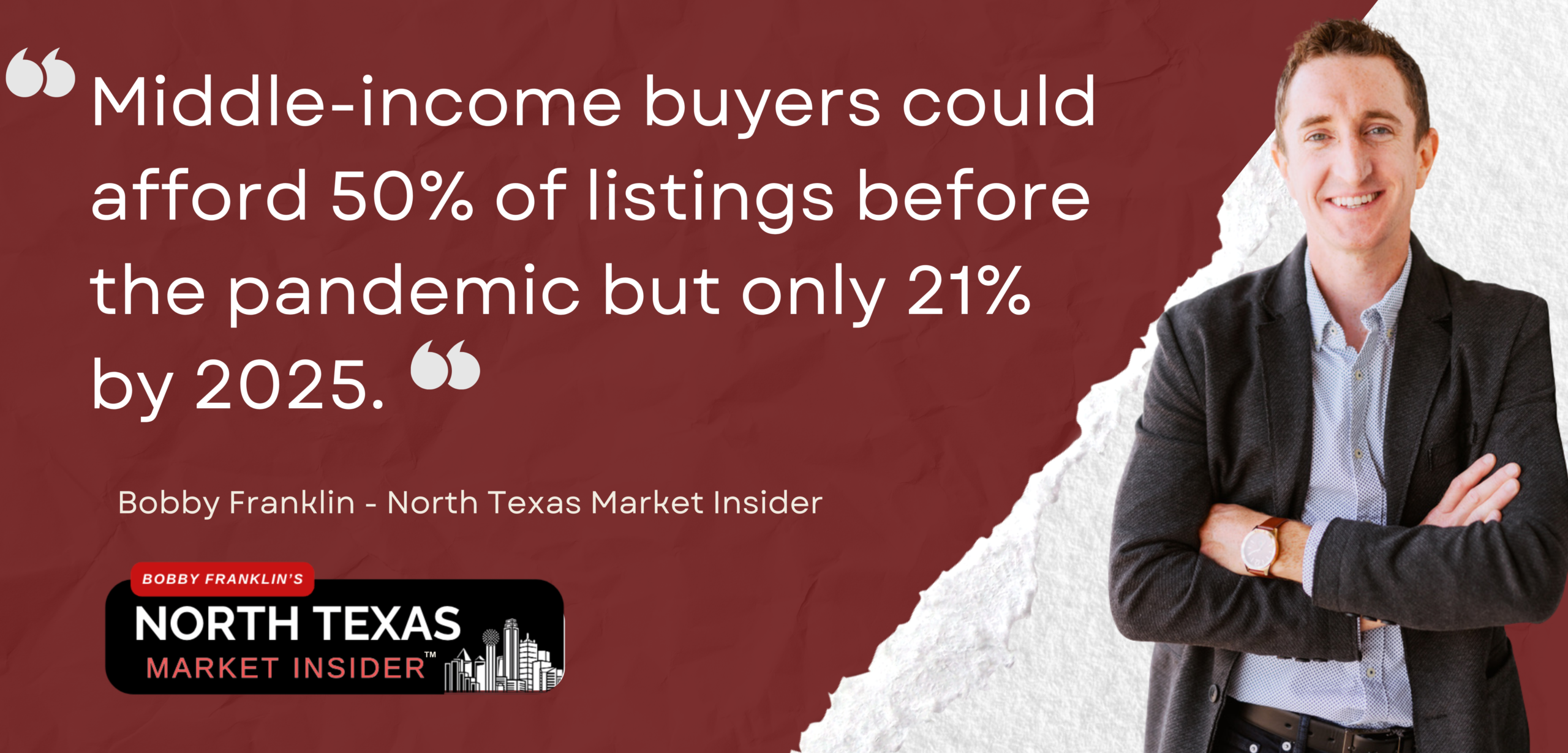
The new Texas laws, particularly the expanded homestead exemption and the zoning reforms allowing smaller lots, are specifically designed to help first-time buyers. But the affordability challenge is still real: NAR data shows that middle-income buyers could afford 50% of listings before the pandemic but only 21% by 2025. These legislative reforms are steps in the right direction, but they are just steps, not a total solution.
If you are a millennial or first-time buyer trying to navigate this market, I’ve written specifically about the financial and psychological barriers holding your generation back, and more importantly how to overcome them here: Why Millennials Are Delaying Their Home Purchase 3+ Years.
The bottom line: these new laws make Texas more accessible than it was a year ago. The tools exist. You need an agent who understands how to use them.
Is This the Right Time to Relocate to North Texas?
I get asked this question constantly, and my answer has not changed: the best time to move to North Texas was five years ago. The second-best time is now.
Here’s why this moment specifically is compelling:
- Interest rates have stabilized and are expected to gradually decline through 2026–2027
- Inventory is at multi-year highs, giving buyers genuine choices
- New property tax cuts are now law and delivering real savings
- Zoning reforms are bringing more supply to market, keeping appreciation measured
- Texas’s constitutional no-income-tax protection remains rock solid
- The DFW job market is recovering heading into 2026
- The I-35E corridor south of Dallas is in the early innings of a major growth wave
None of this means you should rush without strategy. It means this is a market that rewards informed, well-advised buyers and punishes those who try to navigate it alone or with agents who don’t know the specific local data.
For a full breakdown of relocation resources, city profiles, market data, and buyer guides, visit my complete North Texas Relocation Resources hub.
Frequently Asked Questions: Texas New Laws and Relocation 2025–2026

1. What new Texas laws went into effect in 2025 to attract new residents?
Texas’s 89th Legislature passed over 1,200 bills in 2025, including major property tax cuts (SB 4 raising the homestead exemption to $140,000), zoning reforms allowing more housing construction (SB 840, SB 15), expanded buyer protections (HB 2468), and HOA reform laws. Most major provisions took effect September 1, 2025, with the homestead exemption increase approved by voters in November 2025 and retroactive to the 2025 tax year.
2. How much will the new Texas homestead exemption save me in property taxes?
For the typical Texas homeowner with a home valued around $300,000, the jump from a $100,000 to $140,000 exemption saves roughly $490 per year on school district taxes alone. Seniors and disabled homeowners who also qualify for the SB 23 increase can save over $950 per year in combined savings. The exact amount varies by county and local tax rates.
3. Does Texas have state income tax in 2026?
No. Texas has zero state personal income tax, and it is protected by the state constitution, making it very difficult to change. This applies to wages, salaries, retirement income, and many forms of investment income. Texas makes up for this through higher property and sales taxes, but for most residents, especially those relocating from high-tax states, the net financial benefit is still substantial.
4. What is the housing market like in Waxahachie, Texas right now?
Waxahachie’s housing market in early 2026 reflects a broad North Texas normalization: median prices remain in the $368,000–$445,000 range, inventory is elevated with hundreds of homes for sale, and days on market have stretched to around 84 days. This means buyers have more choices and negotiating leverage than at any point since 2020. New construction remains active throughout Ellis County, including several Bloomfield, John Houston, and other major builder communities.
5. Why are so many people moving to Texas from California?
The top reasons are financial: no state income tax (California’s top rate is 13.3%), significantly lower housing costs, lower overall cost of living, and a pro-business environment that offers strong job opportunities in technology, finance, logistics, and energy. Cultural factors like more space, shorter commutes, and a different lifestyle also play a significant role. Californians made up over 14% of all people who moved to Texas in the most recent migration data.
6. What is a Public Improvement District (PID) and how does HB 2468 protect me?
A Public Improvement District is a special taxing zone that can add annual assessments to your property tax bill, often used to fund roads, utilities, and amenities in newer developments. Many buyers don’t find out they are in a PID until closing. HB 2468 now requires sellers to disclose PID status upfront and gives buyers a seven-day window to terminate the contract after receiving that disclosure. This is one of the most important new buyer protections in Texas real estate.
7. What is SB 840 and how does it affect North Texas real estate?
Senate Bill 840, effective September 1, 2025, allows multifamily and mixed-use residential development “by right” in commercial zones in major Texas cities (populations over 150,000 in counties over 300,000). This removes discretionary city council approval from many housing projects, streamlines permitting, and is expected to significantly increase the supply of housing units in DFW over the next 3–5 years, which should help moderate price appreciation and improve affordability.
8. Are there any new Texas laws protecting buyers from HOA overreach?
Yes. Three significant HOA reforms took effect September 1, 2025. HB 517 suspends HOA enforcement of grass and turf rules during drought conditions. HB 431 expands solar energy device protections to include solar roof tiles. HB 621 prevents HOAs from blocking political candidates or officials from meeting with residents in common areas. Additional HOA transparency requirements also took effect in 2025.
9. Is North Texas a good place to retire?
Absolutely. Texas does not tax Social Security, pension income, retirement account distributions, or many forms of investment income. The new SB 23 exemption gives seniors and disabled homeowners a combined $200,000 homestead exemption, saving over $950 per year. The DFW area offers world-class healthcare, cultural amenities, outdoor activities, and a lower cost of living than most comparable metro areas. The I-35E corridor communities like Waxahachie offer smaller-town quality of life with easy access to big-city amenities when you want them.
10. How do I find the right North Texas neighborhood for my family?
The answer depends on your priorities like school districts, commute distance, price point, new vs. existing construction, and community feel. The best approach is to work with a local agent who has deep knowledge of the entire I-35E corridor, not just one submarket. I serve buyers across Ellis County, Johnson County, Hill County, and the broader southern DFW metroplex. Start by exploring the city profiles and market data pages on my North Texas Relocation Resources hub, then reach out directly for a personalized consultation.
The Bottom Line: Texas Is Building the Future: Are You Going to Be Part of It?
The viral Instagram post that sparked this article got one thing exactly right: Texas is making deliberate, structural changes to attract and retain residents. The 40+ new laws passed in 2025 aren’t marketing, they’re policy. They cut your taxes. They build more homes. They protect your rights as a buyer. They make homeownership more achievable than it has been in years.
And right here in North Texas and the growing communities of the I-35E corridor, you are getting a front-row seat to one of the most compelling real estate opportunities in the country. Not because I say so. Because the data says so. The Census Bureau says so. The Dallas Federal Reserve says so. The families I’ve helped buy and sell homes here say so.
If you are thinking about relocating to North Texas, or if you are already here and want to understand how these new laws affect your specific situation, I want to talk. Not sell you something, but give you the real intelligence, the local market data, and the strategic guidance you need to make the best decision for your family.
That’s what North Texas Market Insider is built to do.
Bobby Franklin, REALTOR®
North Texas Market Insider™ | Legacy Realty Group – Leslie Majors Team
Serving Ellis County, DFW, and Beyond
📍 16 Northgate Dr. Ste 100, Waxahachie, TX 75165
📞 (214) 228-0003
This content is original, uniquely tailored, and written to the standards of the NAR Code of Ethics and TREC advertising guidelines. All real estate services are provided in full compliance with the Fair Housing Act (42 U.S.C. § 3604) and RESPA (12 U.S.C. § 2601 et seq.). No steering, unlawful discrimination, or commission-fixing practices are employed or endorsed. Information is believed accurate but not guaranteed; verify all data with appropriate professionals before making real estate decisions.






Join The Discussion