

Last updated: July 21, 2026
Every real estate feed in Texas lit up when the Alabama-Coushatta Tribe broke ground on a 685,000-square-foot casino resort out in East Texas. The renderings looked like a slice of the Vegas Strip dropped into the pines north of Livingston, and the comment sections filled with the same question from Waxahachie to Fort Worth: when does Dallas get one?
Here is the read almost everyone is missing while they repost the same rendering. That groundbreaking in Leggett tells you close to nothing about whether a casino is coming to Dallas-Fort Worth. Nothing about the timeline, nothing about the odds, nothing about your home’s value. The two run on completely separate legal tracks, and knowing why is the entire difference between sounding informed and sounding like a novice.
A Dallas casino was never going to be decided on a construction site. It gets decided in Republican primaries and one man’s vote count in the Texas Senate. The smartest money in the state already knows that, which is exactly why the family that owns the Dallas Mavericks is spending nine figures on elections instead of pouring concrete.
Let me walk you through what actually happened, who actually holds the cards, and the answer to the only question a homeowner should care about: whether any of this moves your property value. The short version is that it doen’t, at least not the way the headlines imply.

First, What Actually Broke Ground (And What Didn’t)
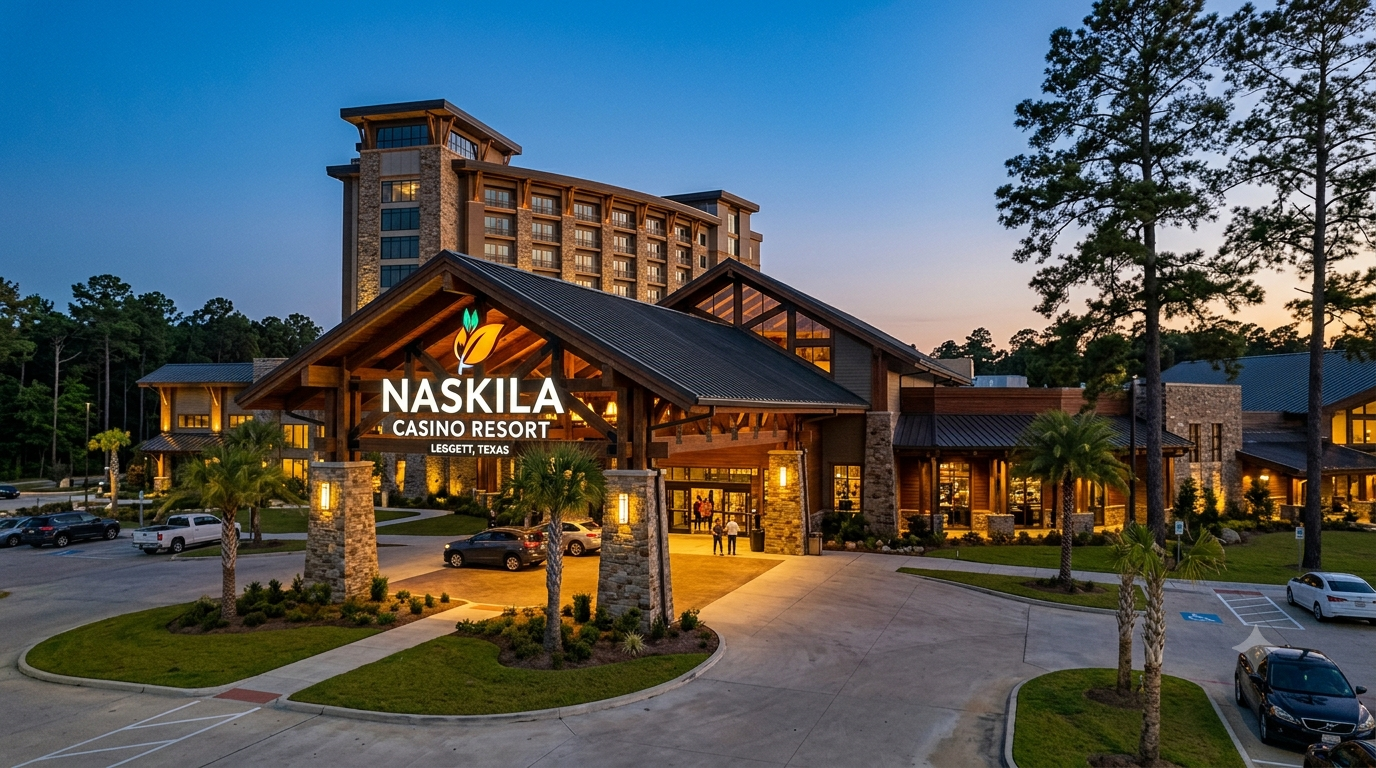
On June 18, 2026, the Alabama-Coushatta Tribe of Texas held a groundbreaking in Leggett, an unincorporated community about nine miles north of Livingston and roughly 90 minutes north of Houston. The plan at full build-out is a 685,000-square-foot resort on 95 acres of tribal trust land, with Phase 1 targeting a late-2028 opening. According to reporting from Community Impact, Phase 1 includes roughly 3,400 electronic bingo machines, dining, and about 35,000 square feet of event space, with a 366-room hotel and a resort-style pool complex planned as the development rolls out. The existing Naskila Casino has already grown into a serious economic engine near Livingston, responsible for more than $200 million in annual local spending.
Now the part that matters, the part the viral posts skipped. This is not the first casino in Texas, and it is not a “casino” in the way most people picture one.
Texas already has three tribal gaming operations running right now: Naskila near Livingston (Alabama-Coushatta), the Kickapoo Lucky Eagle in Eagle Pass, and Speaking Rock in El Paso (Ysleta del Sur Pueblo). They exist not because Texas law allows them, but because federal Indian gaming law overrides state prohibition in specific cases. Naskila runs Class II electronic bingo only. No Las Vegas-style slots, no table games, no roulette wheel. That Class II distinction is the whole legal foundation of the operation, and it was secured the hard way, after a years-long court fight that reached the U.S. Supreme Court.
Do not mistake any of that for a settled, uniform right, either. The three tribes do not stand on the same legal ground, and El Paso is the proof. Speaking Rock, run by the Ysleta del Sur Pueblo, fought Texas for the better part of thirty years. The state won early rounds in the lower courts. Then in June 2022 the U.S. Supreme Court reversed course in a 5-4 decision, ruling that the tribe’s federal Restoration Act bans only the gaming that Texas itself bans outright, and since Texas permits some bingo, the tribe’s electronic bingo stands. Texas dropped its remaining claims a few months later, and Speaking Rock still operates today. The takeaway is not that tribal gaming is fragile. It’s the idea that “Texas has casinos” is actually three separate legal stories with three different histories, and none of them is a template for a commercial casino in Dallas.
Here is the sentence to underline: Naskila’s expansion required no change to Texas law whatsoever. It rests entirely on the tribe’s federal status, which is a completely different door than the one commercial operators are trying to force open in Austin.
So when someone asks whether the Leggett resort means Dallas is next, the honest answer is that the two have almost nothing to do with each other. One walked through a federal door that was already unlocked. The other is standing at a state door that has been bolted shut since the 1800s.
The Only Door To A Dallas Casino Runs Through the Texas Constitution
A commercial, non-tribal casino, the kind Dallas-Fort Worth would actually get, is a separate legal universe. Texas bans casino gambling in its state constitution. Changing that is not a bill the governor signs. It takes a constitutional amendment, which means clearing two brutal thresholds in sequence:
- A two-thirds vote in both chambers. That is 100 of 150 in the House and 21 of 31 in the Senate.
- Then approval by a majority of Texas voters in a statewide referendum.
No commercial casino measure has ever cleared even the first of those two thresholds. Not once. It has never made it to voters because it has never survived the Legislature. That is the wall every “Dallas is getting a casino” prediction runs straight into, and most of them never mention it.
Three Sessions, Three defeats, One Chokepoint
Follow the pattern across the last three legislative sessions, because the pattern is the story.
2021. Lieutenant Governor Dan Patrick declared gambling expansion dead before it started, saying the Senate was nowhere close to the votes and noting no bill had even been filed there.
2023. This was the closest gambling has ever come. A casino and destination-resort amendment reached the House floor and still fell eight votes short of the 100 needed. A separate sports-betting measure fell three votes short. Both then died in the Senate without so much as a committee hearing. Patrick’s line, quoted repeatedly in the Texas Tribune’s coverage: the votes were not there.
2025. The House actually moved backward. A group of freshman Republicans, joined by a few returning members who had voted yes in 2023, signed a letter vowing to oppose any gambling expansion, a swing of roughly 10 votes away from an already-losing tally. Neither the casino nor the sports-betting resolution advanced. The session ended with nothing passed.
See the shape of it. The House came close once, then regressed. The Senate has never even held a hearing. Sitting at the center of that Senate is Dan Patrick, who controls the floor schedule and has set an explicit bar: he will not bring a bill up without 15 to 16 Republican senators behind it, a number that has never existed. In August 2025 he announced a bid for a fourth term. As long as he holds that gavel and that position, the math does not move.
A Dallas casino is not blocked by public opinion or by money. It is blocked by one chamber’s leadership and a vote count that has been getting less favorable, not better.
The Poll Paradox Nobody In Austin Can Solve
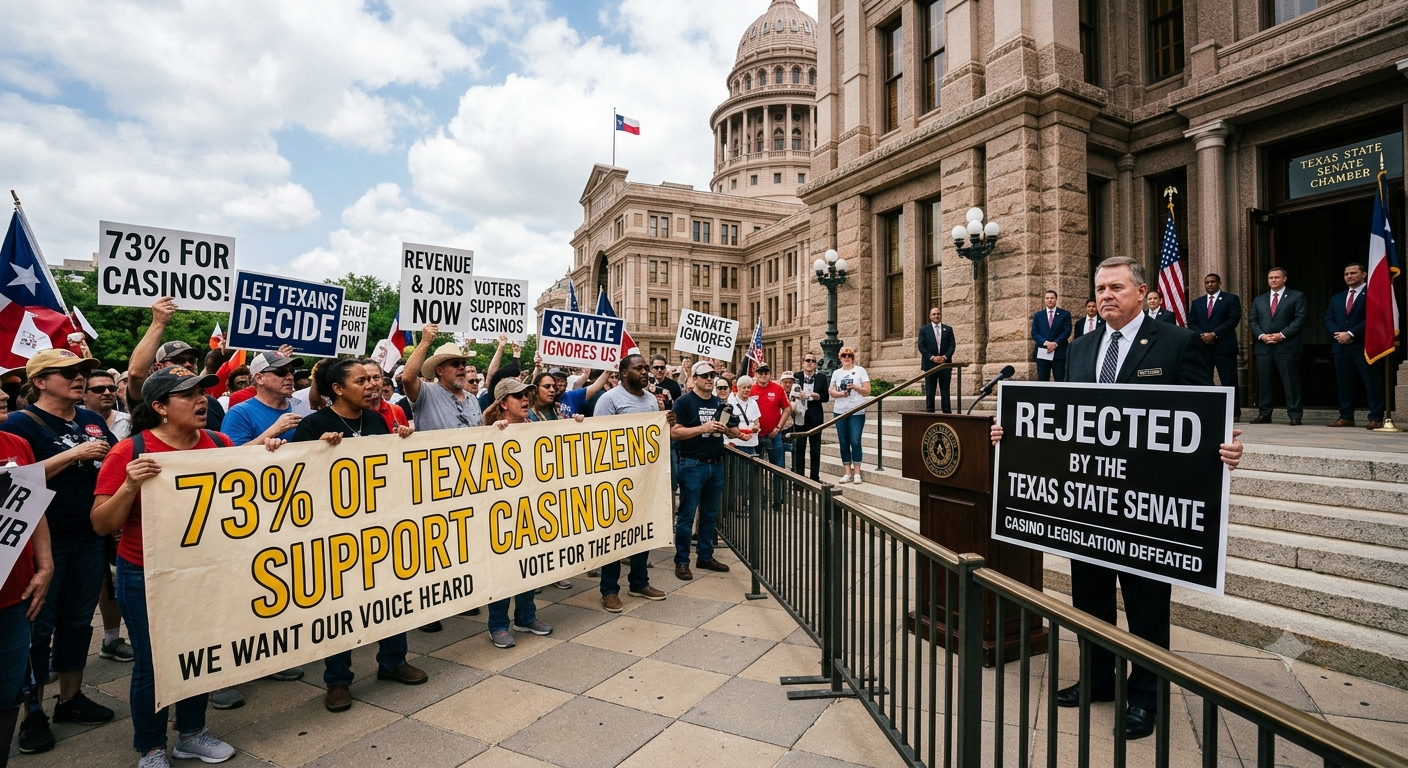
Here is the part that makes casino watchers lose their minds. The public is not the obstacle. A January 2025 University of Houston Hobby School survey found that 73 percent of Texans support legalizing destination resort casinos, including 72 percent of Republicans and 74 percent of Democrats. That is not a slim majority. That is a supermajority that crosses party lines, and it has shown up in poll after poll.
None of it has moved the Senate. Governor Greg Abbott, who once sounded open to the idea, has cooled noticeably, telling CBS News Texas in December 2025 that he was not ready to endorse letting voters decide. The Republican Party of Texas platform formally opposes any expansion of gambling. So you have a rare situation where three-quarters of the public wants a thing, and the institutional machinery still says no. For anyone trying to time this, that gap is the whole lesson: in Texas, casino legalization is not a popularity contest. It is a vote count inside one chamber, and popularity has never been the missing ingredient.
Follow The Money And It Leads To The Mavericks
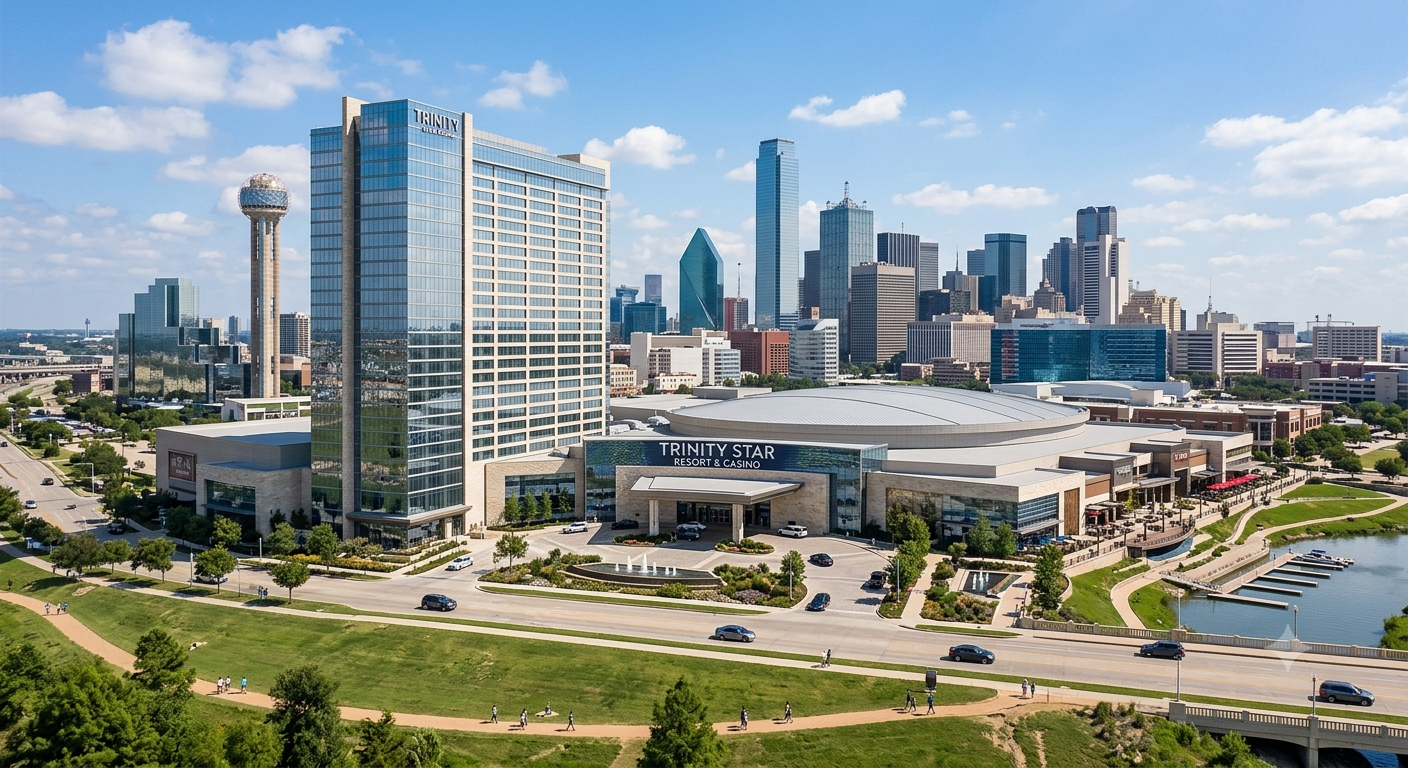
Here is where the story stops being East Texas trivia and becomes a Dallas story, the one nobody in the corridor is connecting.
In late 2023, the Adelson and Dumont families acquired majority control of the Dallas Mavericks in a deal valued at about $3.5 billion, approved by the NBA that December. Miriam Adelson, widow of casino magnate Sheldon Adelson, and her son-in-law Patrick Dumont, president of Las Vegas Sands, took controlling interest. Mark Cuban kept about 27 percent and control of basketball operations. To fund it, the Adelson family sold nearly $2 billion in Las Vegas Sands stock.
The Mavericks purchase and the casino campaign were always the same play. Cuban himself had floated a downtown arena paired with a hotel and casino, and after the sale, entities tied to Sands quietly acquired two prime Dallas-area parcels, one downtown and one in Irving near the airport. The team’s American Airlines Center lease runs through July 2031. Read those facts together and the ambition is obvious: an arena-casino district, if only the law would allow it.
Watch what happened when the law would not. In June 2026 the Mavericks announced their new arena and entertainment district at the former Valley View Mall site in North Dallas, more than 100 acres, and CEO Rick Welts stated flatly that the plans would stay “consistent with no casino component.” No traditional gaming element. Sit with that. The people who own a global casino empire and the Dallas Mavericks are building their marquee Dallas project without a casino in it, because Texas will not let them put one there. If that ownership group cannot attach gaming to a Dallas arena, nobody is sneaking a casino into North Texas through a side door.
Sands is not lobbying quietly, either. The company has poured money into the fight for years, registering dozens of lobbyists each session and, through its Texas Sands PAC funded principally by a $9.1 million Adelson contribution, stockpiling a war chest in the $9 to $10 million range heading into the 2026 cycle, per state campaign-finance reporting. Where is that money going? Not to construction. To elections. Sands backed a candidate in a 2025 Senate special election who lost badly, and the company has promised to keep spending on pro-resort candidates through the primaries.
That is the whole game, and it is the thing to watch. The fight for a Dallas casino is being waged in Republican primaries, one Senate seat at a time, by a company trying to buy itself a friendlier chamber by 2027. Forget the cranes. Watch the primary results. That is your leading indicator, years before any shovel touches Dallas dirt for anything with a slot machine in it.
Irving Already Told Sands “No”
Anyone pointing to Irving as proof a Dallas casino is imminent has the story backward.
Sands did buy the land. A large tract at the old Texas Stadium site, purchased at the end of 2023. Rezoning got a public hearing. Then came the part that got left out of the excited posts. Facing fierce “Don’t Vegas My Irving” backlash, the casino and gaming elements were pulled from the Irving plan, and Sands is now proceeding with a non-gaming development instead. A company executive acknowledged the full casino-resort concept was not financially viable without legalized gambling.
So the one DFW site with real land, a real zoning process, and a real public vote is now moving forward as a resort with no casino in it. The gaming can only come back if Texas law changes first. Irving is not evidence the casino is coming. Irving is evidence of exactly how hard the wall is.
Meanwhile, Texas Money Keeps Driving To Oklahoma
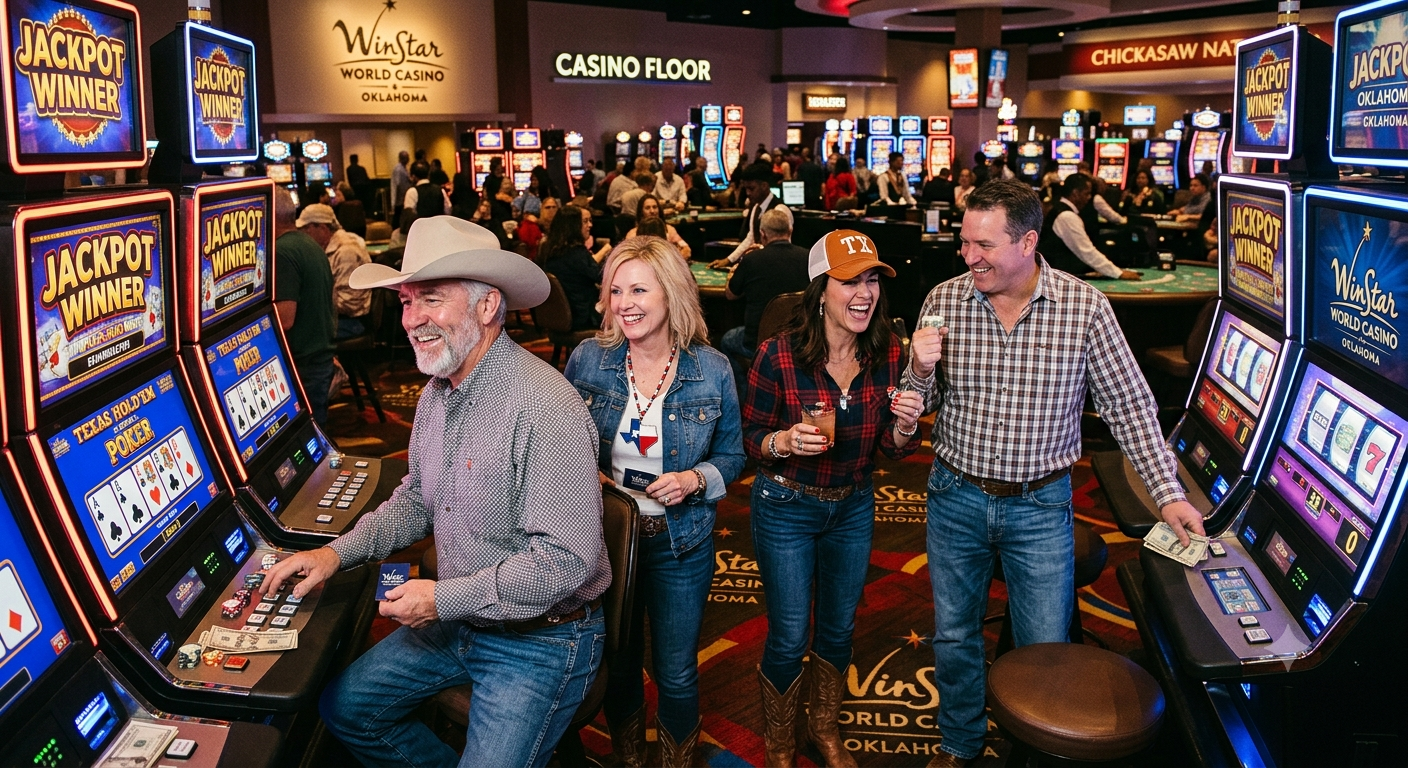
The one argument the industry makes that has real teeth is leakage. Texans already gamble; they just do it across state lines. WinStar Casino and the Choctaw Casino in Durant both pull enormous crowds north, and Hard Rock has been investing near Lake Texoma on the Oklahoma side of the Red River, part of a wave of development aimed at turning that stretch, roughly 90 minutes north of Dallas, into a destination.
How much Texas money leaves the state? Be careful here, because the estimates are all over the map and none is gospel. Depending on what gets counted, credible figures range from roughly $2 billion to $8 billion a year, with the high end including illegal sports betting, not just casino play. Gambling researcher Clyde Barrow has estimated Texans spend around $5 billion annually on casino-style wagering in neighboring states and Las Vegas. Treat any single precise number with suspicion, and remember who authored the frame in the first place. “Texans are funding Oklahoma’s casinos” is the centerpiece of Las Vegas Sands’ own pitch, repeated relentlessly by the one company spending millions to change the law it stands to profit from. That does not make it false. But it does make it a sales argument dressed as a neutral statistic, and it deserves to be read as one.
What This Actually Means For Your Home’s Value
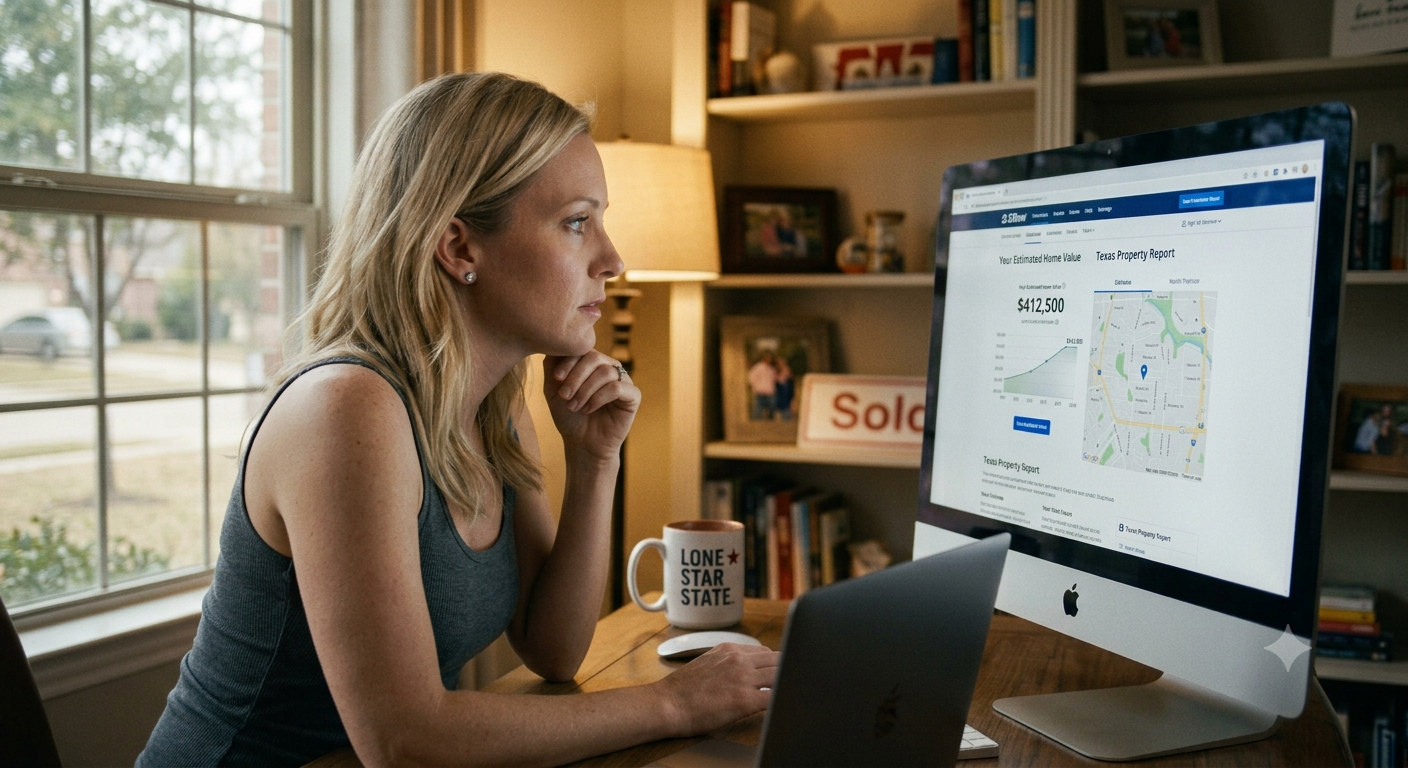
Now the question that matters to a buyer or seller in North Texas, and the one where I am going to give you the truth instead of the hype.
If you are worried a casino is going to tank or supercharge your home value, slow down. First, nothing has been legalized, so there is no near-term effect to price in at all. Second, even the confirmed DFW sites tied to this ownership sit in Irving and North Dallas, not in the Ellis County corridor, so for buyers and sellers across South DFW toward Waco, the direct impact is essentially zero regardless of what Austin does. If you are relocating into the corridor from out of state, this is one headline you can set down. It changes nothing about your search.
The research on casinos and home values refuses to say what either side wants it to say. The most rigorous peer-reviewed work, including a Canadian panel study of casinos opened between 1986 and 2007, finds modest negative effects on home-value growth concentrated very close to a casino site, fading fast with distance, and no clear positive spillover. A National Association of Realtors literature review of a proposed Massachusetts casino projected home-value declines in the low double digits per nearby property. Las Vegas is the famous counterexample where gaming correlates with rising home values, but that reflects an entire metro built around casinos over decades, not one resort dropped into an existing suburb.
Here is the honest bottom line no study can wave away: not one of these analyzed a DFW or North Texas site. Anyone quoting you a specific percentage for what a casino would do to your Midlothian or Waxahachie home value is guessing and dressing it up as data. The defensible read is narrow: any effect would be modest, would concentrate on homes within walking distance of the property, and would not reach the southern corridor. Your home value is a story about schools, inventory, rates, and jobs. It is not a story about a casino that does not exist yet.
The Five-Steps-Ahead Position

Strip it all down and you get one clean argument. A Dallas casino is a political outcome, not a construction project, and the politics have pointed the same direction for three sessions straight. The same Senate has killed every attempt, the House vote count has eroded rather than grown, and Dan Patrick’s stated threshold has never once been met. That is not a forecast. That is the documented record, and it is the anchor to hold onto every time a fresh rendering sets the feeds on fire.
The speculative layer sits on top of that foundation. Las Vegas Sands has stopped pretending this gets won through zoning and started spending to reshape the Legislature by 2027, so the one forward-looking signal worth tracking is whether that money ever buys enough Senate seats to move Patrick’s math. Watch the primary results, not the construction renderings. Until that math actually shifts, a Dallas-Fort Worth casino is a well-funded ambition, not a date on a calendar, and your clients’ home values sit exactly where they were the day before that East Texas groundbreaking.
That is the intelligence. Everyone else has the headline.
Frequently Asked Questions: Will Dallas Ever Get A Casino?

Is the Naskila resort the first casino in Texas?
No. Texas has three tribal gaming operations already running: Naskila near Livingston, the Kickapoo Lucky Eagle in Eagle Pass, and Speaking Rock in El Paso. They operate under federal Indian gaming law, not Texas law.
Is the new casino resort near Dallas?
No. It is in Leggett, in deep East Texas, about 90 minutes north of Houston and more than 200 miles from Dallas-Fort Worth. It has no direct connection to the North Texas market.
When could Dallas-Fort Worth get a commercial casino?
Not before 2027 at the earliest, and only if the Legislature first passes a constitutional amendment by a two-thirds vote in both chambers and voters then approve it. That has never happened. The Texas Legislature meets only in odd-numbered years, so the next possible vehicle is the 2027 session.
Why does the casino effort keep failing if most Texans support it?
Public support is high, around 73 percent in a 2025 University of Houston poll, but legalization runs through the Texas Senate, where Lieutenant Governor Dan Patrick controls the floor and has said he will not advance a bill without 15 to 16 Republican senators in support. That level has never been reached, and House support actually declined between 2023 and 2025.
Will the new Mavericks arena include a casino?
No. The Mavericks announced a new arena and entertainment district at the former Valley View Mall site in North Dallas, and team leadership has said the plans include no casino component. Gaming there would require a change in state law that has not happened.
Would a casino hurt my home’s value in North Texas?
There is no effect to price in today because nothing is legalized. The proposed DFW casino sites are in Irving and North Dallas, not the southern corridor. Research shows any home-value effect is modest and concentrated very close to a casino, fading quickly with distance, with no study specific to North Texas.
Headlines move feeds. The read on your specific street is what moves your decision, and cutting the noise down to that is the whole job. If you want it, let’s talk.
Bobby Franklin – REALTOR®
Legacy Realty Group – Leslie Majors Team
16 Northgate Dr. Ste 100, Waxahachie, TX 75165
📞 214-228-0003
🌐 northtexasmarketinsider.com